Want more images or videos?
Request additional images or videos from the seller
1 of 9

Koloman Moser
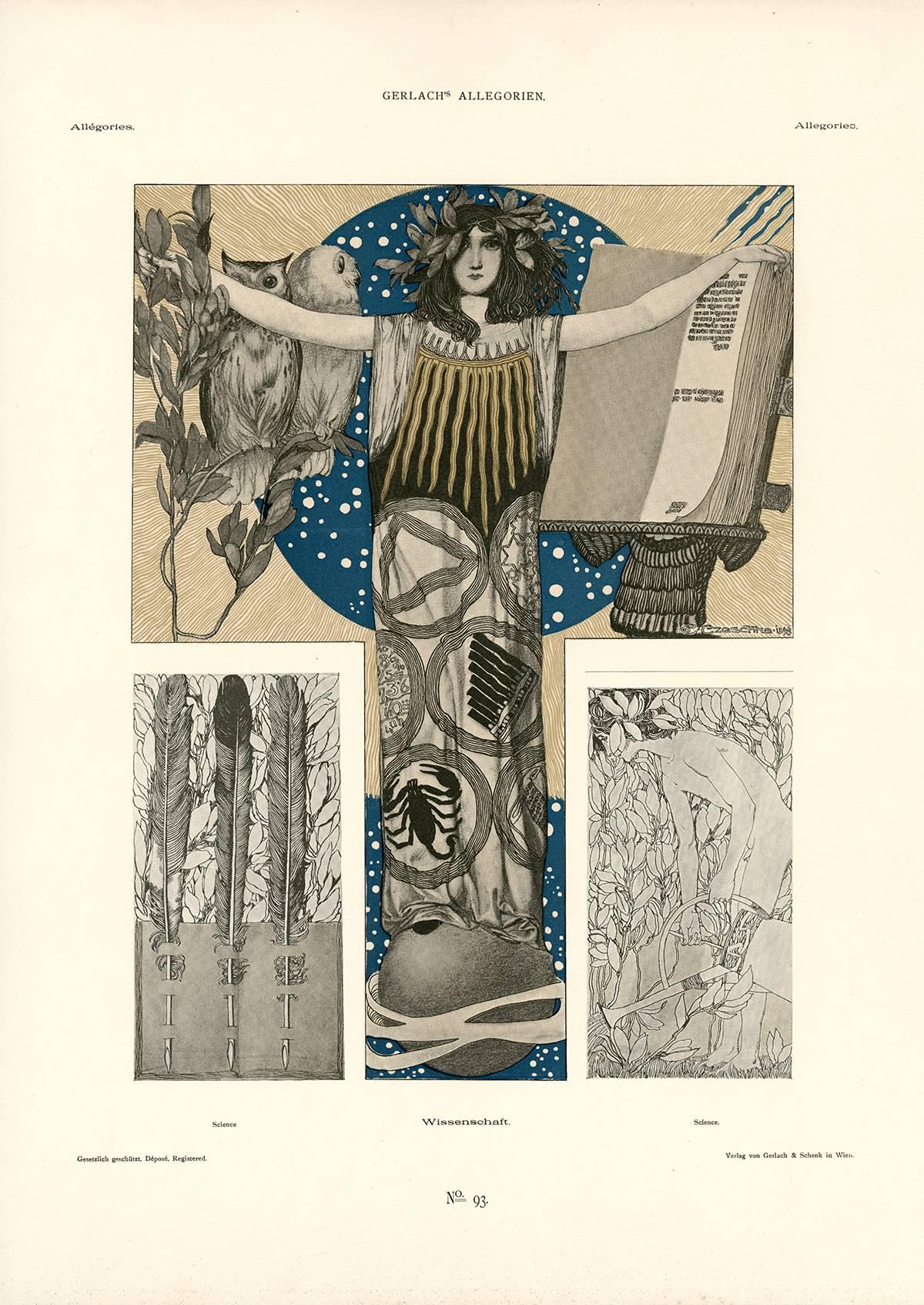
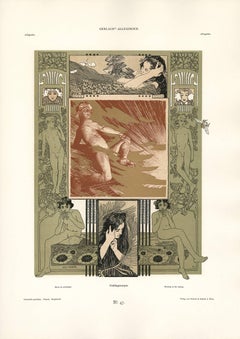
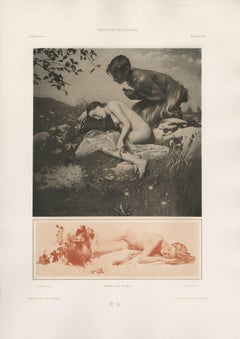
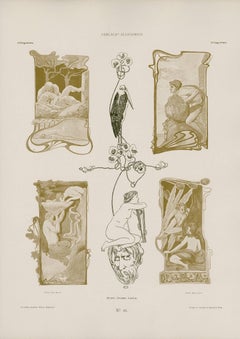
Gerlach's Allegorien Plate #89: "Bookplate Spring" Lithograph

1897

$2,750
£2,079.25
€2,434.36
CA$3,912.57
A$3,979.80
CHF 2,284
MX$47,841.81
NOK 26,642.73
SEK 26,893.55
DKK 18,199.06

About the Item

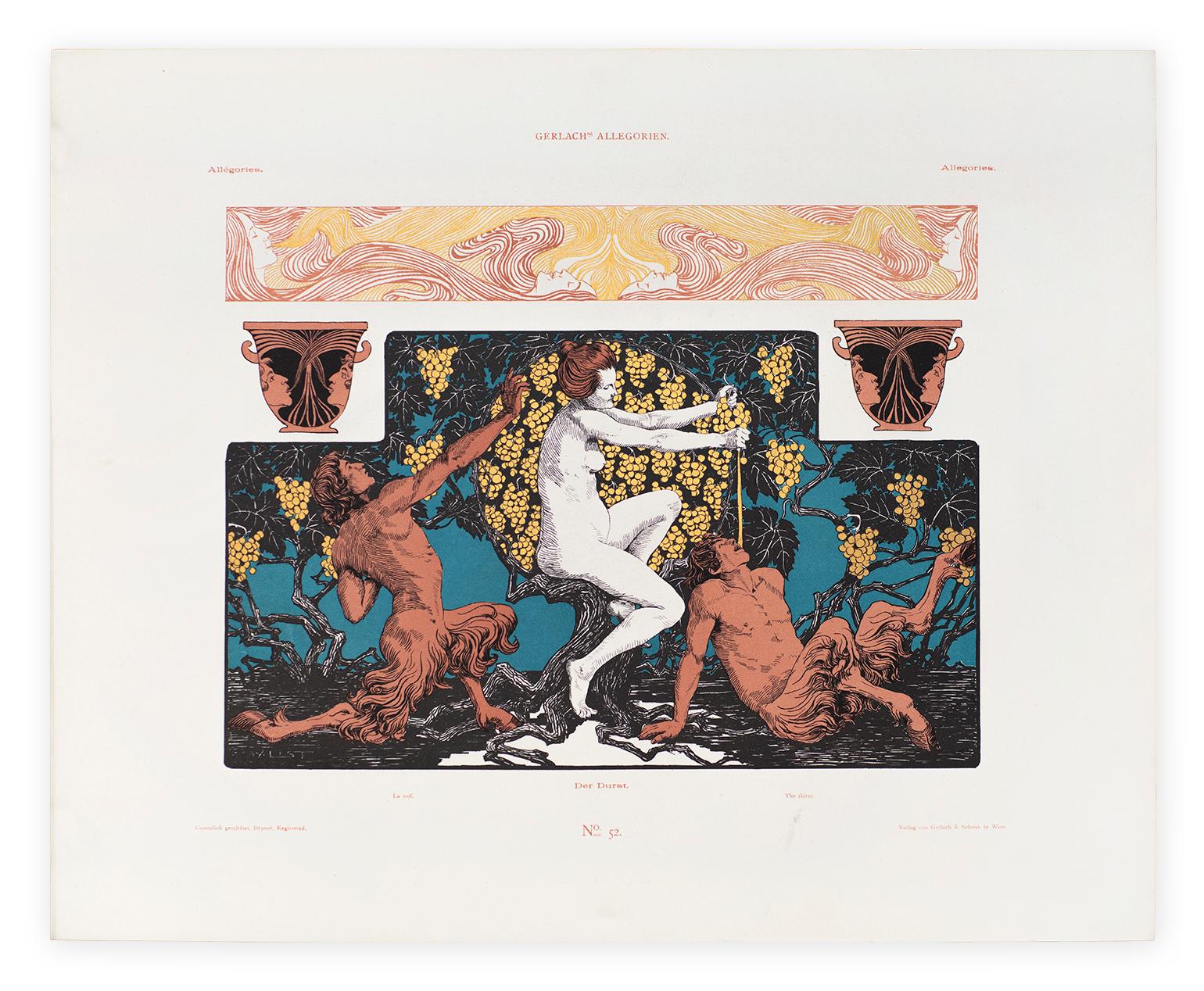
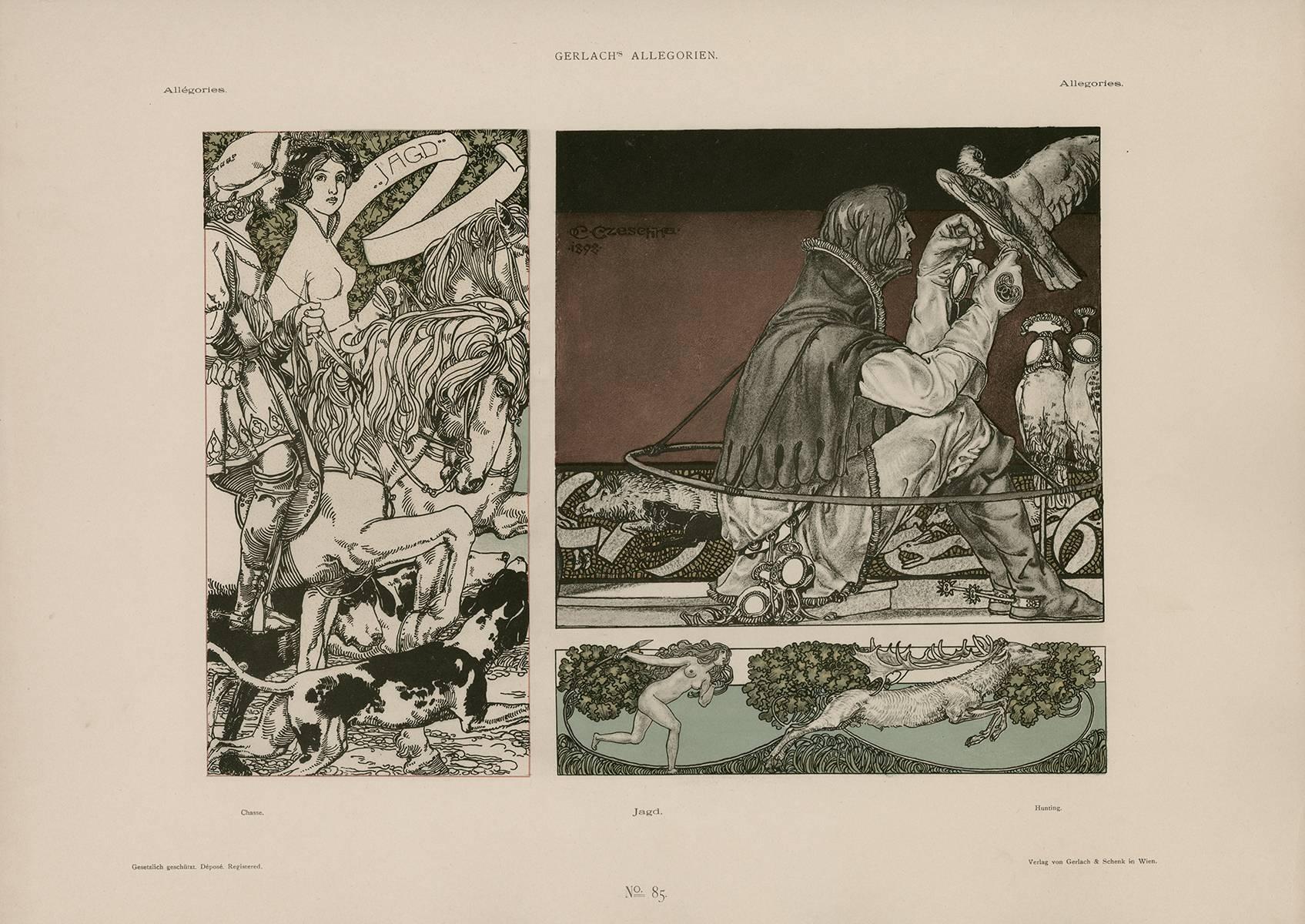
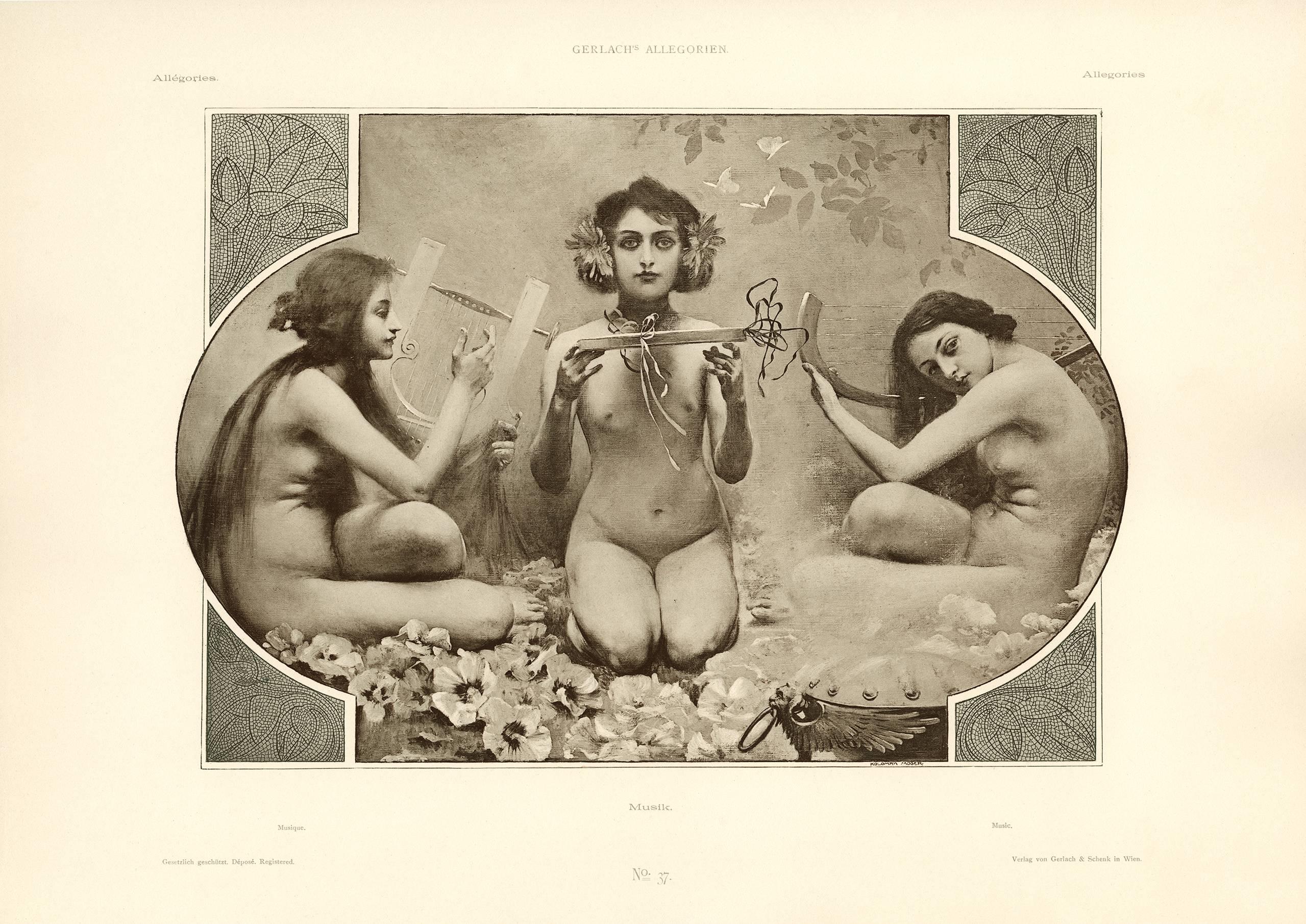
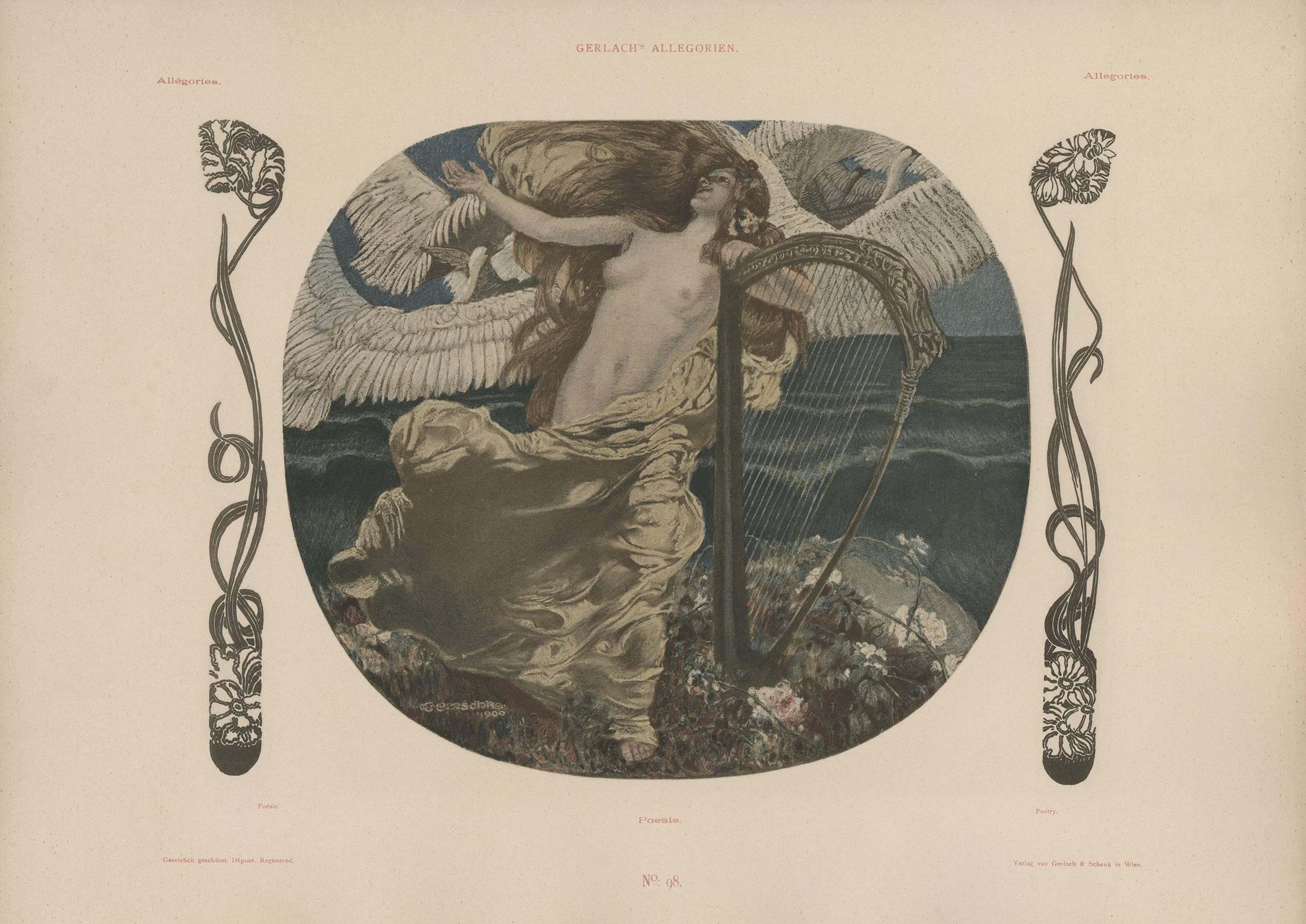
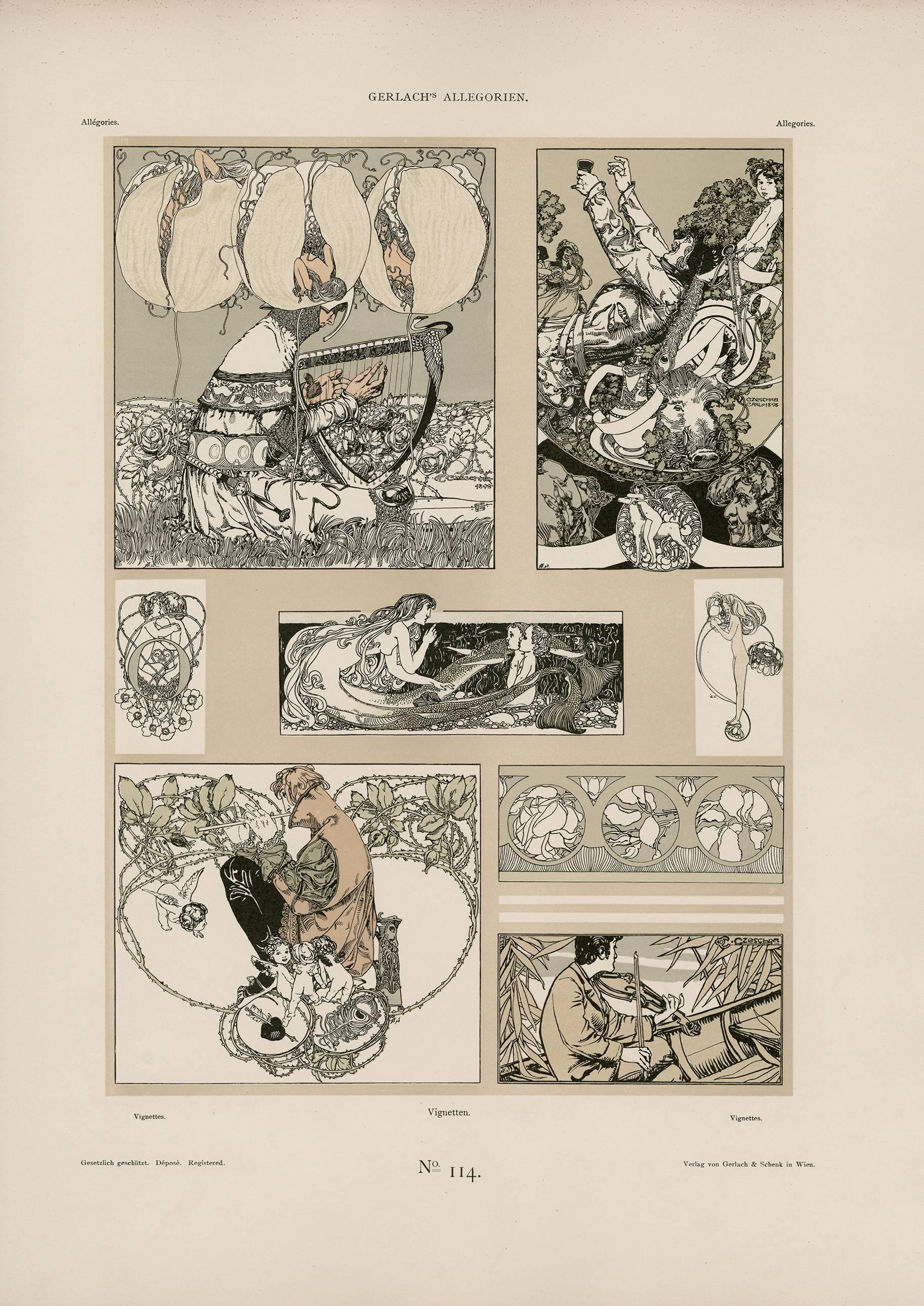
Koloman Moser (1868 –1918), AUSTRIAN Instead of applying his flair and art education solely to painting, Koloman Moser embodied the idea of Gesamt Kunstwerk (all-embracing art work) by designing architecture, furniture, jewelry, graphics, and tapestries meant to coordinate every detail of an environment. His work transcended the imitative decorative arts of earlier eras and helped to define Modernism for generations to come. Moser achieved a remarkable balance between intellectual structure (often geometric) and hedonistic luxury. Collaborating with Gustav Klimt and Josef Hoffmann, the artist was an editor and active contributor to Ver Sacrum, (Sacred Spring), the journal of the Viennese Secession that was so prized for its aesthetics and high quality production that it was considered a work of art. The magazine featured drawings and designs in the Jugendstil style (Youth) along with literary contributions from distinguished writers from across Europe. It quickly disseminated both the spirit and the style of the Secession. In 1903 Moser and Hoffmann founded and led the Wiener Werkstatte (Viennese Workshop) a collective of artisans that produced elegant decorative arts items, not as industrial prototypes but for the purpose of sale to the public. The plan, as idealistic then as now, was to elevate the lives of consumers by means of beautiful and useful interior surroundings. Moser’s influence has endured throughout the century. His design sensibility is evident from the mid-century modern furniture of the 1950s and ‘60s to the psychedelic rock posters of the 1970s and remains a source of inspiration to many currently working within the field of applied arts. ALLEGORIEN-NEUE FOLGE, 1897, published by Gerlach & Schenk Verlag fur Kunst und Gewerbe, Vienna, was a serial publication that began as Allegorien und Embleme in 1882. A sourcebook of inspiration made for and by young Viennese artists became something of a galvanizer of the modernist movement in Vienna with its new series issued in 1897. Its publisher, Martin Gerlach, plucked young artists and even art students who were exploring the newest techniques in drafting and graphic design to contribute to his publication. This was the beginning of a long-standing relationship. In the forward to the 1897 edition, Gerlach, expounds upon the new approach which consciously shifted away from historicism rooted in the conservative Academy. Instead, the artists were encouraged to explore new subjects and new ways to present them. More unconventional subjects such as: Wine, Love, Song, Music and Dance; Arts and Sciences; the Seasons and their corresponding activities, sports and amusements, breathed fresh, modern life into the allegorical genre. Specific topics that were explored ranged from Electricity and new concepts of Work and Time to Bicycle Sport and the Graphic Arts. Essentially, the publication served as a portable forum for sharing and disseminating new ideas. Two contributors, a young Gustav Klimt and an even younger Koloman Moser, likely met through their involvement with Allegorien and found themselves to be like-minded artists. As a result, the two allied with other artists and architects in a dramatic and formal break with the established, conservative state-run arts (Kunstlerhausgenessenschaft) to found the Vienna Secession the very next year in 1898. Klimt became the Secession’s first President; while Moser, in 1903, expanded the group from a solely exhibition-based focus to include a workshop by co-founding the Wiener Werkstatte. Gerlach went on to publish some issues of the Secession’s journal called Ver Sacrum as well as postcards designed by its members. The Viennese art critic, Joseph August, called Gerlach the “Fuhrer der Moderne” (Leader of Modernism). The new 1897 series, featuring its innovative and modern art plates, is an important art historical document as it played a significant role in helping shape the avant-garde art movement in Vienna which exploded onto the scene with the formation of the Vienna Secession in 1898. Individually, the plates are important works; they are noteworthy for their stylistically and thematically modern approach. These plates offer some of the earliest examples of Viennese avant-garde and Secession artists’ published work.
  • Creator:
    Koloman Moser (1868 - 1918, Austrian)
  • Creation Year:
    1897
  • Dimensions:
    Height: 17.25 in (43.82 cm)Width: 13.75 in (34.93 cm)
  • Medium:
  • Movement & Style:
  • Period:
  • Condition:
    See "Koloman Moser, Master of Viennese Modernism"by Maria Rennhofer, 2002. Pg 18.
  • Gallery Location:
    Palm Beach, FL
  • Reference Number:
    1stDibs: LU46731426893

More From This Seller

View All
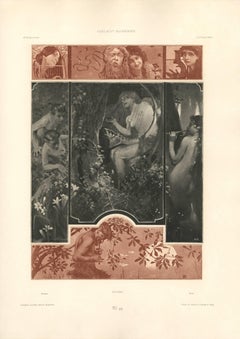
Gerlach's Allegorien Plate #47: "Morning in the Spring" Lithograph

Gerlach's Allegorien Plate #47: "Morning in the Spring" Lithograph

By Koloman Moser

Located in Palm Beach, FL

Koloman Moser (1868 –1918), AUSTRIAN Instead of applying his flair and art education solely to painting, Koloman Moser embodied the idea of Gesamt Kunstwerk (all-embracing art work) by designing architecture, furniture, jewelry, graphics, and tapestries meant to coordinate every detail of an environment. His work transcended the imitative decorative arts of earlier eras and helped to define Modernism for generations to come. Moser achieved a remarkable balance between intellectual structure (often geometric) and hedonistic luxury. Collaborating with Gustav Klimt and Josef Hoffmann, the artist was an editor and active contributor to Ver Sacrum, (Sacred Spring), the journal of the Viennese Secession that was so prized for its aesthetics and high quality production that it was considered a work of art. The magazine featured drawings and designs in the Jugendstil style (Youth) along with literary contributions from distinguished writers from across Europe. It quickly disseminated both the spirit and the style of the Secession. In 1903 Moser and Hoffmann founded and led the Wiener Werkstatte (Viennese Workshop) a collective of artisans that produced elegant decorative arts items, not as industrial prototypes but for the purpose of sale to the public. The plan, as idealistic then as now, was to elevate the lives of consumers by means of beautiful and useful interior surroundings. Moser’s influence has endured throughout the century. His design sensibility is evident from the mid-century modern furniture of the 1950s and ‘60s to the psychedelic rock posters...

Category

1890s Vienna Secession Figurative Prints

Materials

Paper

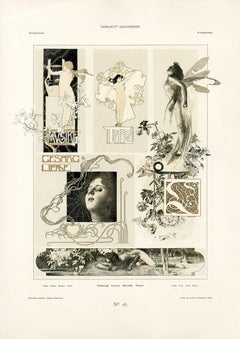
Gerlach's Allegorien Plate #44: "Music" Lithograph

Gerlach's Allegorien Plate #44: "Music" Lithograph

By Koloman Moser

Located in Palm Beach, FL

Koloman Moser (1868 –1918), AUSTRIAN Instead of applying his flair and art education solely to painting, Koloman Moser embodied the idea of Gesamt Kunstwerk (all-embracing art work) by designing architecture, furniture, jewelry, graphics, and tapestries meant to coordinate every detail of an environment. His work transcended the imitative decorative arts of earlier eras and helped to define Modernism for generations to come. Moser achieved a remarkable balance between intellectual structure (often geometric) and hedonistic luxury. Collaborating with Gustav Klimt and Josef Hoffmann, the artist was an editor and active contributor to Ver Sacrum, (Sacred Spring), the journal of the Viennese Secession that was so prized for its aesthetics and high quality production that it was considered a work of art. The magazine featured drawings and designs in the Jugendstil style (Youth) along with literary contributions from distinguished writers from across Europe. It quickly disseminated both the spirit and the style of the Secession. In 1903 Moser and Hoffmann founded and led the Wiener Werkstatte (Viennese Workshop) a collective of artisans that produced elegant decorative arts items, not as industrial prototypes but for the purpose of sale to the public. The plan, as idealistic then as now, was to elevate the lives of consumers by means of beautiful and useful interior surroundings. Moser’s influence has endured throughout the century. His design sensibility is evident from the mid-century modern furniture of the 1950s and ‘60s to the psychedelic rock posters...

Category

1890s Vienna Secession Figurative Prints

Materials

Lithograph

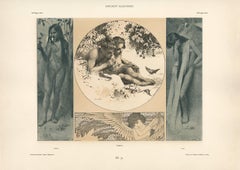
Gerlach's Allegorien Plate #20: "Song, Love, Music, Dance" Lithograph

Gerlach's Allegorien Plate #20: "Song, Love, Music, Dance" Lithograph

By Koloman Moser

Located in Palm Beach, FL

Koloman Moser (1868 –1918), AUSTRIAN Instead of applying his flair and art education solely to painting, Koloman Moser embodied the idea of Gesamt Kunstwerk (all-embracing art w...

Category

1890s Vienna Secession Figurative Prints

Materials

Lithograph

Gerlach's Allegorien Plate #30: "Love" Lithograph

Gerlach's Allegorien Plate #30: "Love" Lithograph

By Koloman Moser

Located in Palm Beach, FL

Koloman Moser (1868 –1918), AUSTRIAN Instead of applying his flair and art education solely to painting, Koloman Moser embodied the idea of Gesamt Kunstwerk (all-embracing art w...

Category

1890s Vienna Secession Figurative Prints

Materials

Lithograph

Gerlach's Allegorien Plate #35: "Love & Wine" Lithograph

Gerlach's Allegorien Plate #35: "Love & Wine" Lithograph

By Koloman Moser

Located in Palm Beach, FL

Koloman Moser (1868 –1918), AUSTRIAN Instead of applying his flair and art education solely to painting, Koloman Moser embodied the idea of Gesamt Kunstwerk (all-embracing art work) by designing architecture, furniture, jewelry, graphics, and tapestries meant to coordinate every detail of an environment. His work transcended the imitative decorative arts of earlier eras and helped to define Modernism for generations to come. Moser achieved a remarkable balance between intellectual structure (often geometric) and hedonistic luxury. Collaborating with Gustav Klimt and Josef Hoffmann, the artist was an editor and active contributor to Ver Sacrum, (Sacred Spring), the journal of the Viennese Secession that was so prized for its aesthetics and high quality production that it was considered a work of art. The magazine featured drawings and designs in the Jugendstil style (Youth) along with literary contributions from distinguished writers from across Europe. It quickly disseminated both the spirit and the style of the Secession. In 1903 Moser and Hoffmann founded and led the Wiener Werkstatte (Viennese Workshop) a collective of artisans that produced elegant decorative arts items, not as industrial prototypes but for the purpose of sale to the public. The plan, as idealistic then as now, was to elevate the lives of consumers by means of beautiful and useful interior surroundings. Moser’s influence has endured throughout the century. His design sensibility is evident from the mid-century modern furniture of the 1950s and ‘60s to the psychedelic rock posters...

Category

1890s Vienna Secession Figurative Prints

Materials

Lithograph

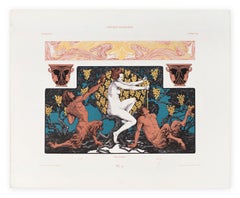
Gerlach's Allegorien Plate #116: "Force, Thirst, Love" Lithograph

Gerlach's Allegorien Plate #116: "Force, Thirst, Love" Lithograph

By Carl Otto Czeschka

Located in Palm Beach, FL

after Carl Otto Czeschka, (1878-1960), Austrian A leading member of the Vienna Secession and later the Wiener Werkstätte (Viennese Workshop), Carl Otto Czeschka was a vital figur...

Category

1890s Vienna Secession Figurative Prints

Materials

Lithograph

You May Also Like

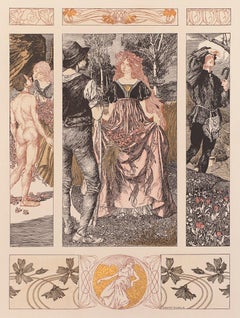
Spring by Robert Engels, Medieval Art Nouveau lithograph with gold ink, 1897

Spring by Robert Engels, Medieval Art Nouveau lithograph with gold ink, 1897

By Robert Engels

Located in Chicago, IL

Allegorien-Neue Folge was a serialized folio published in installments between 1895 and 1900. Martin Gerlach, its publisher, was inspired by the rise of modernist design in Vienna an...

Category

1890s Vienna Secession Prints and Multiples

Materials

Lithograph

Printemps - Original Woodcut Print by J. Beltrand - 1899

Printemps - Original Woodcut Print by J. Beltrand - 1899

By Jacques Beltrand

Located in Roma, IT

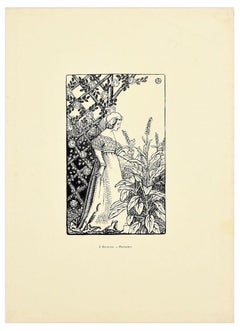
Image dimensions: 15.8 x 9.8 cm. Printemps is an original artwork realized by Jacques Beltrand in 1899. Original woodcut on paper. Inscripted on the lower margin: J. Beltrand - Printemps. Good conditions except for a very small rip on the right upper side. Beautiful and fresh print representing a female figure simbolizing the spring. The young woman is smelling fresh flowers in a garden. The work is a very good example of Art Dèco illustration of that period in which the Art Nouveau was bursting. This beautiful work has been realized by Jacques Beltrand (Paris, 1874 - 1977) a Fresh painter, engraver, xylographer. He collaborated with his father Tony Beltrand from 1890. He soon became a master of the xylograph and book illustrator. He exhibited at the Society of Painters and Engravers of Paris and became a member of the Conseil Supérieur des Beaux-Arts and of the Comité des Tuileries where he exhibited until 1944. Most of his works are preserved in the French Prints Cabinet.

Category

1890s Art Nouveau Figurative Prints

Materials

Woodcut

Renewal - Original lithograph - 1897

Renewal - Original lithograph - 1897

By Émile Berchmans

Located in Paris, IDF

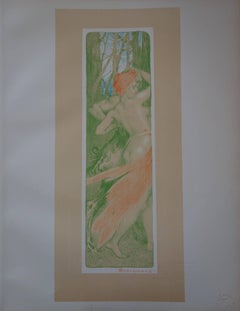
Emile BERCHMANS Renewal Original lithograph Printed signature in the plate 1897/98 Printed on paper Vélin Size 40 x 31 cm (c. 16 x 12") INFORMATION : Published by 'Estampe Moderne...

Category

1890s Art Nouveau Figurative Prints

Materials

Lithograph

Gonthier-Meymans by Henri Meunier, Art Nouveau Japon lithograph, 1897

Gonthier-Meymans by Henri Meunier, Art Nouveau Japon lithograph, 1897

By Henri Meunier

Located in Chicago, IL

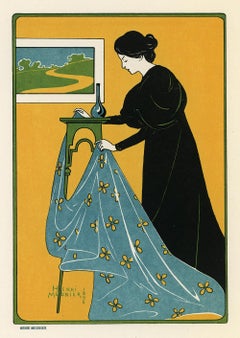
Henri Meunier’s Gonthier-Meymans lithographic poster, published by Verlag von Gerhard Kühtmann in Dresden, 1897. While this poster was printed in multiple sizes and formats, this edi...

Category

1890s Art Nouveau Prints and Multiples

Materials

Lithograph

Late 19th century color lithograph art nouveau ornate bookplate figures floral

Late 19th century color lithograph art nouveau ornate bookplate figures floral

By Alphonse Mucha

Located in Milwaukee, WI

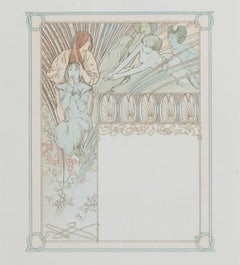
"Dream Weavers" and "Soul of the Land" are two sides of a double-sided lithograph by Alphonse Mucha. These illustrations were created for "Ilsee, Princess of Tripoli" and are the rare proofs before the text. These artworks were for pages 31 and 32. 8" x 6 1/4" art 19 1/4" x 17 1/8" frame Alphonse Mucha was born in 1860 in the small town of Ivancice, Monrovia. Though it is rumored that Mucha was drawing before he was walking, his early years were spent as a choirboy and amateur musician. It wasn’t until after he finished high school that he came to realize that living people were responsible for the art that he admired in the local churches. That epiphany made him determined to become a painter. He was soon sent off to Paris, where he studied at the Academie Julian. On January 1, 1985, he presented his own new style to the citizens of Paris. Spurning the bright colors and the more square-like shape of the more popular poster artists, the design was a sensation. Art Nouveau can...

Category

1890s Art Nouveau Figurative Prints

Materials

Lithograph