Léonard Tsugouharu Foujita
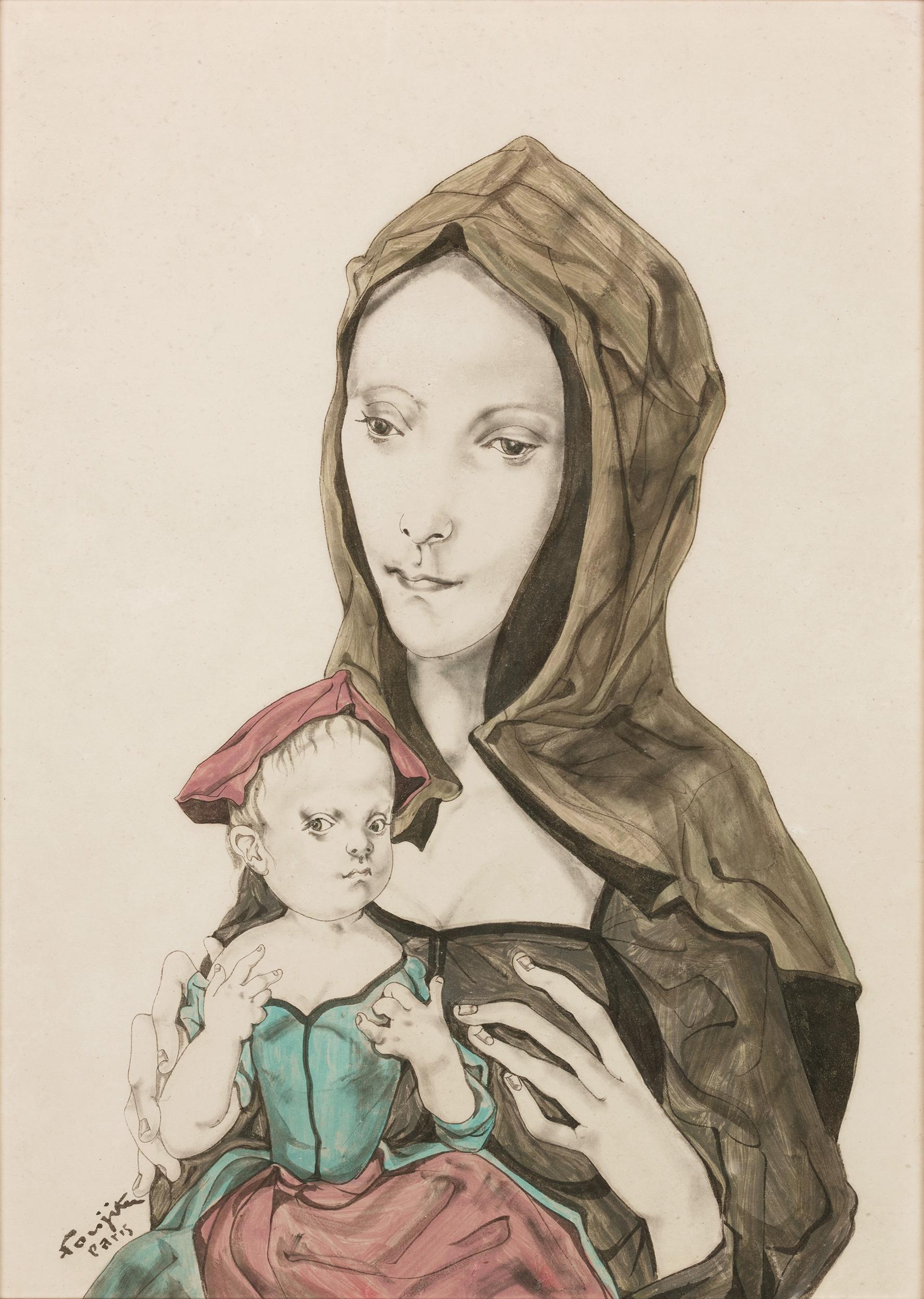
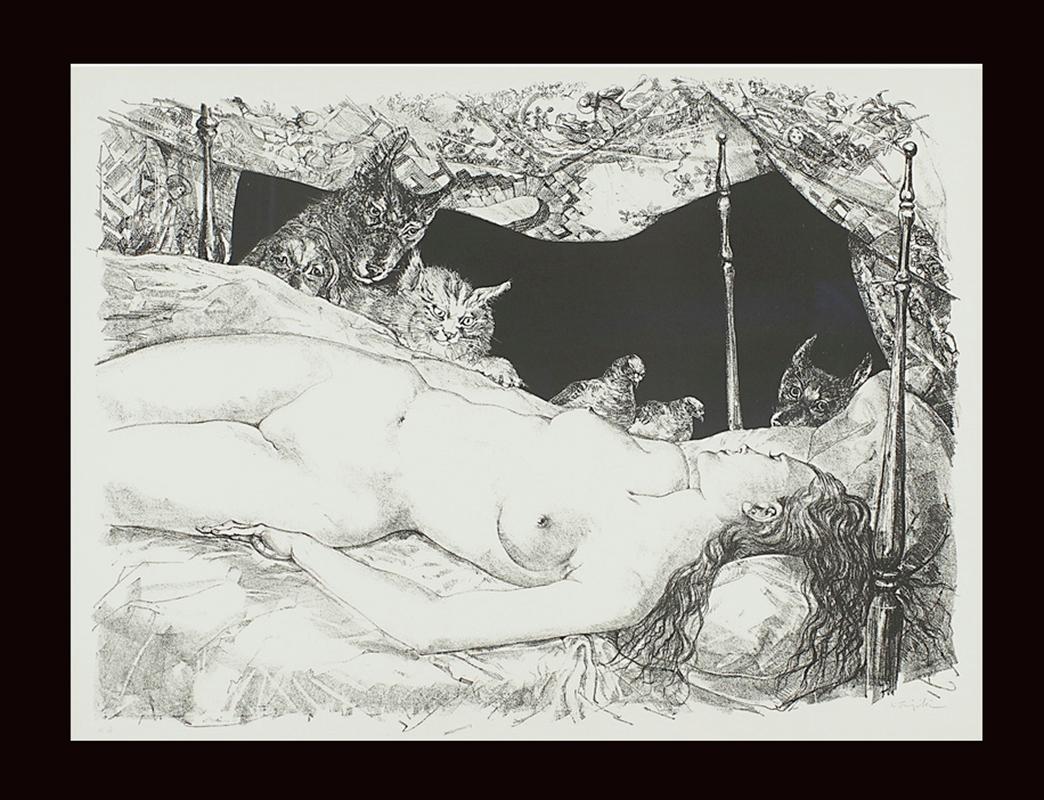
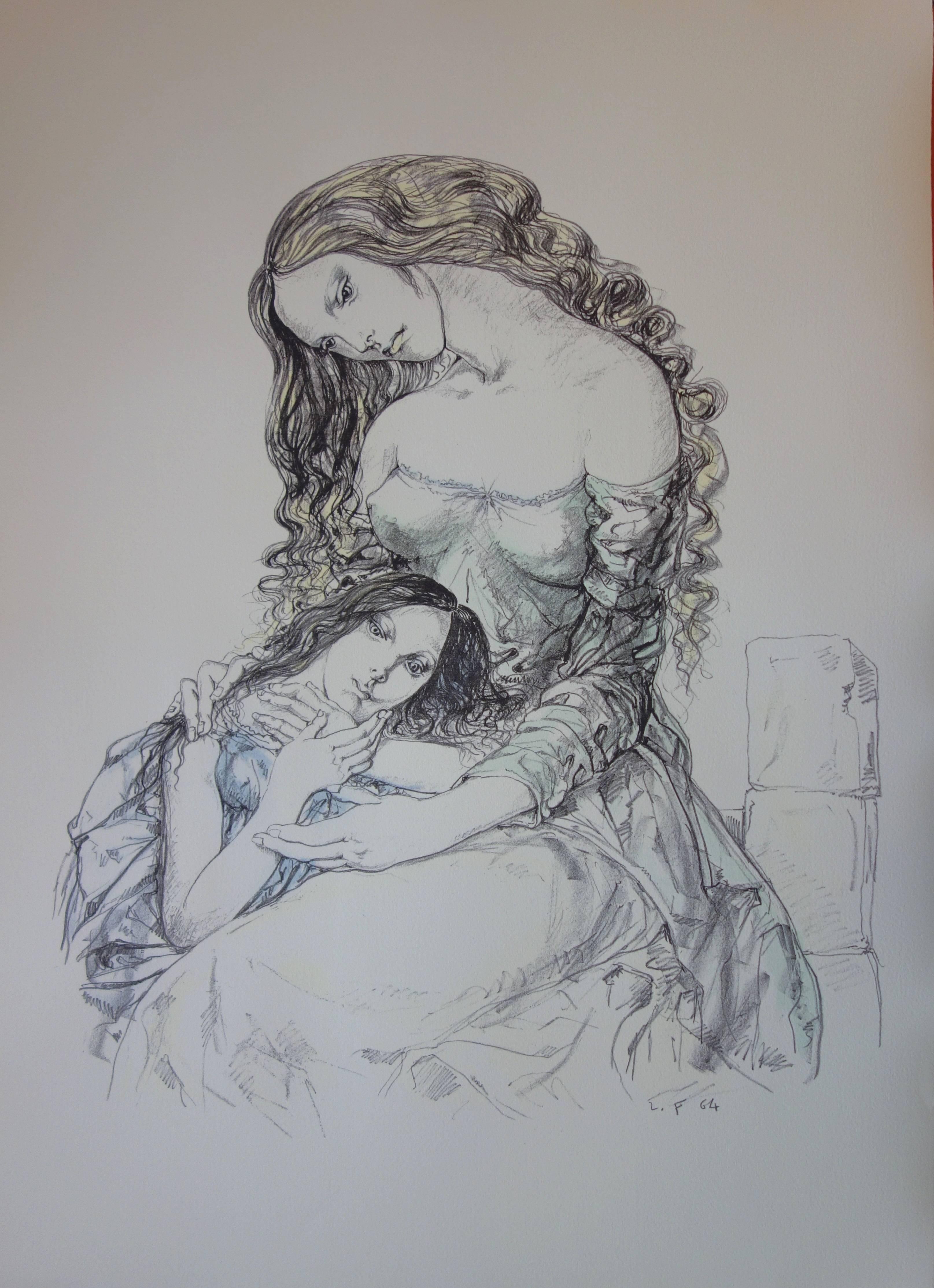
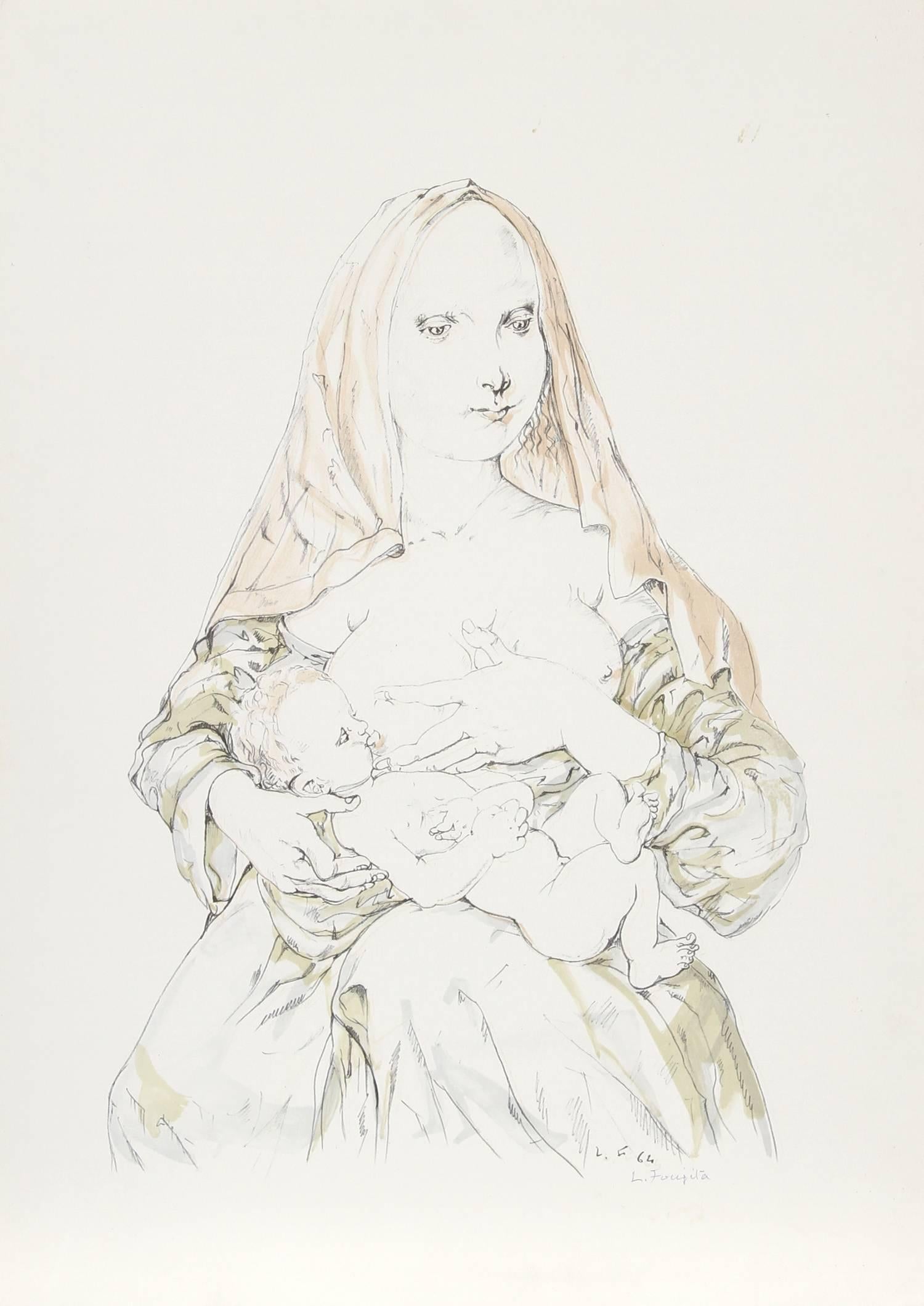
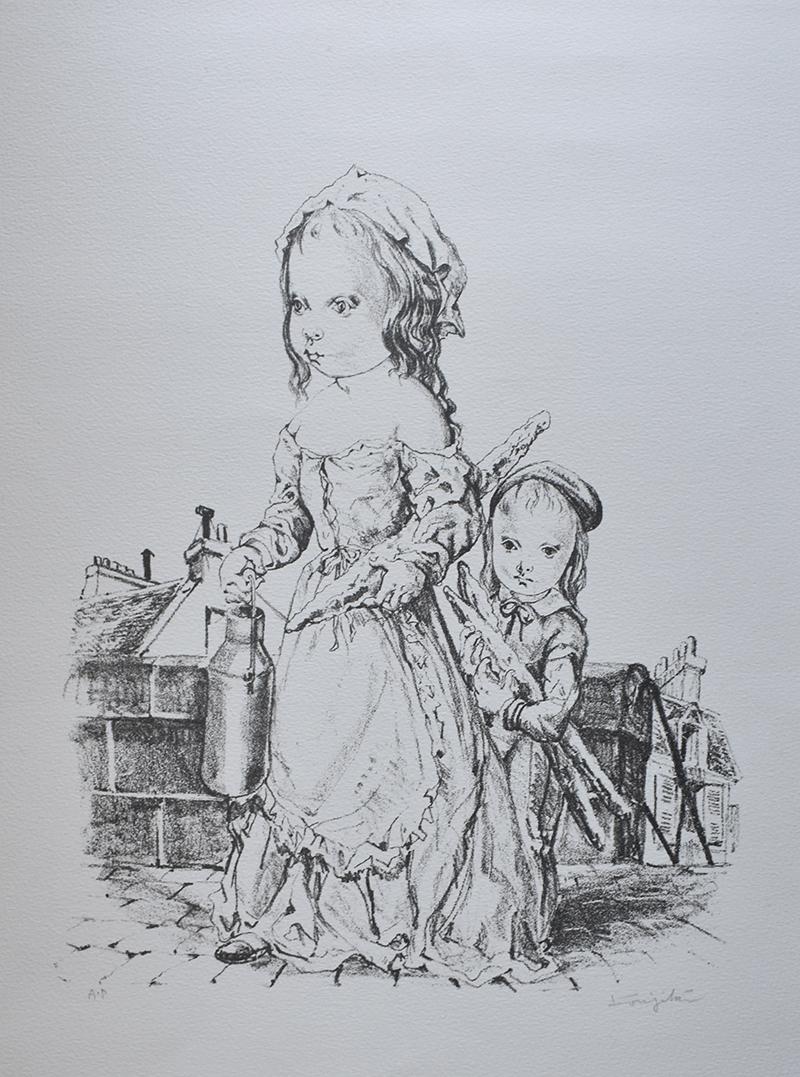
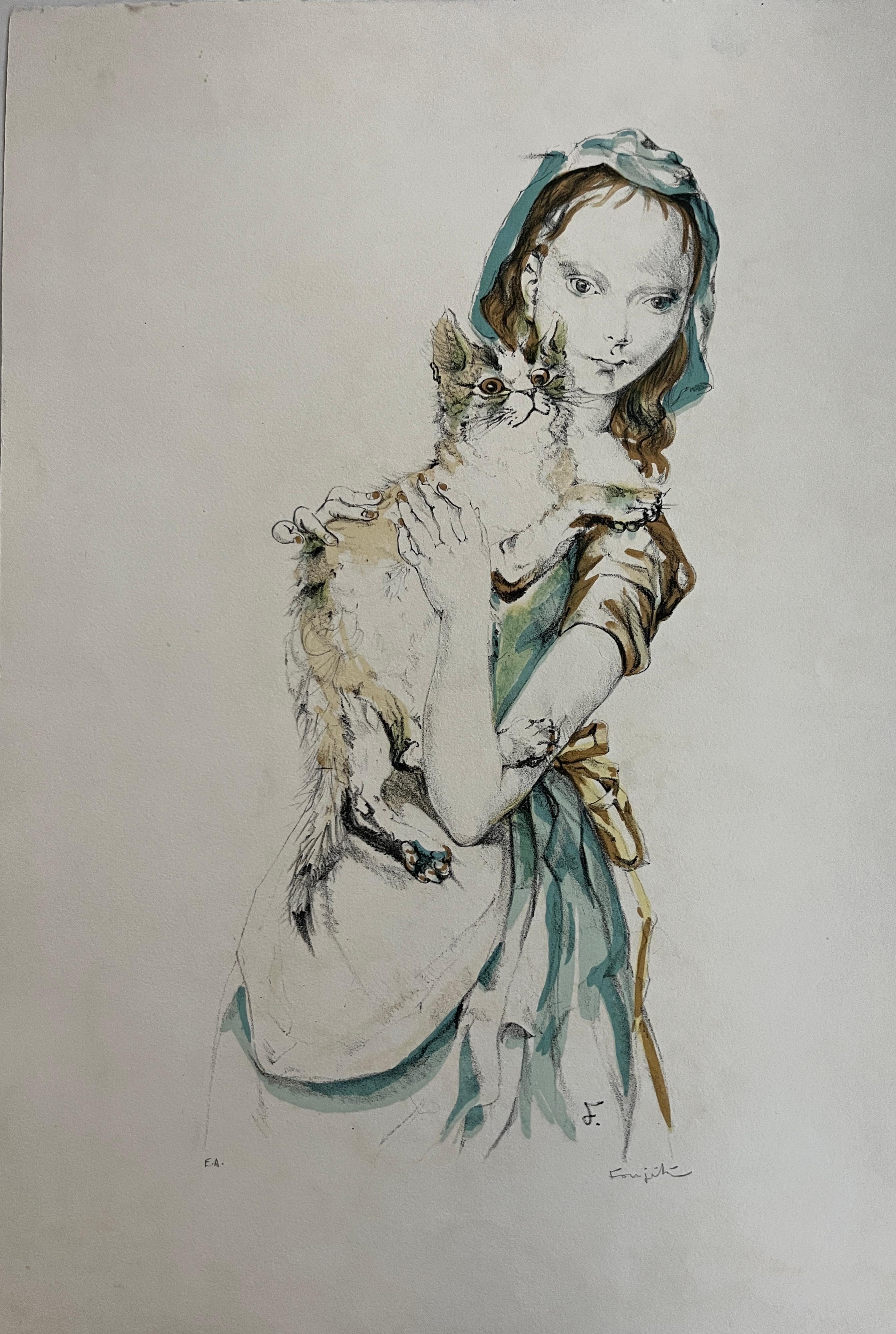
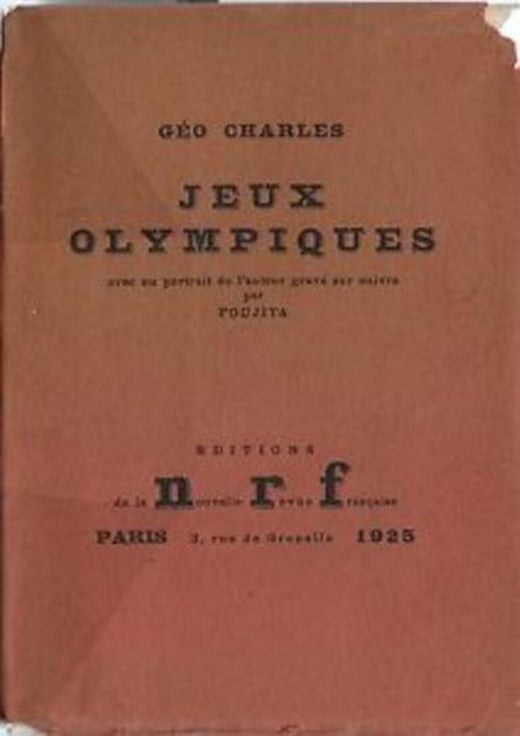
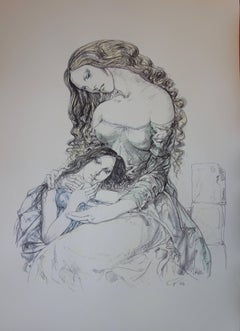
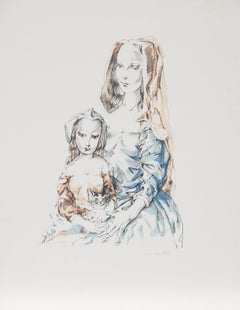
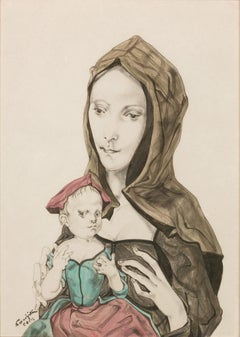
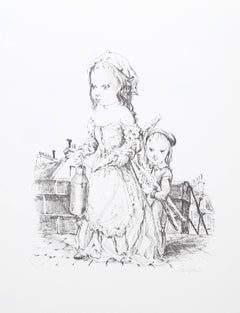
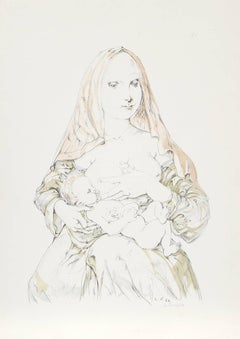
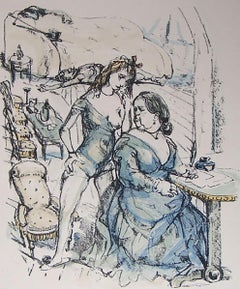
Léonard Tsugouharu Foujita was a painter and printmaker, born in 1886 in Edogawa, Tokyo. He received his formal training at the Imperial School of Fine Arts, quickly attracting success with commissions from the emperors of Korea and Japan. In 1913, he traveled to Paris, immediately befriending many of the leading painters of the day, including Pablo Picasso, Juan Gris, Henri Matisse, Henri Rousseau, and Chaim Soutine. He struck up a particularly close friendship with the famous Italian artist Amedeo Modigliani. Known for his eccentric personality, Foujita developed a colorful reputation through his cropped hairstyle, hoop earrings, and glasses. But beyond his public image, Foujita took his work very seriously, displaying a fondness for white and pale shades like lavender and gray. Foujita walked a fine line between Japanese and European art and was repeatedly inspired by women and cats. Following the breakup of his third marriage, Foujita left Paris for Latin America, spending time in Brazil, Mexico, Cuba, and Argentina, before eventually returning to Japan, where he lived during World War II. Following the war, Foujita again left Japan for France, eventually becoming a citizen in 1955. Later in life, Foujita converted to Catholicism, and decorated a cathedral in the city of Reims. Foujita then adopted the Christian name Léonard, in homage to Leonardo da Vinci, and was buried in Reims following his death in 1968 at the age of 81. Today, his work can be found in numerous public collections including the Hiroshima Museum of Art, the National Museum of Modern Art and the National Museum of Western Art in Japan