Want more images or videos?
Request additional images or videos from the seller
1 of 3

Nicholas Panesis
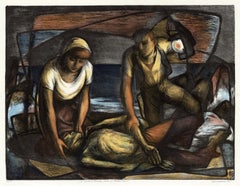
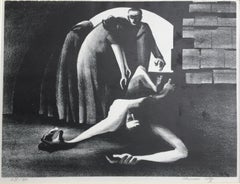
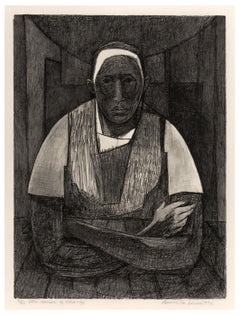
'Negro' — California WPA Social Realism–Slavery, Signed Color Lithograph

1934

$2,800
£2,094.31
€2,448.42
CA$3,958.22
A$3,976.54
CHF 2,293.71
MX$48,392.50
NOK 26,644.58
SEK 27,028.04
DKK 18,303.39

About the Item

Nicholas Panesis, 'Negro', 1934, color lithograph, edition 18. Signed, dated, titled, and numbered 8/28 in pencil. Initialed in the stone, lower right. A fine impression, with fresh colors, on buff wove paper, with margins (1 1/8 to 2 3/8 inches). Minor glue staining at the extreme sheet edges verso, where previously taped (not visible recto), otherwise in excellent condition. Matted to museum standards, unframed. Very scarce. Image size 10 5/8 x 8 1/2 inches; (270 x 216 mm); sheet size 14 13/16 x 10 15/16 inches (376 x 278 mm). Created for the California Works Progress Administration, Federal Art Project (WPA). Impressions of this work are held in the public collections of La Salle University Art Museum (Philadelphia), U.S. General Services Administration, and the Weisman Art Museum (University of Minnesota). ABOUT THE ARTIST Nicholas Panesis (1913–1967) was an American painter, printmaker, ceramicist, and illustrator whose lithographs of the 1930s rank among the most compelling examples of California WPA printmaking. Working within the traditions of Social Realism and the American Scene movement, he combined expressive draftsmanship with a modernist sense of design to create images of remarkable graphic power that address themes of labor, race, industry, and everyday American life. Born in Massachusetts in 1913, Panesis studied art at Syracuse University before joining the faculty of Alfred University, where he taught ceramics. In the early 1930s he relocated to California, first settling in San Francisco before moving to Los Angeles. There he worked for several animation studios while participating in the California Federal Art Project, producing a distinguished body of lithographs that reflect both the social concerns and artistic ambitions of the New Deal era. Panesis proved particularly adept in lithography, employing vigorous line, rich tonal contrasts, and carefully balanced compositions to portray workers, urban neighborhoods, rural communities, and subjects addressing issues of social justice. Among his best-known works are Old Doc (1937), created for the Federal Art Project, and Promenade (1937), both of which exemplify his sensitive handling of the lithographic medium and his interest in portraying ordinary Americans with dignity and psychological presence. His rare color lithograph Negro (1934) is particularly notable for its bold graphic design and forthright treatment of racial injustice, reflecting the socially conscious character of much WPA printmaking. Although Panesis's career was relatively brief, his finest prints stand among the most accomplished works produced under the Federal Art Project in California. Today they are admired for their expressive realism, technical excellence, and enduring relevance as documents of American social and cultural history. Works by Panesis are included in the collections of the National Gallery of Art, the U.S. General Services Administration, the Weisman Art Museum at the University of Minnesota, La Salle University Art Museum, and other public collections.
  • Creator:
    Nicholas Panesis (1913 - 1967)
  • Creation Year:
    1934
  • Dimensions:
    Height: 10.63 in (27.01 cm)Width: 8.5 in (21.59 cm)
  • Medium:
  • Movement & Style:
  • Period:
  • Condition:
  • Gallery Location:
    Myrtle Beach, SC
  • Reference Number:
    Seller: 1034911stDibs: LU532311816612

More From This Seller

View All
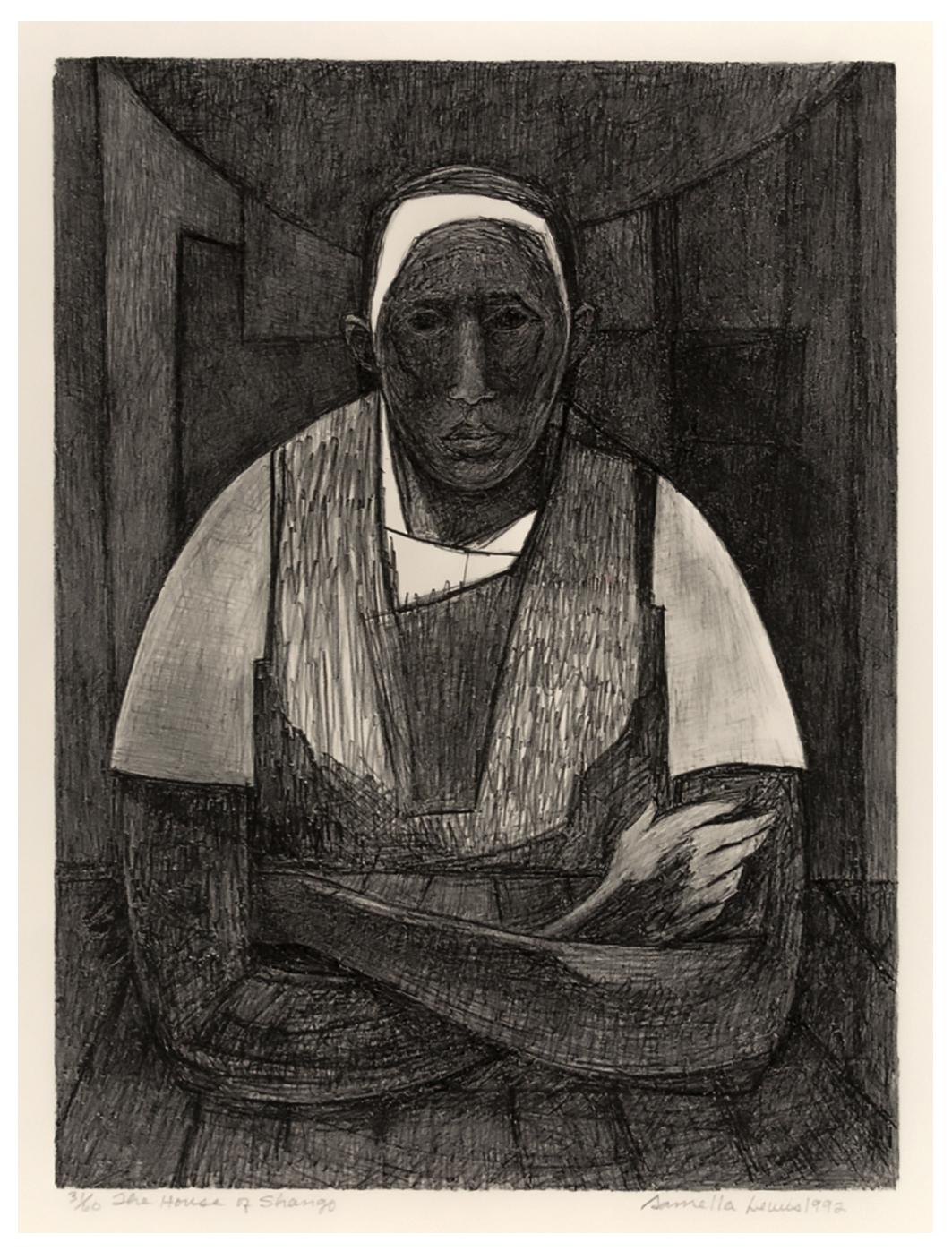
The House of Shango — African American Woman Artist, Signed Lithograph

The House of Shango — African American Woman Artist, Signed Lithograph

By Samella Lewis

Located in Myrtle Beach, SC

Samella Sanders Lewis, 'The House of Shango', lithograph, 1992, edition 60. Signed, dated, titled, and numbered '31/60' in pencil. A superb, richly-inked impression, on Arches cream wove paper; the full sheet with margins (1 1/4 to 3 1/2 inches), in excellent condition. Image size 24 x 18 inches (610 x 457 mm); sheet size 30 inches x 22 1/4 inches (762 x 565 mm). Archivally matted to museum standards, unframed. Impressions of this work are held in the collections of the Los Angeles County Museum of Art, and Scripps College. ABOUT THIS WORK “The title of this piece is an unmistakable harkening to African roots. Shango is a religious practice with origins in Yoruba (Nigerian) belief, deifying a god of thunder by the same name. Shango has been adopted in the Caribbean, most notably in Trinidad and Tobago, a fact that underscores the importance of transnationalism to Samella Lewis’s piece. Her work often grapples with issues of race in the U.S., and The House of Shango is no exception. Through a reliance on the gradual transformation of Shango—one that took place across continents and time—Lewis’s piece forms a powerful link between black Americans and their African and Caribbean counterparts. The figure depicted in the piece appears to emerge, quite literally, from the house of Shango. Given the roots and transformative process of the religion, The House of Shango can draw attention to the historical intersections to which black American culture is indebted.” —Laura Woods, Scripps College, Ruth Chander Williamson Gallery, Collection Highlights, 2018 ABOUT THE ARTIST Samella Lewis’ lifelong career as an artist, art historian, critic, curator, collector, and advocate of African American art has helped empower generations of artists in the United States and worldwide, earning her the designation “the Godmother of African American art.” Born and raised in Jim Crow era New Orleans, Lewis began her art education at Dillard University in 1941, transferring to Hampton University in Virginia, where she earned her B. A. and master's degrees. She completed her master's and a doctorate in art history and cultural anthropology at Ohio State University in 1951, becoming the first female African American to earn a doctorate in fine art and art history. Lewis taught art at Morgan State University while completing her doctorate. She became the first Chair of the Fine Arts Department at Florida A&M University in 1953. That same year Lewis also became the first African American to convene the National Conference of African American artists held at Florida A&M University. She was a professor at the State University of New York, California State University, Long Beach, and at Scripps College in Claremont, California. Lewis co-founded, with Bernie Casey, the Contemporary Crafts Gallery in Los Angeles in 1970. In 1973, she served on the selection committee for the exhibition BLACKS: USA: 1973 held at the New York Cultural Center. Samella Lewis's 1969 catalog 'Black Artists on Art', featured accomplished black artists typically overlooked in mainstream art galleries. She said of the book, "I wanted to make a chronology of African American artists, and artists of African descent, to document our history. The historians weren't doing it. It was really about the movement." From the 1960s through the 1970s, her work, which included lithographs, linocuts, and serigraphs, reflected her concerns with the values of human dignity, democracy, and freedom of expression. Between 1969 and 70, Lewis and E.J. Montgomery were consultants for a groundbreaking exhibition at the Oakland Public L designed to create greater awareness of African American history and art. Lewis was the founder of the International Review of African American Art in 1975. In 1976, she founded the Museum of African-American Art with a group of artistic, academic, business, and community leaders in Los Angeles, California. Lewis, the museum’s senior curator, organized exhibitions and developed new ways of educating the public about African American art. She celebrated African American art as an 'art of experience’ inspired by the artists’ lives. And she espoused the concept of African American art as an 'art of tradition', urging museums to explore the African roots of African American art. In 1984, Lewis produced an extensive monograph on Elizabeth Catlett, her beloved mentor at Dillard University. Lewis has been collecting art since 1942, focusing primarily on the WPA era and work created during the Harlem Renaissance. Pieces from her collection were acquired by the Hampton University Museum in Virginia, the world’s earliest collection of African American fine art...

Category

1990s Realist Figurative Prints

Materials

Lithograph

Strike Breakers — social realism, Great Depression

Strike Breakers — social realism, Great Depression

By Daniel Ralph Celentano

Located in Myrtle Beach, SC

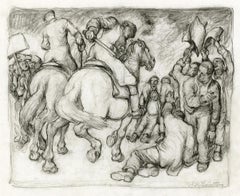
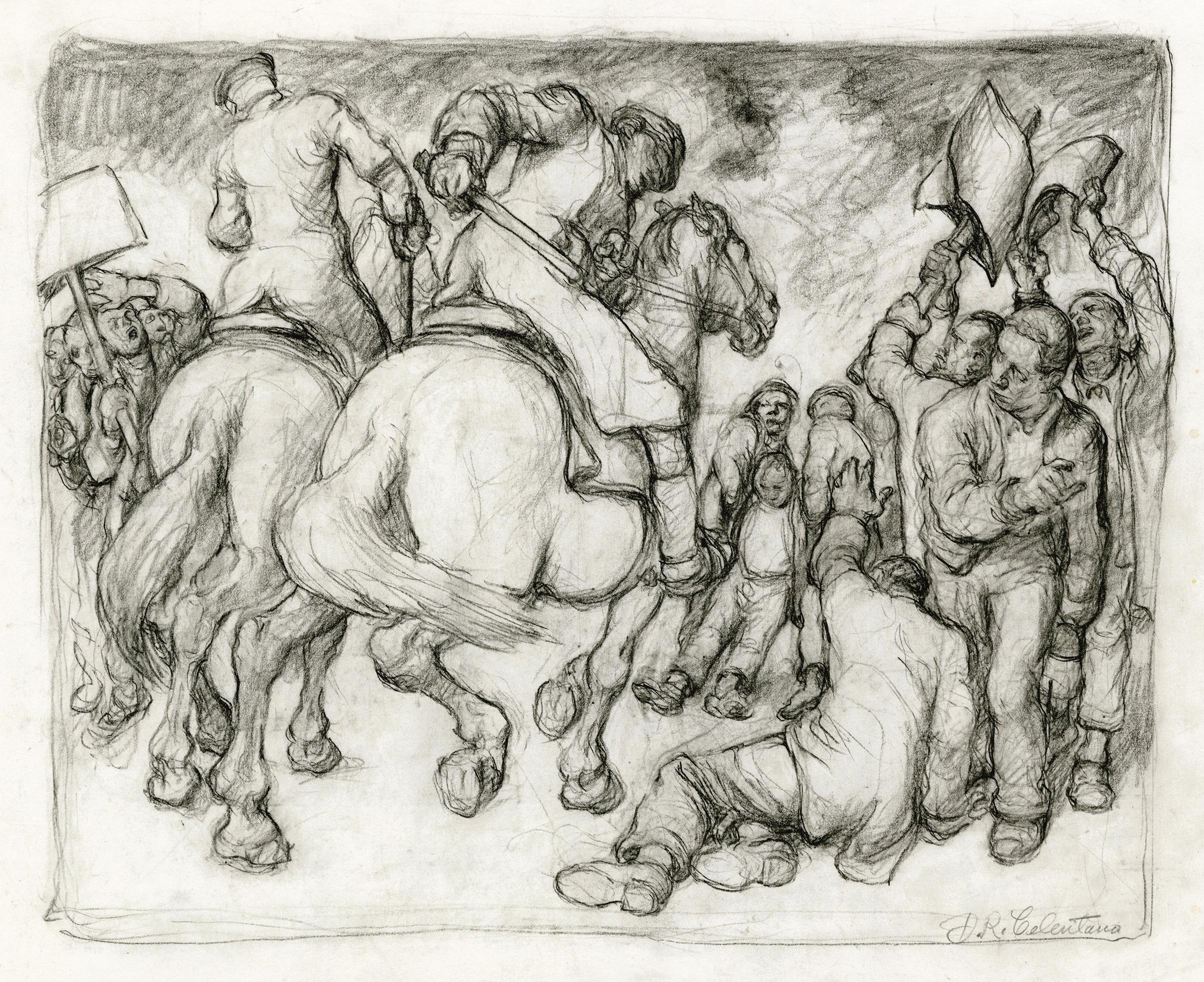
Daniel Ralph Celentano, Untitled (Strike Breakers) pencil, c. 1934. Signed, lower right. A fine, social-realist drawing, on cream wove paper, with margins (1 1/2 to 2 1/2 inches), in...

Category

1930s American Realist Figurative Drawings and Watercolors

Materials

Pencil

War Machine     — Spanish Civil War, Anti-fascism

War Machine — Spanish Civil War, Anti-fascism

By Leon Bibel

Located in Myrtle Beach, SC

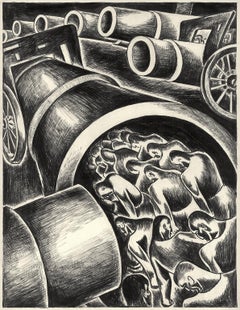
Leon Bibel, 'Untitled (War Machine)', brush and ink, c. 1936. Estate stamped, verso. A fine expressionist rendering, on cream wove drawing board, with marg...

Category

1930s American Modern Figurative Drawings and Watercolors

Materials

Ink

Death March — Spanish Civil War, Anti-fascism

Death March — Spanish Civil War, Anti-fascism

By Leon Bibel

Located in Myrtle Beach, SC

Leon Bibel, 'Untitled (Death March)', brush and ink, c. 1936. Estate stamped, verso. A fine expressionist rendering, on cream wove drawing board, with margins (3/8 to 5/16 inch). Minor toning at the board edges, otherwise in very good condition. Image size 12 5/16 x 9 3/8 inches; sheet size 13 x 10 inches. Matted to museum standards, unframed. One of a series of powerful Anti-fascist brush and ink drawings created by the artist at the commencement of the Spanish Civil War...

Category

1930s American Modern Figurative Drawings and Watercolors

Materials

Ink

You May Also Like

Lo, I am Black - American Figurative Work on Paper, c. 1967

Lo, I am Black - American Figurative Work on Paper, c. 1967

Located in Palm Desert, CA

Charles White’s "Lo I Am Black” (c. 1967) is a powerful, large-scale charcoal drawing that exemplifies the artist’s unwavering commitment to figuration and social consciousness at a ...

Category

Mid-20th Century American Realist Figurative Drawings and Watercolors

Materials

Board, Crayon, Charcoal

Robert Blackburn, Contemporary Figurative Lithograph by Ron Adams

Robert Blackburn, Contemporary Figurative Lithograph by Ron Adams

Located in Long Island City, NY

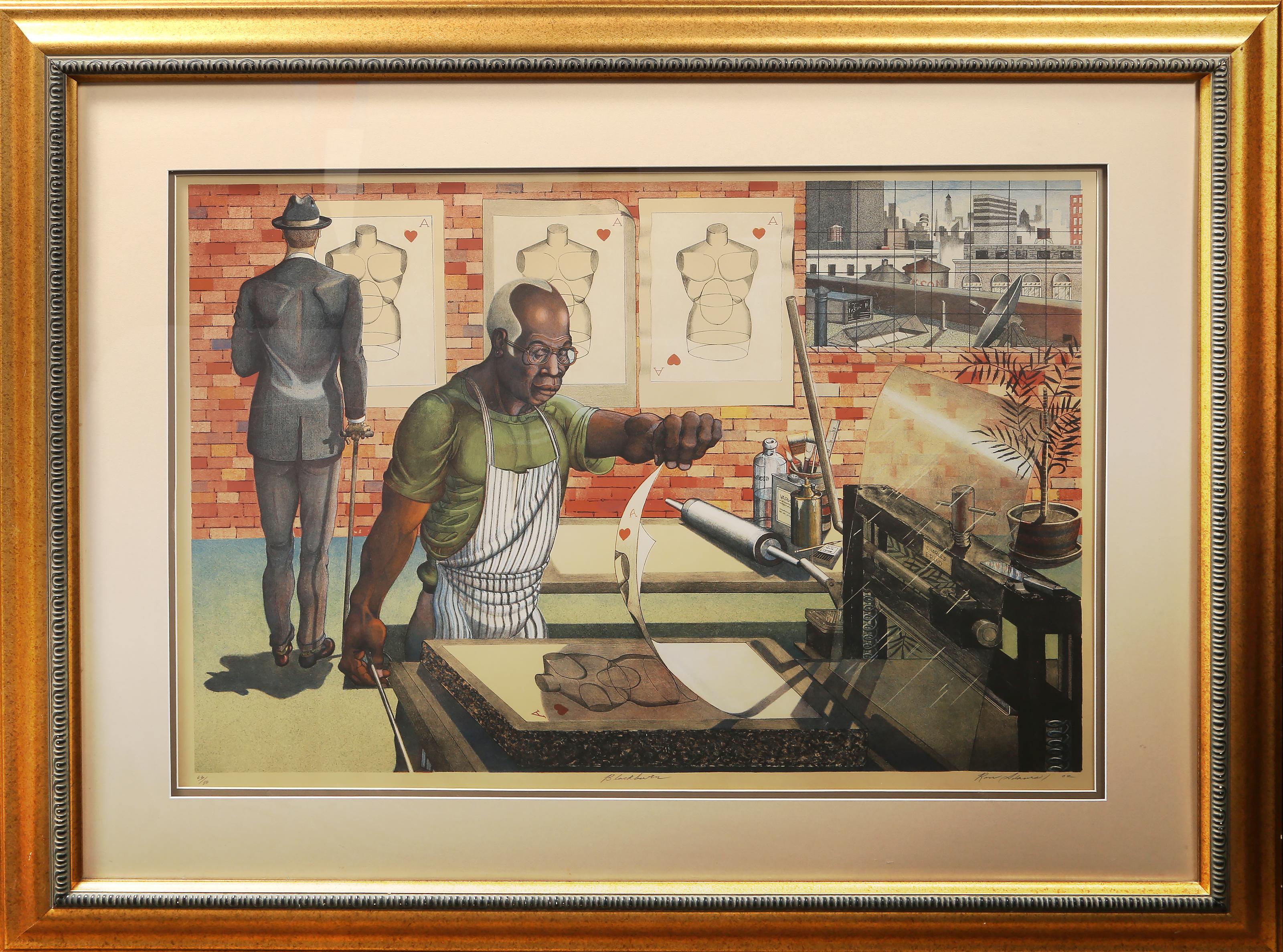
This lithograph by artist Ron Adams depicts the renowned printer Robert Blackburn in his workshop in NYC. Blackburn was involved with every major player of the Harlem Renaissance alo...

Category

Early 2000s American Modern Portrait Prints

Materials

Lithograph

Black Man Pastel Painting Signed Paul Colin, 1925

Black Man Pastel Painting Signed Paul Colin, 1925

By Paul Colin

Located in Marbella, ES

Black man pastel painting signed Paul Colin, 1925. Dimensions with frame: 59.5 x 44 x 2.5cm.

Category

Early 20th Century French Art Deco Drawings

Materials

Paint

THE PARTISAN (SF Dock strike)

THE PARTISAN (SF Dock strike)

By Herman Roderick Volz 1

Located in Santa Monica, CA

HERMAN VOLZ (Swiss/American 1904 - 1990) THE PARTISAN, 1937 Lithograph, signed and no. in pencil. Edition 30. 10 1/2 x 14. Sheet 11 1/4 x 17 1/2" Generally good condition aside fro...

Category

1930s American Realist Figurative Prints

Materials

Lithograph

Prisoner - Original Lithograph by Pietro Morando  - Mid-20th Century

Prisoner - Original Lithograph by Pietro Morando - Mid-20th Century

By Pietro Morando

Located in Roma, IT

Prisoner is an original artwork realized by Italian artist Pietro Morando (Alessandria 1889- 1980). Lithograph print. Hand-signed on the lower right in pencil, titled. Numbered on the lower left, the edition of 69/75 prints. Good conditions. The artwork represents an impressive and tragic scenery of suffering men in Hungary prison, through deft strokes, the drawing of the figure has an authentic style of Morando inspired by his tragic experiences of war. Pietro Morando (Alessandria 1889- 1980). He occasionally studies at the Albertina Academy in Turin; a scholarship (1913) allows him to enroll in painting courses at the Brera Academy of Fine Arts in Milan. He meets Angelo Morbelli whose studio he frequents and temporarily shares the passion for pointillism.His love for drawing led him to produce numerous works, even using the poor means of luck that the First World War allowed him. He thus realizes tragic war drawings...

Category

Mid-20th Century Modern Figurative Prints

Materials

Lithograph