Want more images or videos?
Request additional images or videos from the seller
1 of 3

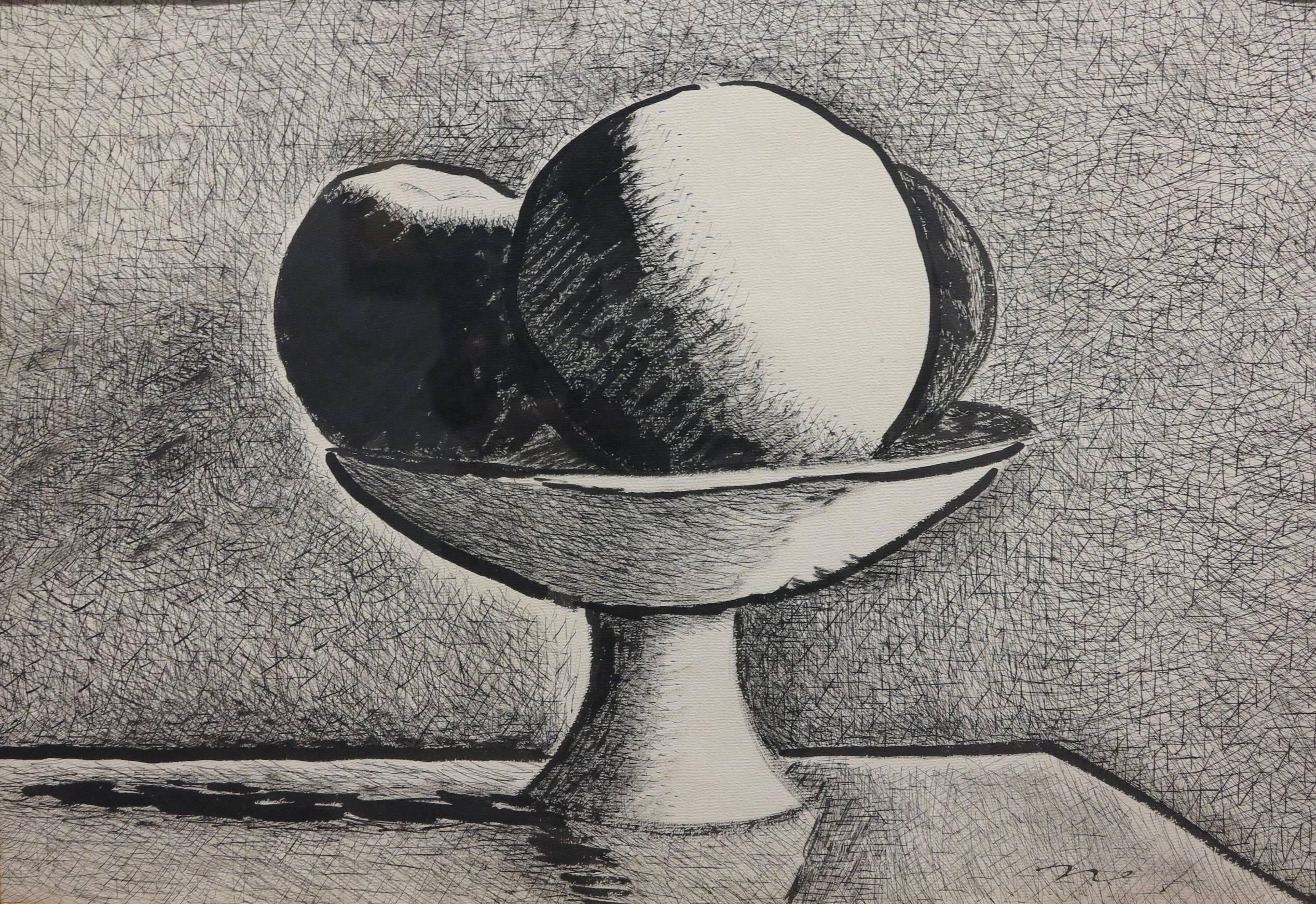
Pamela Bianco
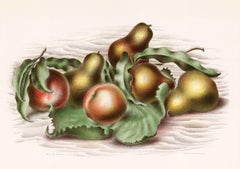
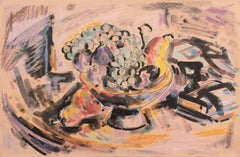
'Fruit Piece' — American Modernism, Woman Artist

c. 1925

$650
£489.84
€572.39
CA$922.40
A$925.20
CHF 536.67
MX$11,293.87
NOK 6,216.16
SEK 6,361.82
DKK 4,278.60

About the Item

Pamela Bianco, 'Fruit Piece', lithograph, c. 1925. Signed and titled in pencil. Signed in the stone, lower left. Annotated 'No. 8' in pencil, upper right. A fine, richly-inked impression, with full margins (3/8 to 1/2 inches) on cream Japan paper, in very good condition. Matted to museum standards, unframed. Image size 9 1/2 x 13 1/4 inches (242 x 336 mm); sheet size 10 1/2 x 14 1/2 inches (167 x 369 mm). Illustrated in 'Fifty Prints' (an exhibition by the American Institute of Graphic Arts, 1926), John Day Company, New York, 1927. Collections: Binghamton University Art Museum, National Gallery of Art, Philadelphia Museum of Art. ABOUT THE ARTIST Pamela Bianco (1906-1924) was born in London the daughter of an Italian scholar and bookseller, Francesco Bianco, and an English writer, Margery Williams Bianco (author of 'The Velveteen Rabbit'). She was educated at home, though home for the Biancos was a shifting location, as the family lived in France, Italy, and the United States when Pamela was a child. Bianco's paintings and drawings were first exhibited as part of a children's show in Turin, Italy. Her career as an artist began at the age of twelve when her exhibition at Leicester Galleries, London, brought the child prodigy to international recognition. Following the show, Walter de la Mare composed a series of poems entitled 'Flora' to accompany a suite of her drawings. The immediate success of Bianco's first American exhibition, arranged by Mitchell Kennedy in 1922 at Anderson Galleries, prompted her to move to New York with her parents. She printed her first lithographs with master printer George Miller in 1922, and was a member of the Studio Club from 1924 - 1928. Her early exhibitions in the U.S. included shows in Los Angeles and San Francisco in 1922; Boston and Chicago in 1923; and in New York at Kennedy Galleries in 1924, Rehn Galleries in 1928, and Firargid Galleries in 1937. Her rich, graphically bold etchings of flowers and still life subjects continued to bring her popular acclaim. Bianco also created illustrations for William Blake's Poems and Oscar Wilde's 'Birthday of the Infanta', a historical fiction for children. Other books illustrated by Bianco include Glenway Wescott's 'Natives of Rock' (1925), and Hazeltine and Smith's 'The Easter Book of Legends and Stories' (1947). She also illustrated several books by her mother, including 'The Skin Horse', 'The Adventures of Andy', and 'The Little Wooden Doll'. In 1930, Bianco was awarded a Guggenheim Fellowship and spent a year in Florence and Rome during which she wrote and illustrated the children's fairy tale 'The Starlit Journey'. A retrospective exhibition of Pamela Bianco's works was mounted in 2004 in London at England & Co Gallery and an exhibition catalogue published. Works by Pamela Bianco are in the collections of the Art Institute of Chicago, Binghamton University Art Museum, British Museum (London), Brooklyn Museum, Carnegie Museum of Art, Museum of Modern Art, National Gallery of Art, Philadelphia Museum of Art, and the Whitney Museum of American Art.
  • Creator:
    Pamela Bianco (1906 - 1994, American)
  • Creation Year:
    c. 1925
  • Dimensions:
    Height: 9.5 in (24.13 cm)Width: 13.25 in (33.66 cm)
  • Medium:
  • Movement & Style:
  • Period:
  • Condition:
  • Gallery Location:
    Myrtle Beach, SC
  • Reference Number:
    Seller: 963231stDibs: LU532312736832

More From This Seller

View All
'Fruit Forms' — American Modernism

'Fruit Forms' — American Modernism

By Albert Heckman

Located in Myrtle Beach, SC

Albert Heckman, 'Fruit Forms', color lithograph, edition not stated, c. 1935. Signed and titled in pencil. A fine, richly-inked impression, with fresh colo...

Category

1930s American Modern Still-life Prints

Materials

Lithograph

Still Life — Mid-century Modern

Still Life — Mid-century Modern

By Charles Quest

Located in Myrtle Beach, SC

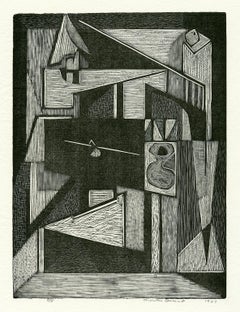
Charles Quest, 'Still Life', 1947, wood engraving, edition 8. Signed, dated, and numbered '3/8' in pencil. Titled and annotated 'wood engraving' in the bottom left margin. A fine impression, on off-white wove paper, with full margins (1 to 2 inches), in excellent condition. Scarce. Matted to museum standards, unframed. ABOUT THE ARTIST Charles Quest, painter, printmaker, and fine art instructor, worked in various mediums, including mosaic, stained glass, mural painting, and sculpture. Quest grew up in St. Louis, his talent evident as a teenager when he began copying the works of masters such as Michelangelo on his bedroom walls. He studied at the Washington University School of Fine Arts, where he later taught from 1944 to 1971. He traveled to Europe after his graduation in 1929 and studied at La Grande Chaumière and Academie Colarossi, Paris, continuing to draw inspiration from the works of the Old Masters. After returning to St. Louis, Quest received several commissions to paint murals in public buildings, schools, and churches, including one from Joseph Cardinal Ritter, to paint a replica of Velasquez's Crucifixion over the main altar of the Old Cathedral in St. Louis. Quest soon became interested in the woodcut medium, which he learned through his study of J. J. Lankes' A Woodcut Manual (1932) and Paul Landacre's articles in American Artist magazine ‘since no artists in St. Louis were working in wood’ at that time. Quest also revealed that for him, wood cutting and engraving were ‘more enjoyable than any other means of expression.’ In the late 1940s, his graphic works began attracting critical attention—several of his woodcuts won prizes and were acquired by major American and European museums. His wood engraving entitled ‘Lovers’ was included in the American Federation of Art's traveling print exhibition in 1947. Two years later, Quest's two prize-winning prints, ‘Still Life with Grindstone’ and ‘Break Forth into Singing’, were exhibited in major American museums in a traveling show organized by the Philadelphia Print Club. His work was included in the Chicago Art Institute's exhibition, ‘Woodcut Through Six Centuries’, and the print ‘Still Life with Vise’ was purchased by the Museum of Modern Art in New York. In 1951 he was invited by artist-Curator Jacob Kainen to exhibit thirty wood engravings and color woodcuts in a one-person show at the Smithsonian's National Museum (now known as the American History Museum). Kainen's press release praised the ‘technical refinement’ of Quest's work: ‘He obtains a great variety of textural effects through the use of the graver, and these dense or transparent grays are set off against whites or blacks to achieve sparkling results. His work has the handsome qualities characteristic of the craftsman and designer.’ At the time of the Smithsonian exhibition, Quest's work was represented by three New York galleries in addition to one in his home town. He had won 38 prizes, and his prints were in the collections of the Library of Congress, the Chicago Art Institute, the Metropolitan Museum, and the Philadelphia Museum of Art. In cooperation with the Art in Embassies program, his color woodcuts were displayed at the American Embassy in Paris in 1951. Recognition at home came in 1955 with his first solo exhibition in St. Louis. Press coverage of the show heralded the ‘growth of graphic arts toward rivaling painting and sculpture as a major independent medium’. An exhibition of his prints at the Bethesda Art Gallery in 1983 attracted Curator Emeritus Joseph A. Haller, S.J., who began purchasing his work for Georgetown University's collection. In 1990 Georgetown University Library's Special Collections Division was the recipient of a large body of Quest's work, including prints, drawings, paintings, sculpture, stained glass, and his archive of correspondence and professional memorabilia. These extensive holdings, including some 260 of his fine prints, provide a rich opportunity for further study and appreciation of this versatile and not-to-be-forgotten mid-Western American artist...

Category

1940s American Modern Abstract Prints
Materials

Woodcut

Variation 4, Vol. I

Variation 4, Vol. I

By Katherine Sophie Dreier

Located in Myrtle Beach, SC

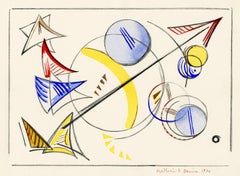
Katherine S. Dreier, 'Variation 4, Vol. I' from '1 to 40 Variations', lithograph with pochoir and hand-coloring, 1934, edition 65. Stenciled signature and date, lower right. Annotate...

Category

Mid-20th Century American Modern Abstract Prints

Materials

Watercolor, Lithograph, Stencil

Untitled Modernist Nude Etching, Signed, Circa 1930, Rare Impression

Untitled Modernist Nude Etching, Signed, Circa 1930, Rare Impression

Located in Myrtle Beach, SC

Russell T. Limbach, 'Untitled (Modernist Nude)', etching and aquatint, no known edition, c. 1930. Signed in pencil. A fine impression, on cream wove paper, with full margins (1 7/8 to 2 3/4 inches), in excellent condition. Extremely rare. Matted to museum standards, unframed. Image size 8 15/16 x 5 15/16 inches; sheet size 13 3/8 x 10 1/4 inches. Probably created when Limbach was in Paris (1928-1934), where he was exposed to modernist printmaking explorations at Stanley William Hayter’s 'Atelier 17'. ABOUT THE ARTIST Born in Massillon, Ohio, Russell Limbach...

Category

1930s American Modern Nude Prints

Materials

Etching

Sister Kate — Mid-century, Jazz-inspired Modernism

Sister Kate — Mid-century, Jazz-inspired Modernism

By James Houston McConnell

Located in Myrtle Beach, SC

James Houston McConnell, 'Sister Kate', color serigraph, 1947, edition 24. Signed, dated, titled, and numbered '24' in pencil. Annotated '10.00 - 19 colors - 24 copies - #24' in pencil. A fine impression, with vibrant, fresh colors, on heavy tan wove paper, with full margins (11/16 to 1 1/2 inches). Tack holes in the four margin corners, well away from the image, otherwise in excellent condition. Matted to museum standards, unframed. Scarce. Image size 8 5/8 x 14 1/16 inches (219 x 357 mm); sheet size 11 1/16 x 15 1/2 inches (281 x 393 mm). Another of McConnell's mid-century modernist, jazz-inspired serigraphs, 'Combo', is featured in the British Museum's 2008 publication (and traveling exhibition) 'The American Scene: Prints from Hopper to Pollock'. ABOUT THE IMAGE "I Wish I Could Shimmy Like My Sister Kate", often simply "Sister Kate", is an up-tempo jazz dance song, written by Armand J. Piron and published in 1922. The lyrics of the song are narrated in the first person by Kate's sister, who sings about Kate's impressive dancing skill and her wish to be able to emulate it. She laments that she's not quite "up to date", but believes that dancing like "Sister Kate" will rectify this, and she will be able to impress "all the boys in the neighborhood" like her sister. Over the years this song has been performed and recorded by many artists, including Frances Faye and Rusty Warren, a 1959 version by Shel Silverstein...

Category

1940s American Modern Abstract Prints
Materials

Screen

You May Also Like

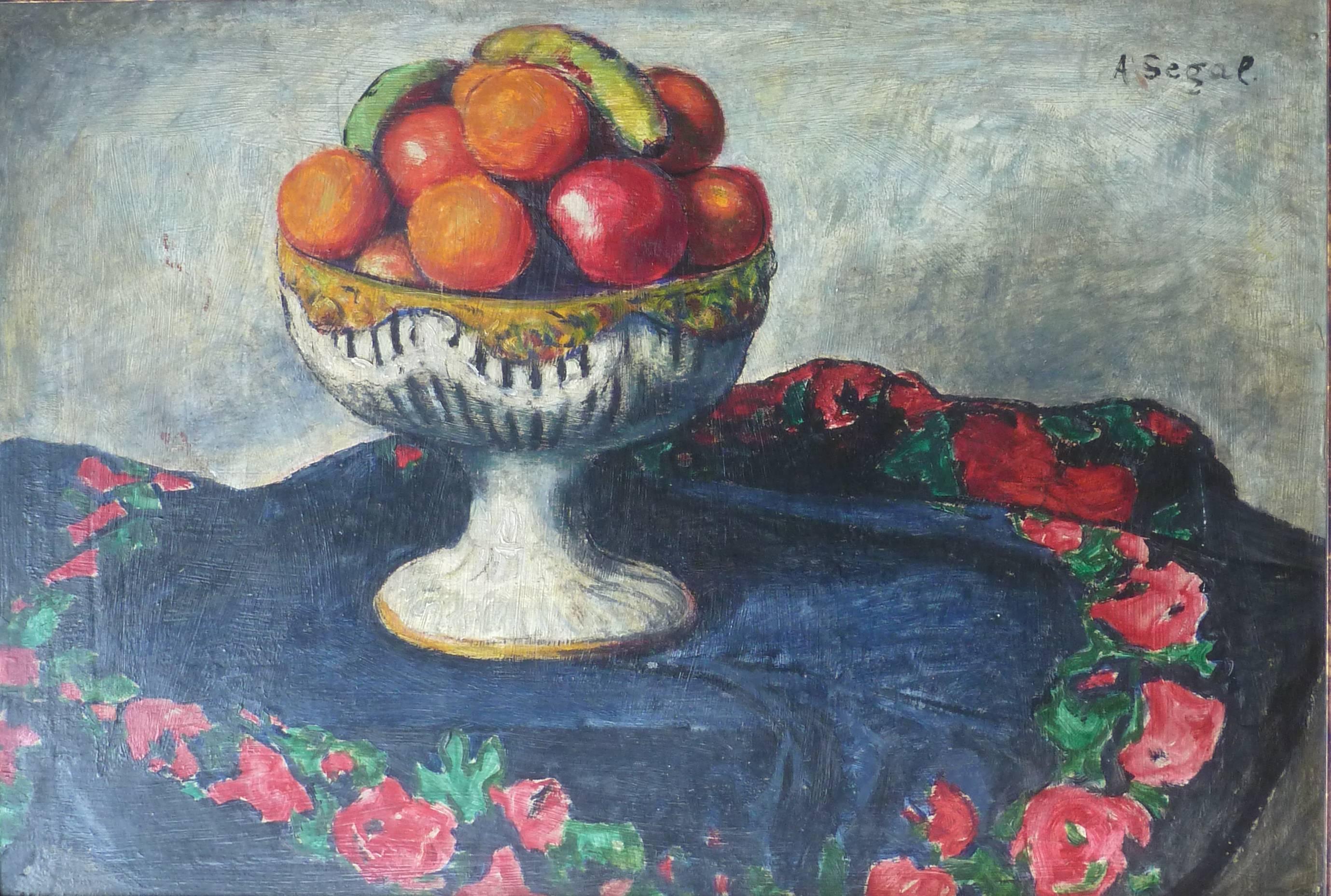
Pamela Bianco, Fruit Piece

Pamela Bianco, Fruit Piece

Located in New York, NY

Pamela Bianco achieve success as an artist in Britain while still a child. This accomplishment resulted in the family coming to the United States where ...

Category

1920s American Modern Still-life Prints

Materials

Lithograph

Mid-Century Modern American Oil Painting Abstract cubist still life fruit

Mid-Century Modern American Oil Painting Abstract cubist still life fruit

By Anita Johnson

Located in Buffalo, NY

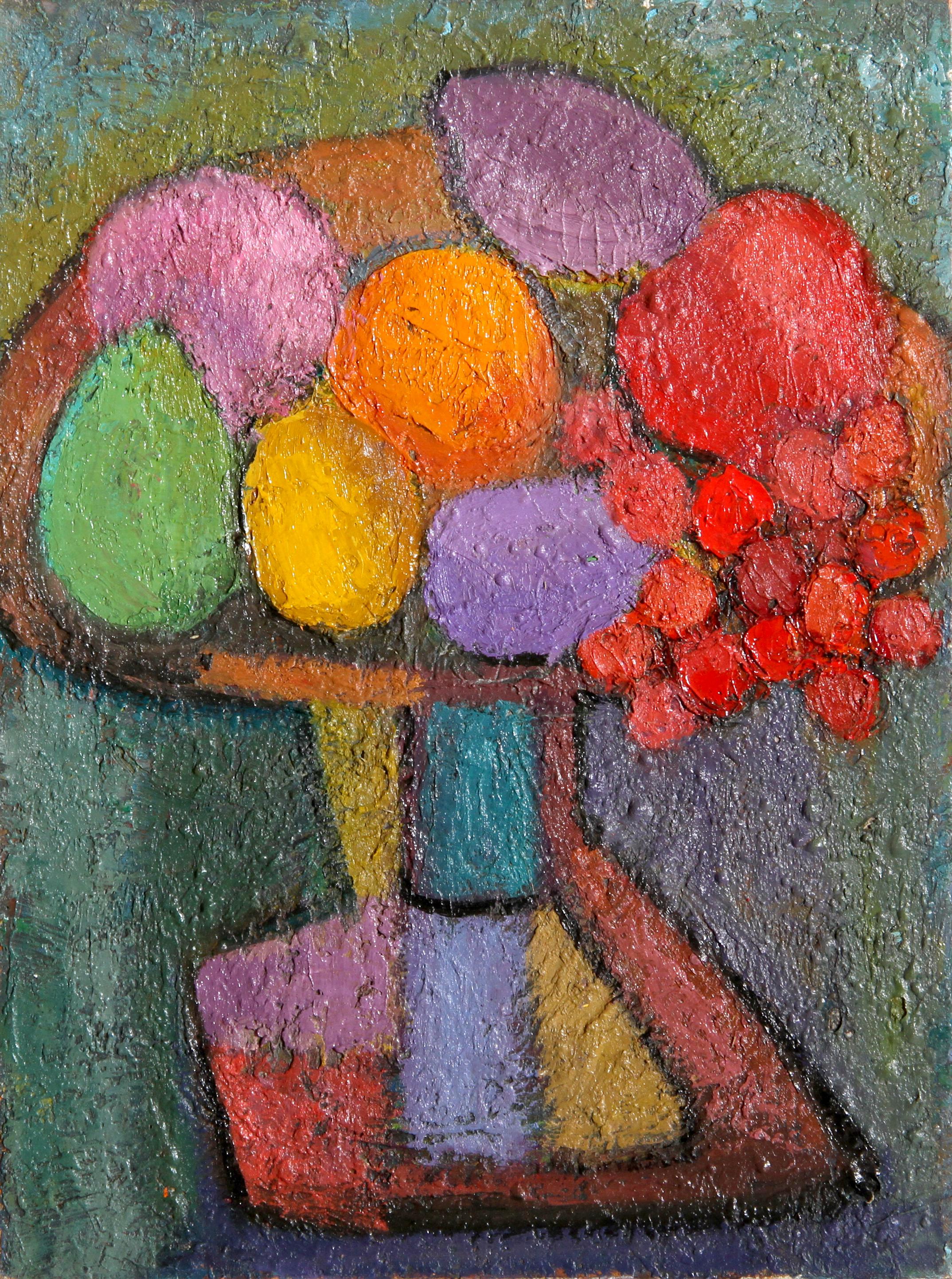
Anita Johnson Untitled (Still Life with Pitcher and Basket of Fruit), c. 1950s Oil on canvas Framed dimensions: 30 in. H × 27 in. W Original vintage frame in silver gilt In Still Li...

Category

Mid-20th Century Cubist Abstract Paintings

Materials

Canvas, Oil

"Still Life of Fruit " Albert Swinden, American Abstract Association, AAA

"Still Life of Fruit " Albert Swinden, American Abstract Association, AAA

By Albert Swinden

Located in New York, NY

Albert Swinden (1901 - 1961) Still Life of Fruit, 1937 Oil on canvas 18 x 30 inches Provenance: Graham Gallery, New York Albert Swinden (1901–1961) was an English-born American abstract painter. He was one of the founders of the American Abstract Artists, and he created significant murals as part of the Federal Art Project. Albert Swinden was born in Birmingham, England in 1901. When he was seven, he moved with his family to Canada, and in 1919 he immigrated to the United States. He lived in Chicago, where he studied for about a year and a half at the Art Institute. He then relocated to New York City, where his art education continued briefly at the National Academy of Design. He soon changed schools again, to the Art Students League, which he attended from 1930 to 1934. He studied with Hans Hofmann and gained an appreciation for Synthetic Cubism and Neoplasticism. According to painter and printmaker George McNeil, Swinden "could have influenced Hofmann ... He was working with very, very simple planes, not in this sort of Cubistic manner. Swinden was working synthetically at this time." While still a student, Swinden began teaching at the Art Students League, in 1932. Swinden married Rebecca Palter (1912–1998), from New York. Their daughter, Alice Swinden Carter, also became an artist. Carter, who attended the School of the Museum of Fine Arts, Boston, received an award from the Institute of Contemporary Art, Boston for her large sculptures. Swinden was hired for the Federal Art Project (FAP) of the Works Progress Administration (WPA), and he is best known for the murals which he painted as part of that project. In 1935, New York City Mayor Fiorello La Guardia attended the opening of the inaugural exhibit at the Federal Art Project Gallery, accompanied by Audrey McMahon, New York regional director for the Works Progress Administration/Federal Art Project. Among the works on display was Abstraction, a sketch by Swinden; it was the design for a mural planned for the College of the City of New York. A newspaper account described it as consisting of "brightly colored T-squares, triangles and rulers in horizontal, vertical and diagonal positions". La Guardia asked what it was, and upon being told it was a mural design, he said he didn't know what it depicted. Someone joked that it could be a map of Manhattan. The displeased mayor stated that "if that's art, I belong to Tammany Hall." (Tammany Hall, which the Republican mayor referenced, was the New York Democratic Party political society.) Fearing that the mayor's negative attitude could jeopardize the future of abstract art within the Federal Art Project, McMahon dispatched an assistant to summon an artist who could speak to the mayor in defense of abstraction. The assistant returned with Arshile Gorky. Swinden played an important role in the founding of the American Abstract Artists. In 1935, he met with three friends, Rosalind Bengelsdorf, her future husband Byron Browne, and Ibram Lassaw, with the goal of exhibiting together. The group grew and started meeting in Swinden's studio, which adjoined those of Balcomb and Gertrude Greene...

Category

1930s Modern Still-life Paintings

Materials

Canvas, Oil

"STILL LIFE FRUIT" MID CENTURY

"STILL LIFE FRUIT" MID CENTURY

By Michael Frary

Located in San Antonio, TX

Michael Frary (1918 - 2005) Austin Artist Image Size: 16 x 20 Frame Size: 17.5 x 21.5 Medium: Oil "Still Life Fruit" Biography Michael Frary (1918 - ...

Category

1960s American Modern Still-life Paintings

Materials

Oil

Cubist Still Life with Fruit and Compote

Cubist Still Life with Fruit and Compote

Located in Wilton Manors, FL

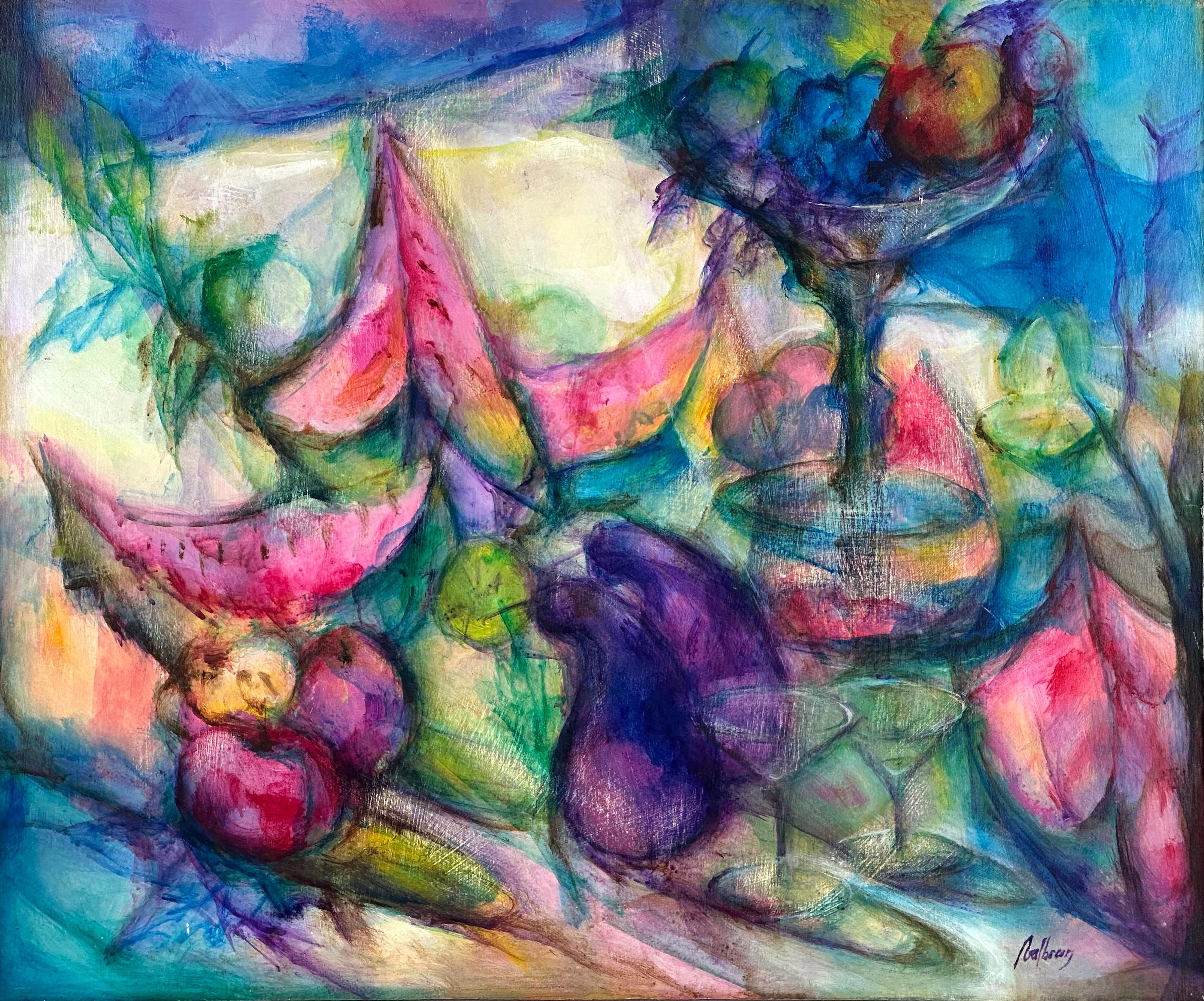
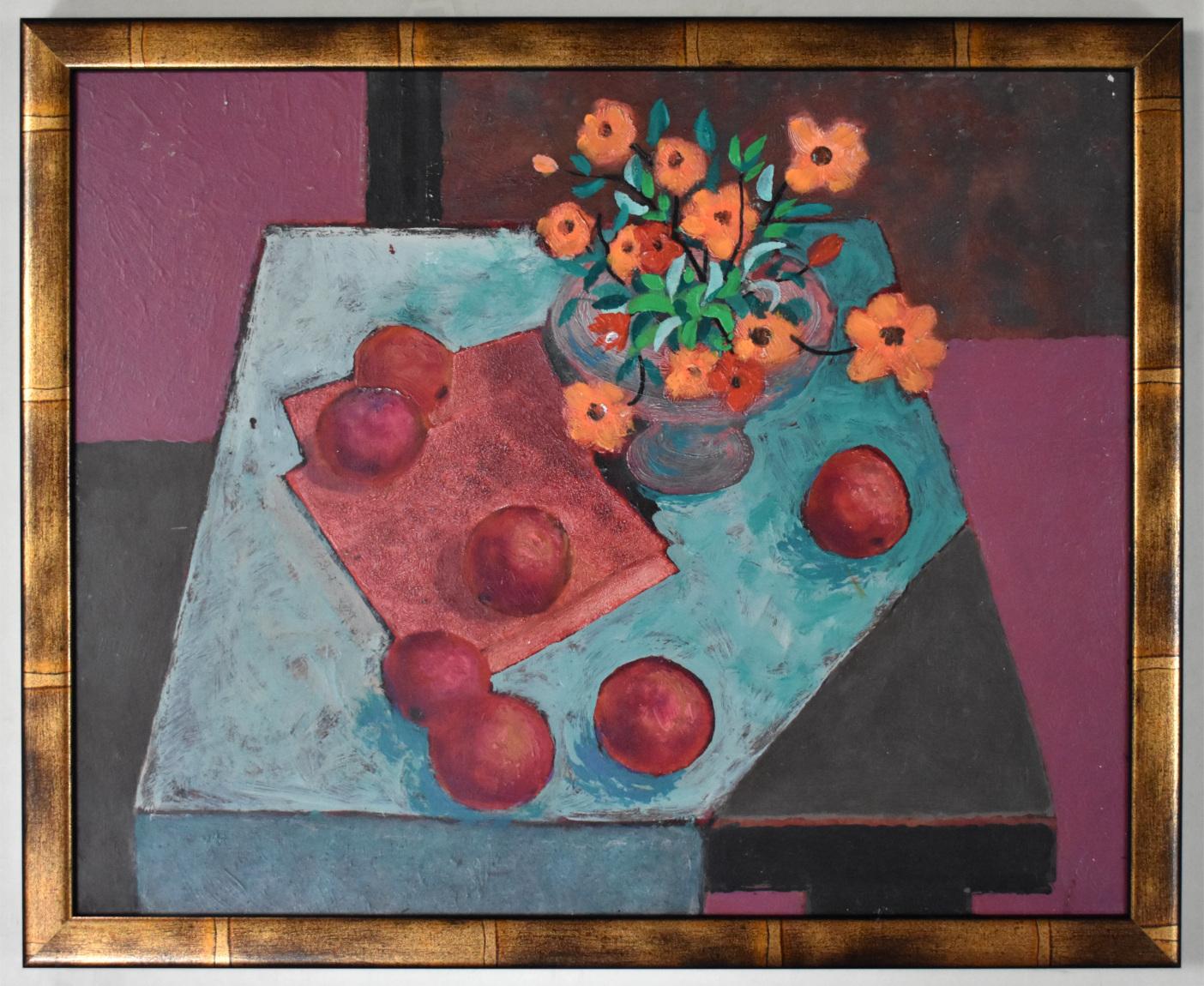
Beautiful cubist still life painted in jewel tones. ca. 1970. Oil on masonite panel measuring 20 x 24 inches. Unfrmaed. Signed "Galbrun" lower right.

Category

1970s Cubist Abstract Paintings

Materials

Masonite, Oil