Want more images or videos?
Request additional images or videos from the seller
1 of 6

Paul Jacoulet
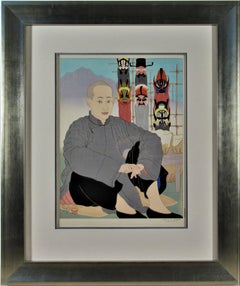
'A Very Funny Story, Mongols' — Mid-Century Woodblock Print

1949

$1,900
£1,421.97
€1,662.04
CA$2,684.84
A$2,710.13
CHF 1,557.25
MX$32,850.04
NOK 18,024.37
SEK 18,410.88
DKK 12,424.20

About the Item

Paul Jacoulet, 'Une Histoire très Drôle, Mongols', color woodblock print, 1949. A fine impression, with fresh colors, on the artist's handmade, personally watermarked Japan paper, in excellent condition. Signed in pencil in the image, lower left, with the artist's red 'Ivy' seal. Carver Maeda Kentaro and printer Honda seals in the lower right margin. Self-published, second edition 350; numbered 131/350, lower left, verso. Image size 15 7/16 x 11 3/4 inches (392 x 298 mm); sheet size 18 1/2 x 14 1/8 inches (470 x 359 mm). Archivally matted to museum standards. An impression of this work is in the permanent collection of the USC Pacific Asia Museum. ABOUT THE ARTIST The Yokohama Museum of Art mounted an extensive exhibition of Paul Jacoulet’s graphic art in 2003, the first in Japan. Tai Kawabata, the award-winning staff reporter/writer for The Japan Times, wrote in his review of the show: “Visitors to ‘The Rainbow Vision of French Ukiyo-e Artist Paul Jacoulet’ will not see traditional ukiyo-e subjects, such as landscapes or beautiful Japanese women. Instead, they will be struck by a large number of predominantly pastel-hued, though vivid — and often erotic — portraits of the indigenous people of Micronesia." Jacoulet, who suffered from frailty and ill health, first visited Micronesia at his mother’s recommendation in 1929. From then on, until around 1937, he repeatedly wintered in the islands — at that time under a Japanese mandate. What Jacoulet captured in Micronesia was the transient beauty of a paradise on the verge of disappearing — and he used incredible craft and skill to create his stunning images. After the opening ceremony of the exhibition, Christian Polak, an expert on Jacoulet who contributed a biography of the artist to the catalog, summarized the artist’s technique: 'He used only pencils [to draw lines]. He had marvelous pencil lines — they are like Utamaro. His colors are fantastic — they are like Gauguin.' While traditional Japanese ukiyo-e artists layered on colors by using 20 to 30 blocks per print, according to Polak, Jacoulet used as many as 200 different blocks to create a single print. Thus, his works are very much the product of collaboration between the artist himself and Japanese woodblock carvers and printers. Perhaps this explains why, despite a prolific output of drawings and watercolors, Jacoulet produced just 166 colored woodblock prints. Of these, only 26 deal with Japanese subjects. Among other subjects are Koreans in traditional dress, elderly Ainu people, Chinese beauties, and Western residents of Japan. Some 100 prints are displayed here. Born in Paris in January 1896, Jacoulet arrived in Japan in September 1899 when he and his mother joined his father, Paul Frederic, who taught French at the School of Business (now Hitotsubashi University) and the School of Foreign Languages of Tokyo (now the Tokyo University of Foreign Studies). The young Jacoulet completed his primary and secondary education at the Tokyo High Normal School, where he was the only Western pupil. He also learned Japanese calligraphy and took private lessons in Western-style painting with Seiki Kuroda (1866-1924), a Japanese pioneer of the genre. He also took dancing lessons and studied gidayu (narrative chanting to the accompaniment of shamisen), at which he attained almost professional-level proficiency. Under Terukata Ikeda (1883-1921) and his wife Shoen (1888-1917), he also mastered the techniques of bijin-ga (paintings of beautiful women). Around the beginning of 1915, Jacoulet started working at the French Embassy. In the following decade, he began to devote his energy to painting. Jacoulet’s first published prints, which appeared between 1934 and 1935, were 10 works grouped under the title “Genre Prints from Around the World.” The series comprised portraits of seven Micronesians, one Japanese, one Korean, and one French woman, and included his first color print, “Young Girl of Saipan and Hibiscus Flowers, Marianas.” This series was followed by numerous prints based on watercolors from his visits to Micronesia, Korea, and China. In addition to Jacoulet’s woodblock prints, the current exhibition includes his Japanese paintings, drawings, and watercolors — the latter being shown publicly for the first time. Kiyoko Sawatari, who is the driving force behind the exhibition, examined more than 2,000 of Jacoulet’s watercolors and drawings at the artist’s Karuizawa studio in Nagano Prefecture. “Jacoulet is different from other painters of Japonisme, in that he became an artist in Japan,” says Sawatari. “His work is too complex and multidimensional to be subsumed under the simple phrase ‘a blending of Japanese and Western styles.’ “ That the works survived at all is thanks to Rah Yong Hwan, a Korean who served as Jacoulet’s assistant and secretary and later became a naturalized Japanese citizen, taking the name Hiroshi Tomita. Just before the March 1945 Tokyo fire-bombing, Tomita and his three younger brothers transported Jacoulet’s works from his studio in Akasaka to Karuizawa where they remained until Therese, Tomita’s daughter, who was adopted by Jacoulet, took on the task of preserving his works after the artist’s death. Thanks to the devotion of a small number of enthusiasts, Jacoulet’s work survives today to be seen and appreciated by his worldwide admirers.
  • Creator:
    Paul Jacoulet (1902 - 1960, French)
  • Creation Year:
    1949
  • Dimensions:
    Height: 15.44 in (39.22 cm)Width: 11.75 in (29.85 cm)
  • Medium:
  • Movement & Style:
  • Period:
  • Condition:
  • Gallery Location:
    Myrtle Beach, SC
  • Reference Number:
    Seller: 1002431stDibs: LU53233854911

More From This Seller

View All
'Peking - Paifang Gate' — Mid-Century Watanabe Color Woodcut

'Peking - Paifang Gate' — Mid-Century Watanabe Color Woodcut

By Cyrus Le Roy Baldridge

Located in Myrtle Beach, SC

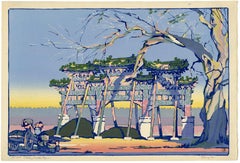
Cyrus Le Roy Baldridge, 'Peking '25', woodblock print, published 1926. Signed, titled, dated, and annotated 'No 124' in pencil. A fine impression, with fresh, undiminished colors; the full sheet, in excellent condition. Watanabe 6 mm seal, lower right, indicating an impression printed between 1945 and 1957. Archivally sleeved, unmatted. Image size 9 5/8 x 14 5/16 inches; sheet size 10 7/16 x 15 3/8 inches. ABOUT THE IMAGE A 'paifang', also known as a 'pailou', is a traditional style of Chinese architectural arch or gateway structure. It has been theorized that the paifang gate architecture was influenced by Buddhist torana temple gates. Paifang are designed with traditional Chinese architectural motifs including multi-tiered roofs, prominent supporting posts, and gracefully arched openings. This is an unusual ukiyo-e or 'floating world' woodcut published by Watanabe Shozaburo, Tokyo, in that the subject is of an early 20th-century scene in Peking, China. ABOUT THE ARTIST Cyrus Leroy Baldridge...

Category

1920s Showa Landscape Prints

Materials

Woodcut

'Kurofune' — Edo period Japanese Woodblock Print Triptych

'Kurofune' — Edo period Japanese Woodblock Print Triptych

Located in Myrtle Beach, SC

Konishi Hirosada, 'Kurofune' (Kabuki scene), color woodblock print, Kamigata chūban triptych, 1851. Signed in black ink in each panel. A fine impression with fresh colors, on Japanes...

Category

Mid-19th Century Edo Figurative Prints

Materials

Woodcut

'Chinoiserie' — Mid-Century Modernism

'Chinoiserie' — Mid-Century Modernism

By Edward August Landon

Located in Myrtle Beach, SC

Edward Landon 'Chinoiserie', color serigraph, 1947, edition 50, Ryan 36. Signed in pencil in the image, lower right. Titled, dated, and annotated '4 COLORS – EDITION 50' in the scree...

Category

Mid-20th Century American Modern Abstract Prints

Materials

Screen

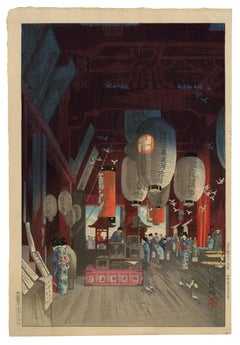
'Kannon Temple at Asakusa' — Tokyo Landmark, Early Edition Woodblock Print

'Kannon Temple at Asakusa' — Tokyo Landmark, Early Edition Woodblock Print

Located in Myrtle Beach, SC

NARAZAKI EISHO (1864-1936), 'Asakusa Kannon-do no naido' (Interior of the Kannon Temple at Asakusa), color woodblock print, 1932. Signed Eisho lower right, with the artist’s red seal beneath. A fine impression with fresh colors; the full sheet with slight overall age toning, a drying tack...

Category

1930s Interior Prints

Materials

Woodcut

You May Also Like

Vendeur de Masques Chinois

Vendeur de Masques Chinois

By Paul Jacoulet

Located in San Francisco, CA

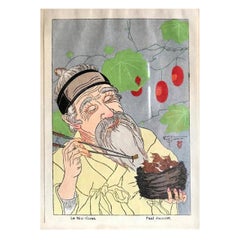
This artwork titled "Le Vendeur de Masques Chinois" {The Chinese Masks Seller) 1940 is an original color woodcut by French artist Paul Jacoulet, 1896-1960. It is hand signed in penci...

Category

Mid-20th Century Realist Figurative Prints

Materials

Woodcut

"Daikoku, Dieu de la Richesse" Japanese Style Woodblock Print

"Daikoku, Dieu de la Richesse" Japanese Style Woodblock Print

By Paul Jacoulet

Located in Austin, TX

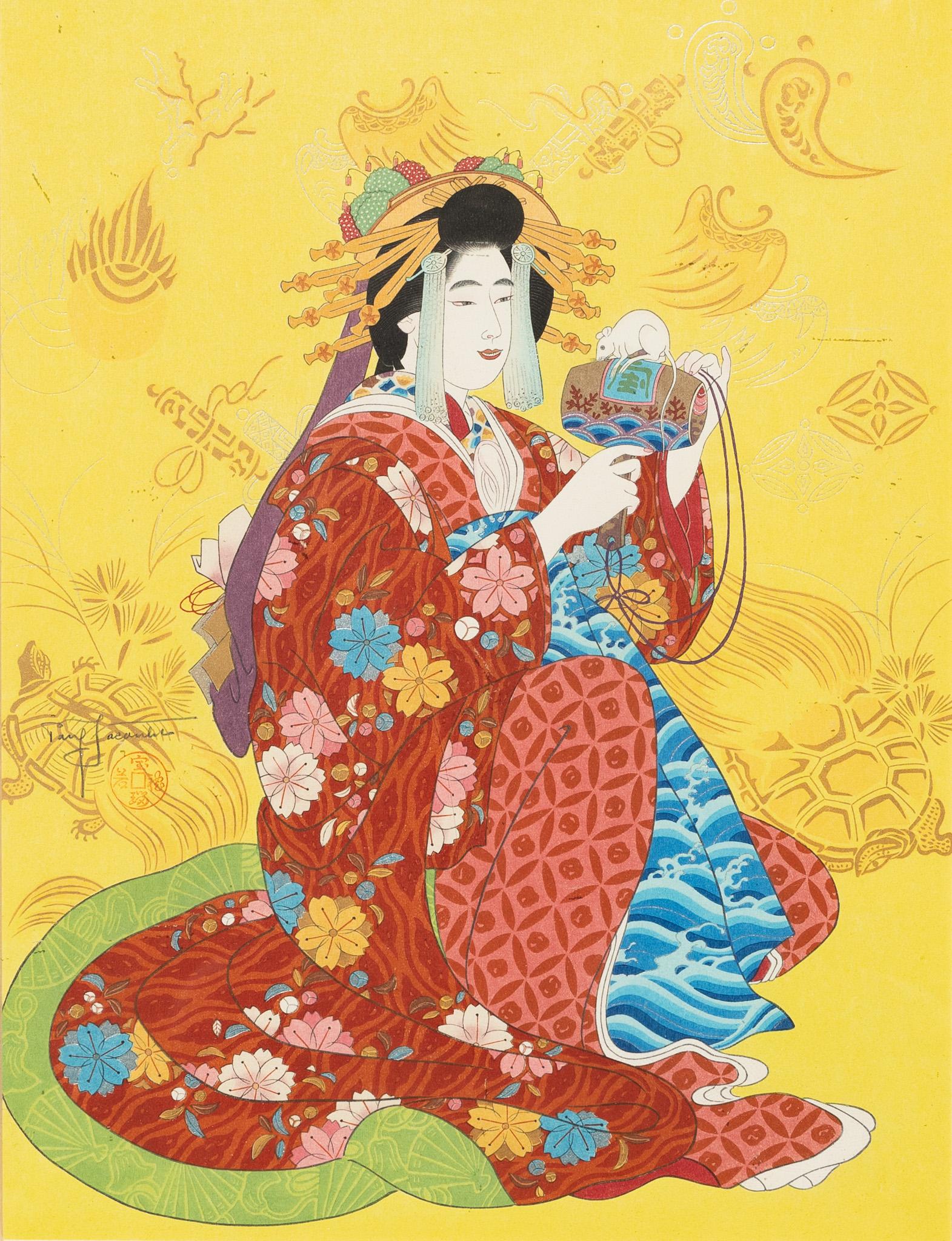
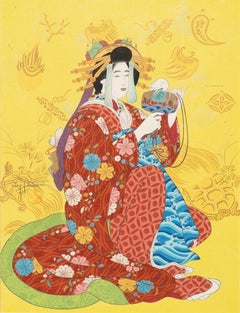
A woodblock print of a Japanese geisha in elegant clothing against a yellow decorative background. By Paul Jacoulet 15.5" x 12" Woodblock print on paper Framed Size: 22.5" x 18.5" ...

Category

Mid-20th Century Figurative Prints

Materials

Paper, Woodcut

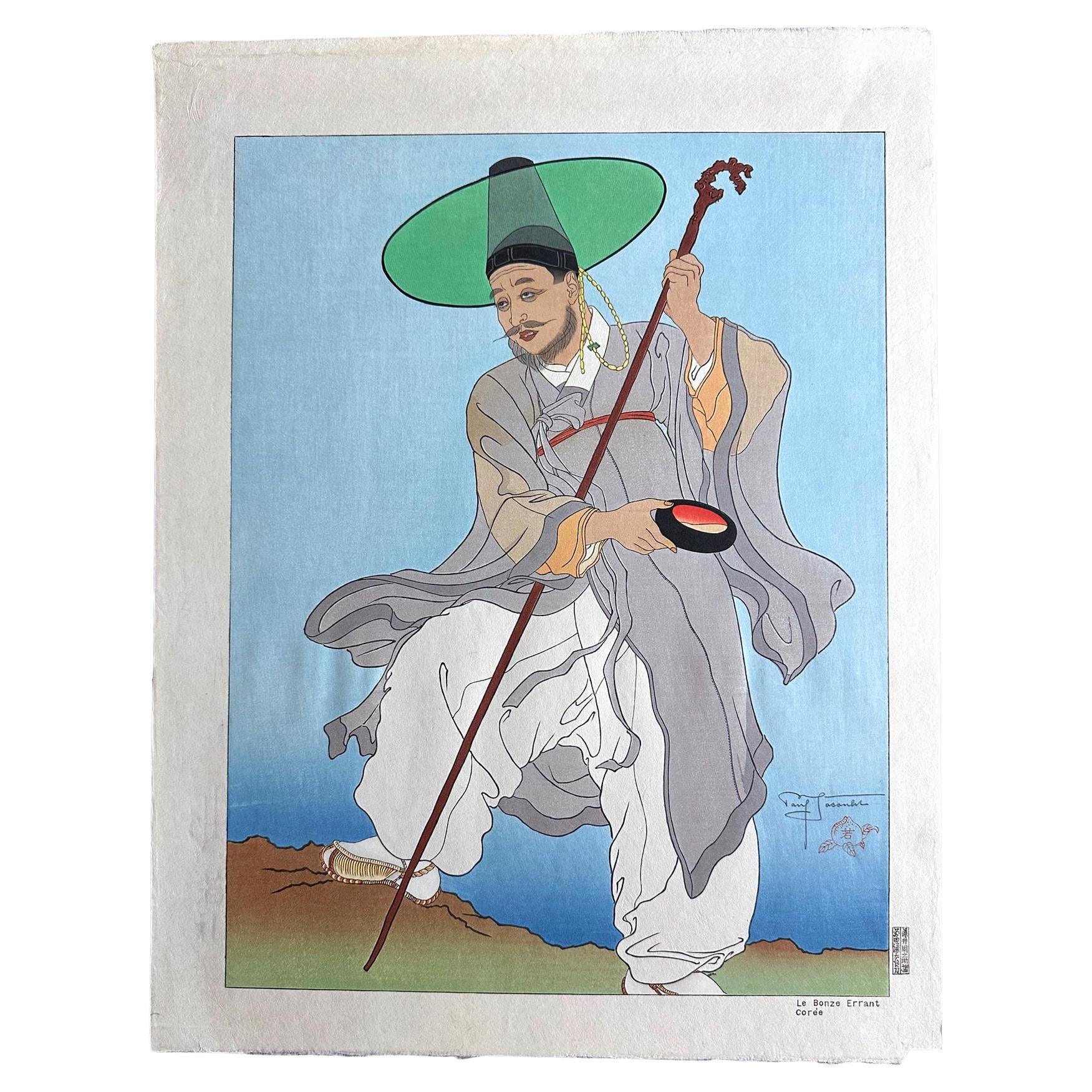
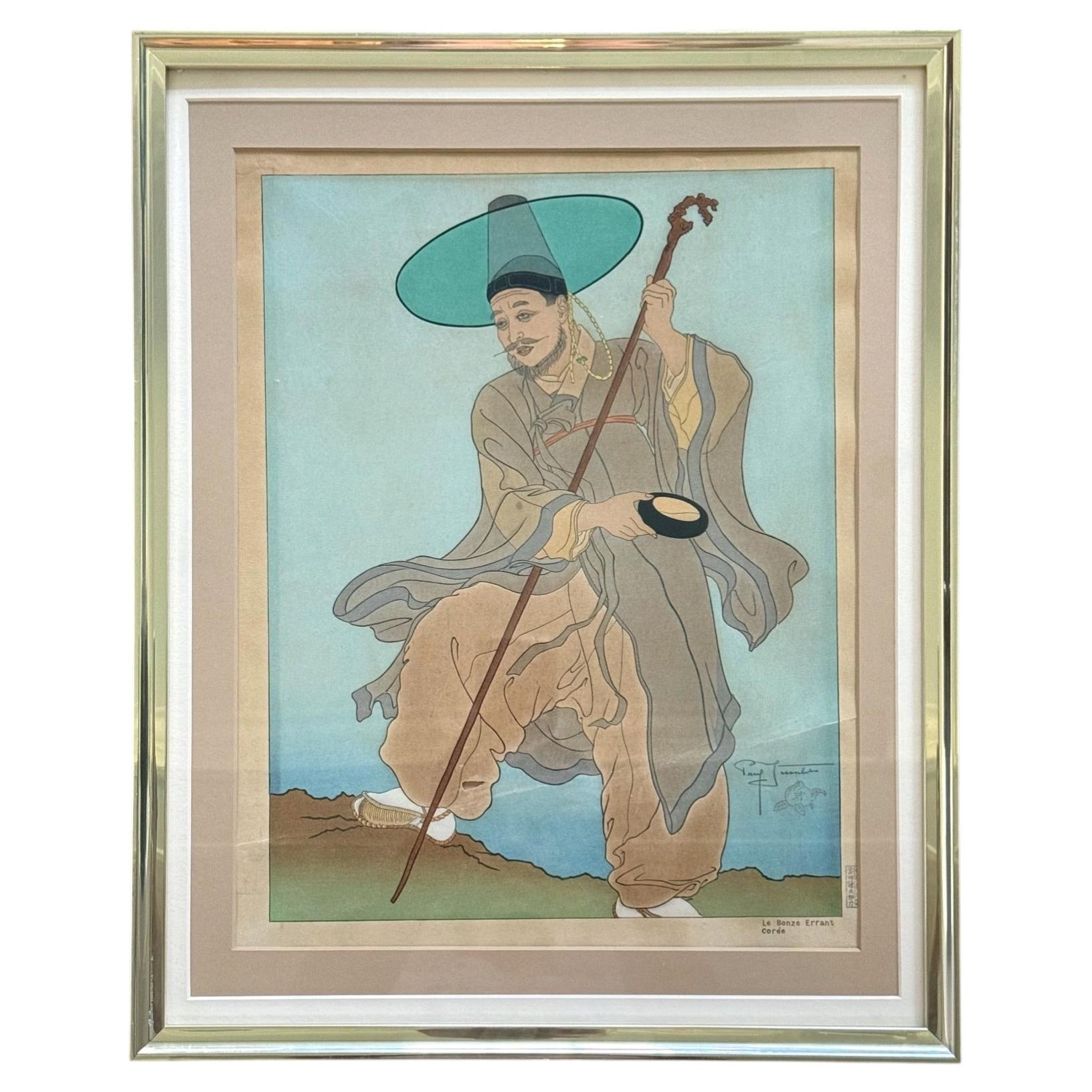
Framed Japanese Woodblock Print Le Bonze Errant by Paul Jacoulet

Framed Japanese Woodblock Print Le Bonze Errant by Paul Jacoulet

By Paul Jacoulet

Located in Atlanta, GA

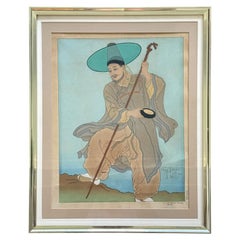
A Japanese Woodblock print by Paul Jacoulet (French, 1896-1960) entitled Le Bonze Errant. Coree (The Wandering Buddhist Priest, Korea). Created in 1948, the print showcases a Korean ...

Category

Vintage 1940s Japanese Japonisme Prints

Materials

Paper

Paul Jacoulet Le Marie Seoul, Coriée, Woodblock Print, 1948

Paul Jacoulet Le Marie Seoul, Coriée, Woodblock Print, 1948

By Paul Jacoulet

Located in Austin, TX

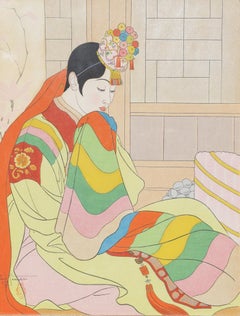
Paul Jacoulet ( France, Japan 1902 - 1960 ) Title: La Mariée Seoul, Corée Medium: Woodblock Print Size: 15.5 in. x 12 in. Movement: Showa Markings: Si...

Category

1940s Figurative Prints

Materials

Woodcut

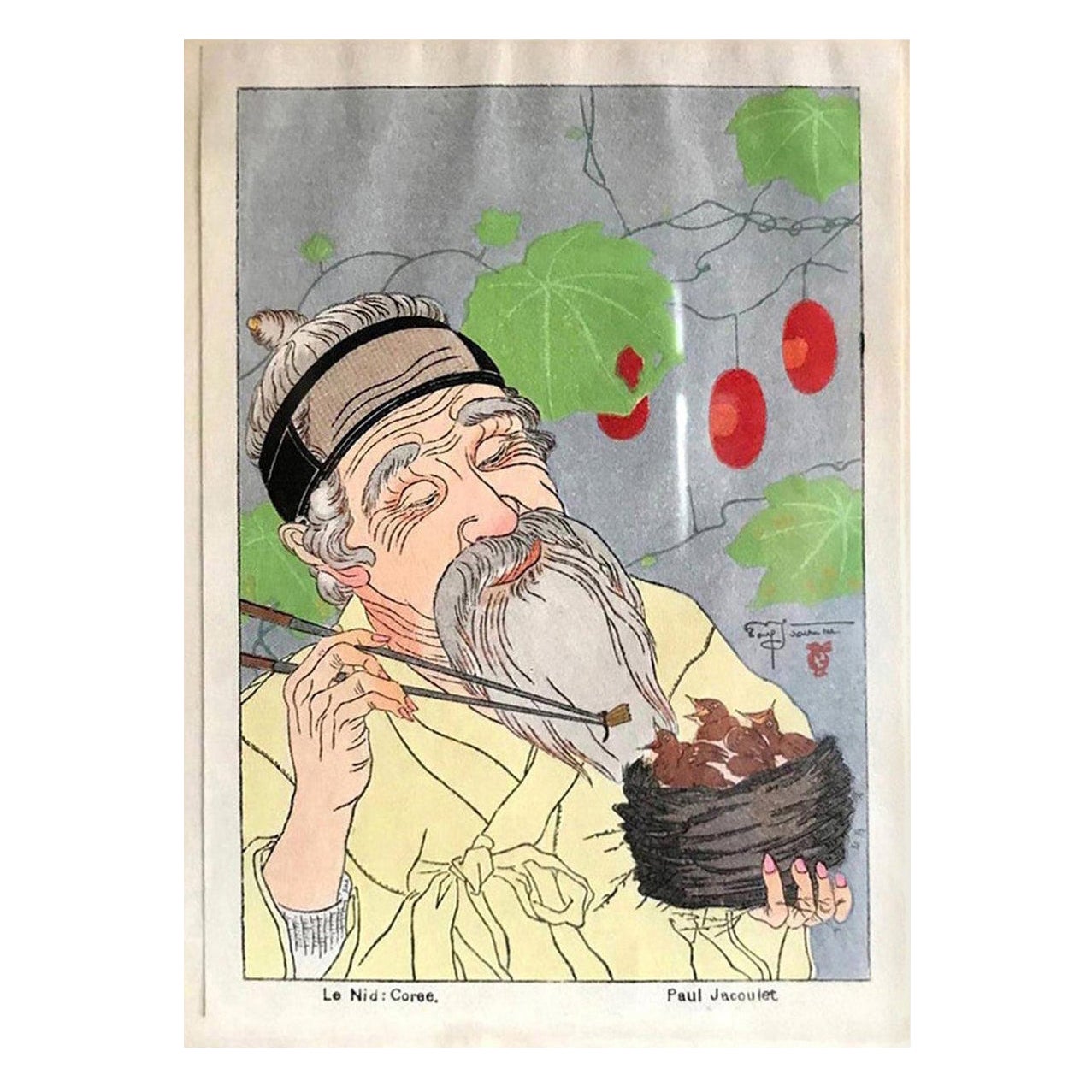
Paul Jacoulet Japanese Surimono Woodblock Print Le Nid, Coree the Nest, Korea

Paul Jacoulet Japanese Surimono Woodblock Print Le Nid, Coree the Nest, Korea

By Paul Jacoulet

Located in Studio City, CA

A fantastic surimono woodblock print by French artist Paul Jacoulet titled "Le Nid, Coree." Jacoulet was famed for his techniques involving lacquers, embossing, mica, and metal pigments, and with experimentations with powdered semi-precious stones. These authentic smaller, more personalized prints, known as surimonos, were made after designs of his regular, larger woodblocks...

Category

Vintage 1940s Japanese Showa Prints

Materials

Paper