Robert Rauschenberg
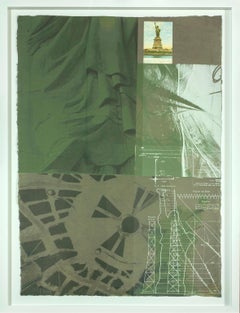
I Love New York, 2001 (LARGE)
Plate signed on the front
Offset lithograph on high quality wove paper
39.25" x 25 inches
(This ships rolled in a tube measuring 37" x 6" x 6")
Limited Edition of 300 (unnumbered)
Printed by ULAE Editions, East Islip, New York for the Twin Towers Fund
Published by Brooke Alexander; printed by ULAE Editions, East Islip, NY
Unframed
This is the color offset lithograph poster, depicting the World Trade Center Towers in the arms of a resolute Statue of Liberty that Rauschenberg created to help raise money for the Twin Towers Fund in the aftermath of the 9/11 terrorist attacks in New York City. An iconic image of New York. Photos dont do this impressive print justice
Makes a terrific gift.
After two airplanes crashed into the World Trade Center, New York on 9/11/2001, Rauschenberg is at his home in Captiva, Florida, awaiting news from studio assistants and staff members who maintain his Lafayette Street home and studio. The artist’s philanthropic foundation, Change, Inc., served as a vital resource to those who suffer in the wake of the attacks. Rauschenberg designed the present poster I Love New York, showing an image of the Statue of Liberty holding the towers of the World Trade Center, to benefit families of the victims and it was donated to many fundraisers and non profit events held by Change Inc. and other philanthropic causes.
About Robert Rauschenberg
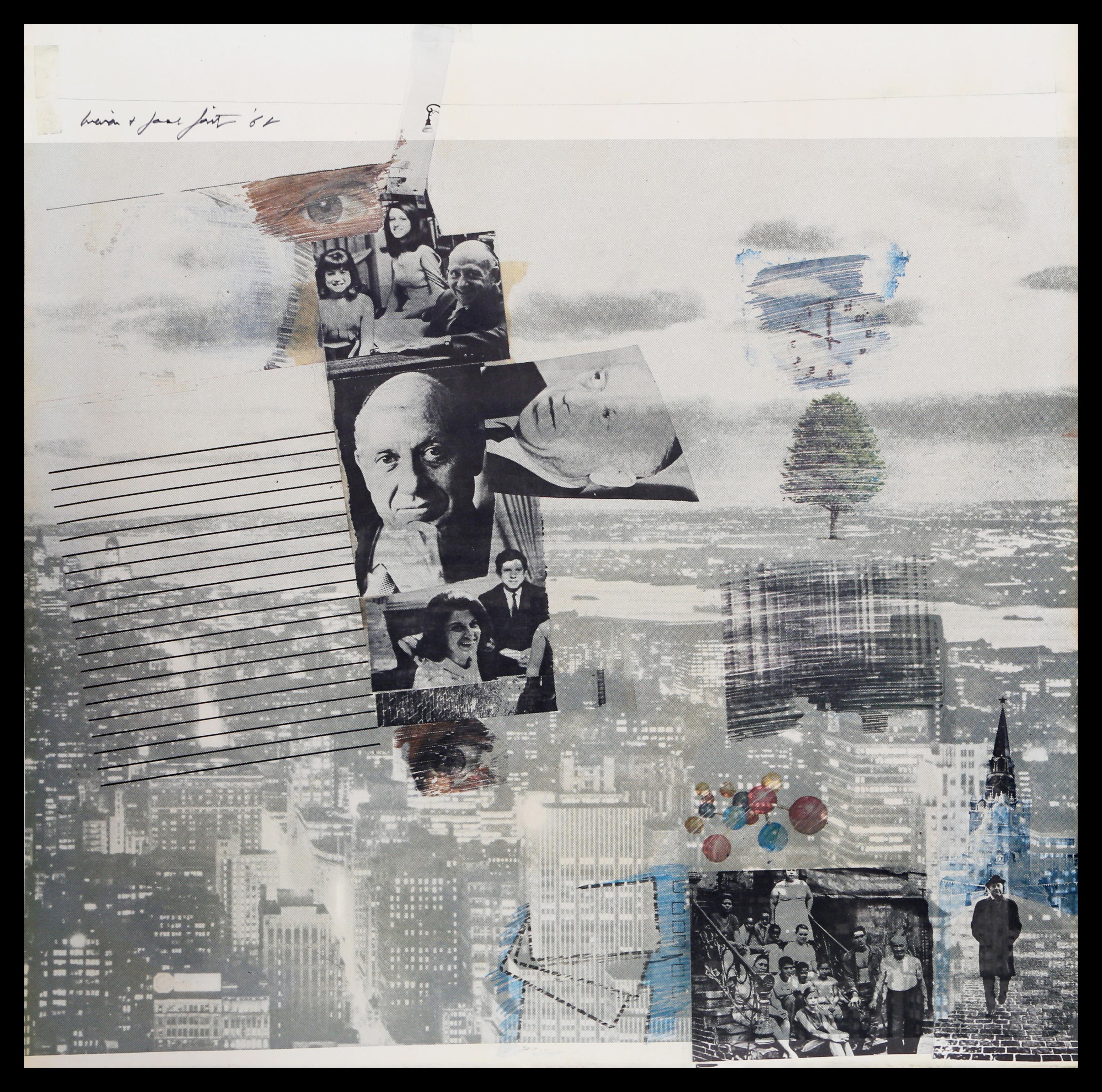
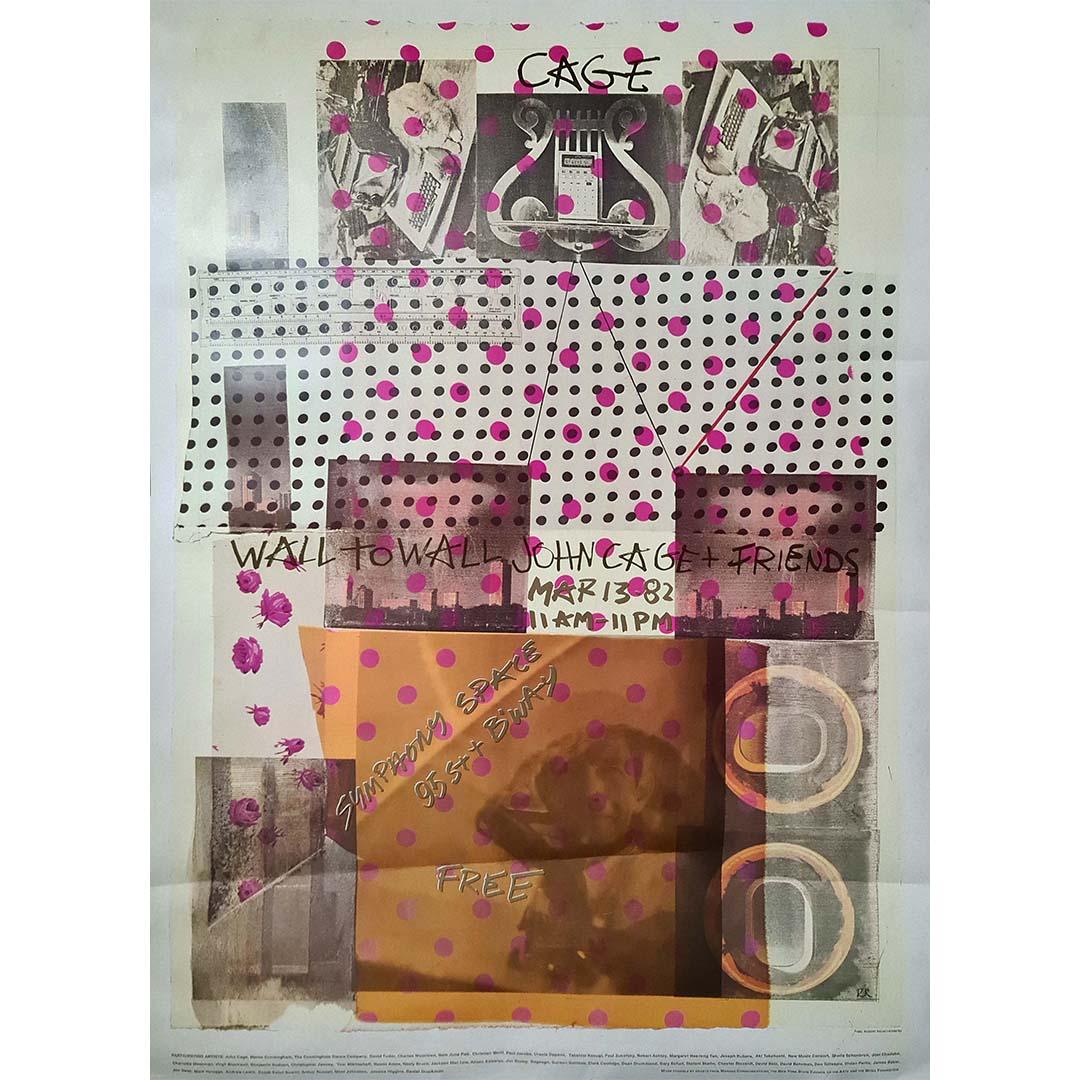
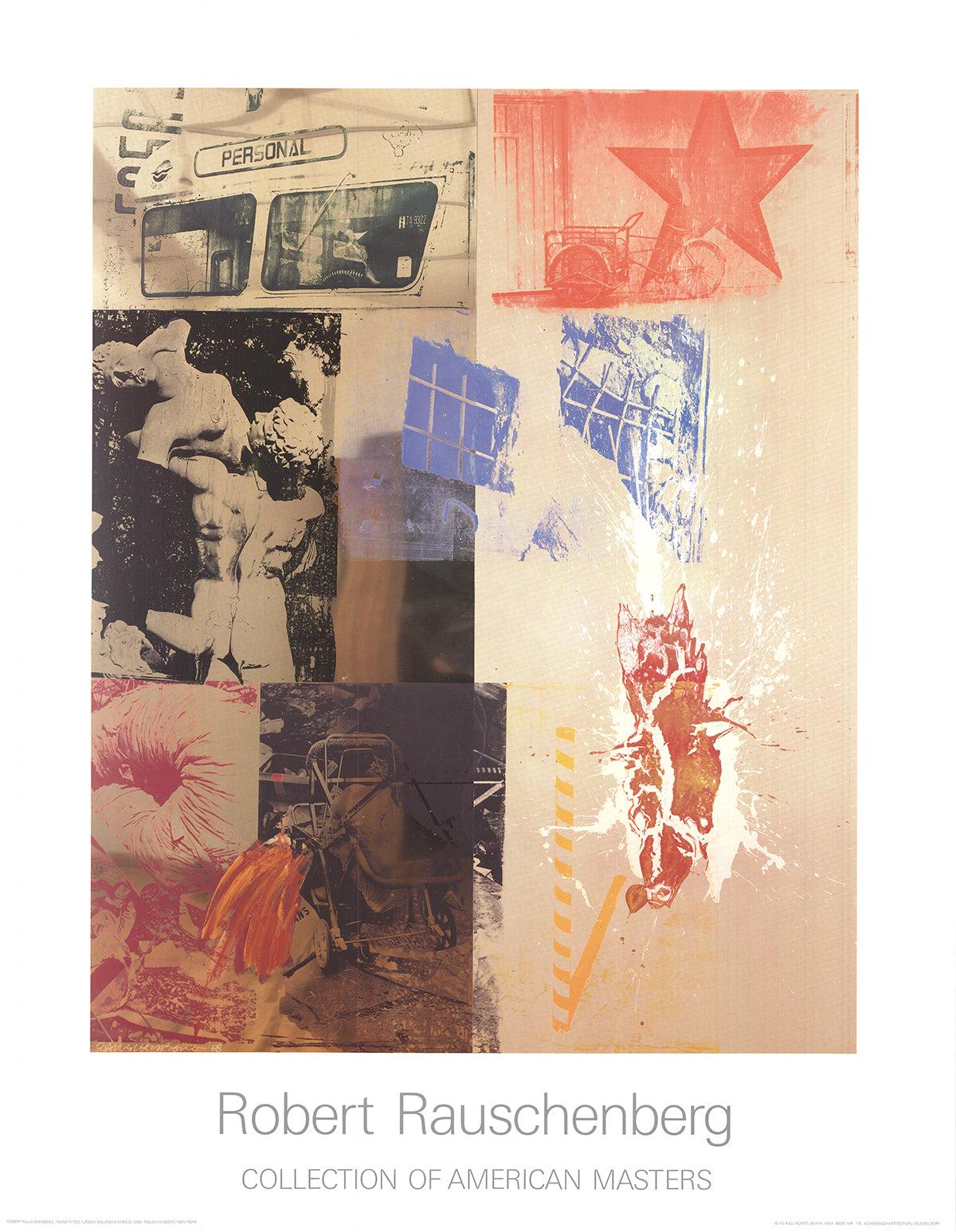
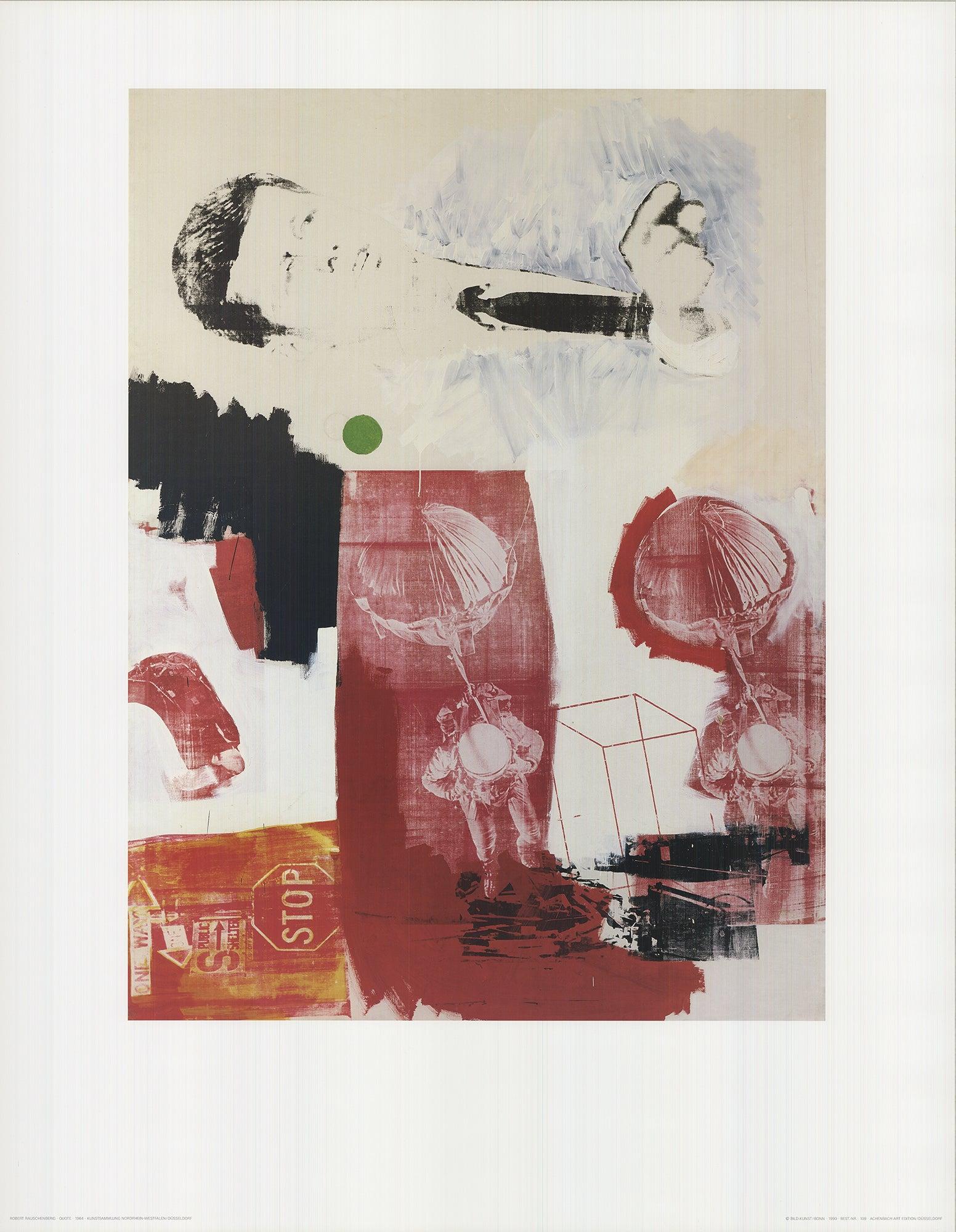
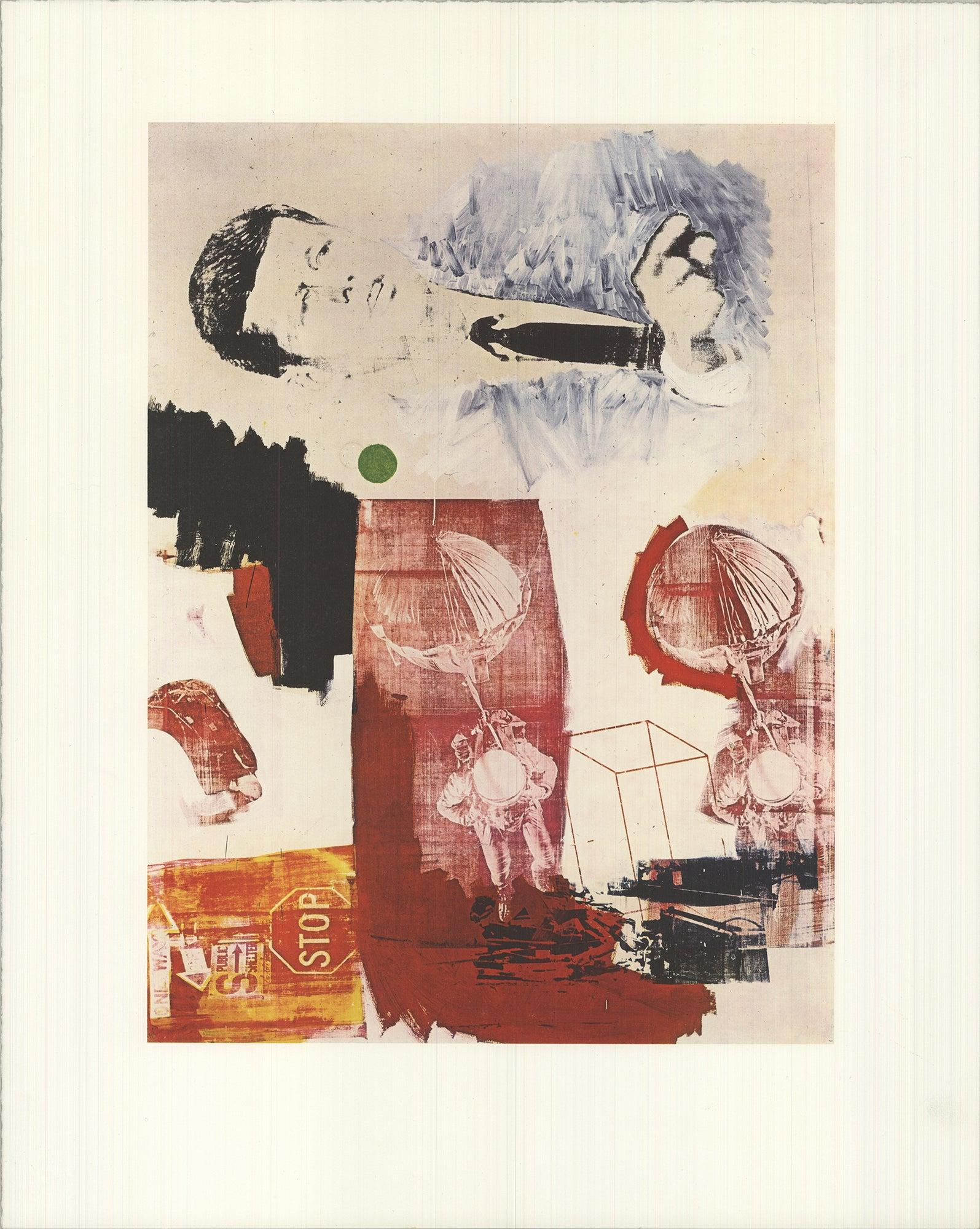
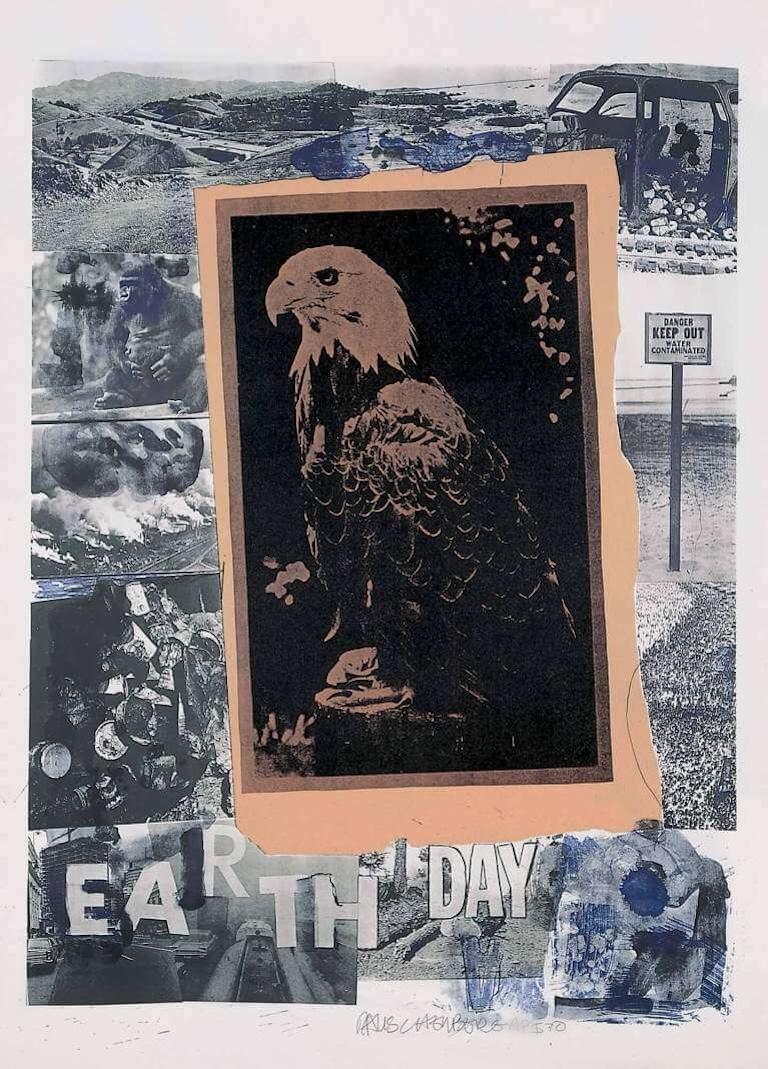
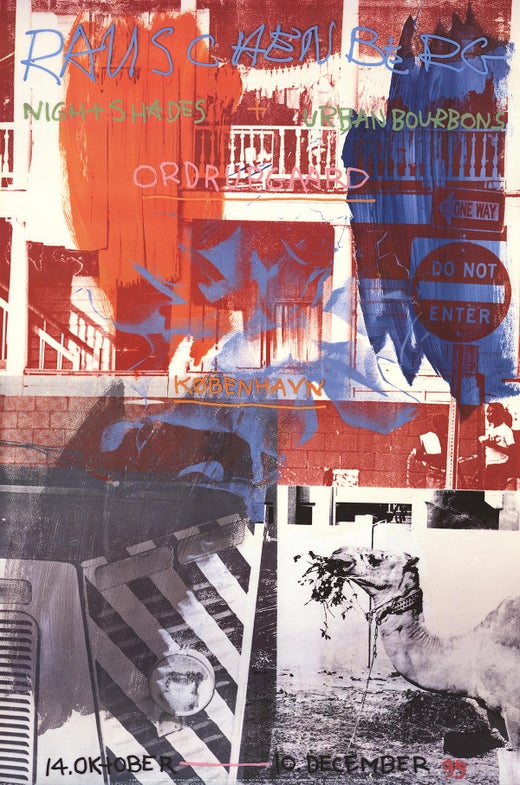
Robert Rauschenberg ushered in a new era of postwar American art in the wake of Abstract Expressionism. His approach, along with that of his contemporary Jasper Johns, was sometimes termed “Neo-Dada,” due to its relation to both European forebears and the physical gestures of American Abstract Expressionists. His Combine works (1954 to early 1960s) blurred the distinctions between painting and sculpture, as their flat surfaces were augmented with discarded materials and appropriated images. Rauschenberg also worked with photography, printmaking, papermaking, and performance, the last of which resulted in a number of collaborations with choreographers, including Merce Cunningham, Paul Taylor, and Trisha Brown. Rauschenberg was among the founding members of the innovative group Experiments in Art and Technology (E.A.T.) in 1966, and in 1984 he established the Rauschenberg Overseas Culture Interchange (ROCI) to bring art to communities around the world, saying, “I feel strong in my beliefs, based on my varied and widely traveled collaborations, that a one-to-one contact through art contains potent peaceful powers, and is the most non-elitist way to share exotic and common information, seducing us into creative mutual understandings for the benefit of all.” Rauschenberg’s nontraditional art practice and creative energy generated an enduring influence that impacted generations of artists, as noted by art historian Branden W. Joseph: “Rauschenberg’s was a position with which artists across the board were confronted and to which they almost necessarily had to respond. … Rauschenberg’s work served as a stimulus, an impetus and a challenge.”
Robert Rauschenberg was born in 1925, in Port Arthur, Texas and died on Captiva Island, Florida in 2008. He has had numerous exhibitions worldwide, including “Robert Rauschenberg: A Retrospective,” Solomon R. Guggenheim Museum, New York (1997, traveled to Menil Collection, Contemporary Arts Museum, and Museum of Fine Arts, Houston, Museum Ludwig, Cologne and Guggenheim Museum, Bilbao, through 1999); “Combines,” Metropolitan Museum of Art, New York (2005, traveled to Museum of Contemporary Art, Los Angeles, Centre Pompidou, Paris, and Moderna Museet, Stockholm in 2007); “Cardboards and Related Pieces,” Menil Collection, Houston (2007); “Traveling ‘70–‘76,” Museu de Arte Contemporânea de Serralves, Porto (2008, traveled to Haus der Kunst, Munich, and Madre, Naples in 2009); “Gluts,” The Peggy Guggenheim Collection, Venice (2009, traveled to The Tinguely Museum, Basel, Guggenheim Museum Bilbao, and Villa e Collezione Panza, Varese in 2010); and “Botanical Vaudeville,” Inverleith House, Royal Botanic Garden, Edinburgh (2011). Gagosian Gallery first exhibited Robert Rauschenberg’s work in 1986.
-Courtesy of Gagosian Gallery