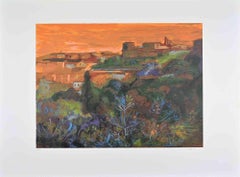
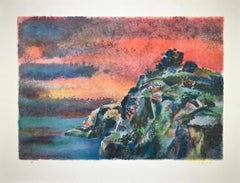
Ugo Attardi
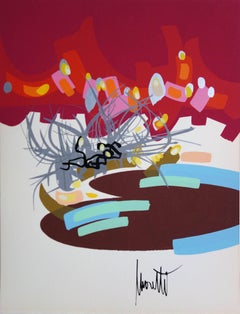
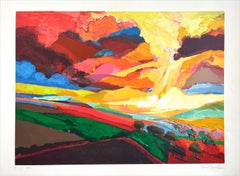
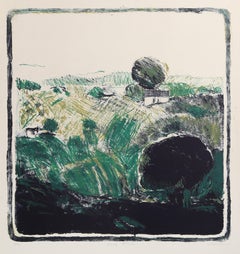
Ugo Attardi (Sori, 12 March 1923 – Rome, 20 July 2006) was an Italian painter, sculptor and writer.
He was born in the province of Genoa. His father, a trade unionist and active member of the “Federazione dei Marittimi” (Seafarers' Federation), originally from Santo Stefano Quisquina, a small village in the province of Agrigento, was forced by the Fascist regime to leave Liguria and return to Sicily. His mother was Natalia Attardi Donnini. After moving with his family to Palermo, intrigued by painting and its techniques from an early age (in his spare time he helped his paternal uncle, an old portrait and landscape painter), he began attending the Academy of Fine Arts and later the Faculty of Architecture. In 1945, he moved to Rome, staying with Pietro Consagra, who was himself a guest of Renato Guttuso.
The climate rich in cultural and civil initiatives of the post-war period allowed him to resume his research with enthusiasm. In 1948, together with a group of young artists, he founded the abstract movement Forma Uno, but his views diverged from those of the rest of the group. His companions were Carla Accardi, Antonio Sanfilippo, Pietro Consagra, Piero Dorazio, Mino Guerrini, Concetto Maugeri, Achille Perilli and Giulio Turcato.
In 1948, he participated in the National Exhibition of Figurative Arts (V Quadriennale Nazionale d'Arte) in Rome.
In the early 1950s, he turned his art towards expressionism, drawing inspiration from Francis Bacon and George Grosz, among others, combining his artistic activity with political commitment within the Italian Communist Party. The need to experiment with a new and visionary relationship with reality led him to move away from abstractionism and study his own form of expressionism. In 1952 and 1954, he was invited to the 26th and 27th Venice Biennales. In 1956, despite the crisis of realism, he exhibited successfully in a gallery in Trastevere. In 1958, he participated in the founding of the cultural and political newspaper Città Aperta and began collaborating with it, together with Tommaso Chiaretti, Elio Petri, Renzo Vespignani and Mario Socrate. In the early 1960s, he participated in numerous exhibitions both in Italy and abroad. In 1961, he founded the group Il Pro e il Contro, leading all the events until the last year, when it was dissolved.
In 1963, one of his works was exhibited at the Contemporary Italian Paintings exhibition, held in several Australian cities. In 1963-64, he exhibited at the Peintures italiennes d'aujourd'hui exhibition, held in the Middle East and North Africa.
A trip to Spain led him to rediscover the classics and deepen his historical studies. In 1974, he created the banner for the Palio di Siena on 16 August. In 1986 and 1987, he exhibited at the ICAF in London and at the International Exhibition of Contemporary Art in Milan.