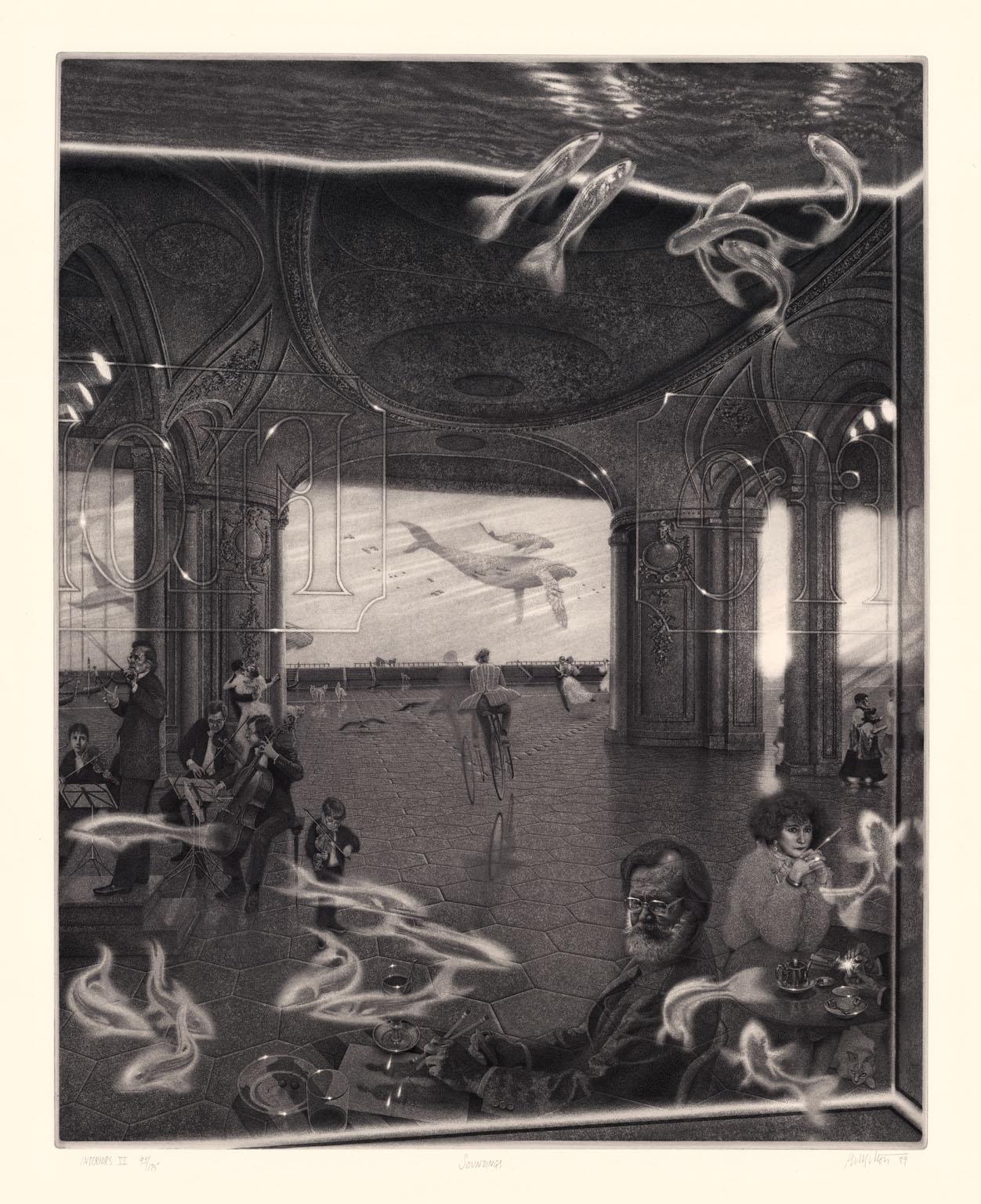
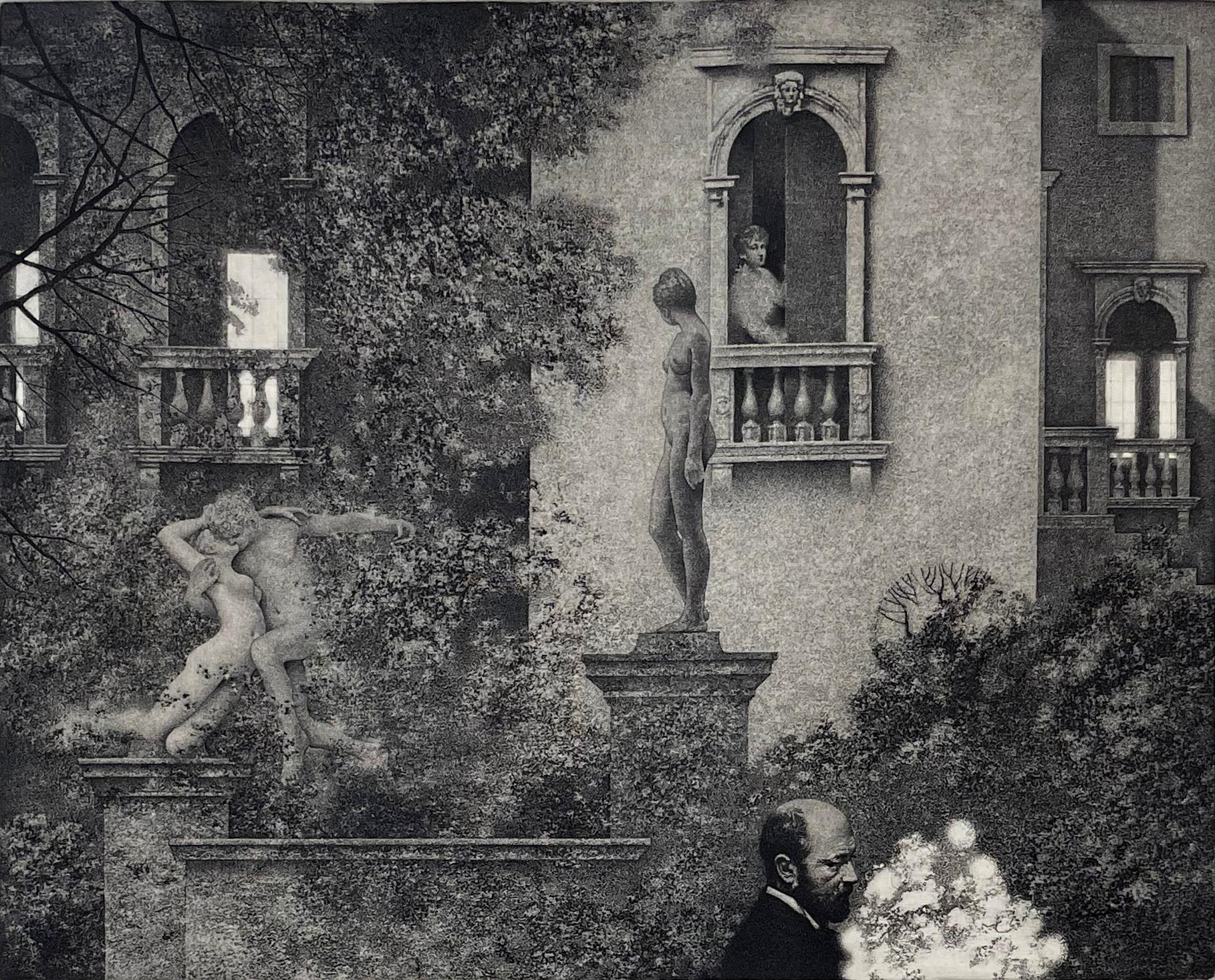
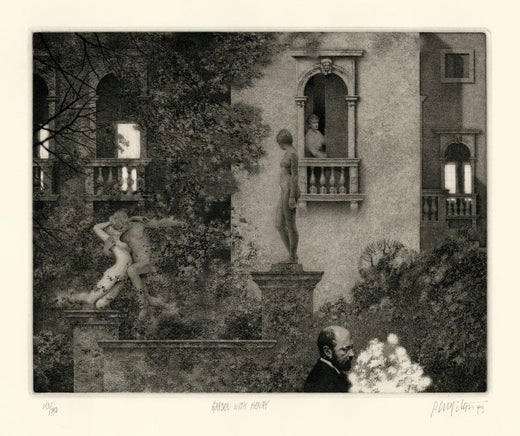
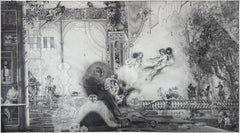
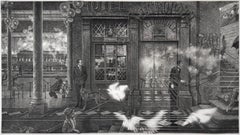
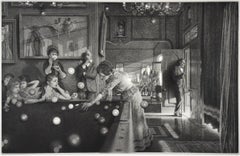
Peter Milton’s Daylilies is a haunting meditation on memory, mortality, and the layered complexity of personal and cultural history. Like much of Milton’s work, the print operates less as a single scene and more as a palimpsest, where images, figures, and shadows overlap to create a dreamlike continuum. The composition feels at once intimate and spectral: a solitary man sits at the foreground, his bowed posture heavy with contemplation, while behind and around him float images of dancers, crowds, portraits, and symbols that blur the boundaries between recollection, imagination, and lived experience.
The architectural setting — walls, windows, mantelpiece — provides a frame of order, but Milton destabilizes this sense of stability by allowing ghostly presences to seep through it. Portraits of women, photographs, and historical figures suggest the persistence of the past, while the looming shadows remind us that memory is never fixed, always shifting with time. Even the small details, such as the cat with its glowing eyes, the suspended clock hands, or the cross and ankh, contribute to an atmosphere of unease and layered symbolism. Milton’s cross-hatched etching technique intensifies this ambiguity, producing a surface that is both precise and hazy, solid and dissolving.
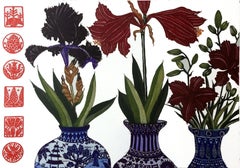
The title Daylilies hints at ephemerality. Daylilies are flowers that bloom for only a short span, emblematic of life’s fleeting beauty. The man in the print becomes a figure of mourning or remembrance, caught in a liminal space where the past is replayed in fragments, and the present is overshadowed by memory’s weight.
Signed, titled, and dated in pencil from the edition of 160.