This monograph contains Nystuen's calculations, actually used by Barr to position his abstract tetrahedral sculpture within the earth. Placement of the sculpture vertices in Easter Island, South Africa, Greenland, and Indonesia was chronicled in film by The Archives of American Art for The Smithsonian Institution. In addition to the archival material, this monograph also contains Arlinghaus's solutions to broader theoretical questions--was Barr's choice of a tetrahedron unique within his initial constraints, and, within the set of Platonic solids? The monograph includes a Preface by sculptor David Barr.
Barr earned a MFA from Wayne State University in Detroit, Michigan and was associate professor of sculpture at Macomb Community College in Warren for 37 years. He worked on perhaps the largest sculpture in the world, the Four Corners Project, with installations at Greenland, Africa, Irian Jaya (New Guinea) and Easter Island.
His sculptures are located all over the state of Michigan, but perhaps his most recognizable is “Transcending,” the sculptural arch located in Hart Plaza, the center of downtown Detroit, in a blend of bronze, steel and granite. This sculpture was made in collaboration with Sergio Degiusti and acknowledges the contributions of Detroit’s laborers and skilled tradespeople.
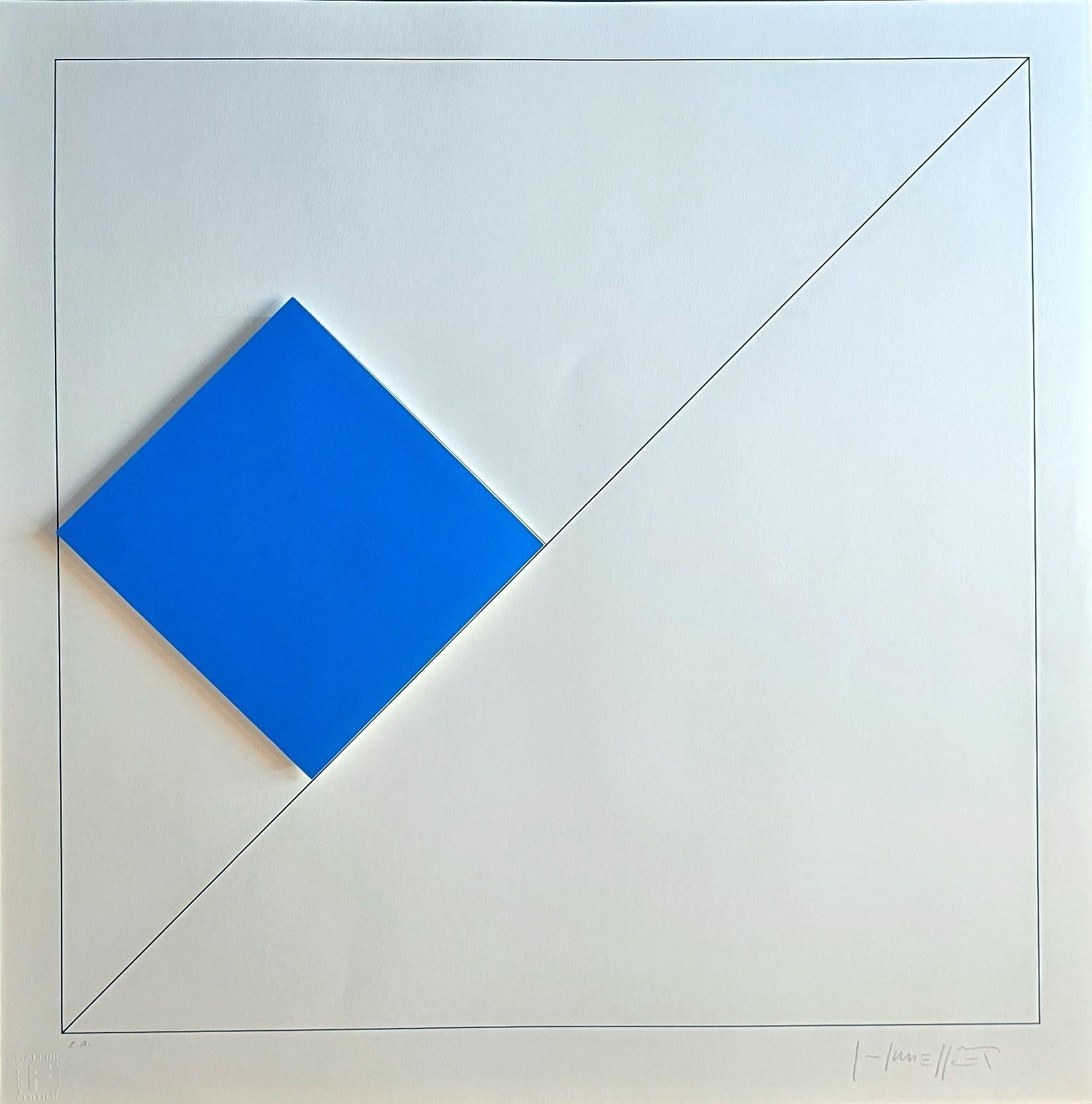
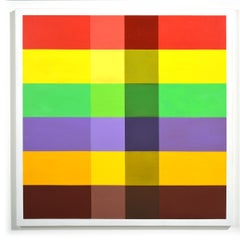
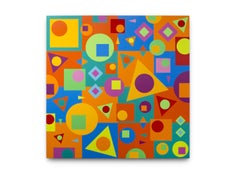
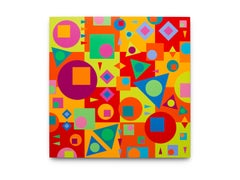
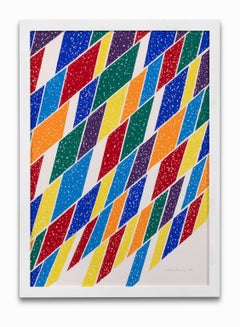
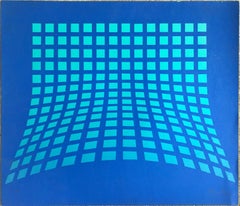
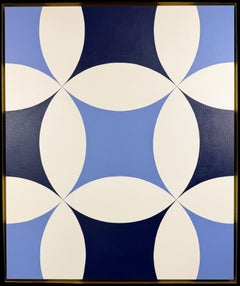
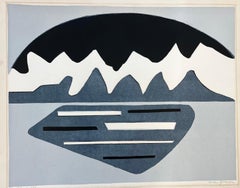
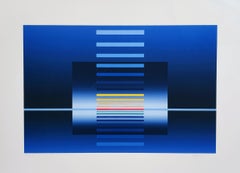
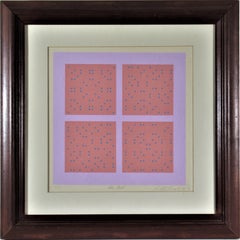
This lithograph is a edition of 50 with 15 artist proofs. signed bottom right number and blindstamp but left.
David Barr is the founder of Michigan Legacy Art Park. His career as an artist, instructor, author and global thinker has crossed borders around the world, bringing people and ideas together.
In the 1980’s, Barr became intrigued with questions such as: How do we experience state histories? Is it enough to experiences them through books, museums, fairs, re-enactments, and educational presentations? Are there ways of bringing history into a more vibrant experience? As an artist, Barr noticed that what was missing from these conventional responses to convey history was a way to experience history in a natural environment and in an experience intensified by the arts. Barr did not know of any “park” for the arts that highlighted the natural beauty of the grounds representative of Michigan. It was within these constraints and concerns the seeds of Michigan Legacy Art Park took root. Thanks to David’s vision, the Art Park opened in 1995 as a nonprofit organization.
Barr has described himself as a structuralist. He has spent half a century studying nature’s growth, decay and regeneration process, and has created works of art reflecting his observations and experiences. “When I look at nature, if I look at a flower or a tree or anything else, I see a color and I see a form and they are revealed to me through light and space and time. And those elements are present in everything I do: the actualities of those elements.””
His work is poetic and visually harmonious. “While my work has been a continual commitment to the Structurist imperative,” Barr wrote in 1979, “the focus and manifestations have increased from philosophy to biology to geology and now to astronomy.”
David has turned his home and 4 acres property in Novi, Michigan, into an art park of more than 30 sculptures and art pieces. The 3,800 square-foot home is now used as an arts residence program space for classes and lectures.
He has said, “I’m not interested in making sculptures that people already know what they mean. There’s no new experience to it. What interests me is providing a new way of seeing things.”