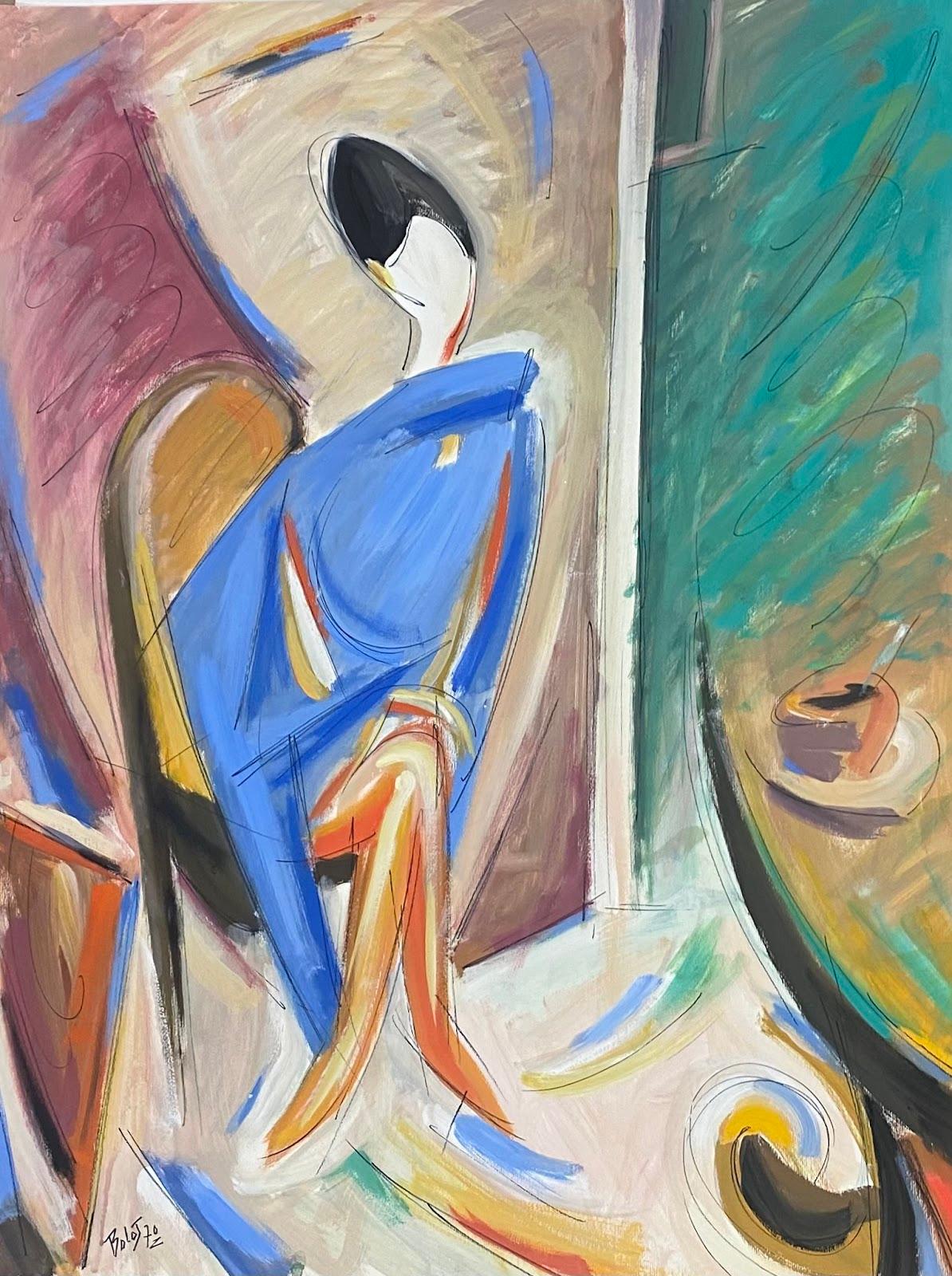
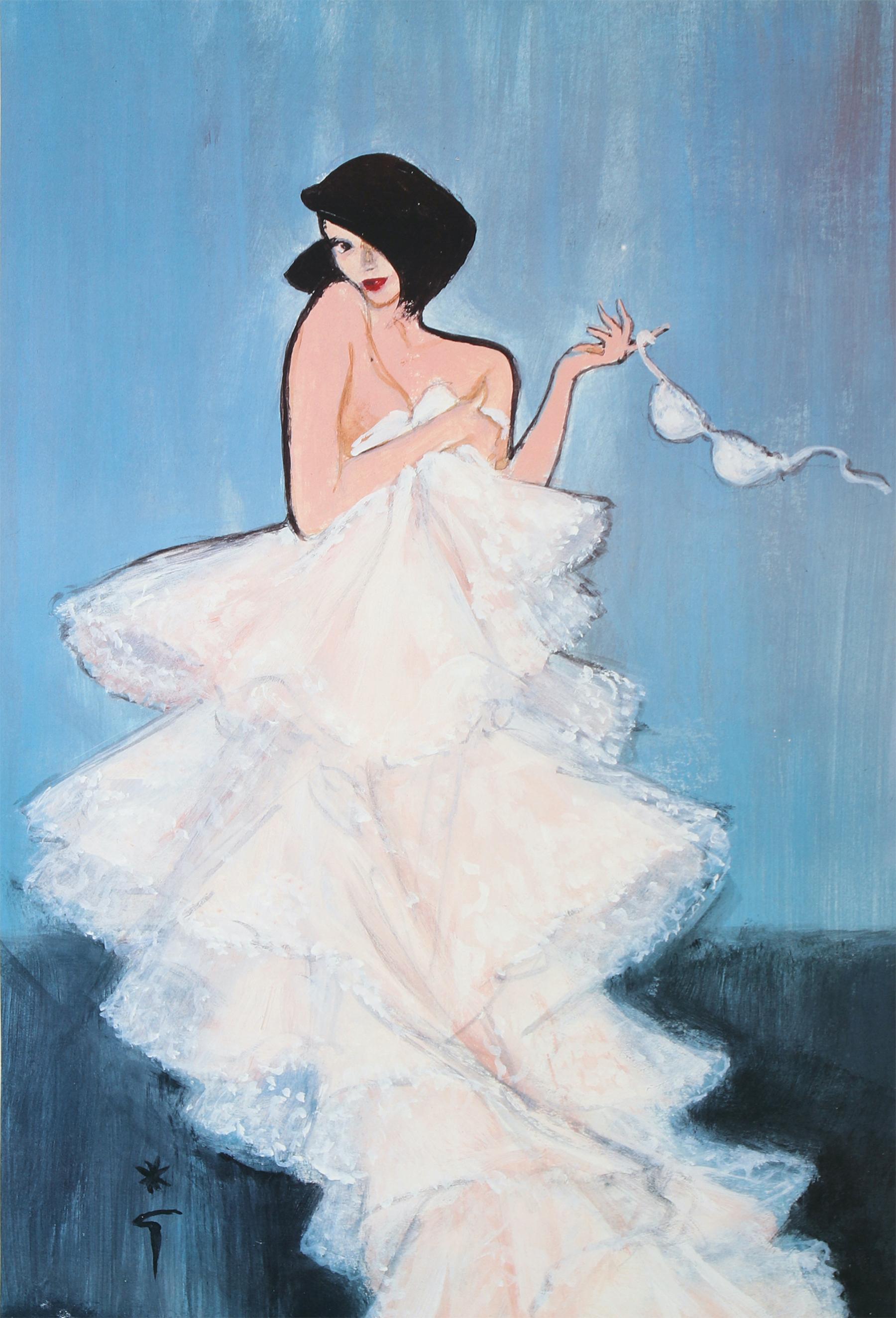
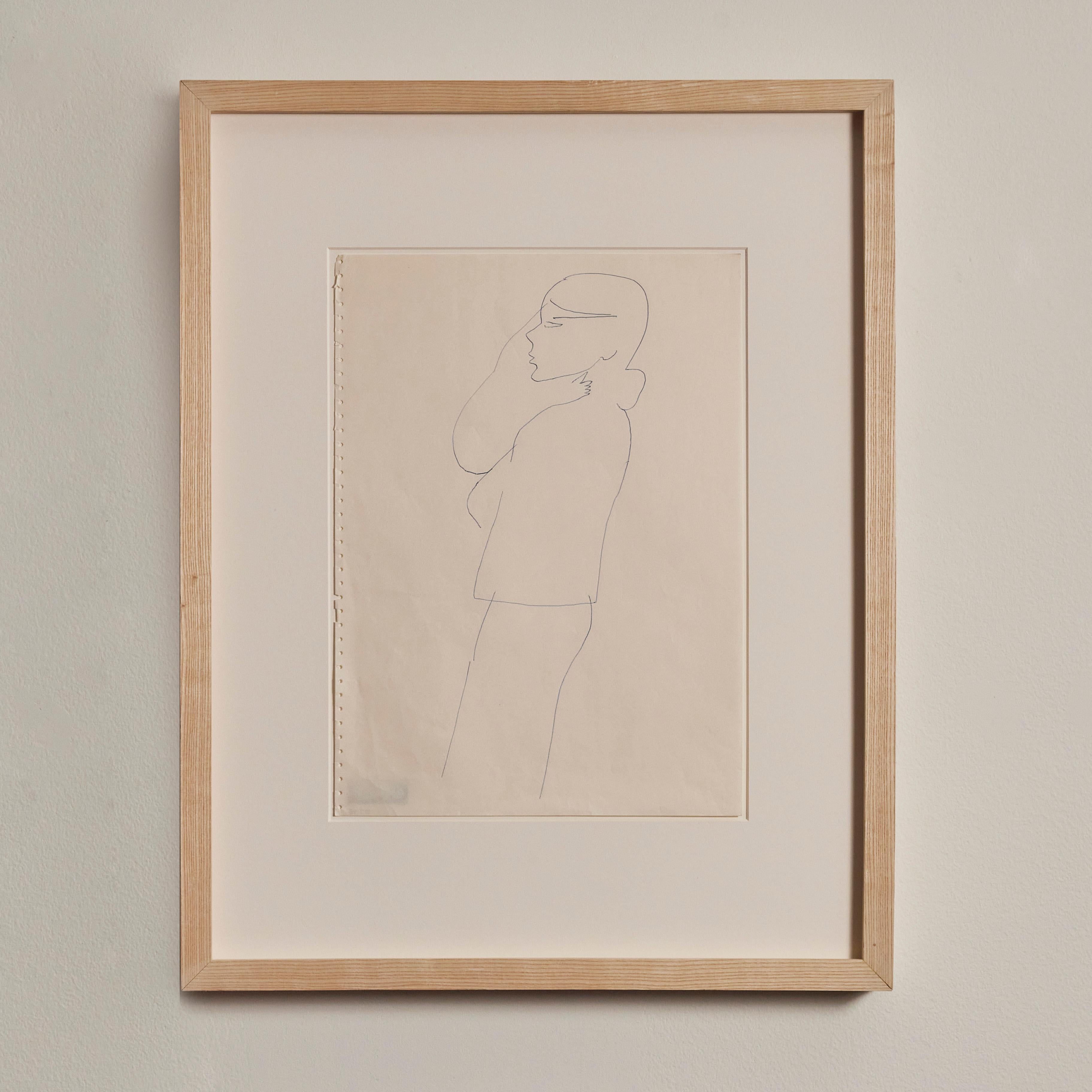
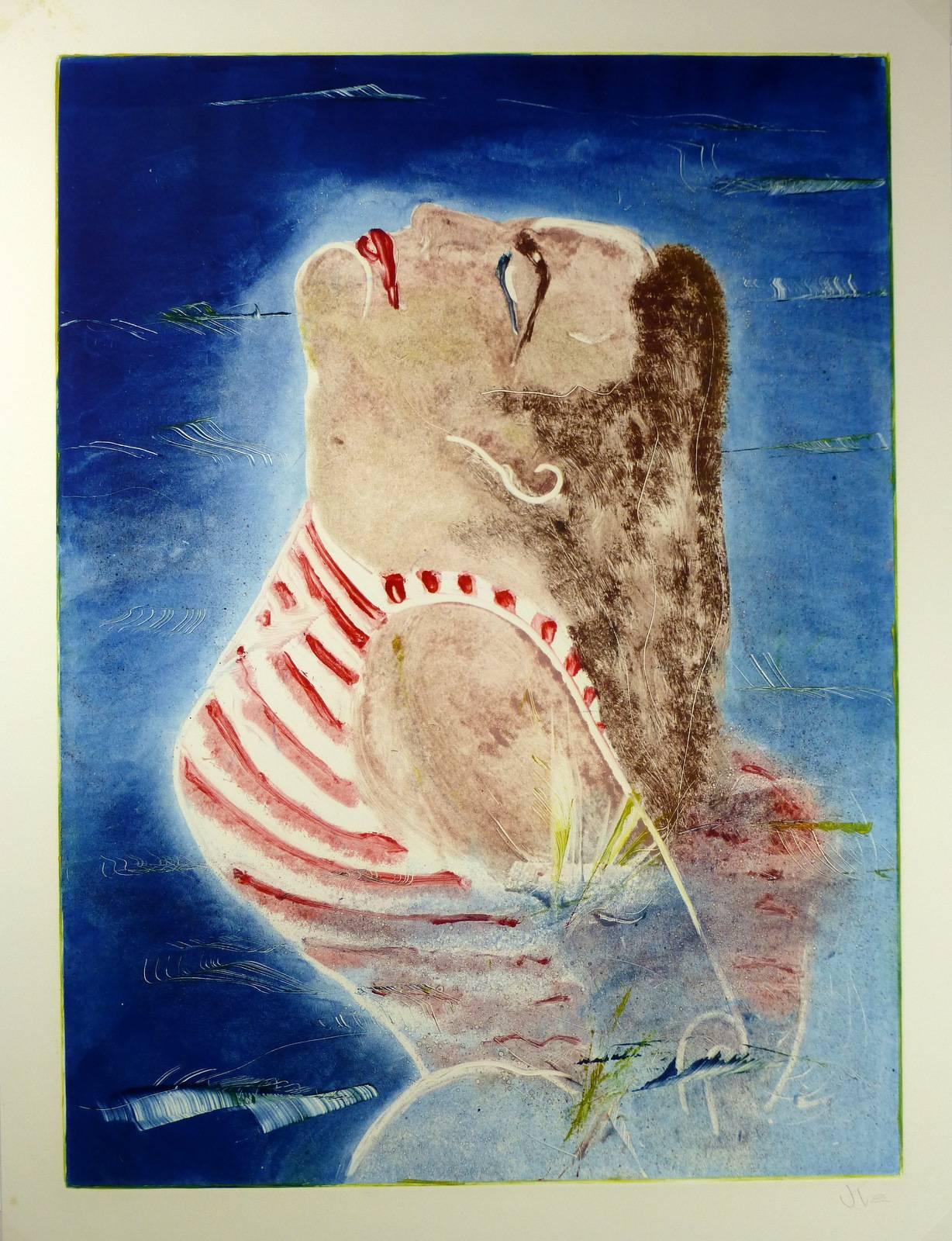
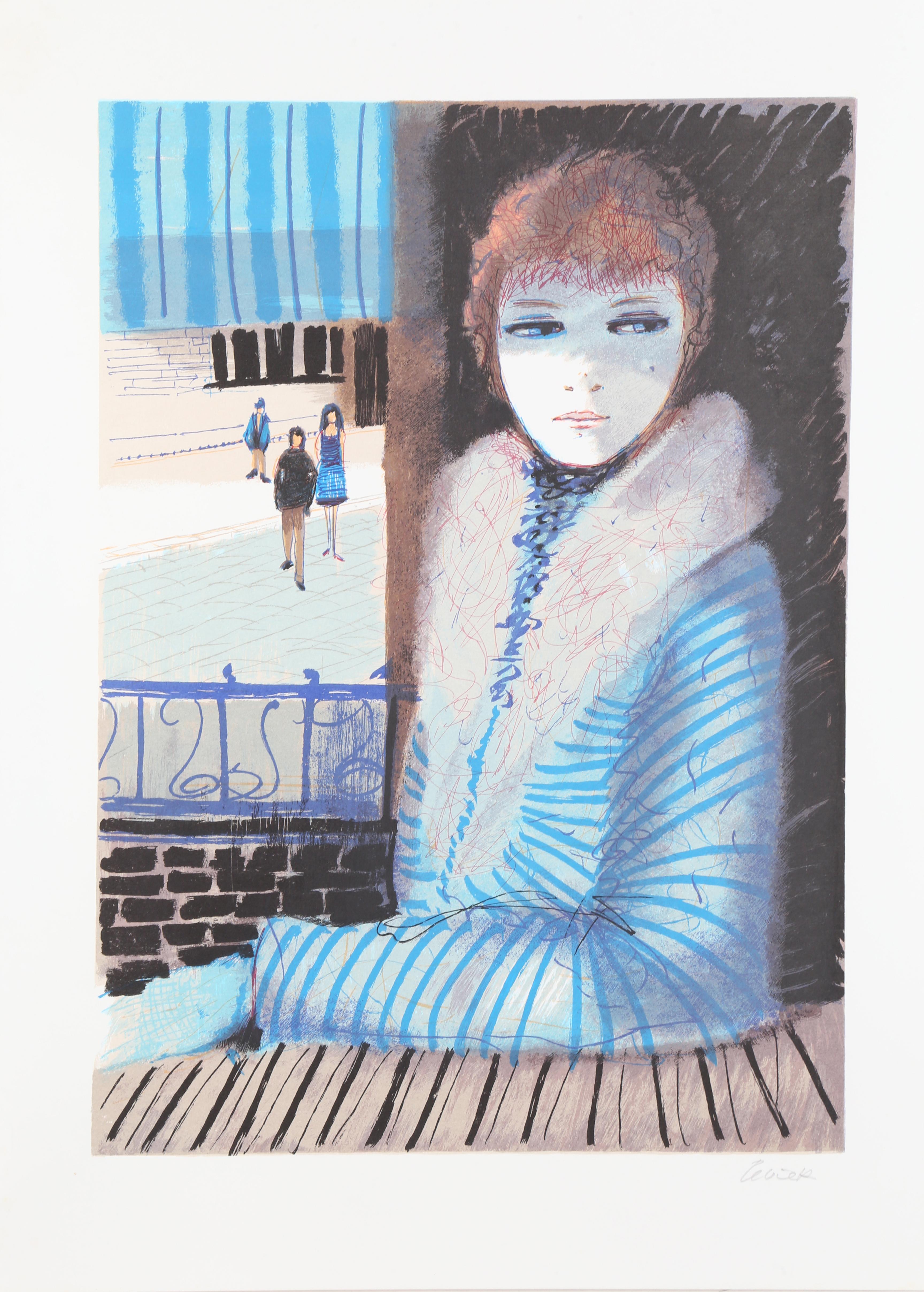
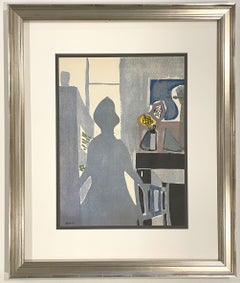
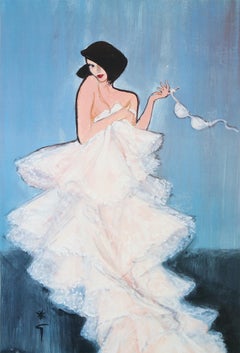
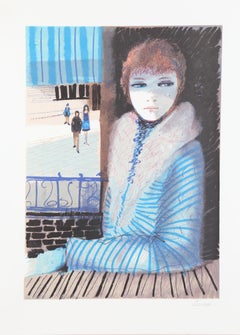
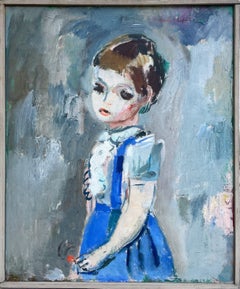
This exquisite lithograph by Francisco Bores (1898–1972), titled La Femme en Bleu (The Woman in Blue), from Verve, Revue Artistique et Litteraire, Vol. VII, No. 27–28, originates from the 1953 issue published by Editions de la revue Verve, Paris, under the direction of Teriade, Editeur, Paris, and printed by Mourlot Freres, Paris, 1953. This refined and lyrical composition exemplifies Bores’s poetic approach to abstraction and figuration, merging the serenity of classical balance with the sensuality of modern color harmonies. La Femme en Bleu reflects his mastery in capturing the quiet grace and introspective emotion of the human form, distilled through translucent tones and fluid rhythm. The interplay of geometric structure and atmospheric delicacy transforms the female figure into a study of light, mood, and visual music—hallmarks of Bores’s mature Parisian period.
Executed as a lithograph on velin du Marais paper, this work measures 14 x 10.5 inches (35.56 x 26.67 cm). Signed in the plate and unnumbered as issued. The edition exemplifies the superior craftsmanship of the Mourlot Freres atelier, celebrated for its collaboration with the foremost modern artists of the 20th century.
Artwork Details:
Artist: Francisco Bores (1898–1972)
Title: La Femme en Bleu (The Woman in Blue), from Verve, Revue Artistique et Litteraire, Vol. VII, No. 27–28, 1953
Medium: Lithograph on velin du Marais paper
Dimensions: 14 x 10.5 inches (35.56 x 26.67 cm)
Inscription: Signed in the plate and unnumbered as issued
Date: 1953
Publisher: Editions de la revue Verve, Paris, under the direction of Teriade, Editeur, Paris
Printer: Mourlot Freres, Paris
Condition: Well preserved, consistent with age and medium
Provenance: From Verve, Revue Artistique et Litteraire, Vol. VII, No. 27–28, published by Editions de la revue Verve, Paris, 1953
About the Publication:
Verve, Revue Artistique et Litteraire was one of the most influential art periodicals of the 20th century, founded in Paris in 1937 by the visionary publisher Teriade (Stratis Eleftheriades). Conceived as a unification of art, poetry, and philosophy, Verve brought together the greatest modern masters—Henri Matisse, Pablo Picasso, Marc Chagall, Georges Braque, Joan Miro, Fernand Leger, and others—alongside leading writers and thinkers such as Paul Eluard, Albert Camus, and Jean-Paul Sartre. Each issue was conceived as a complete work of art, with original lithographs printed by the master atelier Mourlot Freres and produced with an uncompromising devotion to quality and design. The 1953 double issue, Vol. VII, No. 27–28, stands among Verve’s most celebrated postwar publications, reflecting the renewal of artistic expression in mid-century Paris through the collaboration of its greatest visionaries.
About the Artist:
Francisco Bores (1898–1972) was a Spanish painter and printmaker whose poetic abstraction, refined color harmonies, and lyrical compositions positioned him among the most sophisticated figures of the European avant-garde. Born in Madrid, he studied at the Escuela de Bellas Artes de San Fernando, where he absorbed the lessons of Post-Impressionism and Cubism, before joining Spain’s modernist generation alongside Salvador Dali, Joan Miro, and Benjamin Palencia. In 1925, Bores moved to Paris, where he became part of the city’s dynamic artistic community and formed friendships with Pablo Picasso, Georges Braque, Fernand Leger, and Jean Metzinger. Immersed in this avant-garde atmosphere, he developed a style that fused the structural rigor of Cubism with the lyricism of color and transparency, creating paintings that float between figuration and abstraction with musical balance and emotional depth. His compositions—distinguished by delicate tonal transitions, rhythmic brushwork, and soft luminosity—embodied a meditative modernism that contrasted with the intensity of his contemporaries. In Paris, Bores moved in creative dialogue with many of the most influential artists of the 20th century, including Alexander Calder, Alberto Giacometti, Salvador Dali, Joan Miro, Wassily Kandinsky, Marcel Duchamp, and Man Ray, all of whom shared his fascination with abstraction, harmony, and visual rhythm. Over time, his serene, introspective approach earned him international acclaim, influencing later generations of painters such as Antoni Tapies, Esteban Vicente, and the Color Field and lyrical abstractionists who admired his ability to fuse geometry, emotion, and atmosphere. His work was exhibited throughout Europe and the Americas and is now held in major museums, including the Museo Reina Sofia in Madrid, the Centre Pompidou in Paris, and the Museum of Modern Art in New York. Collectors continue to prize Bores’s paintings for their elegance, compositional balance, and timeless modernity. His highest auction record was achieved by Busto de mujer (1932), which sold for €179,800 (approximately $240,000) at Christie’s, Paris, on December 3, 2003, affirming his enduring legacy as one of the most poetic and sophisticated masters of 20th-century modern art.
Francisco Bores La Femme en Bleu, Bores Verve, Bores Mourlot Freres, Bores Teriade, Bores 1953 lithograph, Bores velin du Marais, Bores Revue Artistique et Litteraire, Bores collectible print, Bores modernist lithograph.