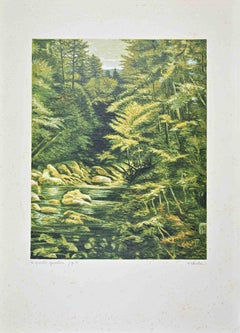
Artist Mati (Abdul) Klarwein
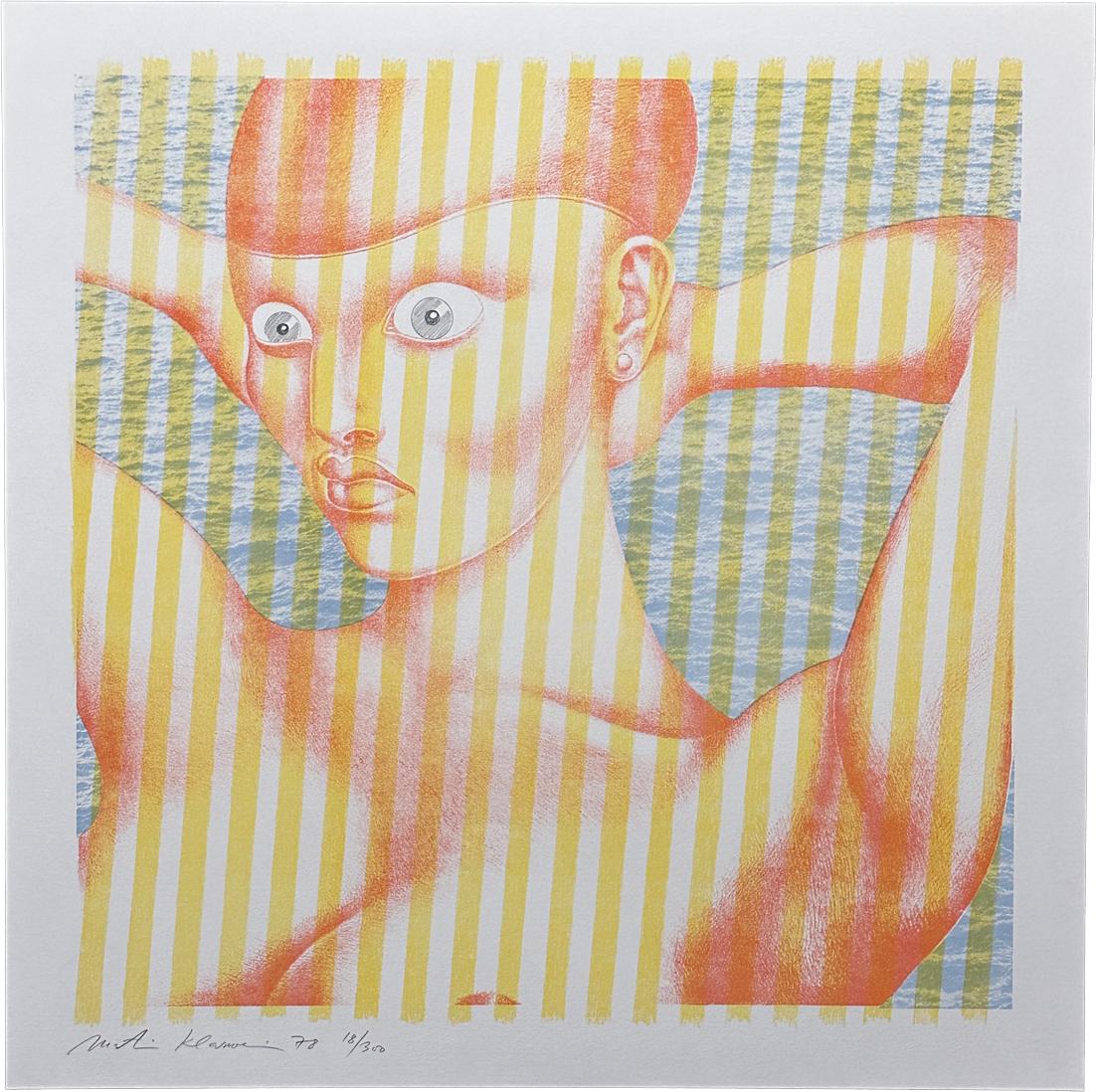
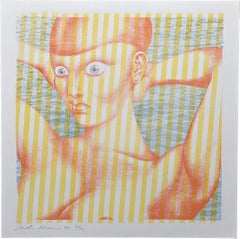
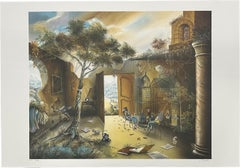
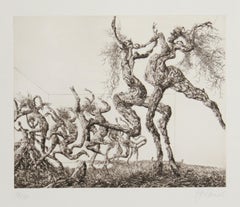
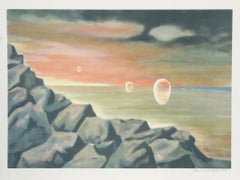
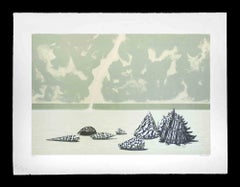
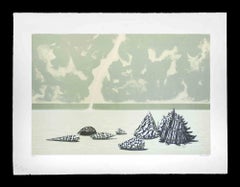
Title: The Good Life
Year: 1978
Print - Lithograph
Paper Size 23" x 23½" inches
Edition: signed in pencil and marked 3/300
Hand embellished by the artist.
Mati (Abdul) Klarwein Biography
Name: Mati Klarwein (born Abdul Mati Klarwein)
Born: April 9, 1932, Hamburg, Germany
Died: March 7, 2002, Deià, Mallorca, Spain
Nationality: German-born French
Occupation: Painter, Illustrator
Art Style: Surrealism, Psychedelic, Visionary
Mati Klarwein was born in Hamburg, Germany, in 1932. His father, Joseph Klarwein, was an architect, and his mother, Elsa, was an opera singer. Being of Jewish descent, his family fled Nazi Germany in 1934, settling in Palestine. Later, Klarwein moved to Paris, where he studied under the famous French artist Fernand Léger.
Klarwein became widely known for his striking, highly detailed paintings that blended surrealism, spirituality, and psychedelic elements. He drew inspiration from diverse cultures, incorporating African, Eastern, and religious symbolism into his works.
He was also deeply influenced by the psychedelic movement of the 1960s and 70s, making him a key figure in visionary and countercultural art. His art often featured dreamlike landscapes, celestial imagery, and mystical figures.
Famous Works & Album Covers
Mati Klarwein is best known for his album cover artwork, particularly:
• “Abraxas” (1970) – Santana (One of the most iconic album covers of all time, featuring Annunciation, a reinterpretation of a Christian scene with a surreal, multicultural twist.)
• “Bitches Brew” (1970) – Miles Davis (A groundbreaking jazz fusion album with an equally mesmerizing, abstract, and Afro-futuristic cover.)
• “Live-Evil” (1971) – Miles Davis
• “Last Days and Time” (1972) – Earth, Wind & Fire
Besides his album artwork, Klarwein painted numerous large-scale pieces, including his Annunciation series and the Visa series, which explored themes of identity, spirituality, and the fusion of different cultural aesthetics.
In the later part of his career, Klarwein continued painting but moved away from the psychedelic aesthetic, focusing on landscapes and commissioned works. He spent much of his time in Mallorca, Spain, where he lived until his passing in 2002.
His work remains highly influential, not only in the music industry but also in contemporary art, where his blend of surrealism, mysticism, and cultural fusion continues to inspire new generations.
!["Les Lauriers de Bonheur" [The Laurels of Happiness] Etching in Colors, 1974](https://a.1stdibscdn.com/salvador-dali-prints-works-on-paper-les-lauriers-de-bonheur-the-laurels-of-happiness-etching-in-colors-1974-for-sale/a_28452/a_183372721784669812645/item_135647_catimage_1_master.jpg)