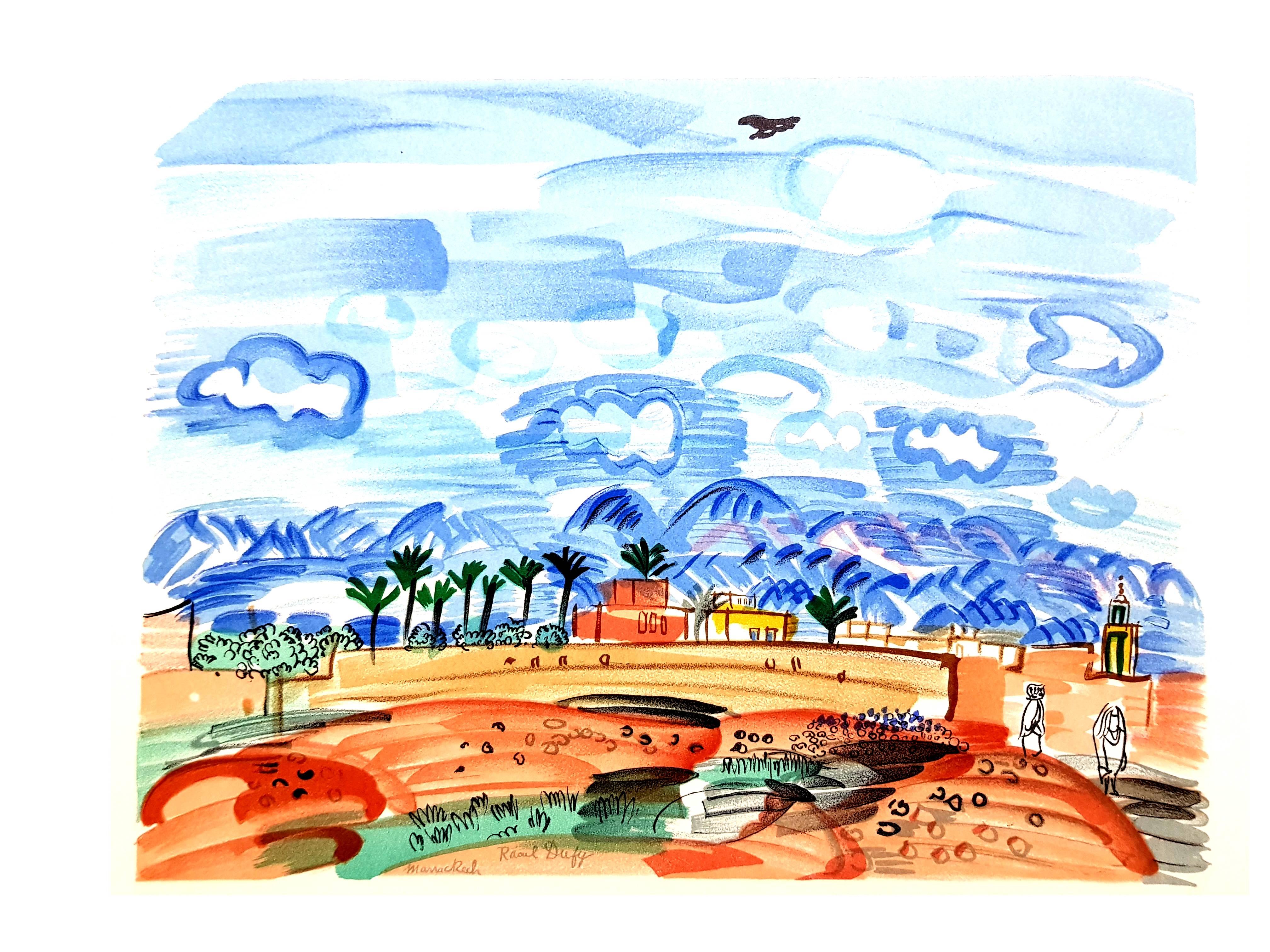
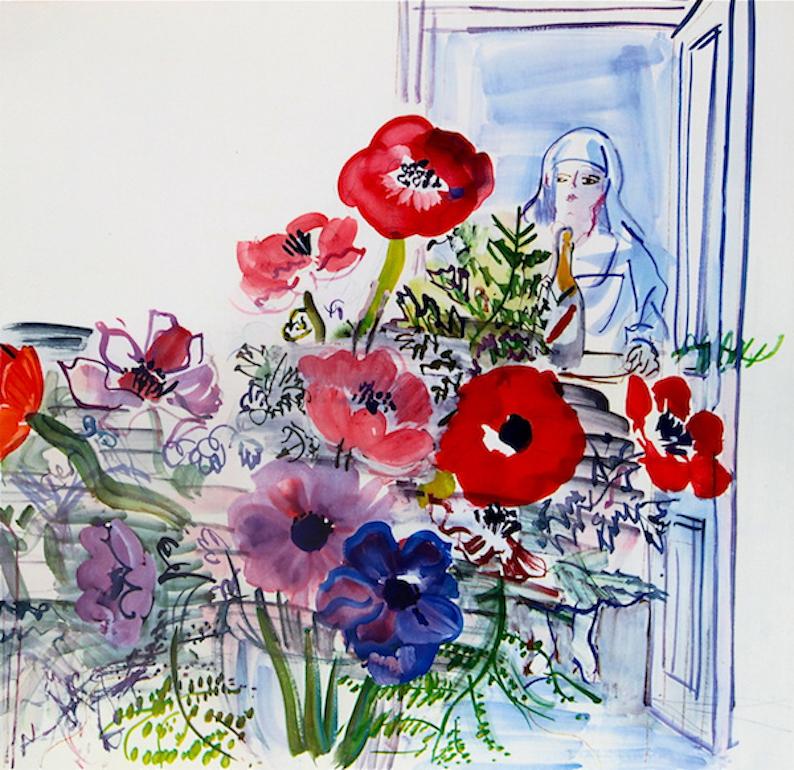
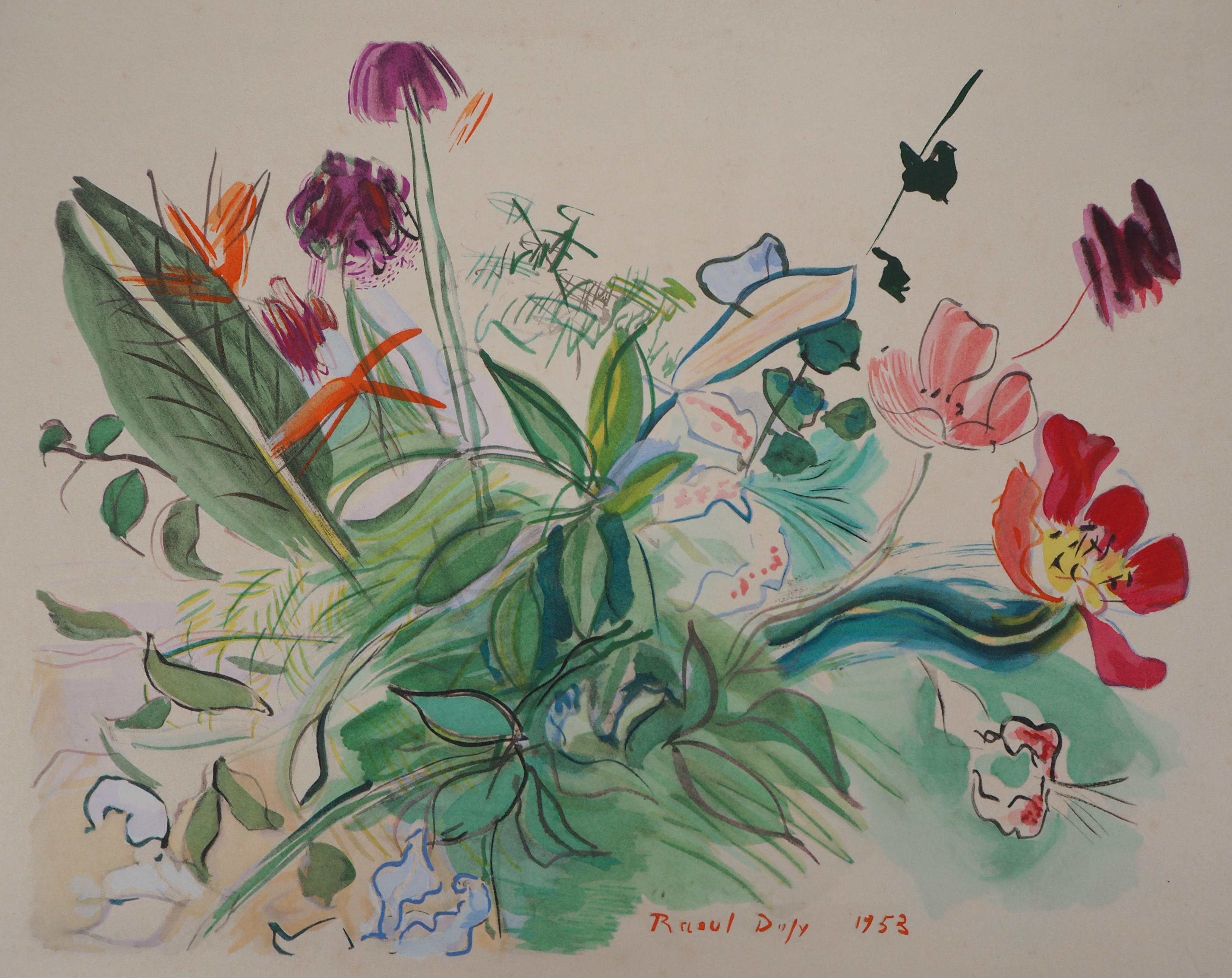
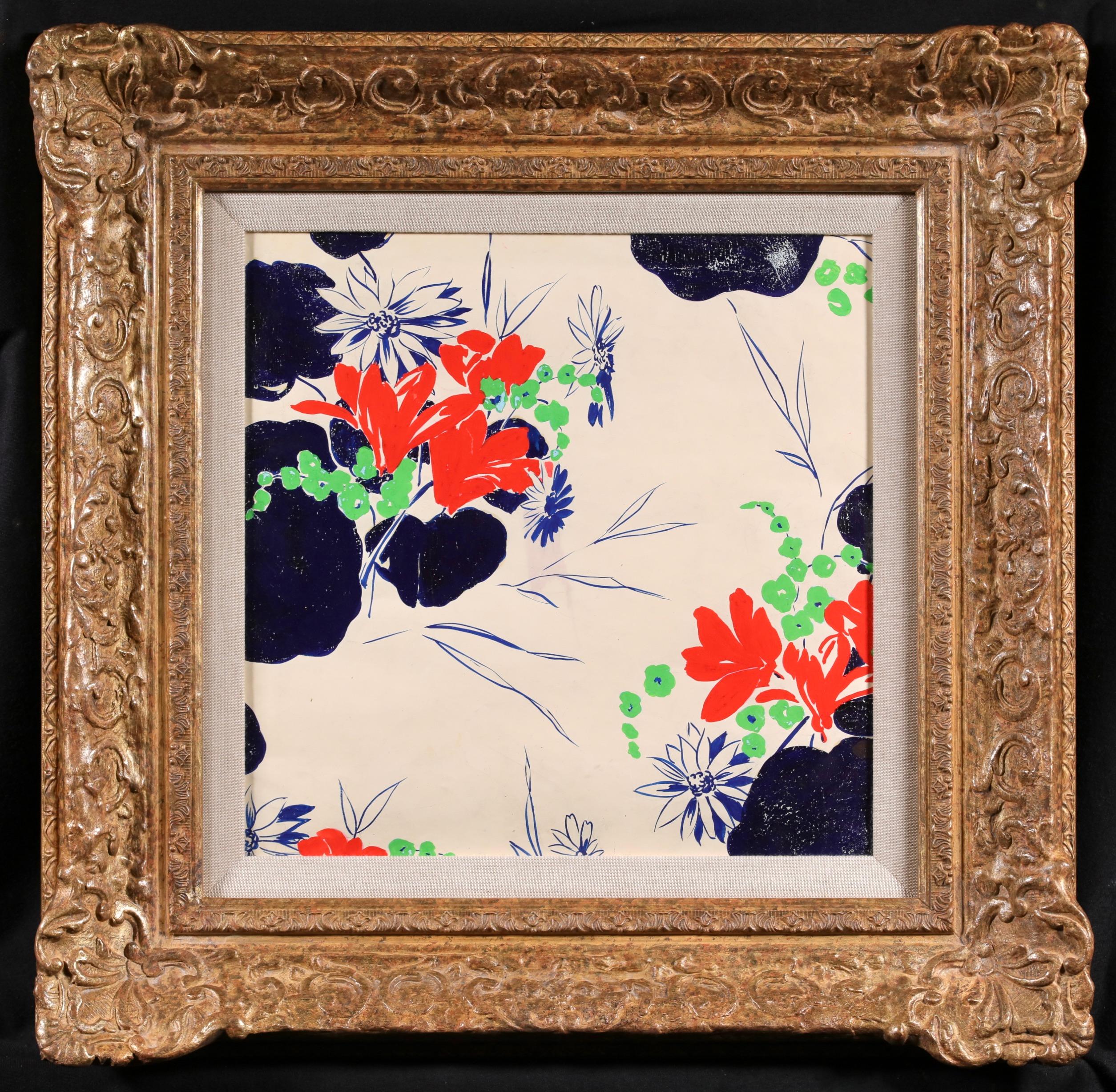
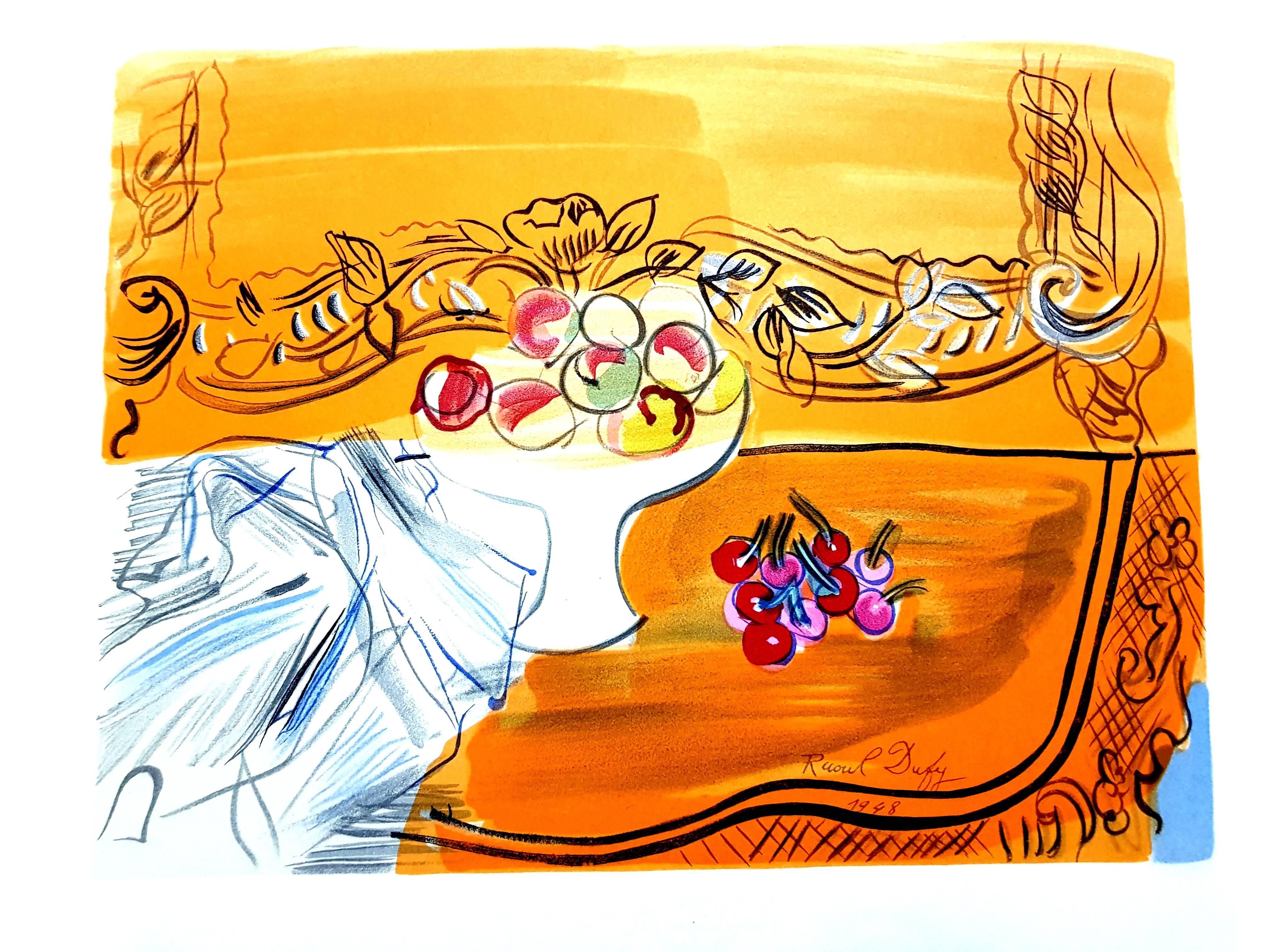
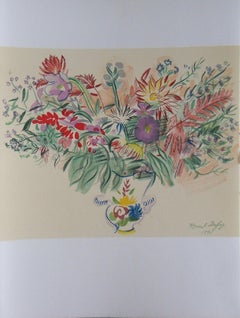
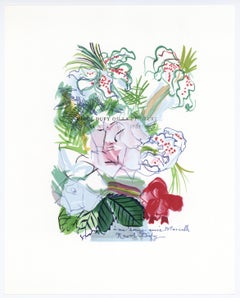
This exquisite lithograph after Raoul Dufy (1877–1953), titled Fleurs (Flowers), from the folio Eaux-de-vie, Esprit de la fleur et du fruit (Spirits, Essence of the Flower and the Fruit), originates from the 1954 edition published and printed by Bernard Klein, editeur, Paris, February 26, 1954. Fleurs captures Dufy’s radiant lyricism and effortless line, distilling blossoms into buoyant harmonies of color and rhythm that celebrate joie de vivre and the poetry of modern life.
Executed as a lithograph and pochoir on velin d'Arches paper, this work measures 10.62 x 13.75 inches. Signed in the plate and unnumbered as issued. The edition exemplifies the refined craftsmanship of Bernard Klein’s Paris atelier and the collaborative artistry that shaped mid-century color printmaking.
Artwork Details:
Artist: After Raoul Dufy (1877–1953)
Title: Fleurs (Flowers), from the folio Eaux-de-vie, Esprit de la fleur et du fruit (Spirits, Essence of the Flower and the Fruit)
Medium: Lithograph and pochoir on velin d'Arches paper
Dimensions: 10.62 x 13.75 inches (26.97 x 34.93 cm)
Inscription: Signed in the plate and unnumbered as issued
Date: 1954
Publisher: Bernard Klein, editeur, Paris
Printer: Bernard Klein, editeur, Paris
Condition: Well preserved, consistent with age and medium
Provenance: From the folio Eaux-de-vie, Esprit de la fleur et du fruit (Spirits, Essence of the Flower and the Fruit), Bernard Klein, editeur, Paris, 1954
Notes:
Excerpted from the folio (translated from French), It was taken from this original edition: XXX examples; XX examples on Japon nacre, including an original sketch, a copper of the album, an additional original etching, a suite en noir sur Chine, a suite in black and color on Japon, numbered from I to XX; XXX examples on Japon Imperial, including an additional original etching, a noir suite on Chine, a black and color suite on Arches, numbered from XXI to L; L examples on Arches, including an additional original etching and a noir suite on Chine, numbered from LI to C; CC examples on Arches, numbered from CI to CCC. In addition, V examples were printed out of the market.
About the Publication:
Eaux-de-vie, Esprit de la fleur et du fruit (Spirits, Essence of the Flower and the Fruit) (Paris, 1954) is a refined mid-century folio conceived to celebrate the fragrances, flavors, and imagery associated with flowers and fruit through the union of fine printing and modern art. Bernard Klein, editeur, oversaw both publishing and printing, combining lithography with hand-applied pochoir to achieve luminous passages of color and crisp contours characteristic of luxury Parisian portfolios of the period. The folio’s production values—high-quality velin papers, careful registration, and layered color applications—reflect the artisanal standards that made postwar French printmaking a benchmark for collectors and institutions. Organized as a coherent suite rather than a narrative book, the publication exemplifies how specialized Paris ateliers collaborated with artists and estates to translate drawings and gouaches into richly surfaced prints for a discerning international audience. Attention to collation and justification, along with tiered paper states and roman-numeral justifications described in the colophon, situates the project within the tradition of deluxe Paris editions that balanced accessibility with bibliophilic rigor.
About the Artist:
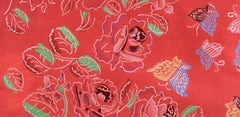
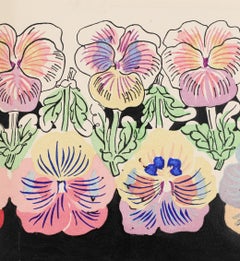
Raoul Dufy (1877–1953) was a French painter, printmaker, designer, and illustrator celebrated for his radiant use of color, lyrical brushwork, and joyous depictions of modern life that made him one of the most beloved artists of the 20th century. A central figure of Fauvism, Dufy’s exuberant compositions captured regattas, orchestras, and seaside scenes in shimmering harmonies of light and movement, translating the rhythm of everyday life into visual music. Influenced by Henri Matisse and Paul Cezanne and shaped by the revolutionary ideas of Pablo Picasso, Alexander Calder, Alberto Giacometti, Salvador Dali, Joan Miro, Wassily Kandinsky, Marcel Duchamp, and Man Ray, Dufy forged a style that balanced structure with spontaneity, joy with sophistication. Born in Le Havre, he studied at the Ecole des Beaux-Arts in Paris and, after encountering the Fauves at the 1905 Salon d’Automne, embraced pure color as his primary language. His early landscapes evolved into a radiant, rhythmic style that blended Cubist structure with the musicality of line and color. Beyond painting, Dufy was a pioneer of decorative arts, collaborating with fashion designer Paul Poiret on textile designs that revolutionized early 20th-century fashion and working in ceramics, tapestry, and stage design. His monumental 1937 mural La Fee Electricite (The Electricity Fairy), commissioned for the Paris International Exposition, remains one of the largest and most celebrated works of modern art—a 600-square-meter symphony of light and movement celebrating human progress. Dufy’s philosophy centered on “the logic of color,” which he likened to the harmony of music, and his free, transparent brushwork captured both atmosphere and emotion with unmatched vitality. Even after developing rheumatoid arthritis, Dufy continued to paint with undiminished energy, creating late works marked by gestural freedom and lyrical serenity. His art influenced later painters including Nicolas de Stael, Richard Diebenkorn, and David Hockney, who admired his balance of form and radiance. Today, Dufy’s works are housed in major museums worldwide, including the Museum of Modern Art in New York, the Centre Pompidou in Paris, and the Tate Modern in London. Standing alongside modern masters such as Pablo Picasso, Alexander Calder, Alberto Giacometti, Salvador Dali, Joan Miro, Wassily Kandinsky, Marcel Duchamp, and Man Ray, Dufy endures as a symbol of joy and beauty in modern art. The highest auction record for Raoul Dufy was achieved with La Fee Electricite, which sold for $6,767,200 USD at Christie’s, London, on June 25, 2007, reaffirming his legacy as one of the most radiant and influential colorists of the modern era.
Raoul Dufy Fleurs Flowers after Raoul Dufy Eaux-de-vie Esprit de la fleur et du fruit Spirits Essence of the Flower and the Fruit 1954 lithograph pochoir Modernism Fauvism.