Want more images or videos?
Request additional images or videos from the seller
1 of 6

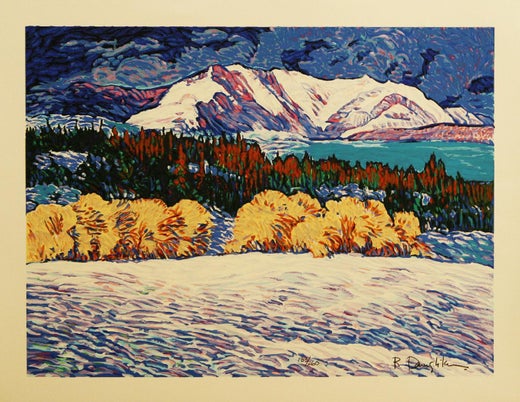
Robert Daughters
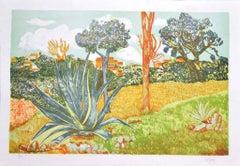
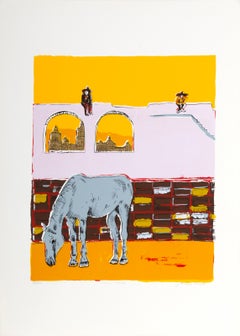
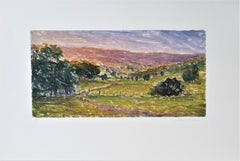
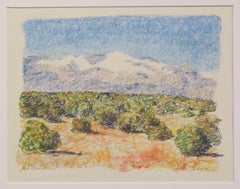
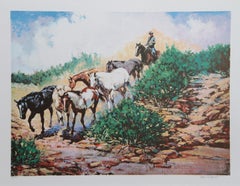
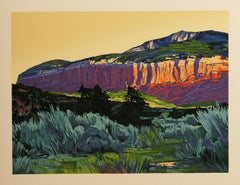
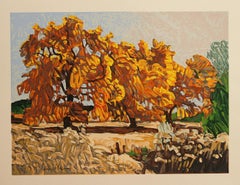
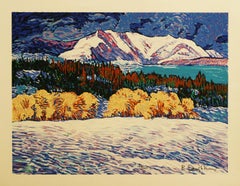
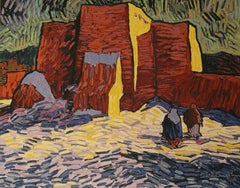
Sonora original serigraph by Robert Daughters

20th c.

$550List Price

You May Also Like

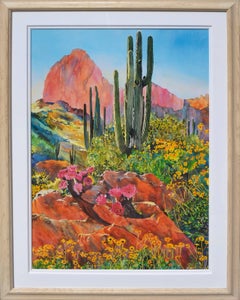
Desert Spring Giclee Print, Signed 27/95, 1996 Landscape

Desert Spring Giclee Print, Signed 27/95, 1996 Landscape

By Laurie Bender

Located in Soquel, CA

Desert Spring Giclee Print, Signed 27/95, 1996 Landscape Vivid large scale giclee print, titled "Desert Spring" by Laurie Bender (American, b. 1953). Saguaro cacti stand in the cent...

Category

1990s American Impressionist Landscape Prints

Materials

Paper, Giclée

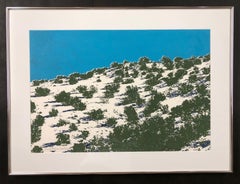
New Mexico Landscape by John Hogan, serigraph screen print limited edition

New Mexico Landscape by John Hogan, serigraph screen print limited edition

By John Hogan (American)

Located in Santa Fe, NM

New Mexico Landscape by John Hogan, serigraph screen print limited edition #6/20 limited edition hand pulled screen print/serigraph © 1977 John Hogan A graduate of Northeast Louisia...

Category

1970s Contemporary Landscape Prints

Materials

Screen

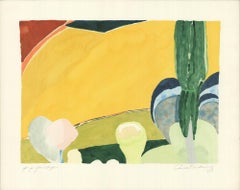
Tertius Serigraph Print, Signed, Late 20th Century, 19x24 Inches

Tertius Serigraph Print, Signed, Late 20th Century, 19x24 Inches

By Paul Narkiewicz

Located in Brooklyn, NY

Paper Size: 19 x 24 inches ( 48.26 x 60.96 cm ) Image Size: 14.5 x 20 inches ( 36.83 x 50.8 cm ) Framed: No Condition: A-: Near Mint, very light signs of handling Additional Details...

Category

Late 20th Century Prints and Multiples

Materials

Screen

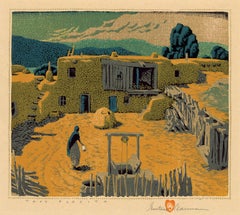
'Taos Placita' — American Southwest Masterwork, Signed Color Woodcut

'Taos Placita' — American Southwest Masterwork, Signed Color Woodcut

By Gustave Baumann

Located in Myrtle Beach, SC

Gustave Baumann, 'Taos Placita', color woodcut, 1947, edition 125. Baumann 132. Signed, titled, and numbered '20-125' in pencil; with the artist’s Hand-in-Heart chop. A superb, richly-inked impression, with fresh colors, on fibrous oatmeal wove paper; the full sheet with margins (2 to 3 1/8 inches); slight rippling at the left sheet edge, in excellent condition. Matted to museum standards, unframed. Image size 9 5/8 x 11 1/4 inches (244 x 286 mm); sheet size 13 1/4 x 17 inches (337 x 432 mm). Collections: Harwood Museum of Art, New Mexico Museum of Art, Phoenix Art Museum, Scottsdale Art Museum, Wichita Art Museum. ABOUT THE ARTIST Gustave Baumann (1881-1971) was a renowned printmaker and a leading figure of the American color woodcut revival whose exquisite craftsmanship and vibrant imagery captured the essence of the Southwest. "A brilliant printmaker, Baumann brought to the medium a full mastery of the craft of woodworking that he acquired from his father, a German cabinetmaker. This craftsmanship was coupled with a strong artistic training that resulted in the handsome objects we see in the exhibition today. After discovering New Mexico in 1918, Baumann began to explore in his woodblock prints of this period the light. color, and architectural forms of that landscape. His prints of this period are among the most beautiful and poetic images of the American West." —Lewis I. Sharp, Director, Denver Art Museum Baumann, the son of a craftsman, immigrated to the United States from Germany with his family when he was ten, settling in Chicago. From 1897 to 1904, he studied in the evenings at the Art Institute of Chicago, working in a commercial printmaking shop during the day. In 1905, he returned to Germany to attend the Kunstwerbe Schule in Munich, where he decided on a career in printmaking. He returned to Chicago in 1906 and worked for a few years as a graphic designer of labels. Baumann made his first prints in 1909 and exhibited them at the Art Institute of Chicago the following year. In 1910, he moved to the artists’ colony in Nashville, Indiana, where he explored the creative and commercial possibilities of a career as a printmaker. In 1915, he exhibited his color woodcuts at the Panama-Pacific International Exposition in San Francisco, winning the gold medal. Among Baumann’s ongoing commercial activities was his work for the Packard Motor Car Company from 1914 to 1920 where he produced designs, illustrations, and color woodcuts until 1923. In 1919, Baumann’s printmaking work dominated the important exhibition of American color woodcuts at the Detroit Institute of Arts. Twenty-six of his prints were included, far more than the works of any other artist. A set of his blocks, a preparatory drawing, and seven progressive proofs complemented the exhibition. That same year, Baumann worked in New York and, over the summer, in Provincetown, Massachusetts. His airy images of Cape Cod employed soft, pastel colors and occasionally showed the influence of the white-line woodcut technique. Many of his Chicago artist friends had traveled to the southwest, and Baumann became intrigued by their paintings, souvenirs, and stories of an exotic place named Taos, New Mexico. In the summer of 1918, he spent the summer in Taos sketching and painting before visiting Santa Fe. Paul Walter, the director of the Museum of New Mexico, offered him a studio in the museum's basement. Inspired by the rugged beauty of the Southwest—the vibrant colors and dramatic landscapes of the region became a central theme in his work, influencing his artistic style and subject matter for the remainder of his career. Later in the decade, he traveled to the West Coast and made prints of California landscape. Baumann's prints became synonymous with the Southwest, capturing the spirit of its place in America's identity with a unique sense of authenticity and reverence. His iconic images of desert vistas, pueblo villages, and indigenous cultures served as visual tributes to the region's rich cultural heritage, earning him a dedicated following among collectors and curators alike. A true craftsman and artist, Baumann completed every step of the printmaking process himself, cutting each block, mixing the inks, and printing every impression on the handmade paper he selected. His dedication to true craftsmanship and his commitment to preserving the integrity of his artistic vision earned him widespread acclaim and recognition within the art world. About the vibrant colors he produced, Baumann stated, “A knowledge of color needs to be acquired since they don’t all behave the same way when ground or mixed...careful chemistry goes into the making of colors, with meticulous testing for permanence. While complicated formulae evolve new colors, those derived from Earth and metal bases are still the most reliable.” In the 1930s, Baumann became interested in puppet theater. He designed and carved his own marionettes and established a little traveling company. From 1943 to 1945, the artist carved an altarpiece for the Episcopal Church of the Holy Faith in Santa Fe. In 1952, a retrospective exhibition of his prints was mounted at the New Mexico Museum of Fine Arts. Throughout his prolific career, Baumann executed nearly four hundred color woodcuts. Baumann’s woodcuts...

Category

1940s American Modern Landscape Prints
Materials

Woodcut

Mexican Landscape, Modern Screenprint by Biagio Civale

Mexican Landscape, Modern Screenprint by Biagio Civale

By Biagio Civale

Located in Long Island City, NY

Biagio Civale, Italian/American (1936 - ) - Mexican Landscape, Medium: Screenprint, Signed, numbered, dated, and titled in pencil, Edition: 36/100, Image Size: 18.5 x 15 inches, S...

Category

1980s Modern Animal Prints

Materials

Screen

Landscape #III

Thomas MonaghanLandscape #III, c.2000

$625

H 15 in W 22 in D 0.01 in

Landscape #III

By Thomas Monaghan

Located in San Francisco, CA

This artwork "Landscape #III' c.2000 is an original color monotype by American artist Thomas (Tom) Monaghan, b. 1961. It is hand signed and numbered 1/1 in pencil by the artist. The image (plate mark) size is 8 x 15.75 inches, the sheet size is 15 x 22 inches. it is in excellent condition, has never been framed. About the artist: Born in Chicago in 1961, Monaghan received his MFA from the University Northern Illinois. He moved west to Sonoma County in his mid-twenties and starting showing in galleries in San Francisco in the early 1990's, his move having a profound impact on his painting. The first impression of that sparkle on water upon the great lakes in Chicago continue his drive to seek out natural beauty in the landscape. Monaghan has had regional acclaim and International showing, include, International Art Fairs in San Francisco in 2011 and 2012. Selected exhibitions 1993 Claudia Chapline Gallery, Stinson Beach, CA., 1993 Heirloom Gallery, Chicago, I., 1994 Marinscapes., 1995 John Mallon, Editions Limited, Indianapolis, IN., 1996 Marinscapes., 1997 John Mallon, Editions Limited, Indianapolis, IN., 1998 Ira Wolk Gallery, St. Helena, CA., 2000 Erickson & Elins Gallery, San Francisco, CA ., 2001 Ira Wolk Gallery, St. Helena, CA, 2002 Ira Wolk Gallery, St. Helena, CA., Erickson Fine Art Gallery 2008. Selected collections The Prudential, Merrill Lynch, LaSalle National Bank, Chicago Mercantile Exchange...

Category

21st Century and Contemporary American Impressionist Landscape Prints

Materials

Monotype

Afternoon Autumn

Afternoon Autumn

By John Hogan (American)

Located in Santa Fe, NM

unique monotype 14" x 18" paper size 9" x 11.5" image size unframed

Category

1990s Contemporary Landscape Prints

Materials

Monotype

Last of the Strays, American Western Art Lithograph by Noel Daggett

Last of the Strays, American Western Art Lithograph by Noel Daggett

By Noel Daggett

Located in Long Island City, NY

Noel Daggett, American (1925 - 2005) - Last of the Strays, Year: 1980, Medium: Lithograph, signed and numbered in pencil, Edition: AP 40, Image Size: 20 x 26 inches, Size: 22.5 ...

Category

1980s American Realist Animal Prints

Materials

Lithograph

More From This Seller

View All
Chama Canyon hand pulled serigraph by William Hook

Chama Canyon hand pulled serigraph by William Hook

By William Hook

Located in Paonia, CO

Chama Canyon is a limited edition hand-pulled serigraph no. 225 /260 in excellent condition. It is signed in pencil and published by Aspen Mountain Graphics. sheet size 14 x 18 image 12 x 16 For American artist William Hook ( b. 1948- ) art was a central focus in his family home and he began his career in art at an early age.. He studied at several prestigious art schools in the US and abroad. His work has been featured in magazines such as Southwest Art, Art of the West, U. S. Art, American Artist and Focus Santa Fe. The book… Leading the West… by Donald Hagerty features William Hook as one of the most notable influences on the western art scene. Publishers Harper-Collins and North Light have included his work in numerous books written about the contemporary art process in Europe and America. Hook’s paintings can be found in the permanent collections of the Denver Art Museum, the Tucson Art Museum, the University of New Mexico, the FORBES Museum, NYC, and the Genesee Museum, NY as well as in many corporate and private collections. His work has also been featured in prints for the New Mexico Symphony, Music from Angel Fire...

Category

20th Century Expressionist Landscape Prints

Materials

Screen