Mid-20th Century Nude Prints

to
26
314
133
77
19
5
Overall Width
to
Overall Height
to
244
107
17
14
13
9
4
4
3
1
53
27
26
24
23
16
49
1,929
436
24
79
117
110
55
114
205
549
245
125
13
429
114
2
439
262
254
176
112
106
101
81
69
12
12
11
11
10
8
8
6
6
6
5
231
214
63
32
25
63
148
336
215
Period: Mid-20th Century
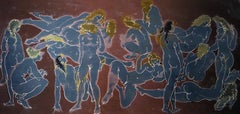
original lithograph

original lithograph

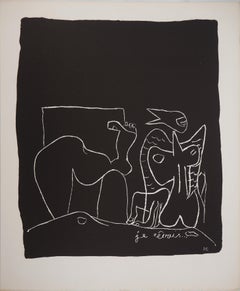
By André Cottavoz

Located in Henderson, NV

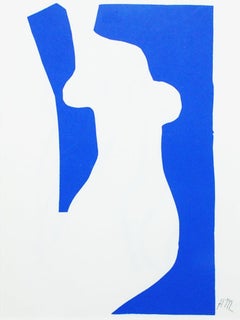
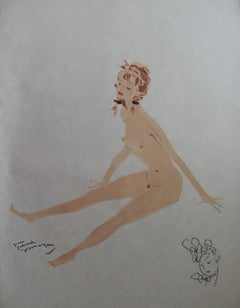
Medium: original lithograph. Printed on Arjomari paper in 1969 at the Mourlot Freres atelier and published by Editions Richelieu in a limited edition of 2400 for the L'Odyssee portfo...

Category

Mid-20th Century Nude Prints

Materials

Lithograph

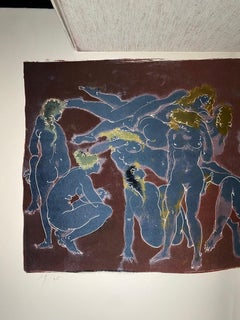
original lithograph

original lithograph

By André Cottavoz

Located in Henderson, NV

Medium: original lithograph. Printed on Arjomari paper in 1969 at the Mourlot Freres atelier and published by Editions Richelieu in a limited edition of 2400 for the L'Odyssee portfo...

Category

Mid-20th Century Nude Prints

Materials

Lithograph

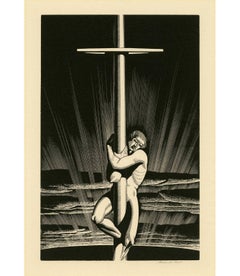
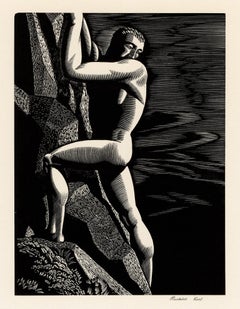
'Mountain Climber' — American Modernism, Signed Wood Engraving

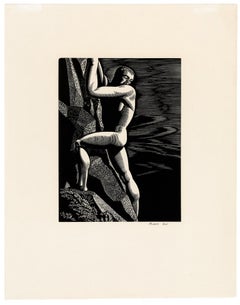
'Mountain Climber' — American Modernism, Signed Wood Engraving

By Rockwell Kent

Located in Myrtle Beach, SC

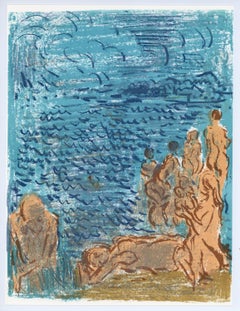
Rockwell Kent, 'Mountain Climber', wood engraving, 1933, edition 250, Burne Jones 93. Signed in pencil. A brilliant, black impression, on cream, wove Japan paper; the full sheet with margins (2 9/16 to 3 5/8 inches); slight skinning at the top sheet edge verso, where previously hinged; otherwise, in excellent condition. Archivally matted to museum standards, unframed. Image size 7 7/8 x 5 7/8 inches (200 x 149 mm); sheet size 14 x 11 1/8 inches (356 x 283 mm). Printed by Pynson Printers, New York. Distributed by The Print Club of Cleveland, Publication No. 11, 1933. Literature: 'Rockwellkentiana,' Harcourt, Brace and Company, New York, 1933. '101 of The World’s Greatest Books', edited by Spencer Armstrong, 1950. Impressions of this work are held in the following museum collections: Akron Art Institute, Burne Jones Collection, IL; Cincinnati Art Museum; Cleveland Museum of Art; Columbus Gallery of Fine Arts; Crystal Bridges Museum of American Art; Davis Museum at Wellesley College; Fine Art Museums of San Francisco; H. M. de Young Museum; Hermitage Museum; Kent Collection, NY; Library of Congress; Memorial Art Gallery, University of Rochester; Metropolitan Museum of Art; New York Public Library; Philadelphia Museum of Art; Princeton University Library; Smithsonian American Art Museum, Spector Collection, NY; SUNY, Plattsburg. ABOUT THE ARTIST Rockwell Kent (1882-1971), though best known as a painter, graphic artist, and illustrator, pursued many careers throughout his life, including architect, carpenter, explorer, writer, dairy farmer, and political activist. Born in Tarrytown, New York, Kent was interested in art from a young age. These ambitions were encouraged by his aunt Jo Holgate, an accomplished ceramicist. Jo came to live with the family after Kent’s father passed away in 1887 and took him to Europe as a teenager, undoubtedly kindling his interest in exploring the world. Kent attended the Horace Mann School in New York City, where he excelled at mechanical drawing. His family’s financial circumstances prevented him from pursuing a career in the fine arts; however, after graduating from Horace Mann in 1900, Kent decided to study architecture at Columbia University. Before matriculating at Columbia, Kent spent the first of three consecutive summers studying painting at William Merritt Chase’s art school in Shinnecock Hills, Long Island. There he found a community of mentors and fellow students who encouraged him to pursue his interest in art. At the end of Kent’s third summer at Shinnecock, Chase offered him a full scholarship to the New York School of Art, where he was a teacher. Kent began taking night classes at the art school in addition to his architecture studies but soon left Columbia to study painting full-time. In addition to Chase, Kent took classes with Robert Henri and Kenneth Hayes Miller, where his classmates included the artists George Bellows and Edward Hopper. Kent spent the summer of 1903 assisting the eccentric painter Abbott Handerson Thayer at his studio in Dublin, New Hampshire—a position he secured through the recommendation of his Aunt Jo. Thayer’s naturalist lifestyle and almost mystical appreciation for natural phenomena greatly influenced Kent; he returned to Dublin for many years to visit Thayer and his family. Thayer gave the young artist time to pursue his work, and that summer Kent painted several views of the New Hampshire landscape, including Mount Monadnock. In 1905 Kent moved from New York to Monhegan Island in Maine, home to a summer art colony, where he continued to find inspiration in nature. Kent soon found success exhibiting and selling his paintings in New York, and in 1907, he was given his first solo show at Claussen Galleries. The following year he married his first wife, Kathleen Whiting (Thayer’s niece), with whom he had five children. The couple divorced in 1924, and Kent married Frances Lee the following year. They divorced after 15 years of marriage, and the artist married Sally Johnstone. For the next several decades, Kent lived a peripatetic lifestyle, settling in several locations in Connecticut, Maine, and New York. During this time he took several extended voyages to remote, often ice-filled, corners of the globe, including Newfoundland, Alaska, Tierra del Fuego, and Greenland, to which he made three separate trips. For Kent, exploration and artistic production were twinned endeavors, and his travels to these rugged, elemental locations inspired his visual art and his writings. He developed a stark, realist landscape style in his paintings and drawings that revealed both nature’s harshness and its sublimity. Kent’s human figures, which appear sparingly in his work, often allude to the mythic themes of isolation, individualism, heroism, and the quest for self-connection. Important exhibitions of works from these travels include the Knoedler Gallery’s shows in 1919 and 1920, featuring Kent’s Alaska drawings...

Category

American Modern Mid-20th Century Nude Prints
Materials

Woodcut

'The Bather' — 1930s American Modernist Signed Wood Engraving

'The Bather' — 1930s American Modernist Signed Wood Engraving

By Rockwell Kent

Located in Myrtle Beach, SC

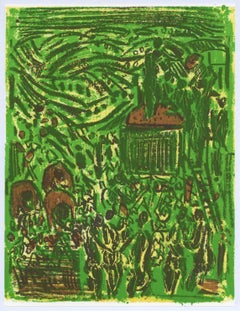
Rockwell Kent, 'The Bather', wood engraving, 1931, edition 120, Burne Jones 63. Signed in pencil. A brilliant, black impression, on cream, wove Japan paper; the full sheet with margins (2 1/2 to 3 1/4 inches); slight skinning at the top sheet edge, verso, otherwise in excellent condition. Archivally matted to museum standards, unframed. Image size 5 3/8 x 7 7/8 inches (137 x 200 mm); sheet size 11 1/8 x 14 1/2 inches (283 x 368 mm). Impressions of this work are held in the following public collections: Burne Jones Collection (Illinois), Chazen Museum of Art, Chegodaev Collection (Moscow), Kent Collection (New York), National Gallery of Art, Philadelphia Museum of Art; SUNY Plattsburg Art Museum, Princeton University Library, Pushkin Museum (Moscow), Smithsonian American Art Museum, Spector Collection (New York), University of Illinois. ABOUT THE ARTIST Rockwell Kent (1882-1971), though best known as a painter, graphic artist, and illustrator, pursued many careers throughout his life, including architect, carpenter, explorer, writer, dairy farmer, and political activist. Born in Tarrytown, New York, Kent was interested in art from a young age. These ambitions were encouraged by his aunt Jo Holgate, an accomplished ceramicist. Jo came to live with the family after Kent’s father passed away in 1887 and took him to Europe as a teenager, undoubtedly kindling his interest in exploring the world. Kent attended the Horace Mann School in New York City, where he excelled at mechanical drawing. His family’s financial circumstances prevented him from pursuing a career in the fine arts; however, after graduating from Horace Mann in 1900, Kent decided to study architecture at Columbia University. Before matriculating at Columbia, Kent spent the first of three consecutive summers studying painting at William Merritt Chase’s art school in Shinnecock Hills, Long Island. There he found a community of mentors and fellow students who encouraged him to pursue his interest in art. At the end of Kent’s third summer at Shinnecock, Chase offered him a full scholarship to the New York School of Art, where he was a teacher. Kent began taking night classes at the art school in addition to his architecture studies but soon left Columbia to study painting full-time. In addition to Chase, Kent took classes with Robert Henri and Kenneth Hayes Miller, where his classmates included the artists George Bellows and Edward Hopper. Kent spent the summer of 1903 assisting the eccentric painter Abbott Handerson Thayer at his studio in Dublin, New Hampshire—a position he secured through the recommendation of his Aunt Jo. Thayer’s naturalist lifestyle and almost mystical appreciation for natural phenomena greatly influenced Kent; he returned to Dublin for many years to visit Thayer and his family. Thayer gave the young artist time to pursue his work, and that summer Kent painted several views of the New Hampshire landscape, including Mount Monadnock...

Category

American Modern Mid-20th Century Nude Prints
Materials

Woodcut

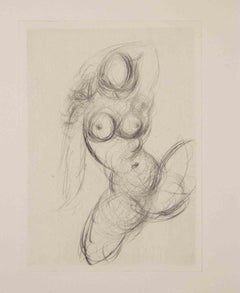
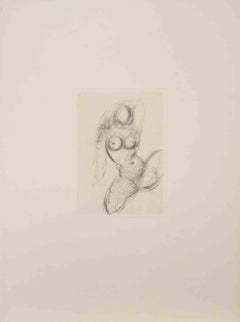
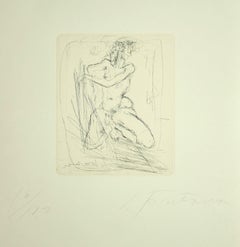
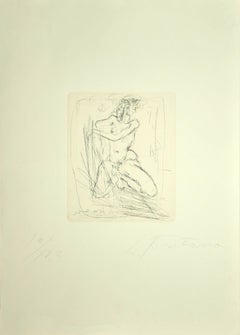
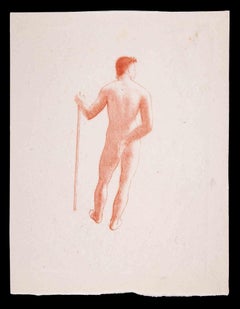
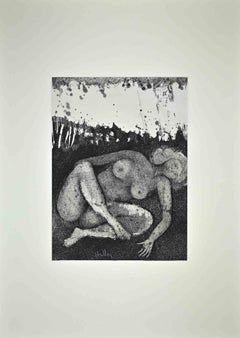
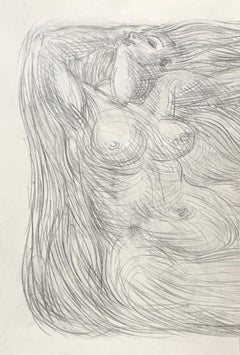
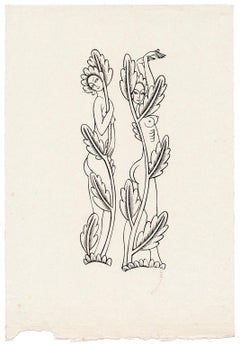
Nude Figure - Original Lithograph - Mid-20th Century

Nude Figure - Original Lithograph - Mid-20th Century

Located in Roma, IT

Figure is an original lithograph on paper realized by an anonymous artist of the mid-20th Century. In very good conditions. The artwork created through confident strokes, short and...

Category

Modern Mid-20th Century Nude Prints

Materials

Lithograph

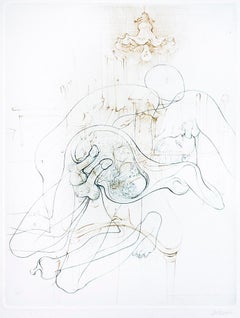
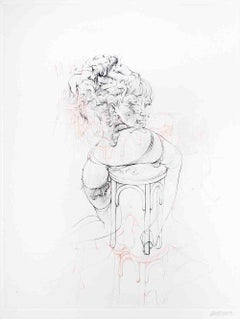
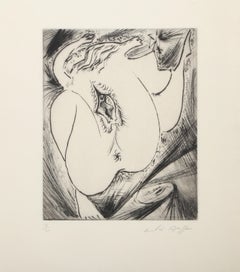
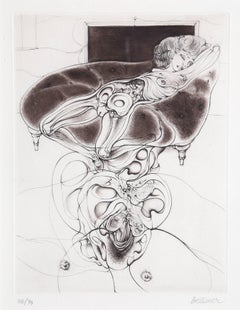
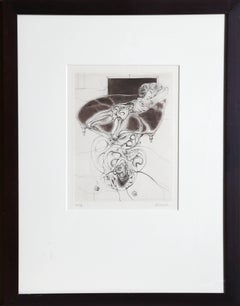
La petite fille sur canape noir, Etching by Hans Bellmer

La petite fille sur canape noir, Etching by Hans Bellmer

By Hans Bellmer

Located in Long Island City, NY

Artist: Hans Bellmer, German Title: La petite fille sur canape noir Year: circa 1970 Medium: Etching, signed and numbered in pencil Edition: 46/70 Image Size: 10.5 x 8 inches Frame...

Category

Surrealist Mid-20th Century Nude Prints

Materials

Etching

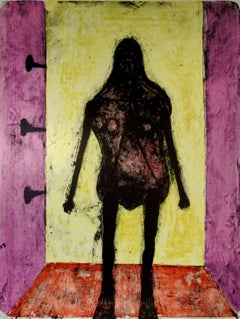
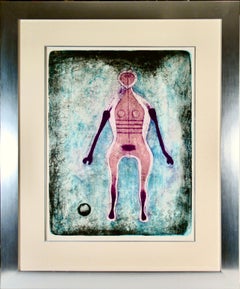
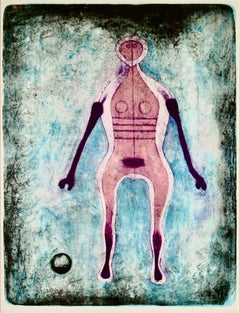
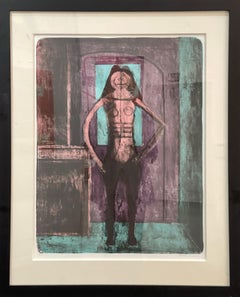
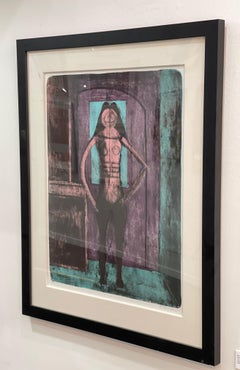
Venus Noir
Venus Noir

Venus Noir

By Rufino Tamayo

Located in San Francisco, CA

This artwork titled "venus Noir" from the suite "The Mujeres File" 1969 is an original colors lithograph on BFK Rives paper by renown Mexican artist Rufino Tamayo, 1899-1991. It is h...

Category

Modern Mid-20th Century Nude Prints

Materials

Lithograph

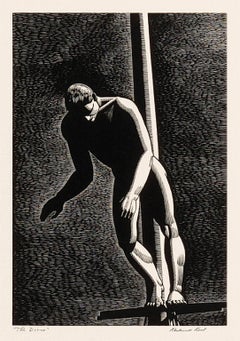
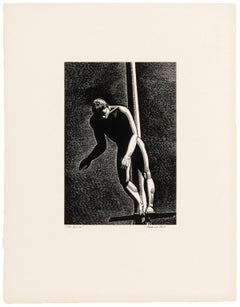
'Diver' — 1930s American Modernism, Signed Wood Engraving

'Diver' — 1930s American Modernism, Signed Wood Engraving

By Rockwell Kent

Located in Myrtle Beach, SC

Rockwell Kent, 'Diver', wood engraving, 1931, edition 150, Burne Jones 88. Signed, and titled 'The Diver' in pencil. A brilliant, black impression, on cream, wove Japan paper; the fu...

Category

American Modern Mid-20th Century Nude Prints
Materials

Woodcut

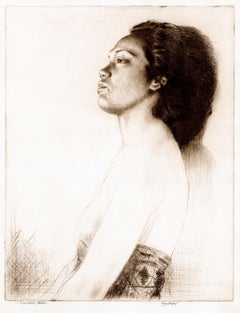
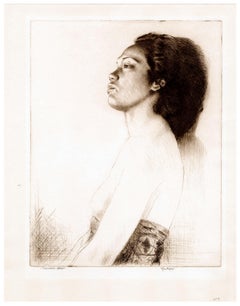
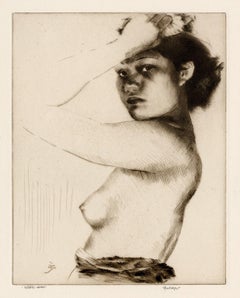
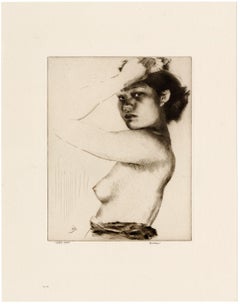
'Mokihana, Hawaii' — Classic Polynesian Portrait, Signed Drypoint

'Mokihana, Hawaii' — Classic Polynesian Portrait, Signed Drypoint

Located in Myrtle Beach, SC

John Melville Kelly, 'Mokihana (Hawaii)', drypoint, 1946. Signed, titled, and annotated 'No 5' in pencil. A superb, finely nuanced impression, in dark brown ink, on cream wove Japan ...

Category

American Modern Mid-20th Century Nude Prints
Materials

Drypoint

Les Crimes de l'Amour - Etching by Hans Bellmer - 1968

Les Crimes de l'Amour - Etching by Hans Bellmer - 1968

By Hans Bellmer

Located in Roma, IT

Hand Signed. From the Portfolio "Petit Traité de Morale", Paris, Editions Georges Visat, 1968. Copy on Velin d'Arches. Includes matting. Hans Bellmer was a German artist, who, when...

Category

Modern Mid-20th Century Nude Prints
Materials

Paper, Etching

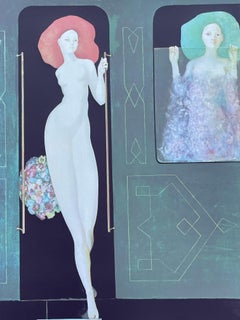
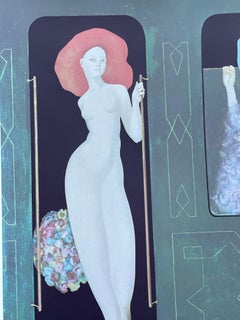
Leonor Fini, rare original serigraph on Rives paper, circa 1970

Leonor Fini, rare original serigraph on Rives paper, circa 1970

By Leonor Fini

Located in Saint-Didier, Provence-Alpes-Côte d'Azur

Rare print handsigned by surrealist artist Leonor Fini, inscreasingly esteemed with the movement of rediscovering art by women. This silkscreen is in perfect condition and from a ver...

Category

Surrealist Mid-20th Century Nude Prints

Materials

Paper

Saut de la Rivière (Steeplechase horses)

Saut de la Rivière (Steeplechase horses)

By Louis Claude

Located in Middletown, NY

New York: Sidney Lucas & The Paris Etching Society, c1970. Lithograph with colors on smooth cream wove paper, 20 x 25 3/4 inches (508 x 654 mm), full margins. Signed and inscribed i...

Category

Modern Mid-20th Century Nude Prints
Materials

Lithograph

original lithograph

original lithograph

By André Cottavoz

Located in Henderson, NV

Medium: original lithograph. Printed on Arjomari paper in 1969 at the Mourlot Freres atelier and published by Editions Richelieu in a limited edition of 2400 for the L'Odyssee portfo...

Category

Mid-20th Century Nude Prints

Materials

Lithograph

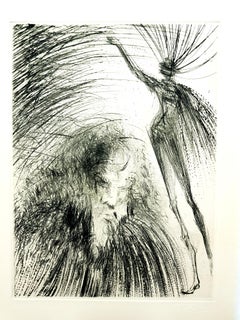
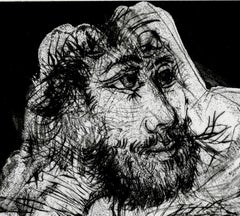
Salvador Dali - Old Faust - Original Etching

Salvador Dali - Old Faust - Original Etching

By Salvador Dalí­

Located in Collonge Bellerive, Geneve, CH

Salvador Dali - Old Faust - from "Faust" Original Etching Embossed signature From the edition of 731 Dimensions: 38,5 x 28,5 cm 1969 References : Field 69-1 / Michler & Lopsinger 305

Category

Surrealist Mid-20th Century Nude Prints

Materials

Etching

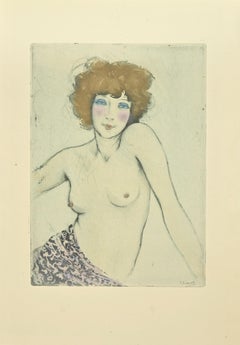
Nude - Etching by Edouard Chimot - 1930s

Nude - Etching by Edouard Chimot - 1930s

By Édouard Chimot

Located in Roma, IT

Nude is an etching realized by Edouard Chimot in the 1930s. Signed on the plate by the artist on the lower right corner. Good conditions. Édouard Chimot (26 November 1880 – 7 June...

Category

Modern Mid-20th Century Nude Prints
Materials

Etching

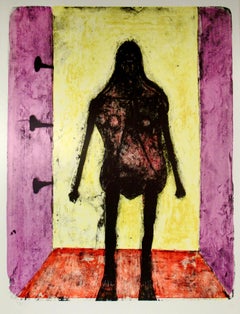
La Negra (The Black Woman)

La Negra (The Black Woman)

By Rufino Tamayo

Located in San Francisco, CA

This artwork titled "La Negra (The Black Woman)" from the suite "The Mujeres File" 1969 is an original colors lithograph on B.F.K. Rives paper by renown Mexican artist Rufino Tamayo, 1899-1991. It is hand signed and numbered 150/150 in pencil by the artist. The image size is 26.85 x 21.25 inches, sheet size is 29.5 x 22.15 inches, framed size is 42 x 35 inches. Published by Touchtone Publisher, New York, printed by Ateliers Desjobert, Paris. Referenced and pictured in the artist's catalogue raisonne by Pereda, plate #109 page 107. Custom framed in a wooden silver frame, with silver spacer and fabric matting. It is in excellent condition. About the artist: A native of Oaxaca in Southern Mexico, Rufino Tamayo's father was a shoemaker, and his mother a seamstress. Some accounts state that he was descended from Zapotec Indians, but he was actually 'mestizo' - of mixed indigenous/European ancestry. (Santa Barbara Museum of Art). He began painting at age 11. Orphaned at the age of 12, Tamayo moved to Mexico City, where he was raised by his maternal aunt who owned a wholesale fruit business. In 1917, he entered the San Carlos Academy of Fine Arts, but left soon after to pursue independent study. Four years later, Tamayo was appointed the head designer of the department of ethnographic drawings at the National Museum of Archaeology in Mexico City. There he was surrounded by pre-Colombian objects, an aesthetic inspiration that would play a pivotal role in his life. In his own work, Tamayo integrated the forms and tones of pre-Columbian ceramics into his early still lives and portraits of Mexican men and women. In the early 1920s he also taught art classes in Mexico City's public schools. Despite his involvement in Mexican history, he did not subscribe to the idea of art as nationalistic propaganda. Modern Mexican art at that time was dominated by 'The Three Great Ones' : Diego Rivera, Jose Clemente Orozco, and David Alfaro Siqueros, but Tamayo began to be noted as someone 'new' and different' for his blending of the aesthetics of post Revolutionary Mexico with the vanguard artists of Europe and the United States. After the Mexican Revolution, he focused on creating his own identity in his work, expressing what he thought was the traditional Mexico, and refusing to follow the political trends of his contemporary artists. This caused some to see him as a 'traitor' to the political cause, and he felt it difficult to freely express himself in his art. As a result, he decided to leave Mexico in 1926 and move to New York, along with his friend, the composer Carlos Chavez. The first exhibition of Tamayo's work in the United States was held at the Weyhe Gallery, New York, in that same year. The show was successful, and Tamayo was praised for his 'authentic' status as a Mexican of 'indigenous heritage', and for his internationally appealing Modernist aesthetic. (Santa Barbara Museum of Art). Throughout the late thirties and early forties New York's Valentine Gallery gave him shows. For nine years, beginning in 1938, he taught at the Dalton School in New York. In 1929, some health problems led him to return to Mexico for treatment. While there he took a series of teaching jobs. During this period he became romantically involved with the artist Maria Izquierdo...

Category

Modern Mid-20th Century Nude Prints
Materials

Lithograph

Feminaire II, Surrealist Etching by André Masson

Feminaire II, Surrealist Etching by André Masson

By André Masson

Located in Long Island City, NY

André Masson, French (1896 -1987) - Feminaire II, Year: 1951, Medium: Etching on wove paper, signed and numbered in pencil, Edition: 30, Image Size: 9.75 x 8 inches, Size: 14.25...

Category

Surrealist Mid-20th Century Nude Prints

Materials

Etching

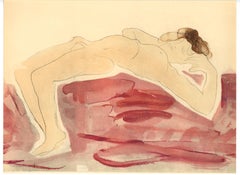
pochoir

pochoir

By (after) Auguste Rodin

Located in Henderson, NV

Medium: pochoir (after the watercolor). Printed in 1944 at the Rene Kieffer atelier and published by Rombaldi in an edition of 300 for the "La Varende" portfolio. Size: 11 1/2 x 15 1...

Category

Mid-20th Century Nude Prints

Materials

Lithograph, Stencil

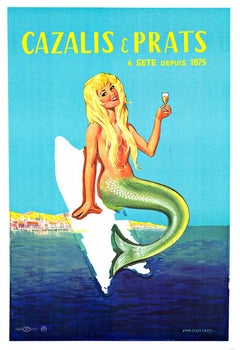
Original CAZALIS & PRATS Grand Cru  Mermaid  vintage French liquor poster

Original CAZALIS & PRATS Grand Cru Mermaid vintage French liquor poster

Located in Spokane, WA

Original CAZALIS & PRATS since 1875. Artist: Emm. Gaillard. Size: 13" x 19.5". Professionally acid-free archival linen backed and ready to frame. Note that a small ink printing line ...

Category

American Modern Mid-20th Century Nude Prints
Materials

Lithograph

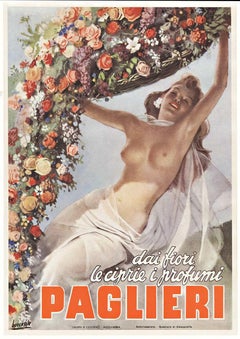
Paglieri dai Fiori le Cipri I Profumi

Paglieri dai Fiori le Cipri I Profumi

By Gino Boccasile

Located in Spokane, WA

Original vintage poster: Paglieri dai fiori le Cipri i Profumi. Italian artist: Gino Boccasile (1901 - 1952). Size: 13.25" x 19". Archival linen backed authentic Italian post...

Category

American Realist Mid-20th Century Nude Prints

Materials

Offset

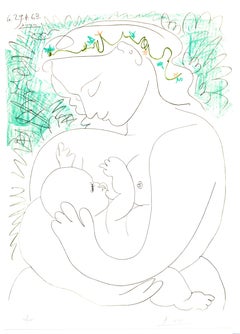
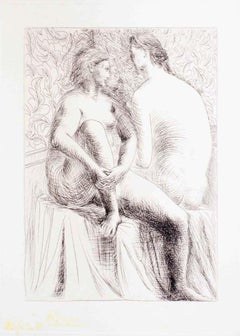
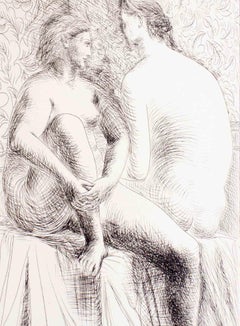
Deux Femmes Nues - Etching by Pablo Picasso - 1930

Deux Femmes Nues - Etching by Pablo Picasso - 1930

By Pablo Picasso

Located in Roma, IT

Etching on wove Arches paper. Hand signed and numbered in ink. Edition of 81/125 prints. Published by Editions Albert Skira, Paris, in 1930. Very good condition. Catalogue Bloch no. ...

Category

Cubist Mid-20th Century Nude Prints

Materials

Paper, Etching

Untitled Modernist Nude Etching, Signed, Circa 1930, Rare Impression

Untitled Modernist Nude Etching, Signed, Circa 1930, Rare Impression

Located in Myrtle Beach, SC

Russell T. Limbach, 'Untitled (Modernist Nude)', etching and aquatint, no known edition, c. 1930. Signed in pencil. A fine impression, on cream wove paper, with full margins (1 7/8 to 2 3/4 inches), in excellent condition. Extremely rare. Matted to museum standards, unframed. Image size 8 15/16 x 5 15/16 inches; sheet size 13 3/8 x 10 1/4 inches. Probably created when Limbach was in Paris (1928-1934), where he was exposed to modernist printmaking explorations at Stanley William Hayter’s 'Atelier 17'. ABOUT THE ARTIST Born in Massillon, Ohio, Russell Limbach...

Category

American Modern Mid-20th Century Nude Prints
Materials

Etching

Henri Matisse Lithograph, Abstract, 1958, Femmes et Singes, Last Works of Matiss

Henri Matisse Lithograph, Abstract, 1958, Femmes et Singes, Last Works of Matiss

By (after) Henri Matisse

Located in Washington, DC

Artist: Henri Matisse (after) Title: Femmes et Singes Portfolio: 1958 The Last Works of Henri Matisse Medium: Lithograph Date: 1958 Edition: 2000 Frame Size: 20" x 27" Sheet Size: 14...

Category

Abstract Mid-20th Century Nude Prints
Materials

Lithograph

Femme au Collant Noir, 1969, (4/150)

Femme au Collant Noir, 1969, (4/150)

By Rufino Tamayo

Located in San Francisco, CA

Rufino Tamayo Femme au Collant Noir, 1969 Color lithograph Unframed dimensions: 27.50 x 21 in Framed dimensions: 37.625 x 30.75 Edition 4/150 This limited edition color lithograph i...

Category

Abstract Mid-20th Century Nude Prints
Materials

Color, Lithograph

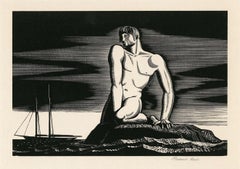
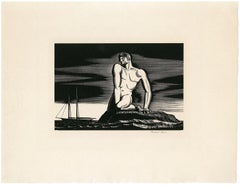
'Sea And Sky' — 1930s Modernism

'Sea And Sky' — 1930s Modernism

By Rockwell Kent

Located in Myrtle Beach, SC

Rockwell Kent, 'Sea and Sky', wood engraving, edition 150, 1931 (published 1932). A brilliant, richly-inked impression on cream wove Japan; the full sheet with margins (2 to 2 1/2 in...

Category

American Modern Mid-20th Century Nude Prints
Materials

Woodcut

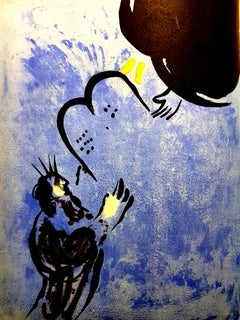
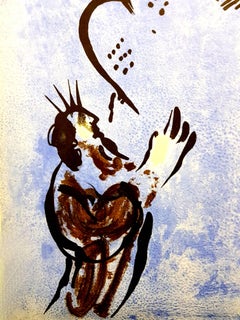
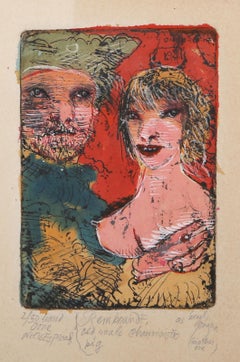
Marc Chagall - Moses - Original Lithograph

Marc Chagall - Moses - Original Lithograph

By Marc Chagall

Located in Collonge Bellerive, Geneve, CH

Marc Chagall, Original Lithograph depicting an instant of the Bible. Technique: Original lithograph in colours Year: 1956 Sizes: 35,5 x 26 cm / 14" x 10.2" (sheet) Published by: Éditions de la Revue Verve, Tériade, Paris Printed by: Atelier Mourlot, Paris Documentation / References: Mourlot, F., Chagall Lithograph [II] 1957-1962, A. Sauret, Monte Carlo 1963, nos. 234 and 257 Marc Chagall (born in 1887) Marc Chagall was born in Belarus in 1887 and developed an early interest in art. After studying painting, in 1907 he left Russia for Paris, where he lived in an artist colony on the city’s outskirts. Fusing his own personal, dreamlike imagery with hints of the fauvism and cubism popular in France at the time, Chagall created his most lasting work—including I and the Village (1911)—some of which would be featured in the Salon des Indépendants exhibitions. After returning to Vitebsk for a visit in 1914, the outbreak of WWI trapped Chagall in Russia. He returned to France in 1923 but was forced to flee the country and Nazi persecution during WWII. Finding asylum in the U.S., Chagall became involved in set and costume design before returning to France in 1948. In his later years, he experimented with new art forms and was commissioned to produce numerous large-scale works. Chagall died in St.-Paul-de-Vence in 1985. The Village Marc Chagall was born in a small Hassidic community on the outskirts of Vitebsk, Belarus, on July 7, 1887. His father was a fishmonger, and his mother ran a small sundries shop in the village. As a child, Chagall attended the Jewish elementary school, where he studied Hebrew and the Bible, before later attending the Russian public school. He began to learn the fundamentals of drawing during this time, but perhaps more importantly, he absorbed the world around him, storing away the imagery and themes that would feature largely in most of his later work. At age 19 Chagall enrolled at a private, all-Jewish art school and began his formal education in painting, studying briefly with portrait artist Yehuda Pen. However, he left the school after several months, moving to St. Petersburg in 1907 to study at the Imperial Society for the Protection of Fine Arts. The following year, he enrolled at the Svanseva School, studying with set designer Léon Bakst, whose work had been featured in Sergei Diaghilev's Ballets Russes. This early experience would prove important to Chagall’s later career as well. Despite this formal instruction, and the widespread popularity of realism in Russia at the time, Chagall was already establishing his own personal style, which featured a more dreamlike unreality and the people, places and imagery that were close to his heart. Some examples from this period are his Window Vitebsk (1908) and My Fianceé with Black Gloves (1909), which pictured Bella Rosenfeld, to whom he had recently become engaged. The Beehive Despite his romance with Bella, in 1911 an allowance from Russian parliament member and art patron Maxim Binaver enabled Chagall to move to Paris, France. After settling briefly in the Montparnasse neighborhood, Chagall moved further afield to an artist colony known as La Ruche (“The Beehive”), where he began to work side by side with abstract painters such as Amedeo Modigliani and Fernand Léger as well as the avant-garde poet Guillaume Apollinaire. At their urging, and under the influence of the wildly popular fauvism and cubism, Chagall lightened his palette and pushed his style ever further from reality. I and the Village (1911) and Homage to Apollinaire (1912) are among his early Parisian works, widely considered to be his most successful and representative period. Though his work stood stylistically apart from his cubist contemporaries, from 1912 to 1914 Chagall exhibited several paintings at the annual Salon des Indépendants exhibition, where works by the likes of Juan Gris, Marcel Duchamp and Robert Delaunay were causing a stir in the Paris art world. Chagall’s popularity began to spread beyond La Ruche, and in May 1914 he traveled to Berlin to help organize his first solo exhibition, at Der Sturm Gallery. Chagall remained in the city until the highly acclaimed show opened that June. He then returned to Vitebsk, unaware of the fateful events to come. War, Peace and Revolution In August 1914 the outbreak of World War I precluded Chagall’s plans to return to Paris. The conflict did little to stem the flow of his creative output, however, instead merely giving him direct access to the childhood scenes so essential to his work, as seen in paintings such as Jew in Green (1914) and Over Vitebsk (1914). His paintings from this period also occasionally featured images of the war’s impact on the region, as with Wounded Soldier (1914) and Marching (1915). But despite the hardships of life during wartime, this would also prove to be a joyful period for Chagall. In July 1915 he married Bella, and she gave birth to a daughter, Ida, the following year. Their appearance in works such as Birthday (1915), Bella and Ida by the Window (1917) and several of his “Lovers” paintings give a glimpse of the island of domestic bliss that was Chagall’s amidst the chaos. To avoid military service and stay with his new family, Chagall took a position as a clerk in the Ministry of War Economy in St. Petersburg. While there he began work on his autobiography and also immersed himself in the local art scene, befriending novelist Boris Pasternak, among others. He also exhibited his work in the city and soon gained considerable recognition. That notoriety would prove important in the aftermath of the 1917 Russian Revolution when he was appointed as the Commissar of Fine Arts in Vitebsk. In his new post, Chagall undertook various projects in the region, including the 1919 founding of the Academy of the Arts. Despite these endeavors, differences among his colleagues eventually disillusioned Chagall. In 1920 he relinquished his position and moved his family to Moscow, the post-revolution capital of Russia. In Moscow, Chagall was soon commissioned to create sets and costumes for various productions at the Moscow State Yiddish...

Category

Modern Mid-20th Century Nude Prints
Materials

Lithograph

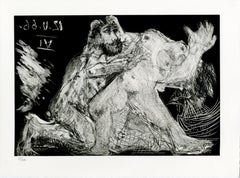
Plate XII, Le Cocu Magnifique

Plate XII, Le Cocu Magnifique

By Pablo Picasso

Located in Fairlawn, OH

Plate XII, Le Cocu Magnifique Etching & aquatyint, 1968 From the unsigned edition of 200 impressions printed on Rives BFK paper There is also a signed edition of 30 impressions The s...

Category

French School Mid-20th Century Nude Prints
Materials

Aquatint

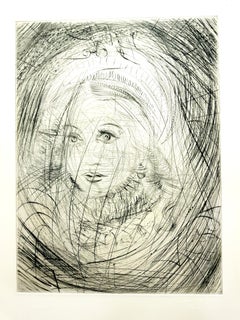
Salvador Dali - Marguerite - Original Etching

Salvador Dali - Marguerite - Original Etching

By Salvador Dalí­

Located in Collonge Bellerive, Geneve, CH

Salvador Dali - Marguerite - Original Etching from "Faust" suite Stamped signature, as issued From the standard edition of 731 Edition number 7 Dimensions: 38,5 x 28,5 cm Edition Arg...

Category

Surrealist Mid-20th Century Nude Prints
Materials

Etching

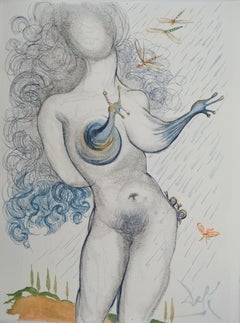
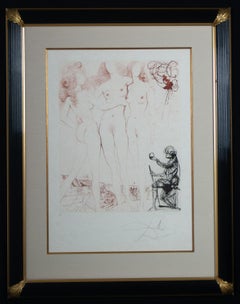
The Judgement of Paris, Mythology Suite original E.A. etching by Salvador Dali

The Judgement of Paris, Mythology Suite original E.A. etching by Salvador Dali

By Salvador Dalí­

Located in Paonia, CO

The Judgement of Paris ( Three Graces ) is an original limited edition Epreuve d'Artiste ( EA ) etching on Rives BFK by Salvador Dali from the Mythology Suite. ( ref: Field 63-3.I / Michler & Lopsinger 123 ). Salvador Dalí’s mythology...

Category

Surrealist Mid-20th Century Nude Prints
Materials

Etching

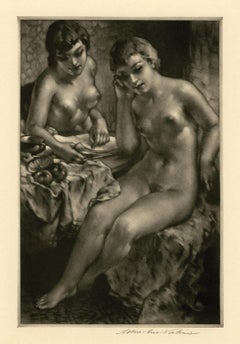
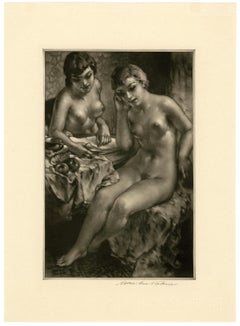
'Morning Paper' — Mid-20th Century American Realist Mezzotint

'Morning Paper' — Mid-20th Century American Realist Mezzotint

By Alessandro Mastro-Valerio

Located in Myrtle Beach, SC

Alessandro Mastro-Valerio, 'Morning Paper', 1941, mezzotint, edition 350. Signed in pencil. A superb, richly-inked, luminous impression, on cream, wove paper, with wide margins (1 9/...

Category

American Realist Mid-20th Century Nude Prints
Materials

Mezzotint

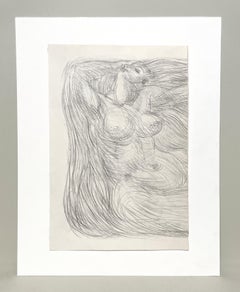
Nude - Original Etching - Mid-20th Century

Nude - Original Etching - Mid-20th Century

Located in Roma, IT

Nude is an original artwork realized by an artist of the mid-20th century. Etching and Aquatint. The drawing is inside a white cardboard passepartout (69x49 cm).

Category

Modern Mid-20th Century Nude Prints
Materials

Etching

Leonor Fini - Dressed-up - Original Lithograph

Leonor Fini - Dressed-up - Original Lithograph

By Leonor Fini

Located in Collonge Bellerive, Geneve, CH

Leonor Fini - Dressed-up - Original Lithograph The Flowers of Evil 1964 Conditions: excellent Edition: 500 Dimensions: 46 x 34 cm Editions: Le Cercle du Livre Précieux, Paris Unsig...

Category

Modern Mid-20th Century Nude Prints
Materials
Lithograph