Want more images or videos?
Request additional images or videos from the seller
1 of 11

George Brookshaw
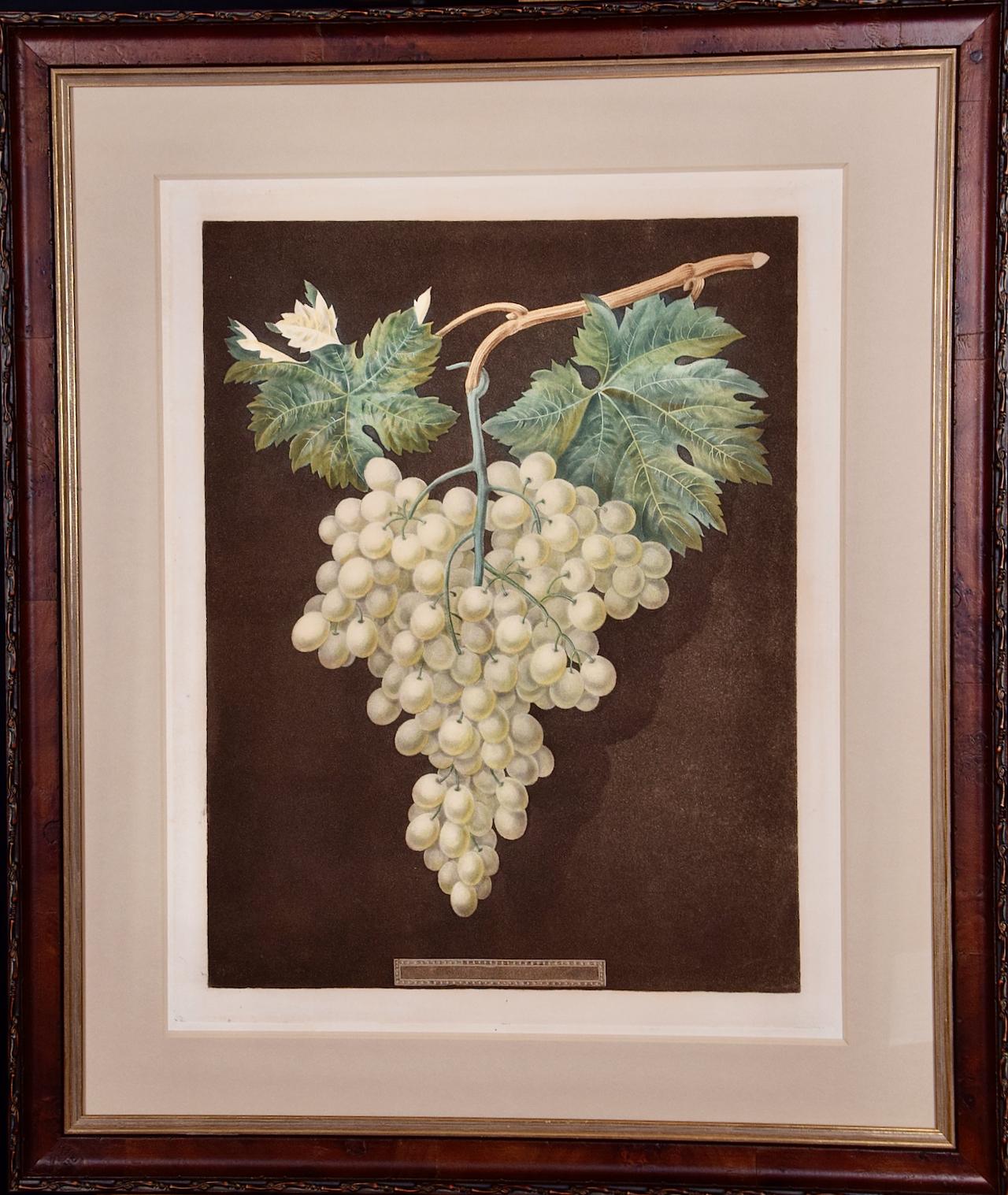
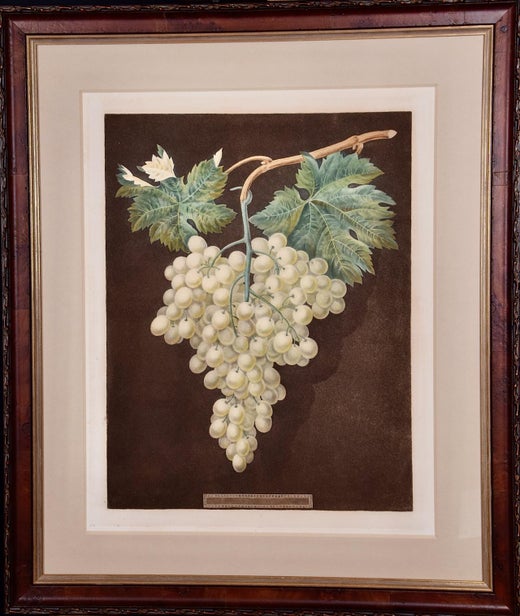
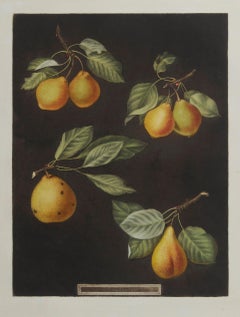
Brookshaw Botanical, Grapes, large folio, Natural Hisotry, Fruit Specimen

1804

$1,400
£1,055.28
€1,234.28
CA$1,981.56
A$2,017.52
CHF 1,161.91
MX$24,309.56
NOK 13,484.03
SEK 13,604.56
DKK 9,225.74

About the Item

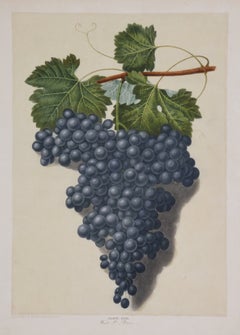
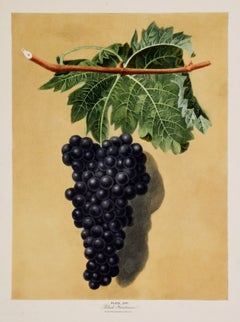
George Brookshaw (1751-1823) Plate XLIX Blue Muscadine Aquatint, engraving with some stipple, printed in colors with hand finishing on J Whatman 1809 paper 1804-1812 Signed in the plate lower center margin (see photo) From: Pomona Britannica or A Collection of the Most Esteemed Fruits (90 Plates) Published: White, Cochrane & Co., E. Lloyd and W. Lindsell, London: [1804-] 1812 Format: Folio size, 1st edition Printer: Thomas Bensley (active c. 1760-1935) Considered to be a msaterpice of natural history illustration Reference: Dunthrone 1938.50 Condition: Excellent Image size: 18 3/4 x 17 inches Sheet size: 21 1/4 x 17 inches Provenance: W. Russell Button Gallery, Chicago Notes: Publication legend lower center: “Painted & Published as the Act Directs by the Author G. Brookshaw” followed by date, varying from 1804 to 1812. Title page credits: “Printed for the author by T. Bensley, Bolt Court, Fleet Street. Published by White, Cochrane and Co. Fleet Street; E. Lloyd, Harley Street; and W. Linsell, Corner of Wigmore Street.” George Brookshaw (1751-1823) (after) from Pomona Britannica; Or, a collection of the most esteemed fruits at present cultivated in this country… selected principally from the Royal Gardens at Hampton Court T. Bensley, London (printer) White, Cochrane & Co., E. Lloyd and W. Lindsell, London: [1804-] 1812 Folio edition Stipple engravings, printed in color, finished by hand 17.5 x 14 inches, plate mark, average approximate 22 x 17 inches, overall, average approximate Pomona Britannica, or a Collection of the Most Esteemed Fruits at present cultivated in the country…selected principally from the royal gardens at Hampton Court…accurately drawn and coloured from nature, with full descriptions was published in London from 1804—1812. Comprising 90 aquatint engravings, including 256 depictions of British fruit, after paintings by George Brookshaw. Published in London and engraved by R. Brookshaw and H. Merke. George Brookshaw (1751—1823) was born in Birmingham, England where he was apprenticed to Samuel Troughton (d. 1783), a Birmingham painter and japanner. According to a recent blog post related to St. Philips Cathedral, Birmingham, England, entitled In Search of Sobieski Brookshaw, by Gill Partridge, he may have received some art training from his father, also named George Brookshaw, who is listed as an engraver in a document dated 1751. George Brookshaw’s brother, Richard Brookshaw (1736—c.1804) was a portrait painter and engraver well versed in mezzotint and copperplate engraving techniques, and may have instructed his brother. In 1777, Brookshaw moved from Birmingham to London and began a celebrated career building fine cabinets detailed with hand-painted botanical and pomological motifs. Shortly afterward, in 1778, he married Sobieski Grice (1749—1811), daughter of William Grice, a prosperous gunsmith.The Prince of Wales was the most distinguished of Brookshaw’s well-heeled patrons, and today examples of Brookshaw’s cabinetry may be seen at the Victoria & Albert Museum, London. According to church records noted in Gill Partridge’s post, both George Brookshaw and Sobieski Grice were baptized at the Birmingham Cathedral. In his cabinet-making shop, Brookshaw also offered lessons in flower painting to ‘Ladies of Taste and Fashion’. During the mid 1790s, it appears his furniture-making business went bankrupt, and he led his life under an assumed name, G. Brown. In 1991, Lucy Wood wrote two articles in which she drew the connection between G. Brown and George Brookshaw. During his years of anonymity, Brookshaw worked as an illustrator of botanical books and gave flower-painting lessons, which may have been his primary source of income. Apparently, the marriage dowry he enjoyed while married to Sobieski Grice was lost after their marriage dissolved. Brookshaw returned to public view as the earliest parts of Pomona Britannica were issued. In Flower and Print Books of the 18th and Early 19th Centuries, Gordon Dunthorne extolls the virtues of George Brookshaw’s large folio edition. “One of the eminent English artists of the early nineteenth century is George Brookshaw, who issued in 1812, Pomona Britannica. Ninety aquatint plates, printed in colour and on a scale comparable to Thornton’s Temple of Flora, depict the fruit grown around London and particularly in the royal gardens at Hampton Court. In Aquatint Engravings, George Brookshaw’s Pomona Britannica is described by S. T. Prideaux as “one of the finest colour plate books in existence.” In many of these plates the lovely mellow tones of the fruit glow against the dark or light brown backgrounds.” Courtesy Joel Oppenheimer Brookshaw’s Pomona Britannica is widely considered the finest English color plate natural history study of fruit. Intended to accurately record the best available varieties and encourage their cultivation, it was first published in 1804-1812 in a large folio version containing 90 plates of 256 varieties, and then in a smaller quarto format in 1816 and 1817 that contained 60 plates of 174 varieties. Both versions feature fruit then grown in and around London, especially at the Royal Gardens at Hampton Court. Varieties include tree fruits such as apples, peaches, cherries, plums, and figs as well as pineapples, melons, berries and grapes. "The folio and quarto editions of Brookshaw maintained a high quality of printing, employing the color-printed stipple method, which approximates the supple coloration, tones and textures achieved with watercolor painting. However, the folio version and the quarto version differ in various respects besides size. The folio illustrations are somewhat bolder, against dark brown backgrounds that accentuate the fruit as it seems to “jump off the page.” In contrast, the quarto edition prints are more spare and delicate against light backgrounds. Another difference is that the folio includes melons on ledges and pineapples, while the quarto does not. It may be posited that the style of the quarto plates are related to Brookshaw’s other vocations as an author of drawing instruction books and designer of painted furniture. Perhaps they were intended to serve as illustrations that would lend themselves to copying in watercolor for drawing practice or as models for decorative arts designers. George Brookshaw was born in Birmingham, England, and early in his career taught the art of watercolor. He set up a business as a cabinet maker about 1777 and created designs for English neoclassical furniture, which are still highly prized by contemporary collectors. He supplied his painted furniture to an aristocratic and fashionable clientele until the 1790s, but after 1795 he abandoned cabinet making. Later he became a botanical artist, producing the lavish folio treatise Pomona Britannica (1804-12), depicting 256 varieties of fruit grown in Britain, many of them drawn from specimens in the Royal Gardens at Hampton Court. A smaller quarto edition of this work was issued in 1817. Brookshaw also published A New Treatise on Flower Painting; or Every Lady her own Drawing Master and two companion volumes on painting birds and fruit. He stated that these instructional manuals presented a method of painting that was so effective that he himself could not tell his pupils’ copies from his own work." Courtesy Glazer Gallery .
  • Creator:
    George Brookshaw (1751 - 1823, British)
  • Creation Year:
    1804
  • Dimensions:
    Height: 18.75 in (47.63 cm)Width: 17 in (43.18 cm)
  • Medium:
  • Period:
  • Condition:
    Excellent condition Never framed Colors fresh Full margins.
  • Gallery Location:
    Fairlawn, OH
  • Reference Number:
    Seller: FA127451stDibs: LU14018422362

More From This Seller

View All
Brookshaw Botanical, Fruit, Grapes, Aquatint, 1st Edition, Natural History

Brookshaw Botanical, Fruit, Grapes, Aquatint, 1st Edition, Natural History

By George Brookshaw

Located in Fairlawn, OH

George Brookshaw (1751-1823) Plate LVIII West St. Peters Aquatint, engraving with some stipple, printed in colors with hand finishing, 1809 Signed in the plate Engraved signature on ...

Category

Early 1800s Other Art Style Still-life Prints

Materials

Aquatint

Brookshaw Botanical, Natural History, Aquatint, Still Life, large folio

Brookshaw Botanical, Natural History, Aquatint, Still Life, large folio

By George Brookshaw

Located in Fairlawn, OH

George Brrokshaw (1751-1823) Plate LVII, Black Frontiniac Aquatint printed in color on heavy laid paper watermarked J. Whatman 1809 Signed in the plate lower center margin (see photo...

Category

Early 1800s Other Art Style Still-life Prints

Materials

Aquatint

Plate XXXVIII Claremont, Homerton's white, Ford's black and the Genoa nectarines

Plate XXXVIII Claremont, Homerton's white, Ford's black and the Genoa nectarines

By George Brookshaw

Located in Fairlawn, OH

Plate XXXVIII Claremont, Homerton's white, Ford's black and the Genoa nectarines. Aquatint, engraving with some stipple, printed in colors with hand finishing 1804-1812 Engraved signature on the bottom left (see photo) From: Pomona Britannica or A Collection of the Most Esteemed Fruits (90 Plates) Published: White, Cochrane & Co., E. Lloyd and W. Lindsell, London: [1804-] 1812 Format: Folio size, 1st edition Printer: Thomas Bensley (active c. 1760-1935) Considered to be a msaterpice of natural history illustration Condition: Excellent Image/Plate size: 18 3/4 x 15 7/8 inches Sheet size: 21 1/4 x 17 inches Refereence: Dunthorne 050 Publication legend lower center: “Painted & Published as the Act Directs by the Author G. Brookshaw” followed by date, varying from 1804 to 1812. Title page credits: “Printed for the author by T. Bensley, Bolt Court, Fleet Street. Published by White, Cochrane and Co. Fleet Street; E. Lloyd, Harley Street; and W. Linsell, Corner of Wigmore Street.” George Brookshaw (1751-1823) (after) from Pomona Britannica; Or, a collection of the most esteemed fruits at present cultivated in this country… selected principally from the Royal Gardens at Hampton Court T. Bensley, London (printer) White, Cochrane & Co., E. Lloyd and W. Lindsell, London: [1804-] 1812 Folio edition Stipple engravings, printed in color, finished by hand 17.5 x 14 inches, plate mark, average approximate 22 x 17 inches, overall, average approximate Pomona Britannica, or a Collection of the Most Esteemed Fruits at present cultivated in the country…selected principally from the royal gardens at Hampton Court…accurately drawn and coloured from nature, with full descriptions was published in London from 1804—1812. Comprising 90 aquatint engravings, including 256 depictions of British fruit, after paintings by George Brookshaw. Published in London and engraved by R. Brookshaw and H. Merke. George Brookshaw (1751—1823) was born in Birmingham, England where he was apprenticed to Samuel Troughton (d. 1783), a Birmingham painter and japanner. According to a recent blog post related to St. Philips Cathedral, Birmingham, England, entitled In Search of Sobieski Brookshaw, by Gill Partridge, he may have received some art training from his father, also named George Brookshaw, who is listed as an engraver in a document dated 1751. George Brookshaw’s brother, Richard Brookshaw (1736—c.1804) was a portrait painter and engraver well versed in mezzotint and copperplate engraving techniques, and may have instructed his brother. In 1777, Brookshaw moved from Birmingham to London and began a celebrated career building fine cabinets detailed with hand-painted botanical and pomological motifs. Shortly afterward, in 1778, he married Sobieski Grice (1749—1811), daughter of William Grice, a prosperous gunsmith.The Prince of Wales was the most distinguished of Brookshaw’s well-heeled patrons, and today examples of Brookshaw’s cabinetry may be seen at the Victoria & Albert Museum, London. According to church records noted in Gill Partridge’s post, both George Brookshaw and Sobieski Grice were baptized at the Birmingham Cathedral. In his cabinet-making shop, Brookshaw also offered lessons in flower painting to ‘Ladies of Taste and Fashion’. During the mid 1790s, it appears his furniture-making business went bankrupt, and he led his life under an assumed name, G. Brown. In 1991, Lucy Wood wrote two articles in which she drew the connection between G. Brown and George Brookshaw. During his years of anonymity, Brookshaw worked as an illustrator of botanical books and gave flower-painting lessons, which may have been his primary source of income. Apparently, the marriage dowry he enjoyed while married to Sobieski Grice was lost after their marriage dissolved. Brookshaw returned to public view as the earliest parts of Pomona Britannica were issued. In Flower and Print Books of the 18th and Early 19th Centuries, Gordon Dunthorne extolls the virtues of George Brookshaw’s large folio edition. “One of the eminent English artists of the early nineteenth century is George Brookshaw, who issued in 1812, Pomona Britannica. Ninety aquatint plates, printed in colour and on a scale comparable to Thornton’s Temple of Flora...

Category

Early 1800s English School Still-life Prints
Materials

Aquatint

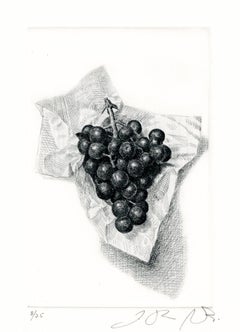
Cluster of Grapes in Folded Napkin

Cluster of Grapes in Folded Napkin

By Stone Roberts

Located in Fairlawn, OH

Cluster of Grapes in Folded Napkin Etching, 2006 Signed and numbered by the artist (see photo) Edition: 25 (8/25), see photo Printed on Hahnemuhle pa...

Category

21st Century and Contemporary American Realist Prints and Multiples

Materials

Etching

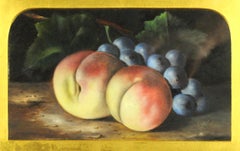
Still Life with Peaches and Grapes

Still Life with Peaches and Grapes

By D.M. Ridley

Located in Fairlawn, OH

Still Life with Peaches and Grapes Oil on paper, 1890 Signed and dated lower right (see photo) Image size: 5 8 5/8 inches Frame size: 10 x 13 1/2 inches Housed in the original frame ...

Category

1890s American Realist Still-life Paintings

Materials

Oil

You May Also Like

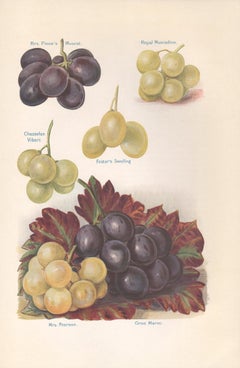
Grapes, English antique botanical fruit food chromolithograph print, 1924

Grapes, English antique botanical fruit food chromolithograph print, 1924

Located in Melbourne, Victoria

Grape Varieties - 'Mrs Pince's Muscat, Royal Muscadine, Chasselas Vibert, Foster's Seedling, Mrs Pearson, Gros Maroc'. Early 20th century fruit chromolithograph, from Horace Wright'...

Category

1920s English School Still-life Prints
Materials

Lithograph

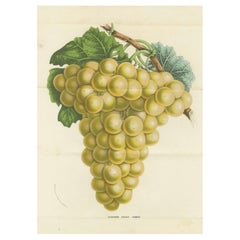
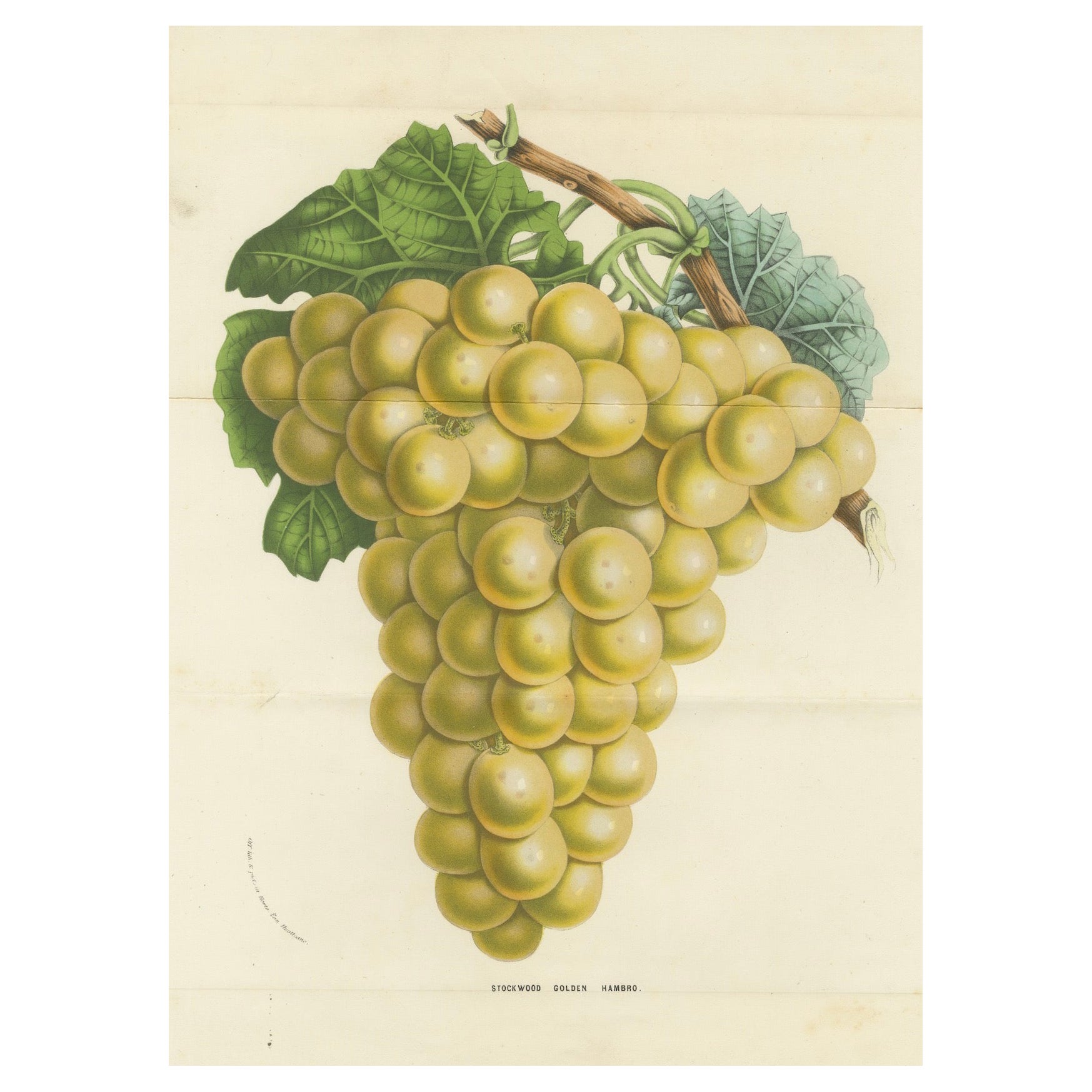
Stockwood Golden Hambro Grapes: Hand-Colored Lithograph by Louis van Houtte

Stockwood Golden Hambro Grapes: Hand-Colored Lithograph by Louis van Houtte

Located in Langweer, NL

This hand-colored lithograph showcases a cluster of Stockwood Golden Hambro grapes, a variety known for its plump, golden fruit. The print is part of Louis van Houtte’s *Flore des Se...

Category

Antique 1850s Prints

Materials

Paper

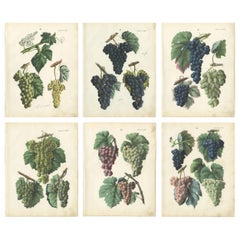
Antique Grape Botanical Chromolithographs, Wine & Table Grapes, Set of Six, 1854

Antique Grape Botanical Chromolithographs, Wine & Table Grapes, Set of Six, 1854

Located in Langweer, NL

Antique Grape Botanical Chromolithographs, Wine & Table Grapes, Set of Six, 1854 This impressive set of six original mid-19th century botanical chromolithographs was published in St...

Category

Antique Mid-19th Century German Prints

Materials

Paper

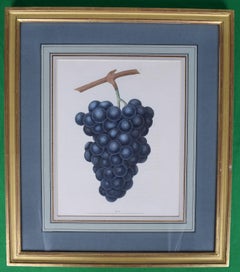
George Brookshaw (1751-1823), Blue Muscadine Grape, PL XXXVIII

George Brookshaw (1751-1823), Blue Muscadine Grape, PL XXXVIII

By George Brookshaw 1

Located in Bristol, CT

Print Sz: 11 1/2"H x 9 1/2"W Frame Sz: 19 1/4"H x 16 3/4"W Publisher: Longman, Hurst, Rees, Orme & Brown Plate XXXVIII George Brookshaw, also known as G. Brown, was a notable Eng...

Category

Early 1800s Still-life Prints

Materials

Engraving

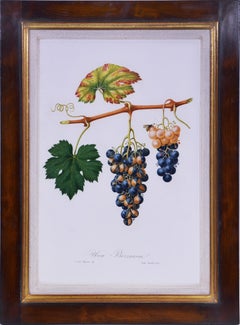
GALLESIO. A Group of Six Grapes.

GALLESIO. A Group of Six Grapes.

Located in London, London

Six hand-coloured plates of Grapes, printed in colour and finished by hand. Framed and glazed, overall size: 42.5 by 57.5cm. Pomona Italiana Ossia Trattato Degli Alberi Fruttiferi...

Category

1810s Naturalistic Still-life Prints

Materials

Handmade Paper, Engraving

FINE 1860'S BOTANNICAL WATERCOLOUR DRAWING - ISABELLA GRAPES ON THE VINE

FINE 1860'S BOTANNICAL WATERCOLOUR DRAWING - ISABELLA GRAPES ON THE VINE

Located in Cirencester, Gloucestershire

Artist/ School: English/ American School, 19th century, circa 1860's. Title: Isabella Grapes on the vine. Interesting inscription telling the history of the drawing and how the orig...

Category

Mid-19th Century Victorian Still-life Paintings

Materials

Watercolor