Want more images or videos?
Request additional images or videos from the seller
1 of 13

Antoine-Louis Barye
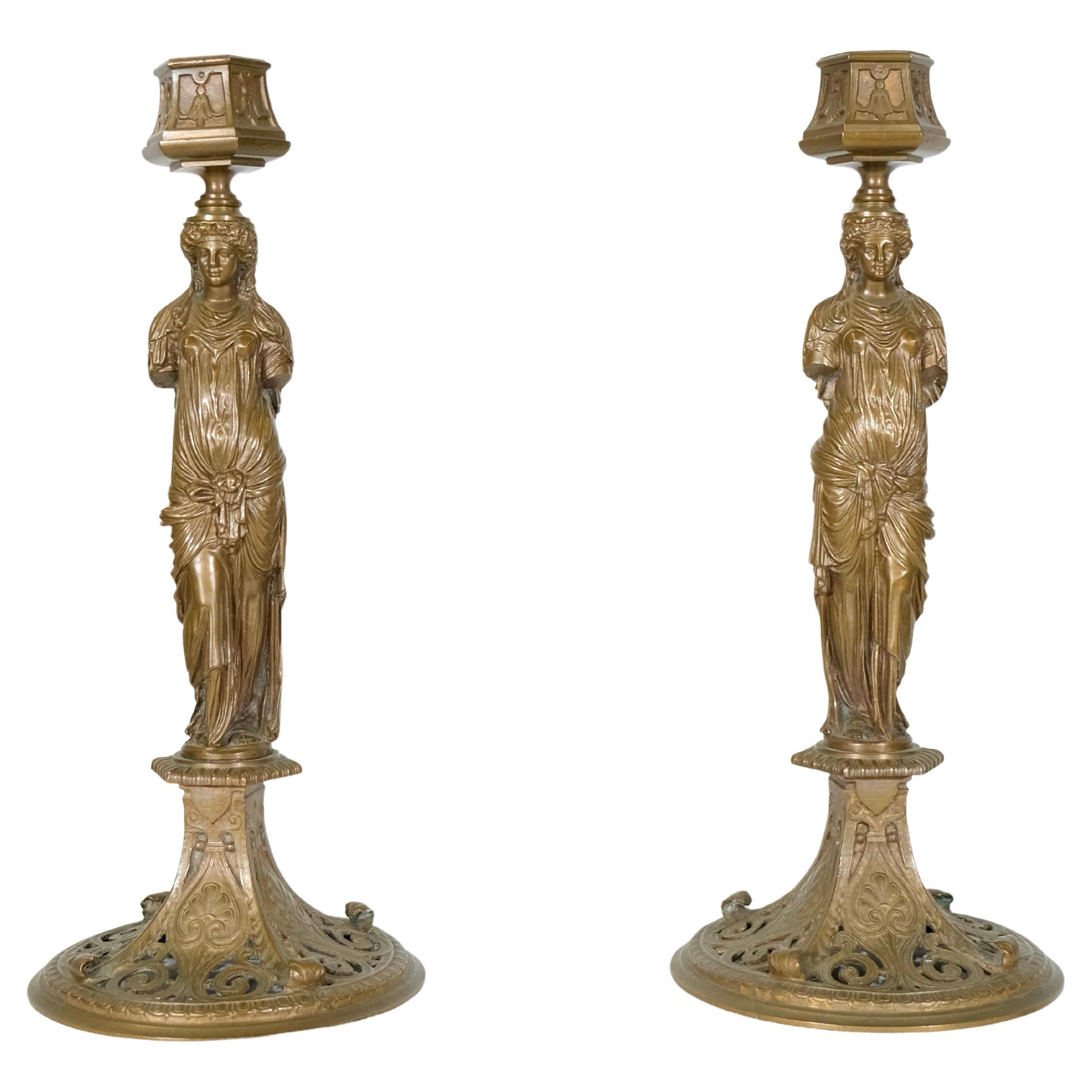
Pair of Candlesticks

circa 1890

$5,465.66
$6,824.9920% Off
£4,060.57
£5,062.1120% Off
€4,640VAT Included
€5,80020% Off
CA$7,659.59
CA$9,576.4920% Off
A$7,755.53
A$9,730.5320% Off
CHF 4,412.10
CHF 5,512.5720% Off
MX$94,253.97
MX$118,396.5820% Off
NOK 52,153.19
NOK 64,640.2020% Off
SEK 51,879.21
SEK 64,992.3720% Off
DKK 35,378.83
DKK 44,255.1020% Off

About the Item

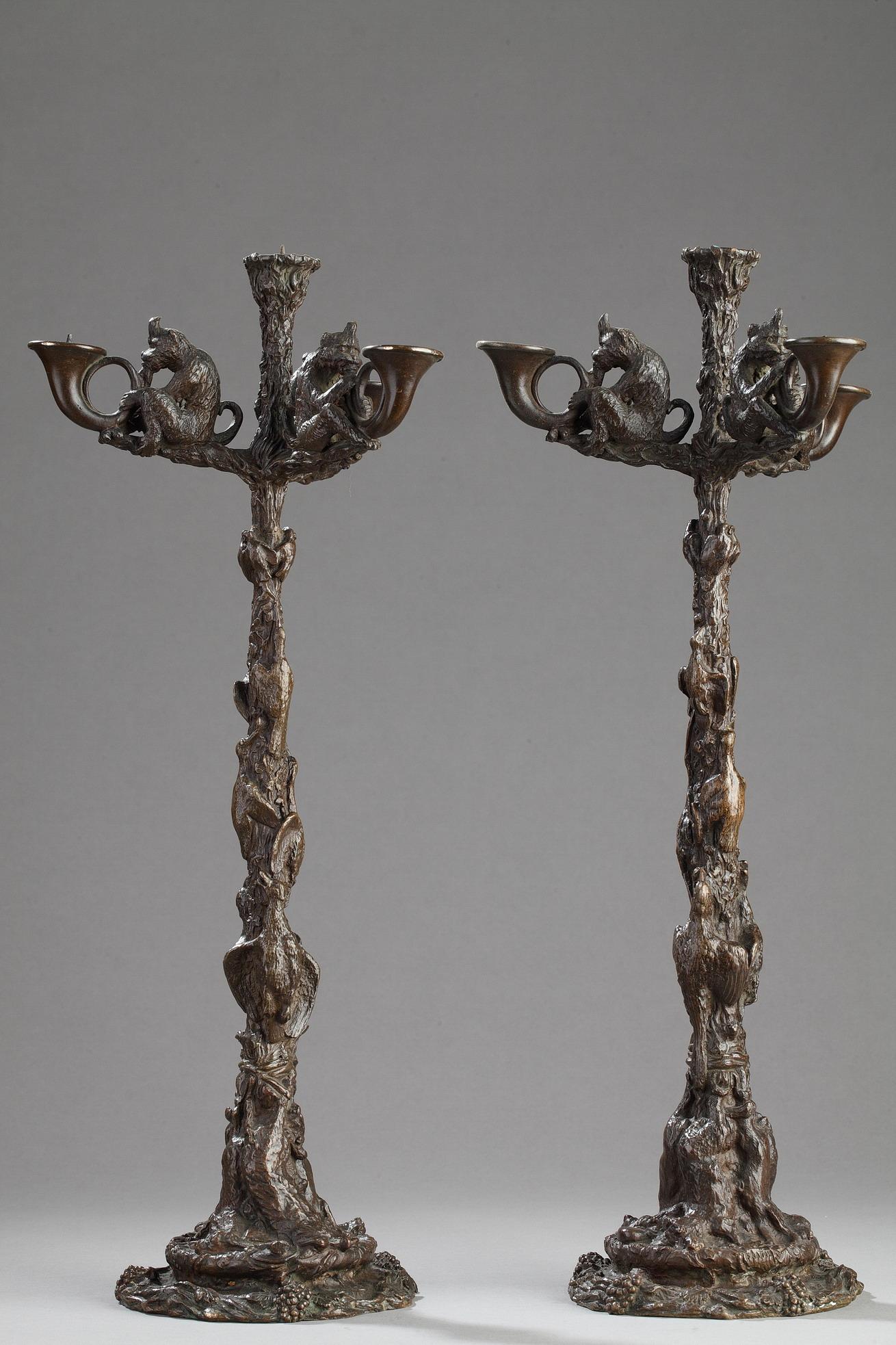
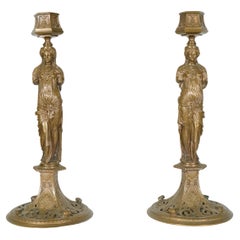
Antoine-Louis BARYE (1796-1875) Pair of Candlesticks Pair of neo-Greek candlesticks Bronze with a dark patina signed on the underside "Barye" Old cast France circa 1890 height 27 cm diameter 11,8 cm A similar model is reproduced in "The Barye Bronzes", Stuart Pivar, England, 1974, p.257. Biography : Antoine-Louis Barye (1796-1875) was a French sculptor, known for his animal sculptures. His sketch practice done in the wild, according to the animals of the Jardin des Plantes in Paris, led him gradually to also practice painting. Placed early in Fourier, an engraver on steel manufacturing metal parts for the uniforms of the Great Army, he learned all areas of metal processing and became a peerless worker. He entered the Ecole des Beaux-Arts in Paris in 1818, where he received classical training in the workshop of the sculptor François Joseph Bosio and the painter Antoine-Jean Gros. He graduated in 1820, the second prize for sculpture in Rome for his "Cain cursed by God" .It was in 1831 that Barye became known to the public exhibiting then his "Tiger devouring a Crocodile", tormented and expressive work, which ranked as soon as the first Romantic sculptor, and causing admiration criticism. He now produced numerous masterpieces, often of small dimensions, that will enrich the collections of fans on both sides of the Atlantic. In 1833, Barye exhibited at the Salon his "Lion and Serpent", a king's command to the Tuileries Gardens, an allegory of the monarchy crushing sedition, three years after the July Revolution. Critics are enthusiastic but it's not necessarily the case of his colleagues. In total contrast to the supporters of the academy who then ruled the Institute, Barye opened a foundry and edited himself his production, using modern techniques of his time. Like the Romantic artists of his time, Barye appreciated the exotic and the Middle Ages. He preferred bronze to marble because too cold. The style of Barye settled down from 1843. He gave his human figures inspired by Greek models, such as the bronze group of "Theseus and the Centaur Biénor", an energy and a movement specific to the romantic vision . Barye's Republican ideas do not prevent him from binding with Ferdinand-Philippe d’Orléans, for whom he made a table centerpiece. He became one of the favorite sculptors of Napoleon III, under whose reign he produced monumental works such as "Peace", "Strength", "War" and "The Order" for the decoration of the new palace of the Louvre and an equestrian statue of the emperor for the gates of the Louvre. Despite his business and practice of art that confused members of the Institute, they finally welcome within them in 1868, and Barye knew recognition in the last ten years of his life.
  • Creator:
    Antoine-Louis Barye (1796 - 1875, French)
  • Creation Year:
    circa 1890
  • Dimensions:
    Height: 10.63 in (27 cm)Diameter: 4.65 in (11.8 cm)
  • Medium:
  • Movement & Style:
  • Period:
  • Condition:
  • Gallery Location:
    PARIS, FR
  • Reference Number:
    Seller: N.60051stDibs: LU2514214462732

More From This Seller

View All
Inkwell with Arabesques

Inkwell with Arabesques

By Antoine-Louis Barye

Located in PARIS, FR

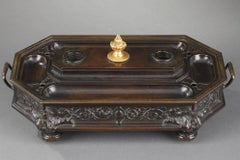
Inkwell with Arabesques by Antoine-Louis BARYE (1796-1875) Rare bronze inkwell with dark brown patina signed on the side "Barye" old cast France around 1875-80 height 5 cm length...

Category

1870s French School Figurative Sculptures

Materials

Bronze

Lion and snake

Lion and snake

By Antoine-Louis Barye

Located in PARIS, FR

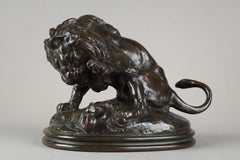
Lion and snake n°3 by Antoine-Louis Barye (1796-1875) Bronze sculpture with a nuanced dark greenish brown patina signed "Barye" on the base old edition cast – probably from the Bary...

Category

1860s French School Figurative Sculptures

Materials

Bronze

Tiger and Lion walking

Tiger and Lion walking

By Antoine-Louis Barye

Located in PARIS, FR

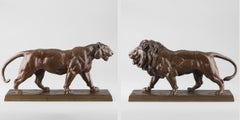
Rare pair of "Tiger and Lion walking" by Antoine-Louis BARYE (1796-1875) A very fine pair of bronze sculptures with a nuanced brown patina each signed "Barye" on the base cast by "F...

Category

1870s French School Figurative Sculptures

Materials

Bronze

Half-blood Horse, head raised

Half-blood Horse, head raised

By Antoine-Louis Barye

Located in PARIS, FR

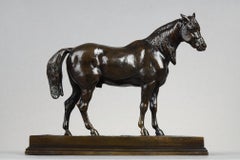
Half-blood Horse, head raised by Antoine-Louis BARYE (1796-1875) A bronze sculpture with a nuanced dark brown patina Signed on the base "Barye" Stamped "Barye" Numbered "25" A rare ...

Category

Mid-19th Century French School Figurative Sculptures

Materials

Bronze

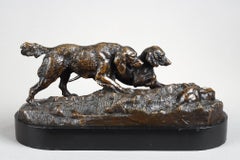
Two dogs pointing a rabbit

Two dogs pointing a rabbit

By Antoine-Louis Barye

Located in PARIS, FR

Two dogs pointing a rabbit by Antoine-Louis BARYE (1796-1875) A rare bronze group with nuanced dark brown patina signed on the base " Barye " stamped " Barye " numbered " 4 " Except...

Category

1850s French School Figurative Sculptures

Materials

Bronze

You May Also Like

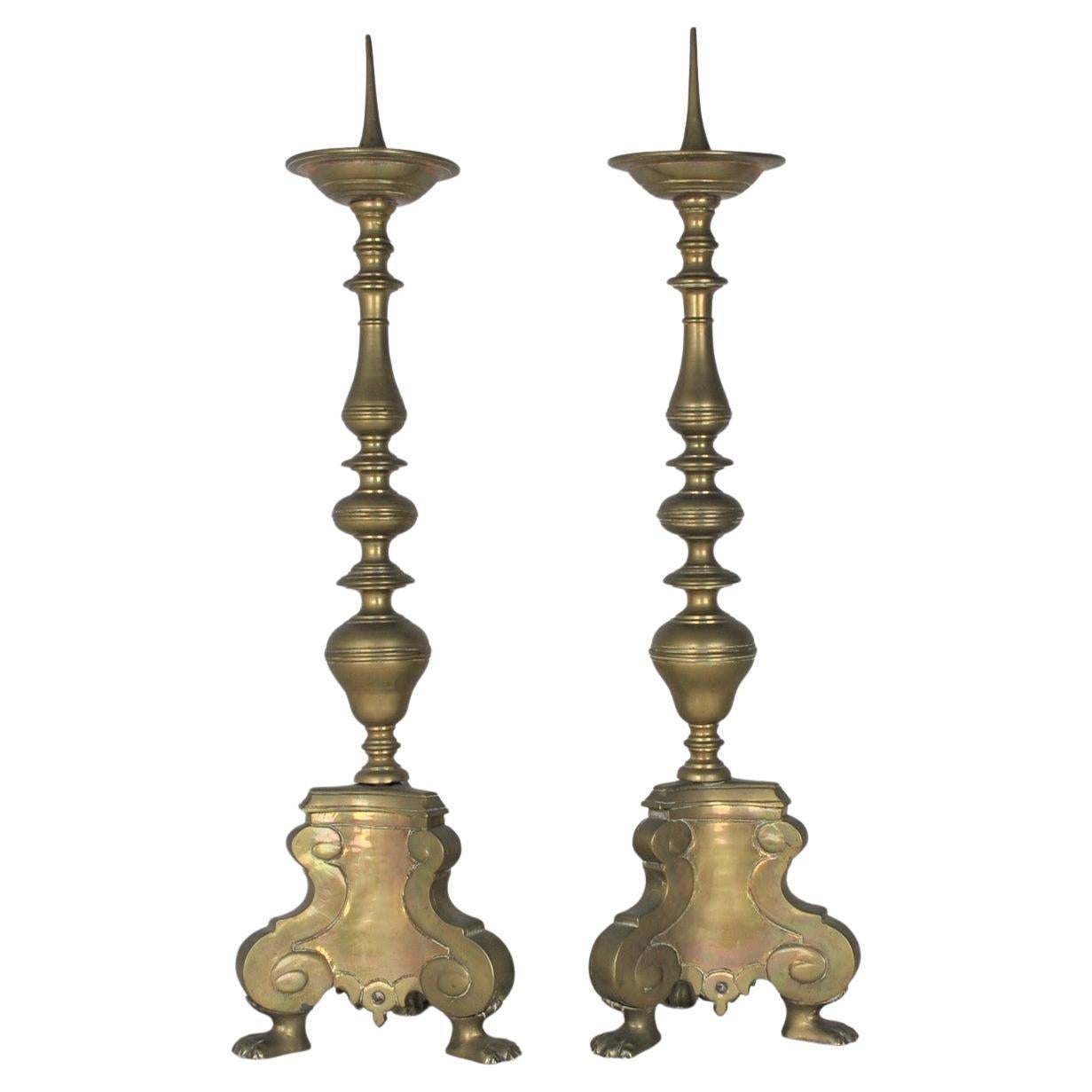
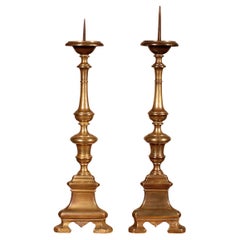
Pair Of Late 17th Century Italian Bronze Candlesticks

Pair Of Late 17th Century Italian Bronze Candlesticks

Located in Brussels, Brussels

Elegant pair of bronze candle sticks from the end of the 17th century from Italy Beautiful appearance and good quality with small traces of wear which make their charm Very beautif...

Category

Antique 17th Century Italian Renaissance Candlesticks

Materials

Bronze

Pair of bronze candlesticks signed Barbedienne (1838-)

Pair of bronze candlesticks signed Barbedienne (1838-)

By Ferdinand Barbedienne

Located in Stockholm, SE

This exquisite pair of 19th-century bronze candlesticks is made by the renowned French foundry F. Barbedienne et Cie, known for its superior craftsmanship and attention to detail. Ea...

Category

Antique Mid-19th Century French Candlesticks

Materials

Bronze

Pair of Bronze Candlesticks, circa 1840

Pair of Bronze Candlesticks, circa 1840

Located in New York, NY

By Christophe Fratin (1800-1864).

Category

Antique 1840s French Candlesticks

Materials

Bronze

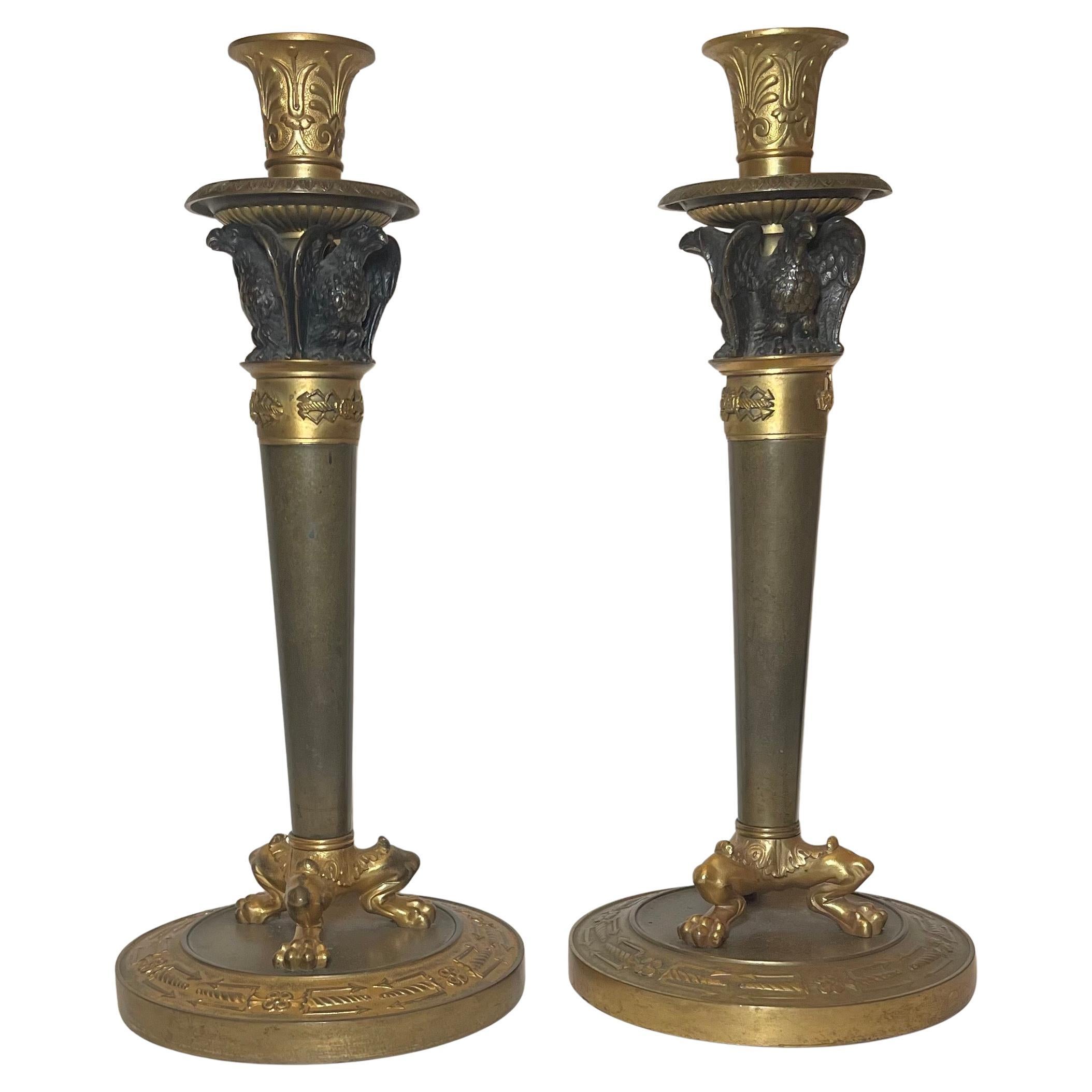
Wonderful Pair French Patinated Dore Bronze Empire Neoclassical Candlesticks

Wonderful Pair French Patinated Dore Bronze Empire Neoclassical Candlesticks

By Claude Galle

Located in Roslyn, NY

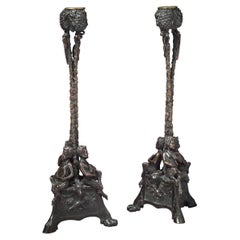
A Wonderful Pair Of French Patinated & Dore Bronze Empire / Neoclassical / Napoleonic Substantial Candlesticks Each With 3 Eagles, In The Manner Of Claude Galle.

Category

Antique 19th Century French Empire Candelabras

Materials

Bronze

Pair of French Napoleon III Bronze Candlesticks by Foundry F. Barbedienne 1860s

Pair of French Napoleon III Bronze Candlesticks by Foundry F. Barbedienne 1860s

By F. Barbedienne Foundry

Located in Salzburg, AT

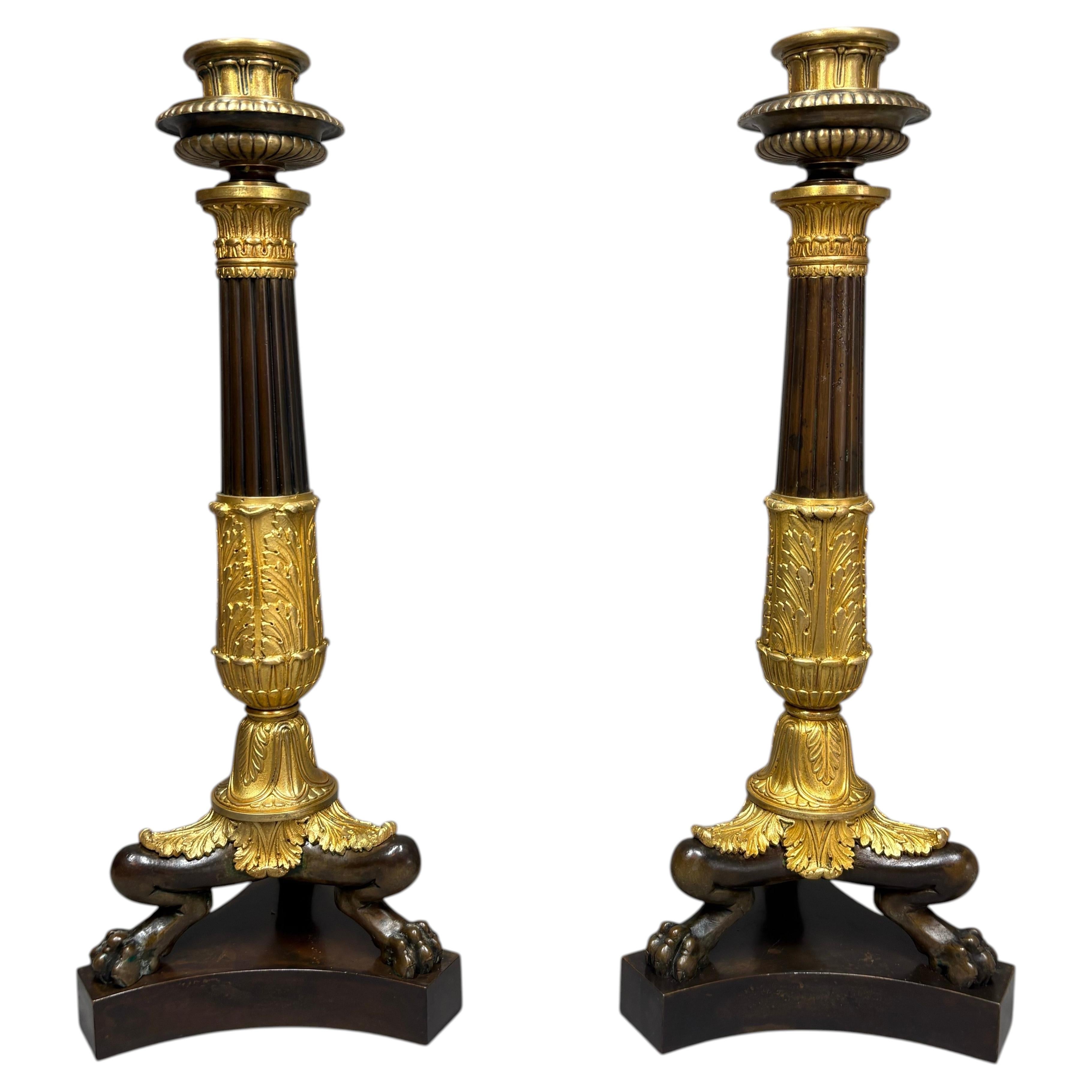
Pair of very elegant classicist candlesticks in fine patinated bronze, signed BARBEDIENNE. The execution of the casting is extremely finely worked with delicate leaves on the outer wall of the candlestick, with a head of antiquity on the upper part of the stem which flows into the lower part with fluting and side volutes. The 3 curved legs stand on raised feet with delicate strappy sandals. Measures: The diameter at the top is 3.5cm and at the bottom 13.5cm Ferdinand Barbedienne (* August 6, 1810 in Saint-Martin-de-Fresnay, Calvados department, France; † March 21, 1892 in Paris) was a French sculptor, bronze ware manufacturer, and gallery owner. One of the most important and popular Éditeurs d'art, or publishers of art articles, he had most of the French sculptors of his time under contract. Life and work Ferdinand Barbedienne was the son of a farmer. At the age of 13, he learned the Craft of saddlery. In 1822 he moved to Paris, where he first worked as a clerk in a wallpaper shop. He received start-up capital from his employer to open his own store, which he set up on Rue Notre-Dame-de-Lorette in 1834. He pursued the idea of exhibiting bronze statues in addition to his core business and mass producing them in small format. In 1838, he joined forces with the mechanic Achille Collas, who had developed the machine á reduction (réducteur for short); a device based on the principles of the pantograph that could reproduce three-dimensional objects in any size - reduced or enlarged. On November 29, 1838, both signed the founding contract for the company Société Ferdinand Barbedienne et Achille Collas, which aimed to commercially exploit the mechanized production of sculptural works for an initial 20 years. Barbedienne took care of the commercial management of the company, while Collas contributed the patent on his invention and seven existing machines, and with his profound knowledge of machinery was responsible for the production processes. Together they decided on the subject matter of the objects, the selling prices, and all other financial matters. In 1841, they produced casts of the Apollo of Belvedere, the Spinario, and 21 pieces with the motif of a bas-relief of the Parthenon. These were followed by versions of the Laocoon group, the Venus of Arles, and the Borghese Fencer, among others. Special interest was initially shown in works from antiquity, for which casts from the Atelier de Moulage in the Louvre served as models. The company continued to produce works by representatives of the Renaissance such as Michelangelo, Donatello, Giovanni Bologna or by French sculptors such as Jean Goujon, Jean-François Flamand, Pierre Puget, François Girardon, Antoine Coysevox...

Category

Antique 1860s French Napoleon III Candlesticks
Materials

Bronze