Want more images or videos?
Request additional images or videos from the seller
1 of 7

Carl Kauba
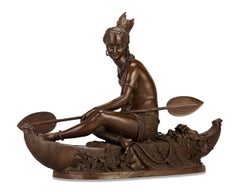
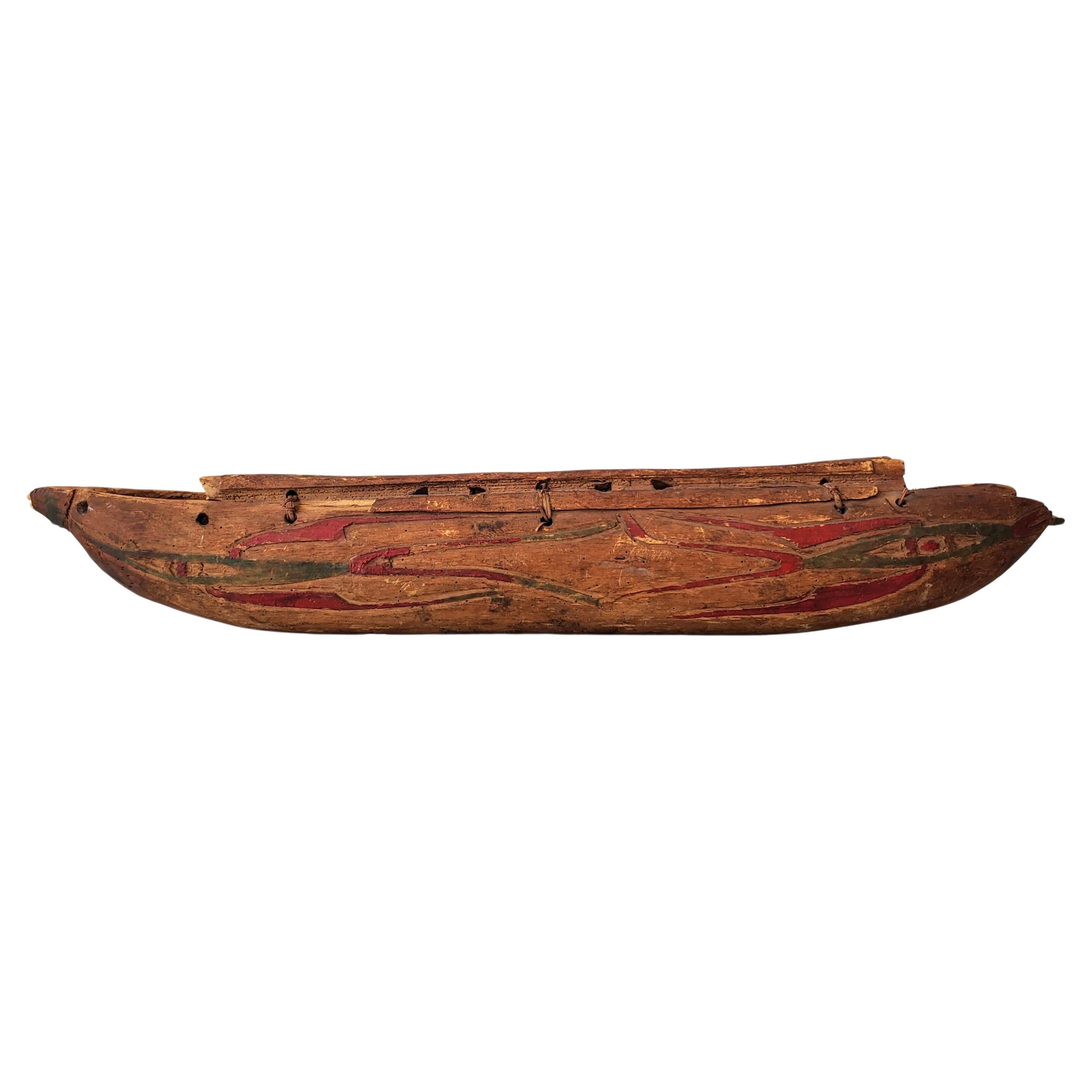
Native American in Canoe

c. 1920

Price Upon Request
Price Upon Request
Price Upon Request
Price Upon Request
Price Upon Request
Price Upon Request
Price Upon Request
Price Upon Request
Price Upon Request
Price Upon Request

About the Item

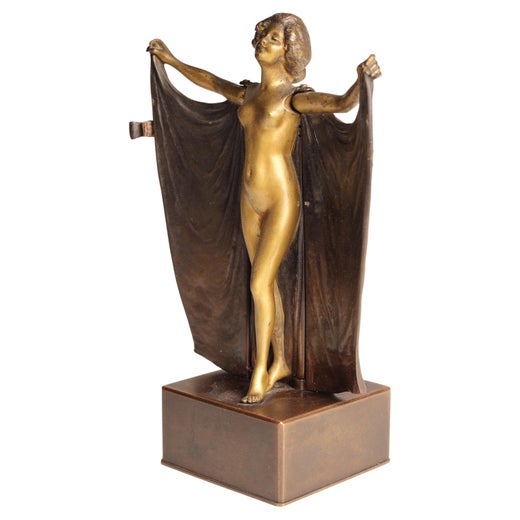
Carl Kauba (1865-1922) "Native American in Canoe" Polychrome Bronze Signed approx 5.5 x 10 x 2.75 inches This Austrian sculptor was born in Vienna in 1865. His teachers were Karl Waschmann (1848-1905), known for his ivory sculptures and portrait plaquettes of contemporary celebrities, and Stefan Schwartz (1851-1924), who exhibited in Paris, including the Exposition Universelle of 1900 where he won a gold medal. Kauba's intricate bronzes, imported to the United States between 1895 and 1912, were cast at the Roman Bronze Works. Kauba was part of the nineteenth-century tradition of polychrome bronze sculpture. There were several types of patinas on a single statue: he could render the color of buckskin, variously tinted shirts, blankets, feathers, as well as beaded moccasins. Reportedly, Kauba came to America around 1886. Inspired by the Western tales of German author Karl May, he traveled to the West and made sketches and models. Critics, however, pointed out inaccuracies of costume and other details. For instance, the guns that his "mid-nineteenth-century" figures use are models produced after 1898. Apparently he did all of his works back in Vienna. Besides the variety of color, Kauba's bronzes show a great range of textures and his style is highly naturalistic. The sculptor loved ornament, some of which he rendered with coiled wire for reins, rope and feathers in headdresses. He successfully rendered figures in motion and often executed compositions with more than one figure. Berman (1974) illustrates non-Western subjects by Kaula, such as the pendants Where? and There (ca. 1910), a seated Scottish couple, impressive in the expressions and the details on patterned fabrics of both sitters. Another genre piece is Buster Brown, ca. 1910, and Nude on Vase shows Kauba's versatility even further. The smooth skin contrasts with the stylistic, plant-like vase. Sources: Card, Helen L. Salute to the Westerners: Bronzes by Remington and Kauba. New York: n.d. [rare sale catalogue]; Berman, Harold. Bronzes: Sculptors and Founders 1800-1930. Chicago: Abage Publishers, 1974, nos. 388, 389, 570, 595; Broder, Patricia Janis. Bronzes of the American West. New York: Harry N. Abrams, 1973, pp. 216-222. The Art of Carl Kauba. Sales pamphlet (New York: Latendorfer Gallery, n.d.)
  • Creator:
    Carl Kauba (1865 - 1922, Austrian)
  • Creation Year:
    c. 1920
  • Dimensions:
    Height: 5.5 in (13.97 cm)Width: 10 in (25.4 cm)Depth: 2.75 in (6.99 cm)
  • Medium:
  • Movement & Style:
  • Period:
  • Condition:
  • Gallery Location:
    Missouri, MO
  • Reference Number:
    1stDibs: LU74733374281

More From This Seller

View All
Native American Girl with Doll

Native American Girl with Doll

By Dave Powell

Located in Missouri, MO

Native American Girl with Doll By Dave Powell (American, b. 1954) Signed on Back 17.5" x 8" Dave Powell is a native son of Montana, in a world of change and transition; few can say they have roots in a single geography that go back four generations. Dave's pedigree in art is just about as deep. He is the son of artists Ace Powell and Nancy McLaughlin Powell. That heritage leads back to the likes of Charlie Russell and Joe De Young, both famous for their abilities to "tell the story" through their art. His father, Ace Powell, was a prolific Western artist whose first childhood paint-box set was a gift from Charlie and Nancy Russell. Dave became a serious student of art in his mid-teens, and has been a professional artist most of his adult life. Over the years he has worked with Bob Scriver, Ned Jacob and Robert Lougheed. Dave will be the first to give thanks...

Category

20th Century American Realist Figurative Sculptures

Materials

Bronze

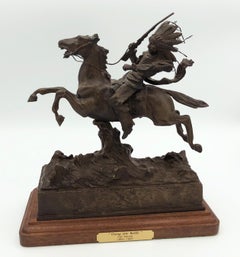
Going into Battle

Going into Battle

By Carl Kauba

Located in Missouri, MO

Carl Kauba "Going into Battle" c. 1920s Bronze with Brown Patina Signed approx 10 x 10 x 4 (including wooden base) This Austrian sculptor was born in Vienna in 1865. His teachers were Karl Waschmann (1848-1905), known for his ivory sculptures and portrait plaquettes of contemporary celebrities, and Stefan Schwartz (1851-1924), who exhibited in Paris, including the Exposition Universelle of 1900 where he won a gold medal. Kauba's intricate bronzes, imported to the United States between 1895 and 1912, were cast at the Roman Bronze Works. Kauba was part of the nineteenth-century tradition of polychrome bronze sculpture. There were several types of patinas on a single statue: he could render the color of buckskin, variously tinted shirts, blankets, feathers, as well as beaded moccasins. Reportedly, Kauba came to America around 1886. Inspired by the Western tales of German author Karl May, he traveled to the West and made sketches and models. Critics, however, pointed out inaccuracies of costume and other details. For instance, the guns that his "mid-nineteenth-century" figures use are models produced after 1898. Apparently he did all of his works back in Vienna. Besides the variety of color, Kauba's bronzes show a great range of textures and his style is highly naturalistic. The sculptor loved ornament, some of which he rendered with coiled wire for reins, rope and feathers in headdresses. He successfully rendered figures in motion and often executed compositions with more than one figure. Berman (1974) illustrates non-Western subjects by Kaula, such as the pendants Where? and There (ca. 1910), a seated Scottish couple, impressive in the expressions and the details on patterned fabrics of both sitters. Another genre piece is Buster Brown...

Category

Early 20th Century Realist Figurative Sculptures

Materials

Bronze

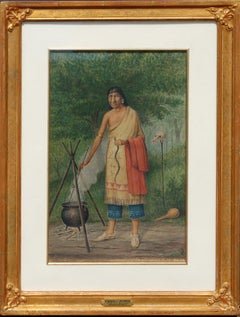
Medicine Man

Medicine Man

By Cassilly Adams

Located in Missouri, MO

Cassilly Adams (American 1843-1921) "Medicine Man" c. 1860s Watercolor on Paper Unsigned Provenance: Questroyal Gallery, NYC Site Size: approx. 14.5 x 8....

Category

Mid-19th Century American Realist Figurative Drawings and Watercolors

Materials

Paper, Watercolor

Work and Play

Work and Play

By Gordon Grant

Located in Missouri, MO

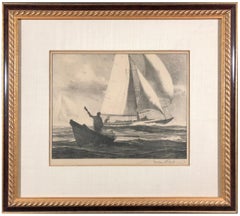
Gordan Hope Grant (1875-1962) "Work and Play" Lithograph Signed in Pencil Lower Right Image Size: 9 x 11.5 inches Framed Size: approx 18 x 20.5 inches Born in San Francisco, Gordon Grant is known for his etchings and paintings of marine subjects. He also painted portraits, streets, harbors, beaches and marines, and was an illustrator, whose work included pulp fiction* for Popular Detective magazine in the 1930s. Skilled with watercolor, Grant was honored many times by the American Watercolor Society*. Memberships included the Society of Illustrators*, Salmagundi Club*, Allied Artists of America*, New York Society of Painters, and American Federation of Artists*. At age 13, he was sent to Scotland for schooling, and the four-month sail around Cape Horn remained a permanent influence on his career. He studied art in Heatherly and at the Lambeth School of Art* in London, and then in 1895, he became a staff artist for the San Francisco Examiner. The next year, he took the same type of job for the New York World and covered the Boer War for Harper's Weekly. He also worked for Puck magazine...

Category

Mid-20th Century American Realist Figurative Prints

Materials

Lithograph

You May Also Like

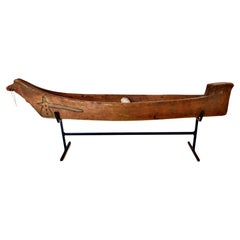
Model Canoe by Native North American Indians, C.1930

Model Canoe by Native North American Indians, C.1930

Located in Incline Village, NV

Displayed on a custom made metal stand designed especially for this boat, this is a typical model dugout canoe carved by the Nootka or Makah Indian tribe of the Pacific Northwest...

Category

Vintage 1930s Canadian Native American Native American Objects

Materials

Wood

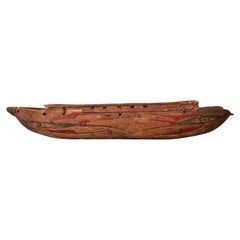
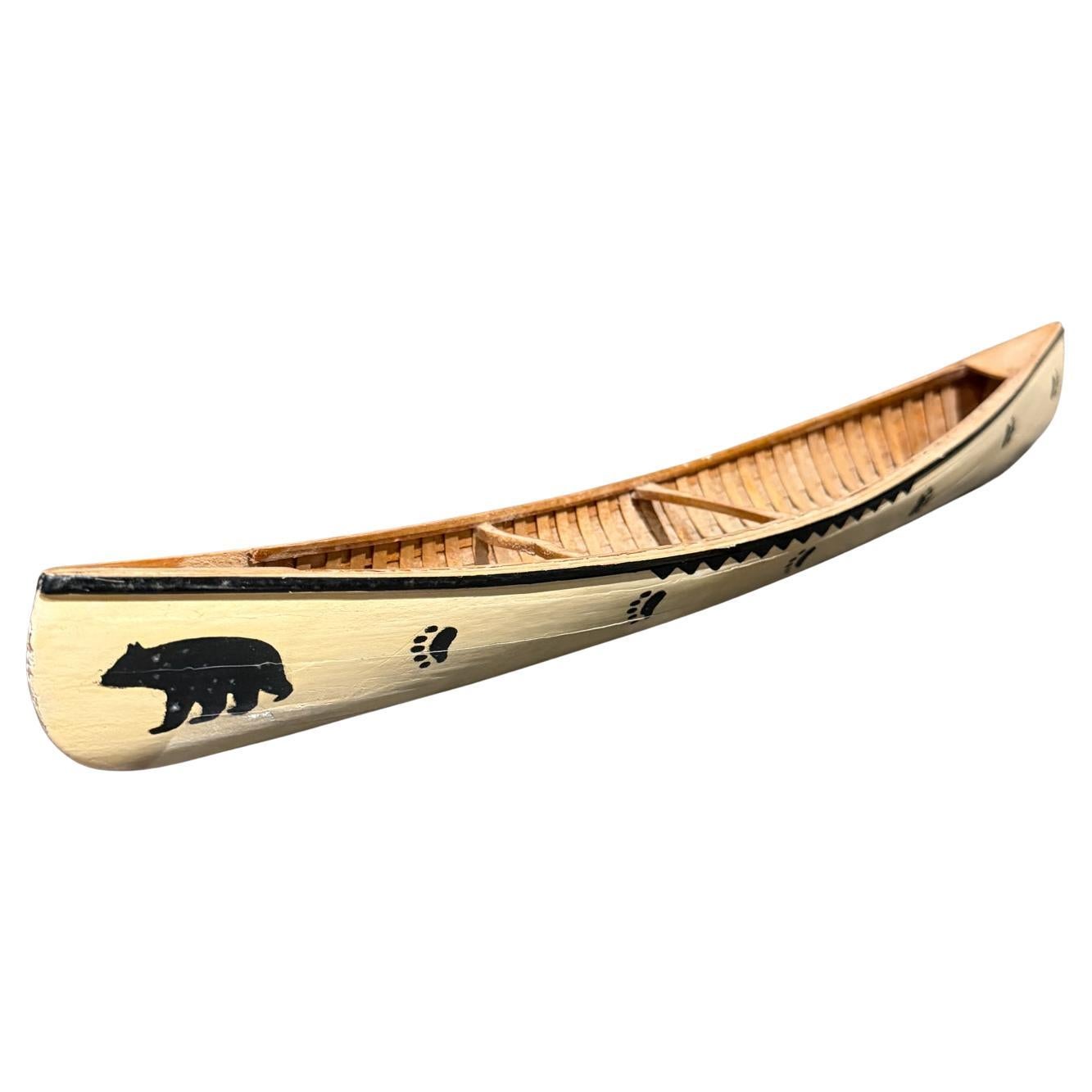
Antique Native American Indigenous Peoples Carved Polychrome Canoe Model

Antique Native American Indigenous Peoples Carved Polychrome Canoe Model

Located in Forney, TX

An exceptionally rare antique Native American / Indigenous Peoples hand carved and painted wooden dugout canoe model, dating to the early 20th century or earlier, likely Pacific Nort...

Category

Early 20th Century North American Native American Sculptures and Carvings

Materials

Twine, Wood, Paint

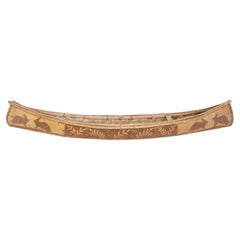
Chippewa Pictorial Bark Canoe

Chippewa Pictorial Bark Canoe

By Native American Art

Located in Coeur d'Alene, ID

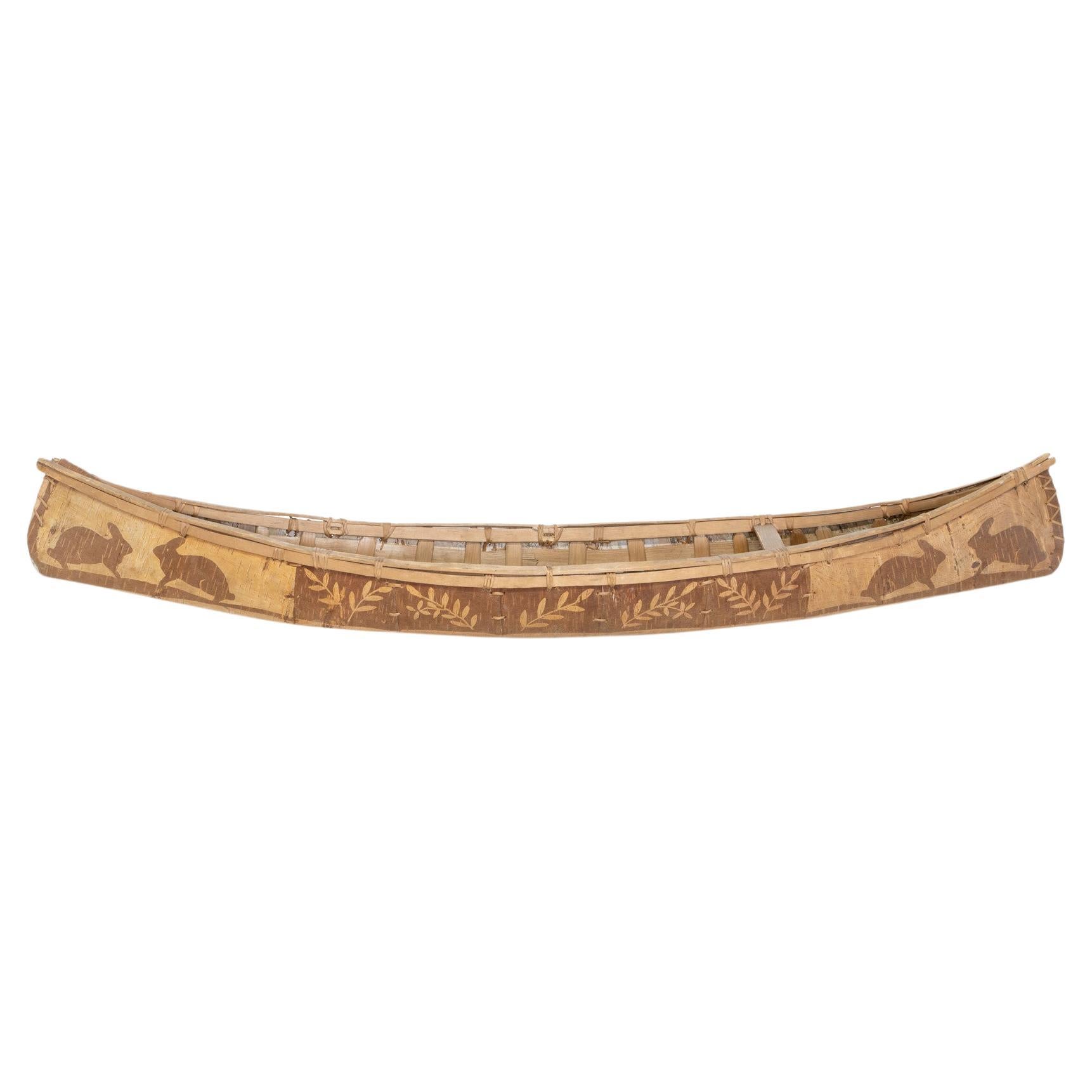
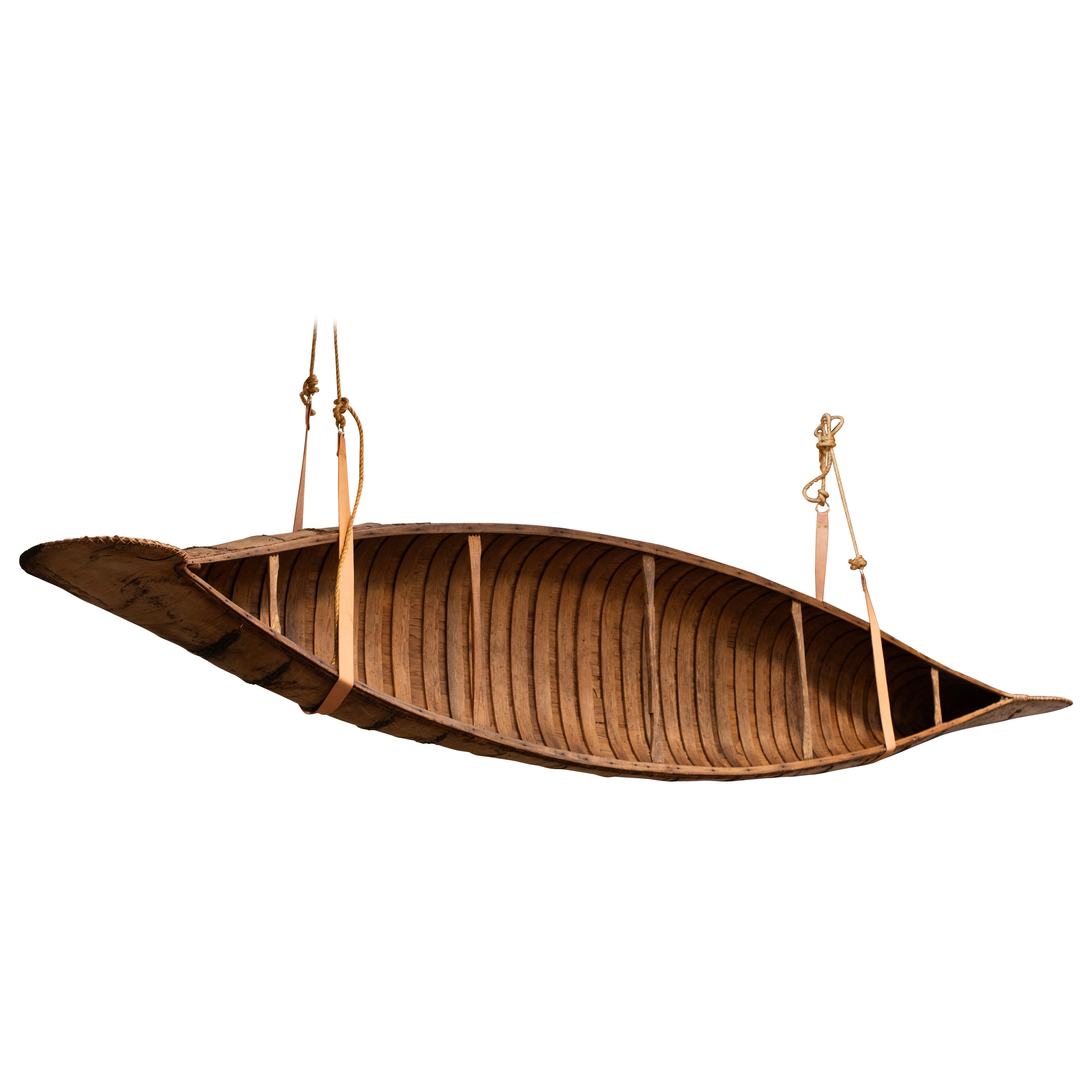
Chippewa pictorial canoe. Fully slated, having four grouse, four rabbits and leaf design. Bark varies in color from a light tan to a mid-tone brown. Circa 1930. Minor damage to one r...

Category

Early 20th Century American Native American Objects

Materials

Wood, Birch

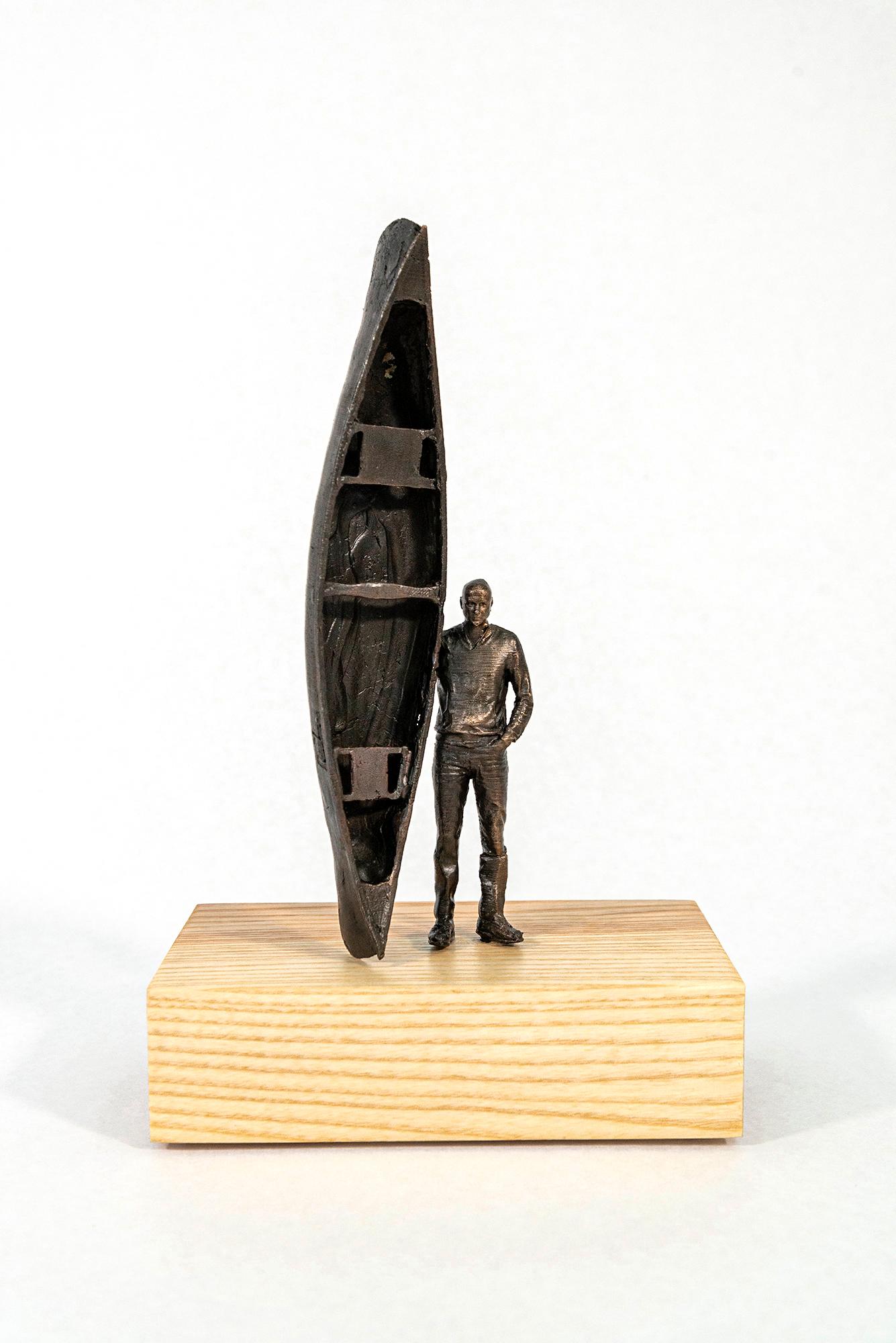
The Craftsman ed.2/2 - surrealist, canoe, figurative, wood, bronze, sculpture

The Craftsman ed.2/2 - surrealist, canoe, figurative, wood, bronze, sculpture

By P. Roch Smith

Located in Bloomfield, ON

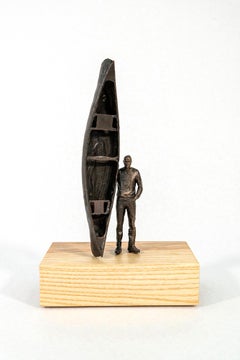
This bronze figurative tabletop sculpture by Roch Smith features a canoe. Canadian sculptor Roch Smith has turned his attention to a cherished national and historic pastime—canoeing...

Category

2010s Contemporary Figurative Sculptures

Materials

Bronze

Iconic Sculpture of Rower, Jihokera, Czechoslovakia, 1960s

Iconic Sculpture of Rower, Jihokera, Czechoslovakia, 1960s

By Jihokera

Located in Zohor, SK

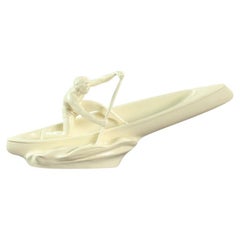
Iconic vintage sculpture of a rower. Produced by Jihokera in Czechoslovakia in 1960s. The sculpture was very popular in the Communist regime of Czechoslovakia. It has a great presenc...

Category

Vintage 1960s Czech Mid-Century Modern Figurative Sculptures

Materials

Plaster

La Pêche by Duchoiselle

La Pêche by Duchoiselle

By Duchoiselle

Located in New Orleans, LA

Duchoiselle 1801-1900 French La Pêche (Allegory of Fishing) Bronze with a brown and parcel-gilt patina Signed “Duchoiselle” This remarkable bronze figure is distinguished by its ...

Category

Mid-19th Century Academic Nude Sculptures

Materials

Bronze