Want more images or videos?
Request additional images or videos from the seller
1 of 13

Curtis Jeré
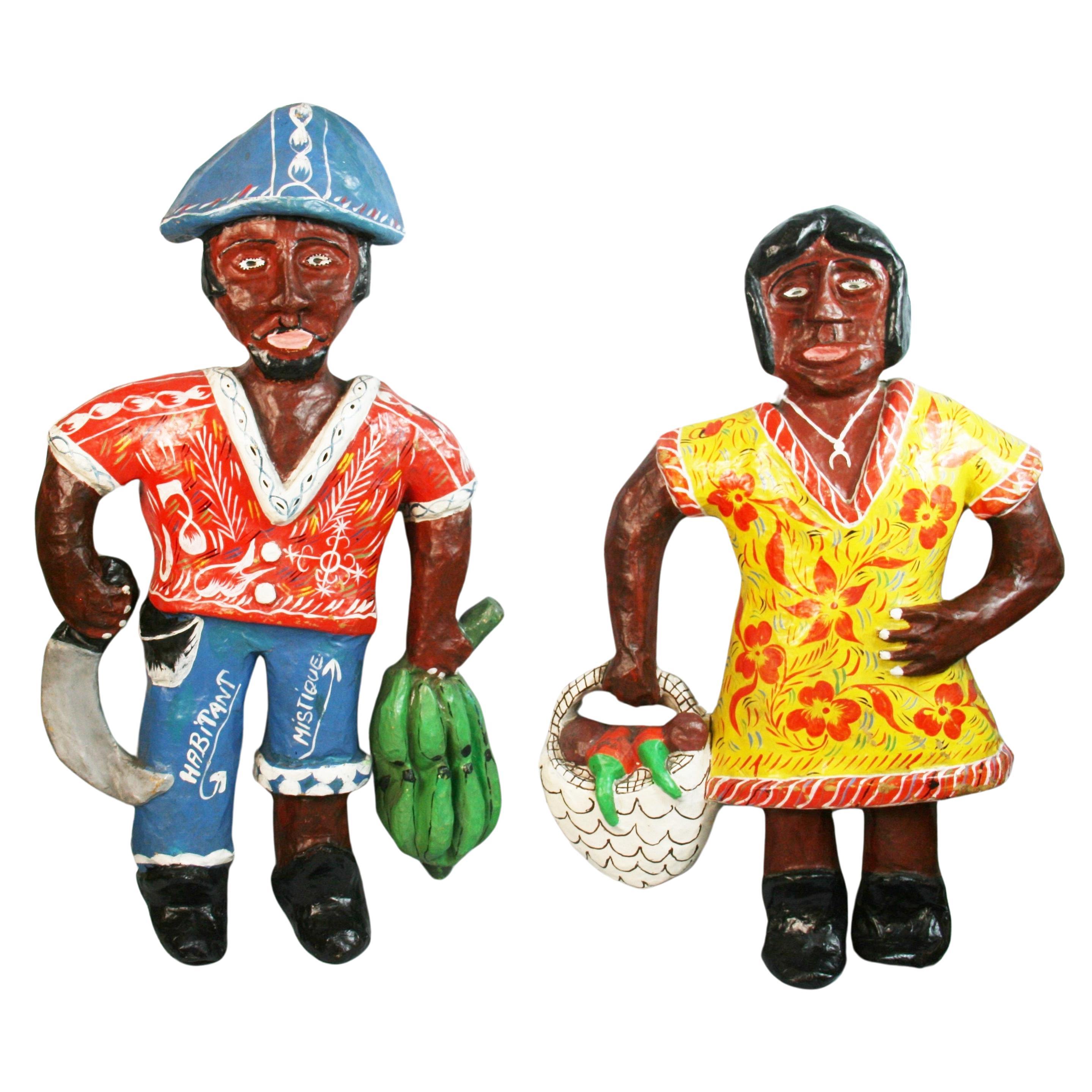
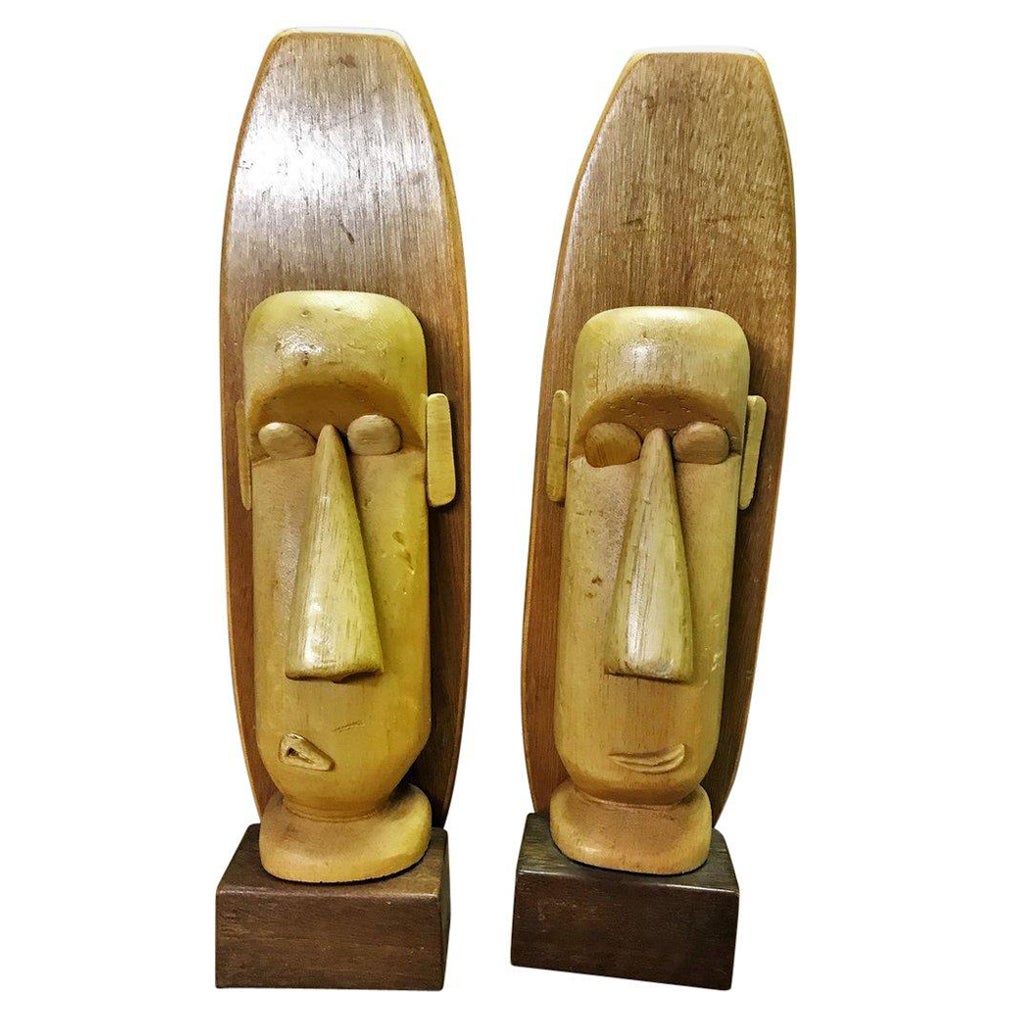
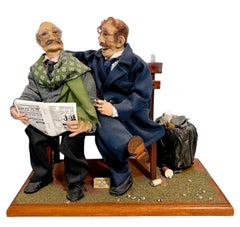
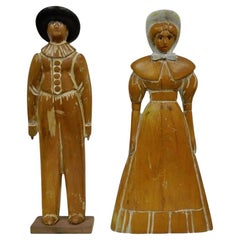
Hand Carved Painted Wood Folk Art Americana Sculpture Pair American Gothic

1982

$3,600
£2,691.88
€3,143.97
CA$5,058
A$5,122.77
CHF 2,942.77
MX$62,120.14
NOK 34,135.78
SEK 34,746.30
DKK 23,504.47

About the Item

C. Jeré ( or Curtis Jere) is a metalwork artist of wall sculptures and household accessories. C. Jeré works are made by Artisan House. Curtis Jere is a compound nom de plume of artists Curtis Freiler and Jerry Fels. The two founders combined pieces of their own names to create the C. Jeré signature. Modernism magazine interviewed Jerry Fels shortly before his death in October 2008. According to the resulting article in the Spring 2007 issue of Modernism magazine page 116, the company was founded in 1963 by Fels and his brother-in-law Curtis (Kurt) Freiler. Freiler was the production chief and Fels was head of design. Prior to the establishment of Artisan House, the partners built a costume jewelry business, selling work under the names Renoir and Matisse. Kurt and Jerry sold Artisan House in 1972. Kurt Freiler died July 22, 2013 at the age of 103. Writer Mitchell Owens wrote a two-page article on the history of C. Jeré for the November 2010 issue of Elle Decor. In it he states that "Today those pieces are attracting the admiration of leading dealers in vintage chic". He goes on to say that after launching in 1964 Jere sculptures were "distributed by Raymor, a cutting edge studio in New York City, and retailed at Gump's in San Francisco and other high quality emporiums". He also reported that "Under Freiler's meticulous direction, the workers - a number of whom were minorities or handicapped - sheared, crimped, torched, and welded brass, copper, and other metals before coating them with luminous patinas." C. Jeré works range from representational to highly abstract. Some of the older techniques, such as enameling, using resin, and the bronzes, haven't been used in decades. While most of their work is in metal, ranging from Pop Art oversize kitchen utensils and brutalist brnze starburst sculptures, this is an unusual hand carved painted wooden folk art sculpture in a vintage Whimsical Americana style. The man is holding a metal cane.
  • Creator:
    Curtis Jeré (American)
  • Creation Year:
    1982
  • Dimensions:
    Height: 34 in (86.36 cm)Width: 18.5 in (46.99 cm)Depth: 9 in (22.86 cm)
  • Medium:
  • Movement & Style:
  • Period:
  • Condition:
    minor wear, dimensions are for both, each bvase is about 9X9 the taller is 34 inches high.
  • Gallery Location:
    Surfside, FL
  • Reference Number:
    1stDibs: LU38213722892

More From This Seller

View All
Rare Vintage Hasidic Wedding Jerusalem Wood Judaica Art Sculpture Frank Meisler

Rare Vintage Hasidic Wedding Jerusalem Wood Judaica Art Sculpture Frank Meisler

By Frank Meisler

Located in Surfside, FL

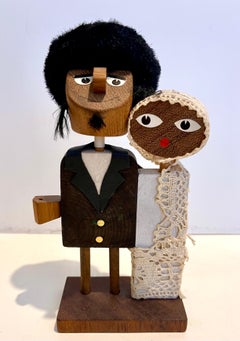
Rare Vintage unusual piece. A cute couple, Chassidic bride and groom in their wedding best. Frank Meisler has sculpted the city of Jerusalem, its walls and buildings culminating in the Temple Mount. There is a little hole in his hand for the flower that is currently missing but can easily be filled with any small sprig FRANK MEISLER Gdansk, Poland - Israel, b. 1929 Frank Meisler (born 1929) is an Israeli architect and sculptor. He was born in Germany, grew up in England, before moving to Israel in 1960. Meisler was born into a Jewish family in Danzig (then in Germany, now Gdańsk in Poland). He was evacuated from Germany by the Kindertransport in August 1939, travelling with 14 other Jewish children via Berlin to the Netherlands and then to Liverpool Street station in London. His parents were arrested three days after his departure, held in the Warsaw Ghetto and later murdered at Auschwitz concentration camp. He was raised by a grandmother, who lived in London. He attended school in Harrow, and then did national service in the Royal Air Force. He studied architecture at the University of Manchester, and was involved in the construction of the Heathrow Airport. Meisler moved to Israel in 1960, where he has a workshop in the Old City of Jaffa. He makes small Judaica sculptures, and also large public works. His public works include a memorial to Ben Gurion in Israel, a statue "Eternal Kiev" in Kiev, and a series of Kindertransport memorials: "Kindertransport - the arrival" erected at Liverpool Street station in London in 2006, "Trains to life, trains to death" erected at Friedrichstraße station in Berlin in 2008, "The departure" erected at Gdańsk Główny station in 2009, and "Crossing to life" erected at the Hook of Holland in 2011. Each includes bronze statues of a group of children, with luggage. Known for his whimsical Folk Art, Judaic sculptures he is a long time denizen of Jaffa along with Ilana Goor. He made large-scale sculptures commemorating various historical figures, including Joseph Stalin, Theodore Roosevelt, Winston Churchill at the 1945 Yalta Conference, and Christopher Columbus. Meisler also worked on a smaller scale, producing menorah, Jerusalem fountains, Jewish figurines...

Category

20th Century Folk Art Sculptures

Materials

Fabric, Wood

Judaica Painting w Sculpture Terra Cotta Jewish Couple Israeli Artist Kanovich

Judaica Painting w Sculpture Terra Cotta Jewish Couple Israeli Artist Kanovich

By Mark Kanovich

Located in Surfside, FL

Original Painting: Terracotta Relief With Acrylic Painting on Wood Panel Hand signed These works are paintings with a 3D carved sculpture dimension to them, fusing sculpture with pai...

Category

21st Century and Contemporary Folk Art Figurative Paintings

Materials

Terracotta, Acrylic, Wood Panel

1960s Pop Art Unique Cast Bronze Sculpture Americana Folk Art William King

1960s Pop Art Unique Cast Bronze Sculpture Americana Folk Art William King

By William King (b.1925)

Located in Surfside, FL

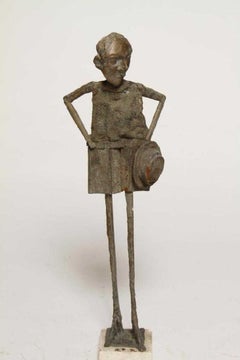
Mid-Century Modern wrought iron sculpture a person with oversize top, shorts, and carrying a hat, signed, artist's monogram and cipher, further mounted on a plaster base. 28" H. This a unique piece. It is interesting in that it speaks of a transition, leading into the later aluminum public pieces that kind of defined his work in the 70's. According to his estate this is most probably cast bronze. It might possibly be wrought iron.. William Dickey King was born in 1925 in Jacksonville, Florida and grew up in the Coconut Grove neighborhood of Miami. As a boy, William King made model airplanes and helped his father and older brother build furniture and boats. “I was 19, 20, my mother gave me a hundred bucks, says, ʻGet out of this state and don’t come back until you’re 65; there is nothing here for you,’ ” Bill King recalled in a video interview for the Smithsonian museum. He came to New York, where he attended the Cooper Union and began selling his early sculptures even before he graduated. He later studied with the sculptor Milton Hebald and traveled to Italy on a Fulbright grant. He was a contemporary, at the Cooper Union, of Alex Katz and Lois Dodd, his first wife, and remained close in many ways to their common aesthetic grounding, shared also with younger sculptors such as Red Grooms and Marisol Escobar. The hallmark of King’s early work was radical experiment keeping company with social connection and hedonism. The mix of big, important, innovative ideas and immediate, sensory, in-the-moment experience was a kind of visual jazz. For this was not just the time of Franz Kline’s big open defiant brushstrokes and Jackson Pollock’s all-over mists of intricately drooling line, but of Charlie Parker and Dizzy Gillespie. If we look at the works that King made in the early 1950s when he got back from his Fulbright to Italy we see free, experimental, open forms that take their cue from jazz as much as art in their fusion of virtuosity and cool.American sculptor King is most noted for his long-limbed figurative public art sculptures depicting people engaged in everyday activities such as reading or conversing. He created his busts and figures in a variety of materials, including clay, wood, metal, and textiles. Mr. King worked in clay, wood, bronze, vinyl, burlap and aluminum. He worked both big and small, from busts and toylike figures to large public art pieces depicting familiar human poses — a seated, cross-legged man reading; a Western couple (he in a cowboy hat, she in a long dress) holding hands; a tall man reaching down to tug along a recalcitrant little boy; a crowd of robotic-looking men walking in lock step. Mr. King’s work often reflected the times, taking on fashions and occasional politics. In the 1960s and 1970s, his work featuring African-American figures (including the activist Angela Davis, with hands cuffed behind her back) evoked his interest in civil rights. But for all its variation, what unified his work was a wry observer’s arched eyebrow, the pointed humor and witty rue of a fatalist. His figurative sculptures, often with long, spidery legs and an outlandishly skewed ratio of torso to appendages, use gestures and posture to suggest attitude and illustrate his own amusement with the unwieldiness of human physical equipment. His subjects included tennis players and gymnasts, dancers and musicians, and he managed to show appreciation of their physical gifts and comic delight at their contortions and costumery. His suit-wearing businessmen often appeared haughty or pompous; his other men could seem timid or perplexed or awkward. Oddly, or perhaps tellingly, he tended to depict women more reverentially, though in his portrayals of couples the fragility and tender comedy inherent in couplehood settled equally on both partners. His first solo exhibit took place in 1954 at the Alan Gallery in New York City. William Dicky King was elected to the American Academy of Arts and Letters in 2003, and in 2007 the International Sculpture Center honored him with the Lifetime Achievement in Contemporary Sculpture Award. Mr. King’s work is in the collections of the Metropolitan Museum of Art, Guggenheim Museum, Whitney Museum and the Museum of Modern Art in New York and the Hirshhorn Museum at the Smithsonian American Art Museum in Washington, among other places, and he had dozens of solo gallery shows in New York and elsewhere. Reviews of his exhibitions frequently began with the caveat that even though the work was funny, it was also serious, displaying superior technical skills, imaginative vision and the bolstering weight of a range of influences, from the ancient Etruscans to American folk art to 20th-century artists including Giacometti, Calder and Elie Nadelman. The New York Times critic Holland Cotter once described Mr. King’s sculpture as “comical-tragical-maniacal,” and “like Giacometti conceived by John Cheever.” From an article by David Cohen "In a career that ran in tandem with the hegemony of formal abstraction in sculpture, Bill King inevitably struggled with the prejudice that sculpture full of humanity and humor can’t be quite as serious as sculpture devoid of them. But the tide has clearly turned in ways that ought to work in King’s favor, with an increasing number of sculptors, fêted internationally, who are producing work that looks remarkably close in spirit, if not quite as regal in sheer mastery of form, as his own. When art historians of the future connect the dots of modern sculpture then artists like Franz West, Stephan Balkenhol, Huma Bhabha...

Category

1960s Pop Art Figurative Sculptures
Materials

Bronze

Marcello Fantoni Firenze Raymor Pair Figures Welded Brutalist Italian Sculpture

Marcello Fantoni Firenze Raymor Pair Figures Welded Brutalist Italian Sculpture

By Marcello Fantoni

Located in Surfside, FL

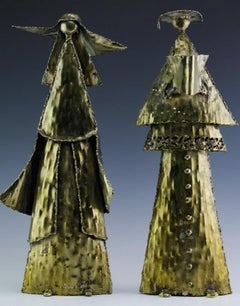
Marcello Fantoni brutalist welded torch cut metal figurines. Signed on base. Metal label reads "Fantoni Firenze Italy Raymor". Italian Mid century modern Sculptural pair of students. Marcello Fantoni (1915-2011) sculptor, ceramicist, metalworker, multimedia artist and designer Born in Florence in 1915, Marcello Fantoni began studying ceramic art at age 12 at the Art Institute of Florence with ceramicist Carlo Guerrini, artistic director of the famed Cantagalli Factory. He continued years of training in ceramics and the arts, including sculpture with Libero Andreotti and Bruno Innocenti, and figurative art with Gianni Vagnetti, graduating as a maestro of art in 1934. After a stint as art director for a ceramics factory in Perugia, in 1936 he opened the Fantoni Ceramic Studio in Florence. Here he produced ceramic series as well as unique mod pieces, sculptures and furnishings. In 1937 Fantoni’s pieces were exhibited in the Florence National Arts and Crafts Exhibit where their unique combination of rustic forms decorated with African and marine motifs and painted figures garnered considerable acclaim. By the start of World War II Fantoni’s melding of ancient Italian pottery techniques with decidedly Modernist elements had won him artistic and commercial success both in Italy and abroad. Having participated in the resistance, after the War Fantoni worked for the 500-year old Maiolica factory in Deruta, Umbria, renowned for its signature tin-glazed pottery. In the 1950s he refocused on his Florence studio, dedicating himself to larger sculptural pieces and working on many collaborations. He also expanded his experimenting with materials, forms, drawing from varied influences – Primitivism, Novecento style, Cubism and Abstract Expressionism. Fantoni gave special emphasis to ancient Etruscan ceramic techniques, glazes and colors, heightening the timeless appeal of his pieces. As well as clay, he also worked in metals to great effect. Whether created as a series or as a unique piece, every Fantoni piece was ultimately rendered unique by his hand-painting it. The extraordinary diversity of shapes and textures notwithstanding, one the most identifiable qualities of his creations was his painting style. Through the 50s and 60s he made many cubist-inspired vases and ewers painted in colors bordered by sgraffito lines scratched through the paint in a manner evoking Picasso and Braque. Along with figurative and abstract works, the 60s also saw Fantoni creating brutalist pieces with edgy, angular shapes, while in later life, his work took a minimalist turn. In 1970 Fantoni founded the International School of Ceramic Art, dedicated to teaching ceramic arts and experimentation. (Many of his students and employees would go on to become noteworthy artisans and artists in their own right.) Maintaining great versatility throughout his career, Fantoni completed projects for public and private buildings, churches, schools, theaters, cinemas, and ships. His works, meanwhile, were collected by important museums worldwide. When Marcello Fantoni died in Florence in 2011 at the age of 95, his obituary in the Italian newspaper La Nazione hailed him “The master of beauty.” Museums and Exhibitions MoMA New York, Metropolitan Museum of Art of New York, Brooklyn Museum, Museum of Fine Art of Boston, Victoria and Albert Museum of London, Royal Scottish Museum of Edinburg, Museums of Modern Art of Tokyo and Kyoto, International Museum of Ceramics in Faenza, National Bargello Museum and Gabinetto Disegni e Stampe of the Uffizi in Florence. “Materia e colore, l’arte di Marcello Fantoni”, Loggia della Limonaia di Palazzo Medici Riccardi di Firenze, 2015 "Marcello Fantoni, A Beautiful Form with Beautiful Color", Archaeological Museum of Fiesole, 2005 "Ceramics as Art, Marcello Fantoni Ceramist and Sculptor", Salone delle Regie Poste, Florence, Marcello Fantoni’s work fused painting, Primitivism, tradition, Modern art, the revival of craft, and the base material of clay itself. Some aspects of Marcello Fantoni’s ceramics – their spikey and angular shapes, with their forms reduced to multiple flat planes of colour bordered by inscribed sgraffito lines – suggest inspiration from Cubist painters Pablo Picasso and Georges Braque. Publications Marcello Fantoni: Ceramista in Firenze Dal 1929 by Antonio Paolucci, Edizioni della Bezuga, 1999 Marcello Fantoni, Ceramica come Arte, Published by Octavo, 2000 Marcello Fantoni Mostra al Museo Archeologico di Fiesole Select Fairs where his work has been exhibited: 2017 Maison Gerard at The Salon Art + Design 2017, Maison Gerard 2016 Patrick Parrish Gallery at The Salon Art + Design 2016, Patrick Parrish Gallery 2015 Galleria Rossella...

Category

Mid-20th Century Modern Figurative Sculptures
Materials

Metal

You May Also Like

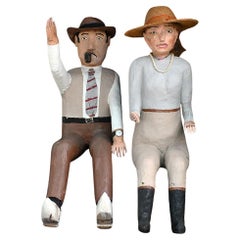
Vintage Sarreid Ltd Pine Wooden Folk Art Sculptures Man and Woman 22" Tall Pair

Vintage Sarreid Ltd Pine Wooden Folk Art Sculptures Man and Woman 22" Tall Pair

Located in Philadelphia, PA

Vintage Sarreid Ltd Pine Wooden Folk Art Sculptures Man and Woman 22" Tall - a Pair. Item features a Huffman Koos label on rear. Believed to be a store display for the High End Furni...

Category

Late 20th Century Unknown Primitive Figurative Sculptures
Materials

Pine

Mid-20th Century folkart carved wood outsider art figures

Mid-20th Century folkart carved wood outsider art figures

Located in London, GB

Mid-20th Century folkart carved wood outsider art figures Dimensions in inches: H 34” x W 11” x D 27” Age: 1950 - 1960 Origin: Holland Condition: Fair Overview We sometimes create ...

Category

Vintage 1960s Dutch Folk Art Sculptures and Carvings

Materials

Pine, Paper

Hand-Carved Folk Art Sculptures of Man and Woman

Hand-Carved Folk Art Sculptures of Man and Woman

Located in Palm Springs, CA

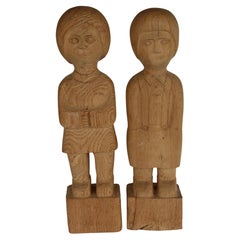
Pair of hand carved sculptures of a man and woman. Each measures about 5.75" wide, 4" Deep and 23" high.

Category

Vintage 1950s American Folk Art Outsider and Self Taught Art

Materials

Wood

Hand-Carved Wooden Folk Art Figures

Hand-Carved Wooden Folk Art Figures

Located in Santa Monica, CA

Kenneth Anthony Krogmeir carvings. Mr. Krogmeir was a dairy farmer from Fort Madison, Iowa. He also owned a small sawmill that he operated for personal use and for milling wood for n...

Category

20th Century American Folk Art Sculptures

Materials

Wood

Pair of Canadian Folk Art Carved Japanese Internment Camp Figures or Sculptures

Pair of Canadian Folk Art Carved Japanese Internment Camp Figures or Sculptures

Located in Hamilton, Ontario

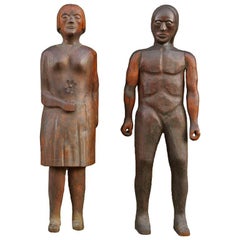
This pair of Folk Art carved figures is believed to have been made by a Japanese immigrant to Canada either while or after being interned by the Canadian government during the Second World War. The male carved figure is hand painted in vibrant colors and the base reads: June 11, 1942" and "Ontario" underneath. The nude female carving...

Category

Mid-20th Century Canadian Folk Art Sculptures and Carvings

Materials

Softwood

Pair of Antique Painted Tole Figures

Pair of Antique Painted Tole Figures

Located in New York, NY

A pair of circa 1900 Northern Italian alpine tole figures with original painted finish and patina. Measurements: Height: 15" Width: 6.25" Depth: 3...

Category

Antique Early 1900s Italian Figurative Sculptures

Materials

Metal