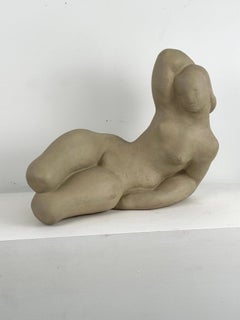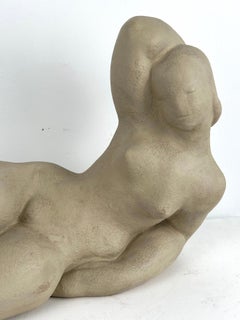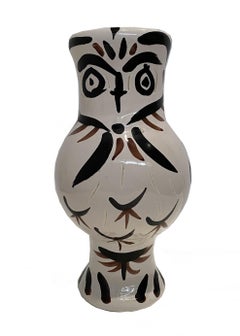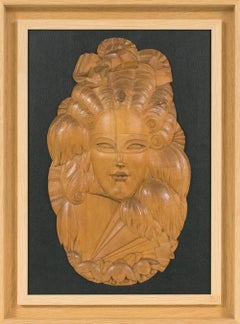
Mid-20th Century Figurative Sculptures

to
84
398
107
58
20
33
Overall Width
to
Overall Height
to
191
661
2,271
7,505
94
40
100
107
54
100
221
170
225
281
68
269
50
21
14
13
10
6
5
4
2
253
183
149
125
123
77
69
50
49
42
37
34
24
23
19
19
18
16
16
16
250
210
201
113
96
54
12
7
6
5
1
12
314
298
Period: Mid-20th Century
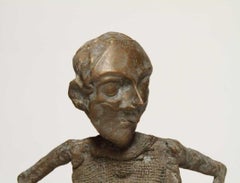
1960s Pop Art Unique Cast Bronze Sculpture Americana Folk Art William King

1960s Pop Art Unique Cast Bronze Sculpture Americana Folk Art William King

By William King (b.1925)

Located in Surfside, FL

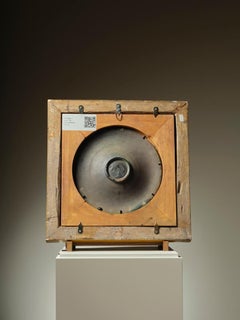
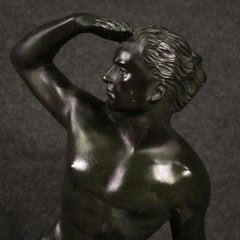
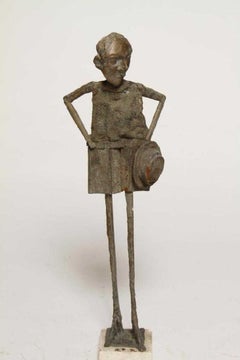
Mid-Century Modern wrought iron sculpture a person with oversize top, shorts, and carrying a hat, signed, artist's monogram and cipher, further mounted on a plaster base. 28" H. This a unique piece. It is interesting in that it speaks of a transition, leading into the later aluminum public pieces that kind of defined his work in the 70's. According to his estate this is most probably cast bronze. It might possibly be wrought iron.. William Dickey King was born in 1925 in Jacksonville, Florida and grew up in the Coconut Grove neighborhood of Miami. As a boy, William King made model airplanes and helped his father and older brother build furniture and boats. “I was 19, 20, my mother gave me a hundred bucks, says, ʻGet out of this state and don’t come back until you’re 65; there is nothing here for you,’ ” Bill King recalled in a video interview for the Smithsonian museum. He came to New York, where he attended the Cooper Union and began selling his early sculptures even before he graduated. He later studied with the sculptor Milton Hebald and traveled to Italy on a Fulbright grant. He was a contemporary, at the Cooper Union, of Alex Katz and Lois Dodd, his first wife, and remained close in many ways to their common aesthetic grounding, shared also with younger sculptors such as Red Grooms and Marisol Escobar. The hallmark of King’s early work was radical experiment keeping company with social connection and hedonism. The mix of big, important, innovative ideas and immediate, sensory, in-the-moment experience was a kind of visual jazz. For this was not just the time of Franz Kline’s big open defiant brushstrokes and Jackson Pollock’s all-over mists of intricately drooling line, but of Charlie Parker and Dizzy Gillespie. If we look at the works that King made in the early 1950s when he got back from his Fulbright to Italy we see free, experimental, open forms that take their cue from jazz as much as art in their fusion of virtuosity and cool.American sculptor King is most noted for his long-limbed figurative public art sculptures depicting people engaged in everyday activities such as reading or conversing. He created his busts and figures in a variety of materials, including clay, wood, metal, and textiles. Mr. King worked in clay, wood, bronze, vinyl, burlap and aluminum. He worked both big and small, from busts and toylike figures to large public art pieces depicting familiar human poses — a seated, cross-legged man reading; a Western couple (he in a cowboy hat, she in a long dress) holding hands; a tall man reaching down to tug along a recalcitrant little boy; a crowd of robotic-looking men walking in lock step. Mr. King’s work often reflected the times, taking on fashions and occasional politics. In the 1960s and 1970s, his work featuring African-American figures (including the activist Angela Davis, with hands cuffed behind her back) evoked his interest in civil rights. But for all its variation, what unified his work was a wry observer’s arched eyebrow, the pointed humor and witty rue of a fatalist. His figurative sculptures, often with long, spidery legs and an outlandishly skewed ratio of torso to appendages, use gestures and posture to suggest attitude and illustrate his own amusement with the unwieldiness of human physical equipment. His subjects included tennis players and gymnasts, dancers and musicians, and he managed to show appreciation of their physical gifts and comic delight at their contortions and costumery. His suit-wearing businessmen often appeared haughty or pompous; his other men could seem timid or perplexed or awkward. Oddly, or perhaps tellingly, he tended to depict women more reverentially, though in his portrayals of couples the fragility and tender comedy inherent in couplehood settled equally on both partners. His first solo exhibit took place in 1954 at the Alan Gallery in New York City. William Dicky King was elected to the American Academy of Arts and Letters in 2003, and in 2007 the International Sculpture Center honored him with the Lifetime Achievement in Contemporary Sculpture Award. Mr. King’s work is in the collections of the Metropolitan Museum of Art, Guggenheim Museum, Whitney Museum and the Museum of Modern Art in New York and the Hirshhorn Museum at the Smithsonian American Art Museum in Washington, among other places, and he had dozens of solo gallery shows in New York and elsewhere. Reviews of his exhibitions frequently began with the caveat that even though the work was funny, it was also serious, displaying superior technical skills, imaginative vision and the bolstering weight of a range of influences, from the ancient Etruscans to American folk art to 20th-century artists including Giacometti, Calder and Elie Nadelman. The New York Times critic Holland Cotter once described Mr. King’s sculpture as “comical-tragical-maniacal,” and “like Giacometti conceived by John Cheever.” From an article by David Cohen "In a career that ran in tandem with the hegemony of formal abstraction in sculpture, Bill King inevitably struggled with the prejudice that sculpture full of humanity and humor can’t be quite as serious as sculpture devoid of them. But the tide has clearly turned in ways that ought to work in King’s favor, with an increasing number of sculptors, fêted internationally, who are producing work that looks remarkably close in spirit, if not quite as regal in sheer mastery of form, as his own. When art historians of the future connect the dots of modern sculpture then artists like Franz West, Stephan Balkenhol, Huma Bhabha...

Category

Pop Art Mid-20th Century Figurative Sculptures

Materials

Bronze
Relining Nude (WG6)
Relining Nude (WG6)

Relining Nude (WG6)

By Waylande Gregory

Located in Wilton Manors, FL

Waylande Gregory (1905-1971). Nude Reclining, ca. 1950's. Painted composite cast from original sculpted in 1930's. Casting sanctioned and approved by the artist during his lifetime in partnership with MPI, Museum Pieces Incorporated. Very few examples were produced and even fewer survive. Waylande Gregory was considered a major American sculptor during the 1930's, although he worked in ceramics, rather than in the more traditional bronze or marble. Exhibiting his ceramic works at such significant American venues for sculpture as the Whitney Museum of American Art in New York City and at the venerable Pennsylvania Academy of the Fine Arts in Philadelphia, he also showed his ceramic sculptures at leading New York City galleries. Gregory was the first modern ceramist to create large scale ceramic sculptures, some measuring more than 70 inches in height. Similar to the technique developed by the ancient Etruscans, he fired his monumental ceramic sculptures only once. Gregory was born in 1905 in Baxter Springs, Kansas and was something of a prodigy. Growing up on a ranch near a Cherokee reservation, Gregory first became interested in ceramics as a child during a native American burial that he had witnessed. He was also musically inclined. In fact, his mother had been a concert pianist and had given her son lessons. At eleven, he was enrolled as a student at the Kansas State Teacher's College, where he studied carpentry and crafts, including ceramics. Gregory's early development as a sculptor was shaped by the encouragement and instruction of Lorado Taft, who was considered both a major American sculptor as well as a leading American sculpture instructor. In fact, Taft's earlier students included such significant sculptors as Bessie Potter Vonnoh and Janet Scudder. But, Taft and his students had primarily worked in bronze or stone, not in clay; and, Gregory's earliest sculptural works were also not in ceramics. In 1924, Gregory moved to Chicago where he caught the attention of Taft. Gregory was invited by Taft to study with him privately for 18 months and to live and work with him at his famed "Midway Studios." The elegant studio was a complex of 13 rooms that overlooked a courtyard. Taft may have been responsible for getting the young man interested in creating large scale sculpture. However, by the 1920's, Taft's brand of academic sculpture was no longer considered progressive. Instead, Gregory was attracted to the latest trends appearing in the United States and Europe. In 1928 he visited Europe with Taft and other students. "Kid Gregory," as he was called, was soon hired by Guy Cowan, the founder of the Cowan Pottery in Cleveland, Ohio, to become the company's only full time employee. From 1928 to 1932, Gregory served as the chief designer and sculptor at the Cowan Pottery. Just as Gregory learned about the process of creating sculpture from Taft, he literally learned about ceramics from Cowan. Cowan was one of the first graduates of Alfred, the New York School of Clayworking and Ceramics. Alfred had one of the first programs in production pottery. Cowan may have known about pottery production, but he had limited sculptural skills, as he was lacking training in sculpture. The focus of the Cowan Pottery would be on limited edition, table top or mantle sculptures. Two of the most successful of these were Gregory's Nautch Dancer, and his Burlesque Dancer. He based both sculptures on the dancing of Gilda Gray, a Ziegfield Follies girl. Gilda Gray was of Polish origin and came to the United States as a child. By 1922, she would become one of the most popular stars in the Follies. After losing her assets in the stock market crash of 1929, she accepted other bookings outside of New York, including Cleveland, which was where Gregory first saw her onstage. She allowed Gregory to make sketches of her performances from the wings of the theatre. She explained to Gregory, "I'm too restless to pose." Gray became noted for her nautch dance, an East Indian folk dance. A nautch is a tight, fitted dress that would curl at the bottom and act like a hoop. This sculpture does not focus on Gray's face at all, but is more of a portrait of her nautch dance. It is very curvilinear, really made of a series of arches that connect in a most feminine way. Gregory created his Burlesque Dancer at about the same time as Nautch Dancer. As with the Nautch Dancer, he focused on the movements of the body rather than on a facial portrait of Gray. Although Gregory never revealed the identity of his model for Burlesque Dancer, a clue to her identity is revealed in the sculpture's earlier title, Shimmy Dance. The dancer who was credited for creating the shimmy dance was also Gilda Gray. According to dance legend, Gray introduced the shimmy when she sang the Star Spangled Banner and forgot some of the lyrics, so, in her embarrassment, started shaking her shoulders and hips but she did not move her legs. Such movement seems to relate to the Burlesque Dancer sculpture, where repeated triangular forms extend from the upper torso and hips. This rapid movement suggests the influence of Italian Futurism, as well as the planar motion of Alexander Archipenko, a sculptor whom Gregory much admired. The Cowan Pottery was a victim of the great depression, and in 1932, Gregory changed careers as a sculptor in the ceramics industry to that of an instructor at the Cranbrook Academy in Bloomfield Hills, Michigan. Cranbrook was perhaps the most prestigious place to study modern design in America. Its faculty included the architect Eliel Saarinen and sculptor Carl Milles. Although Gregory was only at Cranbrook for one and one half years, he created some of his finest works there, including his Kansas Madonna. But, after arriving at Cranbrook, the Gregory's had to face emerging financial pressures. Although Gregory and his wife were provided with complimentary lodgings, all other income had to stem from the sale of artworks and tuition from students that he, himself, had to solicit. Gregory had many people assisting him with production methods at the Cowan Pottery, but now worked largely by himself. And although he still used molds, especially in creating porcelain works, many of his major new sculptures would be unique and sculpted by hand, as is true of Kansas Madonna. The scale of Gregory's works were getting notably larger at Cranbrook than at Cowan. Gregory left the surface of Kansas Madonna totally unglazed. Although some might object to using a religious title to depict a horse nursing its colt, it was considered one of Gregory's most successful works. In fact, it had a whole color page illustration in an article about ceramic sculpture titled, "The Art with the Inferiority Complex," Fortune Magazine, December, 1937. The article notes the sculpture was romantic and expressive and the sculpture was priced at $1,500.00; the most expensive sculpture...

Category

Art Deco Mid-20th Century Figurative Sculptures

Materials

Plaster

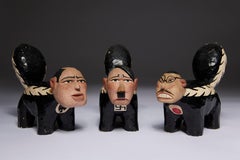
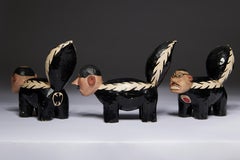
The Three Skunks of WWII, Carved Wooden Figures of Hitler, Mussolini & Tojo

The Three Skunks of WWII, Carved Wooden Figures of Hitler, Mussolini & Tojo

Located in Beachwood, OH

Three Skunks of WWII c. 1940s Carved and painted wood Unsigned 8 x 10 in. h. each These skunks are depicted as Adolf Hitler, Benito Mussolini, and Hideki Tojo. Condition: There ...

Category

Mid-20th Century Figurative Sculptures

Materials

Wood, Paint

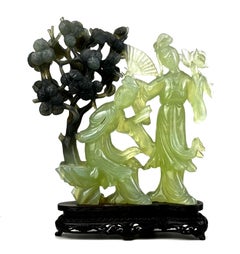
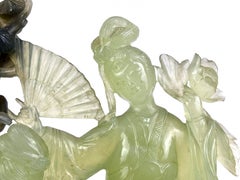
Oriental Jade Sculpture of Two Court Ladies with Tree – Mid-20th Century

Oriental Jade Sculpture of Two Court Ladies with Tree – Mid-20th Century

Located in Sant Celoni, ES

Elegant hand-carved bicolor jade sculpture from the Oriental tradition, depicting two court ladies beneath a flowering tree. The figures are crafted in translucent light green jade, ...

Category

Mid-20th Century Figurative Sculptures

Materials

Other Medium

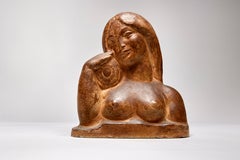
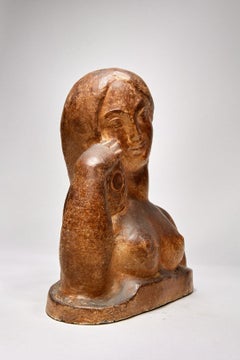
Zinnia, early 20th century sculpture of nude bust of woman, Cleveland School

Zinnia, early 20th century sculpture of nude bust of woman, Cleveland School

By Walter Sinz 1

Located in Beachwood, OH

Walter Sinz (American, 1881-1966) Zinnia, c. 1930 Plaster Signed on base 9 x 8 x 4 inches Walter A. Sinz was an American sculptor born in Cleveland, Ohio on July 13, 1881. Sinz’s fa...

Category

Mid-20th Century Figurative Sculptures

Materials

Plaster

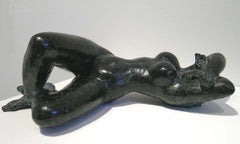
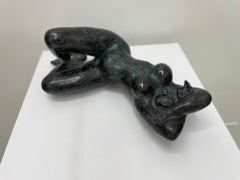
Reclining Figure (woman)

Reclining Figure (woman)

By William King (b.1925)

Located in Wilton Manors, FL

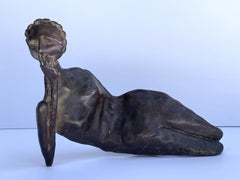
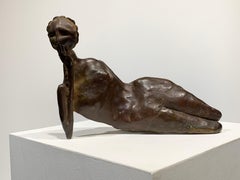
William King (1925-2015). Reclining figure, ca. 1965. Cast and welded bronze, 7 x 9.5 x 5 inches. Unsigned. William King, a sculptor in a variety of materials whose human figures traced social attitudes through the last half of the 20th century, often poking sly and poignant fun at human follies and foibles, died on March 4 at his home in East Hampton, N.Y. He was 90. His death was confirmed by Scott Chaskey, who is married to Mr. King's stepdaughter, Megan Chaskey. Mr. King worked in clay, wood, bronze, vinyl, burlap and aluminum. He worked both big and small, from busts and toylike figures to large public art pieces depicting familiar human poses -- a seated, cross-legged man reading; a Western couple (he in a cowboy hat, she in a long dress) holding hands; a tall man reaching down to tug along a recalcitrant little boy; a crowd of robotic-looking men walking in lock step. But for all its variation, what unified his work was a wry observer's arched eyebrow, the pointed humor and witty rue of a fatalist. His figurative sculptures, often with long, spidery legs and an outlandishly skewed ratio of torso to appendages, use gestures and posture to suggest attitude and illustrate his own amusement with the unwieldiness of human physical equipment. His subjects included tennis players and gymnasts, dancers and musicians, and he managed to show appreciation of their physical gifts and comic delight at their contortions and costumery. His suit-wearing businessmen often appeared haughty or pompous; his other men could seem timid or perplexed or awkward. Oddly, or perhaps tellingly, he tended to depict women more reverentially, though in his portrayals of couples the fragility and tender comedy inherent in couplehood settled equally on both partners. Mr. King's work is in the collections of the Metropolitan Museum of Art and the Museum of Modern Art in New York and the Smithsonian American Art Museum in Washington, among other places, and he had dozens of solo gallery shows in New York and elsewhere. But the comic element of his work probably caused his reputation to suffer. Reviews of his exhibitions frequently began with the caveat that even though the work was funny, it was also serious, displaying superior technical skills, imaginative vision and the bolstering weight of a range of influences, from the ancient Etruscans to American folk art to 20th-century artists including Giacometti, Calder. and Elie Nadelman. The critic Hilton Kramer, one of Mr. King's most ardent advocates, wrote in a 1970 essay accompanying a New York gallery exhibit that he was, "among other things, an amusing artist, and nowadays this can, at times, be almost as much a liability as an asset." A "preoccupation with gesture is the focus of King's sculptural imagination," Mr. Kramer wrote. "Everything that one admires in his work - the virtuoso carving, the deft handling of a wide variety of materials, the shrewd observation and resourceful invention - all this is secondary to the concentration on gesture. The physical stance of the human animal as it negotiates the social arena, the unconscious gait that the body assumes in making its way in the social medium, the emotion traced by the course of a limb, a torso, a head, the features of a face, a coiffure or a costume - from a keen observation of these materials King has garnered a large stock of sculptural images notable for their wit, empathy, simplicity and psychological precision." William Dickey King...

Category

Abstract Mid-20th Century Figurative Sculptures

Materials

Bronze
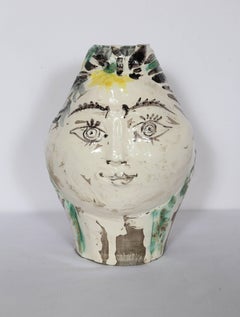
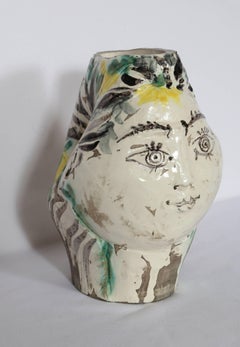
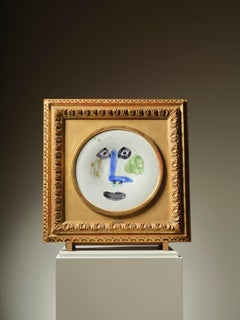
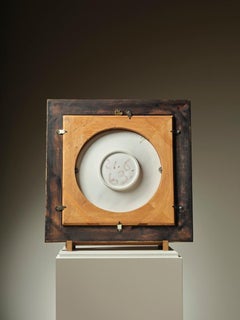
Visage (A.R. 288)
Visage (A.R. 288)

Visage (A.R. 288)

By Pablo Picasso

Located in Östermalm, Stockholms län

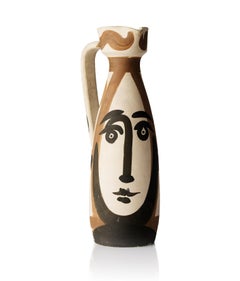
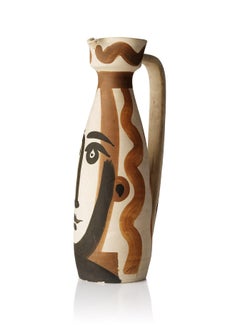
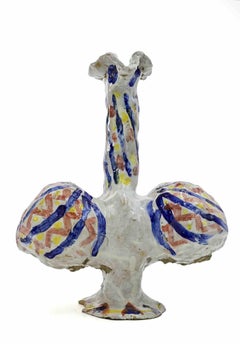
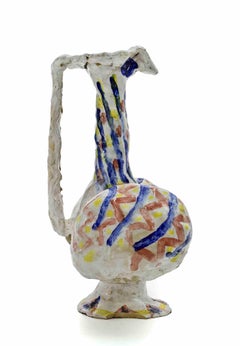
Visage (A.R. 288), 1955 White earthenware ceramic pitcher with colored engobe and glaze Edition of 500 Stamped “Picasso” and “Madoura Plein Feu” (underneath) The piece is in excelle...

Category

Modern Mid-20th Century Figurative Sculptures

Materials

Ceramic

RECLINGING WOMAN
RECLINGING WOMAN

RECLINGING WOMAN

By Antoniucci Volti

Located in Los Angeles, CA

ANTONIUCCI VOLTI "RECLINGING WOMAN" BRONZE, SIGNED, NUMBERED 2/6 VALSUANI FOUNDRY ITALiAN, WORKED IN PARIS, C.1960 6.5 X 18.5 X 10.5 INCHES Antoniucci Volti 1915-1989 Sculptor, painter, and printmaker Antoniucci Volti was born in Albano, Italy, in 1915. His family lived in Italy until 1920 when the family moved to France. Volti studied at the Ecole des Arts Décoratifs in Nice from 1928 to 1920. By 1932 the young artist had won a gold medal for two polychrome bas-reliefs before going to Paris, where he entered the studio of Jean Boucher at the Ecole Nationale des Beaux-Arts in Paris at the age of only fifteen. After serving in the Second World War, when he was interned as a prisoner of war in Bavaria, he returned in poor health to Paris, only to find his studio destroyed. From 1947 he showed work at various Paris Salons and, in 1954 and 1955 at the Brussels and Antwerp Biennales. In 1957 a retrospective of his work was organized at the Museum Rodin in Paris. He died in Paris in 1989 Works by Volti are in leading museums such as the Musée National d'Art Moderne, Paris. Antoniucci Volti is one of the most important Late Modern...

Category

Modern Mid-20th Century Figurative Sculptures

Materials

Bronze

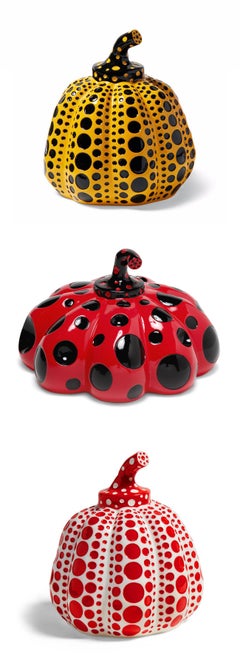
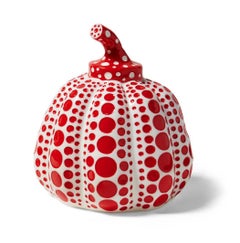
Kusama Pumpkins (Set of 3 works)

Kusama Pumpkins (Set of 3 works)

By Yayoi Kusama

Located in NEW YORK, NY

Yayoi Kusama Set of 3 Pumpkins: Yellow and Black, Red & White and Red & Black Naoshima: An iconic, vibrantly colored pop art set - these small Kusama pumpkin sculptures feat...

Category

Pop Art Mid-20th Century Figurative Sculptures

Materials

Resin

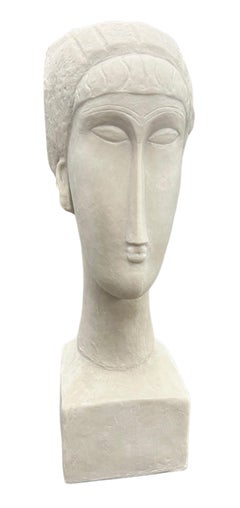
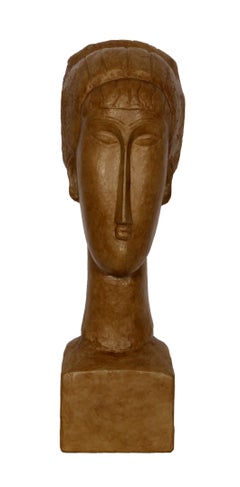
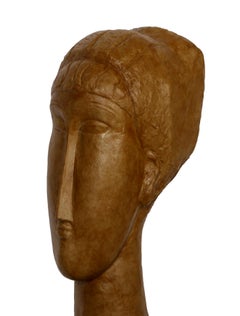
Tête de Femme, after Modigliani

Tête de Femme, after Modigliani

By Amedeo Modigliani

Located in Long Island City, NY

Tete de Femme after Modigliani, produced by Austin Productions in 1961. Austin Productions started in Brooklyn in 1952 and began manufacturing reprodu...

Category

Modern Mid-20th Century Figurative Sculptures

Materials

Resin

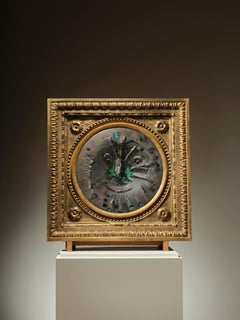
Visage
Visage

Visage

By Pablo Picasso

Located in PARIS, FR

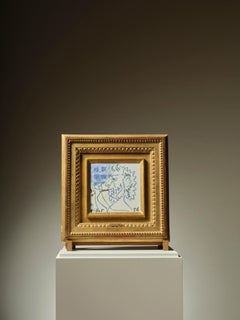
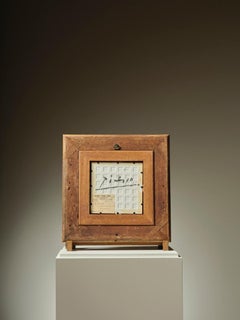
An authenticated work Authenticated by Claude Ruiz Picasso on February 1, 2021, the piece comes directly from the Marina Picasso Collection. A prestigious provenance A provenance fr...

Category

Modern Mid-20th Century Figurative Sculptures

Materials

Ceramic

Rare Milk Glass Carved Sculpture Panel Cowboy Indian WPA Artist Americana

Rare Milk Glass Carved Sculpture Panel Cowboy Indian WPA Artist Americana

By Abraham Harriton

Located in Surfside, FL

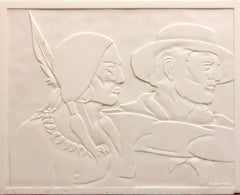
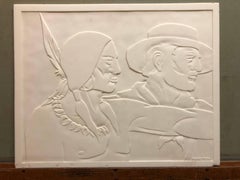
This is a carved glass panel. I belive this is milk glass. it is a classic Americana scene of a cowboy or frontier trapper and an Indian or Native American with a feathered headdress...

Category

Realist Mid-20th Century Figurative Sculptures

Materials

Glass

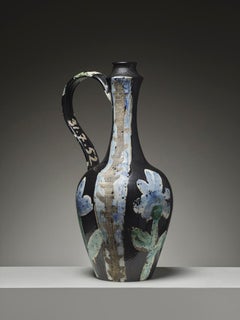
Fleurs
Fleurs

Fleurs

By Pablo Picasso

Located in PARIS, FR

• An authenticated work This work is authenticated by Paloma Ruiz Picasso and Diana Widmaier Ruiz Picasso, who issued a certificate of authenticity on October 7, 2024. • A dated wor...

Category

Modern Mid-20th Century Figurative Sculptures

Materials

Ceramic

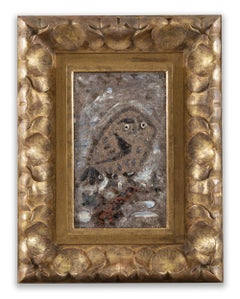
Hibou
Hibou

Hibou

By Pablo Picasso

Located in PARIS, FR

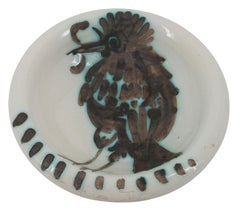
• A unique ceramic by Pablo Picasso This work is a unique ceramic by Pablo Picasso, dated on the reverse, reflecting the artist’s direct and personal intervention in the creation of ...

Category

Modern Mid-20th Century Figurative Sculptures

Materials

Ceramic

Petite Chouette 1949, Rare Picasso Ceramic Pitcher, Ramié Catalogue No. 82

Petite Chouette 1949, Rare Picasso Ceramic Pitcher, Ramié Catalogue No. 82

By Pablo Picasso

Located in Eltville am Rhein, DE

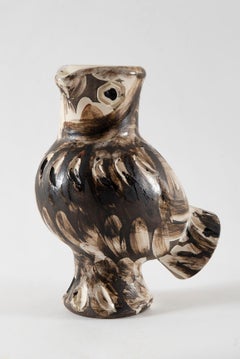
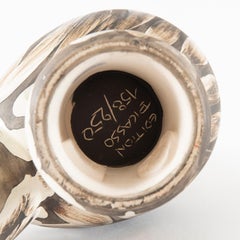
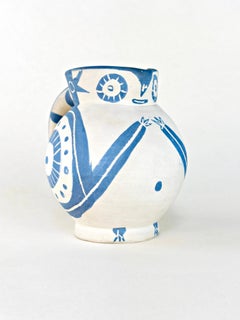
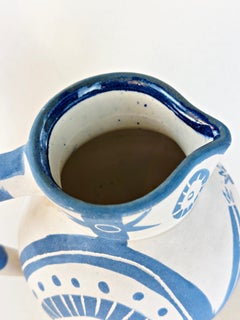
Pablo Picasso Malaga 1881 - 1973 Mougins Petite Chouette, 1949 White earthware with engobe decoration, glazed interior 13 x 15 x 11 cm Impressed studio marke to undersite "EDITION P...

Category

Abstract Expressionist Mid-20th Century Figurative Sculptures

Materials

Ceramic

Rare 1966 Original Bronze Sculpture "The Two Nikes" edition of 6 Salvador Dali
Rare 1966 Original Bronze Sculpture "The Two Nikes" edition of 6 Salvador Dali
By Salvador Dalí­

Located in Surfside, FL

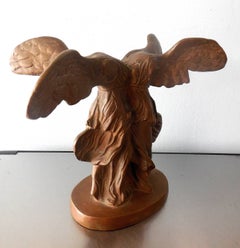
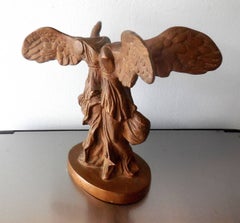
Salvador Dali (1904-1989) – The Two Nikes, Lilith, The Double Victory of Samothrace, Homage to Raymond Roussel Literature: Descharnes, Robert, Salvador Dalí, and Nicolas Descharnes....

Category

Surrealist Mid-20th Century Figurative Sculptures

Materials

Bronze
Horse
Horse

Horse

Located in Greenwich, CT

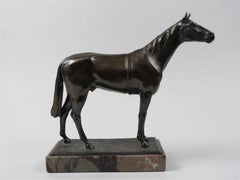
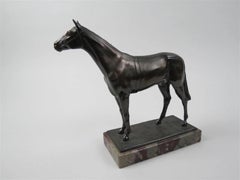
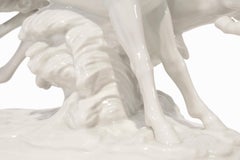
Figure of a horse , French 1940's , on a marble base appears unsigned finely carved, beautiful rendering, nice patina

Category

Mid-20th Century Figurative Sculptures

Materials

Bronze
Heavy Bronze Sculpture Austrian Israeli judaica Jewish Couple Bench Nicky Imber
Heavy Bronze Sculpture Austrian Israeli judaica Jewish Couple Bench Nicky Imber
By Nicky Imber

Located in Surfside, FL

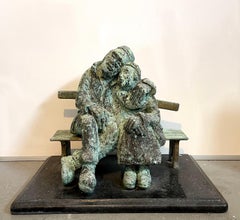
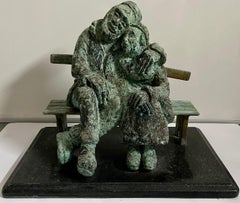
Large and heavy with magnificent patina. This is the large version of this piece. we cannot find any markings on it and it might be unique. Nicky Imber (Vienna, Austria, 1920 -1996) was a multidisciplinary Jewish artist best known for his sculptures on Jewish themes. Grand nephew of Naftali Herz Imber, author of the Israeli national anthem 'Hatikva'. After escaping the Nazi concentration camp in Dachau, he pledged to dedicate his art to perpetuating the memory of the Holocaust. Among his more famous works are "The Hope" and "The Love of Torah". His work can be seen around the world, in Northern Israel, the United States, and the Venezuelan Museum of Natural History in Caracas. Nicky Imber was born in Vienna, Austria. During his studies at the Academy of Arts in Vienna, he drew anti-Nazi caricatures for Jewish student publications. After several thwarted attempts by the family to leave Vienna, in 1938, in the wake of the 'Anschluss', Imber was deported to Dachau. Witnessing the murders of family and friends, he plotted his escape. Using skills he had learned in art school, he made a face mask out of bread and sand, stole a Nazi soldier's uniform and walked out the front gate unnoticed. In 1940, he boarded a ship headed to Haifa. The ship's passengers were refused entry by the British mandatory authorities and imprisoned in a detention camp in Mauritius. In 1943, Imber worked out a deal with the authorities for his release by joining the British Army, serving as a war artist and a dental assistant in East Africa. After the war, he opened an art school in Nairobi, Kenya, and worked as a photographer and a safari guide. In 1949 to 1954, he lived in Venezuela, where he was contracted to do an East African Diorama series. The National Museum added an entire wing to display it. During this period he got married and had a daughter Raquel, who accompanied and assisted him. In 1959, Imber was commissioned to create sculptures and dioramas for the Haifa Prehistory Museum at Gan Ha-em in Haifa, Israel. In 1960 he returned to Venezuela to restaured the Phelps series of Dioramas for the Museum in Caracas. Between 1961 and 1971 he travelled extensively around Europe and after establishing an international name for himself, returned to the United States. In New York he became famous for his realistic oil paintings of portraits of Aga Khan, Tyrone Power, Ava Gardner, David Ben-Gurion, Golda Meir, Sir Richard Burton...

Category

Post-Impressionist Mid-20th Century Figurative Sculptures

Materials

Marble, Bronze
Chouette (A.R.604)
Chouette (A.R.604)

Chouette (A.R.604)

By Pablo Picasso

Located in PARIS, FR

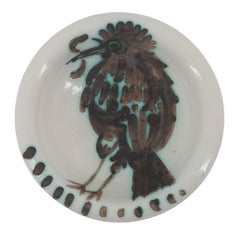
• Picasso began working with ceramics in 1946 at the Madoura workshop in Vallauris, marking the beginning of an important and highly productive chapter in his career. What initially ...

Category

Modern Mid-20th Century Figurative Sculptures

Materials

Ceramic

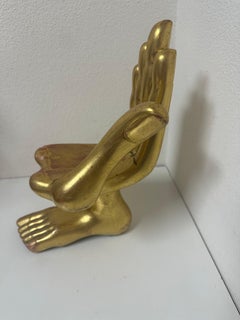
Pedro Friedeberg, "Hand Foot", unique sculpture

Pedro Friedeberg, "Hand Foot", unique sculpture

By Pedro Friedeberg

Located in Chatsworth, CA

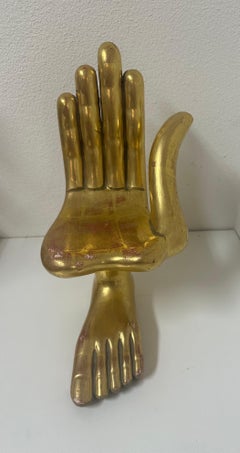
Pedro Friedeberg Unique Hand Foot Sculpture Gilt finished wood Signed PEDRO FRIEDEBERG on bottom of the foot 12 inches tall, 6 inches wide (base of hand), 3 inches wide (base of foot...

Category

Modern Mid-20th Century Figurative Sculptures

Materials

Wood

Visage (Nez à Angle Droit)

Visage (Nez à Angle Droit)

By Pablo Picasso

Located in PARIS, FR

An authenticated work Dated June 21, 1963, this unique painted and glazed ceramic comes with a certificate of authenticity from Claude Ruiz Picasso (2019). A dated work Inscribed Ju...

Category

Modern Mid-20th Century Figurative Sculptures

Materials

Ceramic

Early 20th Century Ceramic Bust of a Woman, Cleveland School Artist

Early 20th Century Ceramic Bust of a Woman, Cleveland School Artist

Located in Beachwood, OH

Edris Eckhardt (American, 1905-1998) Bust, 1933 Ceramic Signed and dated base 8.5 x 4.5 x 4.5 inches, including base Minor losses to paint on base. Born in Cleveland, Ohio January ...

Category

Mid-20th Century Figurative Sculptures

Materials

Ceramic

Tigre à l'affût, Art Deco Bronze Sculpture by Georges Lavroff
Tigre à l'affût, Art Deco Bronze Sculpture by Georges Lavroff

By Georges Lavroff

Located in Long Island City, NY

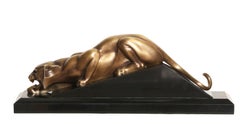
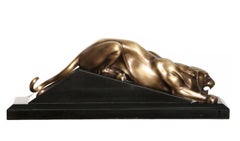
Georges Lavroff, Russian (1895 - 1991) - Tigre à l'affût, Year: circa 1925, Medium: Bronze sculpture on marble base, signature inscribed at base, Size: 4.5 x 21 x 4 in. (11.43 x 5...

Category

Art Deco Mid-20th Century Figurative Sculptures

Materials

Marble, Bronze

Four Dancers
Four Dancers

Four Dancers

By Pablo Picasso

Located in New York, NY

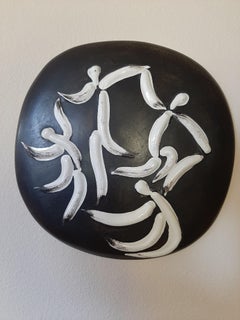
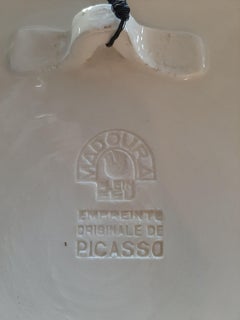
Partially glazed terre-de-faïence convex wall plaque painted in black and white, 1956. Edition of 450. With the Madoura Plein Feu and Empreinte Originale de Picasso stamps, verso. ...

Category

Cubist Mid-20th Century Figurative Sculptures

Materials

Clay, Ceramic

Faune à la Diaule
Faune à la Diaule

Faune à la Diaule

By Pablo Picasso

Located in PARIS, FR

• An authenticated work This work is authenticated by Claude Ruiz Picasso, who issued a certificate of authenticity on January 17, 2019. • A signed and dated work Dated July 11, 195...

Category

Modern Mid-20th Century Figurative Sculptures

Materials

Ceramic

Cigar Store Indian, Early 20th Century, Carved Wood With Polychrome Decoration

Cigar Store Indian, Early 20th Century, Carved Wood With Polychrome Decoration

Located in Cotignac, FR

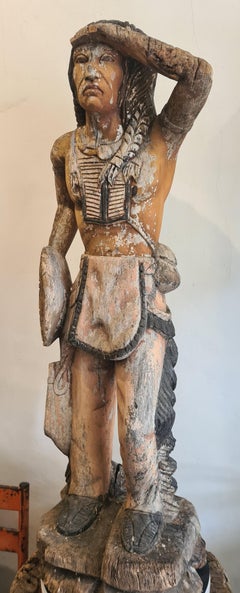
A 20th Century wood carved male figure, a 'Cigar Store Indian' with original polychrome decoration. A now controversial subject, but none the less charming rendition, of a native North American man originally probably used as an advertising figure. Wonderful quality of carving capturing the stance of the man looking out to the distance, hair flowing to his back and plait to the side, all the details of his costume, his native dress and hairpipe breastplate (suggesting he is possibly a Comanche) and chest ornament, apron, trousers, mocassins, shield and arrows. The original Polychrome decoration has weathered beautifully as has the wood itself to present a sculpture that would adorn any collection or interior. Because of the general illiteracy of the populace, early store owners used descriptive emblems or figures to advertise their shops' wares. American Indians and tobacco had always been associated because American Indians introduced tobacco to Europeans. As early as the 17th century, European tobacconists used figures of American Indians to advertise their shops. Because European carvers had never seen a Native American, these early cigar-store "Indians" looked more like Africans with feathered headdresses and other fanciful, exotic features. These carvings were called "Black Boys" or "Virginians" in the trade. Eventually, the European cigar-store figure...

Category

American Realist Mid-20th Century Figurative Sculptures

Materials

Wood, Paint

Modernist Hand Forged Iron Mosaic Sculpture Animal Ram Israeli David Palombo

Modernist Hand Forged Iron Mosaic Sculpture Animal Ram Israeli David Palombo

By David Palombo

Located in Surfside, FL

Heavy Hand Forged Brutalist Iron Ram or Goat Sculpture David Palombo was an Israeli sculptor and painter. He was born in Turkey to a traditional family and immigrated to the Land of Israel with his parents in 1923. They lived in the Nahalat Shiva neighborhood of Jerusalem. In 1940 he began his studies at Bezalel Academy of Arts and Design, and from 1942 was a student of sculptor Ze’ev Ben-Zvi. For a period of time, Palombo was an assistant at Ben-Zvi’s studio and also taught at Bezalel. During this period he was also a member of the “Histadrut HaNoar HaOved VeHaLomed” (The General Federation of Students and Young Workers in Israel). In the 1940s he took art lessons at night. In 1948 he went to Paris, where he visited the studio of the sculptor Constantin Brancusi whose work influenced him. Around 1958 he married the artist Shulamit Sirota. In 1960 he quit his job to devote himself to art. In 1964 he married for the second time to the artist Yona Palombo. The two of them went to live in an abandoned home on Mount Zion in Jerusalem. In 1966 he was killed when the motorcycle on which he was riding ran into a chain stretched across the street to prevent the desecration of Shabbat. His widow opened a museum in their home that was active until the year 2000. Work by Palombo is included in the Judaic collection of the Jewish Museum (a well known Hanukkah menora). Palombo executed the impressive metal gates of the Tent of Remembrance at the Yad Vashem, the memorial to the martyrs of the holocaust, as well as the gates to the Knesset Building the United Nations Educational Scientific and Cultural Organization (Unesco award) awarded him a scholarship for study in Japan. He worked in marble, granite, bronze, iron and steel. as well as with glass mosaic tiles. Palombo’s early works, in the 1950s, were influenced by modernist sculptors such as Brancusi. These works were composed of abstract images from nature and were carved out of stone or wood. At the end of the 1950s he began making metal sculptors, using the technique of welding. His work took on a more abstract and expressive character. Education 1940 Painting with Isidor Ascheim, New Bezalel School for Arts and Crafts, Jerusalem 1942 Sculpture with Zeev Ben Zvi, Jerusalem 1956 Mosaic, Ravenna, Italy 1958 Welding Course Awards And Prizes 1966 UNESCO Award Exhibitions: Sculpture in Israel, 1948-1958 Mishkan Museum of Art, Kibbutz Ein Harod Artists: Zvi Aldouby, Yitzhak Danziger, Arieh Merzer, Dov Feigin, Aaron Priver, David Palumbo, Menashe Kadishman, Kosso Eloul, Yehiel Shemi, Zahara Schatz. The Spring Exhibition of Jerusalem Artists, Artists' House, Jerusalem Artists: Palombo, David Bezalel Schatz, Mordechai Levanon, Fima, Ludwig Blum 12 Artists, The Bezalel National Museum, Jerusalem Avraham Ofek, Aviva Uri, Avigdor Arikha, Yosl Bergner, Lea Nikel, Palombo, Ruth Zarfati...

Category

Arte Povera Mid-20th Century Figurative Sculptures

Materials

Iron

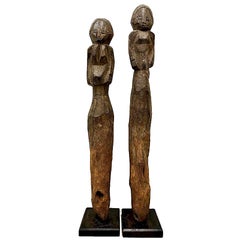
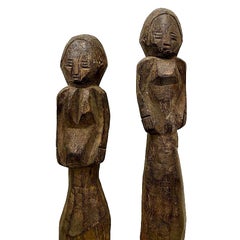
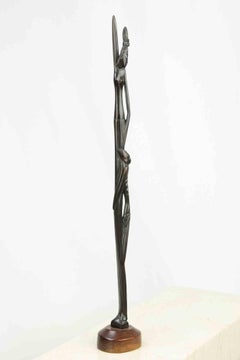
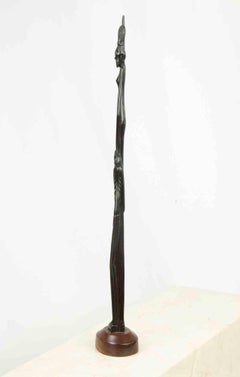
Vintage Hand Carved African Figures – a Pair

Vintage Hand Carved African Figures – a Pair

Located in San Francisco, CA

On offer is a pair of vintage hand-carved African figures. These serve as a classic example of traditional African post sculptures, closely matching the ancestral stylistic tradition...

Category

Tribal Mid-20th Century Figurative Sculptures

Materials

Wood

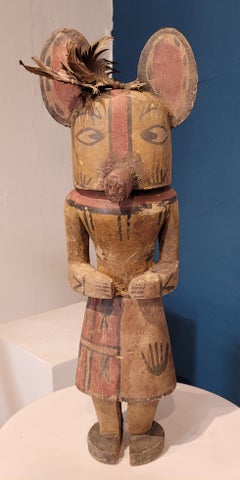
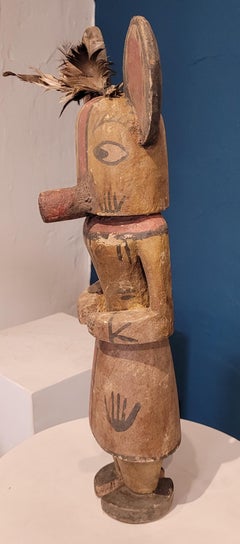
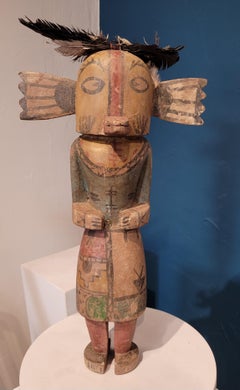
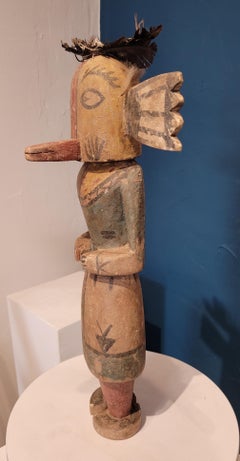
Hopi Katsina Doll Sculpture, Carved Cottonwood, Mid-20th Century

Hopi Katsina Doll Sculpture, Carved Cottonwood, Mid-20th Century

Located in Cotignac, FR

A Native North American carved wood and painted effigy figure, Hopi Katsina or Kachina doll. A wonderfully playful, coloured and highly individual Hopi Katsina doll. Each doll repr...

Category

Mid-20th Century Figurative Sculptures

Materials

Wood

Walter Midener "Contemplation" Seated Figure Clay Sculpture Mid-Century Modern

Walter Midener "Contemplation" Seated Figure Clay Sculpture Mid-Century Modern

Located in Detroit, MI

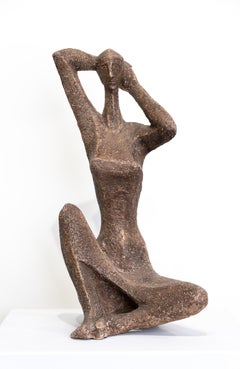
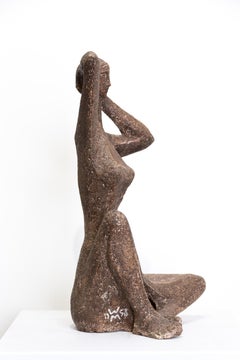
“Contemplation” is an abstract clay sculpture of a female. The figure has both arms and legs extended, but the dignified pose suggests an intimate rather than a sexual moment. The sculpture is delicately rendered, but monumental in pose and clean composition reminiscent of the English artist Henry Moore. The surface is warm and slightly rough to the touch. This sculpture is in the round and beautifully balanced geometrically with the hands clasped behind the head forming a slightly flattened polygon shape that is echoed in the positioning of the legs and draped fabric of a presumed dress. The figure draws the viewer into her contemplation, peace and confidence. An exceptional piece by Midener. Walter Midener...

Category

Modern Mid-20th Century Figurative Sculptures

Materials

Clay

When the Lights Go On Again, Mid Century Cast Stone, Cleveland School Artist

When the Lights Go On Again, Mid Century Cast Stone, Cleveland School Artist

By Walter Sinz 1

Located in Beachwood, OH

Walter Sinz (American, 1881-1966) When the Lights Go On Again, 1943 Cast Stone 10 x 4.5 x 8 inches Walter A. Sinz was an American sculptor born in Cleveland, Ohio on July 13, 1881. ...

Category

Mid-20th Century Figurative Sculptures

Materials

Cast Stone

Tantric Couple Sculpture, Resin and Paint, French School, Circa 1930s

Tantric Couple Sculpture, Resin and Paint, French School, Circa 1930s

By Niki de Saint Phalle

Located in PARIS, FR

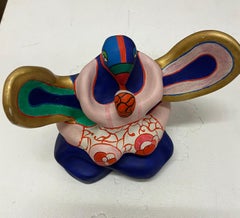
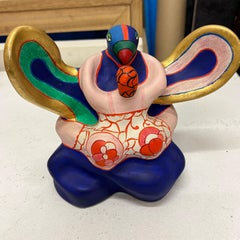
Rare and beautiful sculpture by Niki de Saint Phalle, certificate by Niki de Saint Phalle Foundation. Some small lacks of gilding on the wings of the bird. Signed and numbered at the...

Category

French School Mid-20th Century Figurative Sculptures

Materials

Resin, Paint

Oiseau Posé
Oiseau Posé

Oiseau Posé

By Pablo Picasso

Located in PARIS, FR

• An authenticated work Stamped on the base “Madoura plein feu,” this unique painted and partially glazed ceramic is accompanied by a certificate of authenticity issued by Claude Rui...

Category

Modern Mid-20th Century Figurative Sculptures

Materials

Ceramic

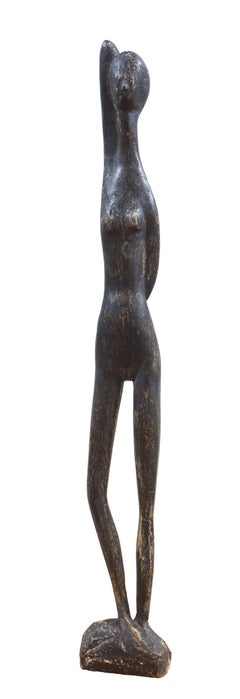
'Woman Standing', Modernist Sculpture, San Francisco Bay Area, de Young Museum

'Woman Standing', Modernist Sculpture, San Francisco Bay Area, de Young Museum

By Wedo Georgetti

Located in Santa Cruz, CA

Inscribed on base, 'W.G.' for Wedo Georgetti (American, 1911-2005) and created circa 1950. Acquired directly from the artist and accompanied by certificate of authenticity. Born in ...

Category

Mid-20th Century Figurative Sculptures

Materials

Wood

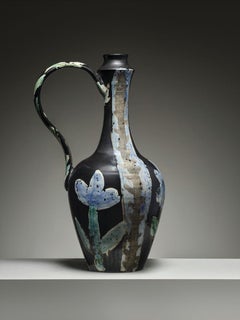
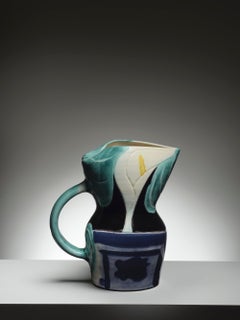
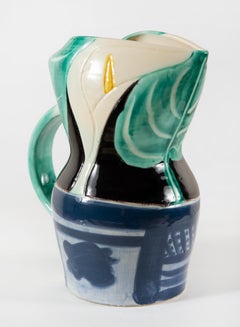
Pichet aux Arums, (A.R.189)

Pichet aux Arums, (A.R.189)

By Pablo Picasso

Located in PARIS, FR

• Picasso began working with ceramics in 1946 at the Madoura workshop in Vallauris, marking the beginning of an important and highly productive chapter in his career. What initially ...

Category

Modern Mid-20th Century Figurative Sculptures

Materials

Ceramic

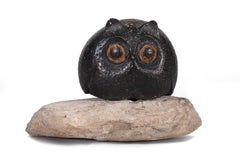
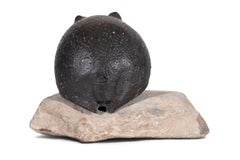
"Owl" Bronze Sculpture, Caricature, Rich Dark Brown Surface

"Owl" Bronze Sculpture, Caricature, Rich Dark Brown Surface

Located in Detroit, MI

The bronze sculpture "Owl" is an exaggerated rendition of an owl that emphasizes the bird's most prominant characteristics - a big fluffy round body and large unblinking eyes making it a charicature of the bird. It is very touchable and calls for one to pet its rounded back. Tom Brun, the sculptor and zookeeper, is well-known for his wood, stone, marble, ceramics and ivory sculptures. One of them, a large hippopotamus, carved from walnut wood travelled the world in the State Department collection. It is said that Tom would often go into a house and pick up one of his sculptures and say that it was unfriendly – meaning that it had not been handled enough. Morley Driver has said of Brun in a newspaper article from the 1950’s “In Any Animal He Sees Beauty”: No one who has ever seen a Tom Brun hippopotamus will ever again think of it as ugly or ungainly, meaning that the artist not only gives you beauty but teaches you to see it. Tom has said: “Small pieces are like a proverb – a gem of meaning that one can dissect.” They are meant to be picked up, caressed and held. This owl, too, seems destined to be caressed. Brun was born in England in 1913. A few years after the end of World War I his father moved the family in 1919 to Detroit, Michigan. In 1935 at age 23, he officially became a U.S. citizen. He served in the army during World War II for five years and upon discharge and at the age of 36 took advantage of the GI Bill and applied for admission to Society of Arts and Crafts (now known as the College for Creative Studies) where he was gladly accepted. While at Arts and Crafts his instructors and established artists such as Sarkis Sarkisian, John P. Foster, Morris Brose, Richard Koslow, Patricia Burnett, Lloyd and Renee Radell...

Category

Modern Mid-20th Century Figurative Sculptures

Materials

Bronze

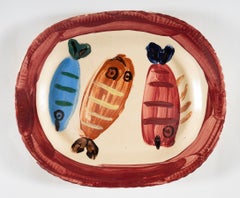
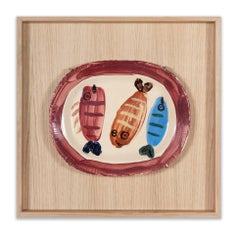
Trois Poissons
Trois Poissons

Trois Poissons

By Pablo Picasso

Located in PARIS, FR

An authenticated work Accompanied by a certificate of authenticity issued by Paloma Ruiz-Picasso and Diana Widmaier-Ruiz-Picasso, dated October 17, 2024. A stamped work This unique ...

Category

Modern Mid-20th Century Figurative Sculptures

Materials

Ceramic

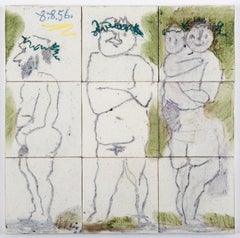
Famille, Têtes Laurées : Quatre Personnages

Famille, Têtes Laurées : Quatre Personnages

By Pablo Picasso

Located in PARIS, FR

• A unique ceramic work by Pablo Picasso Famille, Têtes Laurées : Quatre Personnages is a unique ceramic composition by Pablo Picasso, dated August 8, 1956, with the date inscribed a...

Category

Modern Mid-20th Century Figurative Sculptures

Materials

Ceramic

Visage Et Hibou (A.R.407)

Visage Et Hibou (A.R.407)

By Pablo Picasso

Located in PARIS, FR

Signed, numbered, and stamped on the base: Edition Picasso, 64/200; Madoura Plein Feu; Edition Picasso White earthenware, decorated with engobe, knife engraving under partially brus...

Category

Modern Mid-20th Century Figurative Sculptures

Materials

Ceramic, Faience

Hopi Katsina Doll.
Hopi Katsina Doll.

Hopi Katsina Doll.

Located in Cotignac, FR

A Native North American carved wood and painted effigy figure, Hopi Katsina or Kachina doll. A wonderfully playful, coloured and highly individual Hopi Katsina doll. Each doll repr...

Category

Mid-20th Century Figurative Sculptures

Materials

Wood

Art Deco Venetian Mask Handcarved Wood Panel Wall Sculpture, circa 1930

Art Deco Venetian Mask Handcarved Wood Panel Wall Sculpture, circa 1930

Located in Atlanta, GA

This extraordinary Art Deco wood panel or wall-mounted sculpture features a spectacular Venetian mask. The rare piece was crafted in France circa 1930. The sculpted panel boasts fine...

Category

Art Deco Mid-20th Century Figurative Sculptures

Materials

Wood