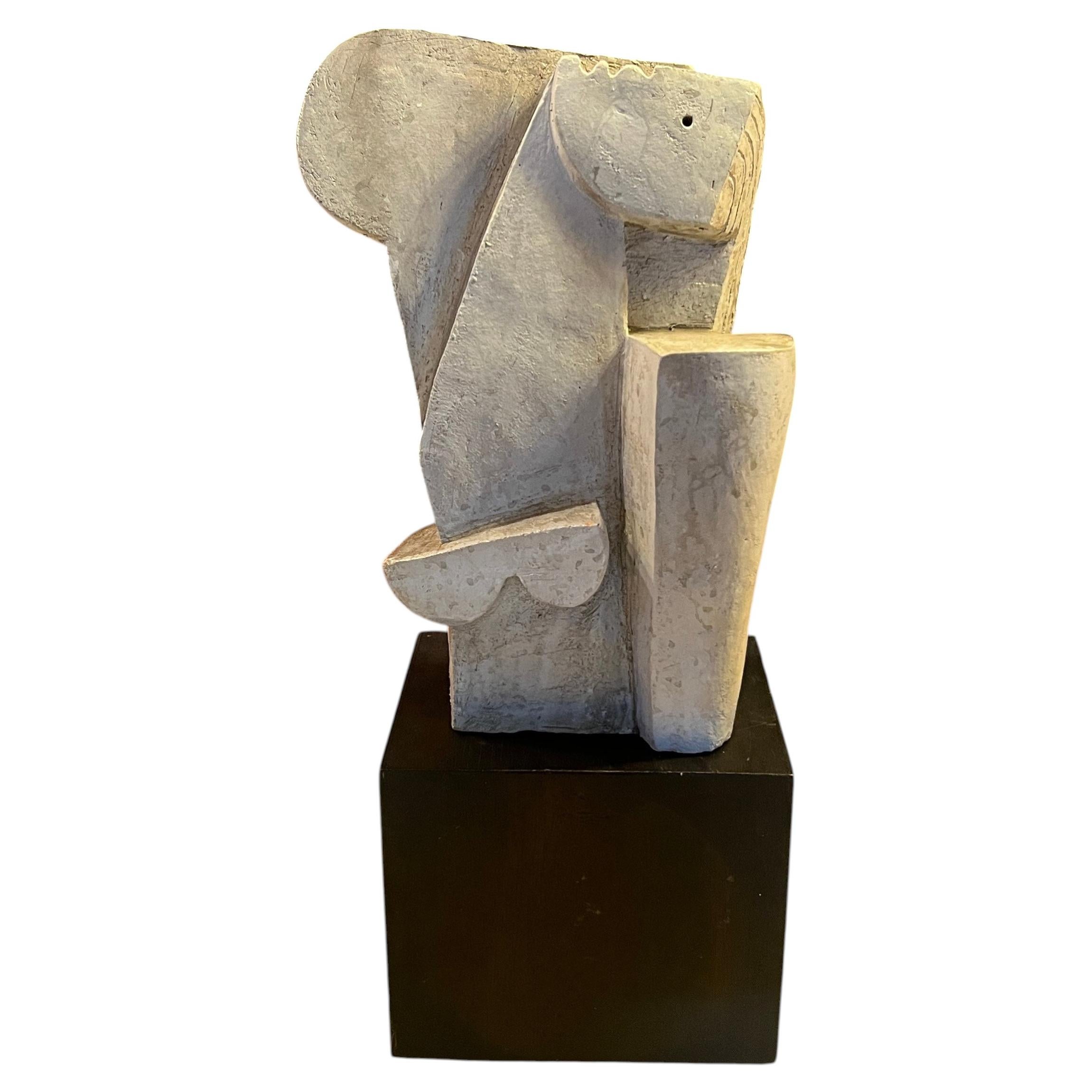
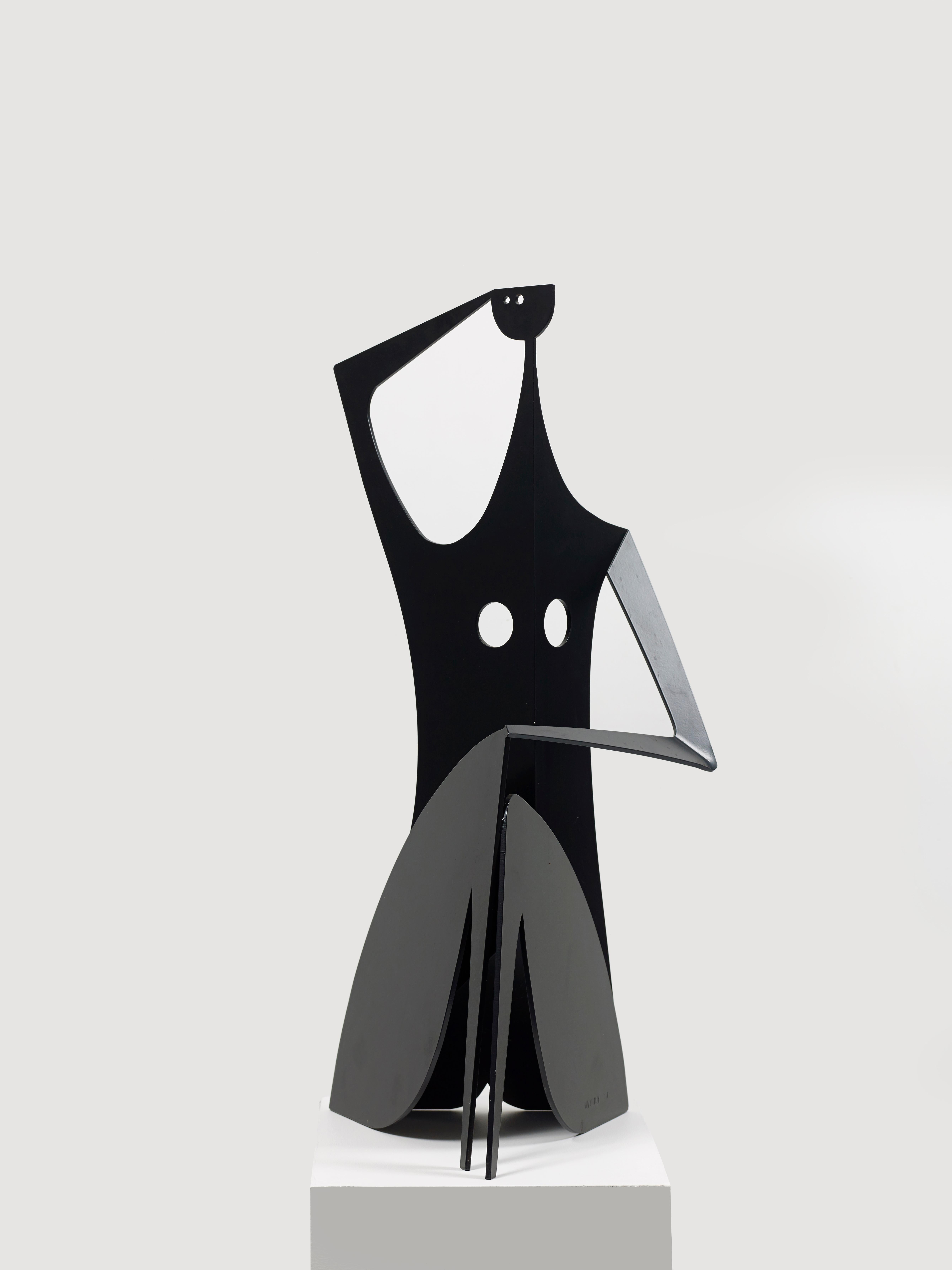
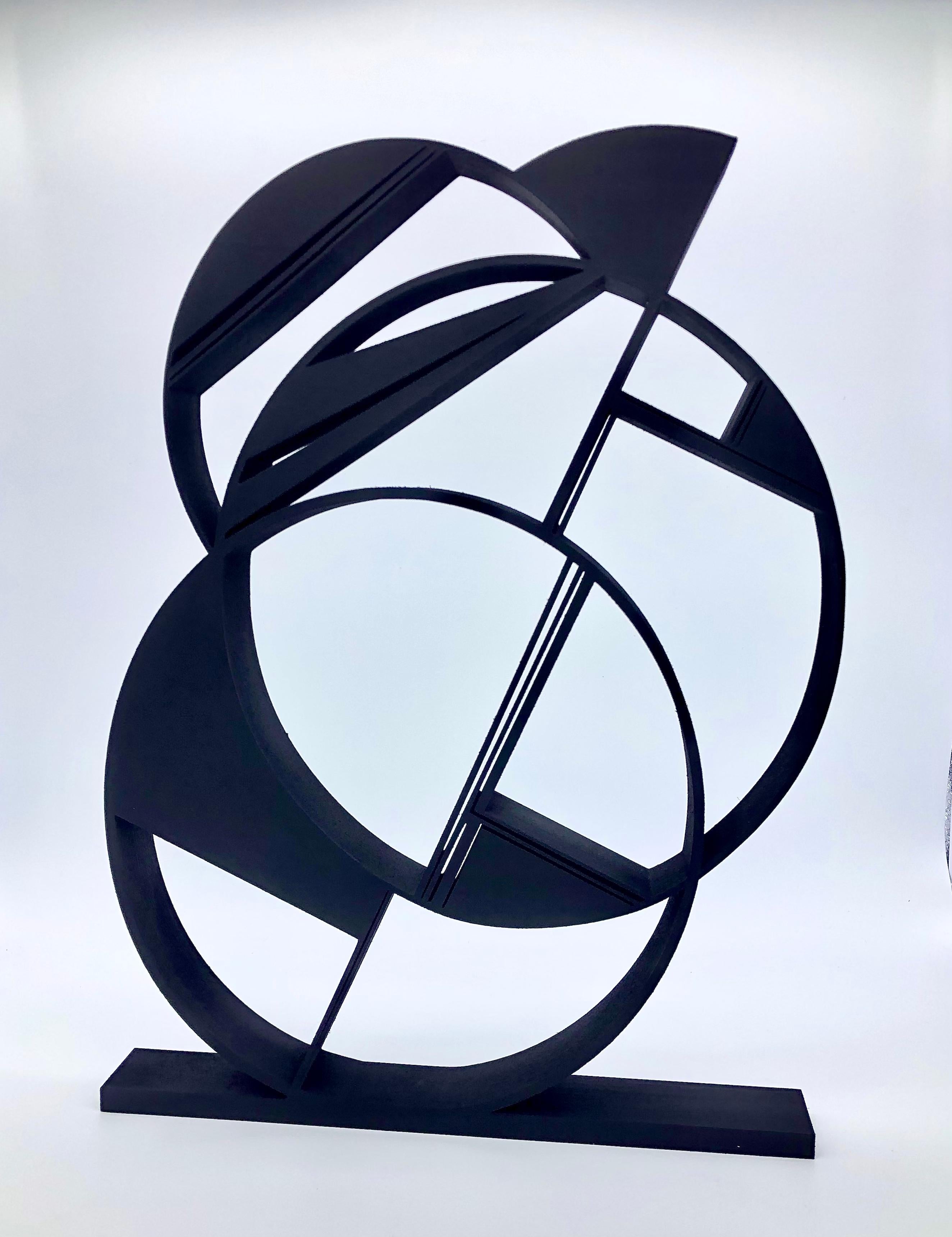
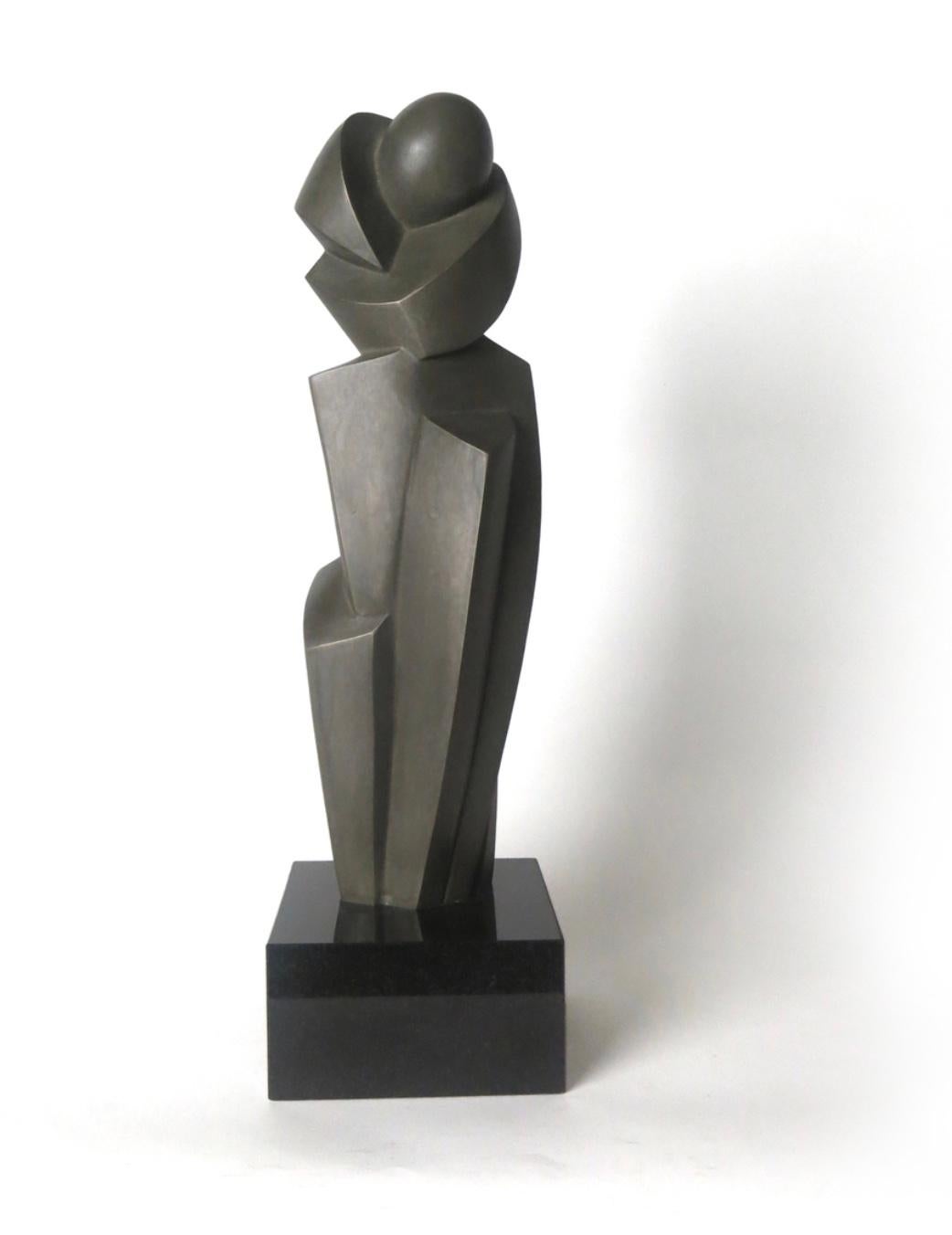
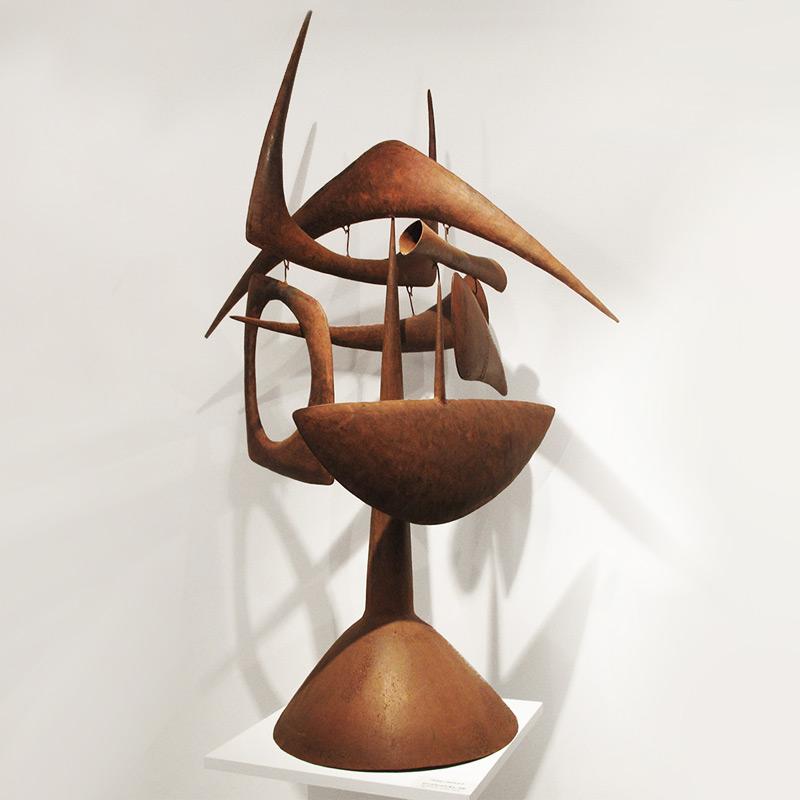
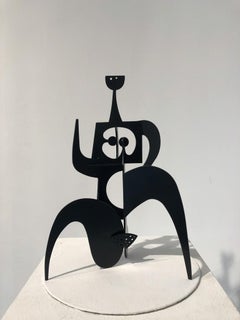
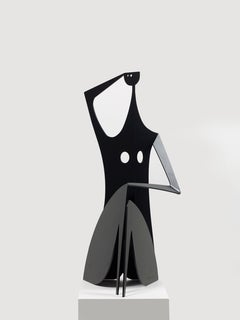
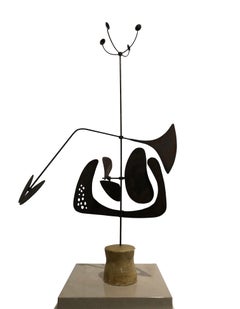
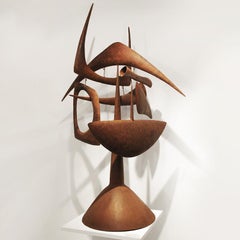
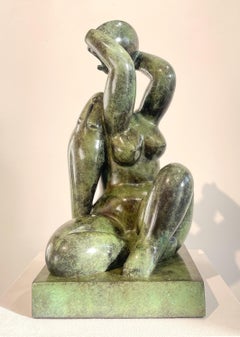
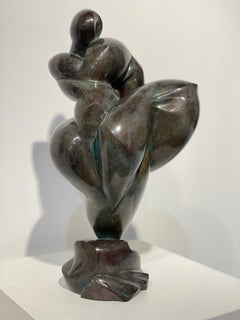
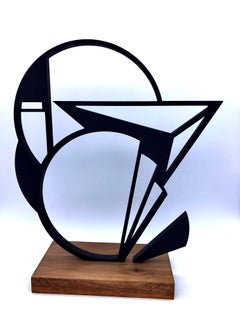
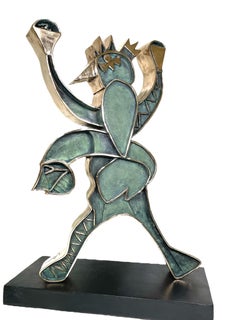
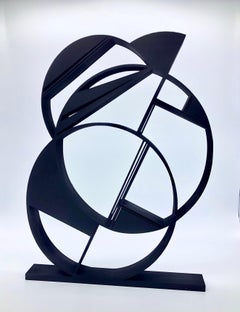
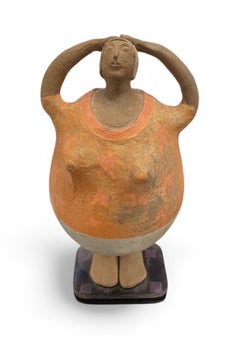
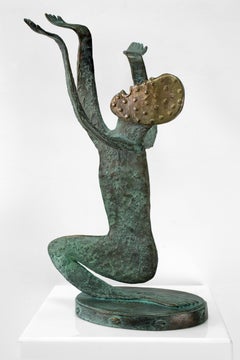
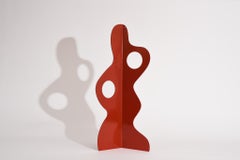
Philippe Hiquily (1925 – 2013) is a French artist and designer known for biomorphic furniture and sculptures. He was able to combine modernist design, insect physiognomy, and human sexuality, to produce unique surrealist works. Hiquily stands apart from the market of art and artistic movements. His almost omnipresent eroticism and the delicacy of its achievements contrast with the raw appearance of the materials, which serve as its base.
Born on March 27, 1925 in Paris, France, Hiquily attended the École des Beaux-Arts in Orléans and later the École Supérieure des Beaux Arts in Paris. In Paris, Hiquily mingled with prominent artists, including Jean Tinguely and Germaine Richier. In 1959, he received the Critic’s Prize for his sculpture at the Paris Biennial. That same year, he showed work at New York-based gallery The Contemporaries, where he met the American artist Robert Rauschenberg.
Using strange, semi-Gothic tapering forms, animal hides, fossils, and metal, Hiquily’s furniture, including his “Van Zuylen” table, combines the imaginative and whimsical with a more serious sense of the antique. His influence by the work of the American artist Alexander Calder is very evident. He explored the question of mobility, balance and movement. By integrating electric motors into his works, he gave a new dimension to the traditional conception of sculpture.
Hiquily died on his 88th birthday on March 27, 2013 in Villejuif, France. Today, his works are held in the collections of The Museum of Modern Art in New York, The Salomon R.Guggenheim Museum, New York, The Musée National d’Art Moderne, Paris and the Centre Georges Pompidou in Paris, and the Museum of Contemporary Art in Montreal with many more private collections.
His path reveals a unity captured by his work. An alert mind, actively engaged in restless questioning, attests to an independence that kept him at a distance from groups. Never fully agreeing with the Surrealists, nor with the abstract artists, he exploited an aesthetic vein whose enchantment would never run dry. Post-cubism has also driven French artist Philippe Hiquily to create something different, something unique.
Though inspired by the Post-Cubist movement, Hiquily does not adhere strictly to its practices, and chooses instead to marginalize himself and allow this movement to be viewed in a new light through his personal artistic lens.