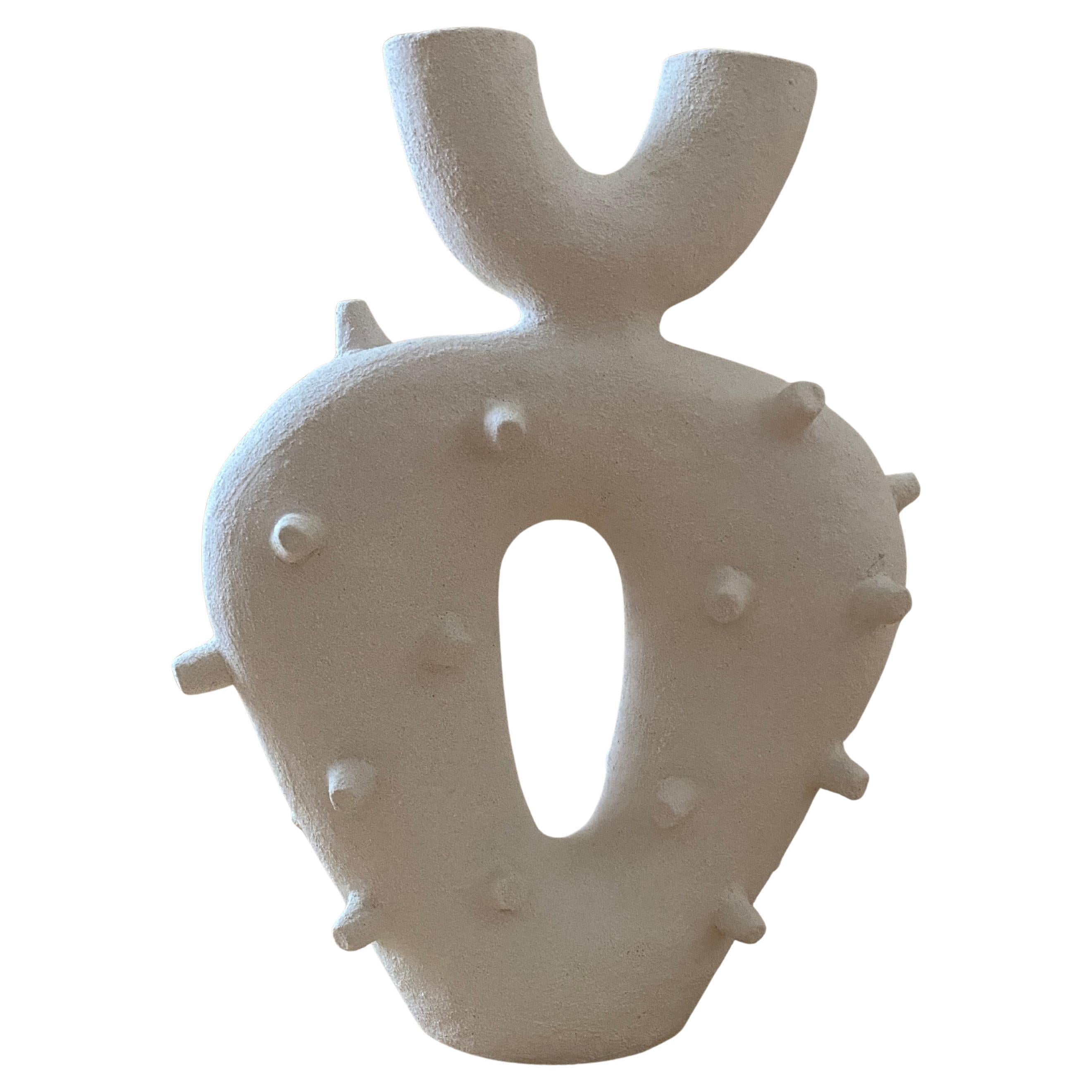
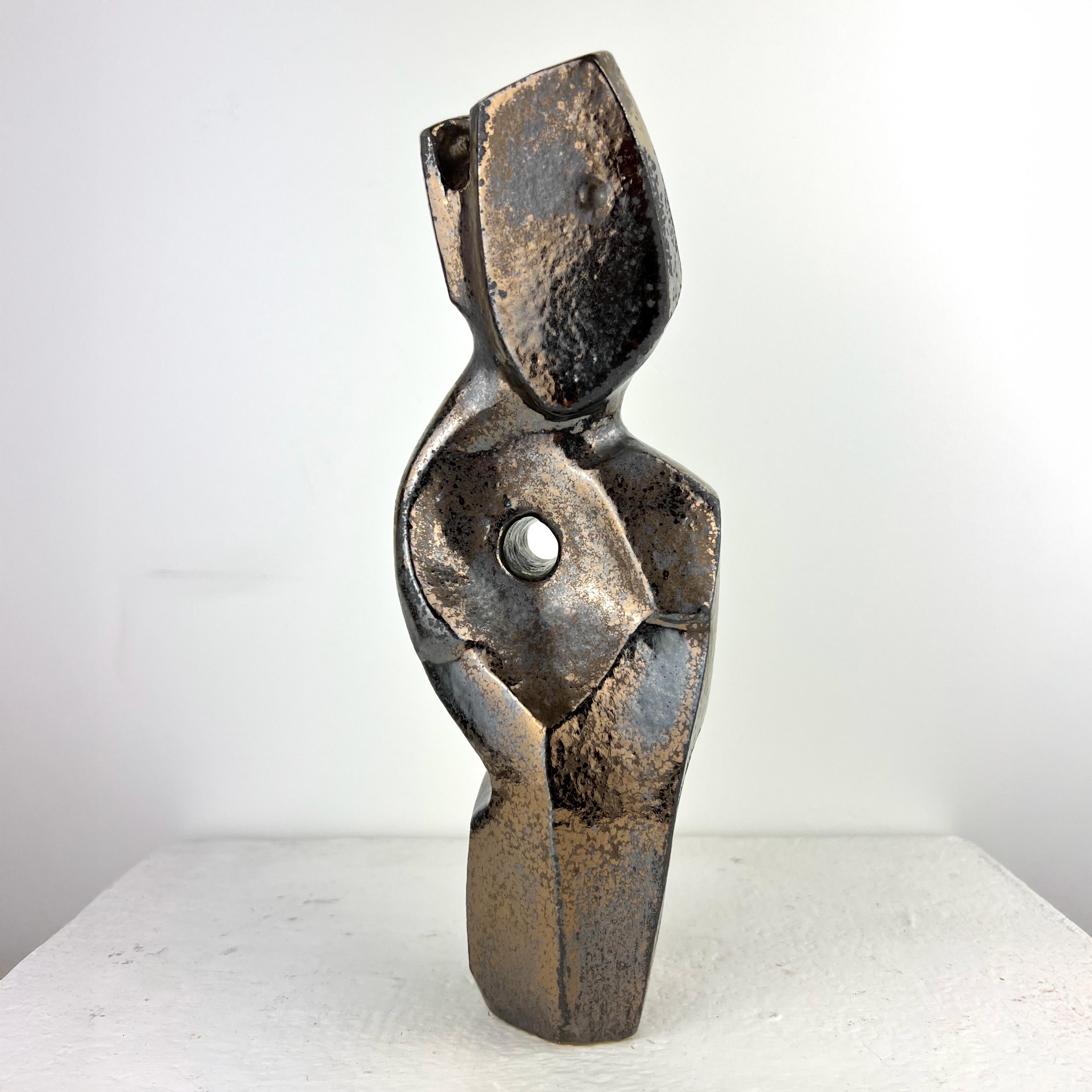
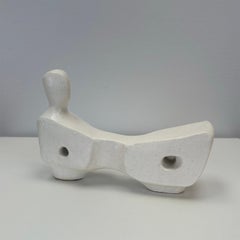
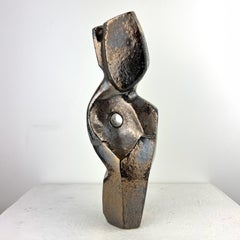
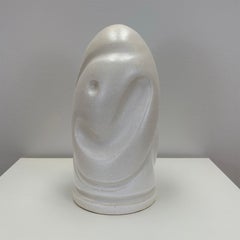
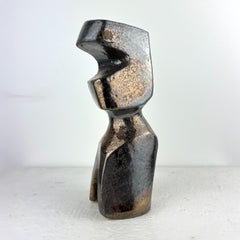
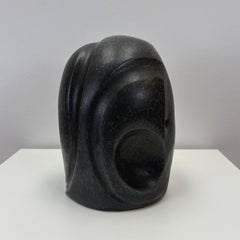
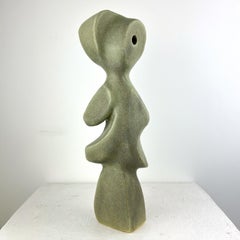
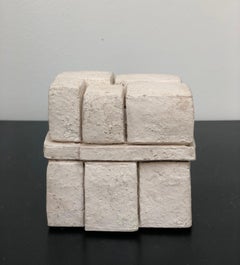
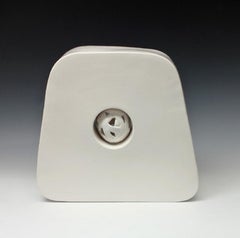
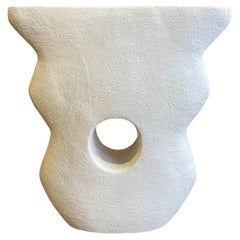
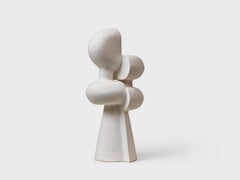
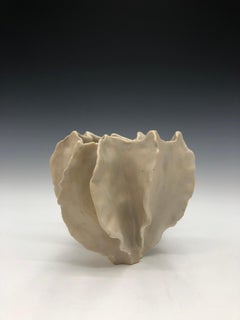
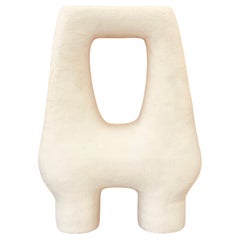
Bodies At Rest #5 by Paige Stewart is a sculptural ceramic form that feels balanced and quietly powerful, with rounded, architectural volumes connected by a gentle central curve. Its matte, stone-like white surface and soft speckling give it an earthy, tactile presence, while the small circular opening adds a subtle, contemplative detail. The overall effect is calm, modern, and meditative, an object that invites stillness and thoughtful observation.
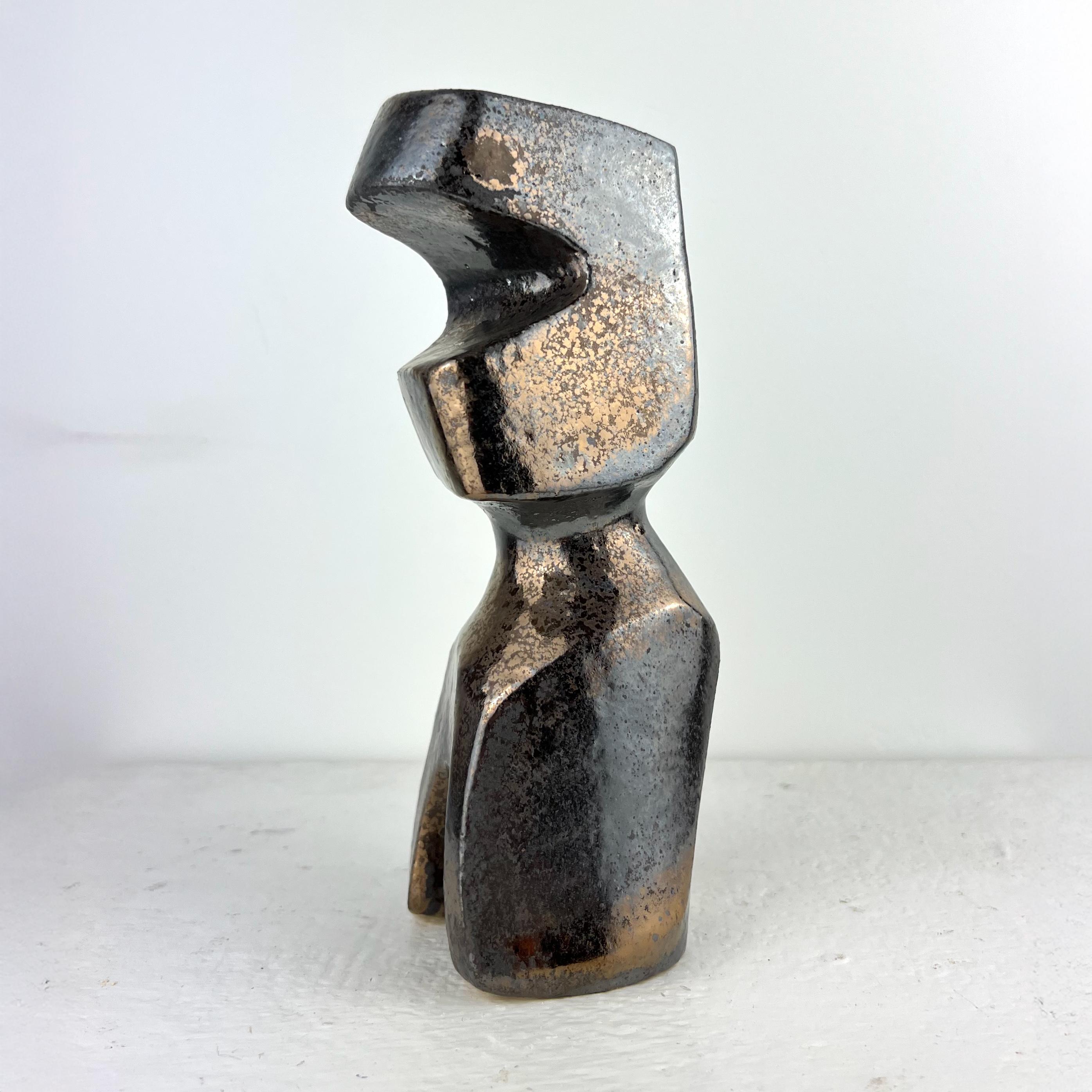
Paige Stewart's “Bodies at Rest” sculptures looks at Isaac Newton’s First Law of Motion, “A body at rest stays at rest unless a force acts upon it.” The work began as small languid figures, built from a single thick piece of clay, allowing her to take the lack of inertia she was feeling and put it into a physical form that she could hold out from herself and look at. It has allowed her to view her own depression from a more neutral place, unexpectedly becoming the force acting upon her “body at rest” and creating movement and healing.
Paige Stewart (b. 1985, Des Moines, IA) is a contemporary sculptor based in Denver whose work spans modern abstract sculptures, including pieces with openings or portals, figural studies, totemic forms, and ceramic murals. Early exposure to the sculptural works of Henry Moore, Barbara Hepworth, and Andy Goldsworthy at The Des Moines Art Center deeply influenced her artistic journey.
Stewart holds a BA in Biopsychology and Clinical Psychology from Western State College in Gunnison, CO, and an MA in Spiritual Psychology from the University of Santa Monica. Her psychology background profoundly informs her artistic practice, as she explores the dualities of the human experience in her sculptures.
Her work reflects a deep fascination with the contrasts that shape our existence—specifically the balance between the feminine and masculine, and the concept of LEGACY. Paige’s sculptures probe the legacies we inherit and the marks we leave on the world, both individually and collectively. The central question in her work: What kind of legacy are we creating in each moment, as individuals and as part of a greater whole? Her art seeks to explore these dualities, encouraging a reflection on the legacy of humanity, community, and personal experience.
As she states, “May what moves one, moves us all as one.”