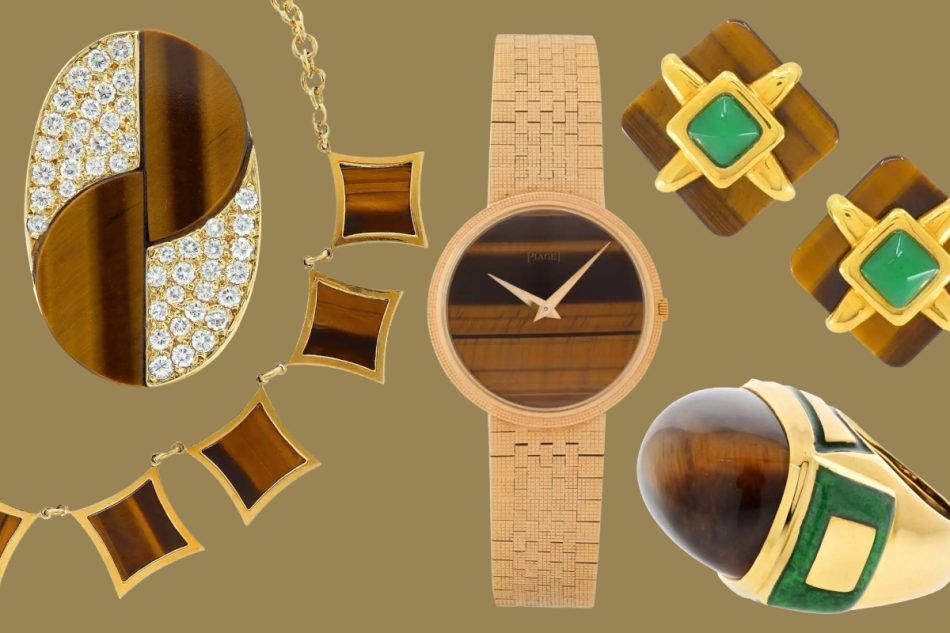
Known for its distinctive stripe and shimmering golden-brown hue, tiger’s eye reached peak popularity in the field of fine jewelry in the 1960s and ’70s. Since then, the stone has receded from view, waiting to be rediscovered by a new generation. Now, its renaissance appears to have begun. Contemporary designers are exploiting the stone’s earthy, wear-with-anything appeal, incorporating it into their latest collections in the form of polished beads, sleek inlays and elaborately carved pendants.
Tiger’s eye, a type of quartz, is distinguished by its chatoyant, or cat’s-eye, effect, in which a narrow luminous band appears on the stone’s surface when it catches the light. The stone’s renewed popularity likely stems from its versatility. A bit like labradorite, which can appear neutral in one light and warm to luminous blue-gray in another, tiger’s eye transforms to harmonize with the colors around it, whether framed by bare skin or paired with other gemstones, shifting from rich bronze to soft caramel.
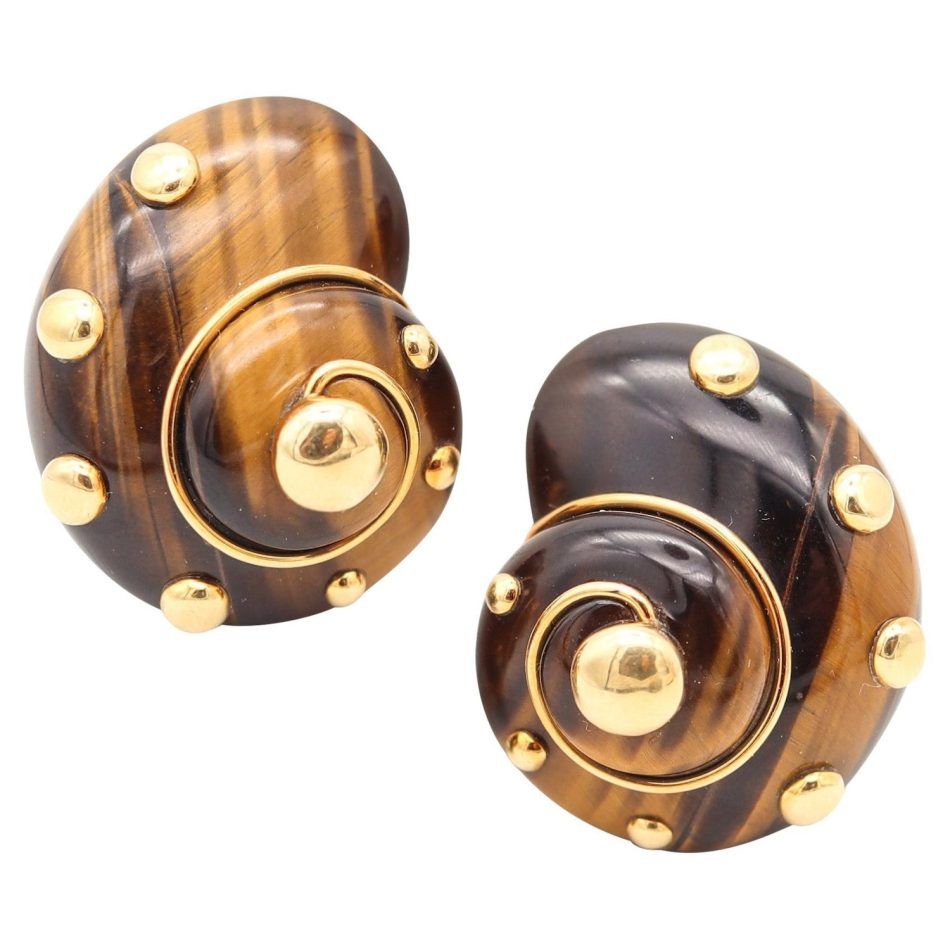
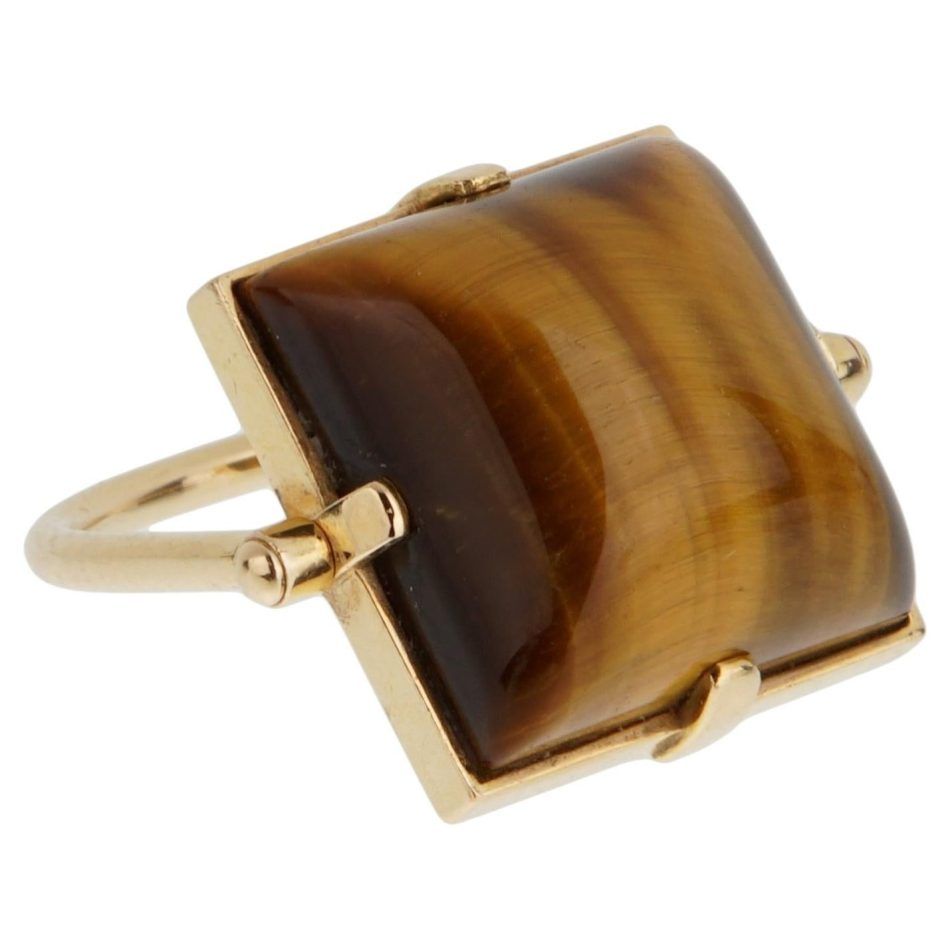
Tiger’s eye also evokes a certain nostalgia, prompting collectors to seek it out in vintage settings. The stone fit seamlessly into the aesthetic of the 1970s. Its amber, honey and chocolate hues echoed the decade’s favored earth tones and natural materials as seen in suede jackets, tortoiseshell sunglasses and Hermès scarves patterned in mustard yellow and mahogany, not to mention the work of designers like David Hicks, Gabriella Crespi and Mario Bellini.
Beyond its role in the period’s fashion, tiger’s eye, associated by many with protective powers, played into the 1970s’ interest in crystals, astrology and alternative spirituality.
It also emerged as a discreet alternative to diamonds and colored gems, viewed as conspicuous signals of wealth. Tiger’s eye, in contrast, offered visual complexity through texture and sheen — an exemplar of “quiet luxury” before the phrase was coined, in the 2020s.
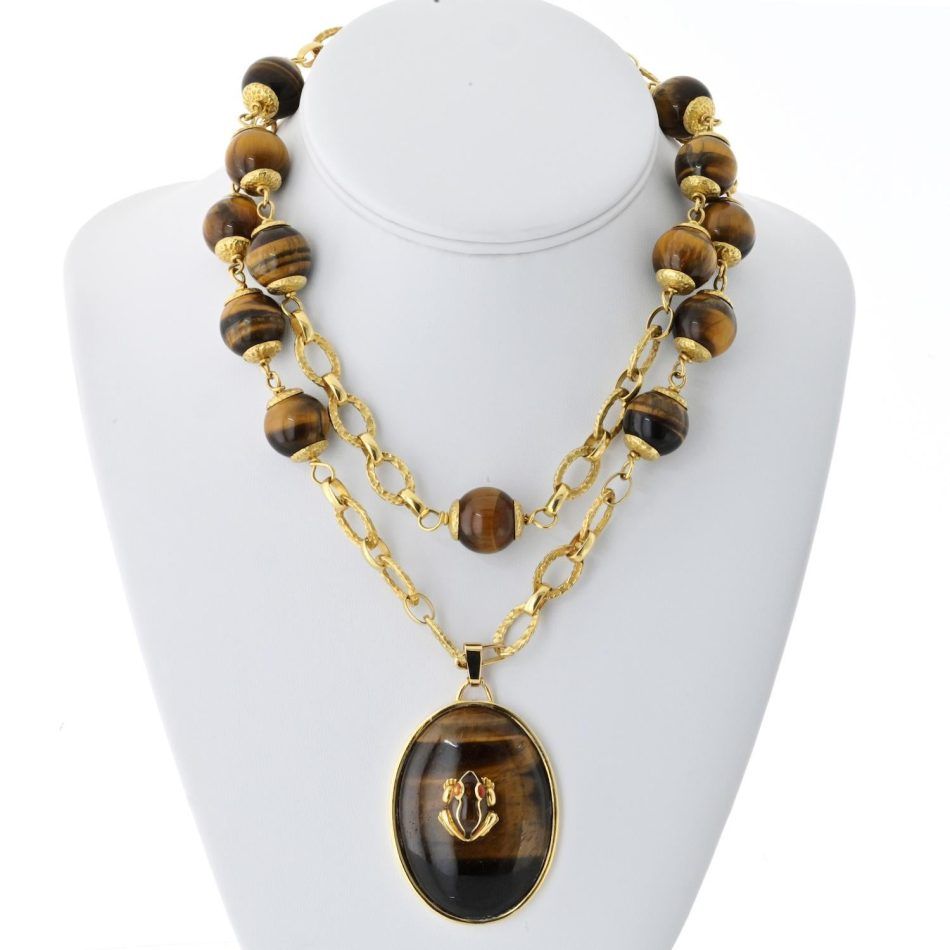
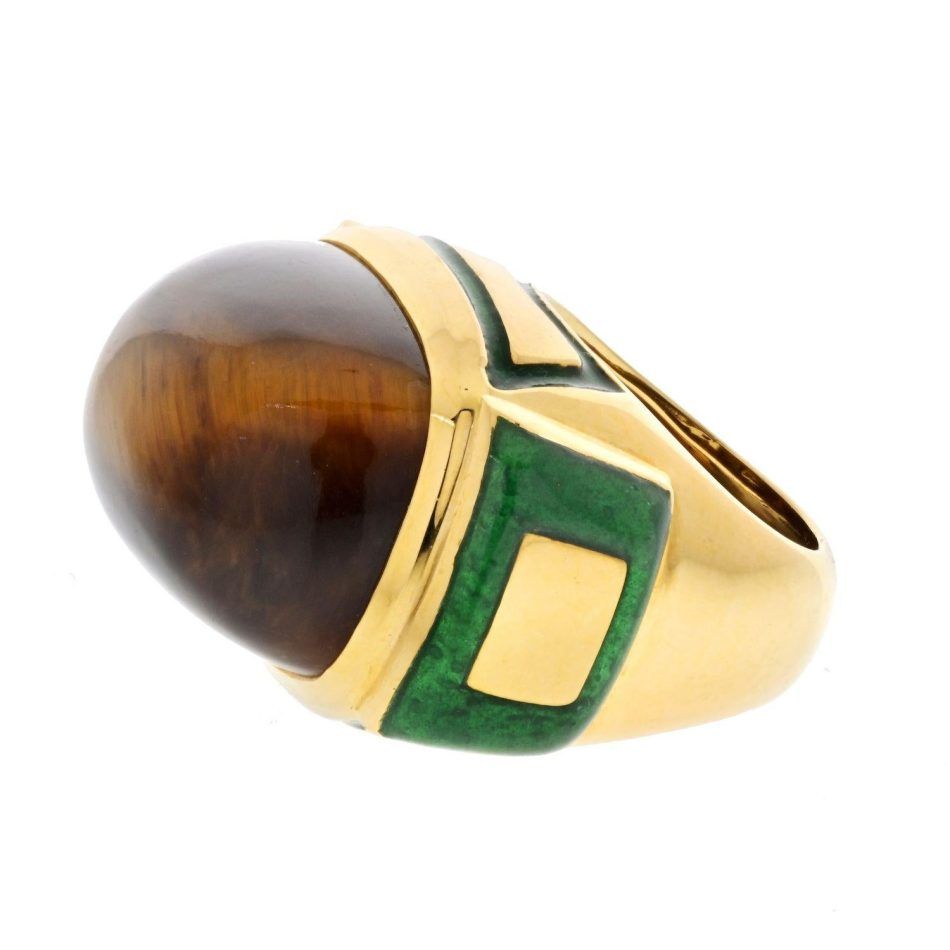
One of the foremost champions of tiger’s eye was David Webb, whose designs celebrated its bold sculptable beauty, along with that of other opaque stones. like malachite, coral, lapis and rock crystal. Webb’s pieces demonstrated that fine jewelry didn’t have to rely on expensive emeralds or rubies. With their naturally graphic bands, tiger’s eyes lent themselves to designs defined by drama, contrast, scale and texture, from fluted links on chunky gold bracelets to oversize cocktail rings with domed cabochons.
Around the same time, Bulgari started pairing precious colored stones and diamonds with hard stones — including tiger’s eye, malachite, lapis lazuli, coral and agate — a combination that became a hallmark of the house’s 1970s aesthetic.
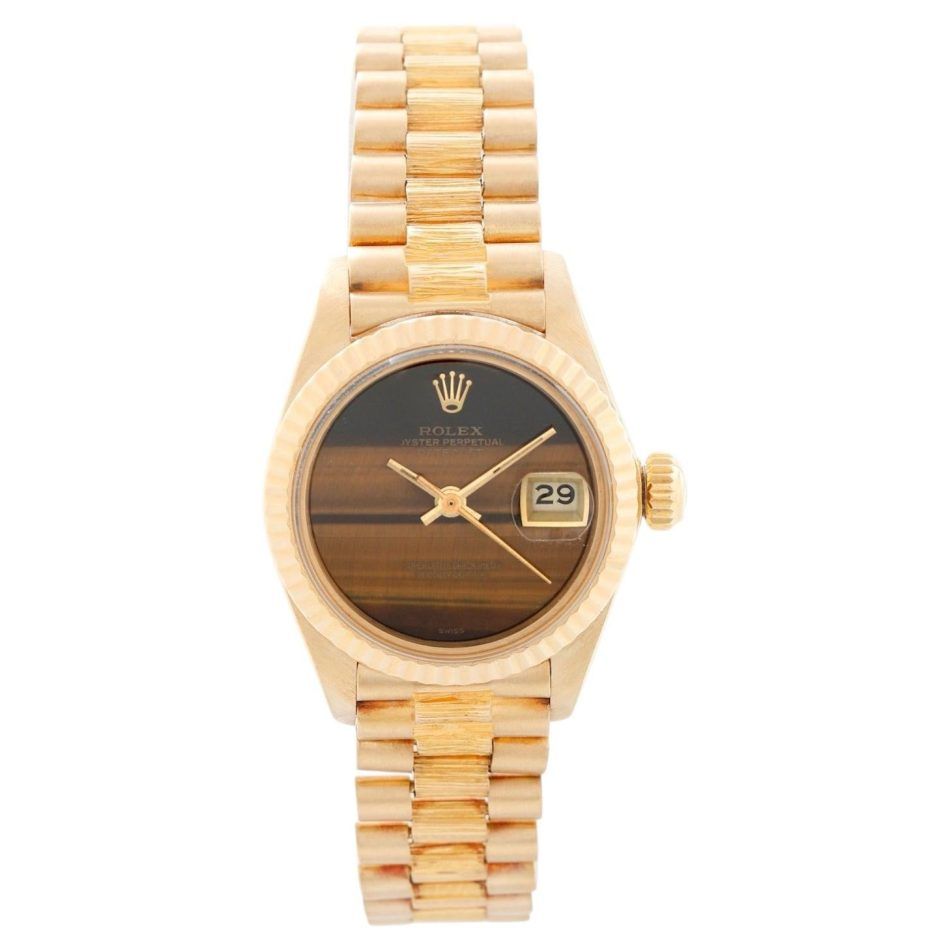
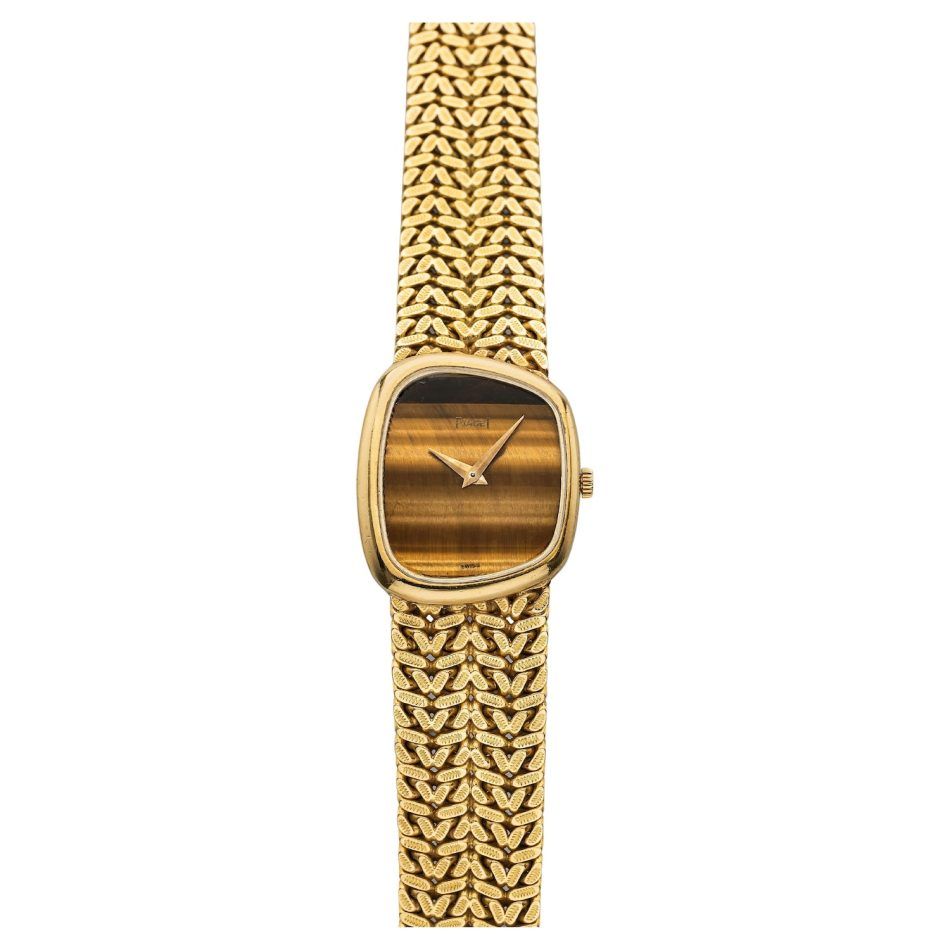
Hard-stone dials were de rigueur in the decade’s dress watches. Piaget, in particular, favored the use of ornamental stones, working with tiger’s eye, as well as lapis, coral and malachite.
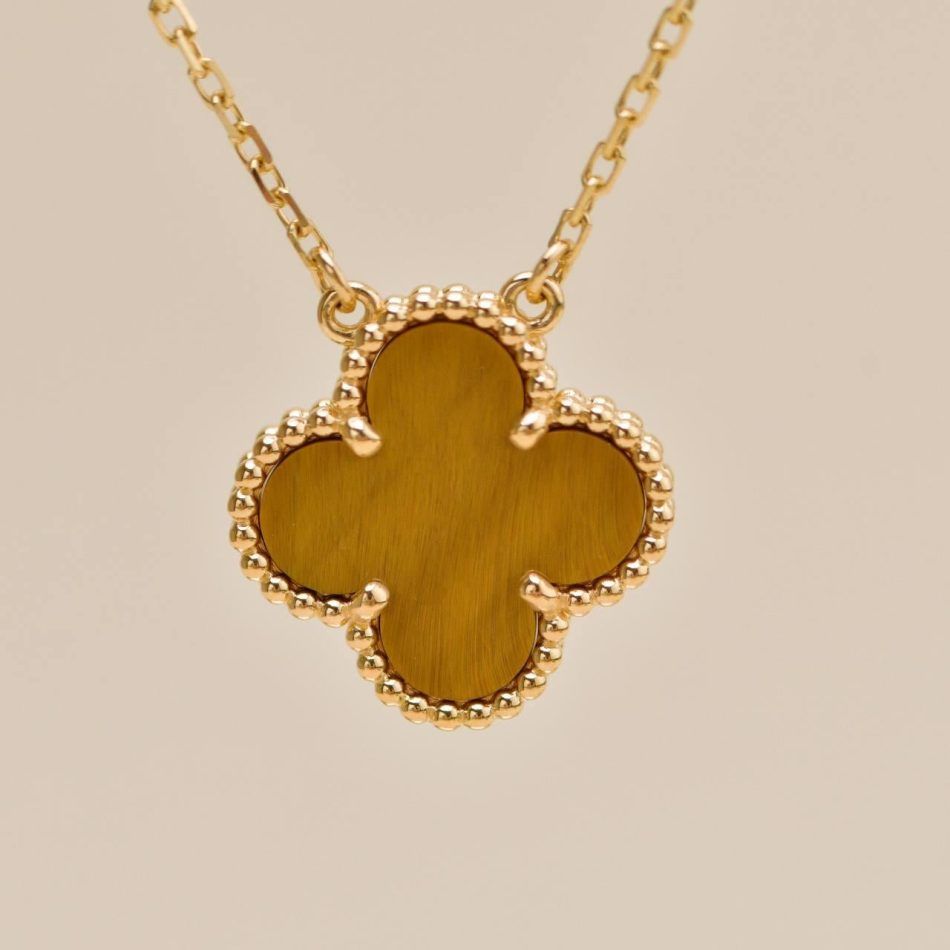
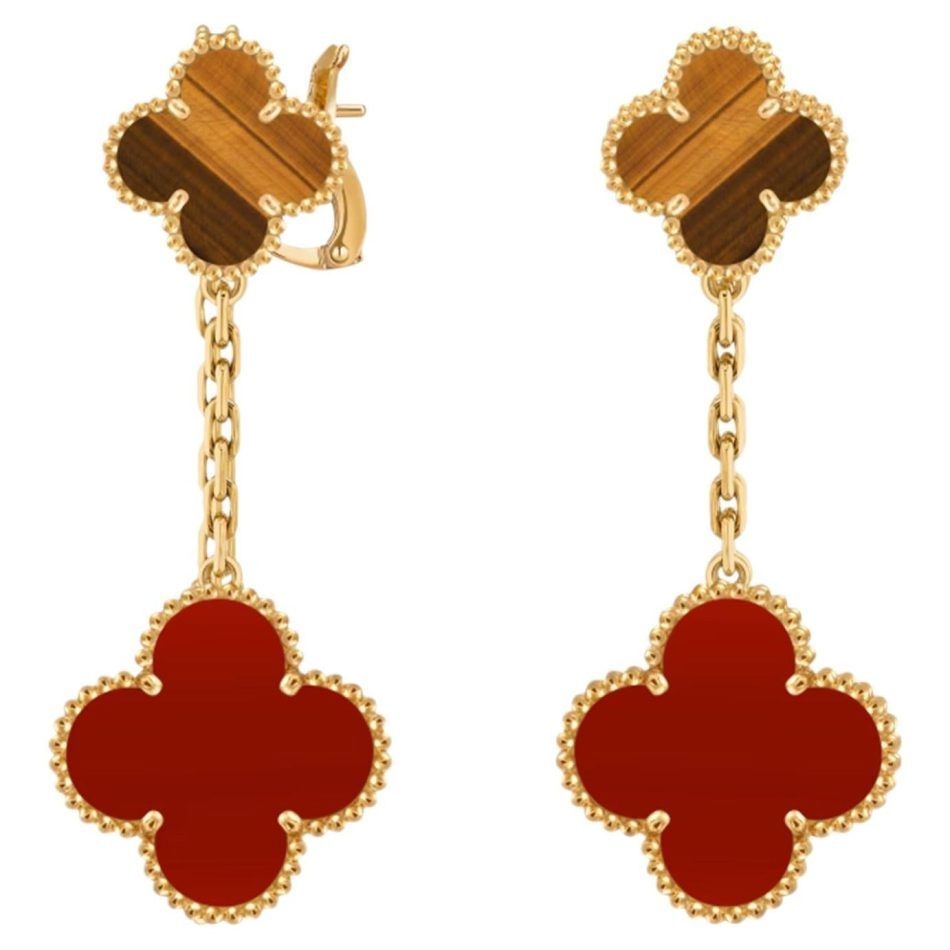
Tiger’s eye’s spike in popularity coincided with the debut of the iconic Van Cleef & Arpels Alhambra collection, in 1968. The signature stylized clover motif first appeared as all gold; versions with stone inlays — of onyx, malachite and lapis lazuli, for example — emerged in the early 1970s. Tiger’s eye was among the earliest opaque gems enlivening the Alhambra leaves, and it remains an option (subject to the production cycle and sourcing availability).
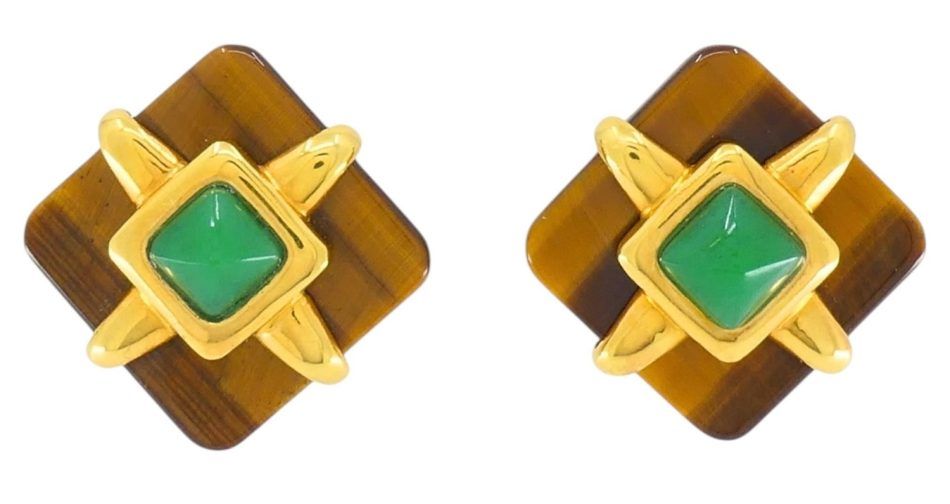
Cartier too succumbed to hard stones’ allure. As many collectors know, Aldo Cipullo‘s work at the house extended far beyond the Love bracelet. In the early 1970s, he designed substantial gold jewelry incorporating tiger’s eye, lapis, coral and malachite, often in clean, geometric settings.
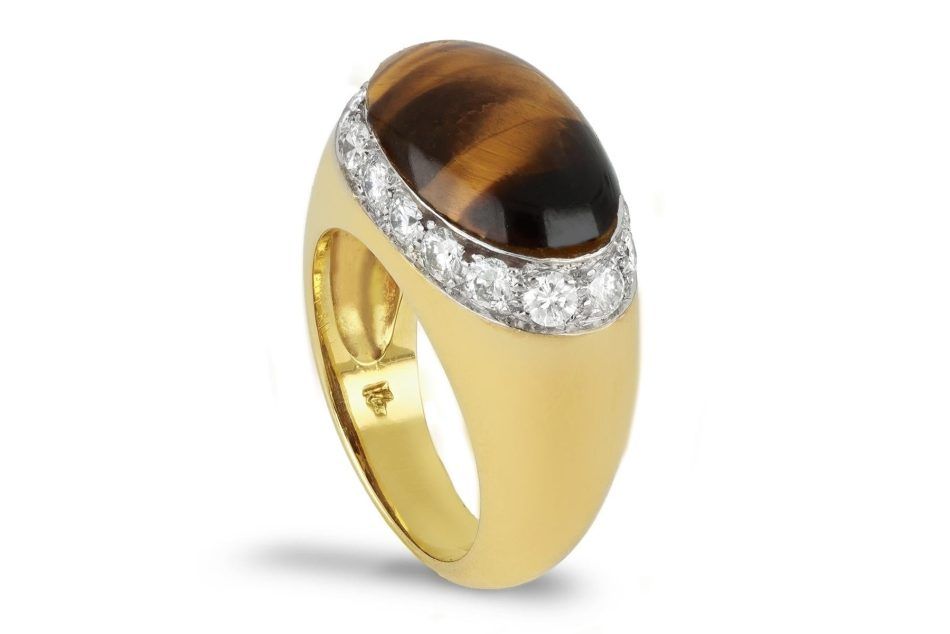
Whether crafted in the 1970s or newly minted, tiger’s eye jewelry conveys a distinct sense of time and place, instantly transporting the wearer to the decade of St. Tropez tans and Halston gowns. But if you prefer your transportive pieces to be of the period, bear in mind that there’s only so much vintage David Webb and Bulgari to go around. So, if you find a piece you love, don’t hesitate. Pounce.