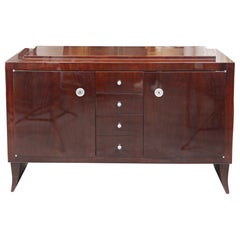
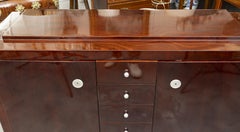
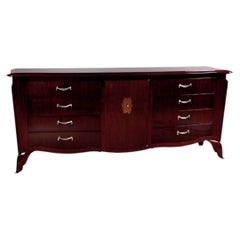
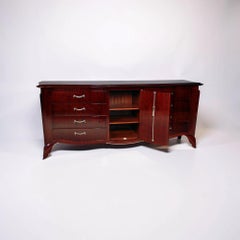
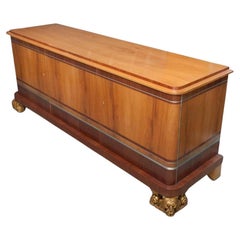
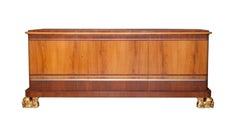
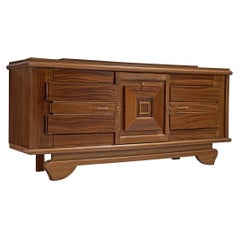
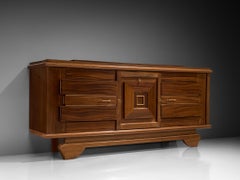
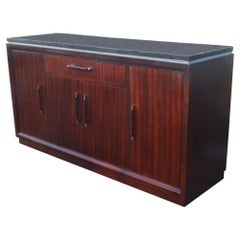
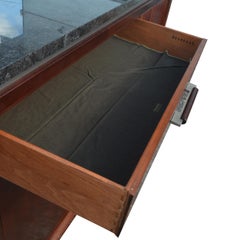
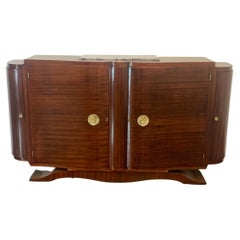
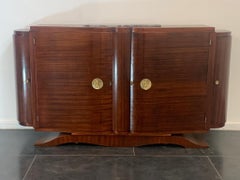
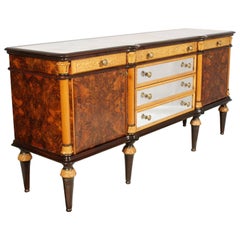
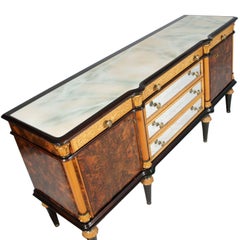
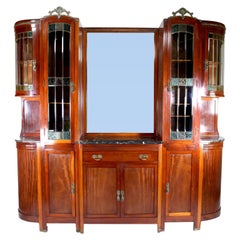
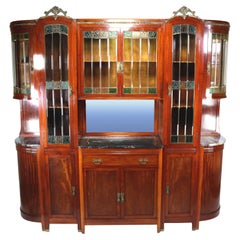
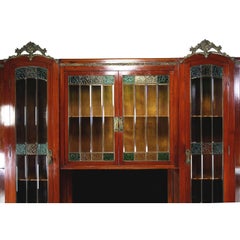
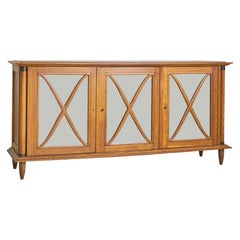
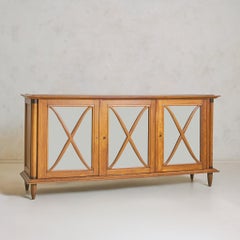
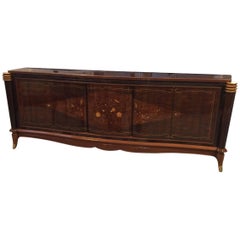
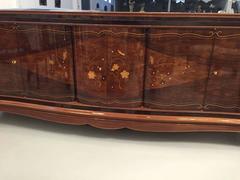
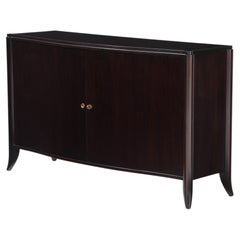
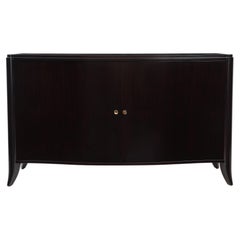
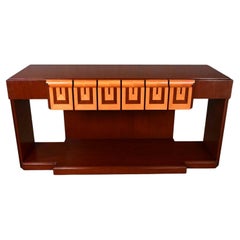
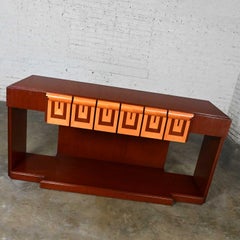
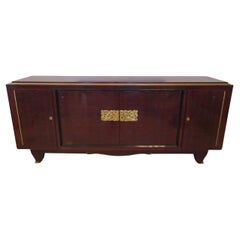
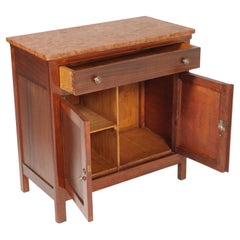
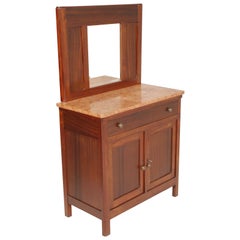
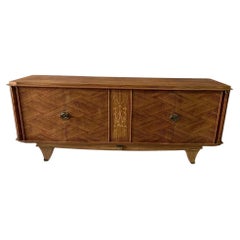
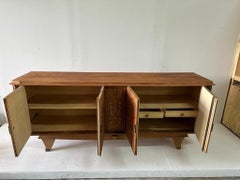
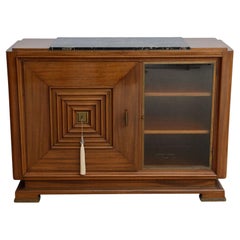
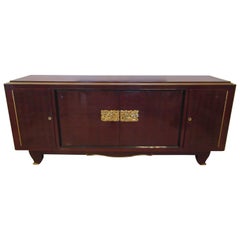
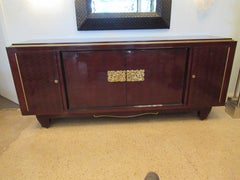
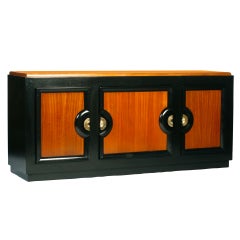
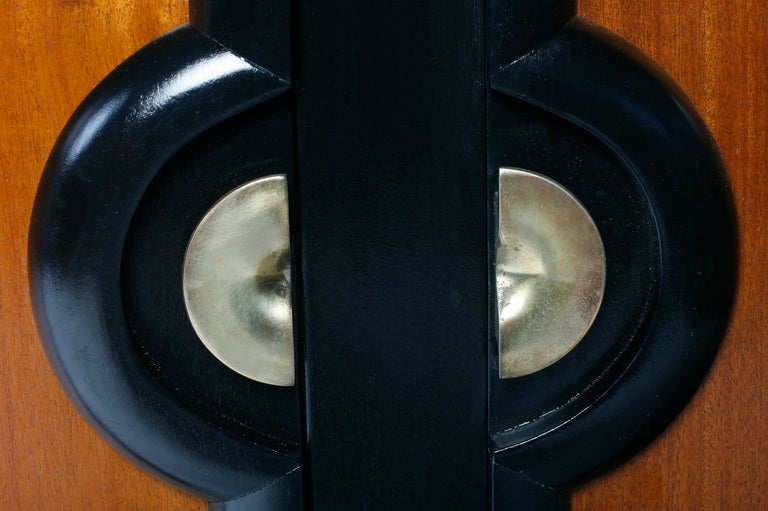
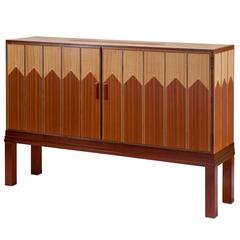
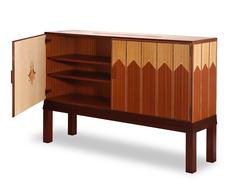
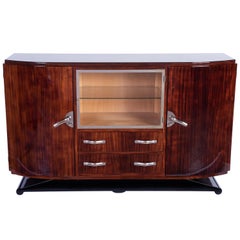
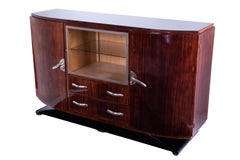
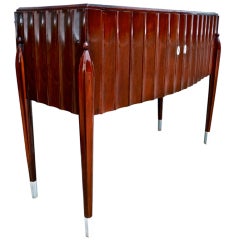
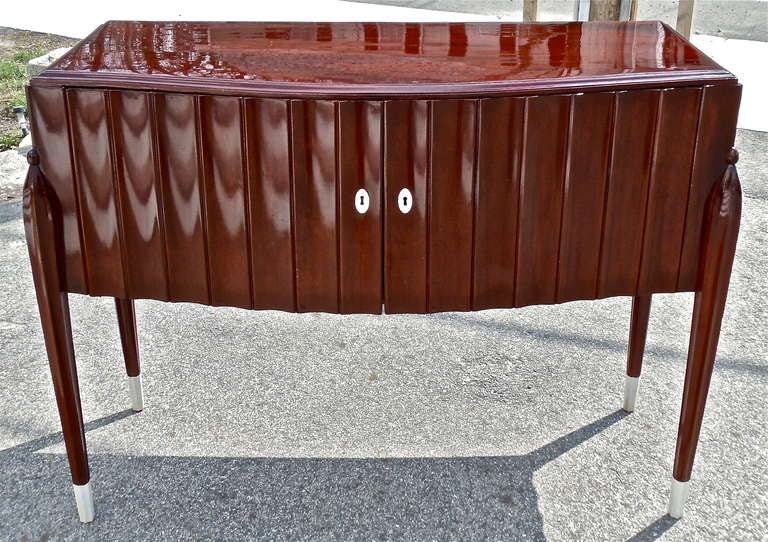
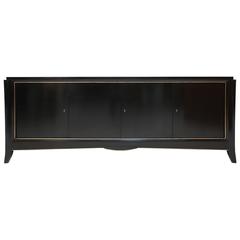
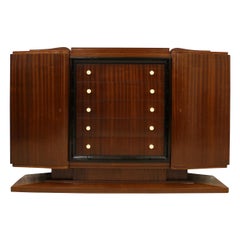
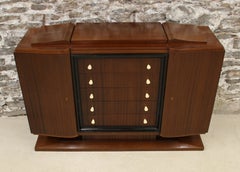
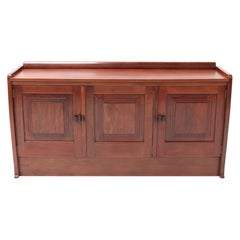
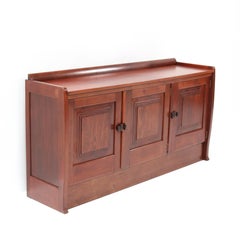
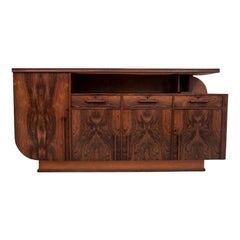
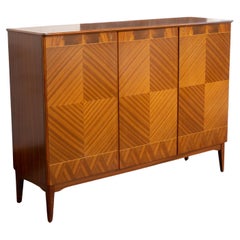
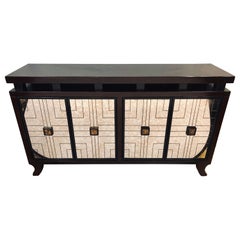
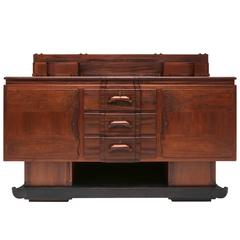
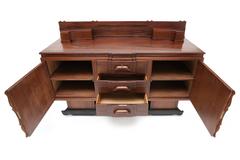
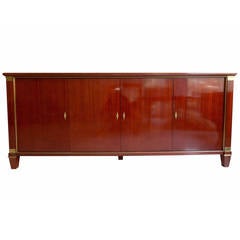
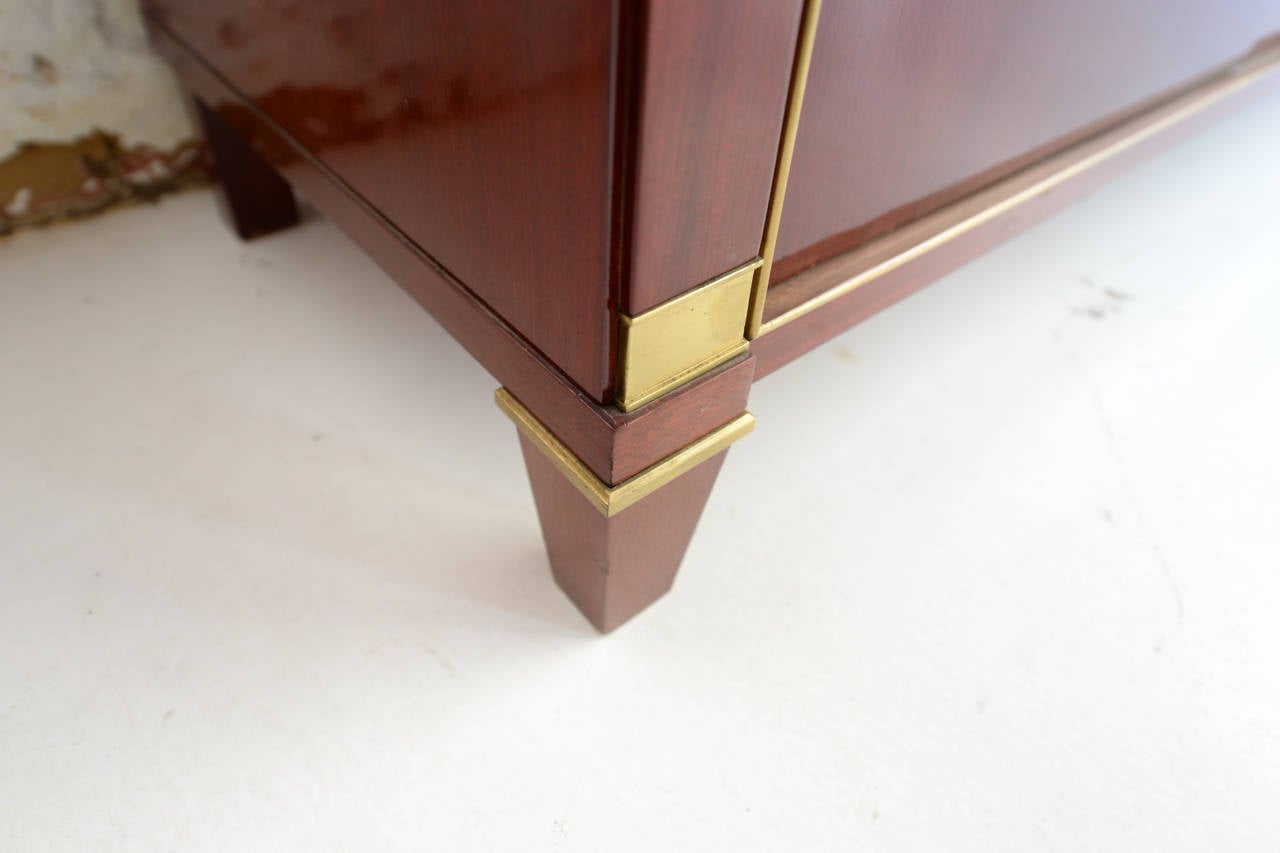
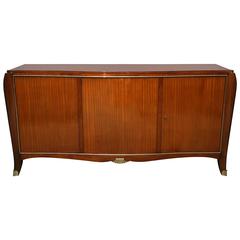
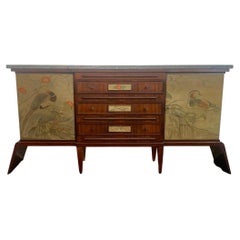
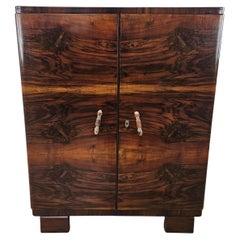
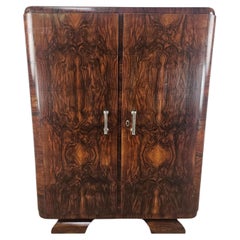
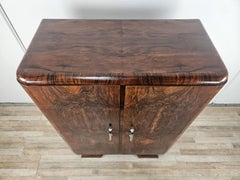
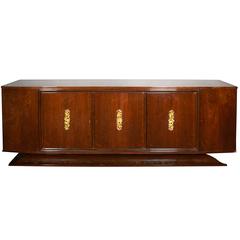
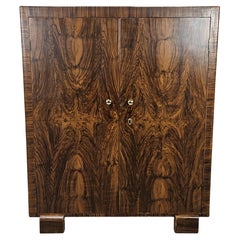
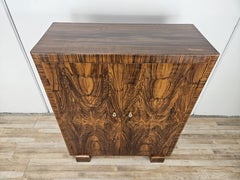
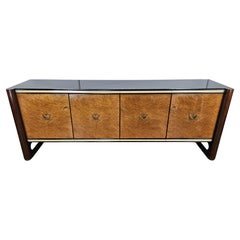
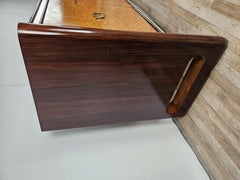
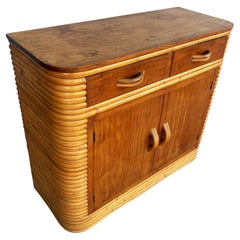
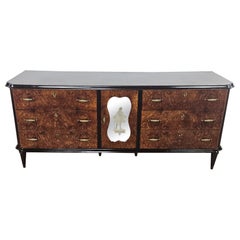
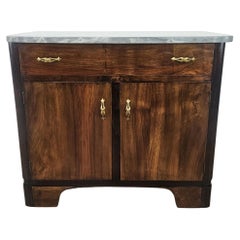
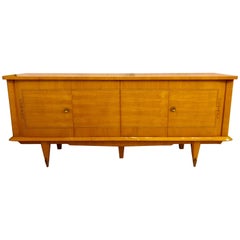
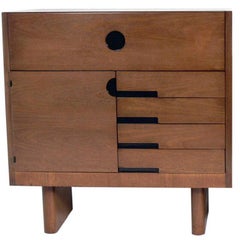
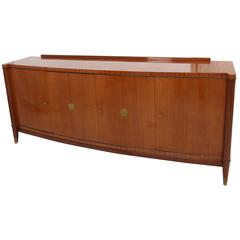
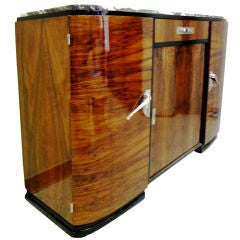
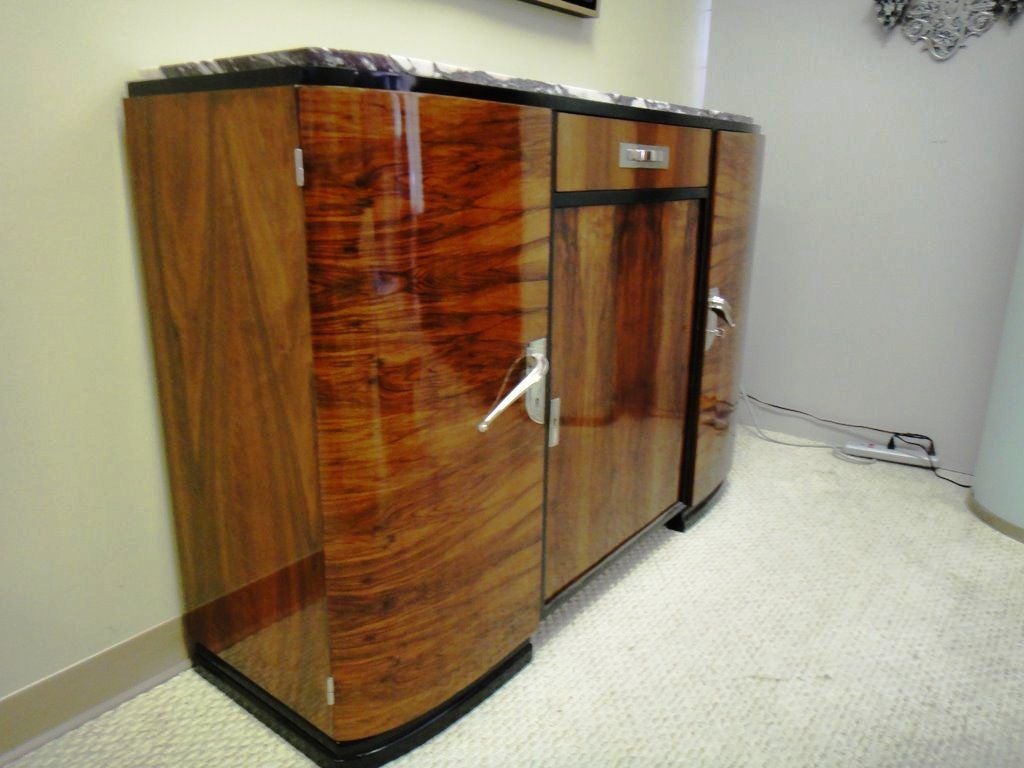
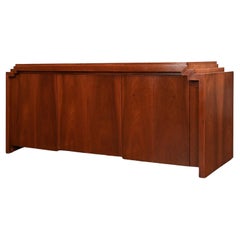
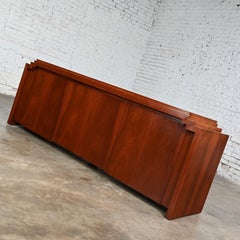
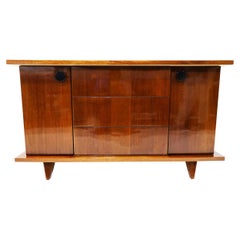
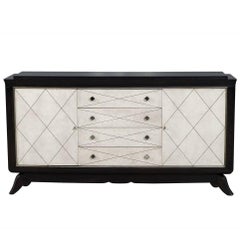
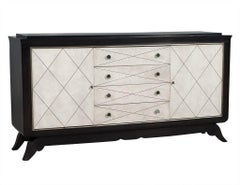
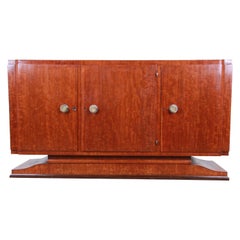
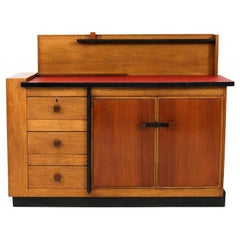
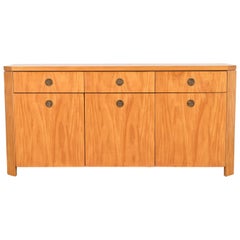
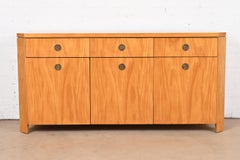
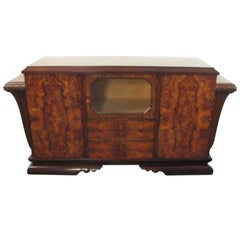
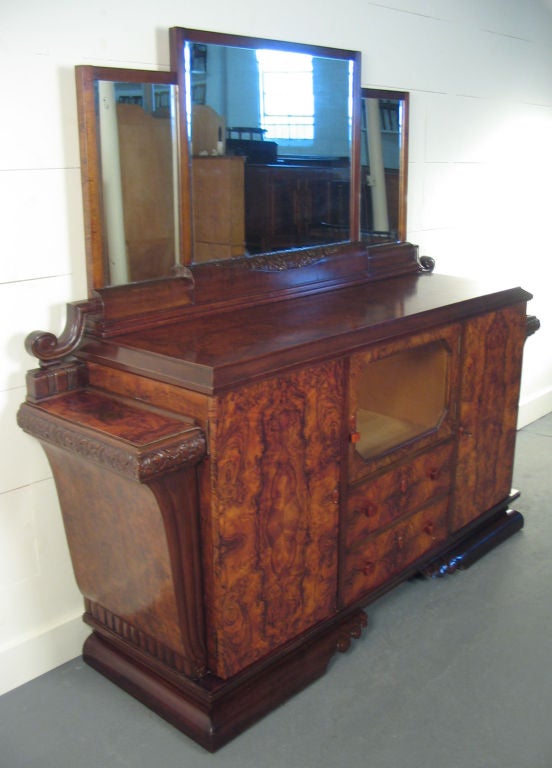
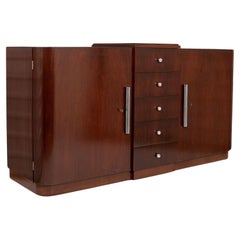
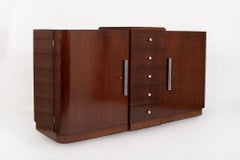
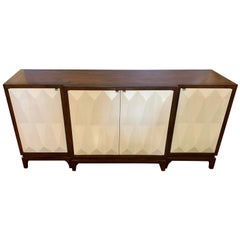
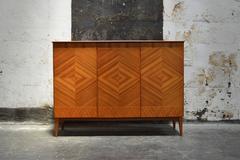
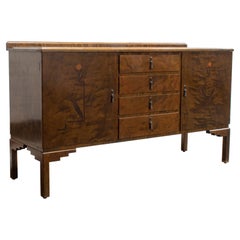
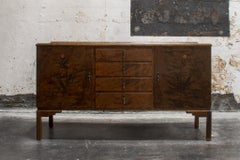
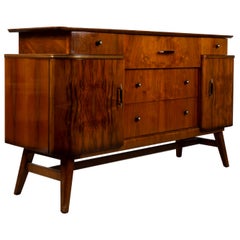
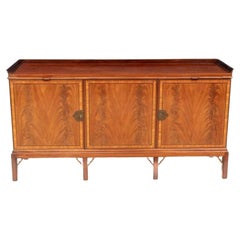
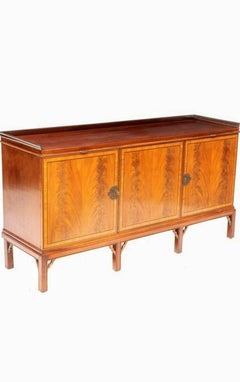
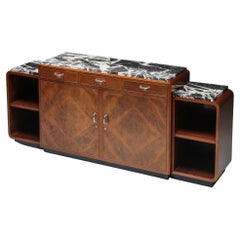
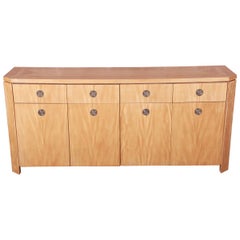
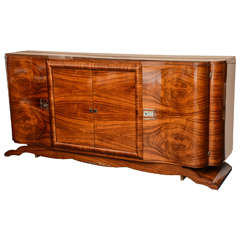
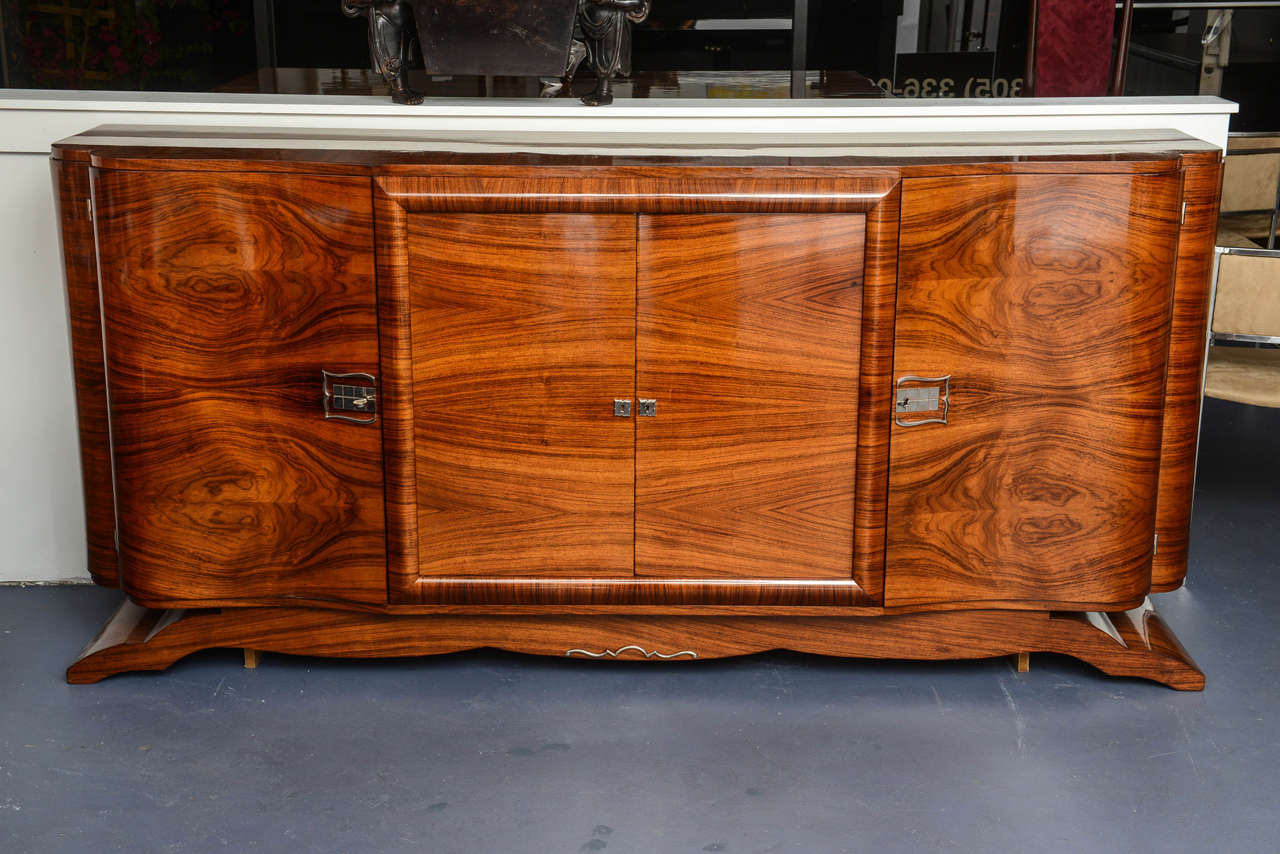
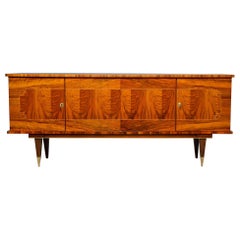
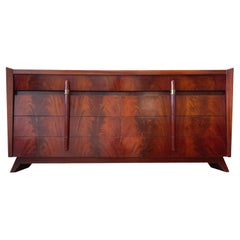
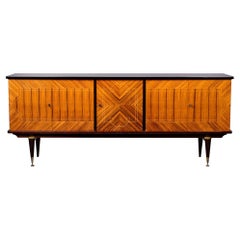
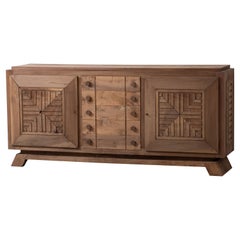
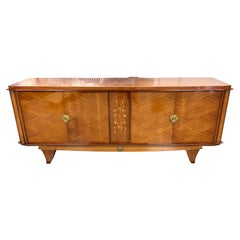
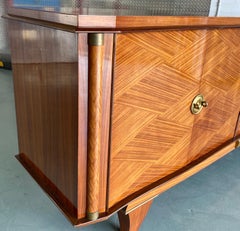
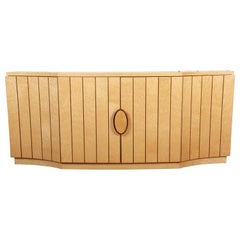
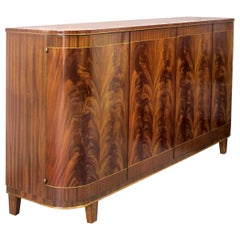
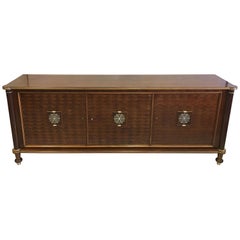
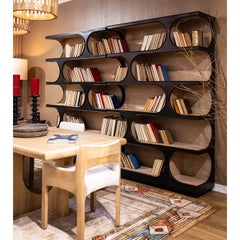
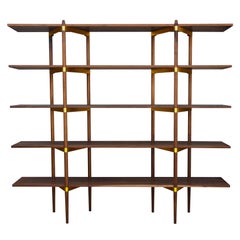
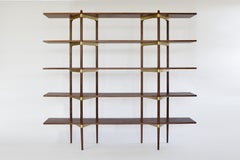
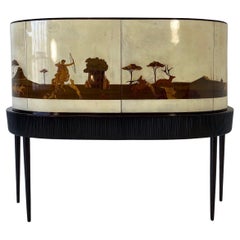
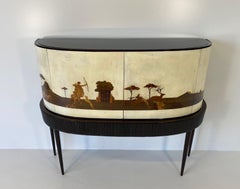
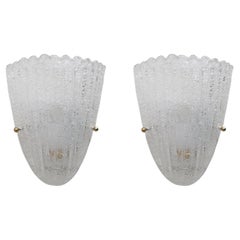
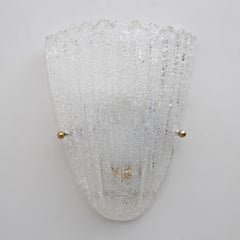
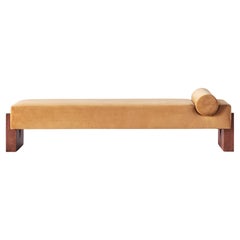
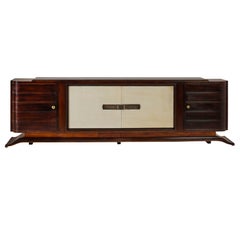
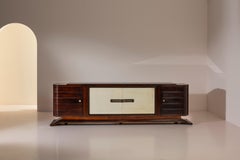
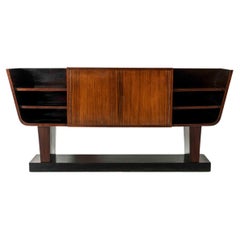
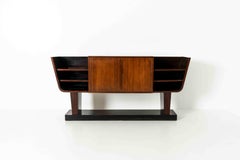
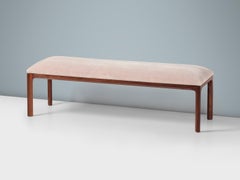
Find many varieties of an authentic art deco mahogany credenza available at 1stDibs. An art deco mahogany credenza — often made from
wood,
mahogany and
metal — can elevate any home. Whether you’re looking for an older or newer art deco mahogany credenza, there are earlier versions available from the 20th Century and newer variations made as recently as the 21st Century. An art deco mahogany credenza, designed in the
Art Deco,
Mid-Century Modern or
Hollywood Regency style, is generally a popular piece of furniture. You’ll likely find more than one art deco mahogany credenza that is appealing in its simplicity, but
Jules Leleu,
't Binnenhuis and
De Coene Frères produced versions that are worth a look.
An art deco mahogany credenza can differ in price owing to various characteristics — the average selling price 1stDibs is $8,040, while the lowest priced sells for $1,095 and the highest can go for as much as $27,958.
Art Deco furniture is characterized by its celebration of modern life. More than its emphasis on natural wood grains and focus on traditional craftsmanship, vintage Art Deco dining chairs, tables, desks, cabinets and other furniture — which typically refers to pieces produced during the 1920s and 1930s — is an ode to the glamour of the “Roaring Twenties.”
ORIGINS OF ART DECO FURNITURE DESIGN
CHARACTERISTICS OF ART DECO FURNITURE DESIGN
- Bold geometric lines and forms, floral motifs
- Use of expensive materials such as shagreen or marble as well as exotic woods such as mahogany, ebony and zebra wood
- Metal accents, shimmering mirrored finishes
- Embellishments made from exotic animal hides, inlays of mother-of-pearl or ivory
ART DECO FURNITURE DESIGNERS TO KNOW
VINTAGE ART DECO FURNITURE ON 1STDIBS
Few design styles are as universally recognized and appreciated as Art Deco. The term alone conjures visions of the Roaring Twenties, Machine Age metropolises, vast ocean liners, sleek typography and Prohibition-era hedonism. The iconic movement made an indelible mark on all fields of design throughout the 1920s and ’30s, celebrating society’s growing industrialization with refined elegance and stunning craftsmanship.
Widely known designers associated with the Art Deco style include Émile-Jacques Ruhlmann, Eileen Gray, Maurice Dufrêne, Paul Follot and Jules Leleu.
The term Art Deco derives from the name of a large decorative arts exhibition held in Paris in 1925. “Art Deco design” is often used broadly, to describe the work of creators in associated or ancillary styles. This is particularly true of American Art Deco, which is also called Streamline Moderne or Machine Age design. (Streamline Moderne, sometimes known as Art Moderne, was a phenomenon largely of the 1930s, post–Art Nouveau.)
Art Deco textile designers employed dazzling floral motifs and vivid colors, and while Art Deco furniture makers respected the dark woods and modern metals with which they worked, they frequently incorporated decorative embellishments such as exotic animal hides as well as veneers in their seating, case pieces, living room sets and bedroom furniture.
From mother-of-pearl inlaid vitrines to chrome aviator chairs, bold and inventive works in the Art Deco style include chaise longues (also known as chaise lounges) and curved armchairs. Today, the style is still favored by interior designers looking to infuse a home with an air of luxury and sophistication.
The vintage Art Deco furniture for sale on 1stDibs includes dressers, coffee tables, decorative objects and more.
Antique and vintage credenzas can add an understated touch of grace to your home. These long and sophisticated cabinet-style pieces of furniture can serve a variety of purposes, and they look great too.
In Italy, the credenza was originally a small side table used in religious services. Appropriately, credere in Italian means “to believe.” Credenzas were a place to not only set the food ready for meals, they were also a place to test and taste prepared food for poison before a dish was served to a member of the ruling class. Later, credenza was used to describe a type of versatile narrow side table, typically used for serving food in the home. In form, a credenza has much in common with a sideboard — in fact, the terms credenza and sideboard are used almost interchangeably today.
Credenzas usually have short legs or no legs at all, and can feature drawers and cabinets. And all kinds of iterations of the credenza have seen the light of day over the years, from ornately carved walnut credenzas originating in 16th-century Tuscany to the wealth of Art Deco credenzas — with their polished surfaces and geometric patterns — to the array of innovative modernist interpretations that American furniture maker Milo Baughman created for Directional and Thayer Coggin.
The credenza’s blend of style and functionality led to its widespread use in the 20th century. Mid-century modern credenzas are particularly popular — take a look at Danish furniture designer Arne Vodder’s classic Model 29, for instance, with its reversible sliding doors and elegant drawer pulls. Hans Wegner, another Danish modernist, produced strikingly minimalist credenzas in the 1950s and ’60s, as did influential American designer Florence Knoll. Designers continue to explore new and exciting ways to update this long-loved furnishing.
Owing to its versatility and familiar low-profile form, the credenza remains popular in contemporary homes. Unlike many larger case pieces, credenzas can be placed under windows and in irregularly shaped rooms, such as foyers and entryways. This renders it a useful storage solution. In living rooms, for example, a credenza can be a sleek media console topped with plants and the rare art monographs you’ve been planning to show off. In homes with open floor plans, a credenza can help define multiple living spaces, making it ideal for loft apartments.
Browse a variety of antique and vintage credenzas for sale on 1stDibs to find the perfect fit for your home today.