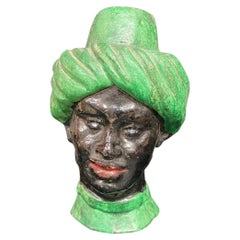
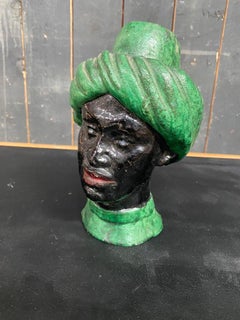
Decorative ceramic to identify circa 1950
Located in Mouscron, WHT
Buste de jeune fille Terre cuite polychrome. Marquée 1424 70 8. Eclats. Haut. 50 cm circa 1900
Category
20th Century Austrian Art Nouveau Busts
Materials
Terracotta
Decorative ceramic to identify circa 1950
Located in Mouscron, WHT
Buste de jeune fille Terre cuite polychrome. Marquée 1424 70 8. Eclats. Haut. 50 cm circa 1900
Terracotta
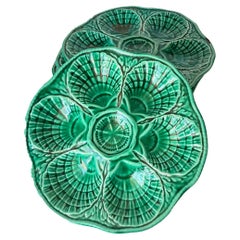
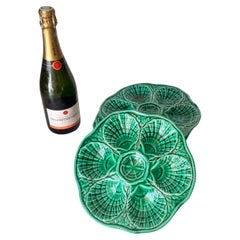
Set of 4 French Green Majolica Plates – Sarreguemines Manufacture – 20th Century
By Sarreguemines
Located in Auribeau sur Siagne, FR
Set of 4 French Green Majolica Plates – Sarreguemines Manufacture – 20th Century Description: This is a set of four majolica plates, crafted in France during the 20th century by the...
Ceramic
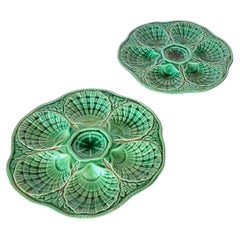
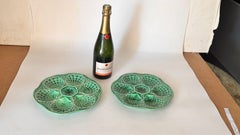
Set of 2 French Green Majolica Plates – Sarreguemines Manufacture – 20th Century
By Sarreguemines
Located in Auribeau sur Siagne, FR
Set of 2 French Green Majolica Plates – Sarreguemines Manufacture – 20th Century Description: This is a set of four majolica plates, crafted in France during the 20th century by the ...
Ceramic
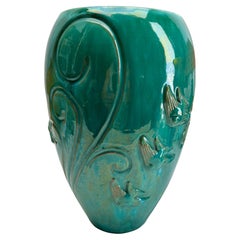
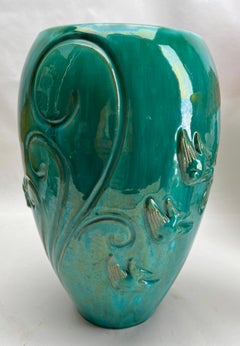
Alexandre / Belgium Vase green glazed terracotta decorated with Fish in relief
Located in Verviers, BE
Signed: Alexandre / Belgium Vase green glazed terracotta decorated with Fish in relief Alexandre Gempfenstein (Alexandre de Wemmel) (Ukrainian Belgian, 1909 to circa 1964). A mode...
Ceramic
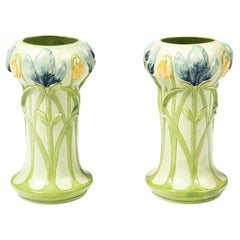
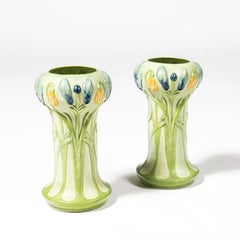
Pair of Polychromed Ceramic Vase by Julius Dressler, Austria, Early 20th Century
By Julius Dressler
Located in Buenos Aires, Buenos Aires
Pair of polychromed ceramic vase by Julius Dressler, Austria, early 20th century.
Ceramic
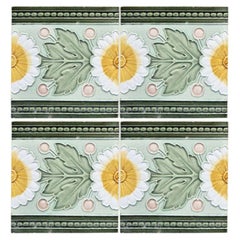
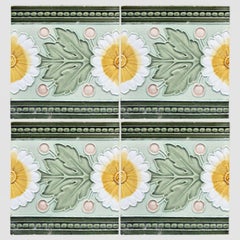
1 of the 55 Green White Tiles with Yellow Flower Pattern, Maison Helman
Located in Rijssen, NL
1 of the 57 amazing original antique handmade tiles manufactured by Maison Helman. A beautiful relief and deep green and yellow colors with lightgreen background with pink details. ...
Ceramic
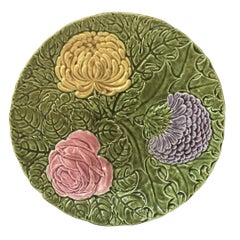
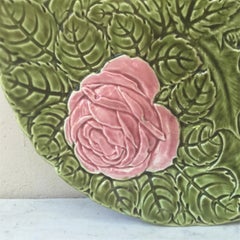
Green Sarreguemines Platter with Large Majolica Flowers, circa 1900
By Sarreguemines
Located in Austin, TX
Large Majolica flowers (rose,mum) platter signed Sarreguemines, circa 1900.
Ceramic
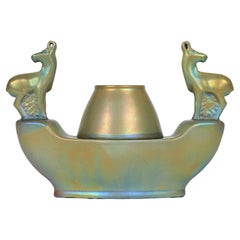
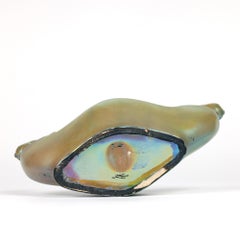
Zsolnay Pecs Green Eosin Iridescent Glazed Deer Mounted Desk Stand
By Zsolnay
Located in Bishop's Stortford, Hertfordshire
A rare and unusual Hungarian art nouveau art pottery desk stand mounted with deer and decorated in eosin iridescent green glazes dating from around 1900. The desk stand has a boat sh...
Ceramic
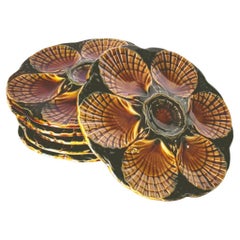
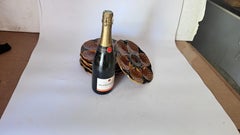
Set of 6 Majolica Oyster Plates – 19th Century – Green and Brown Glazes
By Sarreguemines
Located in Auribeau sur Siagne, FR
Set of 6 Majolica Oyster Plates – 19th Century – Green and Brown Glazes Description: This is a beautiful set of six oyster plates made in France during the 20th century, in majolica...
Ceramic
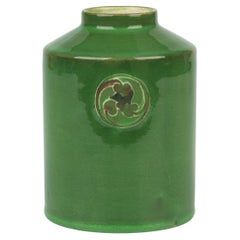
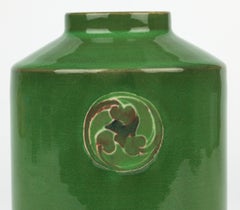
Moorcroft Green Glazed Flamminian Ware Cannister Vase 1913
By William Moorcroft
Located in Bishop's Stortford, Hertfordshire
A rare Moorcroft for Liberty & Co green glazed flamminian ware cannister shaped vase dated 1913. Flamminian Ware was produced between 1905 and 1915 and was produced for renowned...
Ceramic
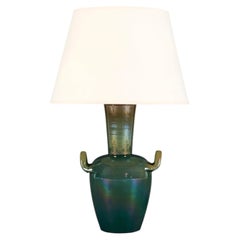
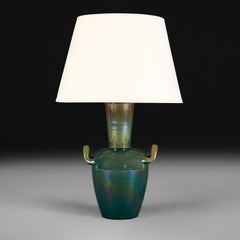
A Large Green Lustre Glaze Studio Pottery Vase as a Lamp
Located in London, GB
England, circa 1930 An early twentieth century Art Nouveau bottle vase in the manner of Dr Christopher Dresser for Linthorpe pottery, the body flanked by two lug handles and a slend...
Ceramic
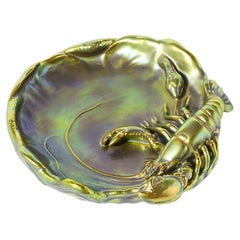
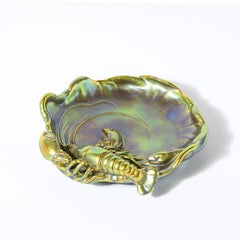
Zsolnay Hungary Eosin Iridescent Green Gold Lobster & Snake Hand Painted Dish
By Zsolnay
Located in New York, NY
This exquisite Zsolnay hand-painted dish, crafted in 19th-century Hungary, showcases the unparalleled artistry and innovation of the renowned Zsolnay porcelain factory. The dish is a...
Ceramic

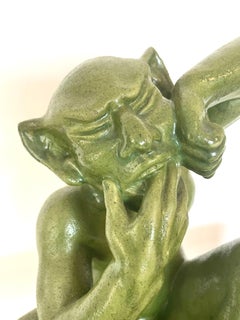
Exclusive Danish early 20th century sculpture of large green glazed goblin
Located in Ebberup, DK
Original antique large unique sculpture of goblin made by Danish artist Anders Møller. Anders Møller resided on Funen and was born in 1890. He was a member of Danish artist group “Ge...
Ceramic, Clay, Stoneware
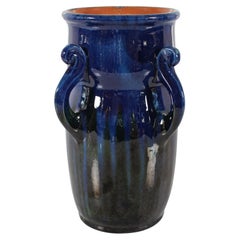
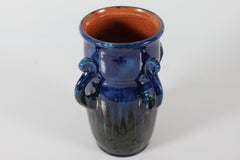
Herman A. Kähler Sculptural Vase with Blue and Green Glaze Denmark, circa 1910
By Herman Kähler
Located in Silkeborg, Silkeborg
Sculptural ceramic vase made by Herman A. Kähler ceramic works circa 1910 The vase has modeled starfish-arm shaped handles glazed with glossy deep blue luster glaze turning into gre...
Ceramic
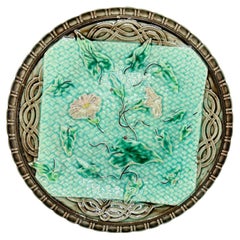
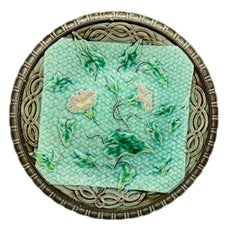
German Majolica Plate with Morning Glory, circa 1900
Located in Nuernberg, DE
Early 20th century German majolica plate with morning glory on a blue basket weave and a brown border, circa 1900. Small cracks in the glazing, glazing craquelure, chip at the backsi...
Ceramic, Majolica
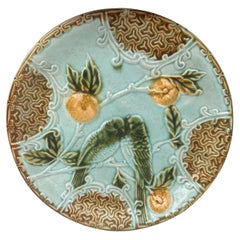
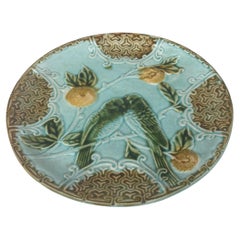
Majolica Parakeets Plate Salins, circa 1890
By Salins
Located in Austin, TX
Majolica plate two parakeets on a blue background with oranges signed Salins, circa 1890.
Ceramic, Majolica
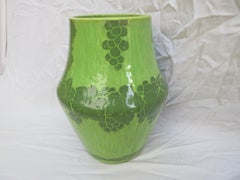
$4,295
Josef Ekberg, 1907
By Gustavsberg
Located in Hollywood, FL
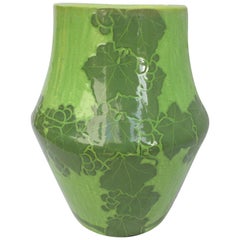
This is a handmade vase, this is a rare 2-tone green vase. The only one of its kind. Signed and dated, J-Ekberg 1907. A Swedish Artist that started working for the Gustavsberg Cerami...
Ceramic
In its sinuous lines and flamboyant curves inspired by the natural world, antique Art Nouveau furniture reflects a desire for freedom from the stuffy social and artistic strictures of the Victorian era. The Art Nouveau movement developed in the decorative arts in France and Britain in the early 1880s and quickly became a dominant aesthetic style in Western Europe and the United States.
ORIGINS OF ART NOUVEAU FURNITURE DESIGN
CHARACTERISTICS OF ART NOUVEAU FURNITURE DESIGN
ART NOUVEAU FURNITURE DESIGNERS TO KNOW
ANTIQUE ART NOUVEAU FURNITURE ON 1STDIBS
Art Nouveau — which spanned furniture, architecture, jewelry and graphic design — can be easily identified by its lush, flowing forms suggested by flowers and plants, as well as the lissome tendrils of sea life. Although Art Deco and Art Nouveau were both in the forefront of turn-of-the-20th-century design, they are very different styles — Art Deco is marked by bold, geometric shapes while Art Nouveau incorporates dreamlike, floral motifs. The latter’s signature motif is the "whiplash" curve — a deep, narrow, dynamic parabola that appears as an element in everything from chair arms to cabinetry and mirror frames.
The visual vocabulary of Art Nouveau was particularly influenced by the soft colors and abstract images of nature seen in Japanese art prints, which arrived in large numbers in the West after open trade was forced upon Japan in the 1860s. Impressionist artists were moved by the artistic tradition of Japanese woodblock printmaking, and Japonisme — a term used to describe the appetite for Japanese art and culture in Europe at the time — greatly informed Art Nouveau.
The Art Nouveau style quickly reached a wide audience in Europe via advertising posters, book covers, illustrations and other work by such artists as Aubrey Beardsley, Henri de Toulouse-Lautrec and Alphonse Mucha. While all Art Nouveau designs share common formal elements, different countries and regions produced their own variants.
In Scotland, the architect Charles Rennie Mackintosh developed a singular, restrained look based on scale rather than ornament; a style best known from his narrow chairs with exceedingly tall backs, designed for Glasgow tea rooms. Meanwhile in France, Hector Guimard — whose iconic 1896 entry arches for the Paris Metro are still in use — and Louis Majorelle produced chairs, desks, bed frames and cabinets with sweeping lines and rich veneers.
The Art Nouveau movement was known as Jugendstil ("Youth Style") in Germany, and in Austria the designers of the Vienna Secession group — notably Koloman Moser, Josef Hoffmann and Joseph Maria Olbrich — produced a relatively austere iteration of the Art Nouveau style, which mixed curving and geometric elements.
Art Nouveau revitalized all of the applied arts. Ceramists such as Ernest Chaplet and Edmond Lachenal created new forms covered in novel and rediscovered glazes that produced thick, foam-like finishes. Bold vases, bowls and lighting designs in acid-etched and marquetry cameo glass by Émile Gallé and the Daum Freres appeared in France, while in New York the glass workshop-cum-laboratory of Louis Comfort Tiffany — the core of what eventually became a multimedia decorative-arts manufactory called Tiffany Studios — brought out buoyant pieces in opalescent favrile glass.
Jewelry design was revolutionized, as settings, for the first time, were emphasized as much as, or more than, gemstones. A favorite Art Nouveau jewelry motif was insects (think of Tiffany, in his famed Dragonflies glass lampshade).
Like a mayfly, Art Nouveau was short-lived. The sensuous, languorous style fell out of favor early in the 20th century, deemed perhaps too light and insubstantial for European tastes in the aftermath of World War I. But as the designs on 1stDibs demonstrate, Art Nouveau retains its power to fascinate and seduce.
There are ways to tastefully integrate a touch of Art Nouveau into even the most modern interior — browse an extraordinary collection of original antique Art Nouveau furniture on 1stDibs, which includes decorative objects, seating, tables, garden elements and more.
Aside from his iconic commercial prints, the Czech artist endeavored to make works that spoke to the soul.
From vibrant to subtle, elegant to cheeky, enamel jewelry encompasses a wide range of colors and styles, and there are almost as many techniques for creating these distinctive pieces.
The first art and design movement of the 20th century was all about celebrating beauty of women and nature.