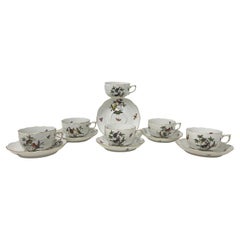
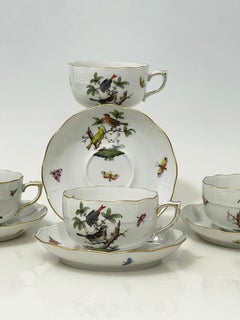
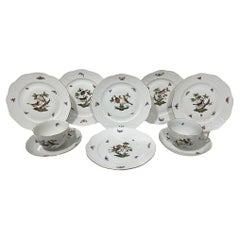
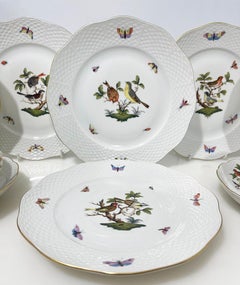
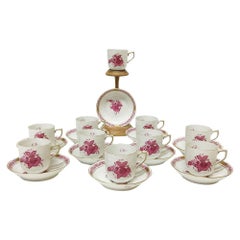
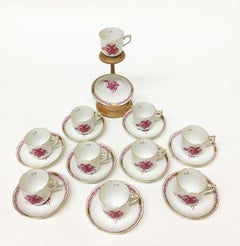
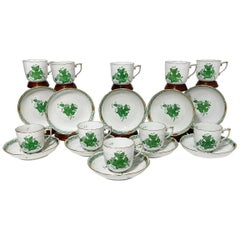
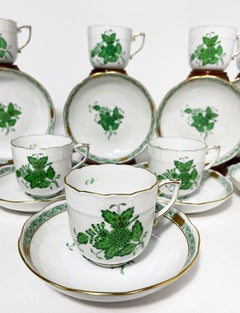
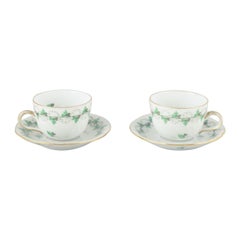
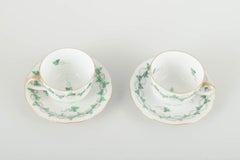
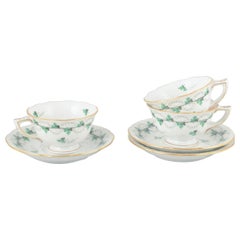
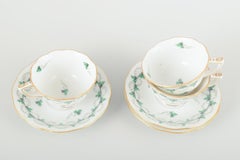
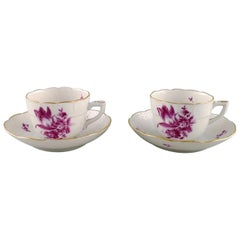
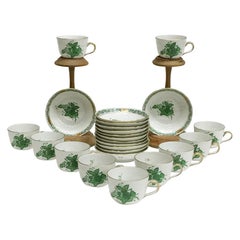
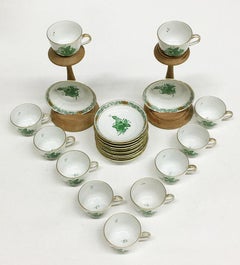
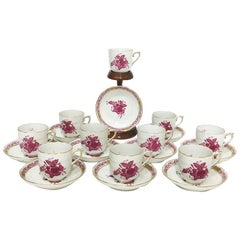
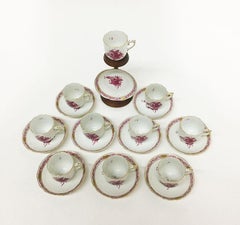
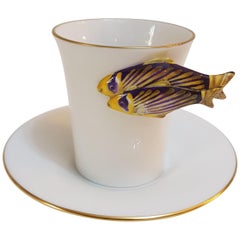
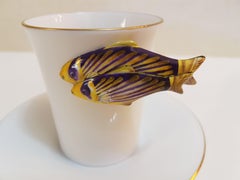
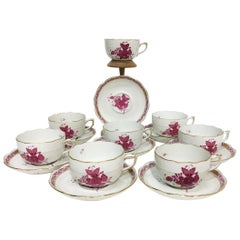
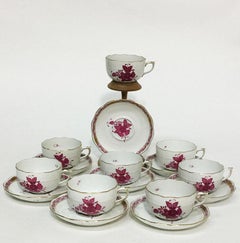
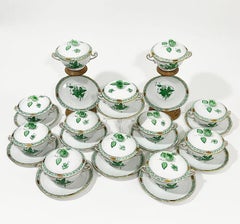
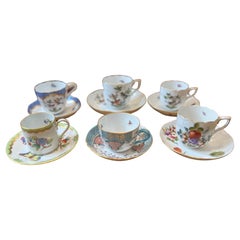
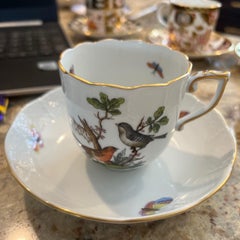
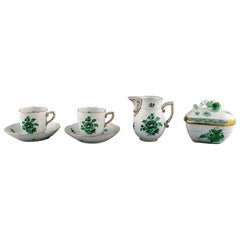
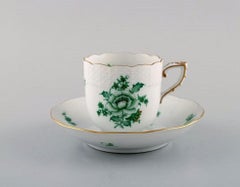
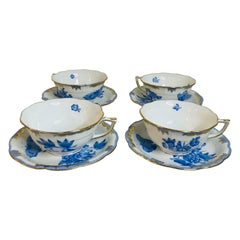
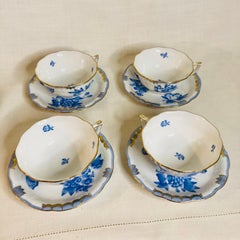
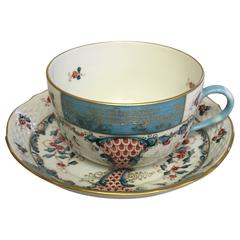
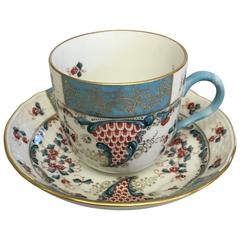
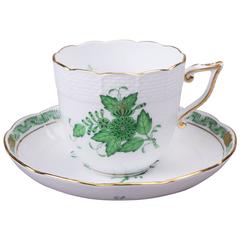
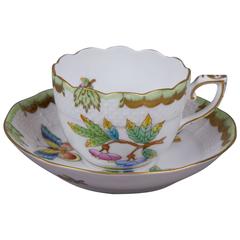
An assortment of herend cups and saucers is available at 1stDibs. The range of distinct herend cups and saucers — often made from
ceramic and
porcelain — can elevate any home. We have 11 antique and vintage herend cups and saucers in-stock, while there are 2 modern editions to choose from as well. Herend cups and saucers have long been popular, with older editions for sale from the 20th Century and newer versions made as recently as the 21st Century. Herend cups and saucers bearing
Modern hallmark is very popular at 1stDibs. Herend cups and saucers have been a part of the life’s work for many furniture makers, but those produced by
Herend are consistently popular.
Herend cups and saucers can differ in price owing to various characteristics — the average selling price at 1stDibs is $928, while the lowest priced sells for $200 and the highest can go for as much as $2,830.
Herend Porcelain occupies a singular place in the world of luxury European ceramics. The firm's vast range of figurines and distinctive patterns are visually striking and notably different from those of other major porcelain producers like Meissen or Sèvres. Whereas the latter tend to feature discrete decorative elements that appear to float on a white background, Herend favors large, bold designs for its porcelain, with its serving pieces, dishes and other works incorporating historical scenes, animals or vegetation.
Vince Stingl established what would become the Herend Porcelain Manufactory in 1826 in the town of Herend, Hungary, to produce earthenware. When he went bankrupt in the late 1830s, Mór Fischer, who took over, switched the focus from earthenware to porcelain to take advantage of the growing European market for fine china.
By 1849, Herend counted among its clients members of the Habsburg dynasty and the Hungarian aristocracy. Thanks to its participation in several important international exhibitions and fairs — including the 1851 Crystal Palace Exhibition in London, the 1853 Exhibition of the Industry of All Nations in New York and the 1855 Exposition Universelle in Paris — its wares became a popular choice for courtly dining in the middle of the 19th century, and its patrons included Francis Joseph I of Austria and Queen Victoria of England, for whom its Viktória pattern was named.
The company foundered in the latter half of the 19th century under the leadership of Fischer’s two sons. But it was given new life, artistically and financially, when Fischer’s grandson, Jenő Farkasházy, himself a trained ceramist, took the helm around 1900. Farkasházy designed new patterns and revived classic ones. After World War II, Herend was nationalized by the Communist government but kept alive its tradition of skilled craftsmanship by continuing to produce its classic patterns. In 1993, after the fall of the Iron Curtain, the factory was privatized once again and today is owned by its management and workers.
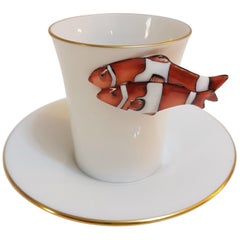
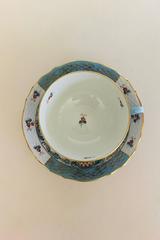
Authentic Herend animal figurines — their groupings of white rabbits, cats or pheasants — are often covered head to toe with the factory’s famed “fish-scale” pattern, also known as Vieux Herend, which produces the effect of a dense coat of feathers or fur. The fish-scale pattern also appears on this chocolate cup and saucer decorated in the Cornucopia pattern.
Find antique Herend porcelain on 1stDibs.
Today you’re likely to bring out your antique and vintage porcelain in order to dress up your dining table for a special meal.
Porcelain, a durable and nonporous kind of pottery made from clay and stone, was first made in China and spread across the world owing to the trade routes to the Far East established by Dutch and Portuguese merchants. Given its origin, English speakers called porcelain “fine china,” an expression you still might hear today. "Fine" indeed — for over a thousand years, it has been a highly sought-after material.
Meissen Porcelain, one of the first factories to create real porcelain outside Asia, popularized figurine centerpieces during the 18th century in Germany, while works by Capodimonte, a porcelain factory in Italy, are synonymous with flowers and notoriously hard to come by. Modern porcelain houses such as Maison Fragile of Limoges, France — long a hub of private porcelain manufacturing — keep the city’s long tradition alive while collaborating with venturesome contemporary artists such as illustrator Jean-Michel Tixier.
Porcelain is not totally clumsy-guest-proof, but it is surprisingly durable and easy to clean. Its low permeability and hardness have rendered porcelain wares a staple in kitchens and dining rooms as well as a common material for bathroom sinks and dental veneers. While it is tempting to store your porcelain behind closed glass cabinet doors and reserve it only for display, your porcelain dinner plates and serving platters can safely weather the “dangers” of the dining room and be used during meals.
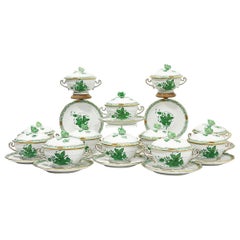
Add different textures and colors to your table with dinner plates and pitchers of ceramic and silver or a porcelain lidded tureen, a serving dish with side handles that is often used for soups. Although porcelain and ceramic are both made in a kiln, porcelain is made with more refined clay and is stronger than ceramic because it is denser.
On 1stDibs, browse an expansive collection of antique and vintage porcelain made in a variety of styles, including Regency, Scandinavian modern and other examples produced during the mid-century era, plus Rococo, which found its inspiration in nature and saw potters crafting animal figurines and integrating organic motifs such as floral patterns in their work.