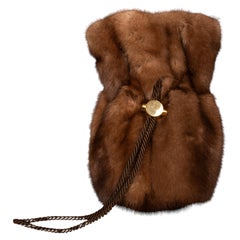
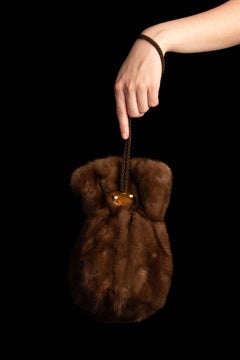
Christian Dior 'purse' bag 1998 by John Galliano
By Christian Dior, John Galliano for Christian Dior
Located in SAINT-OUEN-SUR-SEINE, FR
DIOR - A ready-to-wear Collection circa 1998 under the artistic direction of John Galliano.
Category
Christian Dior 'purse' bag 1998 by John Galliano
By Christian Dior, John Galliano for Christian Dior
Located in SAINT-OUEN-SUR-SEINE, FR
DIOR - A ready-to-wear Collection circa 1998 under the artistic direction of John Galliano.
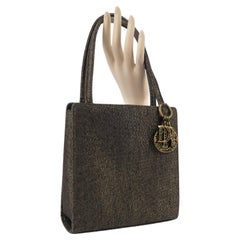
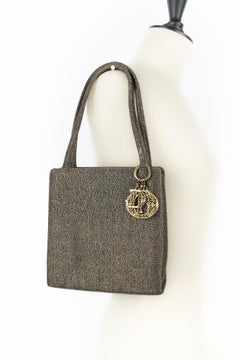
Christian Dior evening bag by John Galliano 1998
By John Galliano for Christian Dior, Christian Dior
Located in SAINT-OUEN-SUR-SEINE, FR
DIOR - A Collection from 1998, under the artistic direction of John Galliano.
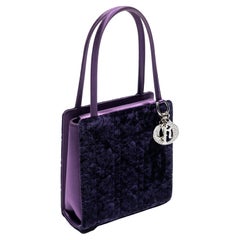
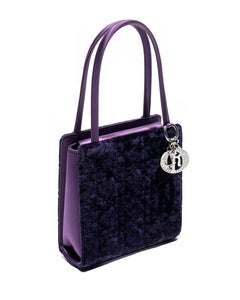
Christian Dior by John Galliano purple velvet and crystal mini bag, c. 1998
By Christian Dior, John Galliano for Christian Dior
Located in London, GB
▪ Christian Dior mini evening bag ▪ Designed by John Galliano ▪ Crushed purple velvet with signature 'Cannage' quilting ▪ Silk handles and interior ▪ Four 'DIOR' silver charms ado...
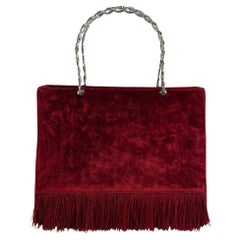
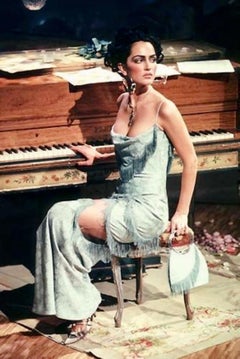
S/S 1998 Christian Dior by John Galliano Red Velvet Fringe Metal Handle Lady Bag
By John Galliano for Christian Dior, Christian Dior
Located in West Hollywood, CA
Presenting a red velvet interpretation of the classic 'Lady Dior' silhouette designed by John Galliano for Christian Dior's Spring/Summer 1998 collection.
Sold
Size: FR 36 - UK 8 - US 4
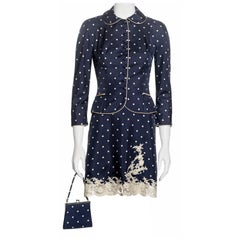
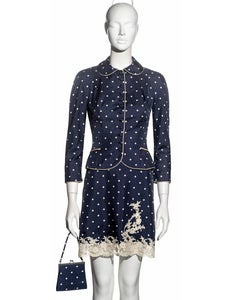
Christian Dior by John Galliano polka dot silk jacket, dress and bag, ss 1998
By John Galliano for Christian Dior, Christian Dior
Located in London, GB
▪ Christian Dior 3-piece ensemble ▪ Designed by John Galliano ▪ Navy polka dot silk ▪ Single-breasted jacket with Peter Pan collar and cream silk trim ▪ Slip dress edged with crea...
When Christian Dior launched his couture house, in 1946, he wanted nothing less than to make “an elegant woman more beautiful and a beautiful woman more elegant.” He succeeded, and in doing so the visionary designer altered the landscape of 20th century fashion. Vintage Dior bags, shoes, evening dresses, shirts and other garments and accessories are known today for their feminine and sophisticated sensibility.
Dior was born in Granville, on the Normandy coast, in 1905. His prosperous haute bourgeois parents wanted him to become a diplomat despite his interest in art and architecture. However, they agreed to bankroll an art gallery, which Dior opened in 1928 in Paris with a friend.
This was the start of Dior’s rise in the city’s creative milieu, where he befriended Pablo Picasso and Jean Cocteau. After seven years as an art dealer, Dior retrained as a fashion illustrator, eventually landing a job as a fashion designer for Robert Piguet, and in 1941, following a year of military service, he joined the house of Lucien Lelong. Just five years later, with the backing of industrialist Marcel Boussac, the ascendant Dior established his own fashion house, at 30 avenue Montaigne in Paris.
Just two years after the end of World War II, the fashion crowd and the moribund haute couture industry were yearning, comme tout Paris, for security and prosperity, desperate to discard the drab, sexless, utilitarian garb imposed by wartime deprivation. They needed to dream anew.
And Dior delivered: He designed a collection for a bright, optimistic future. “It’s quite a revolution, dear Christian!” exclaimed Carmel Snow, the prescient American editor-in-chief of Harper’s Bazaar, famously proclaiming, “Your dresses have such a new look.” The press ran with the description, christening Dior’s debut Spring/Summer haute couture collection the New Look. “God help those who bought before they saw Dior,” said Snow. “This changes everything.”
Dior’s collection definitively declared that opulence, luxury and femininity were in. His skirts could have 40-meter-circumference hems, and outfits could weigh up to 60 pounds. They were cut and shaped like architecture, on strong foundations that molded women and “freed them from nature,” Dior said. Rather than rationing, his ladies wanted reams of fabric and 19-inch waists enforced by wire corsets, and the fashion world concurred. The debut got a standing ovation.
In the subsequent decade, Paris ruled as the undisputed fashion capital of the world, and Christian Dior reigned as its king. With the luxuriously full skirts of his New Look, suits and his drop-dead gorgeous couture dresses and ball gowns worthy of any princess, Dior gave women the gift of glamour they’d lost in the miserable years of war.
On 1stDibs, find an exquisite range of vintage Christian Dior clothing, jewelry, handbags and other items.
For fashion lovers, the 1990s have become associated with styles adopted by today’s supermodels and influencers, who never wear the same thing twice. And because fast fashion didn’t yet exist, the design associated with 1990s fashion — vintage '90s handbags, clothing and accessories — has a quality appreciated by the millennial generation: authenticity.
If there was one concept unifying fashion in the 1990s, it was the lean silhouette. “Fashion is a game of proportion,” Alexander Fury wrote in the New York Times in 2016. “Narrow-shouldered and narrow-hipped, the ’90s were skinny.”
If it takes a practiced eye to identify that single concept, that’s because in truth, ’90s fashion was many things to many people. After the 1980s era of strong-shouldered working women, glossy aerobicized bodies and Madonna, fashion branched out.
The industry gained momentum from big-money relaunches of the great Paris houses Dior, Givenchy and Balenciaga, rescued at long last from the constraints of licensing. Japan and Belgium gave fashion new avant-garde ideas to play with. From America came denim, minimalism, '90s grunge fashion and hip-hop. From Italy came sex appeal. And Prada.
For the colorful corsets of her 1990 Portrait collection, audacious British designer Dame Vivienne Westwood drew on 18th-century oil paintings — her models donned the pearl choker necklaces that have become a social media star and a favorite of influencers and fashion lovers all over the world. For a jacket-and-shorts suit from her Fall/Winter 1996–97 Storm in a Teacup line, the designer used the extreme asymmetry of a tartan mash-up to confront, according to Westwood, “the horror of uniformity and minimalism.”
“The ethos of the time was, you could have style, you could be into all kinds of cool stuff. It wasn’t about money, it wasn’t about status,” says Katy Rodriguez, cofounder of Resurrection. In contrast, “our last 10 years have seen the domination of nonstop luxury, money and status.”
Vintage 1990s Chanel bags, for example, are among the most prized of the brand’s offerings — at Newfound Luxury, proprietor L. Kiyana Macon has "clients who only buy ’90s Chanel because they recognize that it is the best quality.”
Things were different in the ’90s, and the difference is reflected in the clothes. Pull up any recent “How to Do the 1990s” fashion article (or look at photos of current supermodels Gigi, Kendall and Bella), and you’ll see iconic '90s outfits — knee socks, cardigans, fanny packs, fishnet stockings, slip dresses, flannel shirts and combat boots.
Rodriguez has recently noticed something similar happening. Before COVID, customers searched 1990s stock “for very sexy Galliano, Dior, Cavalli — that kind of thing,” she explains, noting that just a few months ago, “people were posting [on social media] the poshest things they could.” Now, in the age of shutdown, “that would just look out of touch.”
Instead, people are looking for “things that are cool but also easy and comfortable, not necessarily super-luxe,” Rodriguez continues. They’re “heading back to the more avant-garde, anti-fashion designers, like Helmut Lang, [Martin] Margiela and [Ann] Demeulemeester.”
Late designer Franco Moschino shocked and titillated the ’80s fashion elite with his whimsical, irreverent parodies of bourgeois finery. Whether emblazoning a sober blazer with smiley faces or embellishing a skirt suit with cutlery, Moschino rendered high style with a hearty wink. He famously said, “If you can’t be elegant, at least be extravagant” — words that, with all due respect to Susan Sontag, epitomize the essence of camp.
Vintage Moschino pants, jackets and other '90s Moschino garments remain so bold and fresh today that even the house's former creative director, Jeremy Scott, drew on the brand's past and the pop culture of the decade for his debut collection in 2014.
Find vintage 90s dresses, skirts, sweaters and other clothing and accessories on 1stDibs — shop Thierry Mugler, Miuccia Prada, Jean Paul Gaultier and more today.
An integral part of fashion, handbags and purses have been indispensable accessories ever since we began to carry around personal items. Level of craftsmanship, style and shape matters — from coin purses in ancient Greece to early 20th-century opera bags and onward, handbags have evolved considerably over the years to meet our needs and desires, whether or not you happen to be prioritizing functionality over a flashy exterior.
Once, a single “It” handbag ruled each fashion season. No more. Today, lovers of vintage handbags are savvier and have a wider range of shopping options. Nevertheless, classics created by the likes of Louis Vuitton, Dior and Balenciaga still rule.
“It is not a fashion bag — it is a statement bag,” says Mightychic's Debra Kent of Hermès's widely beloved accessories. “When you carry an iconic Hermès bag — Birkin, Kelly, Constance — no one knows how long you have been into this culture or if you are a newbie. Your status is validated immediately.”
First released in 1997, Fendi's Baguette rose to fame along with Carrie Bradshaw, the Sex and the City character portrayed by Sarah Jessica Parker. Recently, the design has seen such a resurgence in popularity that Fendi has reissued it.
They are part of design history, so owning a handbag has meaning. As New York–based fashion historian Sarah C. Byrd says, “You have made the choice to invest in this piece because you understand the value of it in the past and in the future to come.”
From a 1980s Chanel black leather quilted mini buckle bag to the rare Hermès Birkin 30cm Himalayan with diamond hardware to a range of 19th-century bags, find a rich variety of vintage and designer handbags and purses spanning numerous brands on 1stDibs — seasonal “It” designation no longer needed.