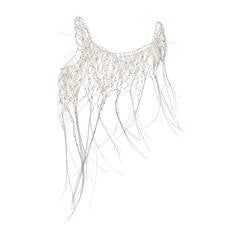
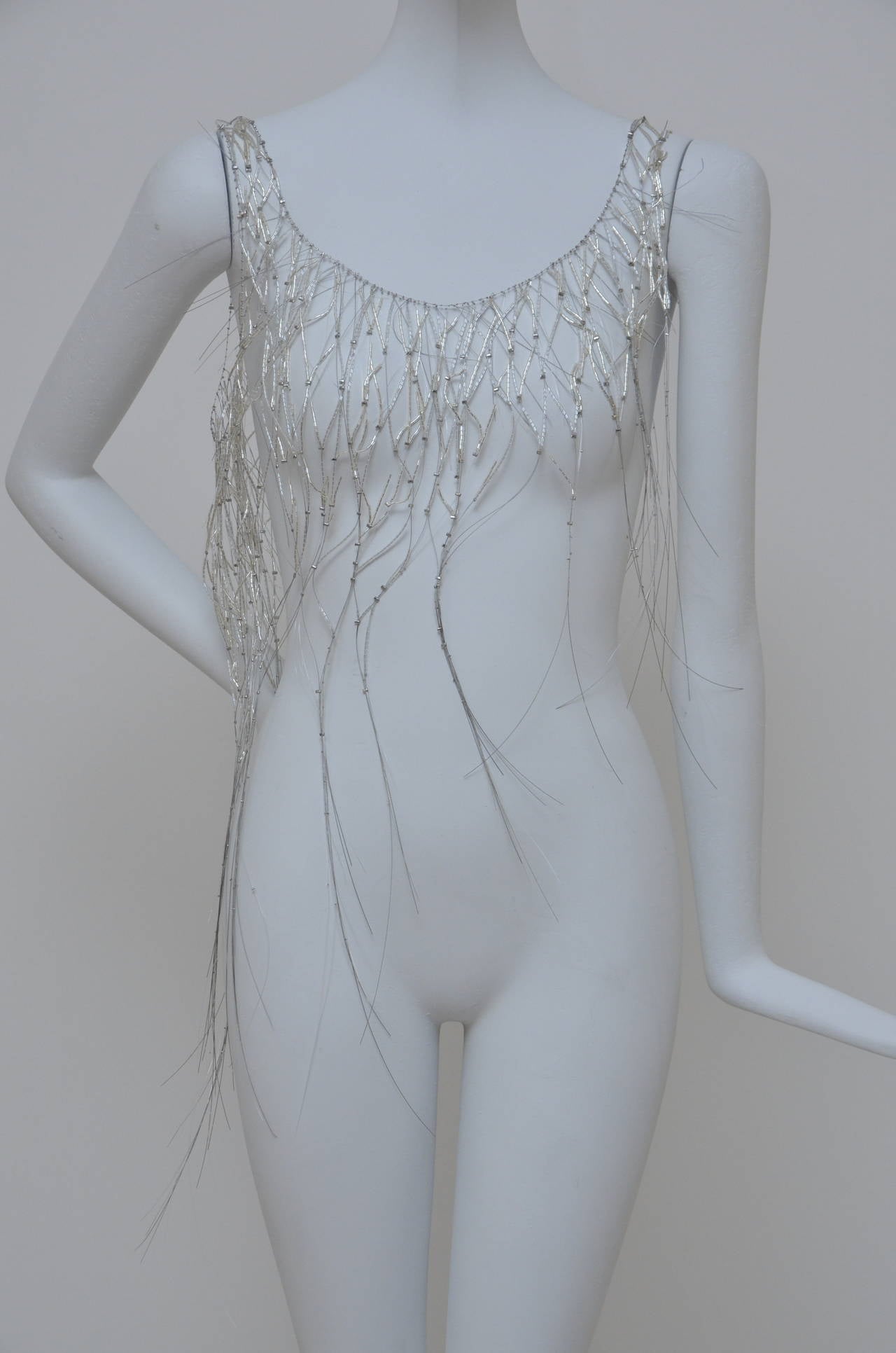
Issey Miyake Runway 2004 Necklace
By Issey Miyake
Located in New York, NY
Issey Miyake runway 2004 necklace. Made in japan.
Category
Issey Miyake Runway 2004 Necklace
By Issey Miyake
Located in New York, NY
Issey Miyake runway 2004 necklace. Made in japan.
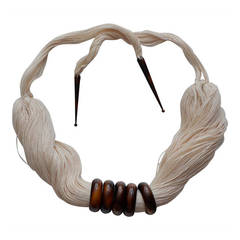
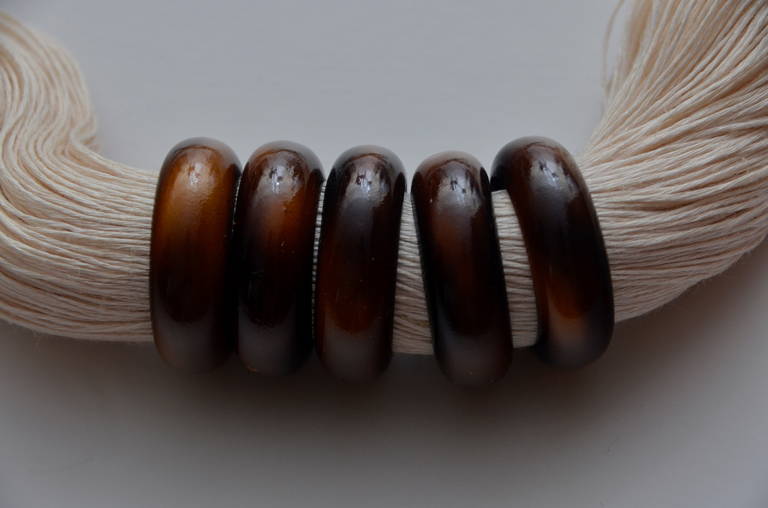
Rare Issey Miyake Rope Choker Necklace 1980's
By Issey Miyake
Located in New York, NY
Issey Miyake rope necklace.From 1980's. New excellent clean condition.Very minor flee bite chip's on the brown glazed rings.Necklace is a kind of tie up style.
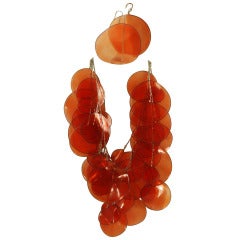
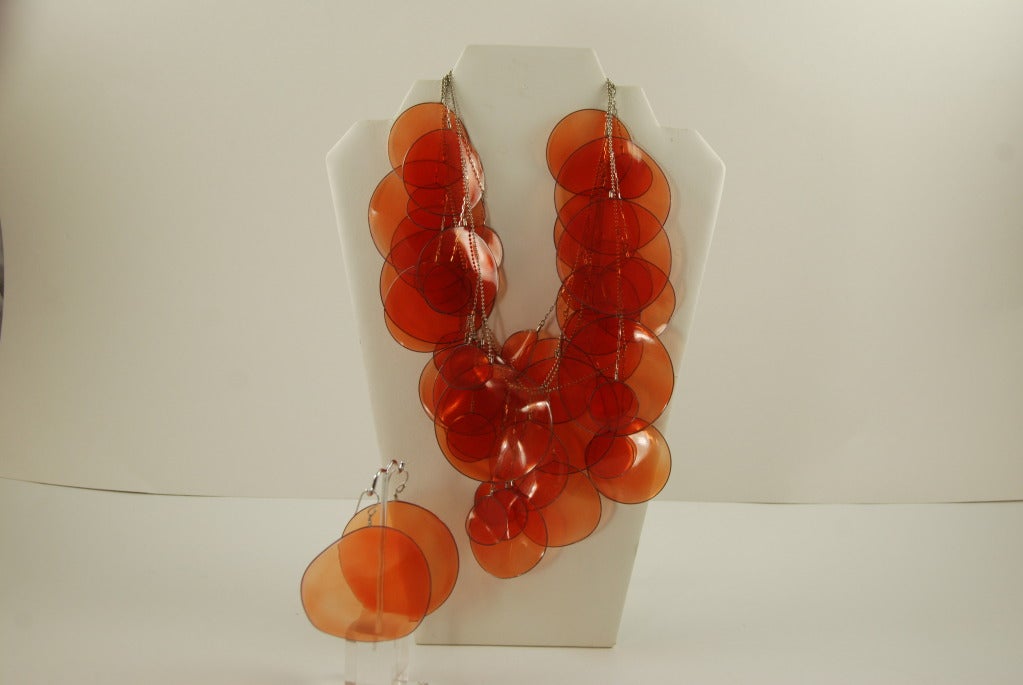
Issey Miyake Multi Strand Necklace & Earrings
By Issey Miyake
Located in New York, NY
Multi strand orange necklace comprised of silver chains from which round discs of transparent acetate film hang. The discs are three different sizes, some are hung directly on one of...
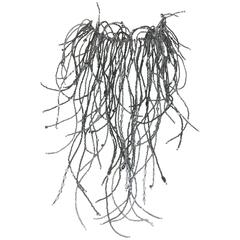
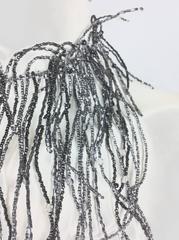
Issey Miyake Hematite Necklace
By Issey Miyake
Located in Bath, GB
Issey Miyake Hematite and Beaded Necklace
Hematite
From the prismatic Pleats Please collection to the modular, three-dimensional garments crafted from recycled plastic bottles in his Reality Lab, the captivating fashions by Japanese designer Issey Miyake are all about movement.
Born in Hiroshima, Miyake studied graphic design at Tama Art University in Tokyo before relocating to Paris in 1965, where he studied couture and cut his teeth working for Guy Laroche and Hubert de Givenchy. In 1969, he moved to New York, where he worked for Geoffrey Beene. He returned to Tokyo in 1970 to found his first solo venture, the Miyake Design Studio. It wasn’t until the 1990s, though, that the designer had his breakthrough moment with experimentations in pleating. Some of his earliest explorations were for choreographer William Forsythe’s Frankfurt Ballet Company, with the 1991 performance of The Loss of Small Detail featuring costumes Miyake designed with pleats that complemented and transformed the movement of the dancers.
Though long a staple in couture — from delicate women’s skirts to men’s suit pants — pleats took on new life in Miyake’s hands. By using a heat press to cure his fabrics after his garments are stitched, Miyake was able to maintain the accordion structure of the pleat, turning a series of folds into sculptural, often futuristic forms unbound by the shape of the human body. In 1993, Miyake debuted “garment pleating” in his Pleats Please line, in which the clothes are constructed at a size that is larger than what is intended for the finished product. The pleats are then created — a process that involves folding and ironing and is separate from the joining of seams — and individual pieces are subsequently hand-fed into a heat press. The pleats are permanent and the garments can be worn and washed without losing their shape.
Miyake’s pleats run the gamut in scale, which enabled him to evoke dramatic, sharp silhouettes and flowy movements in equal measure. In essence, he created an entirely new material whose iterations are infinite — a feat of technology as much as fashion.
Other innovations include Miyake’s 1997 Just Before collection, which introduced a series of tube-knit dresses that could be cut as desired, reducing both work and resources. His Reality Lab now investigates new materials, such as a fully recycled polyester. Miyake’s prowess, in fact, captured another iconic figure in the tech world: Steve Jobs, for whom the designer made hundreds of identical black turtlenecks, the late Apple founder’s sartorial signature.
Find a collection of vintage Issey Miyake day dresses, jackets, shirts and other clothing on 1stDibs.
We are fortunate to know much of the world’s long and dazzling history of necklaces, as this type of jewelry was so treasured that it was frequently buried with its owners. Today, Van Cleef necklaces, Tiffany necklaces and Cartier necklaces are some of the most popularly searched designer necklaces on 1stDibs.
Lapis lazuli beads adorned necklaces unearthed from the royal graves at the ancient Iraqi civilization of Sumer, while the excavation of King Tut’s burial chamber revealed a sense of style that led to a frenzy of Art Deco designs, with artisans of the 1920s seeking to emulate the elegant work crafted by Ancient Egypt’s goldsmiths and jewelry makers.
In ancient times, pendant necklaces worn by royalty and nobles conferred wealth and prestige. Today, wearing jewelry is about personal expression: Luxury diamond necklaces exude confidence and can symbolize the celebratory nature of a deep romantic relationship, while paper-clip chain-link necklaces designed by the likes of goldsmith Faye Kim are firmly planted in the past as well as the present. Kim works exclusively with eco-friendly gold, and these fashionable, fun accessories owe to the design of 19th-century watch fobs.
For some, necklaces are thought of as being a solely feminine piece, but this widely loved accessory has been gender-neutral for eons. In fact, just as women rarely took to wearing a single necklace during the Renaissance, men of the era layered chains and valuable pendants atop their bejeweled clothing. In modern times, the free-spirited hippie and counterculture movements of the 1960s saw costume-jewelry designers celebrating self-expression through colorful multistrand necklaces and no shortage of beads, which were worn by anyone and everyone.
Even after all of these years, the necklace remains an irrefutable staple of any complete outfit. Although new trends in jewelry are constantly emerging, the glamour and beauty of the past continue to inform modern styles and designs. In a way, the cyclical history of the necklace differs little from its familiar looped form: The celebrated French jewelry house Van Cleef & Arpels found much inspiration in King Tut, and, now, their Alhambra collection is a go-to for modern royals. Vintage David Webb necklaces — whose work landed him on the cover of Vogue in 1950, two years after opening his Manhattan shop — were likely inspired by the ornamental styles of ancient Greece, Mesopotamia and Egypt.
On 1stDibs, browse top designers like Dior, Chanel and Bulgari, or shop by your favorite style, from eye-catching choker necklaces to understated links to pearl necklaces and more.