Japanese Screens Byobu

to
6
54
7
84
1
1
6
36
42
1
6
16
1
1
1
1
53
53
37
33
29
78
78
78
2
2
85
85
85
1
1
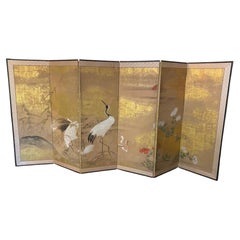
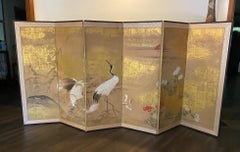
Japanese Asian Edo Meiji 6 Panel Folding Byobu Screen Red Crown Cranes Landscape

Japanese Asian Edo Meiji 6 Panel Folding Byobu Screen Red Crown Cranes Landscape

Located in Studio City, CA

A gorgeous, quite large antique six-panel Japanese Asian Byobu folding screen depicting a landscape scene with red crowned cranes, other playful birds and boldly colored blossoming S...

Category

Antique 19th Century Japanese Edo Paintings and Screens

Materials

Gold Leaf

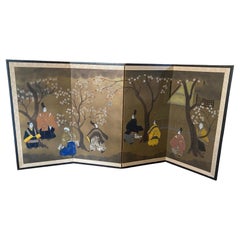
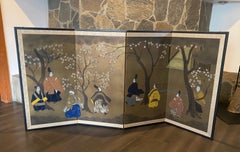
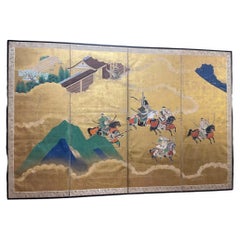
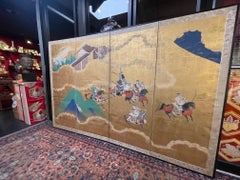
Japanese Asian Four-Panel Folding Byobu Showa Screen Tale of Genji & Cherry Tree

Japanese Asian Four-Panel Folding Byobu Showa Screen Tale of Genji & Cherry Tree

Located in Studio City, CA

A gorgeous four-panel Japanese Byobu folding screen depicting a scene from the Classic Japanese narrative "Tale of Genji" featuring various characters in a cherry blossom tree villag...

Category

20th Century Japanese Showa Paintings and Screens

Materials

Gold Leaf

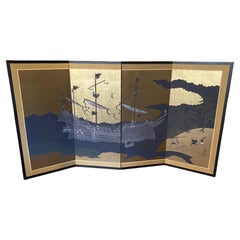
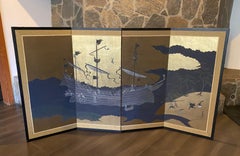
Japanese Asian Signed Four Panel Folding Byobu Nanban Ship at Sea Arrival Screen

Japanese Asian Signed Four Panel Folding Byobu Nanban Ship at Sea Arrival Screen

Located in Studio City, CA

A beautiful, quite engaging four-panel Showa Period Japanese Nanban (Namban) Byobu folding screen depicting the exotic arrival by ship and activities of Southern Barbarians (Portugue...

Category

Mid-20th Century Japanese Showa Paintings and Screens

Materials

Gold Leaf

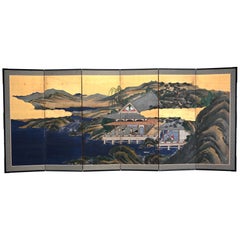
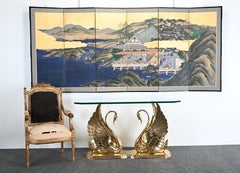
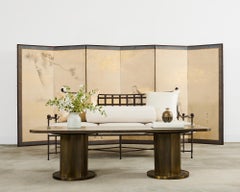
Edo-Style Six-Panel Japanese Byobu Screen with Gold Paint Landscape

Edo-Style Six-Panel Japanese Byobu Screen with Gold Paint Landscape

Located in Hamburg, PA

This Asian screen print is a stunning six-panel byobu (folding screen) featuring a traditional Japanese landscape.

Category

Antique 19th Century Edo Paintings and Screens

Materials

Wood, Paint, Paper

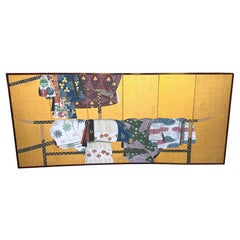
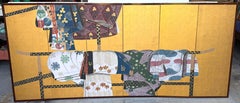
Japanese Six-Panel Byōbu/ Screen Depicting Kimonos and Obi Draped on an Ikō Rac

Japanese Six-Panel Byōbu/ Screen Depicting Kimonos and Obi Draped on an Ikō Rac

Located in West Palm Beach, FL

Mid-Century Japanese Six-Panel Byōbu/Screen Depicting Kimonos and Obi Draped on an Ikō Rack A beautifully composed Japanese six-panel byōbu screen depicting an elegant assemblage of...

Category

Mid-20th Century Japanese Showa Paintings and Screens

Materials

Brass

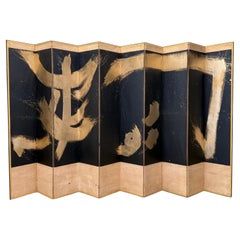
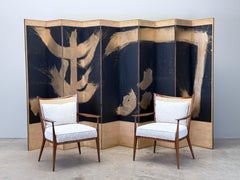
Golden 10 Panel Japanese Screen

Golden 10 Panel Japanese Screen

Located in Dallas, TX

Historically, folding screens (in Japanese 'byōbu', literally 'wind wall) were used to direct air circulation and create privacy in the flexible, open floor plan common in the tradit...

Category

Mid-20th Century Japanese Paintings and Screens

Materials

Wood, Paint, Paper

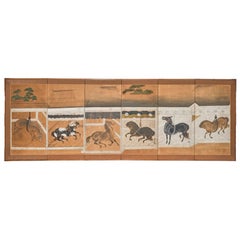
Japanese Six Panel Screen: Horses in Stable

Japanese Six Panel Screen: Horses in Stable

Located in Hudson, NY

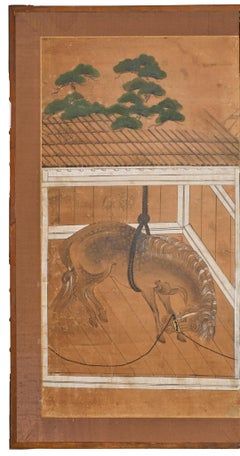
This is a beautiful and evocative antique Japanese six-panel folding screen (Byōbu), a classic example of the popular "Horses in Stable" (Umaya-zu) motif from the Edo Period (1603-18...

Category

Antique Early 19th Century Japanese Paintings and Screens

Materials

Brocade, Silk, Paper

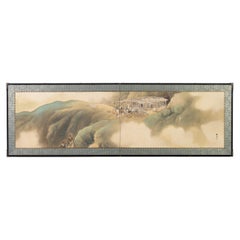
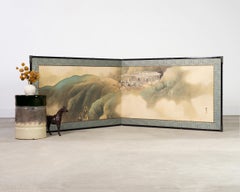
Japanese Taisho Two-Panel Landscape Screen Traveler Waystation

Japanese Taisho Two-Panel Landscape Screen Traveler Waystation

Located in Rio Vista, CA

An important and finely executed Japanese two-panel folding byōbu screen crafted in the Nihonga tradition, depicting a traveler’s waystation set within a mist-laden mountain landscape.

Category

Early 20th Century Japanese Taisho Paintings and Screens

Materials

Wood, Paper, Silk

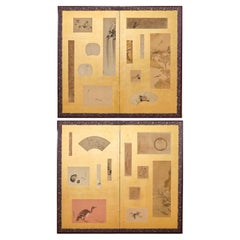
Pair of Japanese Two Panel Screens Edo Period Vignettes

Pair of Japanese Two Panel Screens Edo Period Vignettes

Located in Rio Vista, CA

Impressive pair of Japanese two-panel byobu screens featuring late 18th-century edo period applied vignettes, poems, and paintings in various formats over a dramatic gold leaf square...

Category

Antique 18th Century Japanese Edo Paintings and Screens

Materials

Gold Leaf

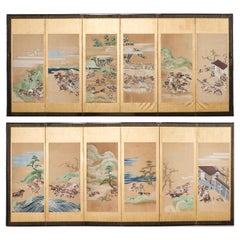
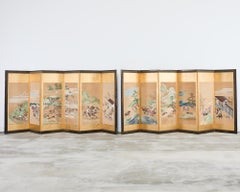
Pair of Japanese Edo/Tokugawa Screens Tale of Heiki

Pair of Japanese Edo/Tokugawa Screens Tale of Heiki

Located in Rio Vista, CA

Monumental pair of late 18th century Japanese Edo/Tokugawa period byobu screens depicting the battles between Taira and Minamoto.

Category

Antique 19th Century Japanese Edo Paintings and Screens

Materials

Brass, Gold Leaf

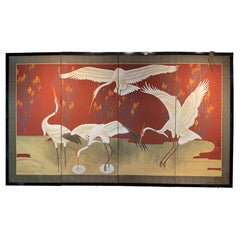
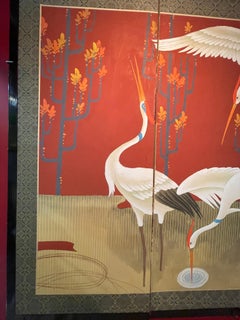
Japanese Shōwa Four-Panel Screen with Flying Cranes, Signed, circa 1950

Japanese Shōwa Four-Panel Screen with Flying Cranes, Signed, circa 1950

Located in New York, NY

Japanese Four-Panel Screen of Flying Cranes, Signed, Shōwa Period (1926–1989), circa 1950 A striking Japanese four-panel folding screen (byōbu) depicting an elegant gathering of red...

Category

Vintage 1950s Japanese Japonisme Paintings and Screens

Materials

Wood

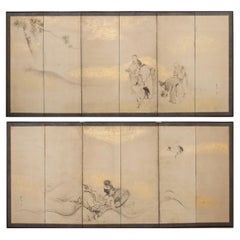
Pair of 18th Century Japanese Edo Screens of Chinese Immortals

Pair of 18th Century Japanese Edo Screens of Chinese Immortals

Located in Rio Vista, CA

Mesmerizing pair of late 18th/early 19th century Japanese Edo period byobu screens by Shibata Gito (Japanese 1780-1819).

Category

Antique 18th Century Japanese Edo Paintings and Screens

Materials

Silk, Wood, Paper

Japanese Edo Four-Panel Gold Leaf Samurai Battle Screen, circa 1800

Japanese Edo Four-Panel Gold Leaf Samurai Battle Screen, circa 1800

Located in New York, NY

Japanese Edo Period Four-Panel Byōbu Screen Depicting a Daimyō Samurai Procession An impressive and unusually large Japanese four-panel folding screen (byōbu) dating to the Edo peri...

Category

Antique 1850s Japanese Japonisme Paintings and Screens

Materials

Gold Leaf

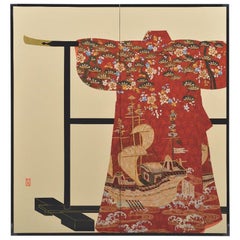
Japanese Large Red Silk Brocade Gilded Two Panel Folding Screen

Japanese Large Red Silk Brocade Gilded Two Panel Folding Screen

Located in Takarazuka, JP

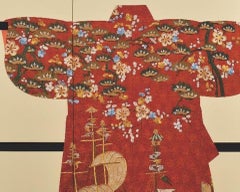
Exquisite contemporary Japanese two panel folding screen or "byobu" featuring genryoku style handcrafted silk raised kimono in cream and gold needlework on a mesmerizing red backgrou...

Category

21st Century and Contemporary Japanese Paintings and Screens

Materials

Gold

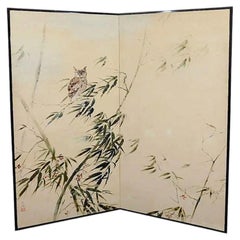
Japanese Meiji-Taisho Two-Panel Screen with Owl & Bamboo, circa 1915

Japanese Meiji-Taisho Two-Panel Screen with Owl & Bamboo, circa 1915

Located in New York, NY

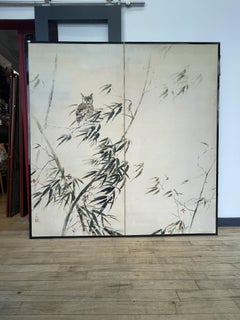
Japanese Meiji-Taisho Two-Panel Screen with Owl & Bamboo, circa 1915 A beautifully painted Japanese two-panel folding screen (byōbu) depicting a solitary owl perched quietly amo...

Category

Vintage 1910s Japanese Japonisme Paintings and Screens

Materials

Silk, Wood, Paper

Pair of Japanese Meiji Screens Blossoms of Spring, Summer and Autumn

Pair of Japanese Meiji Screens Blossoms of Spring, Summer and Autumn

Located in Rio Vista, CA

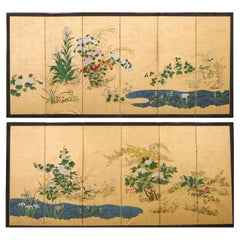
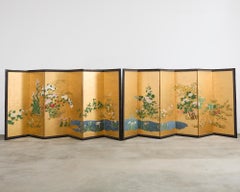
Amazing pair of late 19th/early 20th century Japanese Meiji period byobu screens depicting flowering plants and blossoms of the spring, summer, and autumn.

Category

Antique 19th Century Japanese Meiji Paintings and Screens

Materials

Brass, Gold Leaf

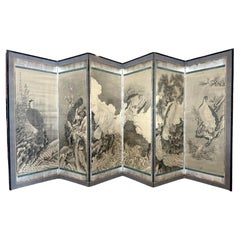
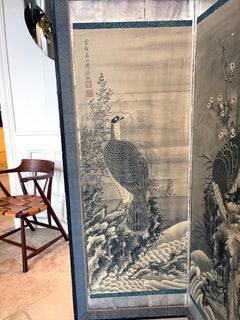
Rare Japanese Floor Screen of Perched Eagles Soga Shohaku Edo period

Rare Japanese Floor Screen of Perched Eagles Soga Shohaku Edo period

Located in Atlanta, GA

A rare six-panel Japanese folding floor screen (Byōbu) by Soga Shōhaku (1730-1781) from Edo period.

Category

Antique 18th Century Japanese Edo Paintings and Screens

Materials

Brocade, Wood, Paper

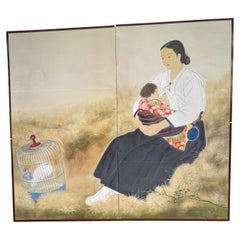
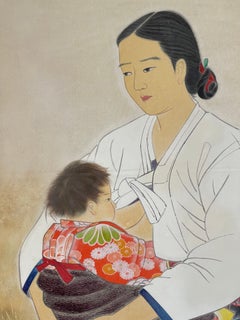
Japanese Shōwa Two-Panel Screen of Mother & Child by Shibata Suika, circa 1930

Japanese Shōwa Two-Panel Screen of Mother & Child by Shibata Suika, circa 1930

Located in New York, NY

Japanese Two-Panel Screen Depicting a Korean Mother Nursing Her Child by Shibata Suika, Shōwa Period, circa 1930 A beautifully executed Japanese two-panel folding screen (byōbu) by ...

Category

Vintage 1930s Japanese Japonisme Paintings and Screens

Materials

Wood

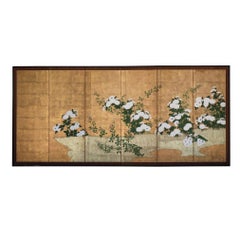
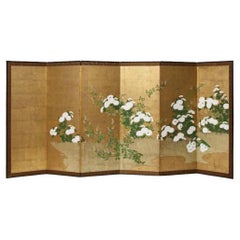
Kiku to Hagi Byobu, Rinpa School Style, Edo Period.

Kiku to Hagi Byobu, Rinpa School Style, Edo Period.

Located in Point Richmond, CA

A Chrysanthemum and Bush Clover painting on gold leaf six-panel folding screen, painted with clusters of leafy green chrysanthemum plants with white blossoms having moriage relief p...

Category

Antique Early 1800s Japanese Edo Paintings and Screens

Materials

Gold Leaf

Early 20th Century Japanese 6-Panel Gouache and Gold Leaf Painted Table Screen

Early 20th Century Japanese 6-Panel Gouache and Gold Leaf Painted Table Screen

Located in Morristown, NJ

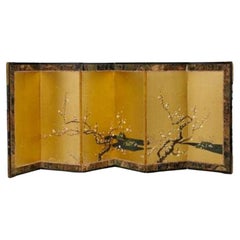
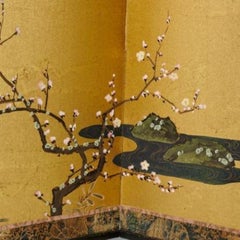
Plum blossoms are often mentioned in Japanese poetry as a symbol of spring. Japanese folding screens, or byobu (“wind screens”), are free-standing, portable, and typically ornamente...

Category

20th Century Japanese Showa Paintings and Screens

Materials

Gold Leaf

Japanese Edo Six-Panel Screen with Poetry & Court Figures, circa 1800

Japanese Edo Six-Panel Screen with Poetry & Court Figures, circa 1800

Located in New York, NY

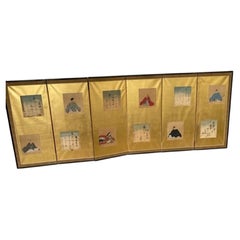
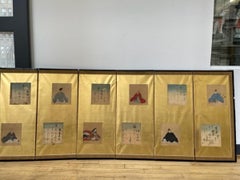
An elegant Japanese six-panel folding screen (byōbu) combining beautifully brushed classical calligraphy with finely painted portraits of Heian-period court nobles.

Category

Antique Early 1800s Japonisme Paintings and Screens

Materials

Wood, Paper

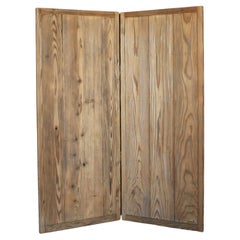
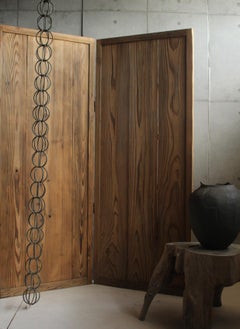
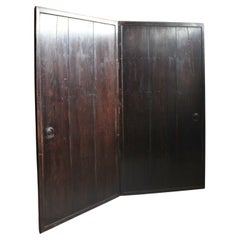
B47 Japanese antique, cedar Byobu folding screen, room dividers

B47 Japanese antique, cedar Byobu folding screen, room dividers

Located in Niiza, JP

Material: Cedar, wood 1 piece: Width 680 x Height 1690 x Depth 33 mm Expanded size: Width 1400 mm Folded size: Width 680 x Height 1690 x Depth 70 mm, weight 10 kg Packaging (4-5 mm t...

Category

Antique 19th Century Japanese Antiquities

Materials

Wood, Cedar

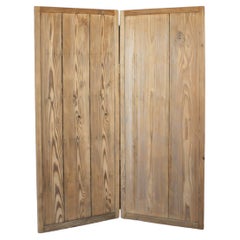
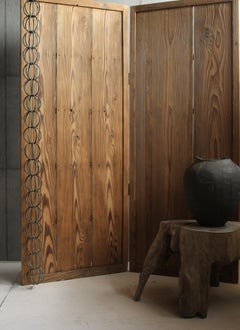
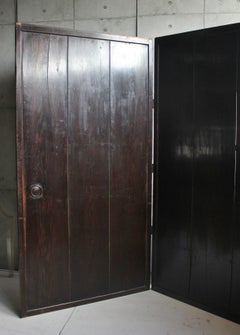
B40 Japanese antique, cedar Byobu folding screen, room dividers

B40 Japanese antique, cedar Byobu folding screen, room dividers

Located in Niiza, JP

Material: Cedar 1 piece: Width 680 x Height 1690 x Depth 33 mm Expanded size: Width 1400 mm Folded size: Width 680 x Height 1690 x Depth 70 mm, weight 10 kg Packaging (4-5 mm thick p...

Category

Antique 19th Century Japanese Furniture

Materials

Cedar, Wood

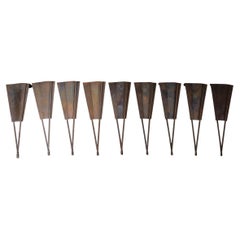
Rare Set of Japanese Byōbu Screen Copper Holders, 19th Century

Rare Set of Japanese Byōbu Screen Copper Holders, 19th Century

Located in Fukuoka, JP

A very rare and unusual set of Japanese byōbu (folding screen) holders, crafted in the elegant form of partially opened hand fans.

Category

Antique 19th Century Japanese Meiji Metalwork

Materials

Copper

B43 Japanese antique, pine, cedar Byobu folding screen, room dividers

B43 Japanese antique, pine, cedar Byobu folding screen, room dividers

Located in Niiza, JP

Material: Pine & cedar etc 1 piece: Width 900 x Height 1740 x Depth 30 mm Expanded size: Width 1800 mm Folded size: Width 900 x Height 1740 x Depth 60 mm, weight 14 kg Packaging (4-5...

Category

Antique 19th Century Japanese Furniture

Materials

Cedar, Pine

Lucien Leinfelder Two Panel Hand Painted Screen

Lucien Leinfelder Two Panel Hand Painted Screen

Located in Denton, TX

Mid-Century Modern Japanese style two panel byobu screen by Lucien Leinfelder (American 1932-2018).

Category

Mid-20th Century American Anglo-Japanese Paintings

Materials

Metal

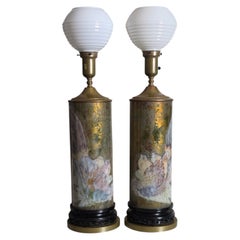
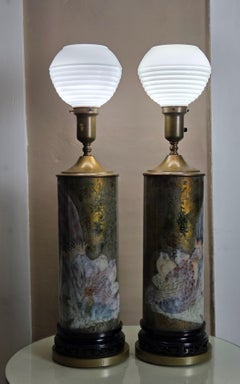
1960s Marbro Hollywood Regency "Onagadori" Blown Glass Table Lamps — A Pair

1960s Marbro Hollywood Regency "Onagadori" Blown Glass Table Lamps — A Pair

By The Marbro Lamp Company

Located in Camden, ME

For this highly exclusive series, Marbro’s designers sourced archival, continuous graphic underlays taken directly from a historic Japanese Edo-period masterpiece folding screen (byō...

Category

Mid-20th Century American Chinoiserie Table Lamps

Materials

Brass

  • 1
Get Updated with New Arrivals
Save "Japanese Screens Byobu", and we’ll notify you when there are new listings in this category.

Japanese Screens Byobu For Sale on 1stDibs

Choose from an assortment of styles, material and more with respect to the Japanese screens byobu you’re looking for at 1stDibs. Each Japanese screens byobu for sale was constructed with extraordinary care, often using metal, paper and wood. If you’re shopping for a Japanese screens byobu, we have 87 options in-stock, while there are 8 modern editions to choose from as well. Your living room may not be complete without a Japanese screens byobu — find older editions for sale from the 18th Century and newer versions made as recently as the 21st Century. A Japanese screens byobu is a generally popular piece of furniture, but those created in Mid-Century Modern, Hollywood Regency and Modern styles are sought with frequency. Robert Crowder each produced at least one beautiful Japanese screens byobu that is worth considering.
How Much is a Japanese Screens Byobu?

The average selling price for a Japanese screens byobu at 1stDibs is $1,598, while they’re typically $285 on the low end and $26,800 for the highest priced.

Finding the Right Paintings-screens for You

Traditional Asian paintings were often created on scrolls and folding screens. Artisans made screens that could be folded up or spread out by connecting several panels using hinges. Today, antique Asian folding screens and paintings are sophisticated decorative accents that can serve as makeshift partitions to ensure privacy.
The original folding screens were created by Chinese artists. The earliest record of screens comes from the 2nd century B.C., and surviving examples date back to the Ming dynasty. Chinese painting utilizes many of the same tools as calligraphy — these screens were crafted from wood with painted panels featuring striking art or calligraphy that told cultural stories or represented nature and life in the area.

The practice was introduced to Japan, where paintings for screens were made on paper and silk, in the 8th century. These paintings frequently feature subjects such as landscapes, animals, flowers and Buddhist religious themes. Along with screens for tea ceremonies and dance backgrounds, there were screens for use in Shinto and Buddhist temples.

In the 17th century, screens began to be imported to Europe where their popularity grew. Coco Chanel famously collected Coromandel folding screens.

Traditional Asian paintings can make a tasteful addition to any wall, and screens can be used as decoration or, in the case of larger iterations, as an aesthetic way to divide a large room. Browse the selection of antique Asian paintings and screens from a variety of styles and eras on 1stDibs.