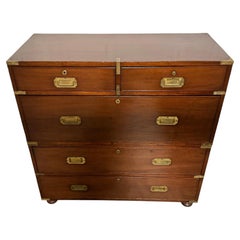
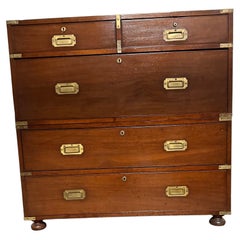
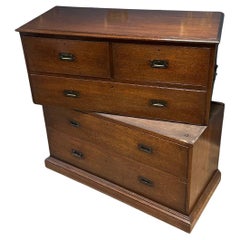
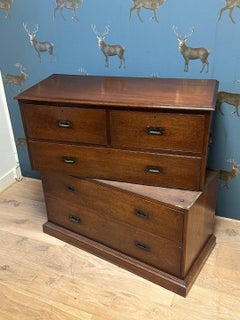
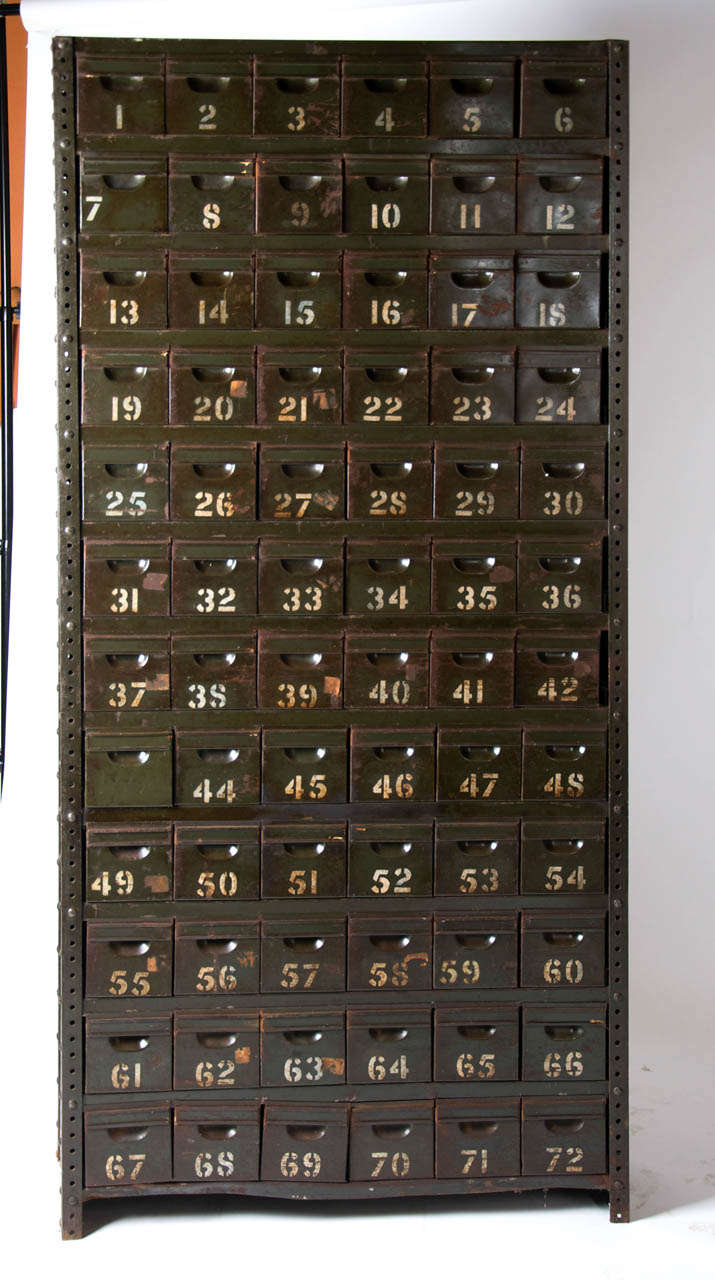
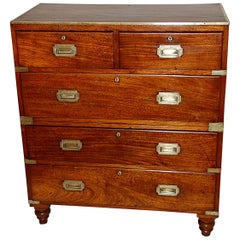
Choose from an assortment of styles, material and more with respect to the military parts cabinet you’re looking for at 1stDibs. Frequently made of
wood,
metal and
brass, every military parts cabinet was constructed with great care. Whether you’re looking for an older or newer military parts cabinet, there are earlier versions available from the 18th Century and newer variations made as recently as the 20th Century. A military parts cabinet is a generally popular piece of furniture, but those created in
Art Deco,
Georgian and
Victorian styles are sought with frequency.
Sometimes called “knock-down” furniture, campaign furniture was designed to be folded, collapsed, taken apart and packed flat to load onto a ship or a camel’s back. Although mobile furniture for military campaigns dates back to the Romans, the British Army in its global conquests in the 18th and 19th centuries defined the style with sturdy and elegant pieces. Even in a tent thousands of miles from London, a four-poster bed, dining table and seating could simulate the comforts of home.
Antique and vintage campaign-style furniture was also initially designed as propaganda. The mahogany and teak structures were part of a purposeful demonstration of power in these campaigns, with the colonizing military officers imposing their culture and view of what they considered “civilized” on a given land and its peoples. Designers and manufacturers including Thomas Butler, Ross & Co. of Dublin, and Morgan & Sanders contributed to the rapid production of this furniture as the British Empire expanded through Africa, Asia and Australia.
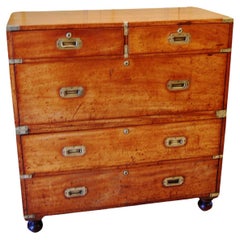
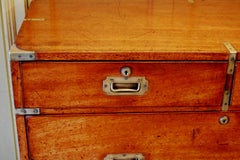
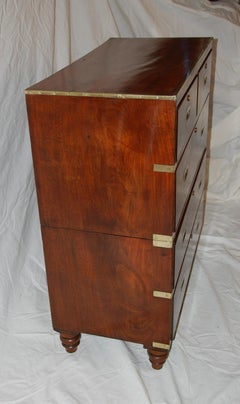
Campaign furniture was utilitarian as well as refined, fitted with recessed brass handles and brass angles on stackable chests and other case pieces to protect vulnerable corners. The Wellington chest was one of the most famous pieces to come out of this style, named for the Duke of Wellington, who slept in his campaign bed long after his battles were over.
The flexibility of campaign-style furniture would influence 20th-century Scandinavian modernists such as Kaare Klint, Mogens Koch and Arne Norell. For his 1930s Safari chair, Klint drew on the simple Roorkhee chair, named for a town in northern India. The lightweight and adaptable campaign-style seat was created in the late 19th century and had no fixed joinery. The Roorkhee’s influence can also be seen in the Wassily chair, a pared-down work of tubular metal and durable canvas conceived by legendary Bauhaus instructor Marcel Breuer.
Now, 21st-century designers like Jomo Tariku and Dokter and Misses are creating pieces that recognize the contributions of African artisans to campaign furniture in order to reframe this style without overlooking its difficult past.
Find a collection of authentic antique and vintage campaign bedroom furniture, chairs, decorative objects and other pieces on 1stDibs.
Shopping for a commode or a chest of drawers?
Commode is the French term for a low chest of drawers, but it is also sometimes used to denote any case piece with a particularly intricate design. The commode dates to circa 1700 France, where it was used as an alternative to a taller cabinet piece so as to not obscure paneled, mirrored or tapestried walls. Coffers, or chests, which were large wooden boxes with hinged lids and sometimes stood on ball feet, preceded chests of drawers, a fashionable cabinet furnishing that garnered acclaim for its obvious storage potential and versatility. The term commode was also used to refer to a piece of bedroom furniture — a washstand or nightstand that contained a chamber pot.
As time passed, French and British furniture makers led the way in the production of chests of drawers, and features like the integration of bronze and ornamental pulls became commonplace. Antique French commodes in the Louis XV style were sometimes crafted in mahogany or walnut, while an Italian marble top added a sophisticated decorative flourish. This specific type of case piece grew in popularity in the years that followed.
So, what makes a chest of drawers different from a common dresser? Dressers are short, and chests of drawers are overall taller pieces of furniture that typically do not have room on the top for a mirror as most dressers do. Tallboys and highboys are variations of the dresser form. Some chests of drawers have one column of four to six long drawers or three long drawers in their bottom section that are topped by a cluster of small side-by-side drawers on the top. To further complicate things, we sometimes refer to particularly short chests of drawers as nightstands.
Even though chests of drawers are commonly thought of as bedroom furniture to store clothing, these are adaptable pieces. A chest of drawers can house important documents — think of your walnut Art Deco commode as an upgrade to your filing cabinet. Nestle your chest near your home’s front door to store coats and other outerwear, while the top can be a place to drop your handbag. Add some flair to your kitchen, where this lovable case piece can hold pots, pans and even cookbooks.
When shopping for the right chest of drawers for your home, there are a few key things to consider: What will you be storing in it? How big a chest will you need?
Speaking of size, don’t dream too big. If your space is on the smaller side, a more streamlined vintage mid-century modern chest of drawers, perhaps one designed by Paul McCobb or T.H. Robsjohn-Gibbings, may best suit your needs.
At 1stDibs, we make it easy to add style and storage to your home. Browse our collection of antique and vintage commodes and chests of drawers today.