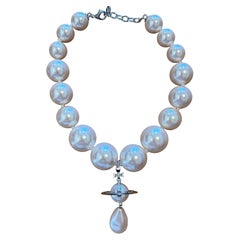
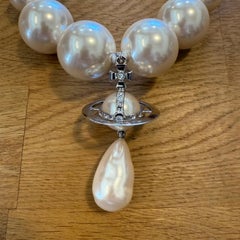
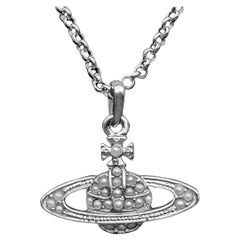
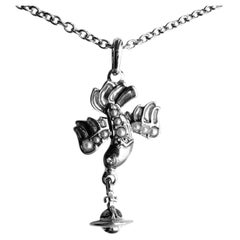
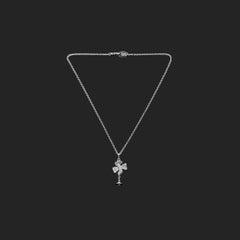
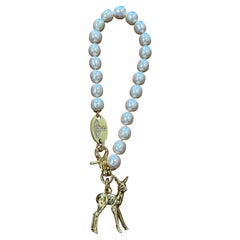
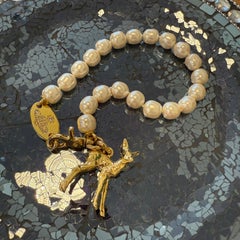
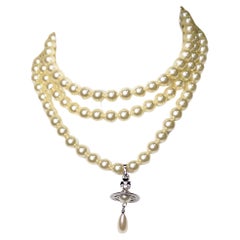
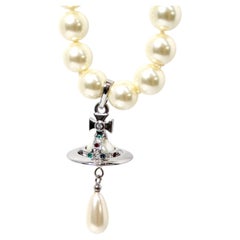
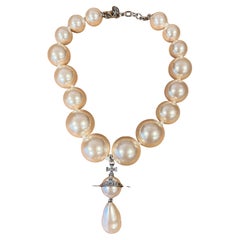
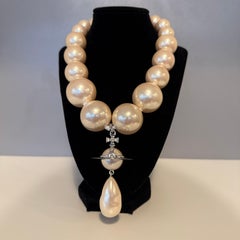
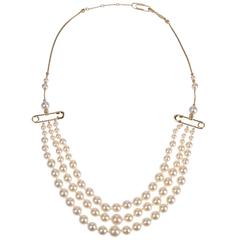
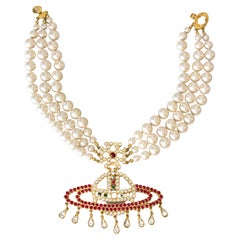
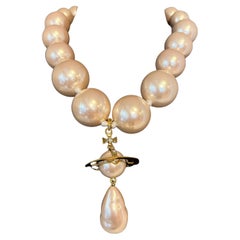
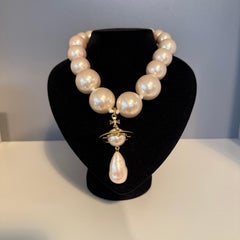
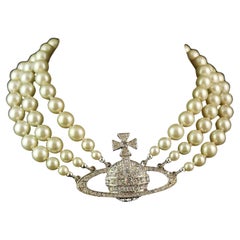
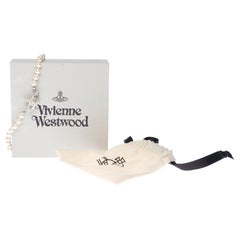
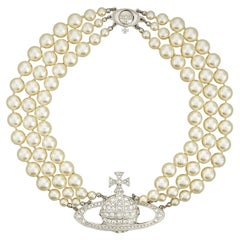
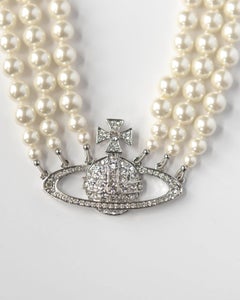
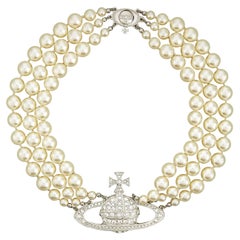
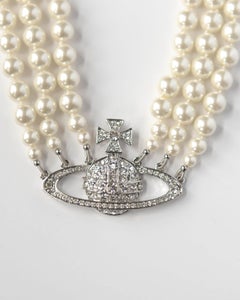
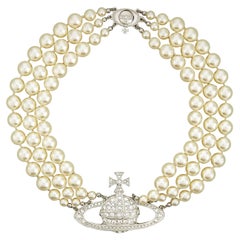
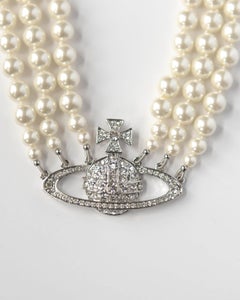
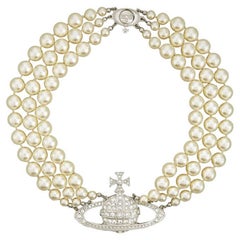
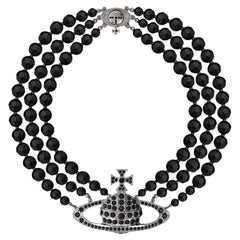
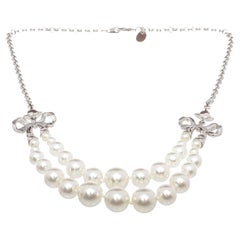
You are likely to find exactly the vivienne westwood pearl necklace you’re looking for on 1stDibs, as there is a broad range for sale. Each design created in this style — which was crafted with great care and often made from
Brass and
Silver — can elevate any look. You can easily find a 1 antique edition and 10 modern creations to choose from as well. Making the right choice when shopping for a vivienne westwood pearl necklace may mean carefully reviewing examples of this item dating from different eras — you can find an early iteration of this piece from the 20th Century and a newer version made as recently as the 21st Century, both of which have proven very popular over the years. A vivienne westwood pearl necklace can be a stylish choice for most occasions, but
Crystal rings, from our inventory of 1, can add a particularly distinctive touch to your look, day or night. Today, if you’re looking for an
uncut version of this piece and are unable to find the perfect match, our selection also includes alternatives. When shopping for a vivienne westwood pearl necklace, you’ll find that there are less available pieces for unisex or
men today than there are for
women.
Prices for a vivienne westwood pearl necklace can differ depending upon size, time period and other attributes — at 1stDibs, these accessories begin at $400 and can go as high as $1,215, while this accessory, on average, fetches $680.
For someone who regularly swatted away the industry that made her, audacious British fashion designer Dame Vivienne Westwood certainly knew her way around a garment. And she knew how to provoke. “I don’t follow fashion,” Westwood once told the New York Times. “I’ve never been interested in it.” Collectors are certainly interested in her work, and vintage Vivienne Westwood dresses, handbags, lingerie and jackets have become very desirable over the years.
Westwood was born Vivienne Isabel Swire in a village in Derbyshire, in central England, but moved to London as a teen. In the early 1960s, she began to make her own necklaces and other jewelry and met an artist, activist and entrepreneur named Malcolm McLaren. They became involved romantically and she made clothes for him in the style of the Teddy Boys — the city’s music-crazed, occasionally violent teenagers at the time who wore high-waisted trousers and tailored velvet blazers that drew on Edwardian-era fashions.
Westwood and McLaren opened a vintage shop on King’s Road in London in 1971. The flared denim and peasant blouses of the 1960s, then still popular with the “peace and love” set, didn’t hold any weight for Westwood. Instead, she was interested in provocative, edgy apparel. She repaired used clothing and endeavored to create bold new designs from scratch.
Together Westwood and McLaren sold older rock-and-roll records, customized T-shirts with antiestablishment slogans, biker jackets and snug trousers inspired by the Marlon Brando film The Wild One as well as bondage fetish wear. The shop, once called Let It Rock and then Too Fast to Live, Too Young to Die before Sex became a more appropriate moniker, evolved into a youth mecca. The DIY garments — zippered tops, burnt tees emblazoned with anarchist messages — flew off the shelves. More notably, it brought punk to the masses.
Westwood was soon dressing the Sex Pistols, a band that McLaren managed, all the while bridging the gap between music and fashion in a manner that has reverberated throughout the industry for decades.
In 1981, the couple’s first fashion show marked the debut of their Pirate collection — a swashbuckler-themed line that sprang from Westwood’s research into Indigenous Americans and the “power garments” of the Louis XIV era. The collection’s ample proportions and cutting-edge tailoring countered punk’s geometry and tight latex fits as well as what rocker Adam Ant called the “Puritanism” that plagued England at the time. The Pirate collection’s enduring influence on the world of fashion as well as the theatrical work of designers such as John Galliano and Alexander McQueen is undeniable.
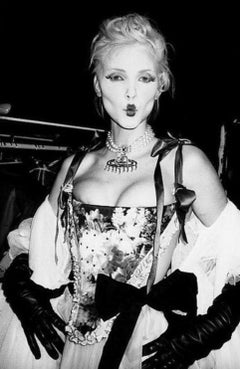
For the colorful corsets of her 1990 Portrait collection, Westwood drew on 18th-century oil paintings — her models donned the pearl necklaces that have become a social media star and a favorite of influencers and fashion lovers all over the world. For a jacket-and-shorts suit from her Fall/Winter 1996–97 Storm in a Teacup line, the designer used the extreme asymmetry of a tartan mash-up to confront, according to Westwood, “the horror of uniformity and minimalism.”
The self-taught Westwood enjoyed a rapid ascent in fashion, with British society embracing her looks and Vogue immortalizing them in its glossy pages. She garnered accolades for introducing corsets to the runway and dressed Kate Moss and Helena Bonham Carter. And an original Vivienne Westwood wedding dress is featured in 2008’s Sex and the City film.
The fires of political and environmental activism burned brightly for Westwood: She was a Greenpeace ambassador, having designed the organization’s official “Save the Arctic” logo; her clothing brand is committed to using recycled canvas and other eco-friendly materials in the production process; and in 2020, she protested the extradition of Julian Assange by suspending herself in a bird cage outside London’s Old Bailey court. But she will always be the grande dame of British design.
Find an extraordinary range of vintage Vivienne Westwood shirts, shoes, gowns and other items today on 1stDibs.
We are fortunate to know much of the world’s long and dazzling history of necklaces, as this type of jewelry was so treasured that it was frequently buried with its owners. Today, Van Cleef necklaces, Tiffany necklaces and Cartier necklaces are some of the most popularly searched designer necklaces on 1stDibs.
Lapis lazuli beads adorned necklaces unearthed from the royal graves at the ancient Iraqi civilization of Sumer, while the excavation of King Tut’s burial chamber revealed a sense of style that led to a frenzy of Art Deco designs, with artisans of the 1920s seeking to emulate the elegant work crafted by Ancient Egypt’s goldsmiths and jewelry makers.
In ancient times, pendant necklaces worn by royalty and nobles conferred wealth and prestige. Today, wearing jewelry is about personal expression: Luxury diamond necklaces exude confidence and can symbolize the celebratory nature of a deep romantic relationship, while paper-clip chain-link necklaces designed by the likes of goldsmith Faye Kim are firmly planted in the past as well as the present. Kim works exclusively with eco-friendly gold, and these fashionable, fun accessories owe to the design of 19th-century watch fobs.
For some, necklaces are thought of as being a solely feminine piece, but this widely loved accessory has been gender-neutral for eons. In fact, just as women rarely took to wearing a single necklace during the Renaissance, men of the era layered chains and valuable pendants atop their bejeweled clothing. In modern times, the free-spirited hippie and counterculture movements of the 1960s saw costume-jewelry designers celebrating self-expression through colorful multistrand necklaces and no shortage of beads, which were worn by anyone and everyone.
Even after all of these years, the necklace remains an irrefutable staple of any complete outfit. Although new trends in jewelry are constantly emerging, the glamour and beauty of the past continue to inform modern styles and designs. In a way, the cyclical history of the necklace differs little from its familiar looped form: The celebrated French jewelry house Van Cleef & Arpels found much inspiration in King Tut, and, now, their Alhambra collection is a go-to for modern royals. Vintage David Webb necklaces — whose work landed him on the cover of Vogue in 1950, two years after opening his Manhattan shop — were likely inspired by the ornamental styles of ancient Greece, Mesopotamia and Egypt.
On 1stDibs, browse top designers like Dior, Chanel and Bulgari, or shop by your favorite style, from eye-catching choker necklaces to understated links to pearl necklaces and more.