Arbit Blatas Paintings

Lithuanian, 1909-1999
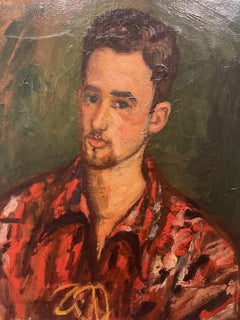
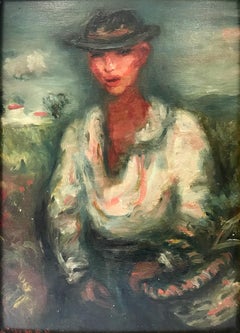
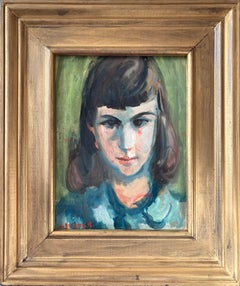
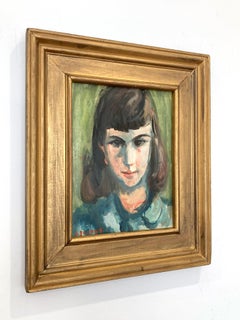
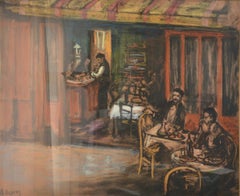
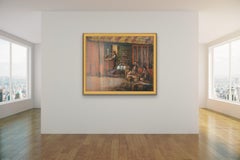
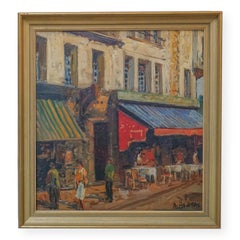
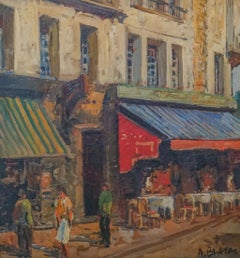
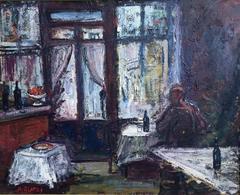
Arbit Blatas (1908–1999) was a Lithuanian-born French artist, widely recognized for his contributions as a painter, sculptor, and lithographer. He was part of the École de Paris (Paris School), a group of international artists who made Paris their home and created influential works during the early to mid-20th century. Blatas was born Arbuth Notovich in Kaunas, Lithuania, but he moved to Paris at a young age to pursue his artistic career. In Paris, he became associated with other notable artists, including Chaim Soutine, Marc Chagall, Pablo Picasso, and Amedeo Modigliani. Blatas was inspired by these artists but developed his own distinctive style. Blatas initially gained recognition for his portraits, landscapes, and still lifes, as well as for his work in lithography. His paintings often exhibited a vibrant color palette and expressive brushwork, typical of modernist traditions. His portraits captured the emotional essence of his subjects, many of whom were cultural figures from the worlds of art, music, and theater. Later in his career, Blatas focused more on sculpture. He is especially noted for his Holocaust memorial sculptures. His most famous work is the "Monument of the Holocaust", a powerful series of bronze reliefs and sculptures commemorating the victims of the Holocaust. These sculptures are installed in several locations around the world, including: Venice, Italy (the Campo del Ghetto Nuovo in the Jewish Ghetto); Paris, France (the Mémorial des Martyrs de la Déportation); New York City, USA (at the Museum of Jewish Heritage). The Monument of the Holocaust series is a deeply emotional tribute to the Jewish victims of Nazi persecution, reflecting Blatas’s personal connection to the tragedy, as his family members perished in the Holocaust. Blatas was married to Regina Resnik, a famous American opera singer. Their marriage led to his growing involvement with the opera world, and he produced many portraits of legendary opera figures such as Maria Callas. He also created set designs and stage art for various opera productions. Arbit Blatas remained active as an artist throughout his life. His works are exhibited in major collections and museums across the world, including the Musée d’Art Moderne in Paris and the Metropolitan Museum of Art in New York. Blatas passed away in 1999, leaving behind a legacy of art that spans painting, sculpture, and lithography, with a particular focus on human expression and historical memory. Blatas's ability to capture both the joy and tragedy of the human experience through his art, particularly his moving Holocaust memorials, makes him a figure of lasting significance in 20th-century art.
to
1
Overall Width
to
Overall Height
to
1
1
1
1
1
1
1
1
1
1
16
763
759
754
666
1
1
Artist: Arbit Blatas
Related Items
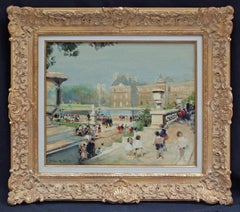
Pond of the Tuileries Garden in Paris

Pond of the Tuileries Garden in Paris

By Jules René Hervé

Located in Saint-Ouen, FR

HERVE Jules René (1887-1981) Pond of the Tuileries Garden in Paris Oil on canvas signed low right Old frame gilded with leaves Dim canvas : 46 X 55 cm Dim frame : 67 X 76 cm HERVE J...

Category

Mid-20th Century Post-Impressionist Arbit Blatas Paintings

Materials

Oil

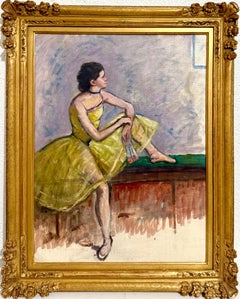
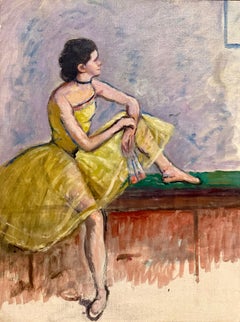
Post Impressionist Ballet Dancer Oil Painting Louis Kronberg French Ballerina

Post Impressionist Ballet Dancer Oil Painting Louis Kronberg French Ballerina

By Louis Kronberg

Located in Surfside, FL

Louis Kronberg (American 1872-1965) Oil on canvas. Hand signed lower right. (very faintly, almost illegibly) "Ballerina" Dimensions: 24 inches high x 18 inches wide. Total Framed ...

Category

20th Century Post-Impressionist Arbit Blatas Paintings

Materials

Canvas, Oil

1960s Vintage Swedish Oil Painting Fish Market Scene by Modernist Henry Eldin

1960s Vintage Swedish Oil Painting Fish Market Scene by Modernist Henry Eldin

Located in Stockholm, SE

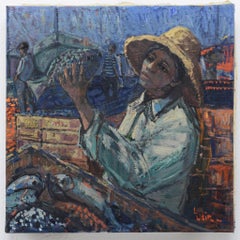
This mid-century oil on canvas by the renowned Swedish modernist Henry Eldin (b. 1921) reveals an expressive harbour scene, where a young woman purchases fish against a backdrop of p...

Category

Mid-20th Century Post-Impressionist Arbit Blatas Paintings

Materials

Canvas, Wood, Oil

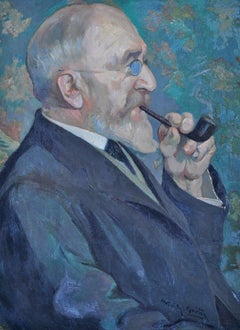
Gentleman with a Pipe - 1930's French Post Impressionist Portrait Oil Painting

Gentleman with a Pipe - 1930's French Post Impressionist Portrait Oil Painting

Located in Sevenoaks, GB

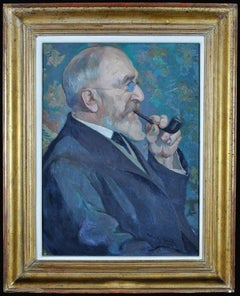
* No US duty or taxes to pay on works of art * A striking 1930's French post-impressionist oil on board portrait of a gentleman smoking a pipe by Antonin Guéton. Excellent quality...

Category

1930s Post-Impressionist Arbit Blatas Paintings

Materials

Oil, Board

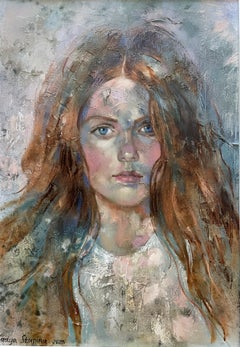
"Elisabeht" Original contemporary portrait. Vertical. oil on hardboard

"Elisabeht" Original contemporary portrait. Vertical. oil on hardboard

Located in Oslo, NO

In my artwork, I've poured my soul into capturing the complex tapestry of human emotion. With each stroke of oil paint, I've interwoven a sense of resilience amidst adversity, the su...

Category

2010s Post-Impressionist Arbit Blatas Paintings

Materials

Oil, Acrylic, Board

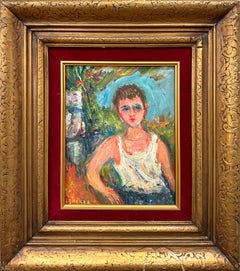
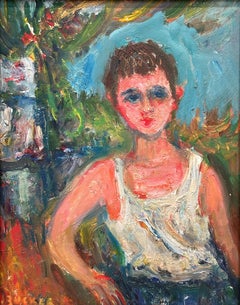
"Portrait of Young Boy" Post-Impressionism French Oil Painting on Panel Framed

"Portrait of Young Boy" Post-Impressionism French Oil Painting on Panel Framed

By Jacques Zucker

Located in New York, NY

An outstanding oil painting depicitng a portrait of a yong boy with a landscape in the background. The bright colors and quick brush strokes are what makes this piece so attractive a...

Category

20th Century Post-Impressionist Arbit Blatas Paintings

Materials

Oil, Panel

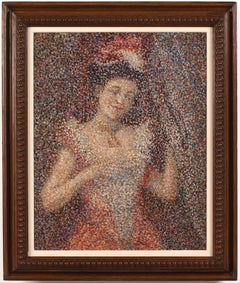
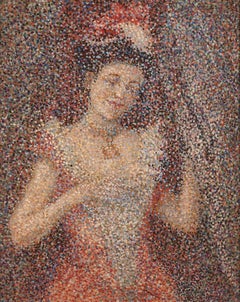
Exceptional French Pointillist Painting – Young Woman at the Theatre, circa 1895

Exceptional French Pointillist Painting – Young Woman at the Theatre, circa 1895

Located in Paris, Île-de-France

Young Woman at the Theatre French Pointillist School, circa 1895 Oil on cardboard 50 x 40.5 cm Unsigned A refined French Pointillist painting dating to the late 19th century, depic...

Category

1890s Post-Impressionist Arbit Blatas Paintings

Materials

Oil, Cardboard

Le Turban Orange by Tamara de Lempicka

Le Turban Orange by Tamara de Lempicka

By Tamara de Lempicka

Located in New Orleans, LA

Tamara De Lempicka 1898-1980 Polish Le turban orange (The Orange Turban) Oil on canvas Wrapped in a spectacular orange headdress, the alluring woman ...

Category

20th Century Post-Impressionist Arbit Blatas Paintings

Materials

Oil

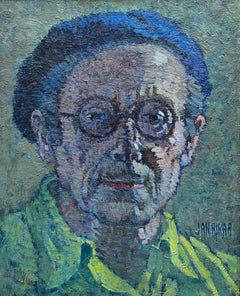
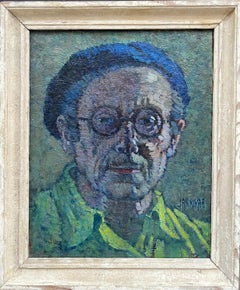
Artist's self portrait

Jan RikarArtist's self portrait

$2,670

H 15.48 in W 12.49 in

Artist's self portrait

Located in PARIS, FR

Self portrait by Jan Rikar Oil on canvas 39,3 x 31,7 cm (48,3 x 40,4 cm with frame) Signed lower right Inscription on the back : "A Madame et Monsieur le Docteur G - Jaubon (?) - a...

Category

20th Century Pointillist Arbit Blatas Paintings

Materials

Canvas, Oil

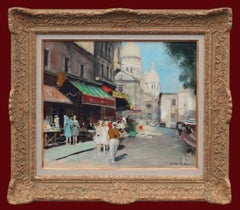
Painting 20th Century Post Impressionist Paris Montmartre

Painting 20th Century Post Impressionist Paris Montmartre

By Jules René Hervé

Located in Saint-Ouen, FR

HERVE Jules René (1887-1981) Tourists in Paris Montmartre Oil on canvas signed low right Gault framer (Paris) Dim canvas : 46 X 55 cm Dim frame : 66 X 75 cm HERVE Jules René (1887-19...

Category

Mid-20th Century Post-Impressionist Arbit Blatas Paintings

Materials

Oil

"Young Self Portrait" Post-Impressionism French Oil Painting on Board of Figure

"Young Self Portrait" Post-Impressionism French Oil Painting on Board of Figure

By Jacques Zucker

Located in New York, NY

This painting depicts a whimsical portrait of a self-portrait of the artist at a younger age. The bright colors and quick brush strokes are what makes this painting so attractive and...

Category

Mid-20th Century Post-Impressionist Arbit Blatas Paintings

Materials

Oil, Board

"Portrait of Young Girl with Blue Shirt" Post-Impressionist French Oil Painting

"Portrait of Young Girl with Blue Shirt" Post-Impressionist French Oil Painting

By Jacques Zucker

Located in New York, NY

This painting depicts a whimsical portrait of a young girl with short brown hair against a light green background and she wears a blue dress. An emotion is felt with in her face. The...

Category

20th Century Post-Impressionist Arbit Blatas Paintings

Materials

Oil, Wood Panel, Laid Paper

Previously Available Items
Café in Ceret France ARBIT BLATAS 1930 LARGE Pastel ink wash on board LITHUANIAN

Café in Ceret France ARBIT BLATAS 1930 LARGE Pastel ink wash on board LITHUANIAN

By Arbit Blatas

Located in Rancho Santa Fe, CA

Arbit Blatas (1908–1999) was a Lithuanian-born French artist, widely recognized for his contributions as a painter, sculptor, and lithographer. He was part of the École de Paris (Par...

Category

1930s Modern Arbit Blatas Paintings

Materials

Board

French Impressionist Parisian street scene Figures and Cafe

French Impressionist Parisian street scene Figures and Cafe

By Arbit Blatas

Located in New York, NY

French Parisian Street scene with figures and cafes by Arbit Blatas (1908-199). Oil on canvas, circa 1970's. Signed Lower right. Displayed in a modernist frame, overall with frame...

Category

1970s American Impressionist Arbit Blatas Paintings

Materials

Oil

Au Cafe

Au Cafe

By Arbit Blatas

Located in Los Angeles, CA

ARBIT BLATAS "AU CAFE" OIL ON CANVAS, SIGNED LITHUANIAN-AMERICAN, C.1950 25 X 31 INCHES Arbit Blatas 1908-1999 Born in Kaunas on 19 November 1908, Arbit Bla...

Category

1950s Post-Impressionist Arbit Blatas Paintings

Materials

Canvas, Oil

View of Paris

View of Paris

By Arbit Blatas

Located in Los Angeles, CA

ARBIT BLATAS "PARIS VIEW" OIL ON PANEL, SIGNED LITHUANIAN, WORKED IN FRANCE, C.1940 9.25 X 15.75 INCHES Arbit Blatas 1908-1999 Born in Kaunas on 19 November 1908...

Category

1940s Post-Impressionist Arbit Blatas Paintings

Materials

Oil, Panel

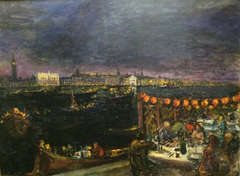
Festa del Redentore

Festa del Redentore

By Arbit Blatas

Located in Los Angeles, CA

Fantastic masterpiece painting from world renowned artist Arbit Blatas. Never before offed for sale, come directly from the family of the artist. Arbit Blatas Arbit Blatas (né Nicolai Arbitblatas) was born in Kaunas, Lithuania on November 19, 1908. He was a precocious talent who began exhibiting in his native country at the age of 15. Soon afterwards, he left for Paris and, at the age of 21, became the youngest member of an illustrious group of artists known as the School of Paris. When Blatas was 24, the Jeu de Paume in Paris acquired its first painting of the young artist, who had already become a colleague and friend of many of the great figures of the Paris art world, such as Vlaminck, Soutine, Picasso, Utrillo, Braque, Zadkine, Léger and Dérain. He was to paint and sculpt them all, as well as Bonnard, Vuillard, Matisse, Dufy, Van Dongen, Cocteau, Marquet and many others. His 30 portraits in oil and bronze are considered a unique document of the painters and sculptors of that dynamic period in 20th-century French painting.. In the 1930s, Blatas exhibited in London and New York, as well as in his adoptive home of Paris. Fleeing Nazi-occupied Europe in 1941 for the United States, Blatas became an American citizen and solidified his reputation among the front ranks of contemporary American painters. After the war, Blatas divided his life between New York and France, where, in 1947, he was elected a life member of the Salon D’Automne. His life-size bronze of his colleague and friend Chaim Soutine, created in 1967, was highly admired by André Malraux. In 1987, the City of Paris installed the statue in Montparnasse in the square of the Gaston Baty and conferred on Blatas the Médaille de Vermeil. A life-size statue of another close friend and colleague, Jacques Lipchitz, now stands in the garden of the Hotel de Ville next to the Museum in Boulogne. In 1978, Arbit Blatas was named Chevalier de la Légion d’Honneur by the French Government for his contribution to French art as an outstanding member of the School of Paris, and in 1994 was promoted to the rank of Officier de la Légion d’Honneur. The Holocaust Blatas’ parents were deported from Lithuania in 1941. His mother died in the Studthof concentration camp. His father miraculously survived Dachau; after the war, Blatas returned to France to bring his father with him to the United States. After the death of his mother, Blatas turned his back on the Holocaust until the late 1970s, when it burst forth in the artist’s oeuvre and remained a recurring theme in many major works. His black-and-white drawings memorializing the unspeakable events of that time appeared in the 1978 American television series, “Holocaust.” The drawings became the basis for four public memorials, consisting of seven powerful bas-reliefs, known as The Monument of the Holocaust, now on permanent display in four countries: Italy, France, The United States and Lithuania. The first edition of this monument was installed in the historic Ghetto of Venice on April 25th, 1980, the National Holiday of Liberation from the Nazis. On that occasion, Mayor Mario Rigo decorated Blatas with the gold medal Venezia Riconoscente. On September 19th, 1993, in the same Historic Ghetto of Venice, President of Italy Oscar Scalfaro honored Blatas by personally dedicating his sculpture The Last Train, a monument honoring the 50th anniversary of the deportation of the Jews from the Venetian Ghetto. The second edition of The Monument of the Holocaust was dedicated at the Shrine of the Unknown Jewish Martyrs in Paris on April 23, 1981. The third edition was placed by the Anti-Defamation League in Hammerskjold Plaza, across from the United Nations in New York on April 25, 1982. In 2009, this edition was installed permanently at the Hebrew Union College-Jewish Institute of Religion in New York City. In 2003, the fourth and final edition of this powerful series of sculptures was donated posthumously by his widow as part of the consecration of the memorial at Fort Nine in Blatas’ native Kaunas, Lithuania, the notorious location from which Blatas’ parents were deported in 1941. Marcel Marceau and The Threepenny Opera Two other major subjects became leitmotifs in Blatas’ work: Marcel Marceau and The Threepenny Opera. Both inspired the artist in paintings, sculpture, and a third medium for which Blatas became widely appreciated: lithography. Beginning in the 1950s, the artist’s great friend, Marcel Marceau, appears in all shapes, poses and sizes: from large portraits to small-scale studies, to sculptures, to sets of lithographs that capture the famous mime in mid-air. Through a magical coincidence, Blatas attended the world premiere of The Threepenny Opera in Berlin in 1928; the groundbreaking musical theatre work by Kurt Weill and Berthold Brecht would inspire Blatas for the next 70 years. His canon of work depicting scenes and characters from The Threepenny Opera includes 18 portraits, 10 sculptures, several large canvases and sets of color and black-and-white lithographs. The outstanding preface by the legendary Lotte Lenya, Weill’s widow, to the first edition of Threepenny lithographs, published in 1962, pays tribute to Blatas’ profound understanding of the work. In 1984, the Threepenny Opera exhibition was displayed at Venice’s Teatro Goldoni; in 1986, at the Museum of the City of New York and the Goethe Institute in Toronto. In May 1994, the Grosvenor Gallery in London presented the exhibition called “Arbit Blatas and his World of Music and Theatre.” In 2000 and 2001, respectively, the entire Threepenny Opera collection appeared as part of Kurt Weill Centenary celebrations at Belmont College, Nashville, Tennessee, and the Leubsdorf Gallery, Hunter College, New York. Career as Stage Designer During the 1970s and 1980s, Blatas designed scenery and costumes for nine international opera productions in collaboration with his wife, the renowned mezzo-soprano, Regina Resnik, as stage director. These productions included Elektra (Teatro La Fenice, Venice; Teatro Sao Carlos, Lisbon; Opéra du Rhin, Strasbourg); Carmen (Hamburg State Opera); Salome (Teatro Sao Carlos); Falstaff (Teatre Wielki, Warsaw; Teatro la Fenice; Teatro Sao Carlos; Festival of Madrid); The Queen of Spades (Vancouver Opera Association; Sydney Opera House); and The Bear and The Medium (Teatro Sao Carlos). The 1980s and 1990s saw major exhibitions of Blatas’ work, including several devoted to the School of Paris. In Venice, in 1982, the School of Paris portraits became a major exhibition at the Church of San Samuele under the joint auspices of the Mayor of Paris, Jacques Chirac, and the Mayor of Venice, Mario Rigo. Le Musée Bourdelle offered the first major exhibition in Paris of the portrait collection in 1986. In 1990, the entire collection of the School of Paris, portraits, drawings and bronzes, were shown at the Musée des Années Trentes in Boulogne-Billancourt, which subsequently acquired the entire collection now permanently installed in galleries dedicated to Blatas. In 1996, the Eastlake Gallery of New York presented Blatas in an exceptional exhibition entitled “Aspects of Venice.” In 1997, the Beacon Hill Gallery, also in New York, presented a landmark exhibition of more than 100 of Blatas’ works. From September 2008 through July 2009, the 100th anniversary of the birth of Arbit Blatas was celebrated in “Arbit Blatas: A Centenary Exhibition,” at the Hebrew Union College-Jewish Institute of Religion in New York. This exhibition brought together all the major themes and media of Blatas’ diverse oeuvre for the first time: French and Venetian landscapes, music and theatre subjects in painting, sculpture and lithographs, the School of Paris in sculpture, and scenic designs. The Holocaust was honored in the fourth edition of Monument of the Holocaust and four towering, major paintings. Blatas was an artist of enormous range. His vivid colors and joie de vivre extend through his entire canon of paintings: landscapes, portraits and still-lifes. The distinguished French art critic, Jean Bouret, summed the artist up this way: “He is color, his palette is color, exuberant and sensual, as is the man.” On the other end of Blatas’ artistic spectrum, the noted Italian art historian Enzo di Martini wrote of the Monument of the Holocaust: “In complete contrast to his paintings, these bronzes are hammered and chiseled in anger and tragedy.” Arbit Blatas passed away on April 27, 1999 at his home in New York City. The artist exhibited regularly in the principal galleries of New York, Paris and London His works are also included in some of the most valued private international art collections. Some of his exhibitions included: NEW YORK - Pierre Matisse Gallery; Associated American Artists; French Art Gallery; Bignou Gallery; Fine Arts Associates; Hirschl & Adler Galleries, Inc.; Eastlake Gallery; Beacon Hill Fine Arts Gallery; PARIS - Galerie Zborowski; Salon D'Automne; Salon des Tuileries; Galerie Mouradian-Van Leer; Galerie Mouradian-Vallotton; Salon Populiste; Galerie de l'Elysée; Galerie André Weil; Galerie Bernheim-Jeune; Galerie René Drouet; LONDON - Wildenstein Gallery; Grosvenor Gallery; Archer Gallery; Fine Arts Society; Redfern Gallery; VENICE - Gritti Palace...

Category

1960s Post-Modern Arbit Blatas Paintings

Materials

Canvas, Oil

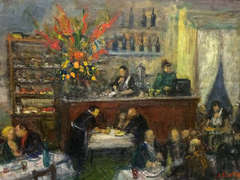
Chez Andre

Chez Andre

By Arbit Blatas

Located in Los Angeles, CA

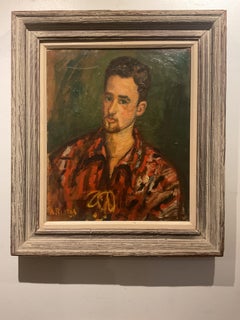
Masterpiece from Arbit Blatas, never for sale before, from the family collection. Arbit Blatas Arbit Blatas (né Nicolai Arbitblatas) was born in Kaunas, Lithuania on November 19, 1908. He was a precocious talent who began exhibiting in his native country at the age of 15. Soon afterwards, he left for Paris and, at the age of 21, became the youngest member of an illustrious group of artists known as the School of Paris. When Blatas was 24, the Jeu de Paume in Paris acquired its first painting of the young artist, who had already become a colleague and friend of many of the great figures of the Paris art world, such as Vlaminck, Soutine, Picasso, Utrillo, Braque, Zadkine, Léger and Dérain. He was to paint and sculpt them all, as well as Bonnard, Vuillard, Matisse, Dufy, Van Dongen, Cocteau, Marquet and many others. His 30 portraits in oil and bronze are considered a unique document of the painters and sculptors of that dynamic period in 20th-century French painting.. In the 1930s, Blatas exhibited in London and New York, as well as in his adoptive home of Paris. Fleeing Nazi-occupied Europe in 1941 for the United States, Blatas became an American citizen and solidified his reputation among the front ranks of contemporary American painters. After the war, Blatas divided his life between New York and France, where, in 1947, he was elected a life member of the Salon D’Automne. His life-size bronze of his colleague and friend Chaim Soutine, created in 1967, was highly admired by André Malraux. In 1987, the City of Paris installed the statue in Montparnasse in the square of the Gaston Baty and conferred on Blatas the Médaille de Vermeil. A life-size statue of another close friend and colleague, Jacques Lipchitz, now stands in the garden of the Hotel de Ville next to the Museum in Boulogne. In 1978, Arbit Blatas was named Chevalier de la Légion d’Honneur by the French Government for his contribution to French art as an outstanding member of the School of Paris, and in 1994 was promoted to the rank of Officier de la Légion d’Honneur. The Holocaust Blatas’ parents were deported from Lithuania in 1941. His mother died in the Studthof concentration camp. His father miraculously survived Dachau; after the war, Blatas returned to France to bring his father with him to the United States. After the death of his mother, Blatas turned his back on the Holocaust until the late 1970s, when it burst forth in the artist’s oeuvre and remained a recurring theme in many major works. His black-and-white drawings memorializing the unspeakable events of that time appeared in the 1978 American television series, “Holocaust.” The drawings became the basis for four public memorials, consisting of seven powerful bas-reliefs, known as The Monument of the Holocaust, now on permanent display in four countries: Italy, France, The United States and Lithuania. The first edition of this monument was installed in the historic Ghetto of Venice on April 25th, 1980, the National Holiday of Liberation from the Nazis. On that occasion, Mayor Mario Rigo decorated Blatas with the gold medal Venezia Riconoscente. On September 19th, 1993, in the same Historic Ghetto of Venice, President of Italy Oscar Scalfaro honored Blatas by personally dedicating his sculpture The Last Train, a monument honoring the 50th anniversary of the deportation of the Jews from the Venetian Ghetto. The second edition of The Monument of the Holocaust was dedicated at the Shrine of the Unknown Jewish Martyrs in Paris on April 23, 1981. The third edition was placed by the Anti-Defamation League in Hammerskjold Plaza, across from the United Nations in New York on April 25, 1982. In 2009, this edition was installed permanently at the Hebrew Union College-Jewish Institute of Religion in New York City. In 2003, the fourth and final edition of this powerful series of sculptures was donated posthumously by his widow as part of the consecration of the memorial at Fort Nine in Blatas’ native Kaunas, Lithuania, the notorious location from which Blatas’ parents were deported in 1941. Marcel Marceau and The Threepenny Opera Two other major subjects became leitmotifs in Blatas’ work: Marcel Marceau and The Threepenny Opera. Both inspired the artist in paintings, sculpture, and a third medium for which Blatas became widely appreciated: lithography. Beginning in the 1950s, the artist’s great friend, Marcel Marceau, appears in all shapes, poses and sizes: from large portraits to small-scale studies, to sculptures, to sets of lithographs that capture the famous mime in mid-air. Through a magical coincidence, Blatas attended the world premiere of The Threepenny Opera in Berlin in 1928; the groundbreaking musical theatre work by Kurt Weill and Berthold Brecht would inspire Blatas for the next 70 years. His canon of work depicting scenes and characters from The Threepenny Opera includes 18 portraits, 10 sculptures, several large canvases and sets of color and black-and-white lithographs. The outstanding preface by the legendary Lotte Lenya, Weill’s widow, to the first edition of Threepenny lithographs, published in 1962, pays tribute to Blatas’ profound understanding of the work. In 1984, the Threepenny Opera exhibition was displayed at Venice’s Teatro Goldoni; in 1986, at the Museum of the City of New York and the Goethe Institute in Toronto. In May 1994, the Grosvenor Gallery in London presented the exhibition called “Arbit Blatas and his World of Music and Theatre.” In 2000 and 2001, respectively, the entire Threepenny Opera collection appeared as part of Kurt Weill Centenary celebrations at Belmont College, Nashville, Tennessee, and the Leubsdorf Gallery, Hunter College, New York. Career as Stage Designer During the 1970s and 1980s, Blatas designed scenery and costumes for nine international opera productions in collaboration with his wife, the renowned mezzo-soprano, Regina Resnik, as stage director. These productions included Elektra (Teatro La Fenice, Venice; Teatro Sao Carlos, Lisbon; Opéra du Rhin, Strasbourg); Carmen (Hamburg State Opera); Salome (Teatro Sao Carlos); Falstaff (Teatre Wielki, Warsaw; Teatro la Fenice; Teatro Sao Carlos; Festival of Madrid); The Queen of Spades (Vancouver Opera Association; Sydney Opera House); and The Bear and The Medium (Teatro Sao Carlos). The 1980s and 1990s saw major exhibitions of Blatas’ work, including several devoted to the School of Paris. In Venice, in 1982, the School of Paris portraits became a major exhibition at the Church of San Samuele under the joint auspices of the Mayor of Paris, Jacques Chirac, and the Mayor of Venice, Mario Rigo. Le Musée Bourdelle offered the first major exhibition in Paris of the portrait collection in 1986. In 1990, the entire collection of the School of Paris, portraits, drawings and bronzes, were shown at the Musée des Années Trentes in Boulogne-Billancourt, which subsequently acquired the entire collection now permanently installed in galleries dedicated to Blatas. In 1996, the Eastlake Gallery of New York presented Blatas in an exceptional exhibition entitled “Aspects of Venice.” In 1997, the Beacon Hill Gallery, also in New York, presented a landmark exhibition of more than 100 of Blatas’ works. From September 2008 through July 2009, the 100th anniversary of the birth of Arbit Blatas was celebrated in “Arbit Blatas: A Centenary Exhibition,” at the Hebrew Union College-Jewish Institute of Religion in New York. This exhibition brought together all the major themes and media of Blatas’ diverse oeuvre for the first time: French and Venetian landscapes, music and theatre subjects in painting, sculpture and lithographs, the School of Paris in sculpture, and scenic designs. The Holocaust was honored in the fourth edition of Monument of the Holocaust and four towering, major paintings. Blatas was an artist of enormous range. His vivid colors and joie de vivre extend through his entire canon of paintings: landscapes, portraits and still-lifes. The distinguished French art critic, Jean Bouret, summed the artist up this way: “He is color, his palette is color, exuberant and sensual, as is the man.” On the other end of Blatas’ artistic spectrum, the noted Italian art historian Enzo di Martini wrote of the Monument of the Holocaust: “In complete contrast to his paintings, these bronzes are hammered and chiseled in anger and tragedy.” Arbit Blatas passed away on April 27, 1999 at his home in New York City. The artist exhibited regularly in the principal galleries of New York, Paris and London His works are also included in some of the most valued private international art collections. Some of his exhibitions included: NEW YORK - Pierre Matisse Gallery; Associated American Artists; French Art Gallery; Bignou Gallery; Fine Arts Associates; Hirschl & Adler Galleries, Inc.; Eastlake Gallery; Beacon Hill Fine Arts Gallery; PARIS - Galerie Zborowski; Salon D'Automne; Salon des Tuileries; Galerie Mouradian-Van Leer; Galerie Mouradian-Vallotton; Salon Populiste; Galerie de l'Elysée; Galerie André Weil; Galerie Bernheim-Jeune; Galerie René Drouet; LONDON - Wildenstein Gallery; Grosvenor Gallery; Archer Gallery; Fine Arts Society; Redfern Gallery; VENICE - Gritti Palace...

Category

1960s Post-Impressionist Arbit Blatas Paintings
Materials

Canvas, Oil

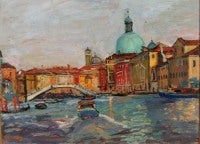
Ponte Della Terovia. Venezia

Ponte Della Terovia. Venezia

By Arbit Blatas

Located in Los Angeles, CA

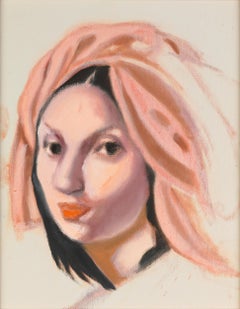
Oil on Panel, fine example of his work. Titled and dated on verso.

Category

Arbit Blatas Paintings
Materials

Oil, Panel

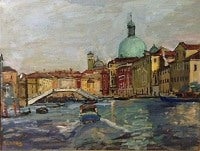
Ponte Della Terovia. Venezia

Ponte Della Terovia. Venezia

By Arbit Blatas

Located in Los Angeles, CA

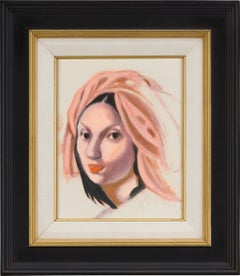
Titled, and dated on verso.

Category

Arbit Blatas Paintings
Materials

Oil, Panel

Arbit Blatas paintings for sale on 1stDibs.
Find a wide variety of authentic Arbit Blatas paintings available for sale on 1stDibs.