Carlos Merida Art

to
5
5
5
5
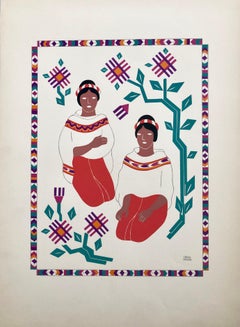
1945 Mexican Modernist Silkscreen Serigraph  Print Regional Dress Carlos Merida

1945 Mexican Modernist Silkscreen Serigraph Print Regional Dress Carlos Merida

By Carlos Merida 1

Located in Surfside, FL

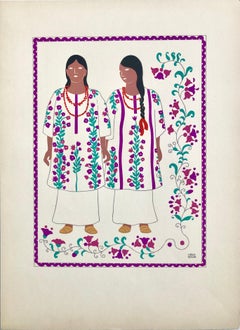
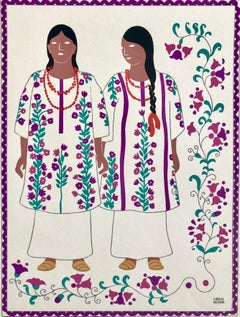
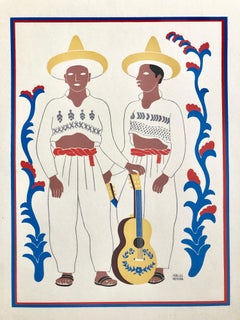
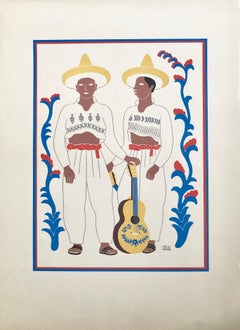
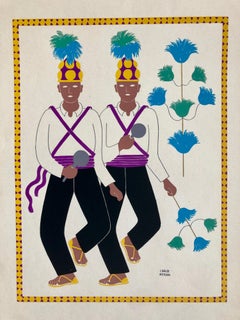
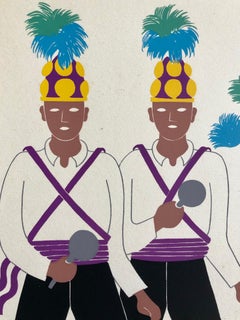
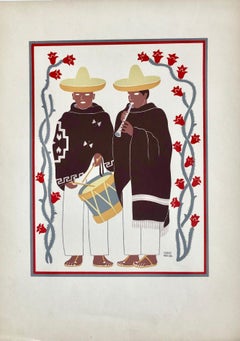
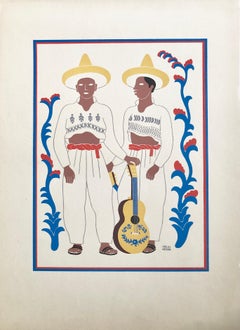
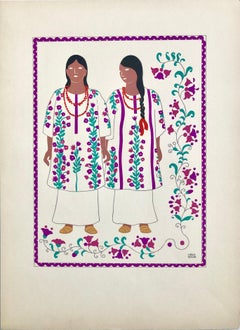
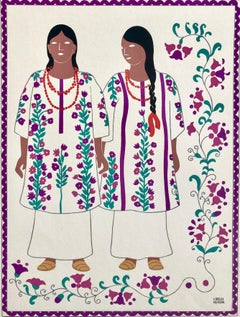
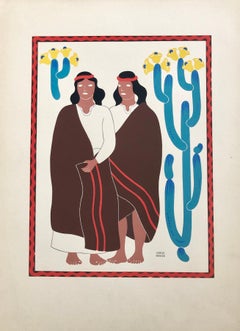
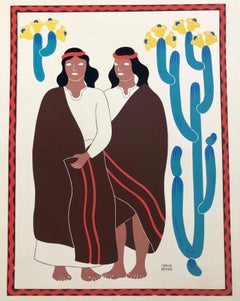
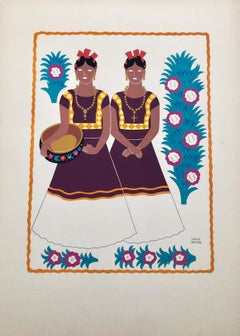
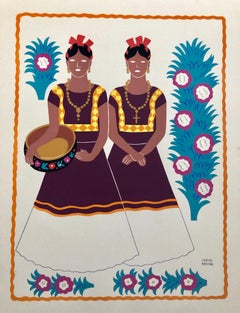
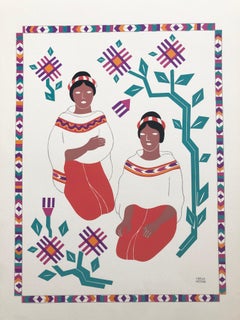
This listing is for the one Silkscreen serigraph piece listed here. Mexico City, 1945. First edition. plate signed, limited edition of 1000, these serigraph plates depict various types of traditional and folk art indigenous clothing...

Category

1940s Folk Art Carlos Merida Art

Materials

Screen

1945 Mexican Modernist Silkscreen Serigraph Print Regional Folk Art Dress Mexico

1945 Mexican Modernist Silkscreen Serigraph Print Regional Folk Art Dress Mexico

By Carlos Merida 1

Located in Surfside, FL

This listing is for the one Silkscreen serigraph piece listed here. Mexico City, 1945. First edition. plate signed, limited edition of 1000, these serigraph plates depict various types of traditional and folk art indigenous clothing...

Category

1940s Folk Art Carlos Merida Art

Materials

Screen

1945 Mexican Modernist Silkscreen Serigraph Print Regional Folk Art Dress Mexico

1945 Mexican Modernist Silkscreen Serigraph Print Regional Folk Art Dress Mexico

By Carlos Merida 1

Located in Surfside, FL

This listing is for the one Silkscreen serigraph piece listed here. Mexico City, 1945. First edition. plate signed, limited edition of 1000, these serigraph plates depict various types of traditional and folk art indigenous clothing...

Category

1940s Folk Art Carlos Merida Art

Materials

Screen

1945 Mexican Modernist Silkscreen Serigraph Print Regional Folk Art Dress Mexico

1945 Mexican Modernist Silkscreen Serigraph Print Regional Folk Art Dress Mexico

By Carlos Merida 1

Located in Surfside, FL

This listing is for the one Silkscreen serigraph piece listed here. Mexico City, 1945. First edition. plate signed, limited edition of 1000, these serigraph plates depict various types of traditional and folk art indigenous clothing...

Category

1940s Folk Art Carlos Merida Art

Materials

Screen

1945 Mexican Modernist Silkscreen Serigraph Print Regional Folk Art Dress Mexico

1945 Mexican Modernist Silkscreen Serigraph Print Regional Folk Art Dress Mexico

By Carlos Merida 1

Located in Surfside, FL

This listing is for the one Silkscreen serigraph piece listed here. Mexico City, 1945. First edition. plate signed, limited edition of 1000, these serigraph plates depict various types of traditional and folk art indigenous clothing...

Category

1940s Folk Art Carlos Merida Art

Materials

Screen

Related Items
Golden Girl, Hand Signed Serigraph, Edition of 500, 37 x 43 in. Framed, 1985

Golden Girl, Hand Signed Serigraph, Edition of 500, 37 x 43 in. Framed, 1985

By LeRoy Neiman

Located in Aventura, FL

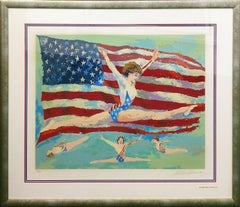
Hand signed numbered by the artist in pencil. Artwork size: 24.25 x 30 in. Frame size: approx. 37 x 43 in. Artwork appears to be in excellent condition. Artwork has not been examine...

Category

1980s Impressionist Carlos Merida Art

Materials

Paper, Screen

Studio 54 Complimentary Drinks FS IIIA.16A, Screen Print, Pop Art, Signed, 1978

Studio 54 Complimentary Drinks FS IIIA.16A, Screen Print, Pop Art, Signed, 1978

By Andy Warhol

Located in Aventura, FL

Screenprint in black on wove paper, hand signed and inscribed 'to Camilla and Earl' by the artist. From the edition of 20. Sheet size 25.25 x 19.25 inches. Custom framed as pictu...

Category

1970s Pop Art Carlos Merida Art

Materials

Screen, Paper

Most Distant Visible Part of the Sea, Hand Signed Silkscreen, Edition PP 2/6

Most Distant Visible Part of the Sea, Hand Signed Silkscreen, Edition PP 2/6

By Robert Rauschenberg

Located in Aventura, FL

Color silkscreen and collage. Framed. Hand signed, dated and numbered by the artist. Certificate of authenticity included. Edition PP 2/6. All reasonable offers will be considered.

Category

1970s Modern Carlos Merida Art

Materials

Color, Screen

Cold Chillin (Blue) (Hip Hop Tribute, Turntable Motif, Faux LP Cover)

Cold Chillin (Blue) (Hip Hop Tribute, Turntable Motif, Faux LP Cover)

By Shepard Fairey

Located in Kansas City, MO

Shepard Fairey Cold Chillin (Blue) Screen print on thick cream Speckletone paper Year: 2008 Size: 24 x 18 inches (60.96 x 45.72 cm) Edition: 350 Signed by Shepard Fairey, dated and n...

Category

2010s Street Art Carlos Merida Art

Materials

Screen

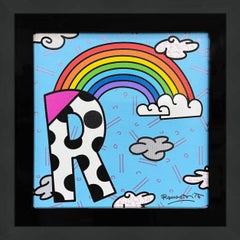
The Letter "R" by Romero Britto, Hand Signed, Pop Art, Framed, 2018

The Letter "R" by Romero Britto, Hand Signed, Pop Art, Framed, 2018

By Romero Britto

Located in Aventura, FL

Digital print on canvas. Hand signed lower right by Romero Britto. Open edition of an unknown size. Britto Studio stamp on verso. Custom framed as pictured. Canvas size: 11 x 11 ...

Category

2010s Pop Art Carlos Merida Art

Materials

Gesso, Board, Screen

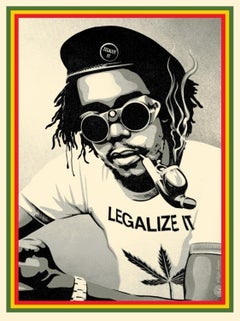
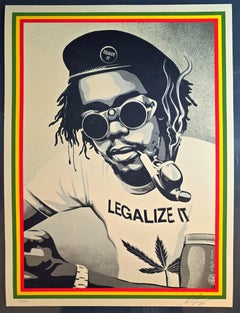
Peter Tosh: Legalize It (The Wailers, Reggae Pioneer, Jamaica, Icon, ~33% OFF)

Peter Tosh: Legalize It (The Wailers, Reggae Pioneer, Jamaica, Icon, ~33% OFF)

By Shepard Fairey

Located in Kansas City, MO

Shepard Fairey Peter Tosh: Legalize It Screen print on thick cream Speckletone paper Year: 2024 Size: 24 x 18 inches (60.96 x 45.72 cm) Edition: 500 Signed by Shepard Fairey, dated a...

Category

2010s Street Art Carlos Merida Art

Materials

Screen

Peter Blake - V is for Valentine, silkscreen, Signed/N, British Pop

Peter Blake - V is for Valentine, silkscreen, Signed/N, British Pop

By Peter Blake

Located in New York, NY

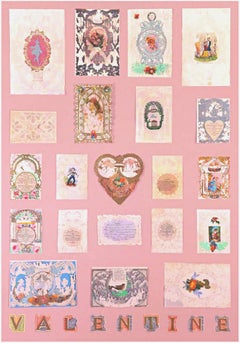
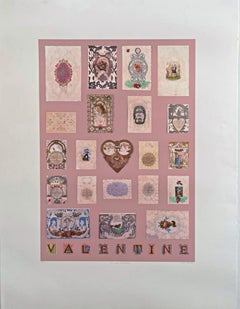
Peter Blake V is for Valentine (from the Alphabet Series), 1991 Silkscreen in colors on wove paper 40 2/5 × 30 3/5 inches Hand signed, titled and numbered 49/95 on the front Published by Waddington Graphics and Corianda Studios from the Alphabet Series Unframed An exquisite print with romantic imagery in a sweet, romantic pastel pink. 'V for Valentine' is from Blake's 1991 series of alphabet letters. This tender and sentimental piece comprises a collection of antique valentine...

Category

1990s Pop Art Carlos Merida Art

Materials

Screen

Rebel Without a Cause FS IIIA.16A, from Ads Portfolio, Signed Screen Print, 1985

Rebel Without a Cause FS IIIA.16A, from Ads Portfolio, Signed Screen Print, 1985

By Andy Warhol

Located in Aventura, FL

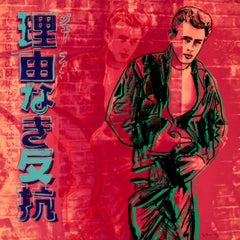
Color screenprint on Lenox Museum Board. Hand signed and numbered by the artist. Artwork is in excellent condition. Certificate of Authenticity included. From the ADS Portfolio. Pub...

Category

1980s Pop Art Carlos Merida Art

Materials

Board, Screen

The Fabulous Moolah, World Champion Female Wrestler Figurative Screen Print

The Fabulous Moolah, World Champion Female Wrestler Figurative Screen Print

Located in Soquel, CA

The Fabulous Moolah, World Champion Female Wrestler Figurative Screen Print Modern figurative print of world champion female wrestler Mary Lillian Ellison (American, 1923-2007), also known as The Fabulous Moolah. The artist of this print is unknown. Unsigned and undated. Presented in a modern frame with Plexiglass. Image size: 26”H x 20L". During her lifetime, Moolah was lauded as a leading figure in women's professional wrestling and was considered one of the industry's greatest wrestlers. Moolah's first World Championship reign lasted over ten years. Moolah successfully defended the belt against the top female wrestlers in the world, such as Judy Grable and Donna Christanello, while also purporting to befriend some of the biggest celebrities of the day such as Elvis Presley and Jerry Lee Lewis. She became the first woman to be inducted into the WWF Hall of Fame in 1995. In 1999, she became the oldest champion in the history of professional wrestling when she won the Women's Championship for a final time at age 76 in 1999. Championships and Accomplishments: Cauliflower Alley Club Ladies Wrestling Award (1997) National Wrestling Alliance NWA Women's World Tag Team Championship (2 times) – with Toni Rose NWA World Women's Championship (5 times) NWA Hall of Fame (Class of 2012) Pro Wrestling...

Category

21st Century and Contemporary Pop Art Carlos Merida Art

Materials

Paper, Screen

The Accordion Player #1

The Accordion Player #1

By Donald Baechler

Located in New York, NY

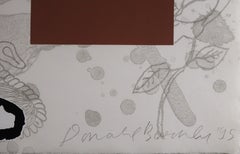
Donald Baechler The Accordion Player #1, 1995 Lithograph with silkscreen 30 x 22 1/4 inches Edition 32 of 49 Signed In 1995 five well-known Ameri...

Category

1990s Contemporary Carlos Merida Art

Materials

Lithograph, Screen

Vivien in White Coat, 2021

Vivien in White Coat, 2021

By Alex Katz

Located in Palo Alto, CA

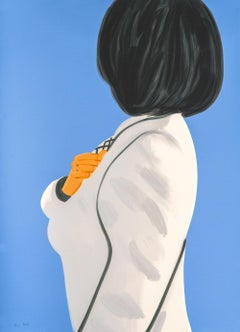
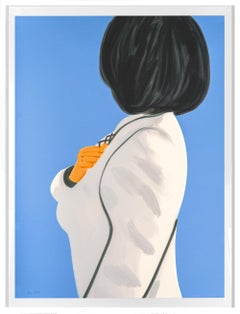
Alex Katz Vivien in White Coat, 2021 is a work of subtle admiration that the artist holds for her daughter-in-law, Vivien Bittencourt. The gentle hues...

Category

2010s Contemporary Carlos Merida Art

Materials

Screen

Previously Available Items
1945 Mexican Modernist Silkscreen Serigraph Print Regional Folk Art Dress Mexico

1945 Mexican Modernist Silkscreen Serigraph Print Regional Folk Art Dress Mexico

By Carlos Merida 1

Located in Surfside, FL

This listing is for the one Silkscreen serigraph piece listed here. Mexico City, 1945. First edition. plate signed, limited edition of 1000, these serigraph plates depict various types of traditional and folk art indigenous clothing...

Category

1940s Folk Art Carlos Merida Art

Materials

Screen

1945 Mexican Modernist Silkscreen Serigraph Print Regional Folk Art Dress Mexico

1945 Mexican Modernist Silkscreen Serigraph Print Regional Folk Art Dress Mexico

By Carlos Merida 1

Located in Surfside, FL

This listing is for the one Silkscreen serigraph piece listed here. Mexico City, 1945. First edition. plate signed, limited edition of 1000, these serigraph plates depict various types of traditional and folk art indigenous clothing...

Category

1940s Folk Art Carlos Merida Art

Materials

Screen

1945 Mexican Modernist Silkscreen Serigraph Print Regional Folk Art Dress Mexico

1945 Mexican Modernist Silkscreen Serigraph Print Regional Folk Art Dress Mexico

By Carlos Merida 1

Located in Surfside, FL

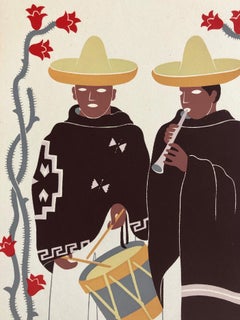
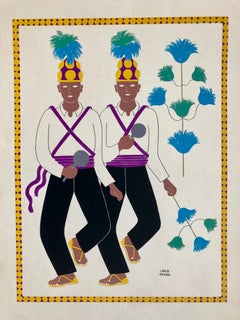
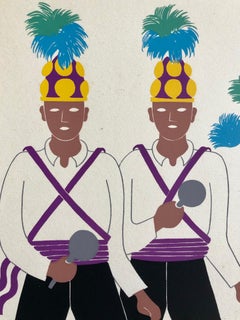
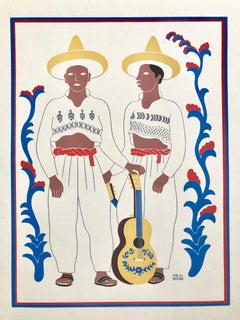
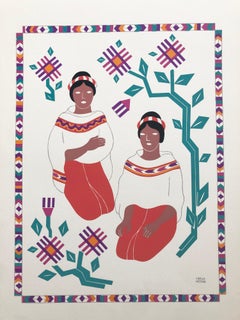
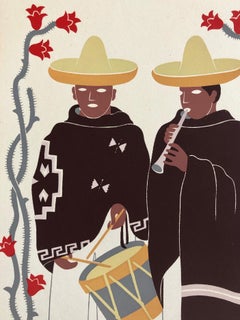
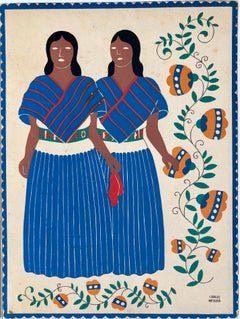
This listing is for the one Silkscreen serigraph piece listed here. Mexico City, 1945. First edition. plate signed, limited edition of 1000, these serigraph plates depict various types of traditional and folk art indigenous clothing and costume styles from around Mexico. The illustrations depict the cultures of many different states in Mexico, including Oaxaca, Chiapas, Jalisco and Veracruz. Carlos Mérida (December 2, 1891 – December 21, 1985) was a Guatemalan artist who was one of the first to fuse European modern painting to Latin American themes, especially those related to Guatemala and Mexico. He was part of the Mexican muralism movement in subject matter but less so in style, favoring a non-figurative and later geometric style rather than a figurative, narrative style. Mérida is best known for canvas and mural work, the latter including elements such as glass and ceramic mosaic on major constructions in the 1950s and 1960s. One of his major works, on the Benito Juarez housing complex, was completely destroyed with the 1985 Mexico City earthquake, but a monument to it exists at another complex in the south of the city. Carlos Mérida was born Carlos Santiago Ortega in Guatemala City to Serapio Santiago Mérida and Guadalupe Ortega Barnoya. He later changed his name what is known by as he thought it was more sonorous. His brothers and children also took the Mérida name later on. He was of mixed Spanish/Maya-Quiché heritage which he promoted during his life. As a young child, Mérida had both music and art lessons, and his first passion was music, which led to piano lessons. He studied at a trade school called the Instituto de Artes y Oficios, then the Instituto de Ciencias y Letras. Here he began to have a reputation for the avant garde. Merída’s first trip to the United States was in 1917, where he met writer Juan José Tablada. Mérida made several trips to Europe over his lifetime to both study art and work as an artist and diplomat. His early trips in the 1920s and 1930s put him in touch with both avant garde movements in Europe as well as noted Latin American artists, especially those from Mexico. His last trip was in 1950s. In 1963, he donated canvases, graphic pieces and mural sketches to the Universidad Nacional Autónoma de Mexico. Merida was one of a number of artists such as Diego Rivera and Gerardo Murillo who became committed to promoting the handcrafts and folk art of Mexico and Central America, with a particular interest in those of Guatemala, often featuring Mayan textiles or elements in their decoration in his artwork. He died in Mexico City at the age of 94 on December 21, 1985. As there was little opportunity for artists in Guatemala, in 1910, Mérida traveled to Paris with a friend named Carlos Valenti on a German cargo ship. From then until 1914, he lived and worked in Paris and traveled much of Europe. This put him in touch with European avant garde artists such as Van Dagen, Amedeo Modigliani, Pablo Picasso and Piet Mondrian as well as Latin American artists studying in Europe such as Diego Rivera, Jorge Enciso, Ángel Zárraga and Dr. Atl. He exhibited his work in venues such as the Independent Salon and the Giroux Gallery in Paris. Mérida has forty five exhibitions in the United States and eighteen in Mexico from 1928 to 1948. These included an exhibition with Rufino Tamayo at the Art Center of New York (1930), the John Becker and Valentine galleries in New York (1930), the Club de Escritores de México and the Galería Posada in Mexico City (1931), the Stendhal Gallery and the Stanley Rose...

Category

1940s Folk Art Carlos Merida Art
Materials

Screen

1945 Mexican Modernist Silkscreen Serigraph Print Regional Folk Art Dress Mexico

1945 Mexican Modernist Silkscreen Serigraph Print Regional Folk Art Dress Mexico

By Carlos Merida 1

Located in Surfside, FL

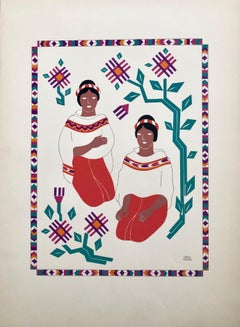
This listing is for the one Silkscreen serigraph piece listed here. Mexico City, 1945. First edition. plate signed, limited edition of 1000, these serigraph plates depict various types of traditional and folk art indigenous clothing and costume styles from around Mexico. The illustrations depict the cultures of many different states in Mexico, including Oaxaca, Chiapas, Jalisco and Veracruz. Carlos Mérida (December 2, 1891 – December 21, 1985) was a Guatemalan artist who was one of the first to fuse European modern painting to Latin American themes, especially those related to Guatemala and Mexico. He was part of the Mexican muralism movement in subject matter but less so in style, favoring a non-figurative and later geometric style rather than a figurative, narrative style. Mérida is best known for canvas and mural work, the latter including elements such as glass and ceramic mosaic on major constructions in the 1950s and 1960s. One of his major works, on the Benito Juarez housing complex, was completely destroyed with the 1985 Mexico City earthquake, but a monument to it exists at another complex in the south of the city. Carlos Mérida was born Carlos Santiago Ortega in Guatemala City to Serapio Santiago Mérida and Guadalupe Ortega Barnoya. He later changed his name what is known by as he thought it was more sonorous. His brothers and children also took the Mérida name later on. He was of mixed Spanish/Maya-Quiché heritage which he promoted during his life. As a young child, Mérida had both music and art lessons, and his first passion was music, which led to piano lessons. He studied at a trade school called the Instituto de Artes y Oficios, then the Instituto de Ciencias y Letras. Here he began to have a reputation for the avant garde. Merída’s first trip to the United States was in 1917, where he met writer Juan José Tablada. Mérida made several trips to Europe over his lifetime to both study art and work as an artist and diplomat. His early trips in the 1920s and 1930s put him in touch with both avant garde movements in Europe as well as noted Latin American artists, especially those from Mexico. His last trip was in 1950s. In 1963, he donated canvases, graphic pieces and mural sketches to the Universidad Nacional Autónoma de Mexico. Merida was one of a number of artists such as Diego Rivera and Gerardo Murillo who became committed to promoting the handcrafts and folk art of Mexico and Central America, with a particular interest in those of Guatemala, often featuring Mayan textiles or elements in their decoration in his artwork. He died in Mexico City at the age of 94 on December 21, 1985. As there was little opportunity for artists in Guatemala, in 1910, Mérida traveled to Paris with a friend named Carlos Valenti on a German cargo ship. From then until 1914, he lived and worked in Paris and traveled much of Europe. This put him in touch with European avant garde artists such as Van Dagen, Amedeo Modigliani, Pablo Picasso and Piet Mondrian as well as Latin American artists studying in Europe such as Diego Rivera, Jorge Enciso, Ángel Zárraga and Dr. Atl. He exhibited his work in venues such as the Independent Salon and the Giroux Gallery in Paris. Mérida has forty five exhibitions in the United States and eighteen in Mexico from 1928 to 1948. These included an exhibition with Rufino Tamayo at the Art Center of New York (1930), the John Becker and Valentine galleries in New York (1930), the Club de Escritores de México and the Galería Posada in Mexico City (1931), the Stendhal Gallery and the Stanley Rose...

Category

1940s Folk Art Carlos Merida Art
Materials

Screen

1945 Mexican Modernist Silkscreen Serigraph Print Regional Folk Art Dress Mexico

1945 Mexican Modernist Silkscreen Serigraph Print Regional Folk Art Dress Mexico

By Carlos Merida 1

Located in Surfside, FL

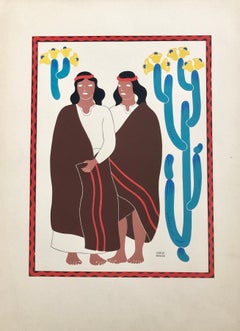
This listing is for the one Silkscreen serigraph piece listed here. Mexico City, 1945. First edition. plate signed, limited edition of 1000, these serigraph plates depict various types of traditional and folk art indigenous clothing and costume styles from around Mexico. The illustrations depict the cultures of many different states in Mexico, including Oaxaca, Chiapas, Jalisco and Veracruz. Carlos Mérida (December 2, 1891 – December 21, 1985) was a Guatemalan artist who was one of the first to fuse European modern painting to Latin American themes, especially those related to Guatemala and Mexico. He was part of the Mexican muralism movement in subject matter but less so in style, favoring a non-figurative and later geometric style rather than a figurative, narrative style. Mérida is best known for canvas and mural work, the latter including elements such as glass and ceramic mosaic on major constructions in the 1950s and 1960s. One of his major works, on the Benito Juarez housing complex, was completely destroyed with the 1985 Mexico City earthquake, but a monument to it exists at another complex in the south of the city. Carlos Mérida was born Carlos Santiago Ortega in Guatemala City to Serapio Santiago Mérida and Guadalupe Ortega Barnoya. He later changed his name what is known by as he thought it was more sonorous. His brothers and children also took the Mérida name later on. He was of mixed Spanish/Maya-Quiché heritage which he promoted during his life. As a young child, Mérida had both music and art lessons, and his first passion was music, which led to piano lessons. He studied at a trade school called the Instituto de Artes y Oficios, then the Instituto de Ciencias y Letras. Here he began to have a reputation for the avant garde. Merída’s first trip to the United States was in 1917, where he met writer Juan José Tablada. Mérida made several trips to Europe over his lifetime to both study art and work as an artist and diplomat. His early trips in the 1920s and 1930s put him in touch with both avant garde movements in Europe as well as noted Latin American artists, especially those from Mexico. His last trip was in 1950s. In 1963, he donated canvases, graphic pieces and mural sketches to the Universidad Nacional Autónoma de Mexico. Merida was one of a number of artists such as Diego Rivera and Gerardo Murillo who became committed to promoting the handcrafts and folk art of Mexico and Central America, with a particular interest in those of Guatemala, often featuring Mayan textiles or elements in their decoration in his artwork. He died in Mexico City at the age of 94 on December 21, 1985. As there was little opportunity for artists in Guatemala, in 1910, Mérida traveled to Paris with a friend named Carlos Valenti on a German cargo ship. From then until 1914, he lived and worked in Paris and traveled much of Europe. This put him in touch with European avant garde artists such as Van Dagen, Amedeo Modigliani, Pablo Picasso and Piet Mondrian as well as Latin American artists studying in Europe such as Diego Rivera, Jorge Enciso, Ángel Zárraga and Dr. Atl. He exhibited his work in venues such as the Independent Salon and the Giroux Gallery in Paris. Mérida has forty five exhibitions in the United States and eighteen in Mexico from 1928 to 1948. These included an exhibition with Rufino Tamayo at the Art Center of New York (1930), the John Becker and Valentine galleries in New York (1930), the Club de Escritores de México and the Galería Posada in Mexico City (1931), the Stendhal Gallery and the Stanley Rose...

Category

1940s Folk Art Carlos Merida Art
Materials

Screen

1945 Mexican Modernist Silkscreen Serigraph Print Regional Folk Art Dress Mexico

1945 Mexican Modernist Silkscreen Serigraph Print Regional Folk Art Dress Mexico

By Carlos Merida 1

Located in Surfside, FL

This listing is for the one Silkscreen serigraph piece listed here. Mexico City, 1945. First edition. plate signed, limited edition of 1000, these serigraph plates depict various types of traditional and folk art indigenous clothing and costume styles from around Mexico. The illustrations depict the cultures of many different states in Mexico, including Oaxaca, Chiapas, Jalisco and Veracruz. Carlos Mérida (December 2, 1891 – December 21, 1985) was a Guatemalan artist who was one of the first to fuse European modern painting to Latin American themes, especially those related to Guatemala and Mexico. He was part of the Mexican muralism movement in subject matter but less so in style, favoring a non-figurative and later geometric style rather than a figurative, narrative style. Mérida is best known for canvas and mural work, the latter including elements such as glass and ceramic mosaic on major constructions in the 1950s and 1960s. One of his major works, on the Benito Juarez housing complex, was completely destroyed with the 1985 Mexico City earthquake, but a monument to it exists at another complex in the south of the city. Carlos Mérida was born Carlos Santiago Ortega in Guatemala City to Serapio Santiago Mérida and Guadalupe Ortega Barnoya. He later changed his name what is known by as he thought it was more sonorous. His brothers and children also took the Mérida name later on. He was of mixed Spanish/Maya-Quiché heritage which he promoted during his life. As a young child, Mérida had both music and art lessons, and his first passion was music, which led to piano lessons. He studied at a trade school called the Instituto de Artes y Oficios, then the Instituto de Ciencias y Letras. Here he began to have a reputation for the avant garde. Merída’s first trip to the United States was in 1917, where he met writer Juan José Tablada. Mérida made several trips to Europe over his lifetime to both study art and work as an artist and diplomat. His early trips in the 1920s and 1930s put him in touch with both avant garde movements in Europe as well as noted Latin American artists, especially those from Mexico. His last trip was in 1950s. In 1963, he donated canvases, graphic pieces and mural sketches to the Universidad Nacional Autónoma de Mexico. Merida was one of a number of artists such as Diego Rivera and Gerardo Murillo who became committed to promoting the handcrafts and folk art of Mexico and Central America, with a particular interest in those of Guatemala, often featuring Mayan textiles or elements in their decoration in his artwork. He died in Mexico City at the age of 94 on December 21, 1985. As there was little opportunity for artists in Guatemala, in 1910, Mérida traveled to Paris with a friend named Carlos Valenti on a German cargo ship. From then until 1914, he lived and worked in Paris and traveled much of Europe. This put him in touch with European avant garde artists such as Van Dagen, Amedeo Modigliani, Pablo Picasso and Piet Mondrian as well as Latin American artists studying in Europe such as Diego Rivera, Jorge Enciso, Ángel Zárraga and Dr. Atl. He exhibited his work in venues such as the Independent Salon and the Giroux Gallery in Paris. Mérida has forty five exhibitions in the United States and eighteen in Mexico from 1928 to 1948. These included an exhibition with Rufino Tamayo at the Art Center of New York (1930), the John Becker and Valentine galleries in New York (1930), the Club de Escritores de México and the Galería Posada in Mexico City (1931), the Stendhal Gallery and the Stanley Rose...

Category

1940s Folk Art Carlos Merida Art
Materials

Screen

1945 Mexican Modernist Silkscreen Serigraph Print Regional Folk Art Dress Mexico

1945 Mexican Modernist Silkscreen Serigraph Print Regional Folk Art Dress Mexico

By Carlos Merida 1

Located in Surfside, FL

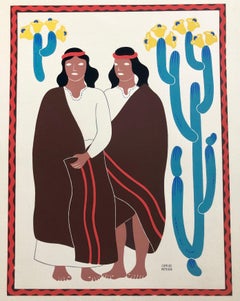
This listing is for the one Silkscreen serigraph piece listed here. Mexico City, 1945. First edition. plate signed, limited edition of 1000, these serigraph plates depict various types of traditional and folk art indigenous clothing and costume styles from around Mexico. The illustrations depict the cultures of many different states in Mexico, including Oaxaca, Chiapas, Jalisco and Veracruz. Carlos Mérida (December 2, 1891 – December 21, 1985) was a Guatemalan artist who was one of the first to fuse European modern painting to Latin American themes, especially those related to Guatemala and Mexico. He was part of the Mexican muralism movement in subject matter but less so in style, favoring a non-figurative and later geometric style rather than a figurative, narrative style. Mérida is best known for canvas and mural work, the latter including elements such as glass and ceramic mosaic on major constructions in the 1950s and 1960s. One of his major works, on the Benito Juarez housing complex, was completely destroyed with the 1985 Mexico City earthquake, but a monument to it exists at another complex in the south of the city. Carlos Mérida was born Carlos Santiago Ortega in Guatemala City to Serapio Santiago Mérida and Guadalupe Ortega Barnoya. He later changed his name what is known by as he thought it was more sonorous. His brothers and children also took the Mérida name later on. He was of mixed Spanish/Maya-Quiché heritage which he promoted during his life. As a young child, Mérida had both music and art lessons, and his first passion was music, which led to piano lessons. He studied at a trade school called the Instituto de Artes y Oficios, then the Instituto de Ciencias y Letras. Here he began to have a reputation for the avant garde. Merída’s first trip to the United States was in 1917, where he met writer Juan José Tablada. Mérida made several trips to Europe over his lifetime to both study art and work as an artist and diplomat. His early trips in the 1920s and 1930s put him in touch with both avant garde movements in Europe as well as noted Latin American artists, especially those from Mexico. His last trip was in 1950s. In 1963, he donated canvases, graphic pieces and mural sketches to the Universidad Nacional Autónoma de Mexico. Merida was one of a number of artists such as Diego Rivera and Gerardo Murillo who became committed to promoting the handcrafts and folk art of Mexico and Central America, with a particular interest in those of Guatemala, often featuring Mayan textiles or elements in their decoration in his artwork. He died in Mexico City at the age of 94 on December 21, 1985. As there was little opportunity for artists in Guatemala, in 1910, Mérida traveled to Paris with a friend named Carlos Valenti on a German cargo ship. From then until 1914, he lived and worked in Paris and traveled much of Europe. This put him in touch with European avant garde artists such as Van Dagen, Amedeo Modigliani, Pablo Picasso and Piet Mondrian as well as Latin American artists studying in Europe such as Diego Rivera, Jorge Enciso, Ángel Zárraga and Dr. Atl. He exhibited his work in venues such as the Independent Salon and the Giroux Gallery in Paris. Mérida has forty five exhibitions in the United States and eighteen in Mexico from 1928 to 1948. These included an exhibition with Rufino Tamayo at the Art Center of New York (1930), the John Becker and Valentine galleries in New York (1930), the Club de Escritores de México and the Galería Posada in Mexico City (1931), the Stendhal Gallery and the Stanley Rose...

Category

1940s Folk Art Carlos Merida Art
Materials

Screen

1945 Mexican Modernist Silkscreen Serigraph Print Regional Folk Art Dress Mexico

1945 Mexican Modernist Silkscreen Serigraph Print Regional Folk Art Dress Mexico

By Carlos Merida 1

Located in Surfside, FL

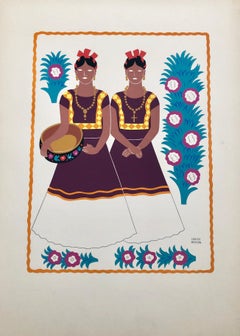
This listing is for the one Silkscreen serigraph piece listed here. Mexico City, 1945. First edition. plate signed, limited edition of 1000, these serigraph plates depict various types of traditional and folk art indigenous clothing and costume styles from around Mexico. The illustrations depict the cultures of many different states in Mexico, including Oaxaca, Chiapas, Jalisco and Veracruz. Carlos Mérida (December 2, 1891 – December 21, 1985) was a Guatemalan artist who was one of the first to fuse European modern painting to Latin American themes, especially those related to Guatemala and Mexico. He was part of the Mexican muralism movement in subject matter but less so in style, favoring a non-figurative and later geometric style rather than a figurative, narrative style. Mérida is best known for canvas and mural work, the latter including elements such as glass and ceramic mosaic on major constructions in the 1950s and 1960s. One of his major works, on the Benito Juarez housing complex, was completely destroyed with the 1985 Mexico City earthquake, but a monument to it exists at another complex in the south of the city. Carlos Mérida was born Carlos Santiago Ortega in Guatemala City to Serapio Santiago Mérida and Guadalupe Ortega Barnoya. He later changed his name what is known by as he thought it was more sonorous. His brothers and children also took the Mérida name later on. He was of mixed Spanish/Maya-Quiché heritage which he promoted during his life. As a young child, Mérida had both music and art lessons, and his first passion was music, which led to piano lessons. He studied at a trade school called the Instituto de Artes y Oficios, then the Instituto de Ciencias y Letras. Here he began to have a reputation for the avant garde. Merída’s first trip to the United States was in 1917, where he met writer Juan José Tablada. Mérida made several trips to Europe over his lifetime to both study art and work as an artist and diplomat. His early trips in the 1920s and 1930s put him in touch with both avant garde movements in Europe as well as noted Latin American artists, especially those from Mexico. His last trip was in 1950s. In 1963, he donated canvases, graphic pieces and mural sketches to the Universidad Nacional Autónoma de Mexico. Merida was one of a number of artists such as Diego Rivera and Gerardo Murillo who became committed to promoting the handcrafts and folk art of Mexico and Central America, with a particular interest in those of Guatemala, often featuring Mayan textiles or elements in their decoration in his artwork. He died in Mexico City at the age of 94 on December 21, 1985. As there was little opportunity for artists in Guatemala, in 1910, Mérida traveled to Paris with a friend named Carlos Valenti on a German cargo ship. From then until 1914, he lived and worked in Paris and traveled much of Europe. This put him in touch with European avant garde artists such as Van Dagen, Amedeo Modigliani, Pablo Picasso and Piet Mondrian as well as Latin American artists studying in Europe such as Diego Rivera, Jorge Enciso, Ángel Zárraga and Dr. Atl. He exhibited his work in venues such as the Independent Salon and the Giroux Gallery in Paris. Mérida has forty five exhibitions in the United States and eighteen in Mexico from 1928 to 1948. These included an exhibition with Rufino Tamayo at the Art Center of New York (1930), the John Becker and Valentine galleries in New York (1930), the Club de Escritores de México and the Galería Posada in Mexico City (1931), the Stendhal Gallery and the Stanley Rose...

Category

1940s Folk Art Carlos Merida Art
Materials

Screen

1945 Mexican Modernist Silkscreen Serigraph Print Regional Folk Art Dress Mexico

1945 Mexican Modernist Silkscreen Serigraph Print Regional Folk Art Dress Mexico

By Carlos Merida 1

Located in Surfside, FL

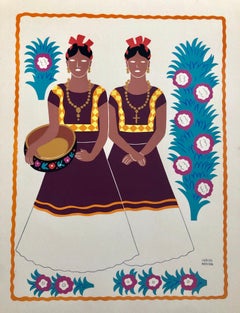
This listing is for the one Silkscreen serigraph piece listed here. Mexico City, 1945. First edition. plate signed, limited edition of 1000, these serigraph plates depict various types of traditional and folk art indigenous clothing and costume styles from around Mexico. The illustrations depict the cultures of many different states in Mexico, including Oaxaca, Chiapas, Jalisco and Veracruz. Carlos Mérida (December 2, 1891 – December 21, 1985) was a Guatemalan artist who was one of the first to fuse European modern painting to Latin American themes, especially those related to Guatemala and Mexico. He was part of the Mexican muralism movement in subject matter but less so in style, favoring a non-figurative and later geometric style rather than a figurative, narrative style. Mérida is best known for canvas and mural work, the latter including elements such as glass and ceramic mosaic on major constructions in the 1950s and 1960s. One of his major works, on the Benito Juarez housing complex, was completely destroyed with the 1985 Mexico City earthquake, but a monument to it exists at another complex in the south of the city. Carlos Mérida was born Carlos Santiago Ortega in Guatemala City to Serapio Santiago Mérida and Guadalupe Ortega Barnoya. He later changed his name what is known by as he thought it was more sonorous. His brothers and children also took the Mérida name later on. He was of mixed Spanish/Maya-Quiché heritage which he promoted during his life. As a young child, Mérida had both music and art lessons, and his first passion was music, which led to piano lessons. He studied at a trade school called the Instituto de Artes y Oficios, then the Instituto de Ciencias y Letras. Here he began to have a reputation for the avant garde. Merída’s first trip to the United States was in 1917, where he met writer Juan José Tablada. Mérida made several trips to Europe over his lifetime to both study art and work as an artist and diplomat. His early trips in the 1920s and 1930s put him in touch with both avant garde movements in Europe as well as noted Latin American artists, especially those from Mexico. His last trip was in 1950s. In 1963, he donated canvases, graphic pieces and mural sketches to the Universidad Nacional Autónoma de Mexico. Merida was one of a number of artists such as Diego Rivera and Gerardo Murillo who became committed to promoting the handcrafts and folk art of Mexico and Central America, with a particular interest in those of Guatemala, often featuring Mayan textiles or elements in their decoration in his artwork. He died in Mexico City at the age of 94 on December 21, 1985. As there was little opportunity for artists in Guatemala, in 1910, Mérida traveled to Paris with a friend named Carlos Valenti on a German cargo ship. From then until 1914, he lived and worked in Paris and traveled much of Europe. This put him in touch with European avant garde artists such as Van Dagen, Amedeo Modigliani, Pablo Picasso and Piet Mondrian as well as Latin American artists studying in Europe such as Diego Rivera, Jorge Enciso, Ángel Zárraga and Dr. Atl. He exhibited his work in venues such as the Independent Salon and the Giroux Gallery in Paris. Mérida has forty five exhibitions in the United States and eighteen in Mexico from 1928 to 1948. These included an exhibition with Rufino Tamayo at the Art Center of New York (1930), the John Becker and Valentine galleries in New York (1930), the Club de Escritores de México and the Galería Posada in Mexico City (1931), the Stendhal Gallery and the Stanley Rose...

Category

1940s Folk Art Carlos Merida Art
Materials

Screen

1945 Mexican Modernist Silkscreen Serigraph  Print Regional Dress Carlos Merida

1945 Mexican Modernist Silkscreen Serigraph Print Regional Dress Carlos Merida

By Carlos Merida 1

Located in Surfside, FL

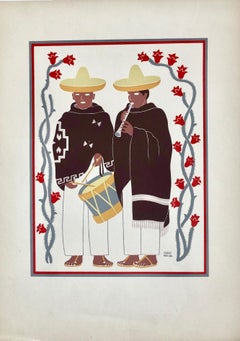
This listing is for the one Silkscreen serigraph piece listed here. Mexico City, 1945. First edition. plate signed, limited edition of 1000, these serigraph plates depict various types of traditional and folk art indigenous clothing and costume styles from around Mexico. The illustrations depict the cultures of many different states in Mexico, including Oaxaca, Chiapas, Jalisco and Veracruz. Carlos Mérida (December 2, 1891 – December 21, 1985) was a Guatemalan artist who was one of the first to fuse European modern painting to Latin American themes, especially those related to Guatemala and Mexico. He was part of the Mexican muralism movement in subject matter but less so in style, favoring a non-figurative and later geometric style rather than a figurative, narrative style. Mérida is best known for canvas and mural work, the latter including elements such as glass and ceramic mosaic on major constructions in the 1950s and 1960s. One of his major works, on the Benito Juarez housing complex, was completely destroyed with the 1985 Mexico City earthquake, but a monument to it exists at another complex in the south of the city. Carlos Mérida was born Carlos Santiago Ortega in Guatemala City to Serapio Santiago Mérida and Guadalupe Ortega Barnoya. He later changed his name what is known by as he thought it was more sonorous. His brothers and children also took the Mérida name later on. He was of mixed Spanish/Maya-Quiché heritage which he promoted during his life. As a young child, Mérida had both music and art lessons, and his first passion was music, which led to piano lessons. He studied at a trade school called the Instituto de Artes y Oficios, then the Instituto de Ciencias y Letras. Here he began to have a reputation for the avant garde. Merída’s first trip to the United States was in 1917, where he met writer Juan José Tablada. Mérida made several trips to Europe over his lifetime to both study art and work as an artist and diplomat. His early trips in the 1920s and 1930s put him in touch with both avant garde movements in Europe as well as noted Latin American artists, especially those from Mexico. His last trip was in 1950s. In 1963, he donated canvases, graphic pieces and mural sketches to the Universidad Nacional Autónoma de Mexico. Merida was one of a number of artists such as Diego Rivera and Gerardo Murillo who became committed to promoting the handcrafts and folk art of Mexico and Central America, with a particular interest in those of Guatemala, often featuring Mayan textiles or elements in their decoration in his artwork. He died in Mexico City at the age of 94 on December 21, 1985. As there was little opportunity for artists in Guatemala, in 1910, Mérida traveled to Paris with a friend named Carlos Valenti on a German cargo ship. From then until 1914, he lived and worked in Paris and traveled much of Europe. This put him in touch with European avant garde artists such as Van Dagen, Amedeo Modigliani, Pablo Picasso and Piet Mondrian as well as Latin American artists studying in Europe such as Diego Rivera, Jorge Enciso, Ángel Zárraga and Dr. Atl. He exhibited his work in venues such as the Independent Salon and the Giroux Gallery in Paris. Mérida has forty five exhibitions in the United States and eighteen in Mexico from 1928 to 1948. These included an exhibition with Rufino Tamayo at the Art Center of New York (1930), the John Becker and Valentine galleries in New York (1930), the Club de Escritores de México and the Galería Posada in Mexico City (1931), the Stendhal Gallery and the Stanley Rose...

Category

1940s Folk Art Carlos Merida Art
Materials

Screen

Carlos Merida art for sale on 1stDibs.
Find a wide variety of authentic Carlos Merida art available for sale on 1stDibs. You can also browse by medium to find art by Carlos Merida in screen print and more. Not every interior allows for large Carlos Merida art, so small editions measuring 13 inches across are available. Customers who are interested in this artist might also find the work of Günther Kieser, Gustavo Montoya, and Igor Galanin. Carlos Merida art prices can differ depending upon medium, time period and other attributes. On 1stDibs, the price for these items starts at $950 and tops out at $950, while the average work can sell for $950.

Artists Similar to Carlos Merida