Dom Hans van der Laan Dining Room Sets

Dom Hans van der Laan was the ninth of the 11 recorded children of Leiden architect Leo van der Laan (1864–1942). Dom van der Laan began his studies in architecture at the Technische Universiteit Delft in 1923, two years after he finished his secondary school. Architectural education in those days was generally confined to nineteenth-century neoclassicism and all teachers originated from before the first world war. Students in their third year of study had to make their designs, but those of Hans van der Laan were all rejected. In the same autumn, he founded, together with some fellow-students, a study-group, the Bouwkundige Studiekring’BSK (‘Architectural Study Circle’), aiming to discover themselves the very basics of architecture, which they missed in regular teaching. On 26 May 1929, Hans van der Laan and his fellow-novice Herman Diepen made their profession in the abbey. In 1936 father Hans was charged with the guidance in the sacristy, which he would retain till his departure to Vaals in 1968. After the war, father van der Laan was invited by the bishop of Breda to take the guidance of a working party, charged with the rebuilding of the destroyed churches in the diocese. In 1951, the abbey of Sint-Benedictusberg in Vaals had been founded a second time by a group of monks of the Saint-Paul's abbey of Oosterhout and father Van der Laan was asked by them to design the still missing crypt and church. On 18 October 1968, father Van der Laan changed his domicile from Oosterhout to Vaals, where in 1970, he became an official member of the community of Sint-Benedictusberg. In his new home, he also was appointed as sacristan, so that he could continue his familiar daily work and in 1973 he was elected as a member of the Council, the board under the guidance of the abbot. Before his death, Van der Laan garnered worldwide acclaim for his comprehensive architectural theory, which has been translated into several languages and presents a doctrine of connections in the design of architectural space, notably the plastic number.

to
Height
to
Width
to
Depth
to
1
1
2
2
2
2
1
1
2
2
2
2
1
2
2
2
2
2
15
38
25
11
10
Creator: Dom Hans van der Laan
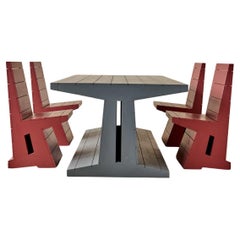
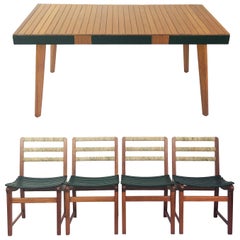
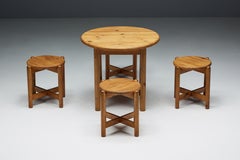
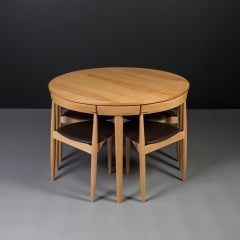
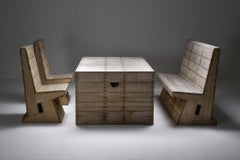
Pine Dining Set by Dom Hans Van Der Laan

Pine Dining Set by Dom Hans Van Der Laan

By Dom Hans van der Laan

Located in Philadelphia, PA

Constructed from lacquered pine planks and fastened using hinge nails, this rare Dom Hans van der Laan (The Netherlands 1904-1991) dining set features straight corners and beveled in...

Category

1980s Dutch Mid-Century Modern Vintage Dom Hans van der Laan Dining Room Sets

Materials

Metal

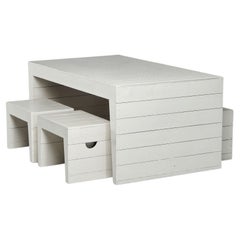
Jacques Uppelschoten Bossche School Dining Set, 1978

Jacques Uppelschoten Bossche School Dining Set, 1978

By Dom Hans van der Laan

Located in Roosendaal, Noord Brabant

Rare and very nice example of the "Bossche school" furniture by architect Jacques Uppelschoten, made for his own house at the Raffendonkstraat 20 in Oirschot. Dom Hans van der Laan s...

Category

1970s Dutch Mid-Century Modern Vintage Dom Hans van der Laan Dining Room Sets

Materials

Iron

Related Items
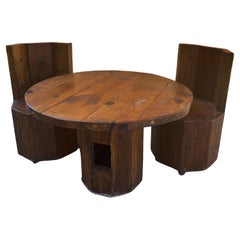
Rustic Knotty Pine Cabin Cottage Table & Chairs Handmade Kitchen Dining Set

Rustic Knotty Pine Cabin Cottage Table & Chairs Handmade Kitchen Dining Set

Located in Clifton Forge, VA

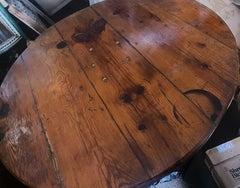
This is a fantastic little knotty pine handmade table with 2 chairs, perfect for a rustic cabin, cottage or breakfast nook. The pine is thick cut (the table top is 2 inches thick) an...

Category

Mid-20th Century American Folk Art Dom Hans van der Laan Dining Room Sets

Materials

Pine

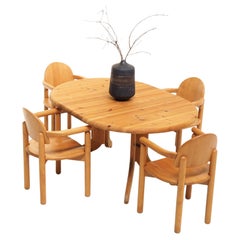
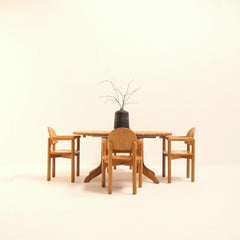
Solid Pine Dining Set by Rainer Daumiller for Hirtshals Savvaerk, Denmark

Solid Pine Dining Set by Rainer Daumiller for Hirtshals Savvaerk, Denmark

By Hirtshals Savvaerk, Rainer Daumiller

Located in Beerse, VAN

This warm and characterful dining set, designed by German designer Rainer Daumiller, is a wonderful example of late 20th-century Scandinavian craftsmanship. Produced in the 1970s–19...

Category

1980s Danish Scandinavian Modern Vintage Dom Hans van der Laan Dining Room Sets

Materials

Pine

Original Domus Dinning Set by Michael Van Beuren

Original Domus Dinning Set by Michael Van Beuren

$10,000 / set

H 33.47 in W 18.12 in D 18.9 in

Original Domus Dinning Set by Michael Van Beuren

By Michael van Beuren

Located in Mexico City, CDMX

We offer this original Domus dinning set (Table and 4 chairs) in pine wood and with the characteristic green Van Beuren color, designed by the American Bau...

Category

1950s Mexican Mid-Century Modern Vintage Dom Hans van der Laan Dining Room Sets

Materials

Pine

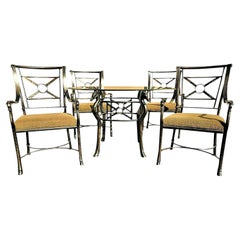
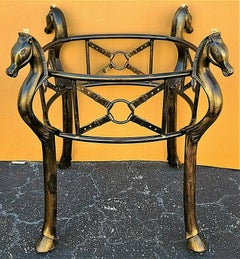
Jacques Adnet Hermes Style Iron Equestrian Dining Set

Jacques Adnet Hermes Style Iron Equestrian Dining Set

$2,695Sale Price / set|25% Off

H 30 in Dm 52 in

Jacques Adnet Hermes Style Iron Equestrian Dining Set

Located in Lake Worth, FL

For FULL item description click on More Details below. Shipping Quote Information The shipping quote stated in the listing was from 1st Dibs and they normally set all the costs and handle all the shipping details. However, if you let us know what 1st Dibs is quoting you and give us your zip code, we can sometimes ship it for less and get it to you faster. For a shipping quote, click on "ASK THE SELLER" under the purchase button and provide your zip code. Offering One Of Our Recent Palm Beach Estate Fine Furniture Acquisitions Of A 5 Piece Jacques Adnet Hermes Style Iron Equestrian Dining Set We called it our 4 Horseman...

Category

Late 20th Century Bauhaus Dom Hans van der Laan Dining Room Sets

Materials

Iron, Metal

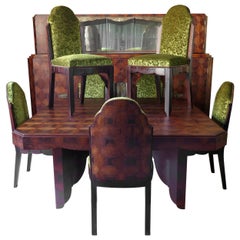
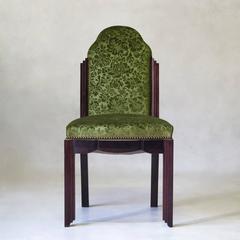
Art Deco Dining Room Set by Mercier Freres, France, 1920s

Art Deco Dining Room Set by Mercier Freres, France, 1920s

$27,899 / set

H 29.53 in W 63.78 in D 63.78 in

Art Deco Dining Room Set by Mercier Freres, France, 1920s

By Mercier Freres

Located in Isle Sur La Sorgue, Vaucluse

Rare and stunning Art Deco dining-room set by Mercier Freres, dating from the 1920s, comprising a large, square, extendable table, eight chairs, a sideboard with top display cabinet,...

Category

Early 20th Century French Art Deco Dom Hans van der Laan Dining Room Sets

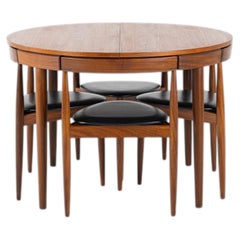
Roundette Dining Set by Hans Olsen for Frem Rojle (Table + 6 chairs), 1950s

Roundette Dining Set by Hans Olsen for Frem Rojle (Table + 6 chairs), 1950s

By Frem Røjle, Hans Olsen

Located in Ranst, VAN

Rare Danish “Roundette” dining set designed by Hans Olsen for Frem Rojle, Denmark, 1950s. This mid-century modern teak dining set includes a round ext...

Category

Mid-20th Century Danish Scandinavian Modern Dom Hans van der Laan Dining Room Sets

Materials

Teak

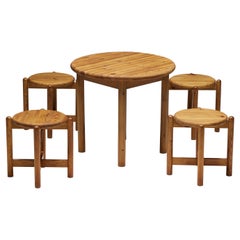
Pine Dining Set by Rainer Daumiller, Denmark, 1970s

Pine Dining Set by Rainer Daumiller, Denmark, 1970s

$4,750 / set

H 29.14 in Dm 31.89 in

Pine Dining Set by Rainer Daumiller, Denmark, 1970s

By Rainer Daumiller

Located in Antwerp, BE

1970s dining set by Rainer Daumiller, crafted entirely from solid pine. This timeless ensemble comprises a robust round dining table and four accompanying stools, each bearing the un...

Category

1970s Danish Mid-Century Modern Vintage Dom Hans van der Laan Dining Room Sets

Materials

Pine

Dining Set by IKEA, 1990s

Dining Set by IKEA, 1990s

$1,929

H 29.93 in W 22.05 in D 17.72 in

Dining Set by IKEA, 1990s

By IKEA

Located in Praha, CZ

Good original condition with some signs of use Faux leather in good condition with some signs of use Table shows some signs of use The table dimensions : H:76 W:84 D:84 Chair - high...

Category

1990s Bulgarian Mid-Century Modern Dom Hans van der Laan Dining Room Sets

Materials

Chrome

Dining Set by Hans Olsen, 4 Chairs, Round Extendable Table, Danish Modern, 1950s

Dining Set by Hans Olsen, 4 Chairs, Round Extendable Table, Danish Modern, 1950s

By Hans Olsen

Located in Wrocław, Poland

This great dining set was most probably designed by Hans Olsen in 1952 for Frem Røjle or designed in his style around 1950s, could have been also produced by some other manufacture. ...

Category

1950s Danish Mid-Century Modern Vintage Dom Hans van der Laan Dining Room Sets

Materials

Beech, Leather

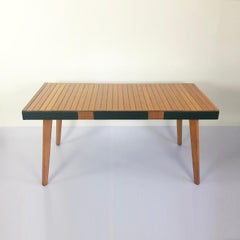
Coffee Table by Dom Hans van der Laan, Netherlands, 1960s

Coffee Table by Dom Hans van der Laan, Netherlands, 1960s

$6,050

H 16.93 in W 55.12 in D 21.66 in

Coffee Table by Dom Hans van der Laan, Netherlands, 1960s

By Dom Hans van der Laan

Located in Antwerp, BE

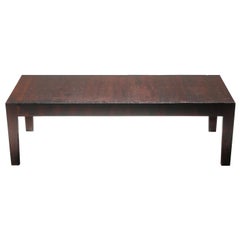
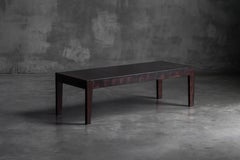
This coffee table was conceived within the close collaboration between Dom Hans van der Laan and the Dutch architect Jan de Jong during the postwar reconstruction period in the Nethe...

Category

Mid-20th Century Dutch Mid-Century Modern Dom Hans van der Laan Dining Room Sets

Materials

Copper

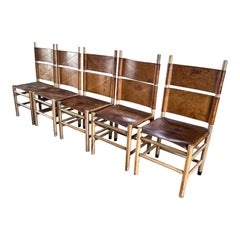
Carlo Scarpa Cognac Leather “Kentucky” Dining Chair for Bernini, 1977, Set of 5

Carlo Scarpa Cognac Leather “Kentucky” Dining Chair for Bernini, 1977, Set of 5

By Carlo Scarpa, Bernini

Located in Vicenza, IT

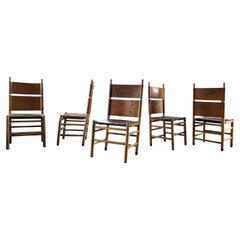
Set of 5 mod. 783 “Kentucky” dining chairs, designed by Carlo Scarpa for the Italian manufacturer Bernini in 1977. Structure made from oak and walnut timber. Seats and backrest made from cognac leather. Excellent vintage condition. Carlo Scarpa designed this chair for the “Scuderia” series., the last project he made for Bernini. The architect took inspiration from the “shaker” movement. He designed the chair slightly inclined at the front. This feature allows you to swing backward (until you lean on a wall) and remain in balance. Born in Venice on June 2nd, 1906, Carlo Scarpa began working at a very early age. A year after he had first qualified as an architect in 1926, he began working for the Murano glassmakers Cappellin & Co. in a consultative capacity. From 1927, Carlo Scarpa began to experiment with the Murano glass, and this research not only gave him excellent results here but would also inform his progress for many years to come. Between 1935 and 1937, as he entered his thirties, Carlo Scarpa accepted his first important commission, the renovation of Venice’s Cà Foscari. He adapted the spaces of this stately University building that stands on the Grand Canal banks, creating rooms for the Dean’s offices and a new hall for academic ceremonies; Mario Sironi and Mario De Luigi were charged with doing the restoration work on the frescos. After 1945, Carlo Scarpa found himself constantly busy with new commissions, including various furnishings and designs for the renovation of Venice’s Hotel Bauer and designing a tall building in Padua and a residential area in Feltre, all worth mentioning. One of his key works, despite its relatively modest diminished proportions, was the [bookshop known as the] Padiglione del Libro, which stands in Venice’s Giardini di Castello and clearly shows Scarpa’s passion for the works of Frank Lloyd Wright. In the years which were to follow, after he had met the American architect, Scarpa repeated similar experiments on other occasions, as can be seen, in particular, in the sketches he drew up in 1953 for villa Zoppas in Conegliano, which show some of his most promising work. However, this work unfortunately never came to fruition. Carlo Scarpa later created three museum layouts to prove pivotal in terms of how twentieth-century museums were set up from then on. Between 1955 and 1957, he completed extension work on Treviso’s Gipsoteca Canoviana [the museum that houses Canova’s sculptures] in Possagno, taking a similar experimental approach to the one he used for the Venezuelan Pavilion at [Venice’s] Giardini di Castello which he was building at the same time (1954-56). In Possagno Carlo Scarpa was to create one of his most significant ever works, which inevitably bears comparison with two other museum layouts that he was working on over the same period, those of: – Galleria Nazionale di Sicilia, housed in the Palazzo Abatellis in Palermo (1953-55) – Castelvecchio in Verona (1957- 1974), all of which were highly acclaimed, adding to his growing fame. Two other buildings, which are beautifully arranged in spatial terms, can be added to this long list of key works that were started and, in some cases, even completed during the nineteen fifties. After winning the Olivetti award for architecture in 1956, Scarpa began work in Venice’s Piazza San Marco on an area destined to house products made by the Industrial manufacturers Ivrea. Over the same period (1959-1963), he also worked on the renovation and restoration of the gardens and ground floor of the Fondazione Querini Stampalia in Venice, which many consider one of his greatest works. While he busied himself working on-site at the Fondazione Querini Stampalia, Carlo Scarpa also began work building a villa in Udine for the Veritti family. To shed some light on the extent to which his work evolved over the years, it may perhaps be useful to compare this work with that of his very last building, villa Ottolenghi Bardolino, which was near to completion at the time of his sudden death in 1978. Upon completion of villa Veritti over the next ten years, without ever letting up on his work on renovation and layouts, Scarpa accepted some highly challenging commissions, working on the Carlo Felice Theatre in Genoa and another theatre in Vicenza. Towards the end of this decade, in 1969, Rina Brion commissioned Carlo Scarpa to build the Brion Mausoleum in San Vito d’Altivole (Treviso), a piece he continued to work on right up until the moment of his death. Nevertheless, even though he was totally absorbed by work on this mausoleum, there are plenty of other episodes which can offer some insight into the final years of his career. As work on the San Vito d’Altivole Mausoleum began to lessen from 1973, Carlo Scarpa started building the new headquarters for the Banca Popolare di Verona. He drew up plans that were surprisingly different from the work he was carrying out at the same time on the villa Ottolenghi. However, the plans Carlo Scarpa drew up, at different times, for a monument in Brescia’s Piazza della Loggia commemorating victims of the terrorist attack on May 28th, 1974, make a sharp contrast to the work he carried out in Verona, almost as if there is a certain hesitation after so many mannered excesses. The same Pietas that informs his designs for the Piazza Della Loggia can also be seen in the presence of the water that flows through the Brion Mausoleum, almost as if to give a concrete manifestation of pity in this twentieth-century work of art. Carlo Scarpa has put together a highly sophisticated collection of structures, occupying the mausoleum’s L-shaped space stretching across both sides of the old San Vito d’Altivole cemetery. A myriad of different forms and an equally large number of different pieces, all of which are separate and yet inextricably linked to form a chain that seems to offer no promise of continuity, rising up out of these are those whose only justification for being there is to bear the warning “si vis vitam, para mortem,” [if you wish to experience life prepare for death] as if to tell a tale that suggests the circle of time, joining together the commemoration of the dead with a celebration of life. At the entrance of the Brion Mausoleum stand the “propylaea” followed by a cloister which ends by a small chapel, with an arcosolium bearing the family sarcophagi, the main pavilion, held in place on broken cast iron supports, stands over a mirror-shaped stretch of water and occupies one end of the family’s burial space. The musical sound of the walkways teamed with the luminosity of these harmoniously blended spaces shows how, in keeping with his strong sense of vision, Carlo Scarpa could make the most of all of his many skills to come up with this truly magnificent space. As well as a great commitment to architectural work, with the many projects which we have already seen punctuating his career, Carlo Scarpa also made many equally important forays into the world of applied arts. Between 1926 and 1931, he worked for the Murano glassmakers Cappellin, later taking what he had learned with him when he went to work for the glassmakers Venini from 1933 until the 1950s. The story of how he came to work on furniture design is different, however, and began with the furniture he designed to replace lost furnishings during his renovation of Cà Foscari. The later mass-produced furniture started differently, given that many pieces were originally one-off designs “made to measure.” Industrial manufacturing using these designs as prototypes came into being thanks to the continuity afforded him by Dino Gavina, who, as well as this, also invited Carlo Scarpa to become president of the company Gavina SpA, later to become SIMON, a company Gavina founded eight years on, in partnership with Maria Simoncini (whose own name accounts for the choice of company name). Carlo Scarpa and Gavina forged a strong bond in 1968 as they began to put various models of his into production for Simon, such as the “Doge” table, which also formed the basis for the “Sarpi” and “Florian” tables. In the early seventies, other tables that followed included “Valmarana,” “Quatour,” and “Orseolo.” While in 1974, they added couch and armchair “Cornaro” to the collection and the “Toledo” bed...

Category

1970s Italian Mid-Century Modern Vintage Dom Hans van der Laan Dining Room Sets

Materials

Walnut, Leather, Plastic
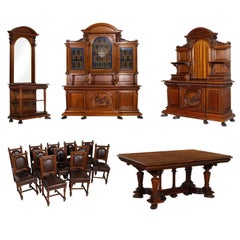
Italian Renaissance Style Set Dining Room 16 Pieces Walnut Hand-Carved

Italian Renaissance Style Set Dining Room 16 Pieces Walnut Hand-Carved

Located in Vigonza, Padua

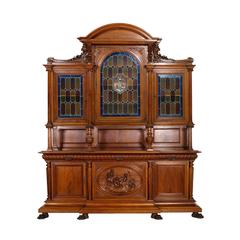
Code: FQ58 Period: 19th century Style: Renaissance Dining room of the School of Arts in Monza, 19th century, walnut hand-carved consists of: sideboard showcase with leaded cathedral glass; sideboard with central mirror; console with large mirror; table with 12 chairs lined leather. Measures cm (height, length, depth): sideboard with showcase...

Category

19th Century Italian Renaissance Antique Dom Hans van der Laan Dining Room Sets

Materials

Leather, Glass, Walnut

Previously Available Items
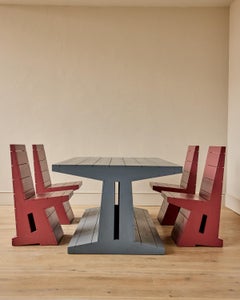
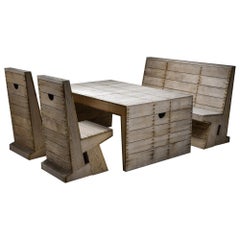
Dom Hans van der Laan & Jan De Jong Outdoor Dining Set

Dom Hans van der Laan & Jan De Jong Outdoor Dining Set

Sold

H 29.93 in W 66.93 in D 43.31 in

Dom Hans van der Laan & Jan De Jong Outdoor Dining Set

By Dom Hans van der Laan, Jan de Jong

Located in Antwerp, BE

Dom Hans van der Laan, Jan de Jong, Bossche school, outdoor dining set, Netherlands, 1970s. Rare set in cedar consisting of a table, bench and two chair...

Category

Late 20th Century Dutch Minimalist Dom Hans van der Laan Dining Room Sets

Materials

Copper

Dom Hans Van Der Laan dining room sets for sale on 1stDibs.

Dom Hans van der Laan dining room sets are available for sale on 1stDibs. These distinctive items are frequently made of wood and are designed with extraordinary care. Many of the original dining room sets by Dom Hans van der Laan were created in the mid-century modern style in netherlands during the 1970s. Prices for Dom Hans van der Laan dining room sets can differ depending upon size, time period and other attributes — on 1stDibs, these items begin at $13,869 and can go as high as $13,869, while a piece like these, on average, fetch $13,869.