Doris Lee Art

1905-1983

Doris Lee, born in Aledo, Illinois, was one of the most successful artists of the depression era. Lee studied at the Kansas City Art Institute with the noted American impressionist Ernest Lawson. She also studied in Paris with the influential cubist painter Andre Lhote and at the California School of Fine Arts, San Francisco, with Arnold Blanch, whom she later married. In 1931, Lee moved permanently to Woodstock, New York and established herself as a leader in an important artist colony. The town’s proximity to New York City guaranteed a regular flow of artists between the colony and the metropolis, keeping in touch with current development in the arts. The Art Students League of New York helped to create that flow when it established a summer school in Woodstock in 1906 that brought hundreds of art students into the town each summer. The 1930s marked the beginning of a long and productive career for Doris Lee. Her work included easel paintings, murals, prints and illustrations, as well as costume, textile and ceramic design. Lee’s work from this period was concerned with life in rural America, and in a stylistic and ideological sense, had much in common with regionalism. Lee portrayed the simple joys of American life in touching, nostalgic and sometimes fanciful ways. Lee’s work was exhibited in the first Whitney Biennial exhibition in 1931. Her earliest major career achievement came in 1935 when she was awarded the Logan Prize for her painting Thanksgiving from the Art Institute of Chicago. Shortly after the Logan Prize, Lee was awarded two commissions by the U.S. Department of the Treasury for murals of the Washington, D.C. Post Office Building. An additional boost to the artist’s fame and prestige came in 1937 with the purchase of her painting ‘Catastrophe’ by the Metropolitan Museum of Art. From 1936–39, Lee was invited to be a summer guest artist at the Colorado Springs Fine Art Center. The 1930s finished with a flourish when Lee was invited to exhibit in the 1939 New York World’s Fair. This early support given to Lee by the museums and the art establishment was an impressive accomplishment for a young woman struggling for acceptance in the male-dominated art world of the time.

Starting in the late 1930s, Lee and her husband, Arnold Blanch, began to spend their winters in Key West, Florida. During the winters of the 1940s through the 1960s, Lee painted her unique Florida subjects: fishermen, bathers, beaches, mangrove swamps and Florida’s plant and wildlife. Lee combined the sophistication of her knowledge of pure abstraction with her love of American folk art to create her unique style. In the 1940s, Lee’s work became more stylized, more concerned with pure form and color. Her simple, flat paintings portrayed gardens, seasonal landscapes and women and children, as well as birds and other beasts. In 1943 and 1944, Lee was the guest artist at Michigan State College in Lansing, Michigan. She received many painting assignments from Life magazine during these years. She was awarded the prestigious Carnegie Prize in 1944 and was included in the 15 of the annual juried exhibition at Pennsylvania Academy of the Fine Arts.

Lee worked in Hollywood, California and Hawaii during the winter months of 1945. She toured Central America in 1946 and went to North Africa in 1951. During the 1950s until the end of the 1960s, Lee’s dealers have Associated American Artists Gallery and World House Galleries in New York City and the Rudolf Gallery in Woodstock. She participated in both one-man and group exhibitions with these dealers. Her paintings from this period are characterized by a bold move to pure abstraction. They are richly colored and geometric in design, with realistic references still discernible. Lee produced a significant body of abstract work during the 1960s. In these paintings, she combined her knowledge of international style, her interest in American folk art and her early training with Andre Lhote in abstract painting. The works celebrate Lee’s private experience of the world and synthesize her personal and emotional response to her subject matter. To engage the viewer’s entire field of vision, Lee used broad expanses of color, often geometrically organized. During this period, Lee experimented with black and white, biomorphic shapes and calligraphic brushwork. The late work is painterly yet contains the subtle, wry humor of her earlier work. Doris Lee retired from painting at the end of the 1960s. She died in Clearwater, Florida, in 1983.

to
4
4
3
1
1
1
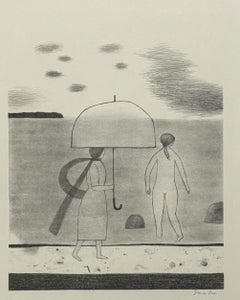
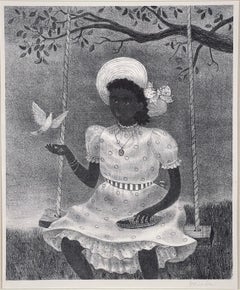
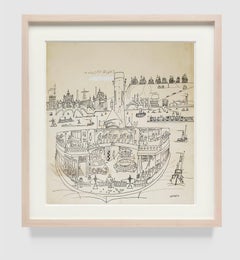
THE DOVE

THE DOVE

By Doris Lee

Located in Portland, ME

Lee, Doris (American, 1905-1983). THE DOVE. Lithograph, 1952. Edition of 250 published by Associated American Artists. Signed in pencil. 11 3/8 x 9 1/2 inches...

Category

1950s Doris Lee Art

Materials

Lithograph

Related Items
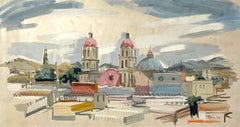
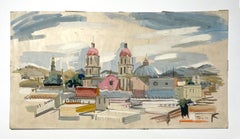
A Charming 1940s Modern Watercolor of a City in Mexico w/ Cathedral and Rooftops

A Charming 1940s Modern Watercolor of a City in Mexico w/ Cathedral and Rooftops

By Rudolph Pen

Located in Chicago, IL

A Charming 1940s Watercolor of a City in Mexico with Cathedral and Rooftops by Noted Chicago Artist, Rudolph T. Pen. A well executed early work by Pen, completed during the artist's...

Category

1940s American Modern Doris Lee Art

Materials

Paper, Watercolor, Gouache

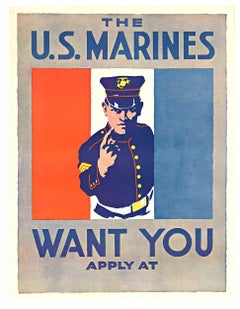
Original 'The U. S. Marines Want You' vintage military recruiting poster

Original 'The U. S. Marines Want You' vintage military recruiting poster

Located in Spokane, WA

Original vintage poster: The U.S. Marines Want You. This military vintage poster is archival linen-backed and in fine condition, ready to frame. There is no date, artist, or printer'...

Category

1910s American Realist Doris Lee Art

Materials

Lithograph

Barbra Stresiand "Belle of 14th Street" 1973 CBS TV Special 20th Century Litho

Barbra Stresiand "Belle of 14th Street" 1973 CBS TV Special 20th Century Litho

By Albert Al Hirschfeld

Located in New York, NY

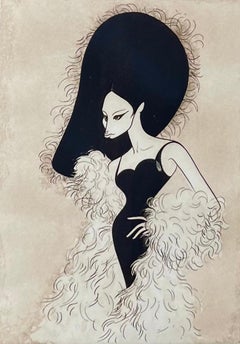
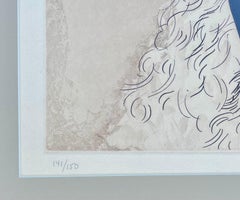
Barbra Stresiand "Belle of 14th Street" 1973 CBS TV Special 20th Century Litho Signed and numbered 10/150 in pencil, lower margin. Etching, 13.5” x 9.75”. Framed 21.25” x 17.25”. Pulled in 1975. Belle of 14th Street After two successful television shows on CBS, Barbra's manager, Marty Erlichman told the press, “We don't intend to go to the well once too often. The next special will have other performers. However, Barbra will never become just another hostess for just another musical variety show. Whatever we decide to do in the future shows, she will dominate in a unique fashion.” Barbra’s third television special for CBS and her sponsor, Monsanto, was titled The Belle of 14th Street . In February 1966, shortly after finishing up Color Me Barbra , Streisand and husband Elliott Gould took a second honeymoon in Paris. The trip was financed by her television corporate sponsor, Chemstrand. Barbra told the press, “I’m here to purchase the wardrobe for my next TV special. Cost is no object because my sponsor is picking up the tab.” At that point the theme of her third TV show would be fashion, and Paris offered many couture choices. Barbra was seen at a Dior fashion show wearing not the designer’s clothes, but a jaguar suit and hat she had designed herself. In all, it is said Barbra chose nine Dior outfits at a cost of $150,000. However, Barbra Streisand's third television special for CBS was postponed. In March 1966, Barbra flew to London to appear at the Prince of Wales Theatre in Funny Girl . Shortly after beginning her run in London, Barbra announced her pregnancy. Not only did that cause her concert tour to be abbreviated, but Barbra’s television special was postponed as well. Barbra told the BBC in July 1966: “I also can’t do my third television show, which I was supposed to do here [London].” Returning to the States, Barbra performed four concert dates, and then retired to enjoy the rest of her pregnancy and give birth to her son, Jason, in December 1966. CBS and Chemstrand wanted a new special by the end of 1967, therefore production on the show picked up momentum in March 1967. (Barbra was due in Hollywood in May to begin shooting the Funny Girl film.) The format and theme of the television show had changed, too. Instead of centering on fashion, Barbra’s next special would be situated in a 1900’s Vaudeville theater. “We were all determined that the show not be just a variety format,” director Joe Layton said. “We wanted something different. So we hit upon the idea of restaging a vaudeville performance. All the acts, songs, skits and specialties had to be derivative of the period between 1895-1912.” Barbra’s creative collaborators did meticulous research on Vaudeville — “We even called George Burns in Hollywood and Jack Pearl,” said Barbra’s manager, Marty Erlichman. Entitled The Belle of 14th Street , the new special would allow Barbra to play several different characters but not have to shoulder the burden of carrying another one-woman show—this time Streisand would be accompanied by guest stars: Broadway actor Jason Robards; Vaudeville veteran John Bubbles; and Lee Allen...

Category

1970s Performance Doris Lee Art
Materials

Lithograph

Israeli Folk Art Hebrew Naive Judaica Lithograph Jewish Holiday Shavuot

Israeli Folk Art Hebrew Naive Judaica Lithograph Jewish Holiday Shavuot

By Shalom Moskovitz

Located in Surfside, FL

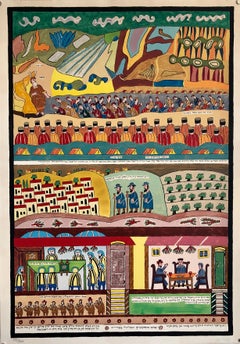
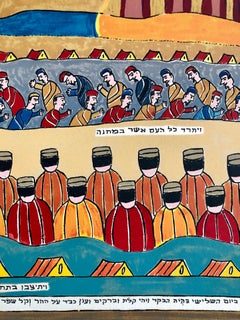
Vintage pencil signed and numbered limited edition lithograph on deckle edged Arches paper. Shalom of Sefad (Shulem der Zeigermacher in Yiddish Shalom Moskowitz) Shalom of Tzfat lived for over seventeen years in his native town of Safed in the hills of the Galilee. There he worked as a watchmaker, stonemason and silversmith, during the 50's. Since then this self-taught artist has achieved an international reputation. Shalom is a naive painter, but not a rustic one, he expresses a very elaborate way of thinking in his own way. While belonging to Hasidism, Shalom of Safed uses his artistic talents positively. 'I don't paint', he explains, 'to tell the story of the Bible in color and lines. His works have been exhibited in prominent museums and galleries in Europe and the United States, and are included in the collections of the Museums of Modern Art in Paris and New York, the Israel Museum in Jerusalem, the Stedelijk Museum in Amsterdam, the Modern Museum in Stockholm and the Jewish Museum in New York He has exhibited alongside all of the Israeli great artists. Israel has had a Vibrant Folk Art, Naive art scene for a long time now artists like Yisrael Paldi, Nahum Guttman, Reuven Rubin and even Yefim Ladizhinsky had naive periods. The most well know if the strict naive artists are Shalom of Safed, Irene Awret...

Category

20th Century Folk Art Doris Lee Art
Materials

Lithograph

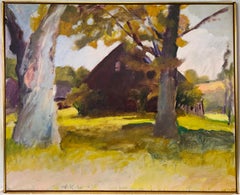
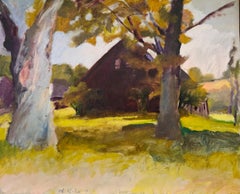
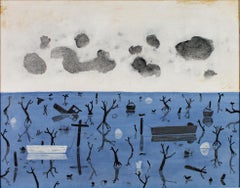
“Middleton Place II, 1974” Wolf Kahn, West Brattleboro, Vermont Barn Oil Canvas

“Middleton Place II, 1974” Wolf Kahn, West Brattleboro, Vermont Barn Oil Canvas

By Wolf Kahn

Located in Yardley, PA

A fantastic early painting from Kahn’s iconic barn series depicting Dr. Middleton’s property in West Brattleboro, VT. Here, Kahn turns a familiar rural motif into something hovering ...

Category

1970s American Modern Doris Lee Art
Materials

Canvas, Oil

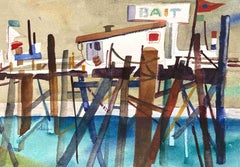
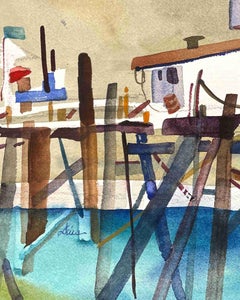
Delightful 1950s Cubist Harbor Scene by Woman Artist Rita Duis (Astley-Bell)

Delightful 1950s Cubist Harbor Scene by Woman Artist Rita Duis (Astley-Bell)

Located in Chicago, IL

A Mid-Century Modern, 1950s Cubist watercolor of a brightly-colored dock scene by Chicago and New York artist Rita Duis (Astley-Bell). Signed "Duis", lower left. Artwork size: 8 1/...

Category

1950s American Modern Doris Lee Art
Materials

Watercolor, Paper

Turner B. Messick 1938 Colorado Winter Landscape Watercolor, American Modern

Turner B. Messick 1938 Colorado Winter Landscape Watercolor, American Modern

Located in Denver, CO

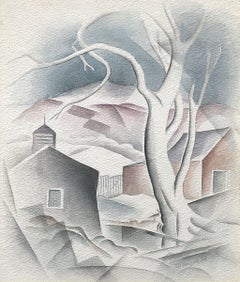
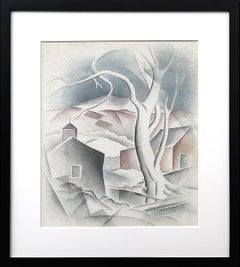
A beautifully atmospheric 1938 watercolor by noted American Modernist Turner B. Messick (1878–1952) depicting a serene winter landscape in Colorado. A graceful leafless tree anchors ...

Category

1930s American Modern Doris Lee Art
Materials

Watercolor

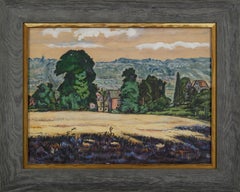
"Woodstock Landscape" Albert Heckman, Modernist, Bright Landscape

"Woodstock Landscape" Albert Heckman, Modernist, Bright Landscape

By Albert Heckman

Located in New York, NY

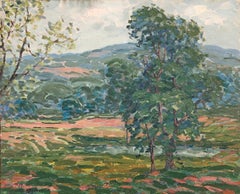
Albert Heckman Woodstock Landscape Oil on board 8 1/2 x 10 1/2 inches Albert Heckman was born in Meadville, Western Pennsylvania, 1893. He went to New York City to try his hand at ...

Category

1940s American Modern Doris Lee Art
Materials

Oil, Board

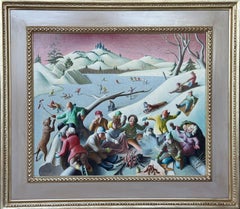
"Skating Party" WPA Regionalism American Scene Mid 20th Century Modern Realism

"Skating Party" WPA Regionalism American Scene Mid 20th Century Modern Realism

By Roger Medearis

Located in New York, NY

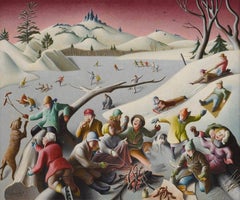
"Skating Party" WPA Regionalism American Scene Mid 20th Century Modern Realism Roger Medearis (1920 – 2001) "Skating Party" 20 x 24 inches Tempera on board, 1949 Signed Medearis and...

Category

1980s American Modern Doris Lee Art
Materials

Oil, Board

Houses in Zoar, Ohio Landscape, Early 20th Century Cleveland School

Houses in Zoar, Ohio Landscape, Early 20th Century Cleveland School

By August F. Biehle

Located in Beachwood, OH

August Frederick Biehle (1885-1979) Houses in Zoar, c. 1921 Gouache, litho crayon, colored pencil and graphite on paper Signed lower right 14 x 19 inches 20.25 x 25.25 inches, framed...

Category

1920s American Modern Doris Lee Art
Materials

Crayon, Gouache, Color Pencil, Graphite

Previously Available Items
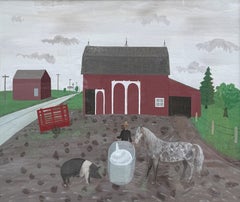
"Michigan Farmyard" Doris Lee, Modernist American Landscape, Red Barn, Farmland

"Michigan Farmyard" Doris Lee, Modernist American Landscape, Red Barn, Farmland

By Doris Lee

Located in New York, NY

Doris Lee Michigan Farmyard, 1946 Signed lower right Gouache on paper 13 1/2 x 17 inches Provenance The artist The J.L. Hudson Company Collection, Detroit, Michigan A Public Institu...

Category

1940s American Modern Doris Lee Art
Materials

Paper, Gouache

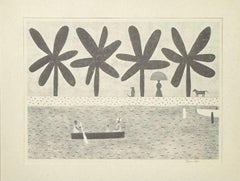
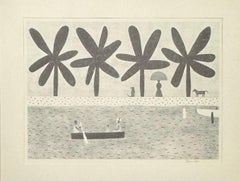
1961 Modernist FOLK ART Original Pencil Lithograph “Along the Waterway”

1961 Modernist FOLK ART Original Pencil Lithograph “Along the Waterway”

By Doris Lee

Located in New York, NY

Doris Lee Lithograph “Along the Waterway” 1961 Image Size: 10 1/16 x 14 in inches Sheet Size: 12 7/8 x 16 5/16inches Signed lower left Condition: Good Provenance: ASA Doris Emrick Lee...

Category

1960s Folk Art Doris Lee Art
Materials

Lithograph, Archival Pigment

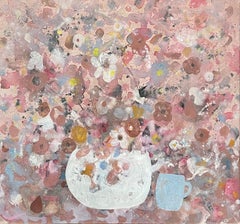
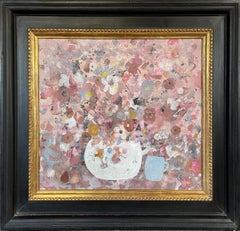
"Floral & Teacup, " Doris Lee Still Life, Spring Pink Still Life, Woodstock

"Floral & Teacup, " Doris Lee Still Life, Spring Pink Still Life, Woodstock

By Doris Lee

Located in New York, NY

Doris Lee (1904 - 1983) Floral & Teacup Oil on canvas 18 x 20 inches Signed lower right An American Scene painter of realistic subjects in a style that combined Realism and Modernis...

Category

Mid-20th Century American Modern Doris Lee Art
Materials

Canvas, Oil

20th Century American Landscape Color Lithography, Blossom Time by Doris Lee

20th Century American Landscape Color Lithography, Blossom Time by Doris Lee

By Doris Lee

Located in West Palm Beach, FL

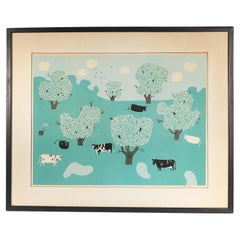
A black wooden frame, vintage American turquoise-blue landscape lithography by Doris Lee, on paper in good condition. The picture, print represents the Folk Art period, depicting a herd of cows among flourishing trees in a field. The Blossom Time lithograph is pencil signed on the lower right from an edition of 300 signed on the lower left. The AAA Certificate was certified, issued from the Associated American Artists, located on the back side. Wear consistent with age and use. Circa 1958 United States. Without the frame: 16.5 " H x 22" W Doris Emrick Lee...
Category

Mid-20th Century American Folk Art Doris Lee Art
Materials

Wood, Paper

Doris Lee art for sale on 1stDibs.

Find a wide variety of authentic Doris Lee art available for sale on 1stDibs. If you’re browsing the collection of art to introduce a pop of color in a neutral corner of your living room or bedroom, you can find work that includes elements of blue and other colors. You can also browse by medium to find art by Doris Lee in lithograph, paint, gouache and more. Much of the original work by this artist or collective was created during the 20th century and is mostly associated with the modern style. Not every interior allows for large Doris Lee art, so small editions measuring 12 inches across are available. Customers who are interested in this artist might also find the work of Cecil Crosley Bell, Charles Quest, and Luigi Lucioni. Doris Lee art prices can differ depending upon medium, time period and other attributes. On 1stDibs, the price for these items starts at $750 and tops out at $47,000, while the average work can sell for $8,200.

Artists Similar to Doris Lee