Gordon House More Prints

British, b. 1932
The Guardian wrote of Gordon House, upon his death in 2004: Many of the works made during his last years by the painter and graphic designer Gordon House, who has died aged 71, referred back to his birthplace in the Swansea valley. He spent his earliest years in the steel town of Pontardawe. In Tin-pan Valley, the memoir he published earlier this year, he recalled "the clamour of steel mills ... the tinplate works and pithead gear" and "dynamite blasting as coal seams were struck higher up the valley". Unemployment and the depression of the 1930s led Gordon's parents to take him from the valleys of south Wales to the order and designed coherence of Letchworth, "Hertfordshire's first garden city". After leaving school at 14, he went to study, first, at Luton School of Art. For a while after that, he worked in a hospital, before, with the aid of a scholarship, moving on to St Albans School of Art. By 1961, Gordon had become established among a new generation of artists as an independently minded and adventurous painter and designer. The previous year, he had shown his large, bold, hard-edged canvasses at the important London "Situation" exhibition of large-scale abstract painting, and had designed the catalogue for that exhibition. As the 1960s moved on, Gordon designed for the pop world. He worked for the Beatles, designing their White album and the back of the Sergeant Pepper album, for which his longtime friend Peter Blake designed the front. Later, he designed Wings' first album. He delighted in the creative energy of others, and so could respond to the talents of musicians and artists alike. Gordon made paintings throughout his life as a designer. During the 1960s and 70s, his canvasses and prints reflected the dramatic tensions of his graphic design; by the 1980s, Wales had become his constant subject matter. The surface, texture and colour of his paintings softened. No doubt, he needed to pay homage to the places and the people who had shaped him, just as he always paid homage to the artists for whom he designed. His canvasses reduced in size, becoming palm-of-the-hand landscapes. He spent much time in Wales and, in his final years, he used his brush to walk a path through memories of collieries, valleys, smoking stacks, rows of cottages and the people who had first nurtured him.
to
6
2
Overall Width
to
Overall Height
to
3
32
743
451
231
153
8
8
2
6
8
Artist: Gordon House
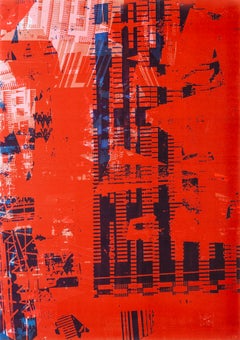
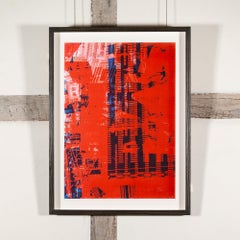
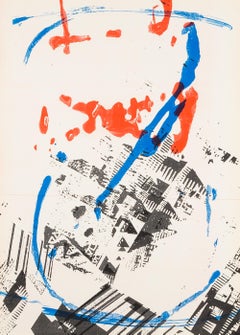
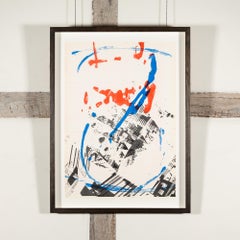
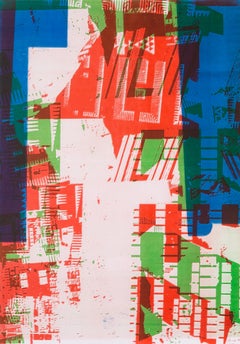
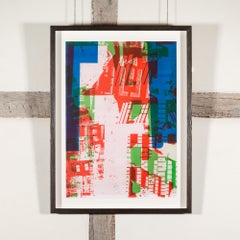
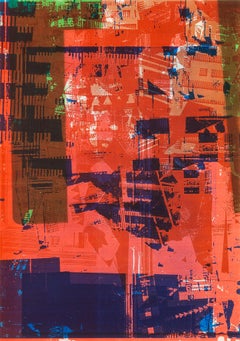
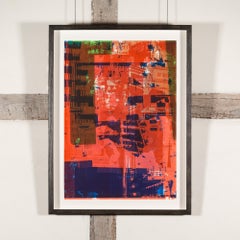
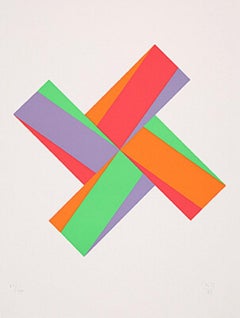
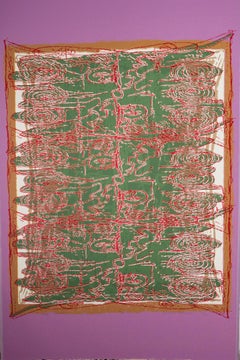
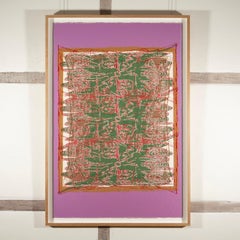
Red Tracery, from the After Powhatan Suite - Large Pink + Green Abstract Print

Red Tracery, from the After Powhatan Suite - Large Pink + Green Abstract Print

By Gordon House

Located in Kingsclere, GB

Gordon House 1932-2004 Red Tracery, from the After Powhatan Suite, 1992 unframed, screenprint 101.6 x 71.1 cm 40 x 28 in signed, titled, dated and numbered 4/20 in pencil Gordon Hou...

Category

20th Century Abstract Gordon House More Prints

Materials

Screen

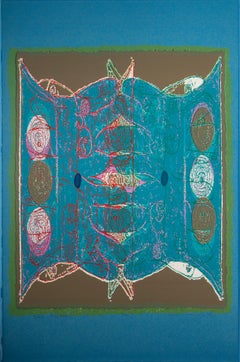
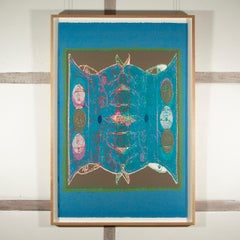
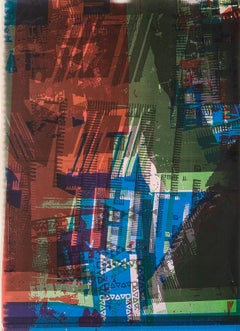
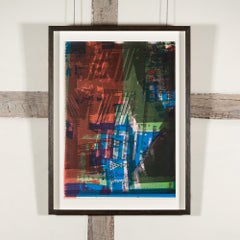
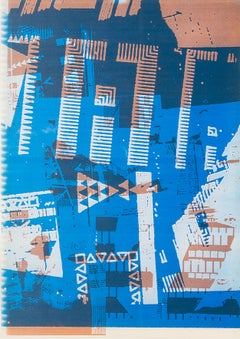
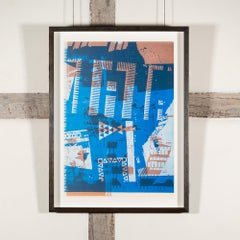
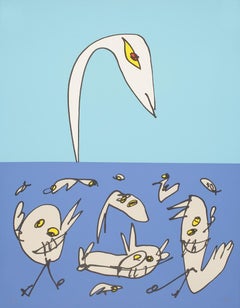
Blue Buckler, from the After Powhatan Suite - Large Blue + Green Abstract Print

Blue Buckler, from the After Powhatan Suite - Large Blue + Green Abstract Print

By Gordon House

Located in Kingsclere, GB

Gordon House 1932-2004 Blue Buckler, from the After Powhatan Suite, 1992 unframed, screenprint 121 x 80.6 cm 47 5/8 x 31 3/4 in signed, titled, dated and numbered 4/20 in pencil Gor...

Category

20th Century Abstract Gordon House More Prints

Materials

Screen

The Idea, from the FLW/ Highbury Portfolio Suite - 20th Century Abstract Print

The Idea, from the FLW/ Highbury Portfolio Suite - 20th Century Abstract Print

By Gordon House

Located in Kingsclere, GB

Gordon House 1932-2004 The Idea, from the FLW/ Highbury Portfolio Suite, 1987 homemade print from an office copy machine 42 x 29.7 cm 16 1/2 x 11 3/4 in Gordon House was born in 193...

Category

20th Century Gordon House More Prints

Materials

Black and White

Site Visit, from the FLW/ Highbury Portfolio Suite - 20th C Abstract Print

Site Visit, from the FLW/ Highbury Portfolio Suite - 20th C Abstract Print

By Gordon House

Located in Kingsclere, GB

Gordon House 1932-2004 Site Visit, from the FLW/ Highbury Portfolio Suite, 1987 homemade print from an office copy machine 42 x 29.7 cm 16 1/2 x 11 3/4 in Gordon House was born in 1...

Category

Late 20th Century Abstract Gordon House More Prints

Materials

Color

Working, from the FLW/ Highbury Portfolio Suite - 20th Century Abstract Print

Working, from the FLW/ Highbury Portfolio Suite - 20th Century Abstract Print

By Gordon House

Located in Kingsclere, GB

Gordon House 1932-2004 Working, from the FLW/ Highbury Portfolio Suite, 1987 homemade print from an office copy machine 42 x 29.7 cm 16 1/2 x 11 3/4 in Gordon House was born in 1932...

Category

20th Century Gordon House More Prints

Materials

Black and White

Still Working, from the FLW/ Highbury Portfolio Suite - 20th C Abstract Print

Still Working, from the FLW/ Highbury Portfolio Suite - 20th C Abstract Print

By Gordon House

Located in Kingsclere, GB

Gordon House 1932-2004 Still Working, from the FLW/ Highbury Portfolio Suite, 1987 homemade print from an office copy machine 42 x 29.7 cm 16 1/2 x 11 3/4 in Gordon House was born i...

Category

20th Century Gordon House More Prints

Materials

Black and White

Related Items
Chinatown Portfolio II Plate Three Signed Silkscreen Large 40 x 38" Greek artist

Chinatown Portfolio II Plate Three Signed Silkscreen Large 40 x 38" Greek artist

By Chryssa Vardea-Mavromichali

Located in New York, NY

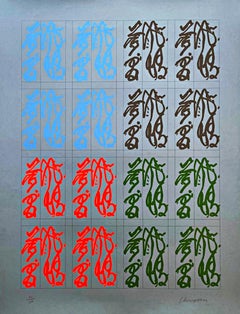
Chryssa Chinatown Portfolio II, Plate Three, ca. 1978 Silkscreen on thick wove paper 40 × 30 1/2 inches (Ships rolled in a tube measuring 35 x 5 x 5) Pencil signed and numbered 36/150 on the front; bears printers stamp on the back Unframed from the Chinatown Portfolio Printed by Atelier Arco in Paris (with stamp on the back of the print) from the Chinatown Portfolio Renowned Greek-American artist Chryssa was preoccupied with the concept of Chinese letters as art forms, which she explores in her Chinatown silkscreen series. Her deliberate experimentations yield an elegant and compelling result. Chryssa Biography Chryssa Vardea...

Category

1970s Abstract Gordon House More Prints

Materials

Screen, Pencil, Graphite

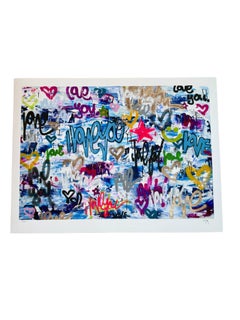
All of My Love Poems - Hand Finished Print by Amber Goldhammer

All of My Love Poems - Hand Finished Print by Amber Goldhammer

By Amber Goldhammer

Located in New York, NY

All My Love Poems — Hand-Finished Print, 2026 — Amber Goldhammer All My Love Poems is a hand-finished print by Los Angeles–based artist Amber Goldhammer, known for her vibrant, emot...

Category

2010s Contemporary Gordon House More Prints

Materials

Ink, Spray Paint, Acrylic

Untitled

Untitled

By Geneviève Claisse

Located in Columbia, MO

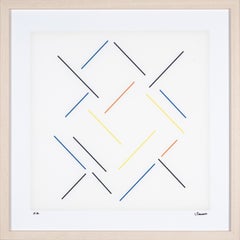
Untitled 2015 Color serigraph 15.75 x 15.75 inches Framed: 21 x 21 inches

Category

2010s Abstract Geometric Gordon House More Prints

Materials

Screen

Düsseldorf (German Cities) by Dieter Roth monuments vintage postcard light blue

Düsseldorf (German Cities) by Dieter Roth monuments vintage postcard light blue

By Dieter Roth

Located in New York, NY

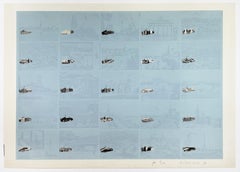
Düsseldorf (German Cities), 1970 24 x 33.8 in. / 61 x 86 cm Screen print in one color on offset lithograph, black on white card. “for Paul” written in pencil lower middle. Signed and...

Category

1960s Abstract Gordon House More Prints

Materials

Lithograph, Screen

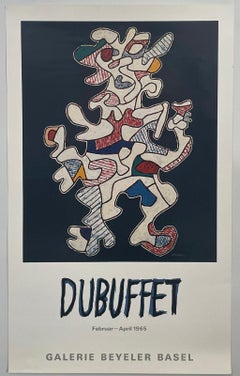
Original Vintage Poster Jean Dubuffet Gallery Exhibition Galerie Beyeler Basel

Original Vintage Poster Jean Dubuffet Gallery Exhibition Galerie Beyeler Basel

By Jean Dubuffet

Located in Surfside, FL

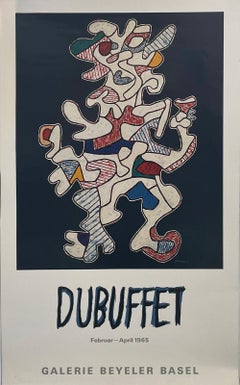
Galerie Beyeler Exhibition Poster Signed in plate Jean Philippe Arthur Dubuffet (French, 1901 – 1985) was a French painter and sculptor of the École de Paris (School of Paris). His idealistic approach to aesthetics embraced so-called "low art" and eschewed traditional standards of beauty in favor of what he believed to be a more authentic and humanistic approach to image-making. He is perhaps best known for founding the art brut movement, and for the collection of works—Collection de l'art brut—that this movement spawned. Dubuffet enjoyed a prolific art career, both in France and in America, and was featured in many exhibitions throughout his lifetime. His childhood friends included the writers Raymond Queneau and Georges Limbour. He moved to Paris in 1918 to study painting at the Académie Julian, becoming close friends with the artists Juan Gris, André Masson, and Fernand Léger. Six months later, upon finding academic training to be distasteful, he left the Académie to study independently. During this time, Dubuffet developed many other interests, including free noise music, poetry, and the study of ancient and modern languages. Dubuffet also traveled to Italy and Brazil, and upon returning to Le Havre in 1925, he married for the first time and went on to start a small wine business in Paris. He took up painting again in 1934 when he made a large series of portraits in which he emphasized the vogues in art history. In 1942, Dubuffet decided to devote himself again to art. He often chose subjects for his works from everyday life, such as people sitting in the Paris Métro or walking in the country. Dubuffet painted with strong, unbroken colors, recalling the palette of Fauvism, as well as the Brucke painters, with their juxtaposing and discordant patches of color. In 1943, the writer George Limbour, a friend of Dubuffet from childhood, took Jean Paulhan to the artist's studio. Dubuffet's work at that time was unknown. Paulhan was impressed and the meeting proved to be a turning point for Dubuffet. His first solo show came in October 1944, at the Galerie Rene Drouin in Paris. This marked Dubuffet's third attempt to become an established artist In 1945, Dubuffet attended and was strongly impressed by a show in Paris of Jean Fautrier paintings in which he recognized meaningful art which expressed directly and purely the depth of a person. Emulating Fautrier, Dubuffet started to use thick oil paint mixed with materials such as mud, sand, coal dust, pebbles, pieces of glass, string, straw, plaster, gravel, cement, and tar. This allowed him to abandon the traditional method of applying oil paint to canvas with a brush; instead, Dubuffet created a paste into which he could create physical marks, such as scratches and slash marks. The impasto technique of mixing and applying paint was best manifested in Dubuffet's series 'Hautes Pâtes' or Thick Impastoes, which he exhibited at his second major exhibition, entitled Microbolus Macadam & Cie/Hautes Pates in 1946 at the Galérie René Drouin. His use of crude materials and the irony that he infused into many of his works incited a significant amount of backlash from critics, who accused Dubuffet of 'anarchy' and 'scraping the dustbin'. He did receive some positive feedback as well—Clement Greenberg took notice of Dubuffet's work and wrote that '[f]rom a distance, Dubuffet seems the most original painter to have come out of the School of Paris since Joan Miro...' Greenberg went on to say that 'Dubuffet is perhaps the one new painter of real importance to have appeared on the scene in Paris in the last decade.' Indeed, Dubuffet was very prolific in the United States in the year following his first exhibition in New York (1951). After 1946, Dubuffet started a series of portraits, with his own friends Henri Michaux, Francis Ponge, George Limbour, Jean Paulhan and Pierre Matisse serving as 'models'. He painted these portraits in the same thick materials, and in a manner deliberately anti-psychological and anti-personal, as Dubuffet expressed himself. A few years later he approached the surrealist group in 1948, then the College of Pataphysique in 1954. He was friendly with the French playwright, actor and theater director Antonin Artaud, he admired and supported the writer Louis-Ferdinand Céline and was strongly connected with the artistic circle around the surrealist André Masson. In 1944 he started an important relationship with the resistance-fighter and French writer and publisher Jean Paulhan who was also strongly fighting against "intellectual terrorism", as he called it. Reception in America Corps de dame jaspé [Marbleized Body of a Lady] (1950) at the National Gallery of Art in 2022 Dubuffet achieved very rapid success in the American art market, largely due to his inclusion in the Pierre Matisse exhibition in 1946. His association with Matisse proved to be very beneficial. Matisse was a very influential dealer of contemporary European Art in America, and was known for strongly supporting the School of Paris artists. Dubuffet's work was placed among the likes of Pablo Picasso, Georges Braque, and Henri Rouault at the gallery exhibit, and he was one of only two young artists to be honored in this manner. A Newsweek article dubbed Dubuffet the 'darling of Parisian avant-garde circles,' and Greenberg wrote positively about Dubuffet's three canvases in a review of the exhibit. In 1947 Dubuffet had his first solo exhibition in America, in the same gallery as the Matisse exhibition. Reviews were largely favorable, and this resulted in Dubuffet having at least an annual, if not a biannual exhibition at that gallery. His reception in America was very closely linked to and dependent upon the New York art world's desire to create its own avant-garde environment. Specific examples of American artists interested in Dubuffet’s art were Alfonso Ossorio and Joseph Glasco. At the end of 1949, while Pierre Matisse was preparing Dubuffet’s January 1950 show, Alfonso Ossorio had traveled to Paris to meet Dubuffet and buy some of his paintings. Then in 1950, at Ossorio’s urging, his young friend Joseph Glasco left New York for Paris to meet Dubuffet. Glasco credited this encounter as having had an influence on his own art, and Dubuffet frequently asked about “Jackson Pollock and Glasco” in his letters to Ossorio. Between 1947 and 1949, Dubuffet took three separate trips to Algeria—a French colony at the time—in order to find further artistic inspiration. In this sense, Dubuffet is very similar to other artists such as Delacroix, Matisse, and Fromentin. However, the art that Dubuffet produced while he was there was very specific insofar as it recalled Post-War French ethnography in light of decolonization. Dubuffet was fascinated by the nomadic nature of the tribes in Algeria—he admired the ephemeral quality of their existence, in that they did not stay in any one particular area for long, and were constantly shifting. The impermanence of this kind of movement attracted Dubuffet and became a facet of art brut. In June 1948, Dubuffet, along with Jean Paulhan, Andre Breton, Charles Ratton, Michel Tapie, and Henri-Pierre Roche, officially established La Compagnie de l'art brut in Paris. This association was dedicated to the discovery, documentation and exhibition of art brut. Dubuffet later amassed his own collection of such art, including artists Aloïse Corbaz and Adolf Wölfli...

Category

1960s Abstract Gordon House More Prints

Materials

Offset

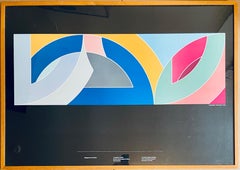
Frank Stella - Art Center College of Design Poster, CA ex-IBM Collection, Framed

Frank Stella - Art Center College of Design Poster, CA ex-IBM Collection, Framed

By Frank Stella

Located in New York, NY

Scarce 1970s Offset lithograph poster Limited Edition of 300 (unnumbered; unsigned) This poster depicts Frank Stella's 1970 print "York Factory", and it was published on the occasion...

Category

1970s Abstract Gordon House More Prints

Materials

Lithograph, Offset

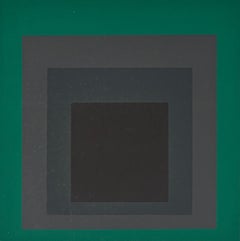
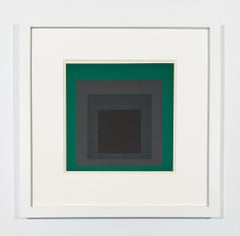
Josef Albers, Color Abstract Screenprint, Homage to the Square, 1977, Framed

Josef Albers, Color Abstract Screenprint, Homage to the Square, 1977, Framed

By (after) Josef Albers

Located in Washington, DC

Artist: Josef Albers Title: Homage to the Square Medium: Screenprint Date: 1977 Edition: 1500 Image Size: 8 1/4" x 8 1/4" Sheet Size: 9" x 9 1/2" Frame Size: 14 7/8" x 14 7/8" Signat...

Category

1970s Abstract Geometric Gordon House More Prints

Materials

Screen

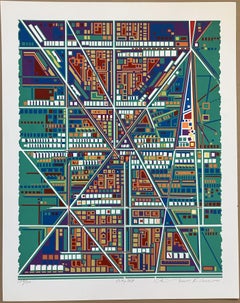
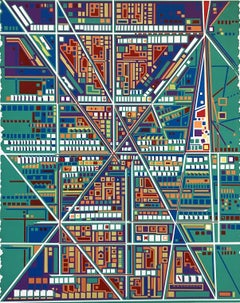
City 368
City 368

Risaburo KimuraCity 368, circa 1972

$750

H 28.75 in W 22.75 in D 0.1 in

City 368

By Risaburo Kimura

Located in San Francisco, CA

Artist: Risaburo Kimura– Japanese/American (1924-2014 ) Title: City 368 Year: circa 1972 Medium: Serigraph Sight size: 25 x 19.75 inches. Sheet size: 28.75 x 22.75 inches. Signatur...

Category

1970s Abstract Geometric Gordon House More Prints

Materials

Paper, Screen

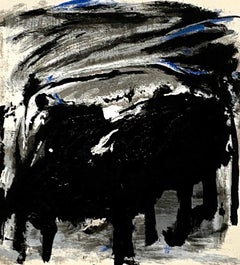
Emil Schumacher Limited Edition Serigraph Terraraph Print Abstract Art Informel

Emil Schumacher Limited Edition Serigraph Terraraph Print Abstract Art Informel

By Emil Schumacher 1

Located in Surfside, FL

Heavily textured abstract print in a serigraph and terragraph technique. It has a raised texture to the surface, A beautiful piece. This listing is for the one print, the cover justification sheet and the photograph are just included for provenance. This is from the limited edition of 100. Hand signed and numbered on colophon page. (They are not signed and numbered on each print) Arches paper. Dimensions: 15.75 X 15.25 These have a texture that feels like a painting. Done in Jaffa Israel based on the Hebrew Bible. Jewish, Judaica interest. Emil Schumacher is among the best-known exponents of Art Informel in Germany. His painting style, which he initially developed in the 1950s under the influence of Wols, is marked by dark, brownish black or brilliant thick red colours and a graffiti like sign language that endow the pictures the expressive character of old cracked masonry. Emil Schumacher (29 August 1912 in Hagen, Westfalen – 4 October 1999 in San José, Ibiza) was a German artist and painter. He was an important representative of abstract expressionism in post-war Germany. As an 18-year-old, Emil Schumacher undertakes a four-week-long bicycle tour to Paris, France. 1932–1935: Studies graphic design at the School of Applied Arts in Dortmund intending to become a graphic designer in advertising. 1935–1939: Independent artist without participating in exhibits. He undertakes study trips by bicycle to the Netherlands and Belgium. 1939–1945: Service obligation as draftsman in an arms factory, the Akkumulatoren–Werke of Hagen. Since 1945: Immediately after end of war, new start as independent artist. 1947: First solo exhibit in the Studio für neue Kunst. Co-founder of the artist group Junger Westen. 1954: Participates in the Willem Sandberg exhibition Deutsche Kunst nach 45 (German Art after 1945) at the Stedelijk Museum Amsterdam: for the first time after World War II, Contemporary German Art is shown abroad. 1955: Participates in the exhibition Peintures et sculptures non-figuratives en Allemagne d’aujourd’hui in Paris. This is the first time, 10 years after the war's end, that René Drouin shows contemporary German art at the Cercle Volney in France. 1956: While searching for new media and materials, Schumacher creates his first 'Tastobjekte' (tactile objects). Conrad von Soest Preis (Conrad-von-Soest Award), Münster, Germany. 1958: Travels to Spain, Italy and Tunisia. Participates in the XXIX. Venice Biennale, Italy. 1958–1960: Professorship at the Hochschule für bildende Künste Hamburg (University of Fine Arts) in Hamburg, Germany. 1959: Participates in the documenta II in Kassel, Germany, as well as the V. São Paulo Art Biennial, Brazil. First solo exhibit in New York at the Samuel M. Kootz Gallery. 1962: Travels to Libya and Tunisia. Summer stay in Anguillara, Lago di Bracciano, Italy. 1963: Solo exhibit as German contribution to the VII. São Paulo Art Biennial, Brazil. Travels to Brazil, Argentina, Uruguay, Peru and Bolivia. Once again summer stay in Anguillara, paintings that originated during the stay are shown in the Galeria La Medusa in Rome. 1964: Participates in the documenta III in Kassel, Germany. 1965: Travels through Yugoslavia, to Montenegro, the Herzegovina, and Bosnia. 1966–77: Professorship at the Academy of Fine Arts, Karlsruhe. 1967–68: Guest professorship at the Minneapolis School of Art, Minneapolis, USA. In Minneapolis, a series of works on paper are created. This series called Minneapolis Suite was exhibited at the Lefebre Gallery in New York and at the Galerie de Montréal in Montréal, Canada. Extensive travels through the USA. 1969: Winter stay on the Island of Djerba in Tunisia. Here, the Djerba gouaches were created over the course of the following years. 1971: Since 1971, frequent stays on Ibiza during spring and summer. 1974: Autumn stay in Cunardo, Lago Maggiore where the first ceramic works are created in Ceramica Ibis. 1983: Travels to Morocco where Suite Maroc, encompassing 36 pages, is created. 1985: Guest of Honor of the German Academy of Rome, Villa Massimo, Italy. 1988: In October 1988, a 10-day stay in Iraq. Design and creation of a 20 m long ceramic wall mural in the new building of the Landtag of North Rhine-Westphalia. 1991: Guest professorship at the Concorso Superiore Internazionale del Disegno of the Fondazione Antonio Ratti, Como, Italy. 1996: Schumacher designs a 20 m long and 3 m high mosaic wall for the Colosseo (Rome Metro) in Rome, Italy. 1998: Commission for mural in the Reichstag building, Berlin (executed in 1999). 1999: Member of the Academy of the Arts of Saxony (Sächsische Akademie der Künste), Dresden, Germany. Publication of the Israeli book 'GENESIS' with 18 Serigraphies in the edition Har-El, Jaffa/ Jerusalem / Israel. Awards 1948: Kunstpreis junger westen from the city of Recklinghausen, Germany. 1955 Art award from the city of Iserlohn, Germany. 1958: Karl Ernst Osthaus Preis (Karl-Ernst-Osthaus Award), 1958: Guggenheim Award (National Section), New York. 1959: Award from the Japanese Cultural Minister in celebration of the V. International Art Exhibition, Tokyo. 1962: Premio Cardazzo, XXX Venice Biennale, Italy. 1962: First prize silver medal, Bang Danh-Du Award in celebration of the 1st International Arts Exhibition, Saigon, Vietnam. 1963: Großer Kunstpreis (Great Art Award) of North Rhine-Westphalia, Düsseldorf, Germany. 1966: Prize of the Governor of Tokyo, in celebration of the 5th International Biennale Exhibition of Prints, Tokyo, 1968: Member of the Academy of Arts Berlin, Germany. 1974: Award of the city of Ibiza in celebration of the Graphic-Biennial 1974. 1978: August Macke Prize of the city of Meschede 1983: Receives Grand Cross of Merit with Star from the Order of Merit of the Federal Republic of Germany. French art critic Michel Tapié named the influential European movement that during the 1950s paralleled Abstract Expressionism in the U.S, Art Informel. Art Informel is and expressionist, artist-oriented abstraction rooted in the works of Wassily Kandinsky, Paul Klee, Jean Dubuffet, and Tachiste and Surrealist automatism. A style primarily of painting that developed in 1945/46 as reaction to geometric abstraction prevailing in post war Paris in the following of the École de Paris. Informel painting emphasises the spontaneous act of painting, the unconscious side of artistic creativity. The process of painting is often more important than what comes out of it. Informel is an international style and can be subdivided into various schools. Tachism [French: "tache" = blot], Action painting, Abstract Expressionism and Art Brut [French = "raw art"] are also considered Informel. By that definition, leading exponents of Informel in the US were Jackson Pollock and Willem de Kooning and in France Wols, Jean Fautrier and Jean Dubuffet. In Germany Informel was at its height in the 1950s and 1960s. The leading exponents of German Informel are Hans Hartung, Emil Schumacher, Karl Fred Dahmen, K.O. Götz, Gerhard Hoehme...

Category

20th Century Abstract Expressionist Gordon House More Prints
Materials

Screen

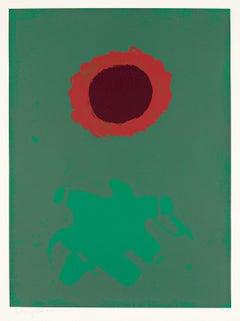
Chrome Green

Adolph GottliebChrome Green, 1972

$4,500

H 23.88 in W 17.75 in

Chrome Green

By Adolph Gottlieb

Located in New York, NY

A very good impression of this color screenprint on Arches. Signed, dated and numbered 125/150 in pencil by Gottlieb. Printed by Kelpra Studio, London, with the ink stamp verso. Publ...

Category

1970s Abstract Expressionist Gordon House More Prints
Materials

Color, Screen

Gordon House more prints for sale on 1stDibs.
Find a wide variety of authentic Gordon House more prints available for sale on 1stDibs.