Manufacture Nationale de Sèvres Decorative Bowls

French

A maker of exemplary European ceramics for hundreds of years, Manufacture Nationale de Sèvres has produced porcelain of the highest quality since 1740.

The factory enjoyed royal patronage from its earliest days, and its most prominent patrons in the late 1700s — King Louis XV of France and his mistress, Madame de Pompadour — commissioned some of the period’s most elegant and striking pieces (only the truly wealthy could afford porcelain at this time). The company was originally established in Vincennes but was moved at the request of Madame de Pompadour, in 1756, to Sèvres, near Versailles, so that its operations would be closer to her château.

Sèvres became a mighty and much-revered factory working under a special grant from King Louis XV — the company’s owner as of 1759 and whose abundance of orders for special state gifts put financial strain on the company. Madame de Pompadour is said to have commissioned Sèvres to create an entire indoor garden of porcelain botanicals, for example.

While Sèvres gained a sterling reputation for its soft-paste porcelain wares, the company was late in entering into the production of hard-paste porcelain.

Hard-paste porcelain is the most common type of Chinese porcelain, then a widely exported and profitable product that was not made in Europe until the 18th century. The resources at Sèvres were largely relegated to meeting the demands of Louis XV, and secondly, it did not acquire the secret formula for hard-paste porcelain until 1761.

Until it obtained the coveted secrets behind hard-paste porcelain from a chemist named Pierre-Antoine Hannong — and, years later, gained access to the elusive raw materials to make hard-paste porcelain — Sèvres produced soft-paste porcelain for decades that was widely celebrated but is comparatively a far weaker type as opposed to the hard-paste productions of the company’s rival, Meissen, in Saxony, the first to produce true porcelain outside of Asia.

The artisans at Sèvres applied the rarest and most difficult-to-produce colors to their decorative objects and dinner services. One such color, the bright bleu de roi, became the manufacturer’s signature shade and is found on many of their objects. Sèvres also experimented with rarely glazed or unglazed works that bore no decoration at all — bisque porcelain, French for “biscuit,” refers to unadorned white porcelain sculptures made at Sèvres that resemble white marble after being kiln-fired.

Sèvres marks were applied over the glaze or rendered with cuts by a sharp tool — authentic Sèvres porcelain is most commonly marked with two interlaced Ls that are painted in blue and enclose a third letter. Painters and potters were tasked with affixing marks to record their role in the creation of a particular piece, and as a lot of these artisans’ names are recorded in archival factory materials — and there is also much to be learned at the Sèvres museum — it’s likely that you can accurately identify your Sèvres piece.

Find antique and vintage Manufacture Nationale de Sèvres vases, urns, sculptures and more on 1stDibs.

to
1
5
4
1
1
1
1
1
5
4
3
2
1
3
1
4
4
1
1
Height
to
Width
to
5
5
5
110
124
120
111
89
Creator: Manufacture Nationale de Sèvres
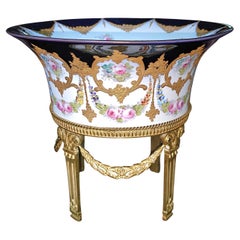
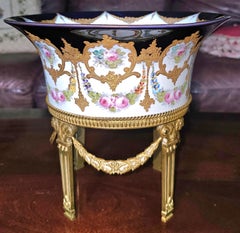
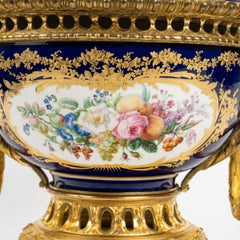
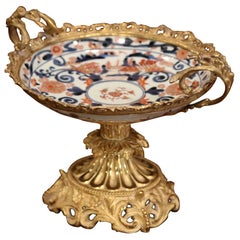
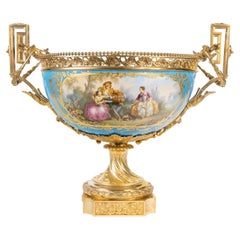
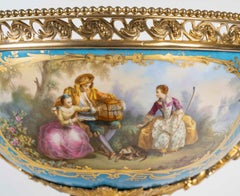
19th C. Sevres Porcelain Gilt Bronze Centerpiece Bowl, Signed and Numbered

19th C. Sevres Porcelain Gilt Bronze Centerpiece Bowl, Signed and Numbered

By Manufacture Nationale de Sèvres

Located in Germantown, MD

A 19th Century Sevres Porcelain Gilt Bronze Centerpiece Bowl on stand, Signed and Numbered 113 of 327 Measures 10" in width, 10" in depth and 9" in height with stand. 4" without stan...

Category

19th Century American Louis XV Antique Manufacture Nationale de Sèvres Decorative Bowls

Materials

Porcelain, Paint

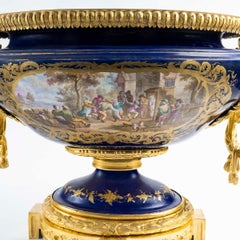
A Large Sèvres Porcelain and Gilt Bronze Bowl, 19th Century, Napoleon III Period

A Large Sèvres Porcelain and Gilt Bronze Bowl, 19th Century, Napoleon III Period

By Manufacture Nationale de Sèvres

Located in Saint-Ouen, FR

A large Sèvres porcelain and gilt bronze bowl, 19th century, Napoleon III period. A Sèvres porcelain and ormolu bowl, 19th century, Napoleon III period. Dimensions : H: 31cm, W: 42...

Category

19th Century French Napoleon III Antique Manufacture Nationale de Sèvres Decorative Bowls

Materials

Bronze

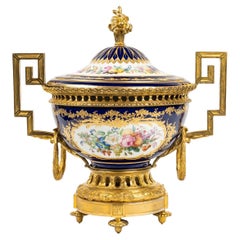
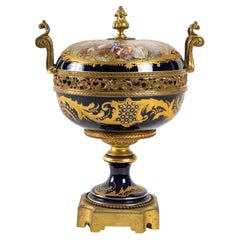
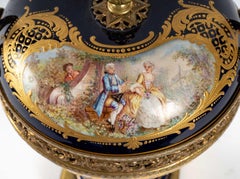
A Sèvres Style Porcelain Covered Bowl, 19th Century, Napoleon III Period.

A Sèvres Style Porcelain Covered Bowl, 19th Century, Napoleon III Period.

By Manufacture Nationale de Sèvres

Located in Saint-Ouen, FR

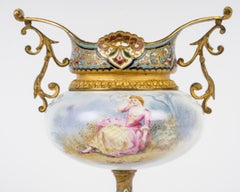
A Sèvres style porcelain covered bowl, 19th century, Napoleon III period. A Sèvres style porcelain covered bowl decorated with a gallant scene, gilt bronze mounting, 19th century, N...

Category

19th Century French Napoleon III Antique Manufacture Nationale de Sèvres Decorative Bowls

Materials

Bronze

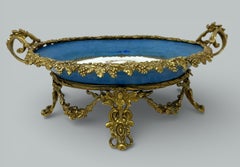
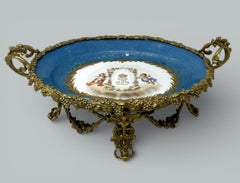
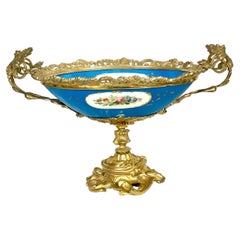
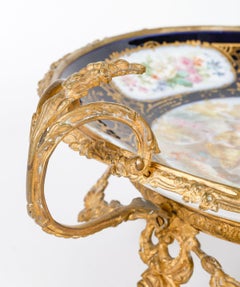
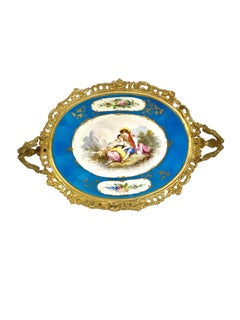
Antique French Sevres Ormolu Gilt Bronze Dore Celeste Blue Porcelain Tazza Plate

Antique French Sevres Ormolu Gilt Bronze Dore Celeste Blue Porcelain Tazza Plate

By Manufacture Nationale de Sèvres

Located in Dublin, Ireland

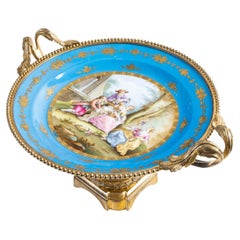
An exceptionally well cast French Sevres Hand Painted Celeste Blue Porcelain and Gilt-Bronze Ormolu Twin Handled Oval form Footed Tazza of museum quality, and unusually large proport...

Category

19th Century French Victorian Antique Manufacture Nationale de Sèvres Decorative Bowls

Materials

Ormolu

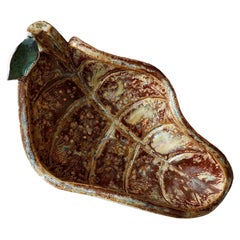
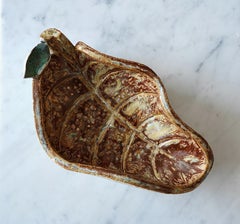
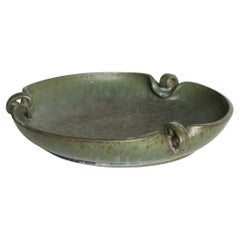
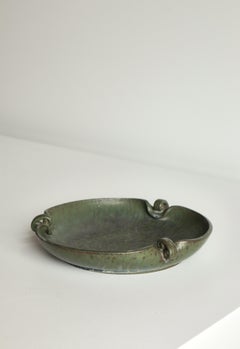
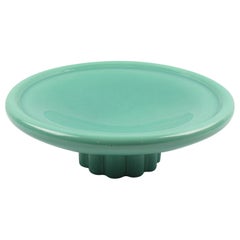
Stoneware Leaf by Tyra Lundgren. Manufacture nationale de Sèvres, 1930s.

Stoneware Leaf by Tyra Lundgren. Manufacture nationale de Sèvres, 1930s.

By Manufacture Nationale de Sèvres, Tyra Carolina Lundgren

Located in Malmö, SE

A beautiful stoneware bowl with amazing glaze. Made by Tyra Lundgren. Executed during the artist's time spent at Sèvres, between 1934-1939. Excellent condition. Impressed with artist's name and maker's marks. Tyra Lundgren (1897-1979) was one of the most multifaceted artists and modernists of the twentieth century. She was a painter, drawer, sculptor, ceramist, glass- and textile designer, as well as an author and an art critic. She was the first woman who designed glass for Paolo Venini at Murano in Venice and she also served as the artistic leader at Arabia in Helsinki at a time when men tended to hold those kinds of positions. Tyra Lundgren grew up in Djursholm, near Stockholm. Her parents were John Petter Lundgren, professor at Veterinärinstitutet (institute of veterinary sciences) in Stockholm, and Edith Lundgren née Åberg, who was a housewife and raised their six children. The bourgeois home also comprised a nanny and a female cook. The family were very socially active, travelled often, and enjoyed the outdoor lifestyle. Tyra Lundgren’s schooling began at Djursholm coeducational school, where her teachers included Natanael and Elsa Beskow and Alice Tegnér. Her school friends included Greta Knutson-Tzara, Stellan Mörner, and Ingrid Rydbeck-Zuhr. Tyra Lundgren knew from the time she was five years old that she wanted to be an artist. She first became aware of the profession through Axel Fahlcrantz, who rented a studio on the plot of land where she lived with her family. In 1913 she began to attend Högre konstindustriella skolan (HKS, now known as Konstfack, college of arts, crafts and design) where she studied decorative art as well as handicrafts in various forms until 1917. One of her fellow students and friends there was Estrid Ericson, who later founded Svenskt Tenn AB in 1924. Whilst attending HKS Tyra Lundgren also took painting lessons at the Althin school of painting. In 1917 she was accepted as a candidate at the Royal Swedish Academy of Fine Arts where, apart from breaks during which she undertook studies abroad, she remained until 1922. She spent a couple of months taking lessons from Anton Hanak in Vienna and from 1920–1923 she was a student of André Lhote in Paris. Tyra Lundgren was primarily active in four countries: Sweden, Finland, France, and Italy. She spent much of her professional life travelling and considered herself to be a European. Greece and Mexico also formed important centres in her artistic life, as did the USA. She had an extensive social network which included focal individuals within twentieth century-European and American artistic and cultural circles. Tyra Lundgren’s main artistic motifs were birds, fish, and people which she depicted through different techniques and materials. Her artistic expression involved a variety of different directions and styles. She was a pioneer of the 1920s Swedish Grace style, the name of which had been coined by the art critic Morton Shand at the Stockholm Exhibition of 1930. This was a Swedish Art Deco style, characterised by elegance and traditional art which contrasted with the current artistic ideals of functionalism. Tyra Lundgren made her debut at a group exhibition held at Kungliga Akademien för de fria konsterna in 1921. She went on to show her work at various exhibitions throughout the 1920s. After that period she only very rarely exhibited her paintings. Tyra Lundgren’s painted output can be divided into different periods or stylistic directions. The first of these, and the most extensive, was her post-Cubist period which began in 1920 on her arrival in Paris. Her paintings from this time and right up to the mid-1930s typically comprise portraits, self-portraits, live-model painting, still-lifes, interiors, and landscapes in the Cubist style. Many of the great number of self-portraits she painted were produced in the New Objective style, displaying broad variation in terms of clothes, poses and techniques. Two of these – Huvud med vit duk and Självporträtt both from 1921 – can be seen at Moderna Museet in Stockholm, although the majority of these works are at Gotlands Museum. Tyra Lundgren’s second artistic period comprises the years of 1927 to 1929 and is characterised by the New Objective style inspired by medieval techniques and materials (Giotto, Piero della Francesca). Her motifs were still-lifes and landscapes. At this point she was living in Rome and was close to the circle involved in the Valori plastici: rivista d’arte art journal. This period saw a breakthrough in her development as a painter. From the 1950s through the 1970s her work can almost be described as belonging to the Concrete style. Using light pastel colours her paintings sought light in a sometimes non-figurative expression, but often depicting abstract bird-shapes or other nature-inspired imagery. Her paintings from this period are outsized and display powerful colours, in yellows, reds, and blues. Tyra Lundgren maintained a constant production of drawings, both in terms of individual artworks and sketches for patterns and designs. She also produced the illustrations for her book Fagert i Fide. Årstiderna på en gammal gotlandsgård, published in 1961. During her early years she also produced advertising illustrations. She spent the final years of her life primarily working with lithographs which were printed at Galleri Prisma and depicted images of doves, swallows, magpies and crows. Tyra Lundgren is meanwhile best known for her work as a ceramist and in this sphere she was one of Sweden’s leading exponents. She worked in the porcelain industry as a designer and as an artisan and ceramic sculptor. Her first job was at St Eriks Lervarufabrik in Uppsala from 1922–1924, she then worked at Arabia from 1924–1937, and at Rörstrand and Lidköping Porslinsfabrik. She was the artistic leader at Arabia ahead of the 1930 Stockholm Exhibition and she exhibited her work at the World’s Fairs. During the 1934–1938 period she was connected to the Manufacture nationale de Sèvres porcelain factory in Paris. Tyra Lundgren was a pioneer when it came to giving ceramic art a public space in Sweden. She produced around 20 outsized reliefs in stoneware, so-called monumental reliefs. One of these is Märkeskvinnor, from 1947, for the former girls’ school at Bohusgatan in Stockholm. From the 1940s onwards Tyra Lundgren produced sculptural objects in Chamotte clay and stoneware, with various glazings. Her small birds are well-known and popular with many. When her ceramic efforts became too much for her during the 1970s she then produced models for sculptures in bronze. There are six of these in various places around the globe, including Solfågel in Almedalen, Visby. Tyra Lundgren began to work as a glassware designer at Moser in Karlsbad in 1922 where she designed new table services and modernised older ones. She also worked freelance for Riihimäki factory in Finland during the 1924–1929 period. From 1934 to 1938 she was employed by Kosta glass factory where she mainly designed thick-walled bowls and vases, engraved with classical motifs. She was introduced to the glassmaker Paolo Venini at Murano during the Triennale di Milano of 1936 and they began a collaboration that lasted into the 1950s. As part of this collaboration Tyra Lundgren became the first woman to design glassware and, in conjunction with the glassblower Arturo Biasutto, she developed new techniques of glass production. Her motifs at this point were birds, fish, snail-shaped designs and leaf-patterned bowls using traditional techniques as well as in new designs. It was during this time that she created the so-called tissue-shaped bowls and it remains unclear as to who specifically came up with the design but Tyra Lundgren claimed it was of her making. Tyra Lundgren was active as textile designer for Licium (now HV Licium), the sacred textiles...

Category

Mid-20th Century French Scandinavian Modern Manufacture Nationale de Sèvres Decorative Bowls

Materials

Ceramic, Stoneware
Related Items
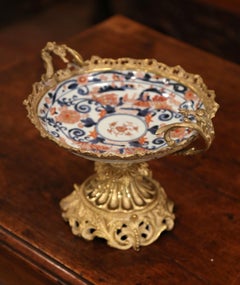
19th Century Japanese Imari Porcelain Bowl on Louis XV Gilt Bronze Stand

19th Century Japanese Imari Porcelain Bowl on Louis XV Gilt Bronze Stand

Located in Dallas, TX

Elevate a console or center table with this refined antique Imari bowl mounted on an ornate gilt bronze stand, crafted in Japan and France circa 186...

Category

Mid-19th Century Japanese Louis XV Antique Manufacture Nationale de Sèvres Decorative Bowls

Materials

Bronze

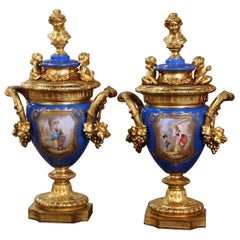
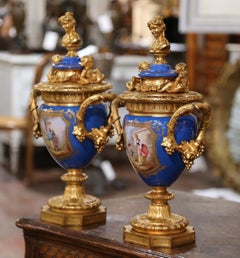
Pair of 19th Century French Blue Porcelain and Gilt Bronze Sèvres Urns Vases

Pair of 19th Century French Blue Porcelain and Gilt Bronze Sèvres Urns Vases

By Manufacture Nationale de Sèvres

Located in Dallas, TX

Decorate a mantel or a console with this important pair of porcelain and bronze Sèvres urns. Created in Paris, France, circa 1870, each impressive vase sits on a square bronze base w...

Category

Mid-19th Century French Antique Manufacture Nationale de Sèvres Decorative Bowls

Materials

Bronze

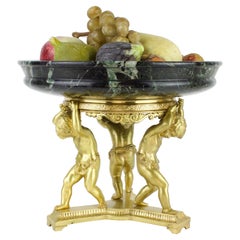
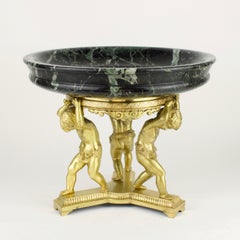
Late 19th Century Napoleon III Empire Gilt Bronze Putti and Marble Centerpiece

Late 19th Century Napoleon III Empire Gilt Bronze Putti and Marble Centerpiece

Located in Berlin, DE

Late 19th Century French Empire gilt bronze putti and marble centerpiece The centerpiece stands on a triangular, fluted base with arched feet; on th...

Category

Late 19th Century French Napoleon III Antique Manufacture Nationale de Sèvres Decorative Bowls

Materials

Marble, Bronze

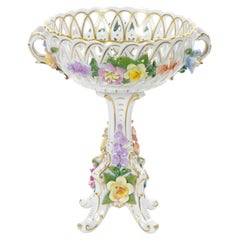
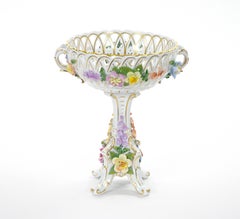
Late 19th Century German Porcelain Reticulated Floral Centerpiece Bowl

Late 19th Century German Porcelain Reticulated Floral Centerpiece Bowl

Located in Tarry Town, NY

This late 19th century German porcelain reticulated centerpiece bowl is a remarkable example of European decorative artistry, combining delicate craftsmanship with vibrant, lifelike ...

Category

Late 19th Century German Victorian Antique Manufacture Nationale de Sèvres Decorative Bowls

Materials

Gold

Art Deco Organically Shaped Stoneware Bowl / Dish by Arne Bang, Denmark, 1930s
Art Deco Organically Shaped Stoneware Bowl / Dish by Arne Bang, Denmark, 1930s
By Arne Bang

Located in Odense, DK

An exceptional and sculptural Art Deco stoneware bowl model no. 206 by Danish ceramicist Arne Bang, executed in the 1930s. This organically shaped dish departs from Bang’s more geome...
Category

1930s Danish Art Deco Vintage Manufacture Nationale de Sèvres Decorative Bowls

Materials

Stoneware
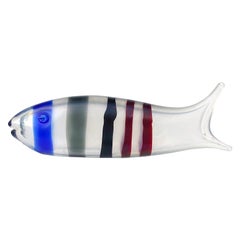
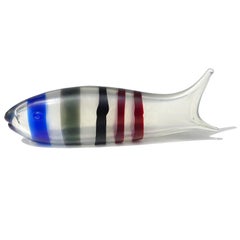
Venini 1930s Tyra Lundgren Murano Iridescent Italian Art Glass Fish Sculpture

Venini 1930s Tyra Lundgren Murano Iridescent Italian Art Glass Fish Sculpture

$3,750Sale Price|25% Off

H 4.5 in W 3.25 in D 12.5 in

Venini 1930s Tyra Lundgren Murano Iridescent Italian Art Glass Fish Sculpture

By Tyra Carolina Lundgren, Venini

Located in Kissimmee, FL

Very rare and large, antique Murano hand blown "A Fasce" striped Italian art glass fish with iridescent surface sculpture. Documented to Tyra Lundgren circa 1935-1936, fully signed "...
Category

Mid-20th Century Italian Art Deco Manufacture Nationale de Sèvres Decorative Bowls
Materials

Glass, Art Glass, Murano Glass, Sommerso, Blown Glass

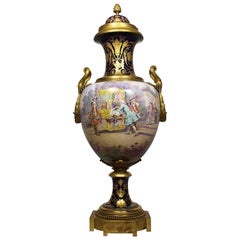
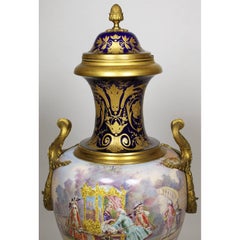
A French 19th Century Napoleon III Sévres Style Porcelain and Ormolu Mounted Urn

A French 19th Century Napoleon III Sévres Style Porcelain and Ormolu Mounted Urn

$12,850Sale Price|31% Off

H 34.75 in W 14.5 in D 12.5 in

A French 19th Century Napoleon III Sévres Style Porcelain and Ormolu Mounted Urn

By Manufacture Nationale de Sèvres

Located in Los Angeles, CA

A very fine French 19th Century Napoleon III Sévres Style Porcelain and Ormolu Mounted Covered Urn, the 360 degree painted urn centered with an 18th century scene of a young Princess...

Category

19th Century French Louis XV Antique Manufacture Nationale de Sèvres Decorative Bowls

Materials

Ormolu

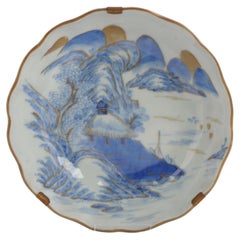
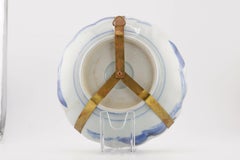
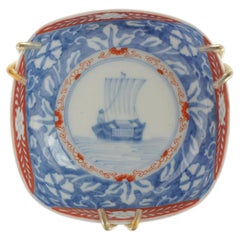
Antique Japanese Porcelain Meiji Period Arita Polychrome Bowl Dish 19th Century

Antique Japanese Porcelain Meiji Period Arita Polychrome Bowl Dish 19th Century

Located in Amsterdam, Noord Holland

Sharing with you this unusual and magnificent bowl from the Meiji period (19th century). It has a very interesting and lovely blue and gold scene Unmarked at the base. Additional in...

Category

19th Century Japanese Meiji Antique Manufacture Nationale de Sèvres Decorative Bowls

Materials

Porcelain

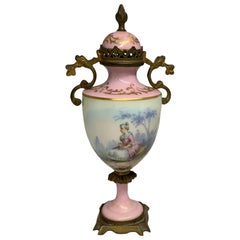
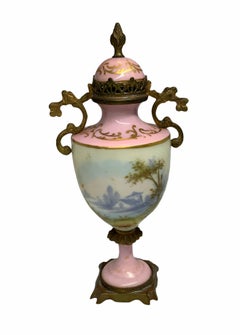
Petite Sevres Porcelain and Bronze Ormolu Mounted Urn Vase

Petite Sevres Porcelain and Bronze Ormolu Mounted Urn Vase

$628Sale Price|68% Off

H 6.75 in W 3.25 in D 2.38 in

Petite Sevres Porcelain and Bronze Ormolu Mounted Urn Vase

By Manufacture Nationale de Sèvres

Located in Guaynabo, PR

This is a very old gilt and pale pink background urn depicting a continuous hand-painted scene of a lady sitting in a pastoral landscape holding her fan and observing nature. In the ...

Category

19th Century French Rococo Antique Manufacture Nationale de Sèvres Decorative Bowls

Materials

Porcelain

19th Century Napoleon III Sèvres Style Porcelain and Bronze Centerpiece

19th Century Napoleon III Sèvres Style Porcelain and Bronze Centerpiece

$1,432Sale Price|36% Off

H 8.86 in W 13.98 in D 8.86 in

19th Century Napoleon III Sèvres Style Porcelain and Bronze Centerpiece

By Manufacture Nationale de Sèvres

Located in LA CIOTAT, FR

An exquisite 19th century Napoleon III compote, or centrepiece, in delicate Sèvres style porcelain and gilt bronze. Designed to grab all the attention as the decorative focal point o...

Category

19th Century French Napoleon III Antique Manufacture Nationale de Sèvres Decorative Bowls

Materials

Bronze

Antique Japanese Porcelain Meiji Period Arita Polychrome Bowl Ship 19th Century

Antique Japanese Porcelain Meiji Period Arita Polychrome Bowl Ship 19th Century

Located in Amsterdam, Noord Holland

Sharing with you this unusual and magnificent bowl from the Meiji period (19th century). It has a very interesting and lovely blue, red and gold scene Unmarked at the base. Addition...

Category

19th Century Japanese Meiji Antique Manufacture Nationale de Sèvres Decorative Bowls

Materials

Porcelain

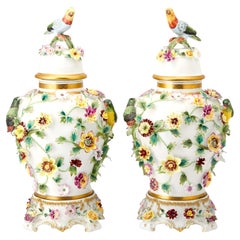
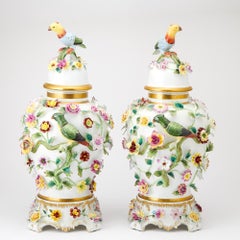
Magnificent Pair of Napoleon III Period Porcelain Covered Vases/ 19th Century.

Magnificent Pair of Napoleon III Period Porcelain Covered Vases/ 19th Century.

By Dresden Porcelain

Located in Tarry Town, NY

This magnificent pair of antique covered vases, dating back to the 19th century during the Napoleon III period, showcases the elegance and artistry characteristic of this iconic era....

Category

Mid-19th Century German Napoleon III Antique Manufacture Nationale de Sèvres Decorative Bowls

Materials

Porcelain

Previously Available Items
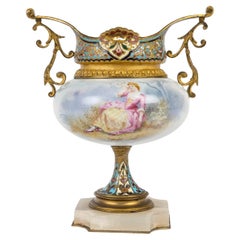
Sèvres Porcelain Bowl, Napoleon III Period, 19th Century.

Sèvres Porcelain Bowl, Napoleon III Period, 19th Century.

By Manufacture Nationale de Sèvres

Located in Saint-Ouen, FR

Sèvres porcelain bowl, Napoleon III period, 19th century. A 19th century Napoleon III period Sèvres porcelain bowl with a gilt bronze and cloisonné frame. H: 30.5cm, W: 11cm, D: 11cm

Category

19th Century French Napoleon III Antique Manufacture Nationale de Sèvres Decorative Bowls

Materials

Porcelain

Large Porcelain Bowl in the Style of the Sèvres Manufactory, Napoleon III Period

Large Porcelain Bowl in the Style of the Sèvres Manufactory, Napoleon III Period

By Manufacture Nationale de Sèvres

Located in Saint-Ouen, FR

Large porcelain bowl in the style of the Sèvres manufactory, Napoleon III period. An important porcelain and ormolu bowl, Louis XVI style, Napoleon III period, 19th century, porcela...

Category

19th Century French Louis XVI Antique Manufacture Nationale de Sèvres Decorative Bowls

Materials

Bronze

Porcelain Bowl in the Sèvres Style, 19th Century, Napoleon III Period.

Porcelain Bowl in the Sèvres Style, 19th Century, Napoleon III Period.

By Manufacture Nationale de Sèvres

Located in Saint-Ouen, FR

Porcelain bowl in the Sèvres style, 19th century, Napoleon III period. A porcelain and gilt bronze bowl in the style of the Sèvres manufactory, 19th century, Napoleon III period. H:...

Category

19th Century French Napoleon III Antique Manufacture Nationale de Sèvres Decorative Bowls

Materials

Bronze

A Sèvres Porcelain and Gilt Bronze Bowl Surmounted by a Mirror, 19th Century.

A Sèvres Porcelain and Gilt Bronze Bowl Surmounted by a Mirror, 19th Century.

By Manufacture Nationale de Sèvres

Located in Saint-Ouen, FR

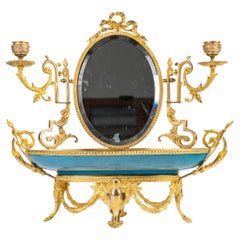
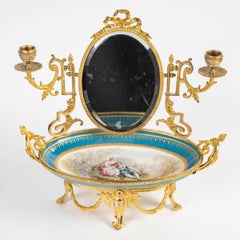
A Sèvres porcelain and gilt bronze bowl surmounted by a mirror, 19th century, Napoleon III period. A Sèvres porcelain and gilt bronze bowl surmounted by a mirror and two candelabras...

Category

19th Century French Napoleon III Antique Manufacture Nationale de Sèvres Decorative Bowls

Materials

Bronze

Sèvres Porcelain Cup and Gilt Bronze Mount, Napoleon III.

Sèvres Porcelain Cup and Gilt Bronze Mount, Napoleon III.

By Manufacture Nationale de Sèvres

Located in Saint-Ouen, FR

Sèvres Porcelain Cup and Gilt Bronze Mount, Napoleon III. 19th century Sèvres porcelain bowl and gilt bronze mounting, Napoleon III period. h: 17cm, l: 37cm, p: 30cm

Category

19th Century French Napoleon III Antique Manufacture Nationale de Sèvres Decorative Bowls

Materials

Bronze

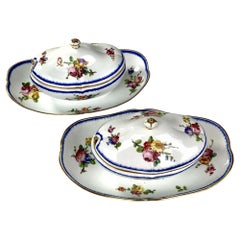
Pair Sèvres Porcelain Tureens with Feuille-de-Choux Pattern Borders 18th Century

Pair Sèvres Porcelain Tureens with Feuille-de-Choux Pattern Borders 18th Century

By Manufacture Nationale de Sèvres

Located in Katonah, NY

Why We Love It! The flowers are so beautiful! Sèvres has been called the most important French porcelain manufacturer. We are delighted to offer for sale this exquisite Sèvres soft-paste porcelain pair of tureens made 1773-1782. Decorated with delicate polychrome flowers, it is marked with the exclusive royal cipher in underglaze puce (a crowned interlaced 'L' mark), the painter's mark for Michel-Louis Chauveaux (active 1773–82). In 1751 Sèvres became the factory of the King of France, Louis XV. The factory produced a lovely white soft-paste porcelain decorated with natural painted flowers in various colors. Porcelains decorated in this style were the most important part of the Sèvres production, especially during the early years. Fine quality and elegant design made these porcelains highly sought after and expensive. Combinations of flowers, including roses, daisies, orange blossoms, violets, hyacinths from Holland, daffodils from Constantinople, lily of the valley, were all used to decorate Sèvres porcelains. The painting on our pair of small tureens is exceptional. Note how the polychrome colors of the flowers sink...

Category

Late 18th Century French Antique Manufacture Nationale de Sèvres Decorative Bowls

Materials

Porcelain

Royal Blue Sèvres Porcelain Bonbonniere

Royal Blue Sèvres Porcelain Bonbonniere

Sold

H 10.63 in W 8.27 in D 6.7 in

Royal Blue Sèvres Porcelain Bonbonniere

By Chateau des Tuileries, Manufacture Nationale de Sèvres

Located in Saint-Ouen, FR

A royal blue Sèvres porcelain bonbonniere, richly decorated with gold and a gallant scene, mounted in gilt bronze, 19th century, Napoleon III period. Stamps of the Tuileries castle a...

Category

1870s French Napoleon III Antique Manufacture Nationale de Sèvres Decorative Bowls

Materials

Porcelain

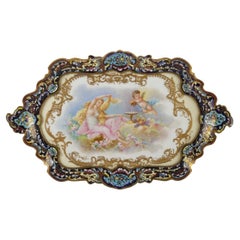
Sèvres Porcelain and Cloisonné Bronze Tray

Sèvres Porcelain and Cloisonné Bronze Tray

Sold

H 1.19 in W 15.36 in D 9.45 in

Sèvres Porcelain and Cloisonné Bronze Tray

By Manufacture Nationale de Sèvres

Located in Saint-Ouen, FR

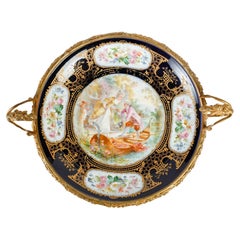
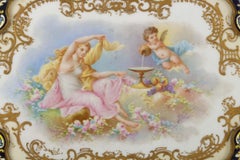
Sèvres porcelain and cloisonné bronze tray Composed of a Sèvres porcelain plate with romantic scene painting Surrounded by gilt and cloisonné bronze of good quality. End of the 19...

Category

1870s French Napoleon III Antique Manufacture Nationale de Sèvres Decorative Bowls

Materials

Bronze

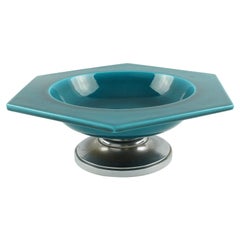
Paul Milet for Sevres Art Deco Bronze and Turquoise Ceramic Centerpiece Bowl

Paul Milet for Sevres Art Deco Bronze and Turquoise Ceramic Centerpiece Bowl

By Manufacture Nationale de Sèvres

Located in Atlanta, GA

Striking French Art Deco modernist ceramic decorative bowl or centerpiece by Paul Milet (1870-1950) for Manufacture de Sevres, France. Geometric shape with turquoise glaze on a nicke...

Category

1930s French Art Deco Vintage Manufacture Nationale de Sèvres Decorative Bowls

Materials

Metal, Bronze

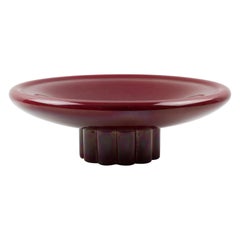
Paul Milet for Sevres Art Deco Oxblood Ceramic Bowl Centerpiece

Paul Milet for Sevres Art Deco Oxblood Ceramic Bowl Centerpiece

By Manufacture Nationale de Sèvres

Located in Atlanta, GA

A charming French Art Deco modernist ceramic decorative bowl centerpiece, designed by Paul Milet (1870-1950) for Manufacture de Sevres, France. Large streamline round shape with oxbl...

Category

1940s French Art Deco Vintage Manufacture Nationale de Sèvres Decorative Bowls

Materials

Ceramic, Faience

Paul Milet for Sevres Art Deco Celadon Ceramic Bowl Centerpiece

Paul Milet for Sevres Art Deco Celadon Ceramic Bowl Centerpiece

By Manufacture Nationale de Sèvres

Located in Atlanta, GA

A lovely French Art Deco modernist ceramic decorative bowl centerpiece, designed by Paul Milet (1870-1950) for Manufacture de Sevres, France. Large streamline round shape with green ...

Category

1940s French Art Deco Vintage Manufacture Nationale de Sèvres Decorative Bowls

Materials

Ceramic, Faience

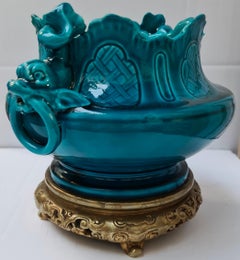
19th Century French Sèvres Porcelain Ormolu-Mounted Center Bowl, circa 1880

19th Century French Sèvres Porcelain Ormolu-Mounted Center Bowl, circa 1880

By Manufacture Nationale de Sèvres

Located in Saint-Ouen, FR

A 19th century French sèvres blue fire glazed porcelain ormolu-mounted center bowl Applied with two Dolphins simulating handles Signed underneath, circa 1880.

Category

1870s French Louis XIV Antique Manufacture Nationale de Sèvres Decorative Bowls

Materials

Ormolu

Manufacture Nationale De Sèvres decorative bowls for sale on 1stDibs.

Manufacture Nationale de Sèvres decorative bowls are available for sale on 1stDibs. These distinctive items are frequently made of ceramic and are designed with extraordinary care. There are many options to choose from in our collection of Manufacture Nationale de Sèvres decorative bowls, although gray editions of this piece are particularly popular. Many of the original decorative bowls by Manufacture Nationale de Sèvres were created in the Scandinavian Modern style in france during the 20th century. If you’re looking for additional options, many customers also consider decorative bowls by Verlys Glass, Ferdinand Barbedienne, and Daum. Prices for Manufacture Nationale de Sèvres decorative bowls can differ depending upon size, time period and other attributes — on 1stDibs, these items begin at $2,400 and can go as high as $3,950, while a piece like these, on average, fetch $2,800.