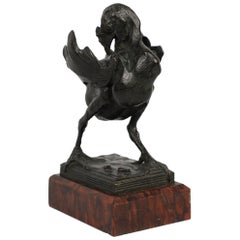
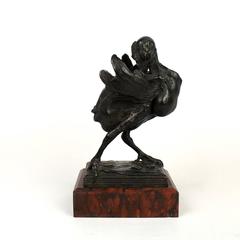
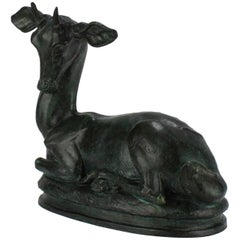
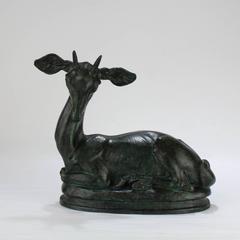
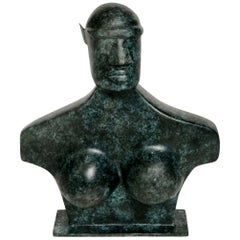
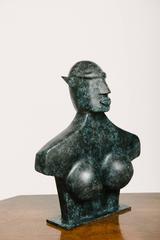
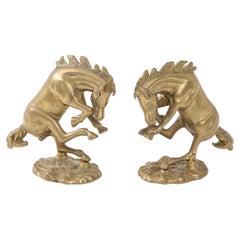
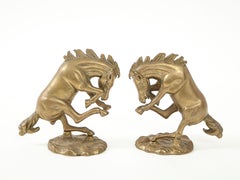
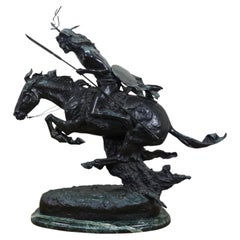
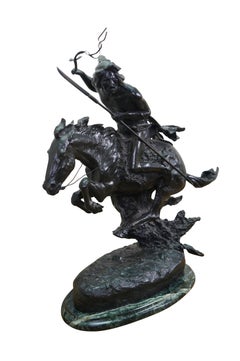
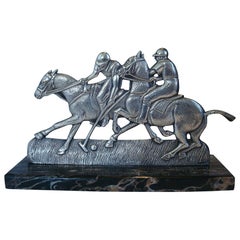
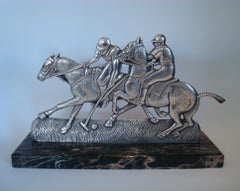
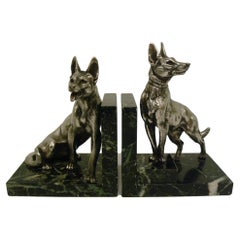
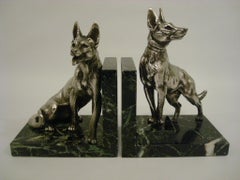
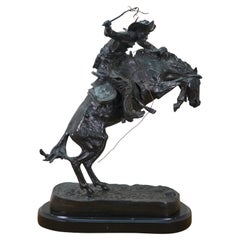
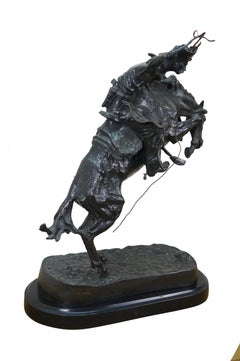
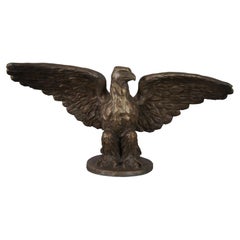
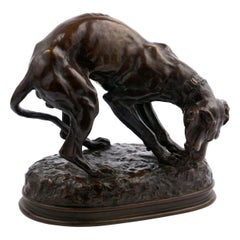
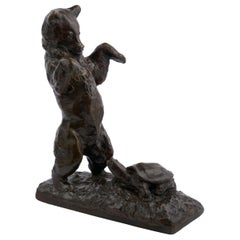
By Roman Bronze Works
Located in Shippensburg, PA
Born in Rixdorf, Germany on October 16th of 1877, Lee Oscar Lawrie came to the United States to live in Chicago at the age of 5. He began working as a sculptor at the early age of 14, serving as an assistant to numerous professional sculptors and ultimately studied under Augustus Saint-Gaudens and Martiny. He would go on to work with some of the most influential architectural sculptors of the 20th century and established himself as a major exponent of Modernism by the late 1920s. His first major commission was the Nebraska State Capitol Building (1922-32) in Lincoln, Nebraska under retainer by architect Bertram G. Goodhue. He became well known for his innovations in flying buttress sculpture for decorative architecture and is perhaps most widely recognized for his monumental public commission of Atlas (1937) that stands prominently before New York City's Rockefeller Center. He was active in mixing architecture with sculpture, often in collaboration with other sculptors and architects; the sheer breadth of his chosen material is admirable, from bas-relief, free-standing statuary, bronze figural work and wooden frescoes. He had a comfort level with the Gothic-style that permeates his work, but his imagination was far-reaching, encompassing the Modernist, the Neoclassical, the Romantic and the Biblical in his subject matter. He would go on to execute numerous public commissions in the full Modernist taste of decoration, including the Church of Heavenly Rest in New York, the National Academy of Sciences in Washington, D.C., the Education Building of Soldiers and Sailors' Memorial Bridge in Harrisburg, Pennsylvania, the Saint Thomas Church of New York and Westpoint Academy. From 1910-12 he served as an instructor in sculpture at Harvard University and was appointed to instructor in the Yale Fine Arts Department where he taught from 1908 through 1918. He was an associate of the National Academy of Design and he served as President of the National Sculpture Society.
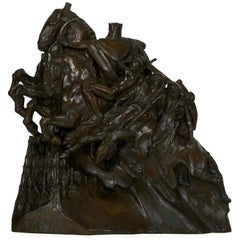
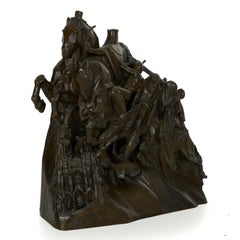
His acceptance of Metro's commission is unusual, as he firmly believed art should be accessible to the broader public and not only available for private display; but his fondness for his student, Rex Ingram, coupled with the moving subject matter of the film led him to sculpt the Horsemen.
Metro bought rights to produce a film based on the bestselling novel The Four Horsemen...
Category
20th Century American Art Deco Roman Bronze Works Animal Sculptures