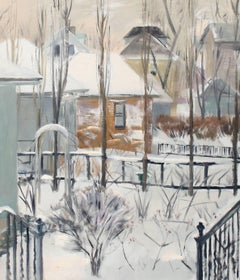
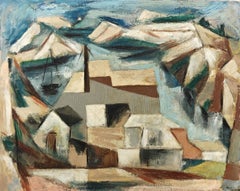
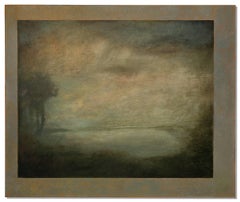
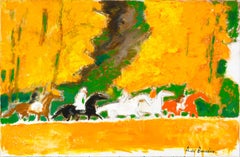
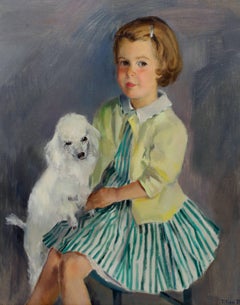
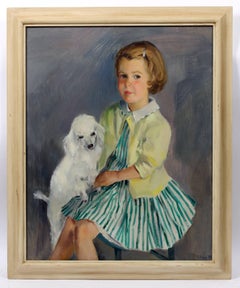
Virginia TillouNorth Street, 1957
$2,240Sale Price|20% Off
North Street
By Virginia Tillou
Located in Buffalo, NY
An original modern landscape painting by American female artist Virginia Tillou.
1950s Modern Virginia Tillou Art
Canvas, Oil
$2,240Sale Price|20% Off
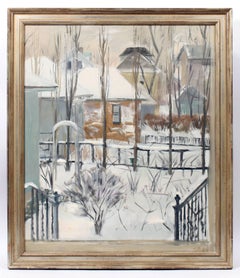
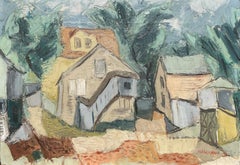
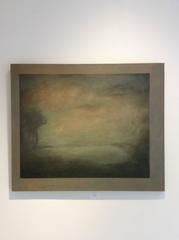
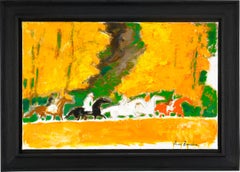
North Street
By Virginia Tillou
Located in Buffalo, NY
An original modern landscape painting by American female artist Virginia Tillou.
Canvas, Oil
$1,516Sale Price|20% Off
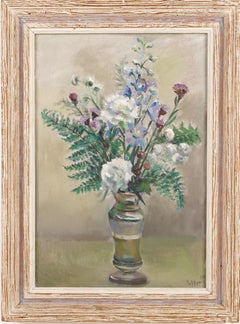
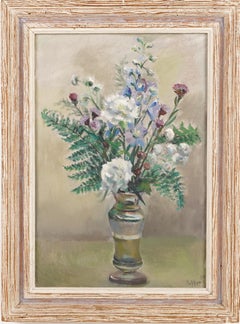
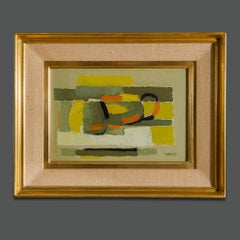
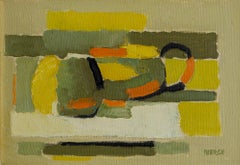
Virginia Tillou Signed Antique American Female Modernist Still Life Oil Painting
By Virginia Tillou
Located in Buffalo, NY
Vintage modernist still life painting by Virginia Tillou (1906 - 1995). Oil canvas. Housed in a period Heydenryk frame. Image size, 12L x 18H. Sig...
Canvas, Oil
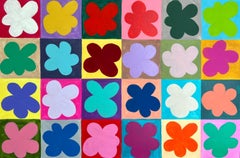
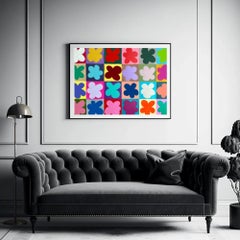
Warhol‑Style Colorful Flowers
Located in Zofingen, AG
shipped in roll Acrylic on canvas Size: 60 x 90 x 2 cm Style: Modern minimalistic and pop art Professional-grade acrylics on canvas Signed by the artist with certificate of authenti...
Canvas, Acrylic
$3,490
H 8.86 in W 13.19 in D 1.97 in
Modern French Abstract Paintig Still Life by Roland Bierge
By Roland Bierge
Located in Roma, IT
Modern French Abstract Paintig Still Life by Roland Bierge Beautiful, important painting by the great French artist Roland Bierge (1922-1991). Still life oil on canvas ‘Pomme et Po...
Canvas, Oil
$6,000
H 16 in W 20 in
"Cubist Landscape" Albert Heckman, American Modernism, Woodstock, Earth Tones
By Albert Heckman
Located in New York, NY
Albert Heckman Cubist Landscape Oil on canvas 16 x 20 inches Albert Heckman was born in Meadville, Western Pennsylvania, 1893. He went to New York City to try his hand at the art w...
Canvas, Oil
$4,750
H 15 in W 19.5 in
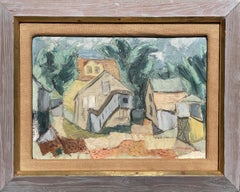
"Cluster of Houses near Woodstock" Albert Heckman, American Modernist Landscape
By Albert Heckman
Located in New York, NY
Albert Heckman Cluster of Houses near Woodstock Signed lower right Oil on canvas 10 x 14 inches Albert Heckman was born in Meadville, Western Pennsylvania, 1893. He went to New Yor...
Canvas, Oil
$3,500
H 31 in W 25.5 in
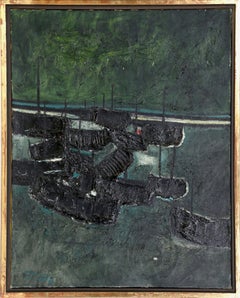
Boats in the Harbor, Abstract Oil Painting on Canvas by David Azuz
By David Azuz
Located in Long Island City, NY
Artist: David Azuz, Israeli/French (1942 - 2014) Title: Boats in the Harbor Year: 1960 Medium: Oil on Canvas, signed l.l. and verso Size: 31 x 25.5 in. (78.74 x 64.77 cm) Frame Size:...
Oil, Canvas
$8,500
H 40 in W 48 in D 1.5 in
Opening No. 51 (Modern, Hudson River Landscape Painting in Romanticist Style)
By Leigh Palmer
Located in Hudson, NY
Contemporary landscape oil painting reminiscent of Hudson River School & Romanticist painters oil on canvas 40 x 48 inches Highly romantic (yet modern) Hudson River oil landsca...
Canvas, Oil
$8,500
H 40 in W 48 in D 1.5 in
Opening No. 50 (Abstract Landscape Painting on Canvas in Romanticist Style)
By Leigh Palmer
Located in Hudson, NY
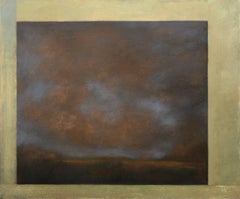
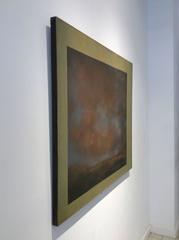
Contemporary, abstracted landscape reminiscent of Hudson River School & Romanticist painters oil on canvas 40 x 48 inches Romantic (yet modern) Hudson River oil landscape painting of a vast field in the foreground with a red and blue sunset sky in the background. This painting is of a horizontal orientation and is finished with an olive green border painted directly onto the canvas. The edges are finished with the same color, so no additional frame required here. Once a hard edge realist painter, the artist eschews those details, letting the stroke of his brush and moody palette leave an abstract implication of the landscape. In the Openings series, Palmer integrates the frame into the painting. This element contributes to the narrative, suggesting the viewer is inside looking out. We are not a part of the landscape, rather we are a peaceful witnesses to nature that will transcend even our own existence and continue to change with the seasons long after we have passed. We are romanced by Leigh Palmer's unique ability to pare down and find the true essence of the landscape, gently veiled through his own soul. We are proud to have exhibited his work since the inception in 1991. Artist Statement: My paintings are based on observation of the landscape in the Hudson River Valley where I live, and are improvised in the studio; the images are found or discovered in my memory of familiar places and developed during the painting process. Human beings do not appear, but their presence is felt in the marks left on the ground (furrows, fence rows, roads), and sometimes in the air (smoke, haze). About the artist: In 1987, Leigh Palmer moved with his family from suburban Duxbury, Massachusetts, to Tivoli, New York, a quiet town on the Hudson River, north of New York City. His subject matter shifted to the sprawling hills and countryside of the Hudson Valley. “I wanted to respond to the new landscape I was seeing, to catch something of the feeling I had just before dark,” says Palmer. “I took a lot of photographs, but I was happier with the paintings I created from memory.” Leigh Palmer has been represented by Carrie Haddad Gallery in Hudson, NY for over 25 years. Resume: EXHIBITIONS 2013 - 2017 Carrie Haddad Gallery, Hudson NY 2011 Graficas Gallery, Nantucket MA 2010 Carrie Haddad Gallery, Hudson NY 2009 Bachelier-Cardonsky Gallery, Kent CT 2008 Bachelier-Cardonsky Gallery, Kent CT Four Starr Gallery, Stonington CT 2007 Carrie Haddad Gallery, Hudson NY 2005 Bachelier-Cardonsky Gallery, Kent CT 2004 Segalas Gallery, Bernardsville NJ 2003, 04 Bachelier-Cardonsky, Gallery Kent CT 2000, 01, 03 Carrie Haddad Gallery, Hudson NY 1999 Barbara Singer Fine Art, Cambridge MA 1999, 98 Carrie Haddad Gallery, Hudson NY 1997 The Main Street Gallery, Nantucket MA 1996 Randall Tuttle Fine Arts, Woodbury CT 1995 James Cox...
Canvas, Oil
Automne d'or by André Brasilier
By André Brasilier
Located in New Orleans, LA
André Brasilier French I b. 1929 Automne d'or Signed “André Brasilier” (lower right) Oil on canvas In Automne d'or, celebrated French artist André Brasilier exquisitely conveys th...
Canvas, Oil
$5,000
H 30 in W 48 in D 1 in
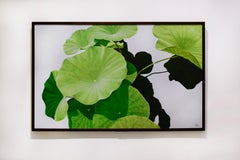
Lotus Number Fifteen: Photo-realist Still Life Painting of Green Leaves
By Frank DePietro
Located in Hudson, NY
Horizontal photo-realist still life painting on canvas of green lotus leaves on a light grey background 'Lotus Number Fifteen' by Frank Depietro, made i...
Canvas, Oil
$540Sale Price|20% Off
H 16 in W 13 in
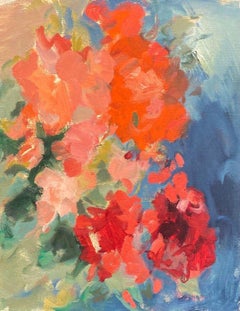
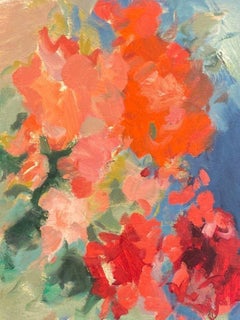
20th Century German Modernist Oil Painting Colorful Still Life of Flowers
By Elisabeth Hahn
Located in Cirencester, Gloucestershire
Artist: Elisabeth Hahn (German 1924-2021) Elisabeth Hahn was born in Dortmund, Germany, where she began her artistic studies. In 1953, she moved to Paris. She continued her studies ...
Canvas, Oil
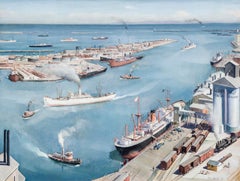
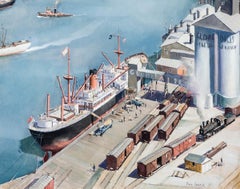
San Pedro Harbor
By Paul Sample
Located in New York, NY
It is infrequent, to say the least, that a diagnosis of tuberculosis proves fortuitous, but that was the event, in 1921, that set Paul Starrett Sample on the road to becoming a professional artist. (The best source for an overview of Sample’s life and oeuvre remains Paul Sample: Painter of the American Scene, exhib. cat., [Hanover, New Hampshire: Hood Museum of Art, 1988] with a detailed and definitive chronology by Sample scholar, Paula F. Glick, and an essay by Robert L. McGrath. It is the source for this essay unless otherwise indicated.) Sample, born in Louisville, Kentucky, in 1896 to a construction engineer and his wife, spent his childhood moving with his family to the various locations that his father’s work took them. By 1911, the family had landed in Glencoe, Illinois, settling long enough for Paul to graduate from New Trier High School in 1916. Sample enrolled at Dartmouth College, in Hanover, New Hampshire, where his interests were anything but academic. His enthusiasms included the football and basketball teams, boxing, pledging at a fraternity, and learning to play the saxophone. After the United States entered World War I, Sample, to his family’s dismay, signed on for the Naval Reserve, leading directly to a hiatus from Dartmouth. In 1918 and 1919, Sample served in the U.S. Merchant Marine where he earned a third mate’s license and seriously contemplated life as a sailor. Acceding to parental pressure, he returned to Dartmouth, graduating in 1921. Sample’s undergraduate life revolved around sports and a jazz band he formed with his brother, Donald, two years younger and also a Dartmouth student. In November 1933, Sample summarized his life in a letter he wrote introducing himself to Frederick Newlin Price, founder of Ferargil Galleries, who would become his New York art dealer. The artist characterized his undergraduate years as spent “wasting my time intensively.” He told Price that that “I took an art appreciation course and slept thru it every day” (Ferargil Galleries Records, circa 1900–63, Archives of American Art, Smithsonian Institution, available on line). In 1920, Donald Sample contracted tuberculosis. He went for treatment to the world-famous Trudeau Sanitorium at Saranac Lake, in New York State’s Adirondack Mountains for the prescribed regimen of rest, healthful food, and fresh air. Visiting his brother in 1921, Paul also contracted the disease. Tuberculosis is highly contagious, and had no certain cure before the development of streptomycin in 1946. Even for patients who appeared to have recovered, there was a significant rate of recurrence. Thus, in his letter to Price, Sample avoided the stigma conjured by naming the disease, but wrote “I had a relapse with a bad lung and spent the next four years hospitalized in Saranac Lake.” The stringent physical restrictions imposed by adherence to “the cure” required Sample to cultivate an alternate set of interests. He read voraciously and, at the suggestion of his physician, contacted the husband of a fellow patient for instruction in art. That artist, then living in Saranac, was Jonas Lie (1880–1940), a prominent Norwegian-American painter and an associate academician at the National Academy of Design. Lie had gained renown for his dramatic 1913 series of paintings documenting the construction of the Panama Canal (The Metropolitan Museum of Art, New York; United States Military Academy, West Point, New York). Primarily a landscape artist, Lie had a particular affinity for scenes with water. His paintings, impressionistic, atmospheric, and brushy, never strayed from a realistic rendering of his subject. Sample regarded Lie as a mentor and retained a lifelong reverence for his teacher. Sample’s early paintings very much reflect Lie’s influence. ` In 1925, “cured,” Sample left Saranac Lake for what proved to be a brief stay in New York City, where his veteran’s benefits financed a commercial art course. The family, however, had moved to California, in the futile hope that the climate would benefit Donald. Sample joined them and after Donald’s death, remained in California, taking classes at the Otis Art Institute in Los Angeles. In Sample’s account to Price, “I couldn’t stomach the practice of painting a lot of High Sierras and desert flowers which seemed to be the only kind of pictures that were sold here so I got a job teaching drawing and painting at the art school of the University of Southern California.” Initially hired as a part-time instructor, Sample progressed to full-time status and ultimately, by the mid-1930s, to the post of Chairman of the Fine Art Department. Sample, however, did not want to wind up as a professor. “Teaching is all right in small doses,” he wrote, “but I have a horror of drifting into being a college professor and nothing more.” At the same time as he taught, Sample began to exhibit his work in a variety of venues at first locally, then nationally. Though he confessed himself “a terrible salesman,” and though occupied with continued learning and teaching, Sample was nonetheless, ambitious. In 1927, he wrote in his diary, “I am eventually going to be a painter and a damned good one. And what is more, I am going to make money at it” (as quoted by Glick, p. 15). In 1928, Sample felt sufficiently solvent to marry his long-time love, Sylvia Howland, who had also been a patient at Saranac Lake. The Howland family were rooted New Englanders and in summertime the Samples regularly traveled East for family reunion vacations. While the 1930s brought serious hardship to many artists, for Paul Sample it was a decade of success. Buttressed by the financial safety net of his teacher’s salary, he painted realist depictions of the American scene. While his work addressed depression-era conditions with a sympathetic eye, Sample avoided the anger and tinge of bitterness that characterized much contemporary realist art. Beginning in 1930, Sample began to exhibit regularly in juried exhibitions at important national venues, garnering prizes along the way. In 1930, Inner Harbor won an honorable mention in the Annual Exhibition of the Art Institute of Chicago. That same year Sample was also represented in a show at the Albright-Knox Gallery in Buffalo and at the Biennial Exhibition of the Corcoran Gallery of Art, Washington, D.C. In 1931, Dairy Ranch won the second Hallgarten Prize at the Annual Exhibition of the National Academy of Design, in New York. Sample also made his first appearances at the Carnegie Institute, Pittsburgh, and The Pennsylvania Academy of the Fine Arts, Philadelphia. In 1936, Miner’s Resting won the Temple Gold Medal at the Pennsylvania Academy’s Annual Exhibition. Always interested in watercolor, in 1936, Sample began to send works on paper to exhibitions at the Whitney Museum, New York. While participating in juried exhibitions, Sample also cultivated commercial possibilities. His first New York art dealer was the prestigious Macbeth Gallery in New York, which included his work in a November 1931 exhibition. In 1934, Sample joined the Ferargil Galleries in New York, after Fred Price arranged the sale of Sample’s Church Supper to the Michele and Donald D’Amour Museum of Fine Arts in Springfield, Massachusetts. In 1937, The Metropolitan Museum of Art purchased Sample’s Janitor’s Holiday from the annual exhibition of the National Academy of Design, a notable honor. As prestigious as this exhibition schedule may have been, by far Sample’s most visible presence in the 1930s and 1940s was the result of his relationship with Henry Luce’s burgeoning publishing empire, Time, Inc. Sample’s first contribution to a Luce publication appears to have been another San Pedro...
Canvas, Oil
Six O'Clock
Located in Los Angeles, CA
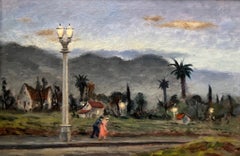
Six O-Clock, c. 1942, oil on canvas, 30 x 20 inches, signed and titled several times verso of frame and stretcher (perhaps by another hand), marked “Rehn” several times on frame (for the Frank K. M. Rehn Galleries in New York City, who represented Craig at the time); Exhibited: 1) 18th Biennial Exhibition of Contemporary American Oil Paintings from March 21 to May 2, 1943 at The Corcoran Gallery of Art in Washington, D.C. #87, original price $450 (per catalog) (exhibition label verso), 2) Craig’s one-man show at the Frank K. M. Rehn Galleries, New York City, from October 26 to November 14, 1942, #10 (original price listed as $350); and 3) Exhibition of thirty paintings sponsored by the Harrisburg Art Association at the State Museum of Pennsylvania in Harrisburg in March, 1944 (concerning this exhibit, Penelope Redd of The Evening News (Harrisburg, Pennsylvania) wrote: “Other paintings that have overtones of superrealism inherent in the subjects include Tom Craig’s California nocturne, ‘Six O’Clock,’ two figures moving through the twilight . . . .” March 6, 1944, p. 13); another label verso from The Museum of Art of Toledo (Ohio): original frame: Provenance includes George Stern Gallery, Los Angeles, CA About the Painting Long before Chris Burden’s iconic installation outside of the Los Angeles County Museum of Art, Urban Light, another artist, Tom Craig, made Southern California streetlights the subject of one of his early 1940s paintings. Consisting of dozens of recycled streetlights from the 1920s and 1930s forming a classical colonnade at the museum’s entrance, Burden’s Urban Light has become a symbol of Los Angeles. For Burden, the streetlights represent what constitutes an advanced society, something “safe after dark and beautiful to behold.” It seems that Craig is playing on the same theme in Six O-Clock. Although we see two hunched figures trudging along the sidewalk at the end of a long day, the real stars of this painting are the streetlights which brighten the twilight and silhouette another iconic symbol of Los Angeles, the palm trees in the distance. Mountains in the background and the distant view of a suburban neighborhood join the streetlights and palm trees as classic subject matter for a California Scene painting, but Craig gives us a twist by depicting the scene not as a sun-drenched natural expanse. Rather, Craig uses thin layers of oil paint, mimicking the watercolor technique for which he is most famous, to show us the twinkling beauty of manmade light and the safety it affords. Although Southern California is a land of natural wonders, the interventions of humanity are already everywhere in Los Angeles and as one critic noted, the resulting painting has an air of “superrealism.” About the Artist Thomas Theodore Craig was a well-known fixture in the Southern California art scene. He was born in Upland California. Craig graduated with a degree in botany from Pomona College and studied painting at Pamona and the Chouinard Art School with Stanton MacDonald-Wright and Barse Miller among others. He became close friends with fellow artist Milford Zornes...
Canvas, Oil
Young Girl with Poodle
By Virginia Tillou
Located in Buffalo, NY
A 1950's portrait of a young girl with her poodle by American female artist Virginia Tillou.
Canvas, Oil