Passer au contenu principal
Vous voulez plus d'images ou de vidéos ?
Demander au vendeur plus d'images ou de vidéos
1 sur 10

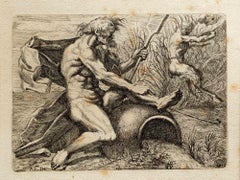
Giovanni Andrea Podestà
Bacchanale

1649

2 116 €

À propos de cet article

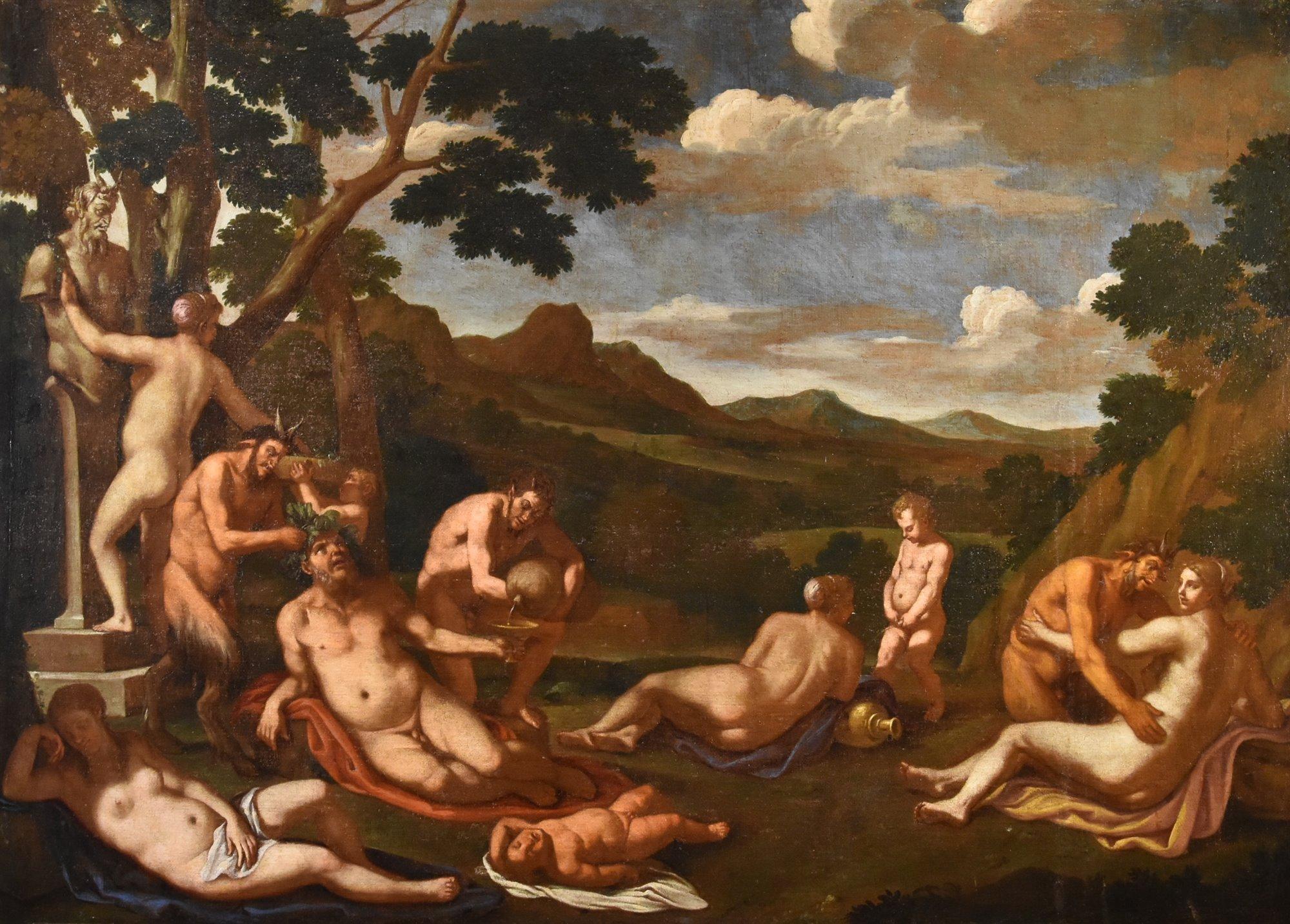
Bacchanal Etching, 1649 Inscribed in the square left: "Magnificentis/simo Principi/Paolo lorda/no. II Bracci/ani Duci/Aud. P.DDD/1640; Inscribed on right: Rome apud Franciscsum Saluucium Condition: Usual centerfolds from paper manufacture Plate: 10 3/8 x 15 1/2" Sheet: 11 1/2 x 16 1/2"; References: Bartsch XX.4 Sopher Plate 145 An impression of this image is in the collections of the Philadelphia Museum of Art and the National Gallery of Art, Washington An exceptionally rich impression in excellent condition. From Wikipedia, the free encyclopedia Putti as Allegory of Music Giovanni Andrea Podestà or Giovanni Andrea Podesta (1608 - c. 1674) was an Italian painter and engraver who was principally active in Rome. His principal subject matter is children playing in landscapes with classical objects. His works show the influence of Poussin's Arcadian landscapes and bacchanals, which were ultimately derived from Titian's bacchanals. Life Giovanni Andrea Podestà was born in Genoa. He was formed in Genoa with Giovanni Andrea de Ferrari and Domenico Fiasella according to the information provided by the contemporary Genoese biographer Raffaele Soprani. He is also recorded as an apprentice of Giovanni Battista Paggi in 1627. His presence is documented from in 1634 in Rome where he made drawings after the statues and ancient reliefs at the famous Giustiniani collection. These were subsequently engraved for publication in the 'Galleria Giustiniani'. The artist's career ran a course similar to that of the young Domenico Fiasella. In Rome his art evolved in contact with the works of Poussin, Andrea di Leone, Pietro Testa and the Flemish artists François Duquesnoy and Karel Philips Spierincks. In 1650 Podesta became a member of the Accademia di San Luca in Rome. He died in Genoa. Work A majority of Podestà's paintings depict children playing amid classical objects in landscapes. Few of his paintings have survived and his work is now mainly known from the etchings he made himself after his compositions. In particular a series of prints published in Rome which date from 1636 to 1661 form an important source of information on his work. Putti in a Landscape Podestà made prints after the bacchanals of Titian, which he dedicated to powerful patrons. He dedicated a series of prints to the pleasures of wine to Paolo Giordano Orsini II, Prince of Bracciano. Orsini also owned multiple paintings by Podestà, including two landscapes and seven small paintings of seafood. A Worship of Venus etched after Titian was dedicated to Cassiano dal Pozzo and other prints of bacchanals to Fabio della Cornia. The artist clearly tried tocurry favour with the Barberini family through these dedications.[3] Cassiano dal Pozzo was known for his archaeological interests. Podestà's acquaintance with Cassiano dal Pozzo may have played a role in Podestà’s artistic development and may have put him in the circle of Poussin. This circle included Flemish artists such as the sculptor François Duquesnoy and the painter Karel Philips Spierincks who at one time or the other shared a home in Rome and also had common artistic interests. In this circle there was an interest in Classicism as well as a growing interest and admiration for the bacchanals of Titian. This found expression in copies and reproductions after Titian as well as new compositions inspired by the theme of the bacchanals. The mutual influence of the artists in this circle is clear from the fact that Podestà 's Bacchus and Ariadne (At Arte Antico) cites in the putto who scares another putto with a mask similar figures in a Drunken Silenus of the Flemish painter Karel Philips Spierincks. The quality of his work and its closeness to the Poussin circle was such that it is often difficult to distinguish his work from compositions by Poussin and Spierincks. His work has considerable charm, a feature sometimes lacking in the work of his more illustrious contemporaries. One scholar noted that 'Although Podestà was neither a great designer nor a great draughtsman, his amusing conceits display the lighter side of the often sober classical devotees in Rome in the 1630s and 1640s.' Although a rather marginal artist, his works depicting putti at play definitely had an influence on late Genoese Baroque painting, such as on the decorative artists of the 'Casa Piola'. The few drawings by Podesta that have been preserved show features familiar from his etchings: contorted facial expressions, small twisting figures, patches of dark cross-hatching and an interest in still-life. In their precision they are similar to and possibly derived from Sinibaldo Scorza, whose prints may have been an inspiration for Podestà's own etchings.
  • Créateur:
    Giovanni Andrea Podestà (1615 - 1674, Italien)
  • Année de création:
    1649
  • Dimensions:
    Hauteur : 29,21 cm (11,5 po)Largeur : 41,91 cm (16,5 po)
  • Support:
  • Mouvement et style:
  • Période:
  • État:
  • Adresse de la galerie:
    Fairlawn, OH
  • Numéro de référence:
    Vendeur : FA95541stDibs : LU14014429832

Plus d'articles de ce vendeur

Tout afficher
L'enfant Jupiter allaitant de la chèvre Amaltheia (La naissance d'Apollon)

L'enfant Jupiter allaitant de la chèvre Amaltheia (La naissance d'Apollon)

ParLuigi Quaini

L'enfant Jupiter allaité par la chèvre Amaltheia (La naissance de Jupiter) Craie rouge et lavis sur papier blanc cassé, v. 1700 Non signé Attribué à Quaini par Dwight Miller, le spé...

Catégorie

XVIIIe siècle et antérieur, Baroque, Dessins et aquarelles - Figuratif

Matériaux

Craie
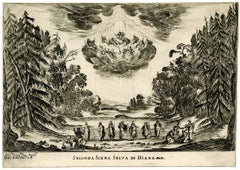
Scène II, Le Nozze Degli Dei

Scène II, Le Nozze Degli Dei

ParStefano Della Bella

Scène II, Le Nozze Degli Dei Gravure, 1637 Signé dans la plaque en bas à gauche La scène dépeint le moment initial où Diane est révélée, entourée de ses nymphes, célébrant une chasse...

Catégorie

années 1630, Maîtres anciens, Estampes - Paysage

Matériaux

Eau-forte

Ostiakes

Ostiakes

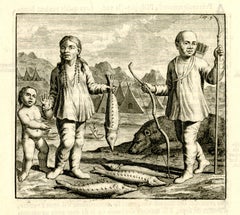
ParCornelis de Bruijn

Ostiakes Gravure, 1718 D'après : Voyages de Corneille le Brun par la Moscovie, en Perse, et aux Indes Occidentales (traduction française, 1718), Chapitre XXI Les Ostyaks font partie ...

Catégorie

années 1710, Maîtres anciens, Estampes - Paysage

Matériaux

Gravure

The Garden of Love (d'après Peter Paul Rubens [1577-1640])

The Garden of Love (d'après Peter Paul Rubens [1577-1640])

ParChristoffel Jegher

Le jardin d'amour (d'après Peters Paul Rubens [1577-1640]) Diptyque gravé sur bois, c. 1633-1636 Chacune des deux feuilles est signée dans la plaque en bas à droite Une impression po...

Catégorie

17ème siècle, Maîtres anciens, Estampes - Figuratif

Matériaux

Gravure sur bois

Dessins ovales illustrant les « Métamorphoses » d'Ovide, de style baroque, non signés, années 1760

Dessins ovales illustrant les « Métamorphoses » d'Ovide, de style baroque, non signés, années 1760

ParCharles Joseph Natoire

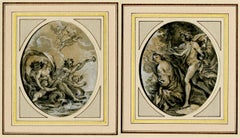
Une paire de dessins ovales pour Ovid, Metamophoses À gauche : Le Triomphe d'Amphitrite (Livre I) À droite : Diane et Actéon (Livre III) Extrait de : Ovide, Métamorphoses Ces études...

Catégorie

Années 1760, Baroque, Dessins et aquarelles - Portrait

Matériaux

Encre, Stylo

Camera sepolcrale

Camera sepolcrale

ParGiovanni Battista Piranesi

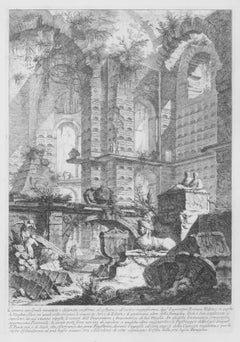
Camera sepolcrale Gravure à l'eau-forte 1743 Signé dans le coin inférieur gauche D'après : Prima Parte, 1743 Deuxième édition : 1750-1778 Filigrane : R 37-39 Une impression à vie imp...

Catégorie

années 1740, Maîtres anciens, Estampes - Intérieurs

Matériaux

Eau-forte

Suggestions

Bacchanales -  Gravure de P. Fontana d'après A. Tofanelli - 1821

Bacchanales - Gravure de P. Fontana d'après A. Tofanelli - 1821

ParPietro Fontana

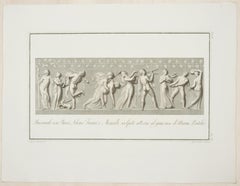
"Baccanale con Bacco, Sileno, Fauni, e Menadi" (Baccanale avec du vin, du silence, des fruits et des légumes) est une belle gravure au burin en noir et blanc sur papier, réalisée pa...

Catégorie

années 1820, Moderne, Estampes - Figuratif

Matériaux

Eau-forte

Estampe néoclassique italienne représentant des bacchanales, en corne, encadrée, XIXe siècle

Estampe néoclassique italienne représentant des bacchanales, en corne, encadrée, XIXe siècle

Estampe italienne de style néoclassique représentant une scène de foule bacchanale rendue de manière réaliste, avec un personnage à cornes assis dans une position pensive, avec des a...

Catégorie

Antiquités, XIXe siècle, italien, Néoclassique, Estampes

Matériaux

Corne