Want more images or videos?
Request additional images or videos from the seller
1 of 10

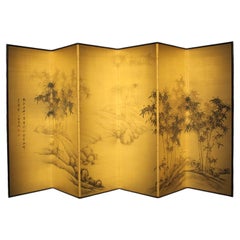
Set of Four Sliding Doors (Fusuma): Bamboo on Gold

$20,700
£15,620.33
€18,179.79
CA$29,222.83
A$29,329.08
CHF 17,102.70
MX$356,556.34
NOK 196,527
SEK 202,117.99
DKK 135,891.82

About the Item

Meiji period (1868 - 1912) four separate fusuma doors (sliding doors) with paintings of bamboo trees. Can be hung separately, or together as shown. Signature in the process of being read. Mineral pigments painted on gold paper with gilded bronze hardware. Each panel measures 68 1/2" h x 19" w. Overall dimensions: 68 1/2" h x 116" w.
  • Dimensions:
    Height: 68.5 in (173.99 cm)Width: 116 in (294.64 cm)Depth: 0.75 in (1.91 cm)
  • Materials and Techniques:
  • Place of Origin:
  • Period:
  • Date of Manufacture:
    c. 1900
  • Condition:
    Condition report upon request.
  • Seller Location:
    Hudson, NY
  • Reference Number:
    Seller: S13571stDibs: LU855135317282

More From This Seller

View All
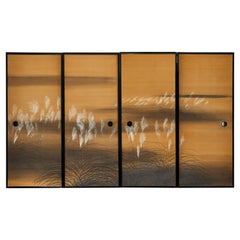
Set of Four Sliding Doors (Fusuma): Wild Grasses

Set of Four Sliding Doors (Fusuma): Wild Grasses

Located in Hudson, NY

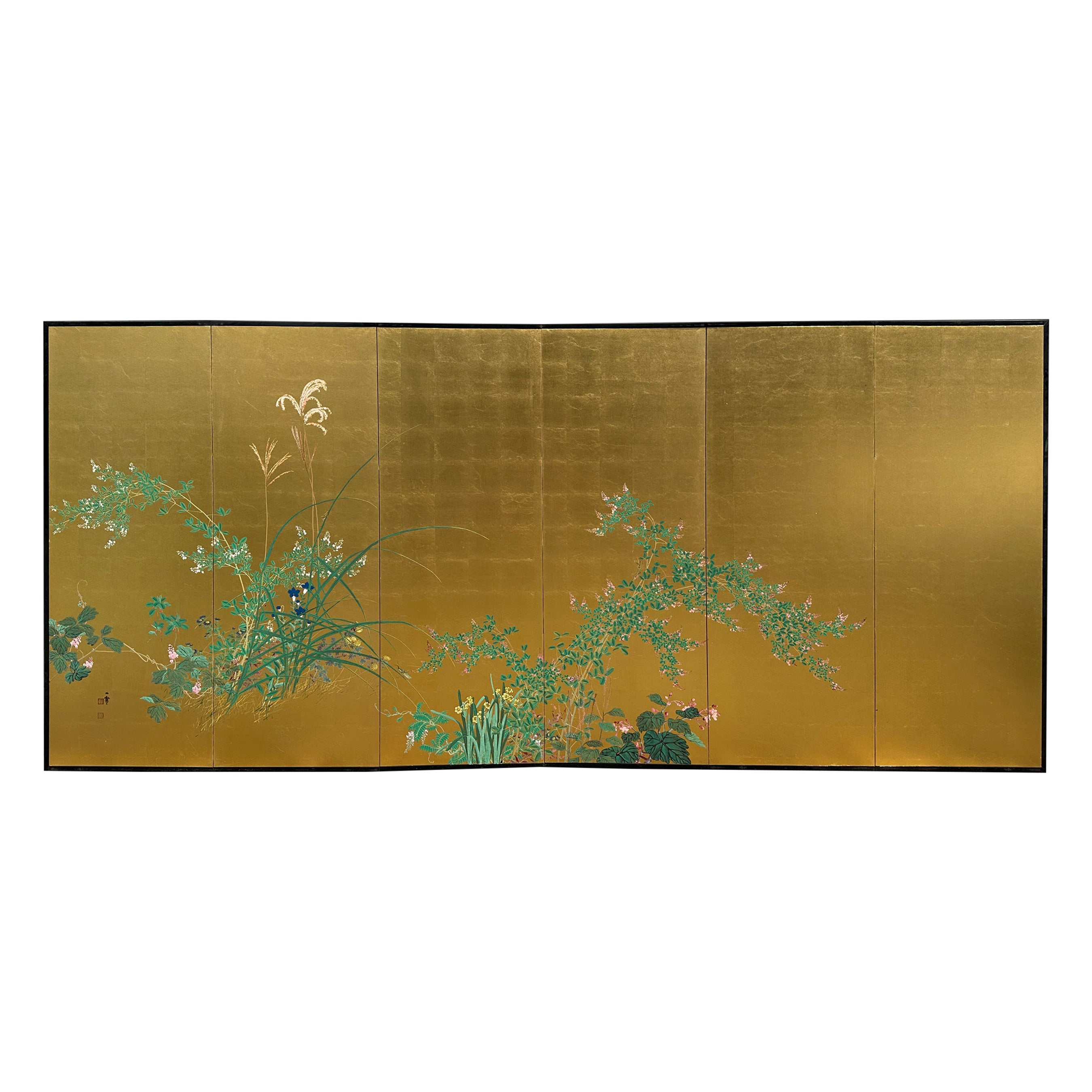
Meiji period (1868 - 1912) four separate sliding doors (fusuma) with Shijo School paintings of wild grasses. Can be hung separately, or together as shown. Signature reads: Kogetsu....

Category

20th Century Japanese Paintings and Screens

Materials

Bronze

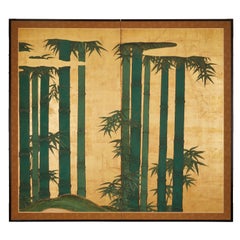
Japanese Two Panel Screen: Bamboo on Gold

Japanese Two Panel Screen: Bamboo on Gold

Located in Hudson, NY

Bamboo grove on a knoll with stylized gold mist. Mineral pigments on gold leaf with silk brocade border.

Category

Antique Early 19th Century Japanese Paintings and Screens

Materials

Gold Leaf

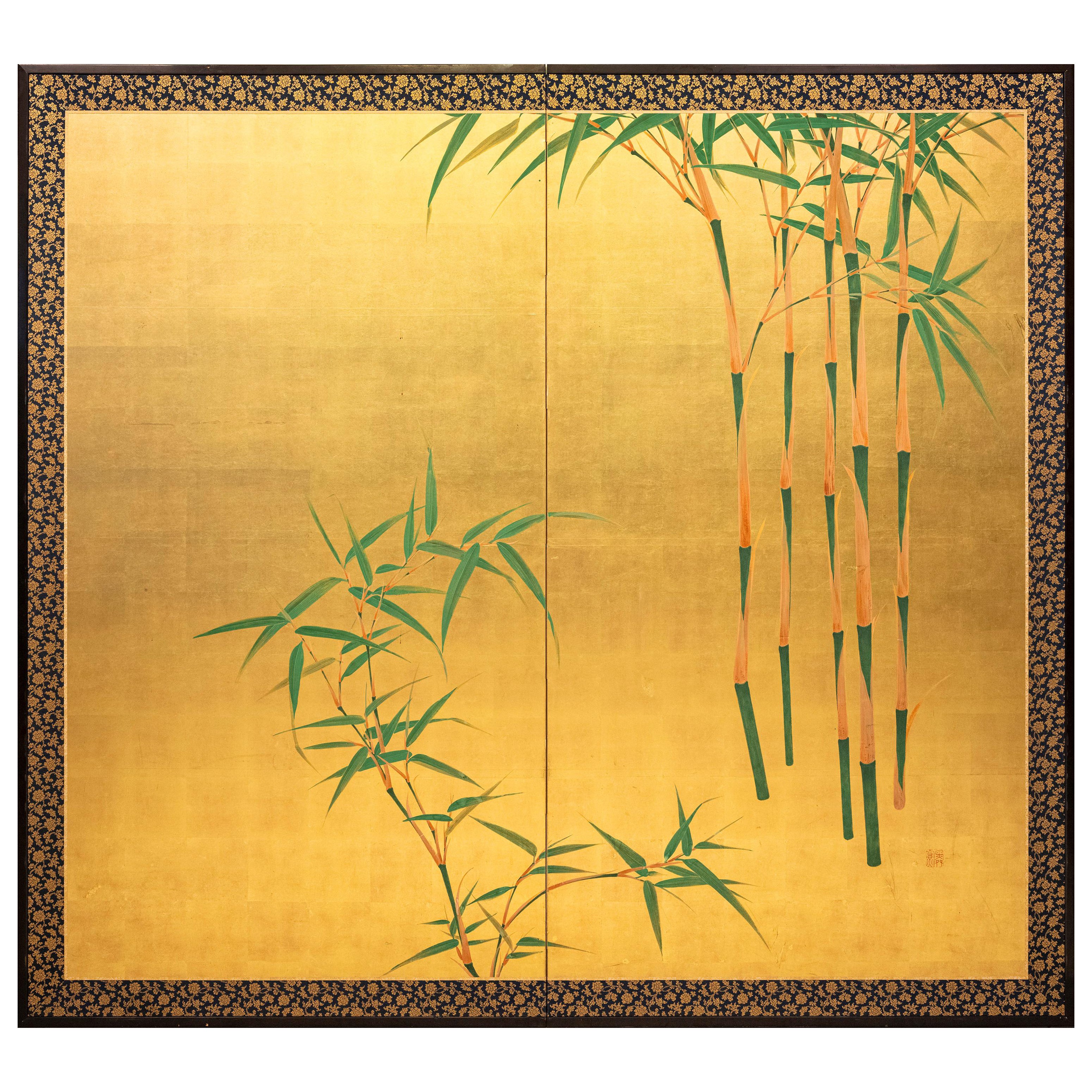
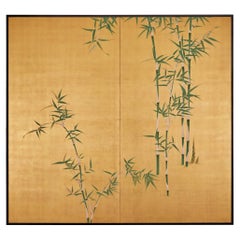
Japanese Two Panel Screen: Young Bamboo on Gold

Japanese Two Panel Screen: Young Bamboo on Gold

Located in Hudson, NY

Symbolizing the Sun, gold is often used in shrines and temples in Japan. Gold has been extensively recognized to represent wealth, while bamboo is said to bring good luck due to its ability to regenerate in the forest. A beautiful composition of the two together...

Category

Antique Late 19th Century Japanese Paintings and Screens

Materials

Gold

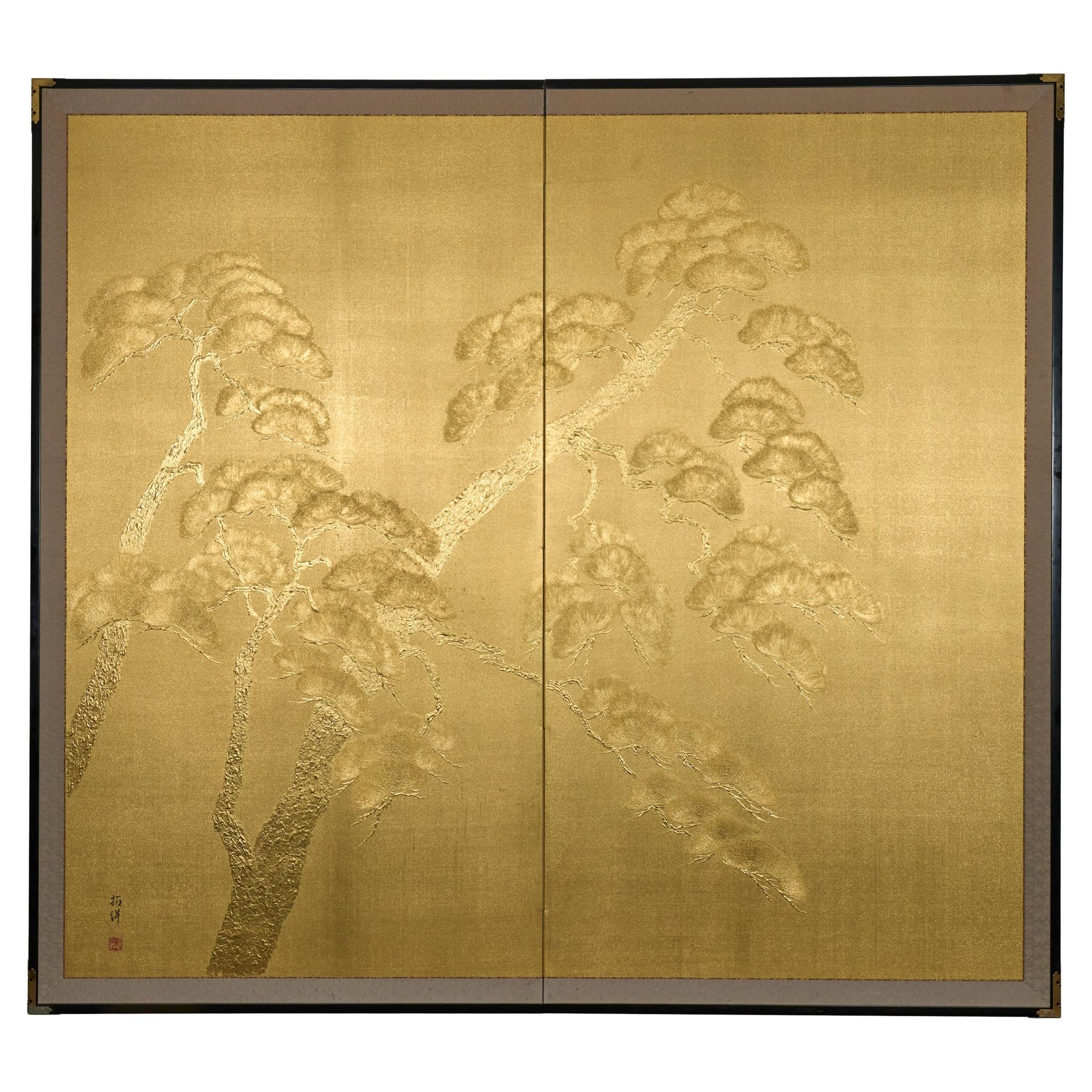
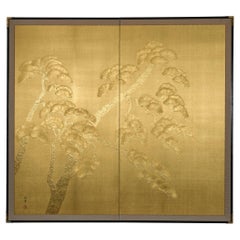
Japanese Two Panel Screen: Gilded Pine

Japanese Two Panel Screen: Gilded Pine

Located in Hudson, NY

Luxurious golden pine with gold raised relief on gold silk with silk brocade border and black lacquer trim with bronze mounts. Signature and seal read: Takuyo. Back Label Reads: ...

Category

Mid-20th Century Japanese Paintings and Screens

Materials

Brocade, Silk, Lacquer

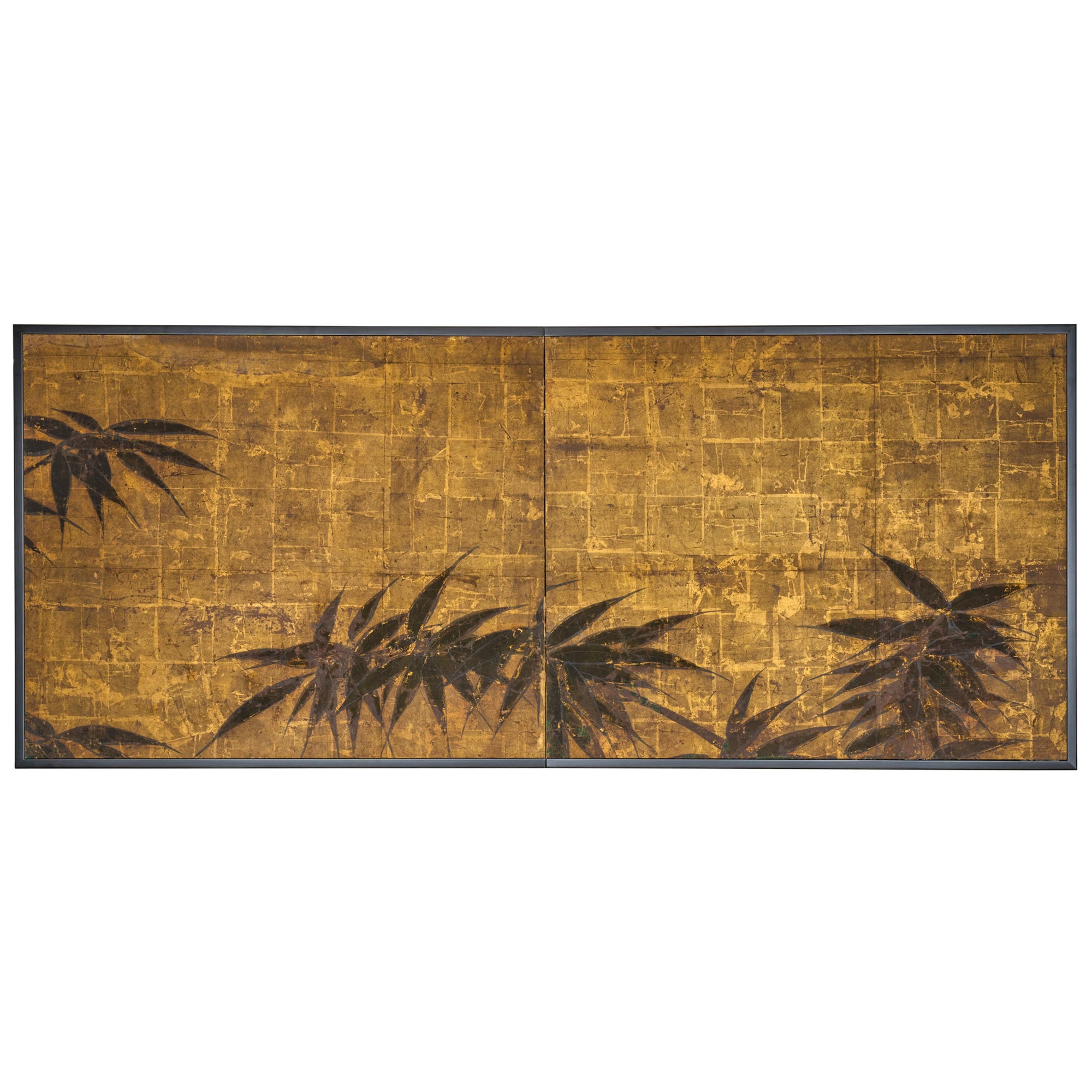
Japanese Two Panel Screen: Bamboo Grove on Mulberry Paper with Gold Dust

Japanese Two Panel Screen: Bamboo Grove on Mulberry Paper with Gold Dust

Located in Hudson, NY

Kano School painting of a bamboo grove with blooming flowers and gold dust mists. Painted in mineral pigments on mulberry paper with gold dust and a silk brocade border.

Category

Antique Early 19th Century Japanese Edo Paintings and Screens

Materials

Gold

Japanese Two Panel Screen: Bamboo Grove on Mulberry Paper with Gold Dust

Japanese Two Panel Screen: Bamboo Grove on Mulberry Paper with Gold Dust

Located in Hudson, NY

Kano School painting of a bamboo grove with blooming flowers and gold dust mists. Painted in mineral pigments on mulberry paper with gold dust and a silk brocade border.

Category

Antique Early 19th Century Japanese Paintings and Screens

Materials

Gold

You May Also Like

Stunning Set of Four 19th Century Edo Period Fusuma Door Decorative Panels

Stunning Set of Four 19th Century Edo Period Fusuma Door Decorative Panels

Located in Los Angeles, CA

A set of four fusuma (sliding door) panels from the 19th century, painted in ink and colors on gold leaf. The panels depict a blossoming cherry tree extending beyond a woven fence an...

Category

Antique Late 19th Century Japanese Edo Paintings and Screens

Materials

Gold Leaf, Brass

19th Century Japanese Screen for Tea-Ceremony, Ink Bamboo and Plum on Gold Leaf

19th Century Japanese Screen for Tea-Ceremony, Ink Bamboo and Plum on Gold Leaf

Located in Kyoto, JP

Three Friends of Winter Nakajima Raisho (1796-1871) Late Edo period, circa 1850 Ink and gold leaf on paper. This is a double-sided Japanese Furosaki or tea-ceremony screen from the mid 19th century; bamboo and plum on the front, young pines the back. It by Nakajima Raisho, a master painter of the Maruyama school in the late Edo and early Meiji periods. In this work Raisho combines exquisite ink brushwork with large open spaces of brilliant gold-leaf to inspire the viewers imagination. Rather than naturalism, he is searching for the phycological impression of the motifs, resulting in abstraction and stylization. His simplification of the motifs the result of looking to capture the inner nature of the objects. This art motif is known as Sho Chiku Bai, or the Three Friends of Winter. Evergreen pine connotes steadfastness, bamboo suggests both strength and flexibility, while plum blossoms unfurling on snow-laden branches imply hardiness. Combined, this trio is emblematic of Japanese new year. Chinese literati were the first to group the three plants together due to their noble characteristics. Like these resilient plants flowering so beautifully in winter, it was expected of the scholar-gentleman to cultivate a strong character with which he would be able to show the same degree of perseverance and steadfastness even during times of adverse conditions. The screen would have been placed near the hearth of a room used for the Japanese tea ceremony, shielding the fire from draughts and also forming a stimulating and decorative backdrop behind the tea utensils. It would have been used in the Hatsugama, or first tea-ceremony of the new year. Nakajima Raisho (1796-1871) originally studied under Watanabe Nangaku before entering the school of Maruyama Ozui. He was the highest ranking Maruyama school painter at the end of the Edo period and was known as one of the ‘Four Heian Families’ along with Kishi...

Category

Antique Mid-19th Century Japanese Edo Paintings and Screens
Materials

Gold Leaf

B100 Old Japanese 6panels, gold byobu, ink bamboo painting, left, folding Screen

B100 Old Japanese 6panels, gold byobu, ink bamboo painting, left, folding Screen

Located in Niiza, JP

Folding screen Material: Paper, wooden frame, etc 1 piece: Width 610 x Height 1740 x Depth 20 mm Expanded size: Width 3700 mm Folded size: Width 630 x Height 1740 x Depth 110 mm, wei...

Category

Early 20th Century Japanese Paintings and Screens

Materials

Paper

Japanese Six-Panel Folding Screen with Ancient Pine and Bamboo, 19th Century

Japanese Six-Panel Folding Screen with Ancient Pine and Bamboo, 19th Century

Located in Fukuoka, JP

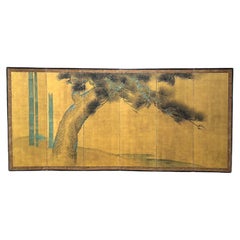
A Japanese six-panel folding screen depicting an ancient pine extending dramatically across a gold-leaf ground, accompanied by a small grouping of upright bamboo. The composition is...

Category

Antique 19th Century Japanese Edo Paintings and Screens
Materials

Gold Leaf

Tall 6-panel golden silk Japanese folding screen

Tall 6-panel golden silk Japanese folding screen

Located in Amsterdam, NL

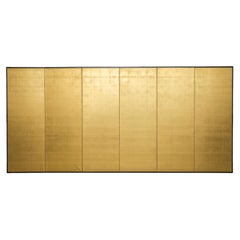
A striking, tall six-panel byôbu (folding screen) entirely covered with lustrous golden silk with a faint square pattern. In Japan, such tranquil and evenly composed screens are ofte...

Category

Mid-20th Century Japanese Paintings and Screens
Materials

Gold Leaf

A set of four Japanese lacquered fusuma doors with a painted silk landscape

A set of four Japanese lacquered fusuma doors with a painted silk landscape

Located in Milano, IT

Incredible Japanese sliding doors fusuma (襖) painted on silk, framed with black lacquered borders. The composition depicts a wide natural landscape with mountains veiled in mist, pin...

Category

Mid-20th Century Japanese Paintings and Screens

Materials

Silk, Lacquer