Want more images or videos?
Request additional images or videos from the seller
1 of 13

Large Japanese Textile Futon Cover with Resist Yuzen Dye

$3,850
£2,905.23
€3,381.26
CA$5,435.16
A$5,454.93
CHF 3,180.94
MX$66,316.03
NOK 36,552.12
SEK 37,591.99
DKK 25,274.56

About the Item

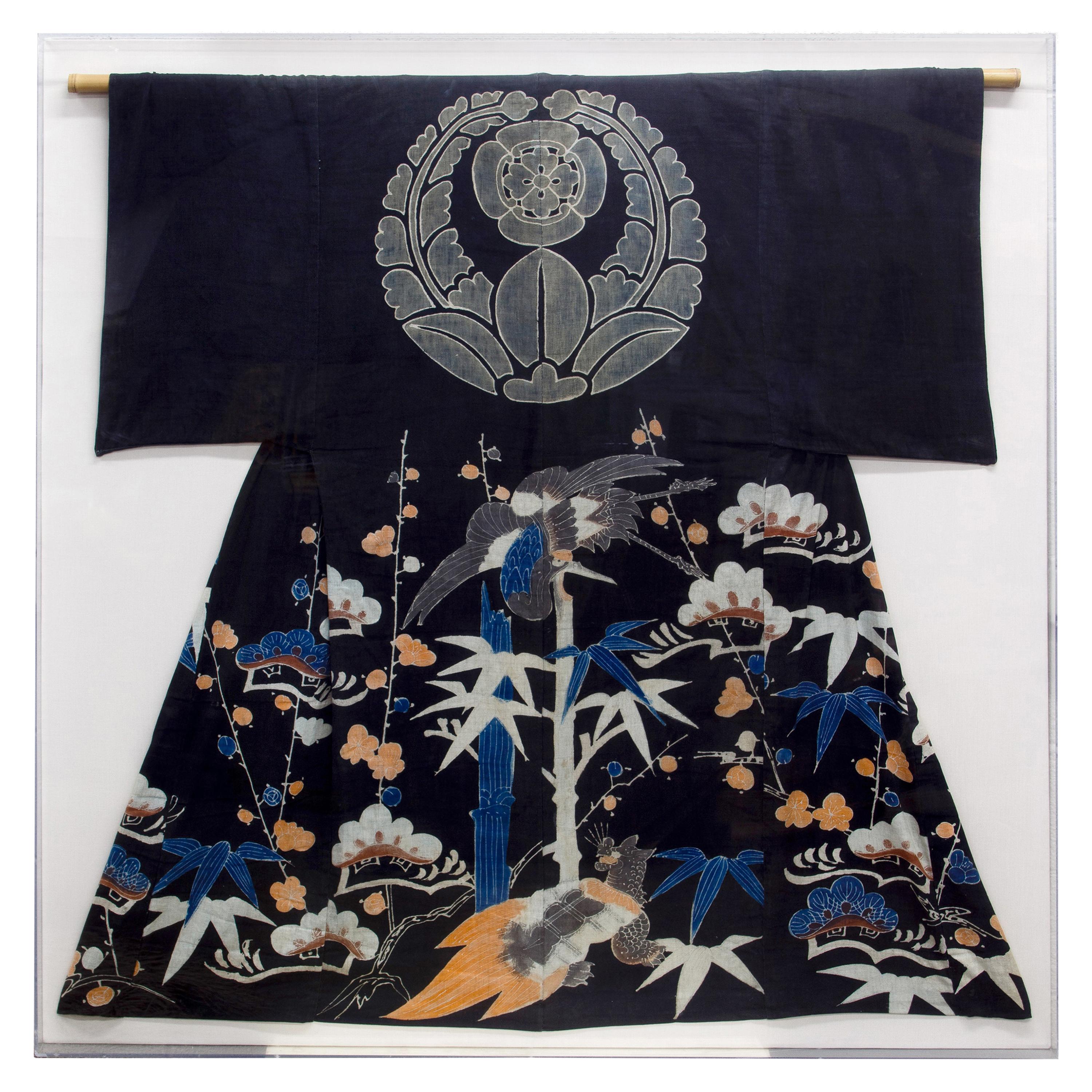
A large unframed Japanese textile art circa late early 20th century toward the end of the Meiji period. Seamed together from four vertical sections of cotton in deep indigo color, this large piece was made as a Futonji (futon cover) or Yutan (covering cloth) for domestic use. It showcases a beautiful pictorial design with two cranes, one standing, one flying on a background of pine tree, bamboo and plum blossom. On the lower right corner there is a longevity tortoise called Minogame in Japanese. The imagery is full of symbolism. The pine, bamboo and plum trees are collectively known as "three friends in winter". Their cold-resilient character represents inner strength. While minogame is the symbols of longevity, the red-crowned crane, beloved in Japan, project fidelity in marriage, good luck, long life and love. On four corners, there are prominent Choji mons (clover design), likely indicating the family which the Futonji belonged to. Achieved using Tsutsugaki method of Yuzen dye, a technique of free hand resist dying using rice paste, which involves many painstaking steps, and all done by hands in the workshop, this panel retains vibrant colors and remains in remarkable condition. The back is fresh as it was likely taken off the futon cover a long ago and used as a wall hanging. Reference: for several examples of Futonji and Yutan, see Textile of Japan: The Thomas Murray Collection at the Minneapolis Institute of Art" (Prestell) page 224-250.
  • Dimensions:
    Height: 64 in (162.56 cm)Width: 48 in (121.92 cm)Depth: 0.2 in (5.08 mm)
  • Style:
    Meiji (Of the Period)
  • Materials and Techniques:
    Cotton,Dyed
  • Place of Origin:
  • Period:
  • Date of Manufacture:
    Early 20th Century
  • Condition:
    Wear consistent with age and use. Textile in overall good condition with vivid color and minor expected wear, spots of discoloration barely noticeable. Edges folded back and clean. No obvious stain or odor. Folding wrinkles.
  • Seller Location:
    Atlanta, GA
  • Reference Number:
    1stDibs: LU945038699632

More From This Seller

View All
Antique Large Japanese Futon Cover with Resist Yuzen Dye

Antique Large Japanese Futon Cover with Resist Yuzen Dye

Located in Atlanta, GA

A large unframed Japanese Futonji textile art circa late 19th century toward the end of the Meiji period. Seamed together from four vertical sections of cotton in deep indigo color, ...

Category

Antique 1890s Japanese Meiji Textiles

Materials

Cotton

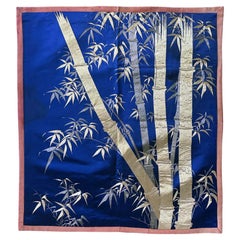
Japanese Embroidery Silk Bamboo Fukusa Meiji Period

Japanese Embroidery Silk Bamboo Fukusa Meiji Period

Located in Atlanta, GA

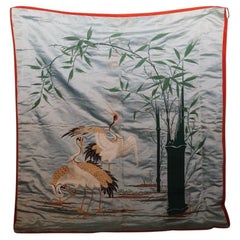
A Japanese silk embroidery Fukusa panel circa 1890-1910s toward the end of Meiji Period. On the deep blue satin background, the artist showcases a clump of bamboos in a realistic sty...

Category

Early 20th Century Japanese Meiji Textiles

Materials

Silk

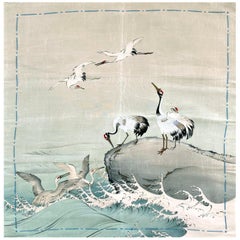
Japanese Antique Fusuka Textile Art Meiji Period

Japanese Antique Fusuka Textile Art Meiji Period

Located in Atlanta, GA

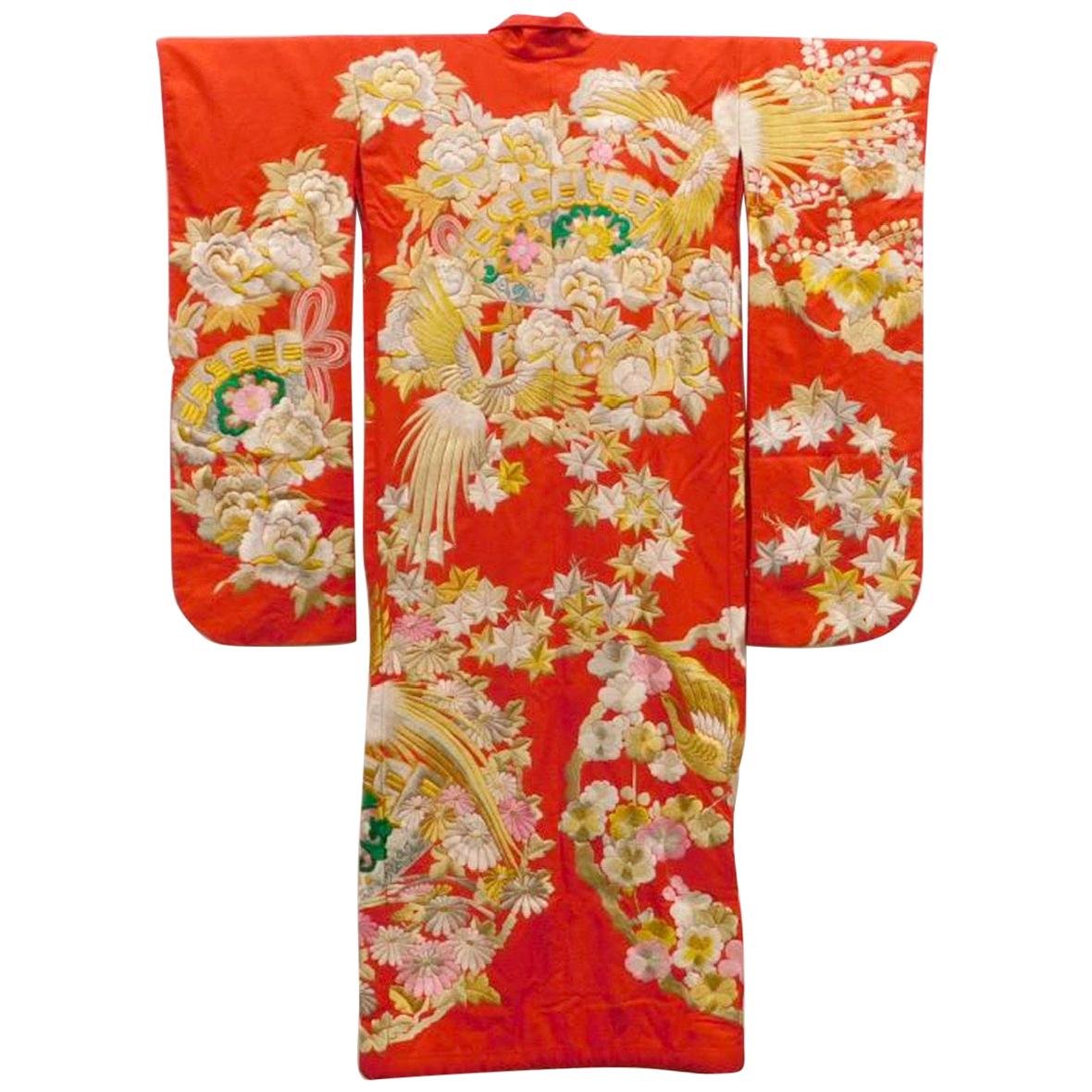
A Japanese silk Fukusa panel circa late 19th-early 20th century of Meiji Period. The front was beautifully decorated with Yuzen-zome, a labor intensive resist-dye technique invested by an artist monk Miyazaki Yuzensai (1654 -1736) of Edo period. The auspicious composition features a group of red-crown cranes, the symbol of longevity. Three of them perch on the rock by the ocean (East Sea) an two of them are in flight. Additionally, two egrets frolic in the wave. Yuzen dying was used extensively to showcase the amazing details such as the waves and the gradual coloring effect. Embroidery was used sparsely to highlight areas such as the legs of the crane to render it more dimensional details. The piece has a red silk backing and still retains four blue tassels on corners as well as decorative stitches along the edges. Fukusa is a traditional Japanese textile...

Category

Early 20th Century Japanese Japonisme Textiles
Materials

Brocade, Silk

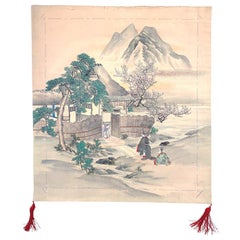
Japanese Antique Fukusa Textile Art Meiji Period

Japanese Antique Fukusa Textile Art Meiji Period

Located in Atlanta, GA

A Japanese silk Fukusa panel circa late 19th-early 20th century of Meiji Period. The front was beautifully decorated with Yuzen-zome, a labor intensive resist-dye technique invested by an artist monk Miyazaki Yuzensai (1654 -1736) of Edo period. The front cover likely depicts a scene from the Tale of Genji, showing a nobleman and his servant pays a visit to a lady in a fenced thatch-roof house under a high peak. The details of blossom trees and pines, as well as the characters, and scenery with a gradual color are astounding. It is telling that the Yuzen dying was used such an mastery. The piece has a red silk backing and still retains two red tassels on the lower corners as well as decorative stitches along the edges. There is a patched design on the back likely a Mon symbol (family crest). Fukusa is a traditional Japanese textile...

Category

Early 20th Century Japanese Japonisme Textiles
Materials

Silk

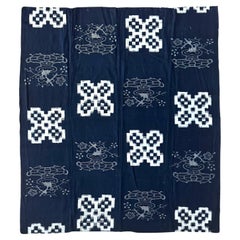
Japanese Textile Panel Double Ikat Kasuri Futon Cover

Japanese Textile Panel Double Ikat Kasuri Futon Cover

Located in Atlanta, GA

A Japanese woven cotton textile panel with white pattern on indigo background circa 1900-20s (end of Meiji to Tasho period). The panel was joined by four vertical stripes and was tra...

Category

Early 20th Century Japanese Meiji Textiles

Materials

Cotton

You May Also Like

19th Century Japanese Silk Fukusa Pillow Case, Embroidered Edo Design

19th Century Japanese Silk Fukusa Pillow Case, Embroidered Edo Design

Located in Fukuoka, JP

Superb embroidered silk Fukusa, wedding gift wrapping silk cloth decorated with auspicious motive. Condition : Fine original condition with only minor abrasions and very minor ...

Category

Antique 19th Century Japanese Edo Textiles

Materials

Silk

Antique Japanese Silk Obi Fragment, Hand-Embroidered, Meiji Period

Antique Japanese Silk Obi Fragment, Hand-Embroidered, Meiji Period

Located in Fukuoka, JP

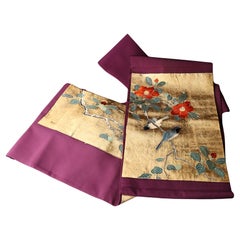
A magnificent antique Japanese silk obi fragment from the Meiji period (1868–1912), showcasing exceptional hand embroidery and gold leaf overlay. This refined textile features a pai...

Category

Antique 19th Century Japanese Meiji Textiles

Materials

Silk

Antique Japanese or Chinese Textile Tapestry / traditional Japanese curtain

Antique Japanese or Chinese Textile Tapestry / traditional Japanese curtain

Located in Sammu-shi, Chiba

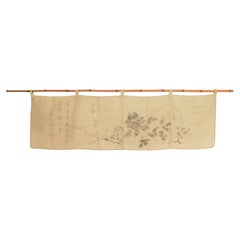
Woven from fine plant-fiber cloth, this piece is painted in ink with floral and botanical motifs — blossoms reminiscent of chrysanthemums, and branches that bring to mind a flowering...

Category

Antique Late 19th Century East Asian Other Tapestries

Materials

Textile, Bamboo

Early 20th Century Japanese Linen Go-Board Pattern Futon Cover

Early 20th Century Japanese Linen Go-Board Pattern Futon Cover

Located in Point Richmond, CA

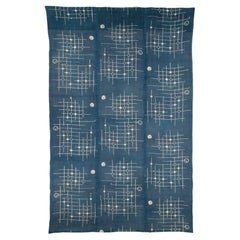
Early 20th Century Japanese linen go-board pattern futon cover A unique example of a game-themed textile, this 3-panel futon cover is woven of very fine...

Category

Early 20th Century Japanese Meiji Textiles

Materials

Hemp

Japanese Indigo Boro Futon Cover, Antique Textile Wall Panel, 1930

Japanese Indigo Boro Futon Cover, Antique Textile Wall Panel, 1930

Located in Alessandria, Piemonte

Rare perfect antique collection Japanese Indigo Boro Futon cover : also to use. The rare antique boros are now valued as pieces of art, therefore they are...

Category

Mid-20th Century Japanese Japonisme Textiles
Materials

Cotton

Vintage Japanese Obi Textile, Mid 20th C

Vintage Japanese Obi Textile, Mid 20th C

Located in Istanbul, TR

An obi in very good condition that can be utilized as a table runner, wall hanging.

Category

Mid-20th Century Japanese Pillows and Throws

Materials

Silk