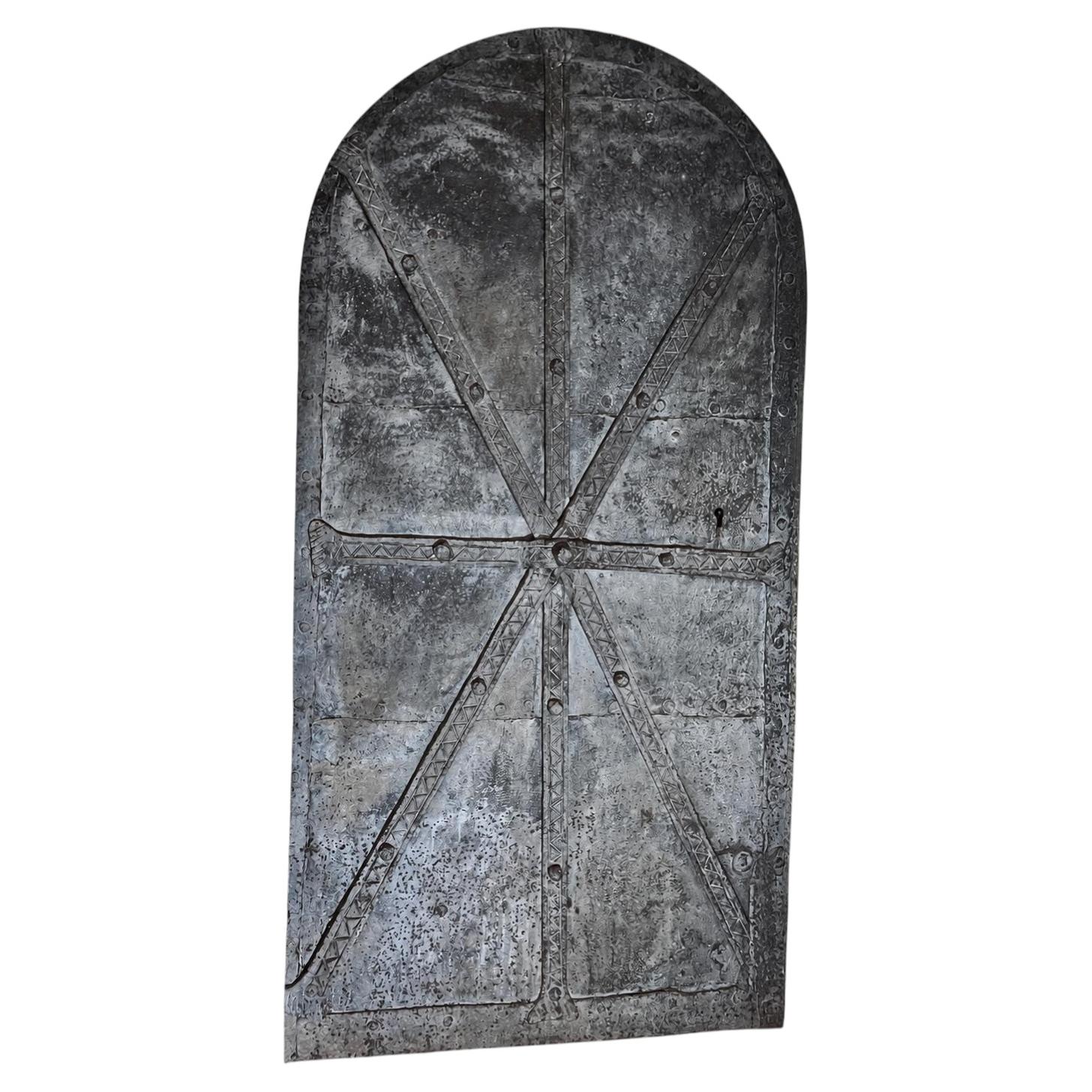
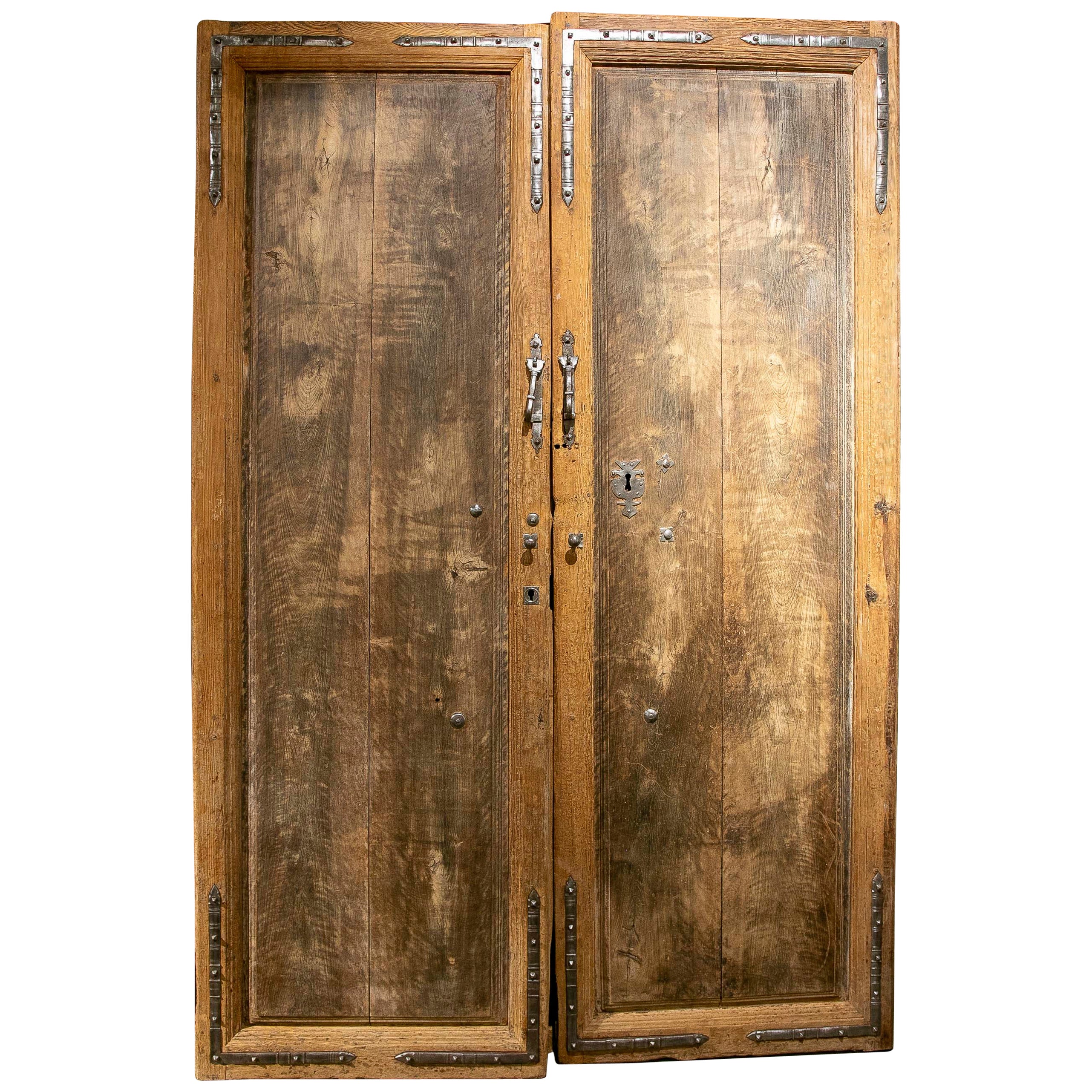
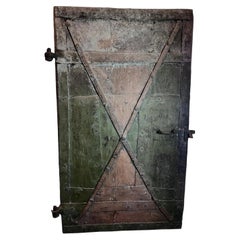
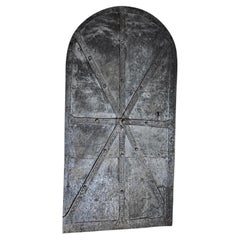
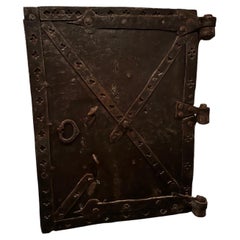
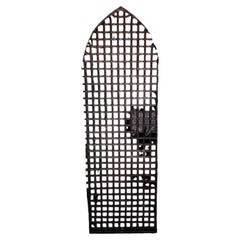
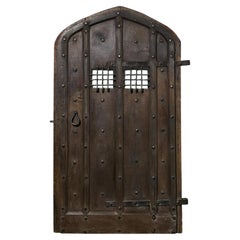
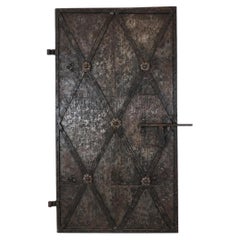
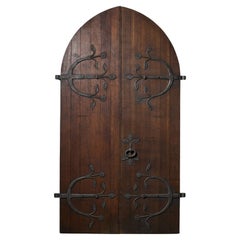
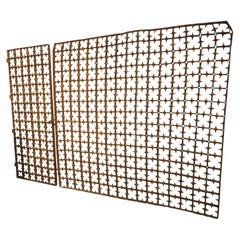
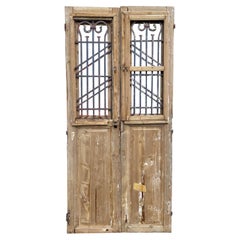
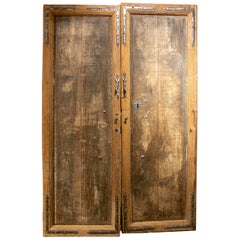
Among the rarest survivals of medieval architectural ironwork, this monumental pair of Gothic castle doors (one door-two wings) represents an extraordinary achievement in the art of the medieval blacksmith. Entirely hand forged from wrought iron and assembled with individually forged rivets, the doors embody the engineering skill, defensive requirements, and uncompromising craftsmanship of late medieval France.
Unlike the overwhelming majority of surviving castle doors- which rely on heavy oak cores reinforced with iron straps- these remarkable examples are constructed almost entirely of wrought iron plates, braces, and structural members. Such an approach demanded immense quantities of iron, exceptional technical expertise, and hundreds of hours of skilled labor, making doors of this type exceptionally costly to produce and reserved only for the most important fortified spaces.
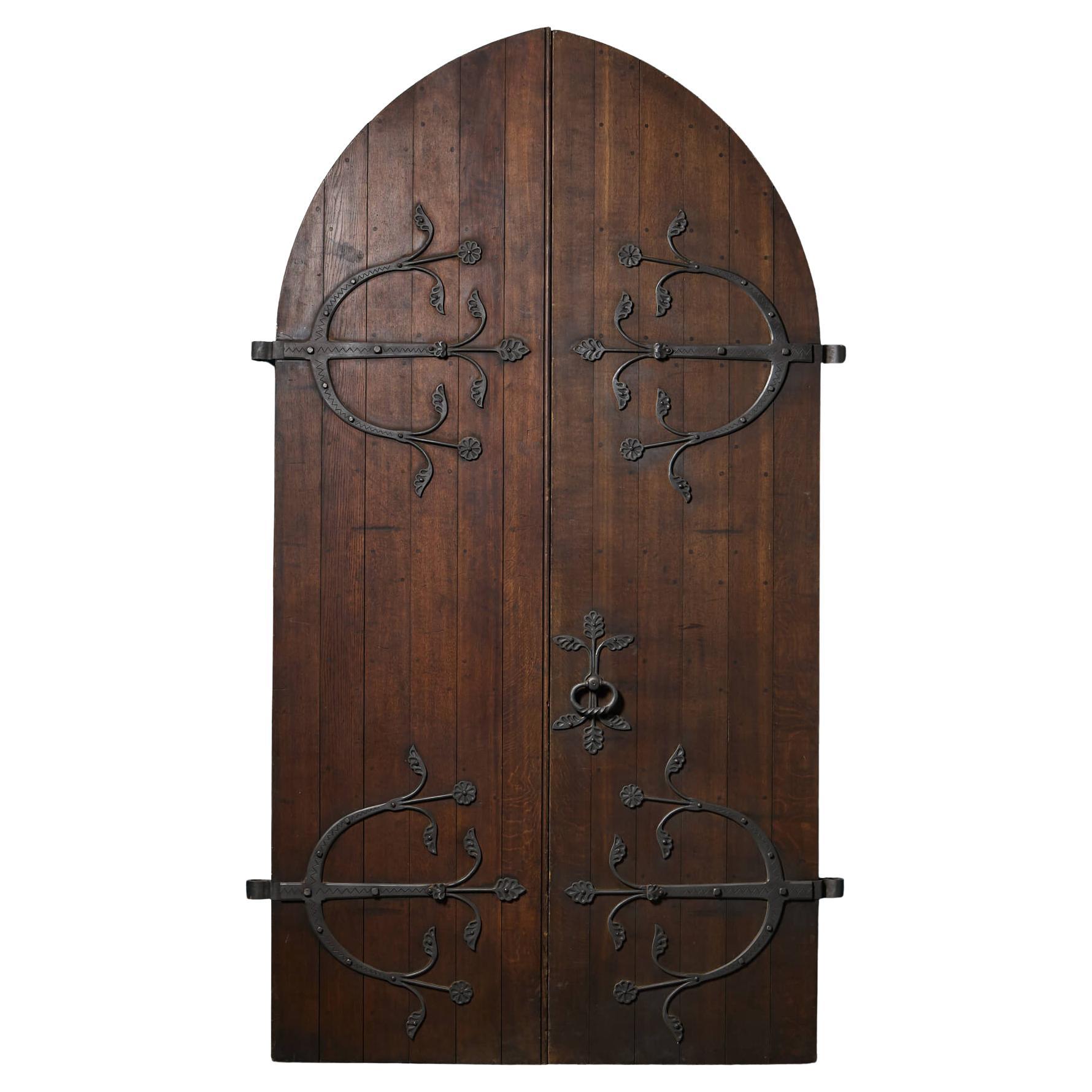
Their bold Gothic silhouette, terminating in a pointed arch, corresponds to the original medieval stone opening from which they originate. Massive diagonal reinforcing members, broad riveted iron plates, forged hinge assemblies, and individually hand-worked rivets form a powerful architectural composition that is as sculptural as it is functional.
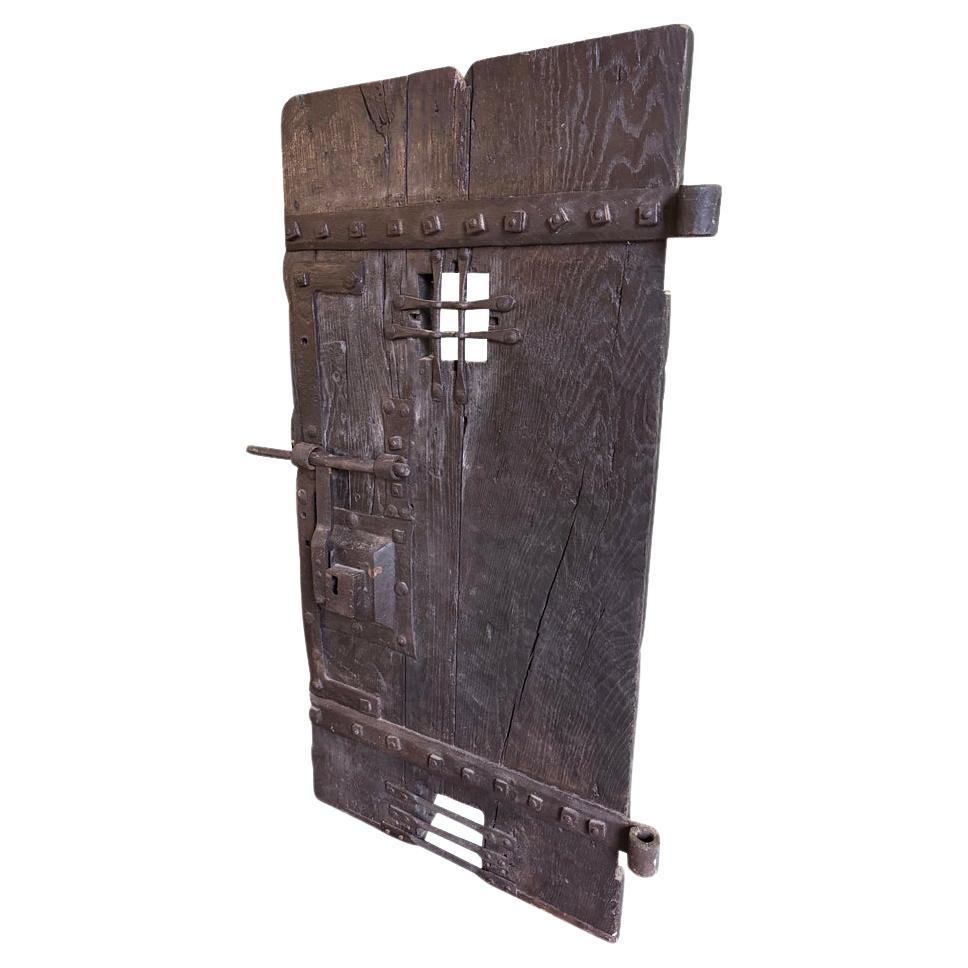
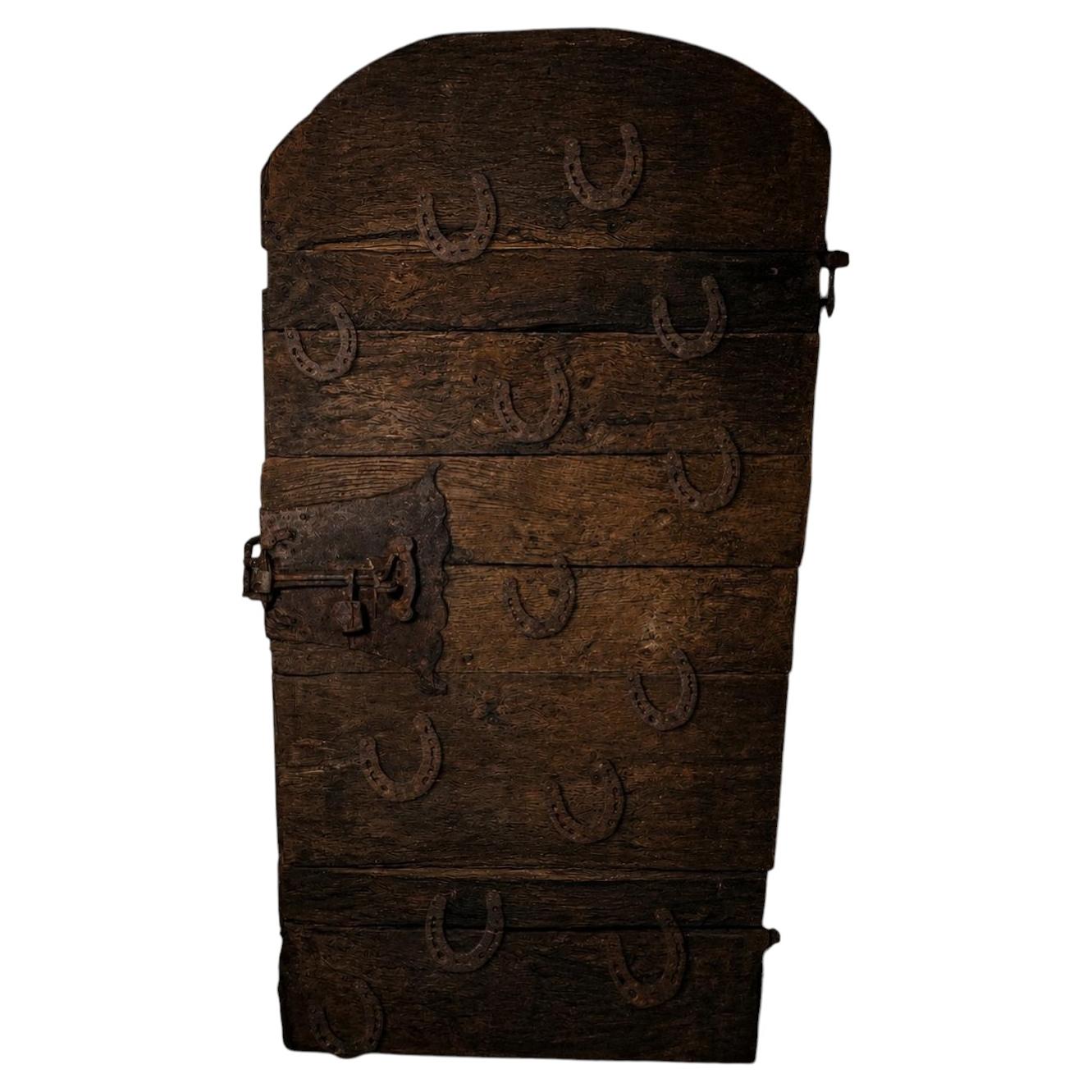
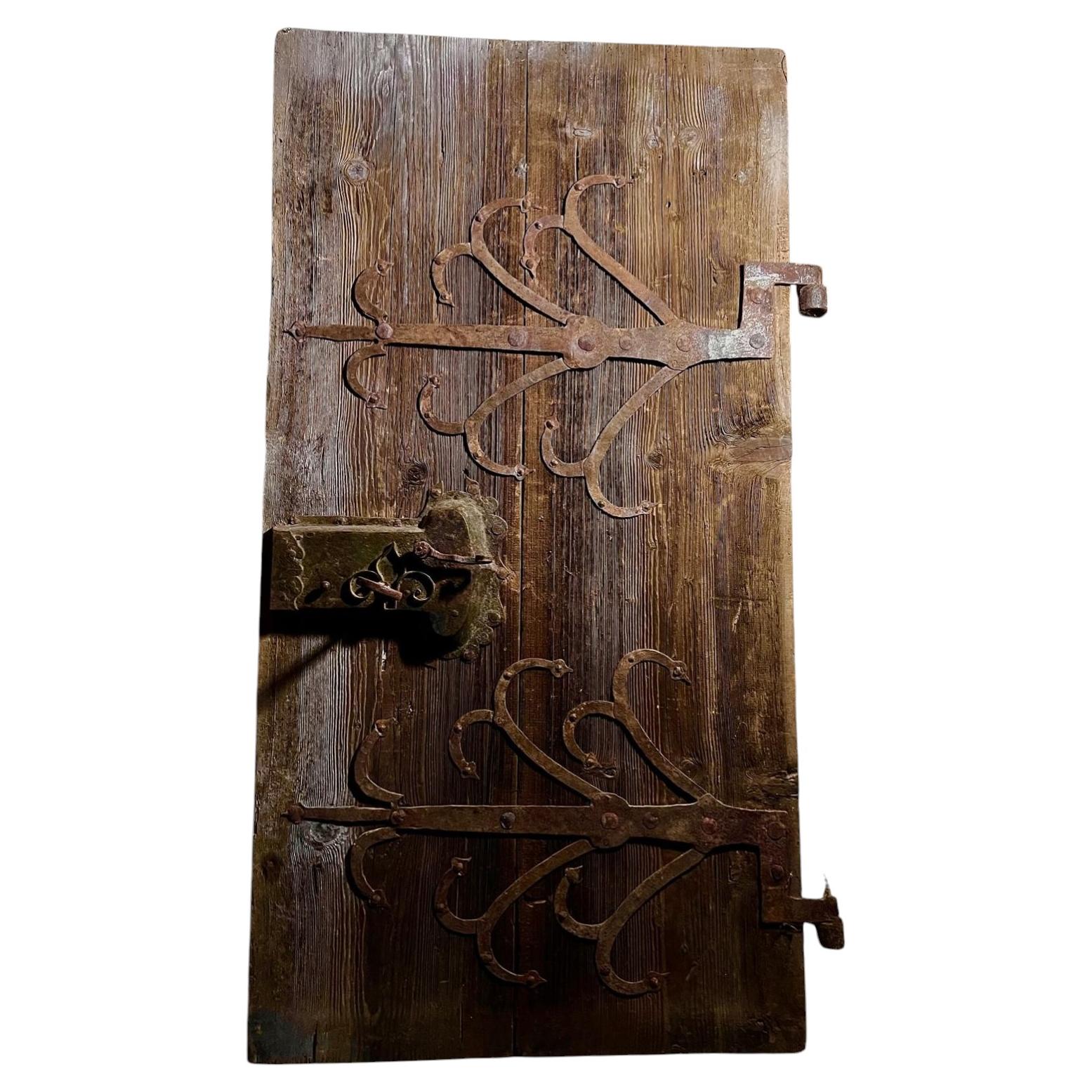
Every surface tells the story of more than five centuries of existence. The wrought iron retains its rich historic patina, displaying centuries of oxidation, forge textures, hammer marks, laminated iron surfaces, and evidence of traditional forge-welding techniques. The irregular rivet heads, overlapping iron plates, and subtle variations in thickness reveal unmistakable hand craftsmanship impossible to reproduce through modern industrial methods.
Architecturally, these doors were almost certainly created for one of the most secure areas of a medieval fortress or château. Their all-iron construction suggests installation within a treasury, armoury, prison, fortified vault, strong room, or other location where maximum security and resistance to fire were essential. Such commissions were reserved for castles of considerable importance and required the work of master blacksmiths operating at the highest level of their craft.
Stylistically and technically, the doors date most convincingly to the late 15th to early 16th century (circa 1480–1530). However, the conservative nature of medieval architectural ironwork, together with the Gothic form and traditional forging methods, leaves open the possibility that portions of the construction- or the original commission itself- may extend into the 14th century, making these doors potentially even earlier than their generally accepted dating.
Authentic medieval all-wrought-iron castle doors are extraordinarily rare. Most comparable examples remain in situ within protected castles, monasteries, and museums, making complete pairs with historic provenance from a French medieval castle exceptionally difficult to acquire on the open market. Their survival is remarkable, preserving not only their original construction but also the accumulated character of centuries of continuous use.
Today, these doors transcend their original defensive purpose. They stand as monumental works of Gothic iron sculpture and among the finest surviving expressions of medieval architectural metalwork- objects that unite military history, architecture, metallurgy, and craftsmanship in a single, awe-inspiring creation.
Origin: Medieval Castle, France.
Date: Late 15th to Early 16th Century, possibly incorporating elements or traditions of the 14th century.
Materials: Entirely hand-forged wrought iron with original riveted construction.
Condition: Outstanding original historic condition with centuries-old patina, hand-forged rivets, original hinge assemblies, forge-welded construction, and age-consistent wear and oxidation. Preserved with exceptional integrity, offering a rare and authentic testament to medieval Gothic ironworking at its highest level.