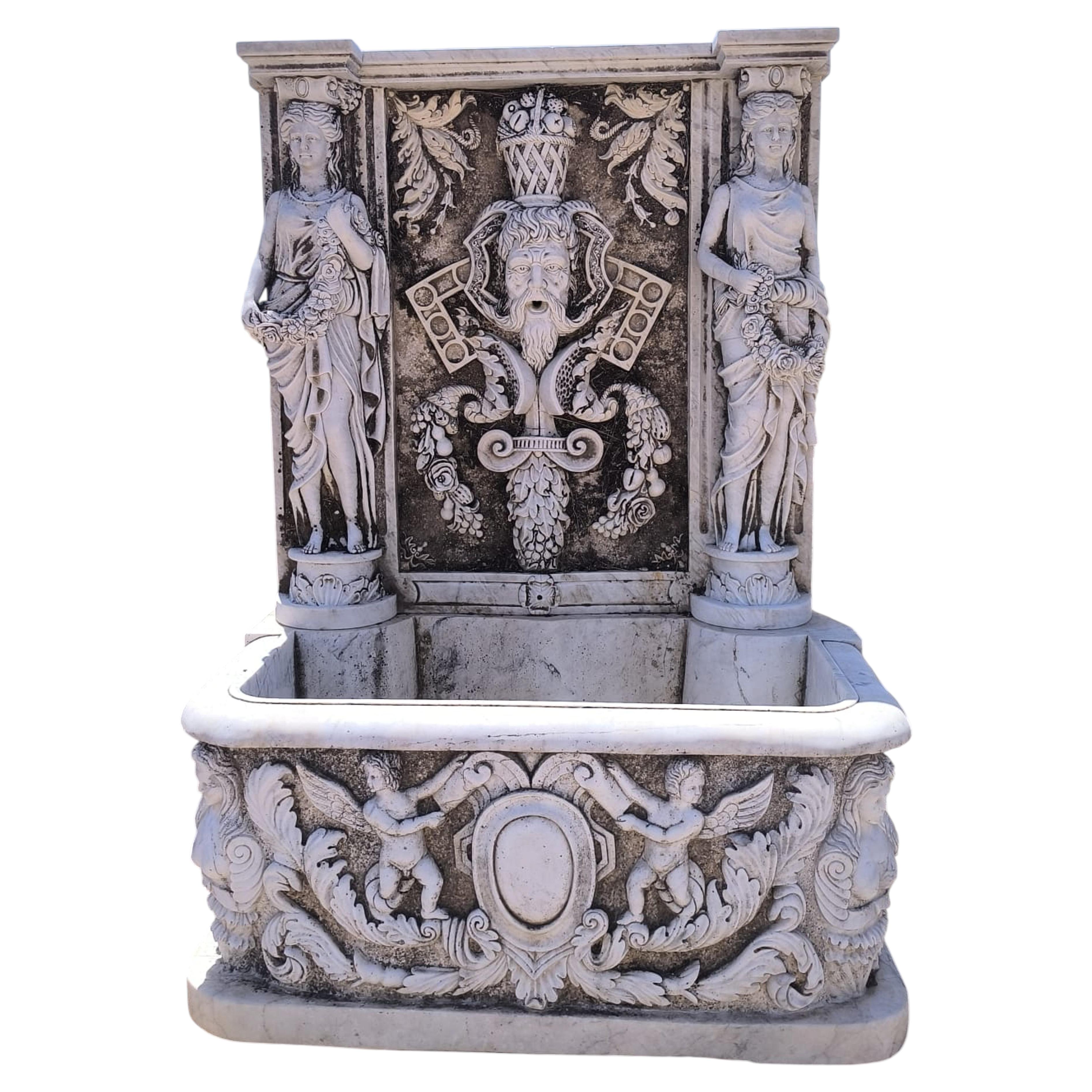
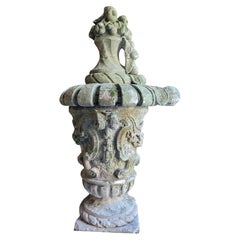
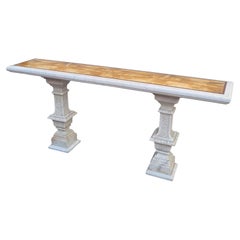
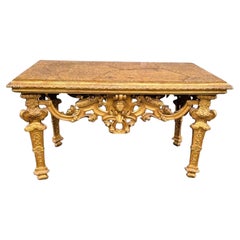
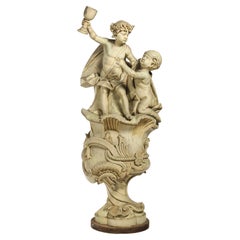
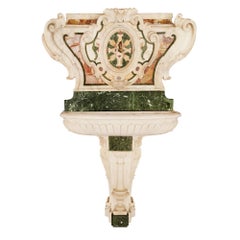
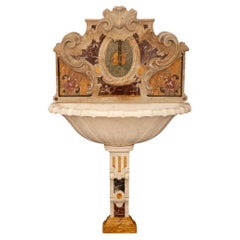
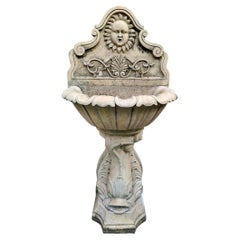
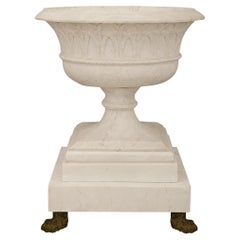
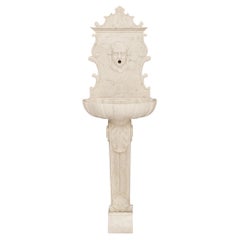
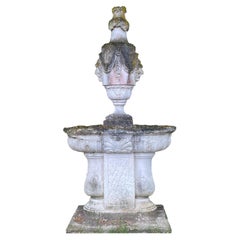
An important Italian center fountain in carved marble with marble inlay decoration, period 17th century
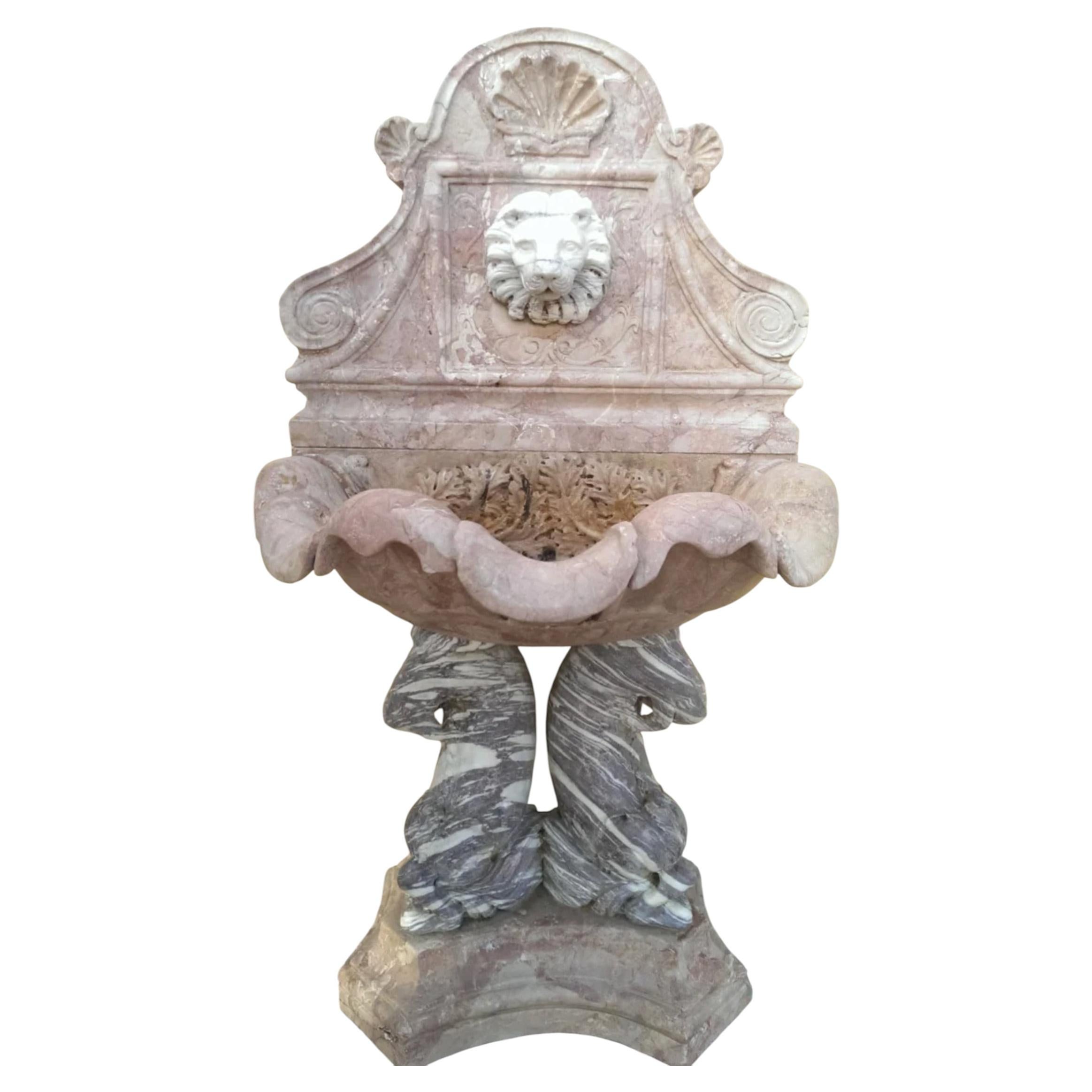
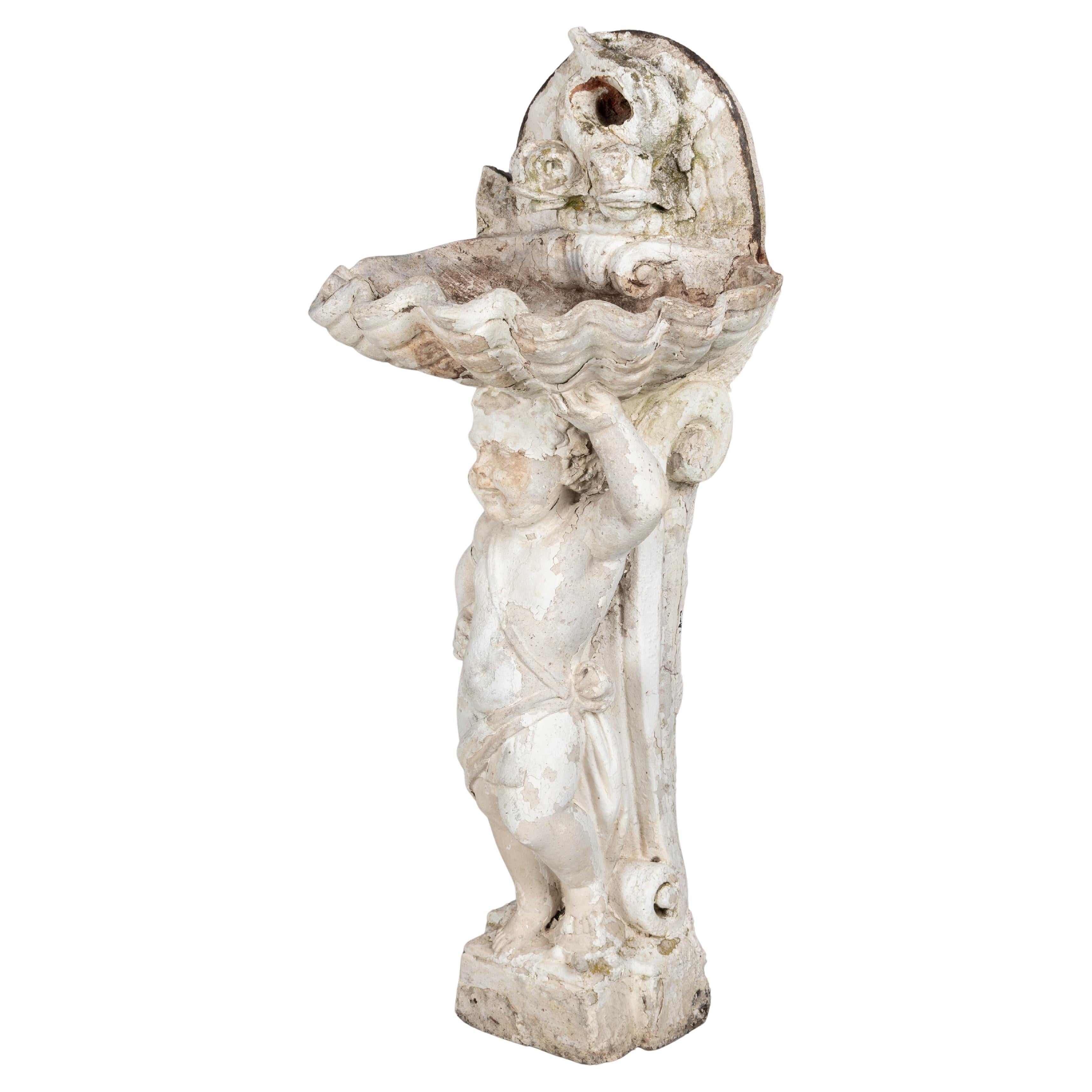
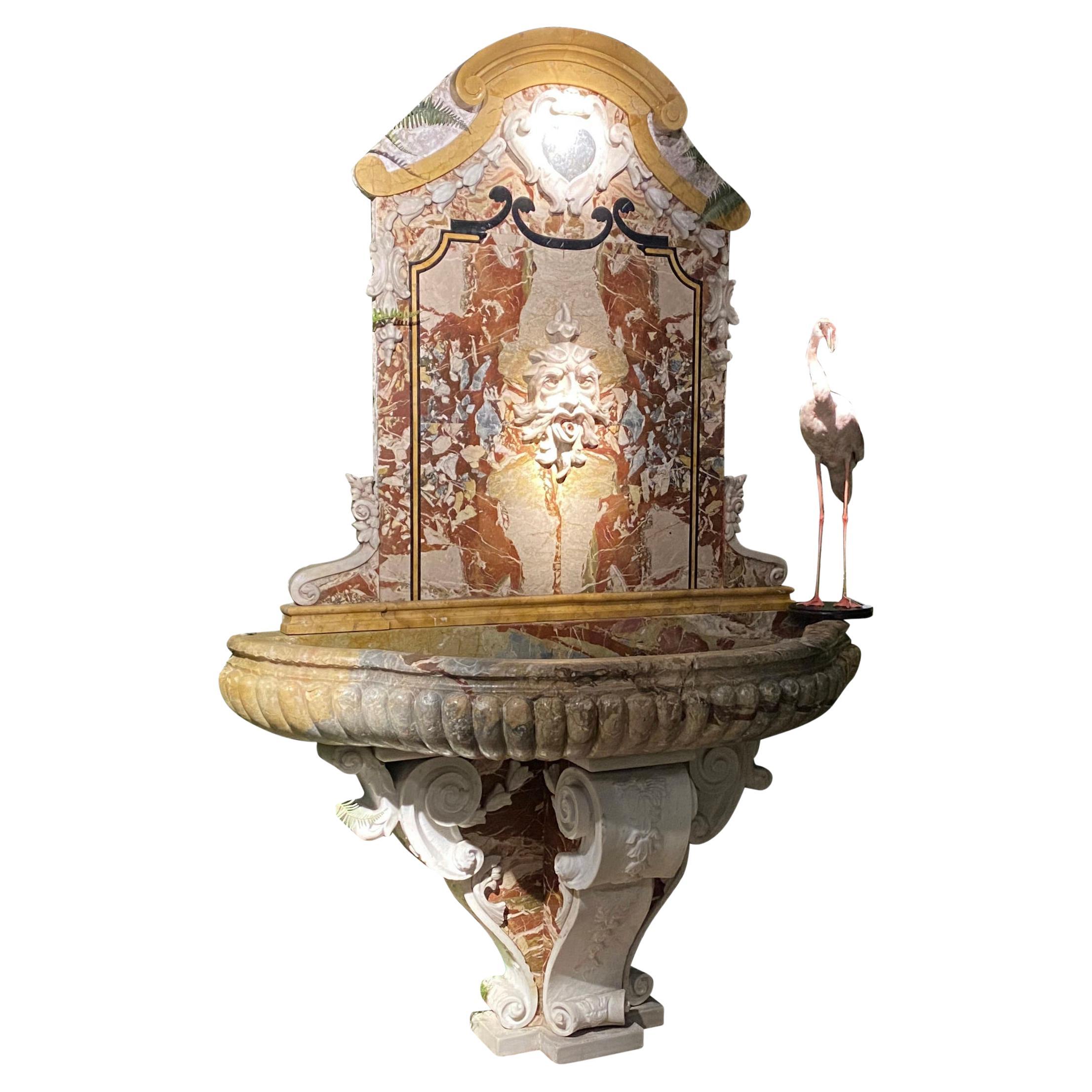
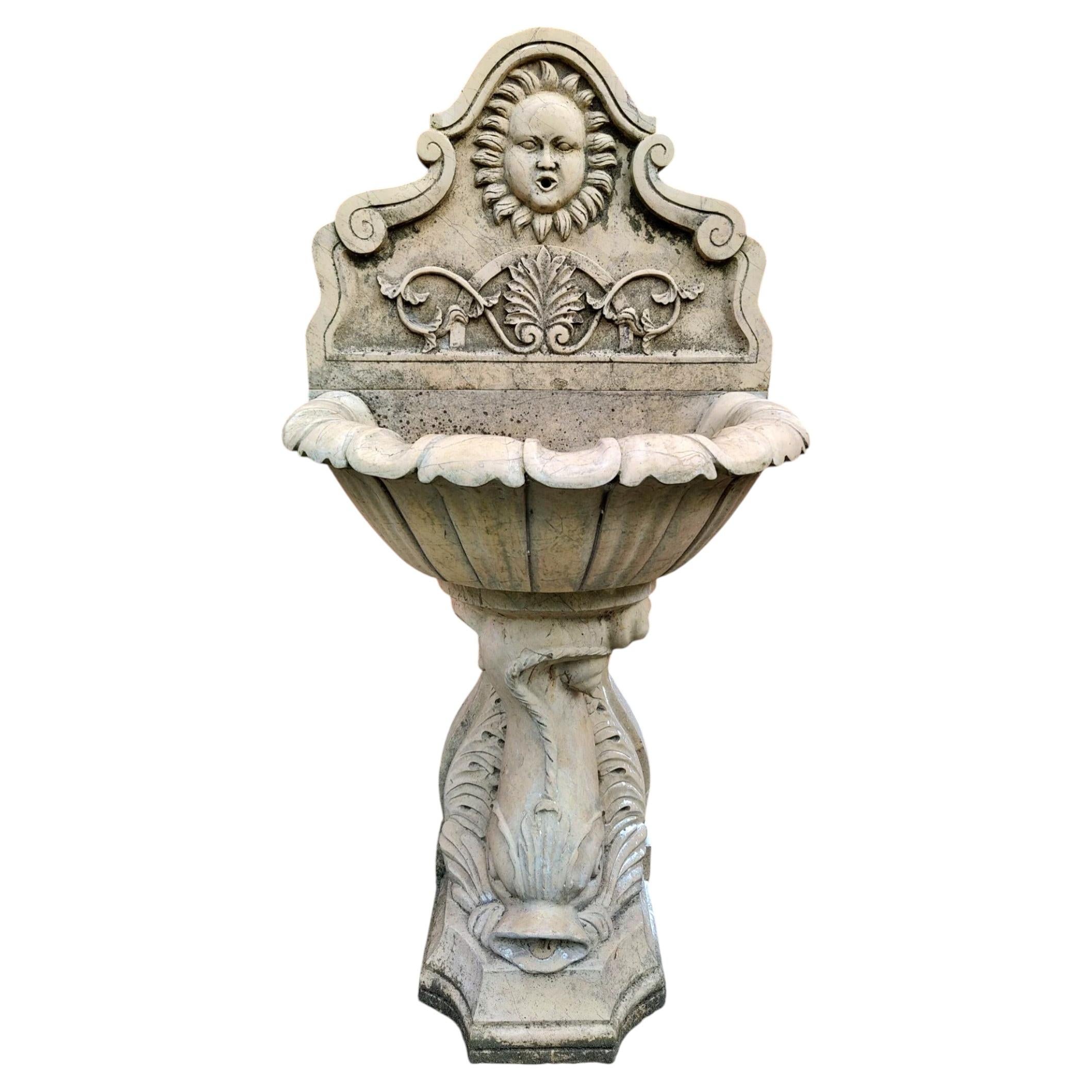
This elegant architectural composition is centered around a large radiating scallop-shell basin, deeply carved and resting upon a baluster-shaped support. The basin rises from a boldly modeled pedestal animated by powerful scrolls derived from the Ionic order, lending the piece both monumentality and refinement.
The body of the fountain is enriched with finely executed marble inlays of variegated red marble set within a pale marble framework. This sophisticated use of contrasting marbles reflects the enduring Italian tradition of commesso marmoreo, in which different stones were carefully assembled to create rich architectural and decorative effects.
The interplay between the shell form, the sculptural support, and the scrolling base creates a harmonious composition that is both dynamic and balanced. Conceived to stand at the center of a basin, courtyard, or formal garden, the fountain would have served as a prestigious ornamental feature, combining architecture, sculpture, and water into a unified decorative ensemble.
The quality of the carving, the architectural rigor of the design, and the refined use of marble all testify to the high level of craftsmanship achieved by Italian stone carvers during the late seventeenth century.
Drawing upon over thirty years of experience specializing in European works of art and architectural antiques, this fountain can confidently be attributed to Italy, c17th century. Its sculptural language, architectural composition, and sophisticated use of marble inlay are all characteristic of the mature Italian Baroque tradition during the reign of Louis XIV. The quality of execution and the preservation of original period features further support this dating.
The large radiating shell basin belongs to one of the most iconic motifs of the Italian Baroque vocabulary. Inspired by Roman fountain design, the shell became a recurring decorative element throughout the seventeenth century, particularly in garden architecture, grottoes, and monumental water features.
The architectural base displays a disciplined symmetry combined with vigorous scrolling forms derived from Classical architecture. This balance between movement and order is characteristic of the mature Baroque period. Unlike eighteenth-century Rococo designs, which favored asymmetry and greater decorative freedom, the present fountain retains the monumentality and structural clarity associated with the late seventeenth century.
Particularly significant is the use of marble inlay decoration. The insertion of colored marble panels within a pale marble structure recalls the long-standing Italian tradition of stone inlay work, especially associated with the prestigious workshops of Florence, Rome, and Northern Italy. Such techniques remained highly prized in architectural and garden ornament during the seventeenth century.
Finally, the overall execution, carving quality, surface wear, and natural patina of the marble are all consistent with a work produced during the late Baroque period.
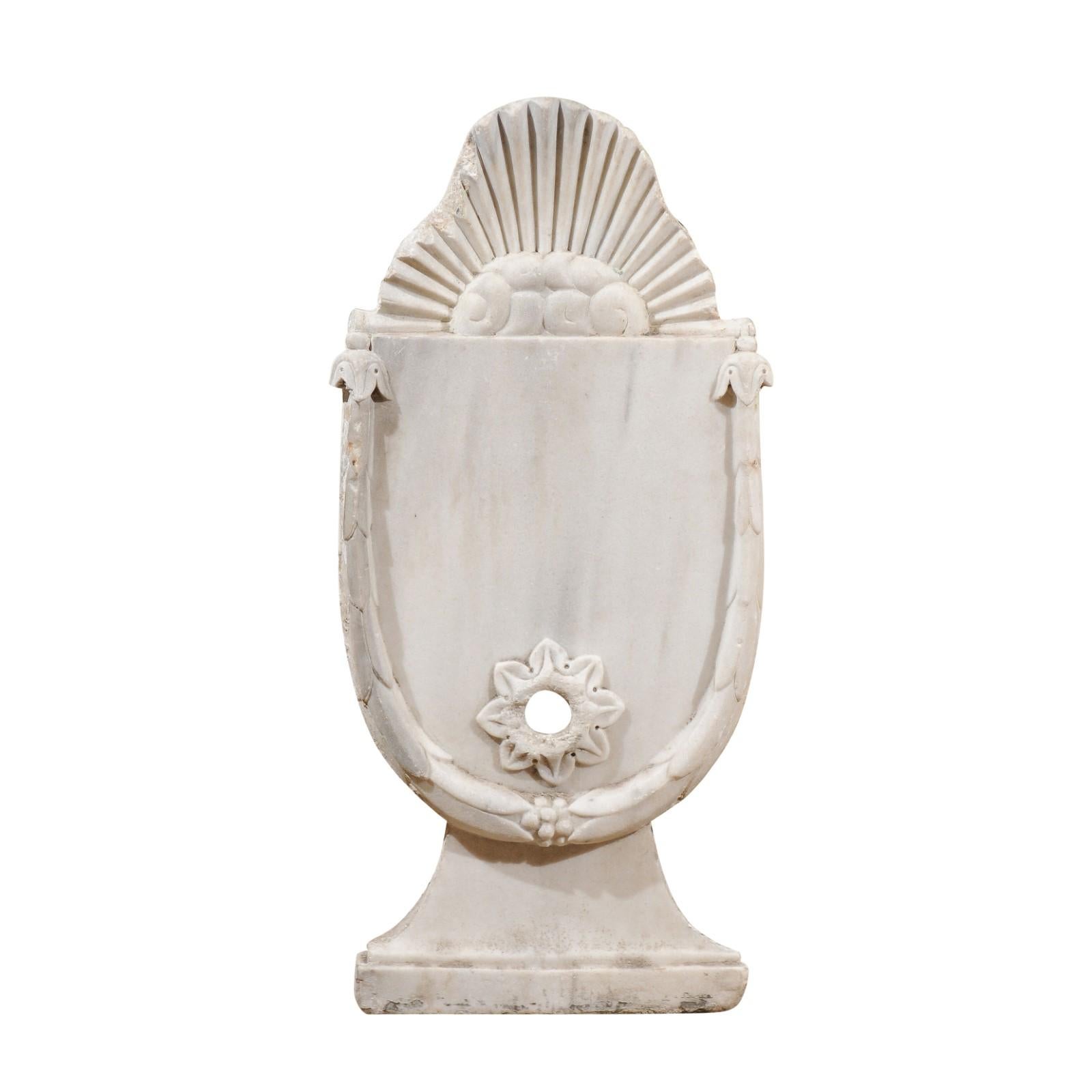
The upper shell basin retains its original central aperture, indicating that it was once connected to a working hydraulic system.
An Italian work from the 17th century, it shows normal signs of wear, as well as chips, losses, and some old restorations.
It disassembles into three parts.
Total height 173 cm.
Width approximately 110 cm at the base.
Diameter of the basin approximately 90 cm