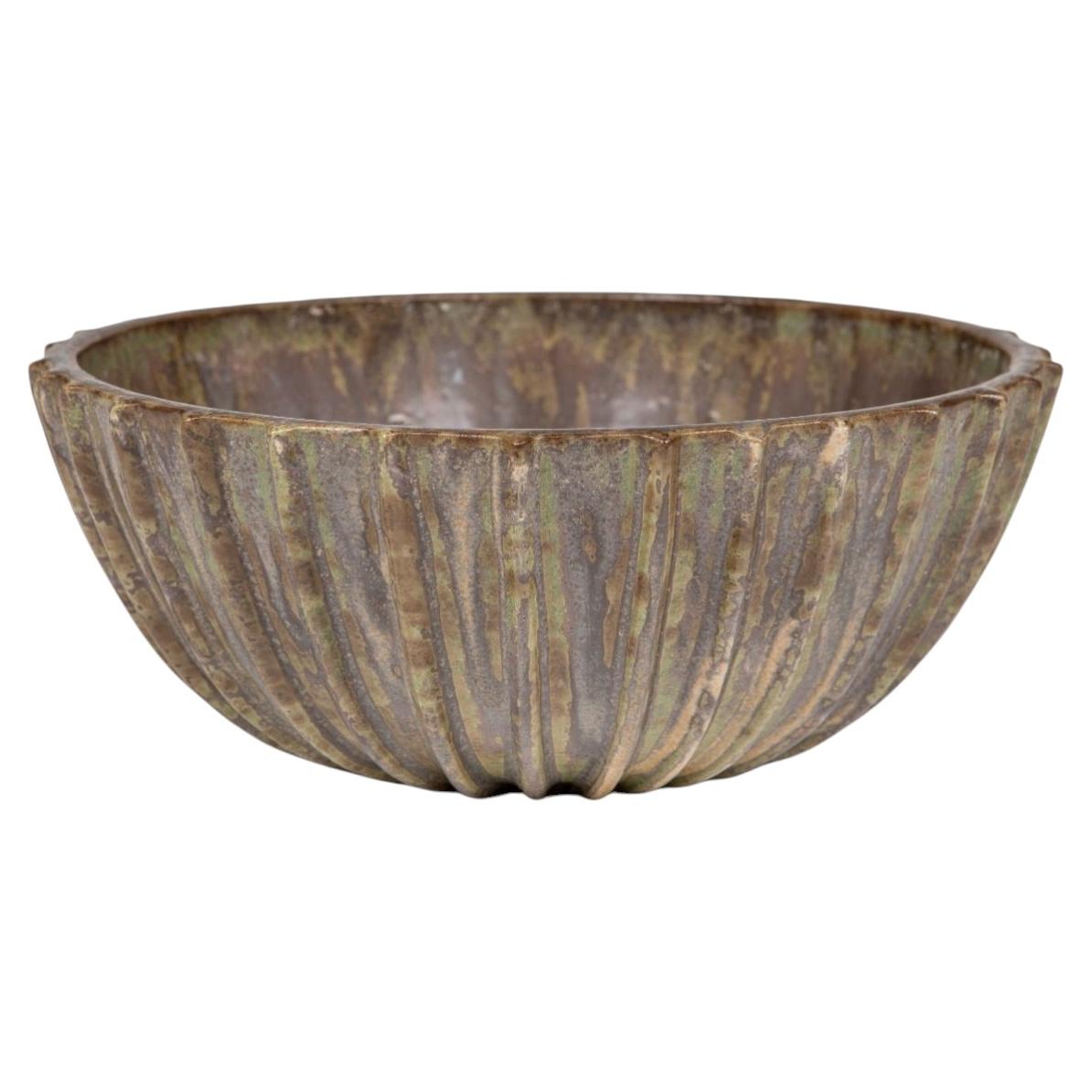
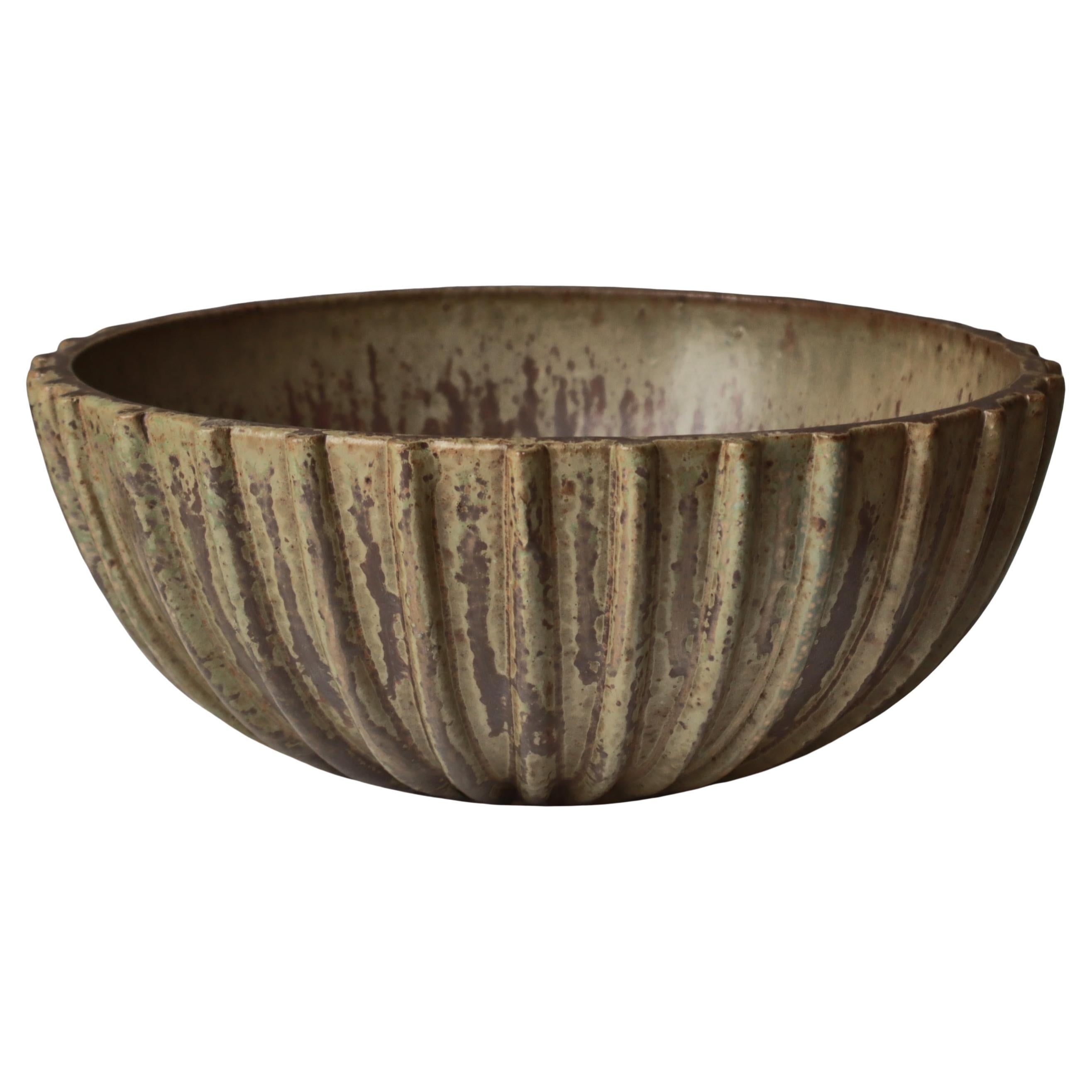
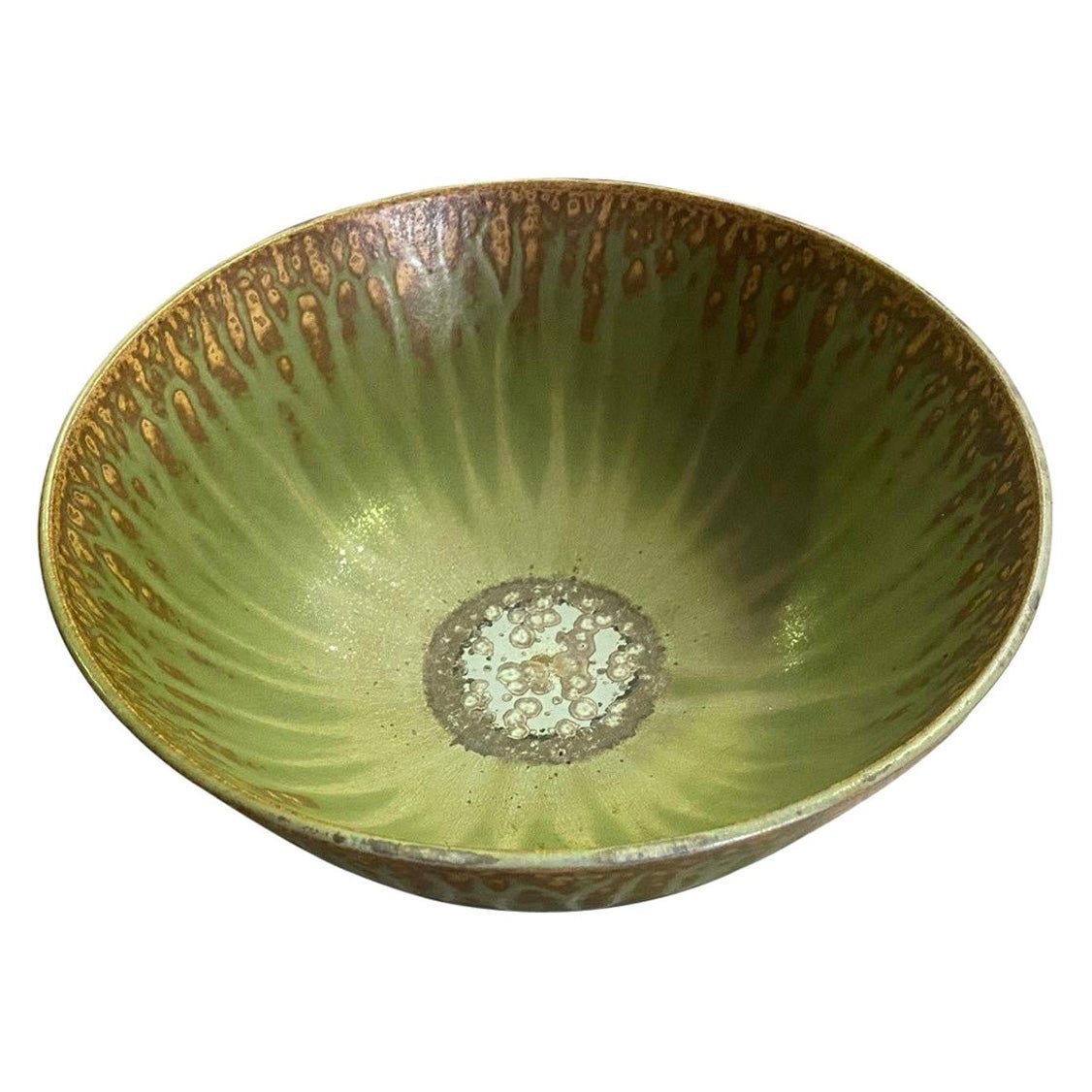
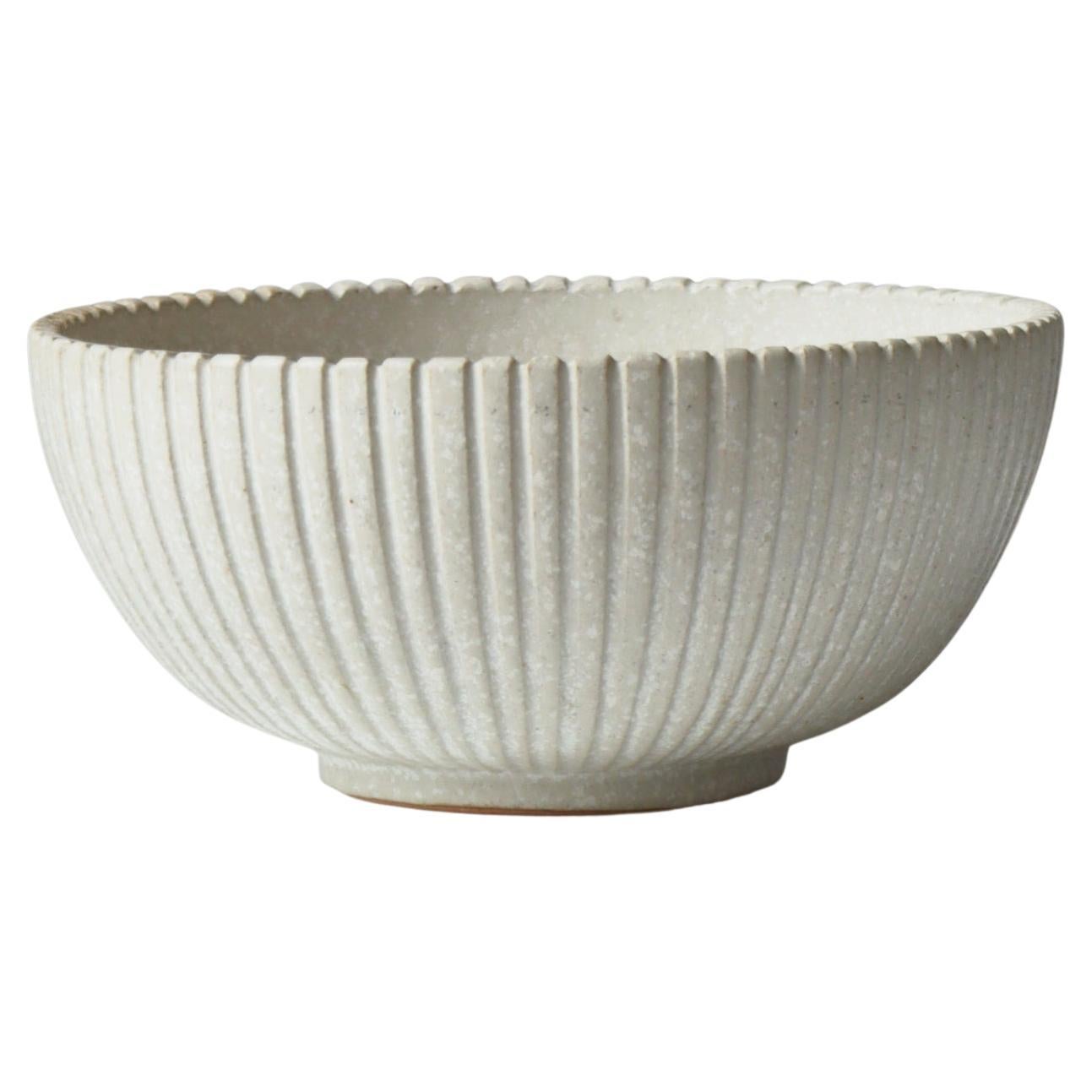
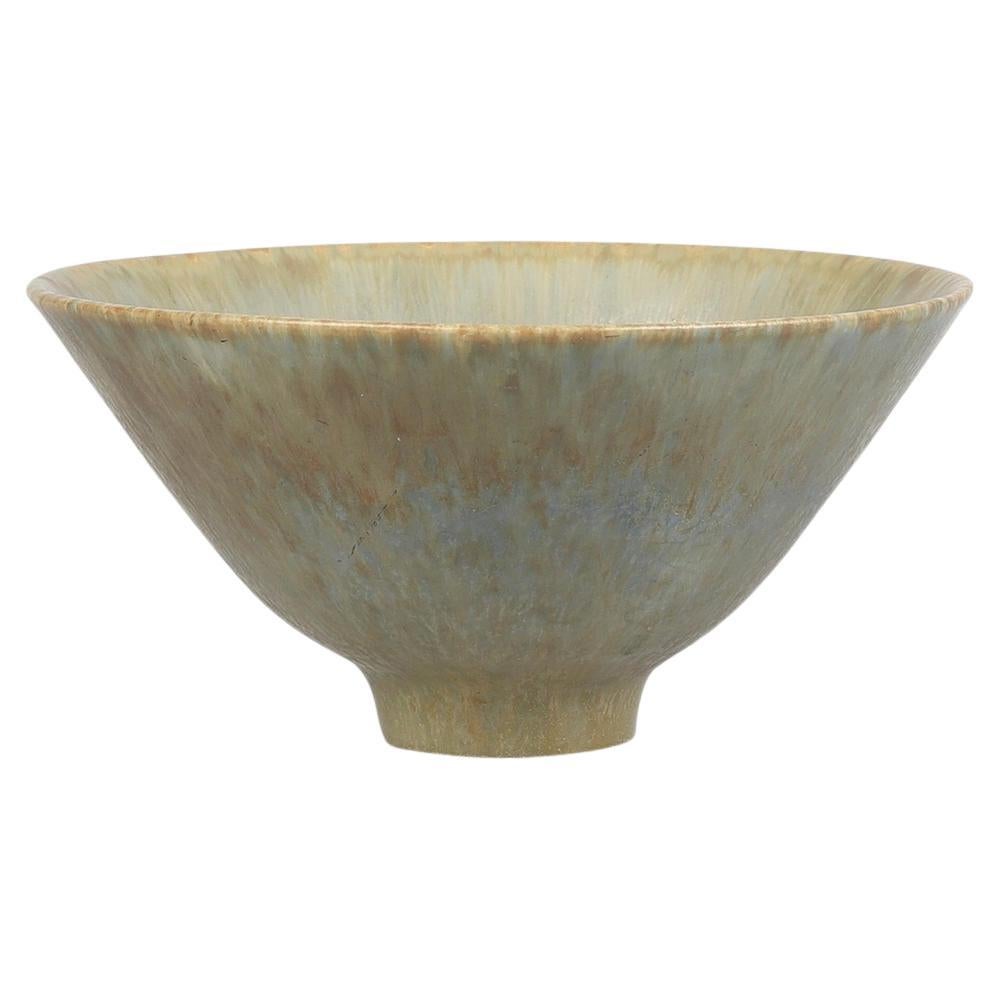
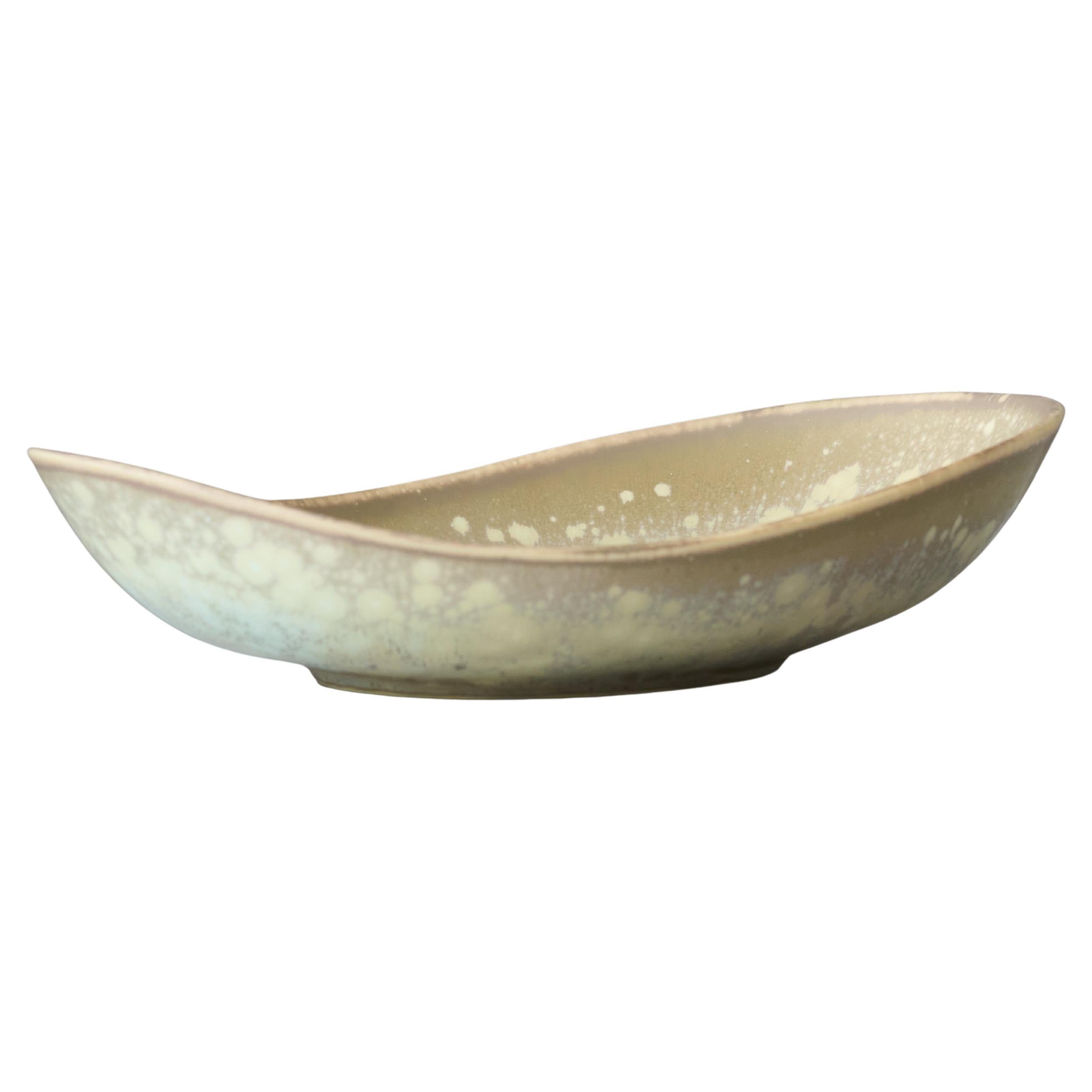
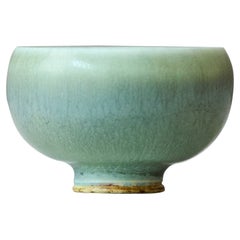
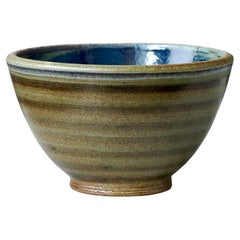
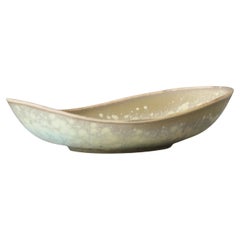
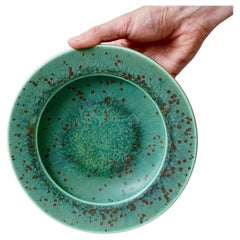
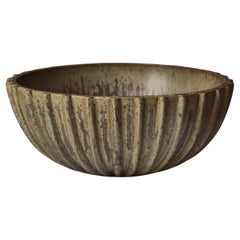
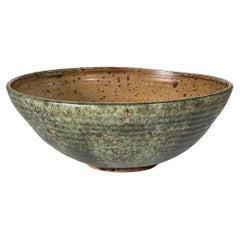
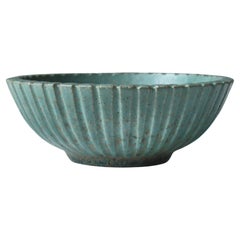
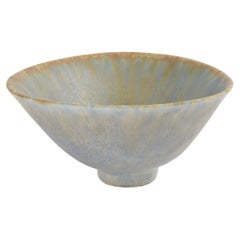
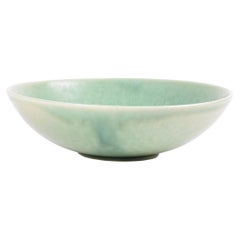
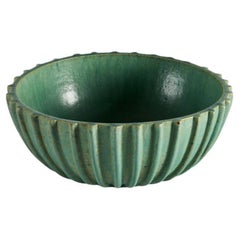
A rare and early stoneware bowl with amazing glaze.
Made by Arne Bang in his own studio, Denmark, 1930s.
Excellent condition, no chips, cracks or crazing.
Incised monogram "AB" and model number "5".
Arne Bang (1901–1983) was one of the most influential figures in twentieth-century Danish ceramics, a sculptor whose artistic vision helped elevate stoneware from a craft tradition to a respected form of modern design. Born in Frederiksberg, Denmark, into an artistic family, Bang grew up surrounded by creativity. His father was the painter Christian Bang, and his brother, the renowned glass designer Jacob E. Bang, would later become one of Denmark’s leading modernists. From an early age, Arne Bang was destined for an artistic career and trained as a sculptor at the Royal Danish Academy of Fine Arts under the celebrated professor Einar Utzon-Frank.
Although sculpture remained an important part of his work throughout his life, it was ceramics that brought him international recognition. In the mid-1920s he began experimenting with stoneware and established a workshop together with the ceramist Carl Halier. This collaboration introduced him to the technical possibilities of clay and glaze, while his sculptural training gave his ceramic forms an unusual sense of weight, balance, and monumentality.
A decisive moment came in 1929 when Bang joined Holmegaard Glassworks and established its stoneware production. Here he developed a distinctive style that combined sculptural form with practical function. His ambition was not merely to create unique artistic objects but to produce beautifully designed stoneware that ordinary people could afford. During the 1930s and 1940s, his bowls, vases, dishes, and animal figures became fixtures in Danish homes, admired for their simplicity, craftsmanship, and timeless elegance.
Bang’s work is characterised by strong, often ribbed forms, restrained decoration, and richly textured glazes in earthy, muted colours. Influenced by Art Deco, Functionalism, and Japanese aesthetics, he created objects that balanced decorative beauty with everyday usefulness. Whether designing a vase, a bowl, or a sculptural figure, he approached clay with the eye of a sculptor, giving even functional pieces a sense of permanence and architectural presence.
Alongside his ceramic production, Bang continued to work as a sculptor, creating public monuments, reliefs, and large-scale decorative works. Among his best-known sculptures are *The Fallen Warrior*, a memorial in Copenhagen, and *The Troll* in Næstved, a landmark that remains one of his most beloved public works.
After taking greater control of the stoneware enterprise in the late 1940s, Bang eventually established his own workshop in Fensmark, where he continued to design and produce ceramics for the rest of his life. His output was remarkably prolific, encompassing hundreds of models and tens of thousands of pieces, yet his work never lost its strong personal identity.
When Arne Bang died in 1983, he left behind a body of work that had profoundly shaped Danish ceramic art. Today his stoneware is highly sought after by collectors, museums, and design enthusiasts around the world. His creations remain admired not only for their craftsmanship but also for their ability to unite sculpture, design, and everyday life—an achievement that places him among the great masters of Scandinavian decorative arts.