Video Loading
Want more images or videos?
Request additional images or videos from the seller
1 of 10

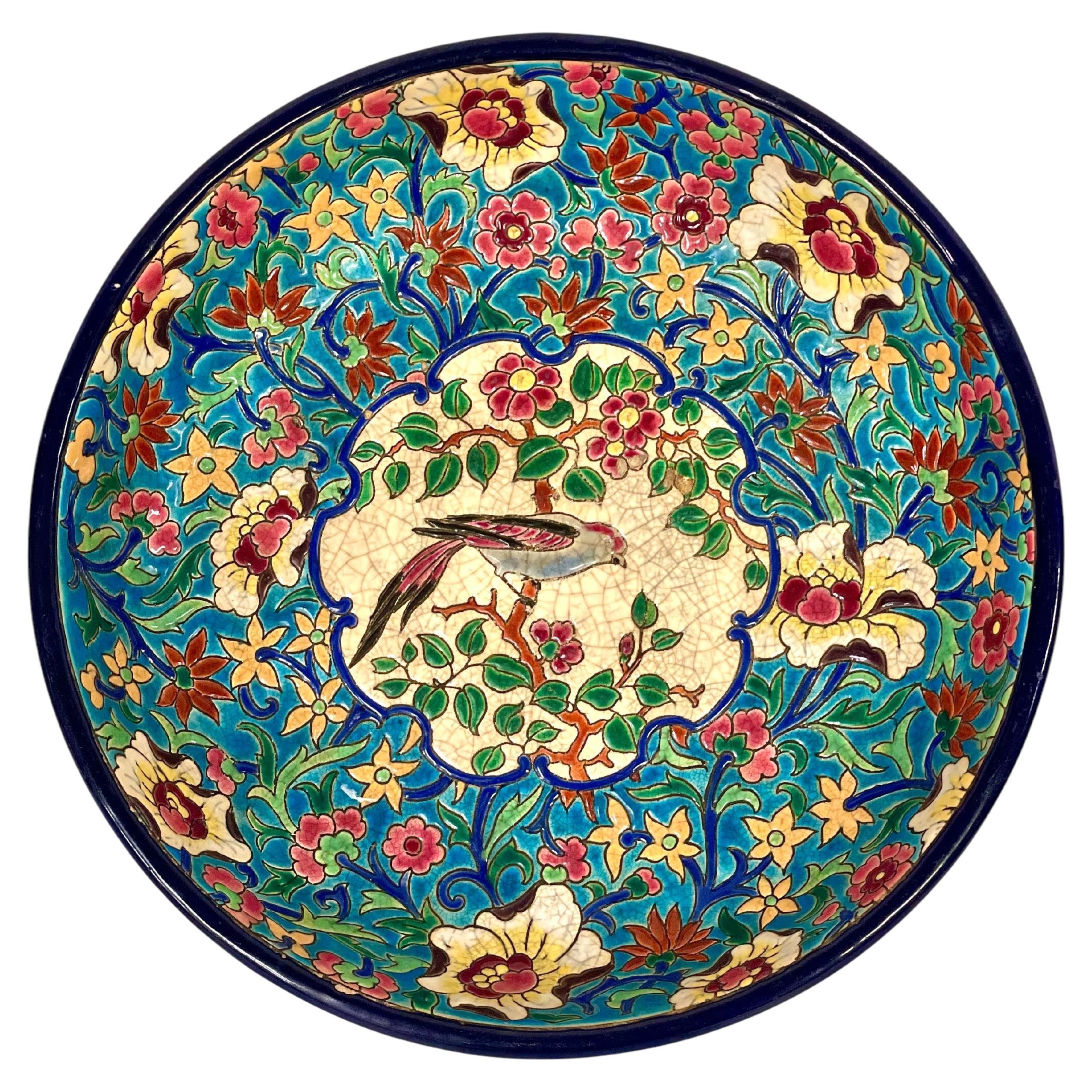
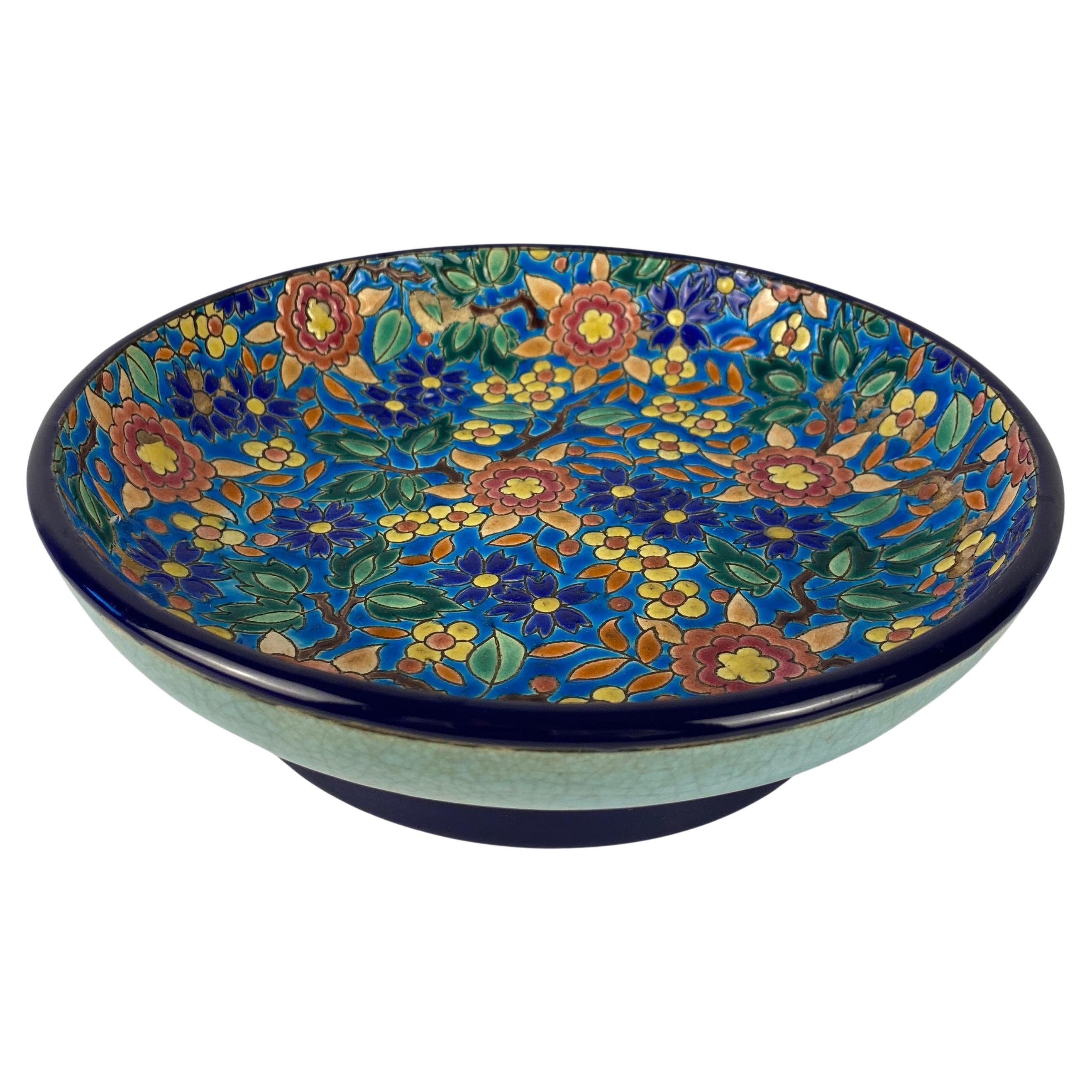
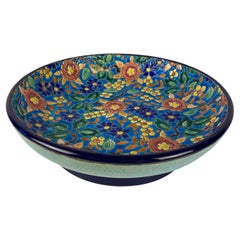
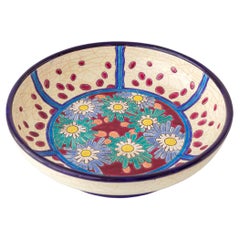
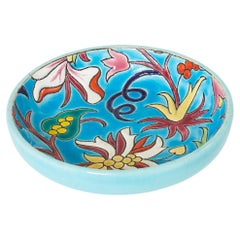
Longwy Art Deco Ceramic Bowl by Faïenceries, Enameled, France, 1920

$1,200
£903.73
€1,267.12VAT Included
CA$1,700.20
A$1,707.75
CHF 990.20
MX$20,836.31
NOK 11,459.45
SEK 11,757.99
DKK 7,893.57

About the Item

French Art Deco ceramic bowl by Longwy, France, 1920s. Measures: Diameter 10.6" (26.9cm), height 3" (7.7cm). Incised mold number "3021" and stamped pattern number "D.5415", 1925 Longwy stamp. Charles Régnier is at the origin of the foundation of the Faïenceries de Longwy. He set up the factory in a former Carmelite convent that had become national property. Production is limited to classic pieces such as table services. Emperor Napoleon I, on his return from his visit to the Vauban fortifications around the upper town of Longwy, ordered table services for the Maisons d'éducation de la Légion d'honneur. Around 1814-1815 production stopped due to economic difficulties mainly due to the Napoleonic wars and the siege of the city by the Prussians. Faced with a partial restart of the activity, Charles Régnier decided to sell the company in 1816. The earthenware factory was then acquired by Jean-Antoine de Nothomb, former colonel of a regiment of cuirassiers, married to Marie-Catherine Boch. This is the daughter of Pierre-Joseph Boch, owner of the earthenware factories of Audun-le-Tiche and Septfontaines. De Nothomb was able to benefit from the advice of his father-in-law and he developed marketing and production with new pastes and fine white enamel until 1835, the date of his death. His daughter Marie-Catherine Nothomb, is the wife (1832) of Henri-Joseph d'Huart, Belgian baron, who therefore logically takes the head of the factory left in inheritance to his wife. Inventive and enterprising, he improved manufacturing techniques and modernized the company and the workshops, notably with the use of coke ovens. It innovates with a new glaze and adopts earthenware printing techniques. This period will be abundant in awards and honorary medals on the occasion of numerous exhibitions in Paris and in the provinces. In 1866, he passed the business on to his two sons Fernand and Hippolyte. Around 1870, the two sons of Henri-Joseph, both from Central, were in charge of the pottery. On the back of the pieces produced, they put their coat of arms recognizable by their holly leaves. In response to the French craze for cloisonné products from the Far East, they would have called on Amédée de Caranza, a French artist born in Constantinople, whom various works place in Gien around 1870, at the Creil & Montereau factory. from 1876 to 1877 and with Vieillard in Bordeaux from 1878 (source Bordeaux Histoire d'une Collection par Claude Mandraut). Nothing proves its passage in Longwy except the fact that there are similarities of production in Longwy and Bordeaux in the technique of cloisonné with the syringe and that one allots a dish to him (with the tigers) visible at the Municipal Museum of Longwy. The famous Émaux de Longwy were born. They become the specialty of the city. In 1885, still in response to the invasion of Asian products in the field of pottery, earthenware is looking for new decorations in Chinese, Japanese, Iznik, Persian or Egyptian trends. Several patterns are emerging, including a scattering of white and pink apple blossoms on a cerulean blue background, of Japanese inspiration. This decoration, referenced to the pottery under the number D188notes 3, marks the beginning of a fruitful period. It is still produced today in its original or revisited version. The two d'Huart brothers also brought in many ceramists, painters or sculptors such as Charles Rudhart (1829-1895), Aristide Croisy, Carrière, Ernest Quost, Carl Schuller, Cirode or Paul Émile Morlon to modernize the production which would mark their mark in impressionist works in the so-called slip technique. The enamels in blue of Sèvres will often be the work of Louis Ernie. Also born during this period other production techniques such as majolica, brocatelle, grand feu, flame. The end of the 19th century will be a very rich period for pottery and composed of prestigious works and majestic artistic talent. From 1918, the Art Deco style opened up new artistic perspectives for earthenware, particularly through the association with the “Primavera” art workshop in the Printemps stores. During this period, many artists such as Claude Lévy, Jean Luce (1895-1964), Jean Olin or Raymond Chevallier (1900-1959) collaborated with the Émaux de Longwy and created more modern and geometric shapes. The highlight of this period is the participation in the International Exhibition of Modern Decorative and Industrial Arts of 1925. The crash of 1929 in the United States reached France in the years 1930-1931: activity was reduced and personnel decreased. In 1939, the activity ceased due to the exodus. In 1945, the company restarted with two hundred and fifty workers. Maurice Paul Chevallier (1892-1987), cousin of Raymond Chevallier, took over the artistic direction, helped by Paul Mignon (1930-2012), France's best young apprentice decorator who became responsible for the Artistic Workshops in 1972. The abandonment of production of table services will be effective in the 1950s. In 1972, Christian Leclercq, a former student of Maurice Paul Chevallier, was awarded Meilleur Ouvrier de France. He joined the earthenware factory in 1961, where he created an important artistic work until he filed for bankruptcy in 1976. During this period other artists will be added such as Rolande Rizzi (born in 1927 in Longwy), Hélène Gabet (1914-2016), Jean Rabet, or Louis Valenti (died in 1999), without forgetting the talent of boosters like Léa Valenti (born June 16, 1939), Justin Masson (1882-1959) and the best known Albert Kirchtetter (1910-1976) whose pieces bear his initials "A K".
  • Creator:
  • Dimensions:
    Height: 3.04 in (7.7 cm)Diameter: 10.6 in (26.9 cm)
  • Style:
    Art Deco (Of the Period)
  • Materials and Techniques:
    Ceramic,Enameled
  • Place of Origin:
  • Period:
  • Date of Manufacture:
    1920
  • Condition:
  • Seller Location:
    Saint-Amans-des-Cots, FR
  • Reference Number:
    1stDibs: LU2312346851312

More From This Seller

View All
Revernay French Art Deco Stoneware Bowl, 1920s Pedestal Design

Revernay French Art Deco Stoneware Bowl, 1920s Pedestal Design

By Revernay Sarreguemines Digoin

Located in Saint-Amans-des-Cots, FR

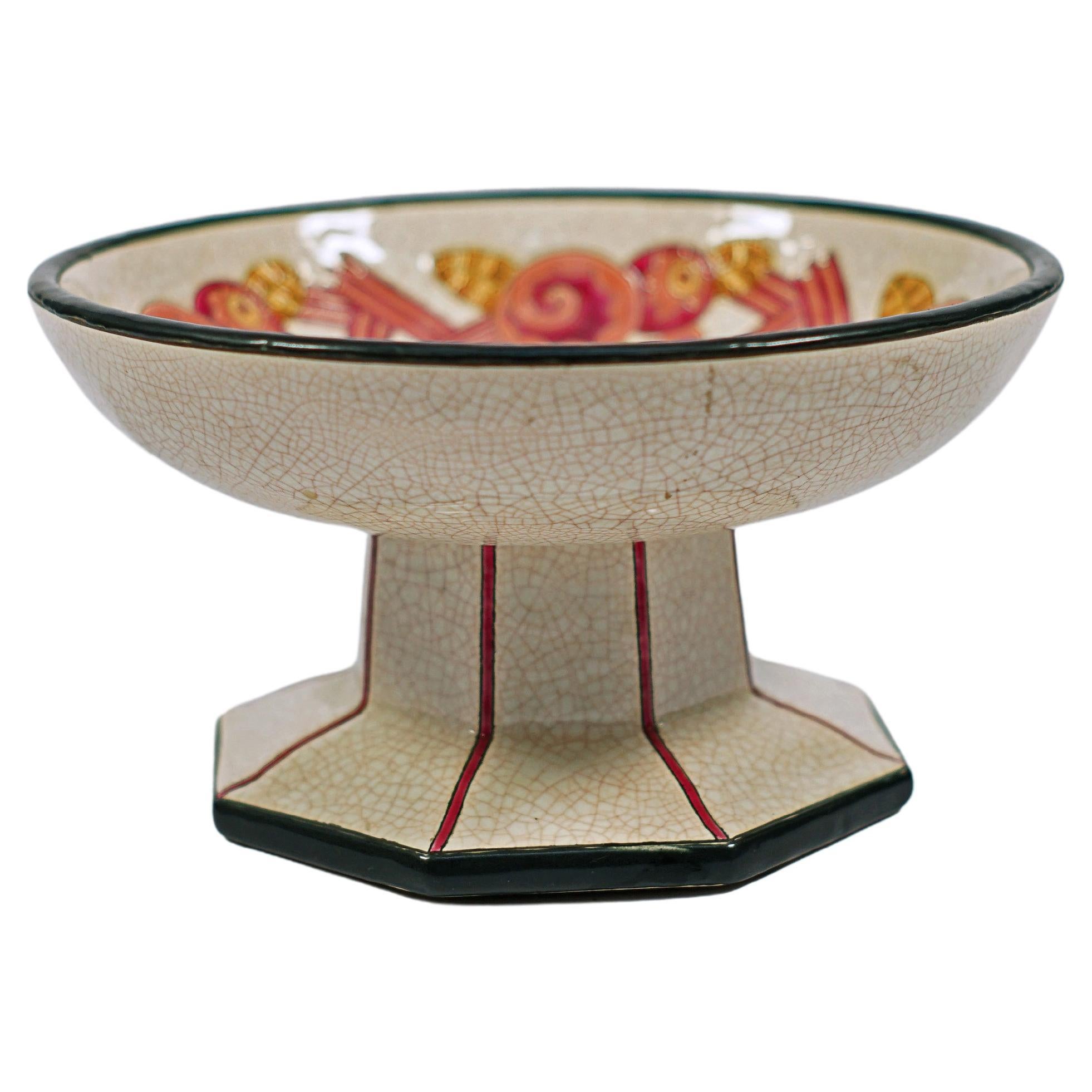
This elegant French Art Deco stoneware pedestal bowl was produced by Revernay in Digoin, France, during the 1920s. Combining a strong architectural silhouette with the rich material ...

Category

Vintage 1920s French Art Deco Decorative Baskets

Materials

Stoneware

Paul Milet Art Deco Ceramic Bowl, Sèvres, France, 27cm Diameter, 1930s

Paul Milet Art Deco Ceramic Bowl, Sèvres, France, 27cm Diameter, 1930s

Located in Saint-Amans-des-Cots, FR

This elegant French Art Deco ceramic bowl by Paul Milet is a refined example of the sophisticated craftsmanship that established Sèvres as one of France’s most celebrated centers of ...

Category

Vintage 1920s French Art Deco Decorative Bowls

Materials

Ceramic

French Mid-Century Ceramic Stoneware Bowl by Ciboure, France, 1950s

French Mid-Century Ceramic Stoneware Bowl by Ciboure, France, 1950s

By Ciboure

Located in Saint-Amans-des-Cots, FR

Elegant French Mid-Century stoneware bowl by the Poterie de Ciboure, created in the French Basque Country circa 1950. This large two-handled bowl features a finely hand-painted Neo-B...

Category

Vintage 1950s French Mid-Century Modern Decorative Bowls

Materials

Ceramic, Stoneware

Louis Dage Art Deco Stoneware Vase, Enameled Ceramic, France, 1920

Louis Dage Art Deco Stoneware Vase, Enameled Ceramic, France, 1920

By Louis Dage

Located in Saint-Amans-des-Cots, FR

French Art Deco Stoneware Vase by Louis Dage, France, 1920s. Exceptional French Art Deco stoneware vase by Louis Dage (Antony, Paris), created in the 1920s. This sculptural ceramic vase features rich enameled applications, characteristic of Dage’s refined craftsmanship and bold decorative style from the interwar period. The vase displays harmonious proportions and a strong presence, making it a striking example of early 20th-century French Art Deco ceramics. Its vibrant glaze and textured surface reflect the influence of modernist design combined with traditional French stoneware techniques. Dimensions: Height: 8.2 in (20.5 cm) Diameter: 9.8 in (25 cm) Condition: Excellent condition, with no chips, cracks, or restorations. About the Artist: Louis Dage began his career at the Fives-Lille earthenware factory, followed by formative experiences in Saint-Aubin-en-Bray and Beauvais, where he worked near the renowned Gréber and Auguste Delaherche workshops. In 1920, he co-founded the Faïencerie d’Art d’Antony (Paris) alongside Louis Fontinelle, a specialist in animal ceramics...

Category

Vintage 1920s French Art Deco Vases

Materials

Ceramic, Stoneware

Art Deco Ceramic And Stoneware Vase By Boch Frères Keramis, Ch. Catteau, 1920

Art Deco Ceramic And Stoneware Vase By Boch Frères Keramis, Ch. Catteau, 1920

By Boch Freres Keramis

Located in Saint-Amans-des-Cots, FR

This remarkable Art Deco glazed stoneware vase was made under the direction of Charles Catteau for the Boch Frères Keramis manufactory in La Louvière, Belgium. The model was designed...

Category

Vintage 1920s French Art Deco Vases

Materials

Ceramic, Stoneware

Charles Catteau Art Deco Ceramic Vase for Boch Frères Keramis, Belgium, 1920

Charles Catteau Art Deco Ceramic Vase for Boch Frères Keramis, Belgium, 1920

By Charles Catteau for Boch Freres

Located in Saint-Amans-des-Cots, FR

An exceptional Art Deco ceramic vase by Charles Catteau for Boch Frères Keramis, created in La Louvière, Belgium, during the interwar period. With its impressive proportions—12.2 in....

Category

Vintage 1920s Belgian Art Deco Vases

Materials

Ceramic

You May Also Like

Art Deco Ceramic Bowl by Faïenceries et Emaux de Longwy, France, 8.25"

Art Deco Ceramic Bowl by Faïenceries et Emaux de Longwy, France, 8.25"

By Faïenceries et Emaux de Longwy

Located in Miami, FL

A stunning Art Deco period faience bowl, made in France by the Emaux de Longwy art pottery workshop and dating circa 1920-30s. This earthenware bowl is hand-decorated with Chinoiseri...

Category

Early 20th Century French Art Deco Vases

Materials

Enamel

Art Deco Cloisonné Enamel Bowl by Faïenceries de Longwy, France, 1930

Art Deco Cloisonné Enamel Bowl by Faïenceries de Longwy, France, 1930

By Faïenceries et Emaux de Longwy

Located in Sitges, Barcelona

This Longwy Art Deco bowl, handcrafted in France in July 1930, displays the manufactory’s celebrated cloisonné-style enamel work at its peak. The decor...

Category

Vintage 1930s French Art Deco Decorative Bowls

Materials

Enamel

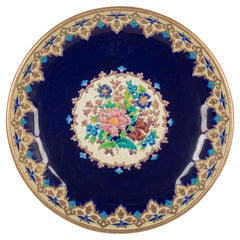
French Art Deco Ceramic Centerpiece Bowl by Longwy, Floral Design

French Art Deco Ceramic Centerpiece Bowl by Longwy, Floral Design

By Faïenceries et Emaux de Longwy

Located in Winter Park, FL

A French Art Deco Longwy large ceramic centerpiece bowl, hand-painted in the style of Chinoiserie cloisonné enamel. Dark cobalt blue ground with ...

Category

20th Century French Art Deco Delft and Faience

Materials

Ceramic

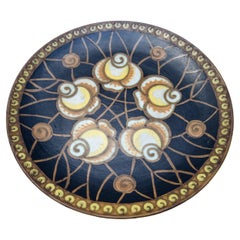
Polychrome Ceramic Plate by Charles Catteau, Art Deco, Belgium, 1920

Polychrome Ceramic Plate by Charles Catteau, Art Deco, Belgium, 1920

By Charles Catteau

Located in Ciudad Autónoma Buenos Aires, C

Polychrome ceramic plate with a design of stylized floral motifs in black, yellow, orange, brown and white. This plate is illustrated in: L'homme de Keramis, Charles Catteau de Dominique Corrieras, by Charles Catteau (1880-1966). Signed CH Catteau, D 954, NY, Boch Freres, Keramis Made belgium...

Category

Vintage 1920s Belgian Art Deco Decorative Bowls

Materials

Ceramic

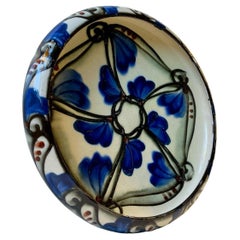
Hand Glazed Ceramic Art Nouveau Bowl from Annashåb, 1920s

Hand Glazed Ceramic Art Nouveau Bowl from Annashåb, 1920s

Located in Esbjerg, DK

A danish Jugendstil vase. The floral decorations on this vase was achieved by using slip trailed glaze through a cow horn and feather quill . Like Danico Annashaab in Denmark was sta...

Category

Vintage 1920s Danish Art Nouveau Decorative Bowls

Materials

Ceramic