Want more images or videos?
Request additional images or videos from the seller
1 of 5

Chinese Porcelain Plate City Characters Rising Sun Dao Administration, 1908-1911

$4,132.20
£3,052.45
€3,498VAT Included
CA$5,736.88
A$5,842.39
CHF 3,353.78
MX$70,498.98
NOK 38,868.58
SEK 39,402.50
DKK 26,675.56

About the Item

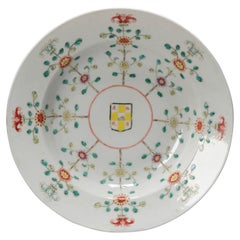
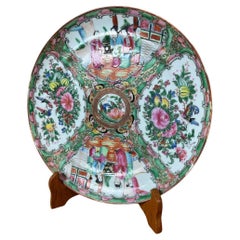
Lovely Guangxu/Xuantong period dish, two concentric circles at the base. Very high quality with flowers and central a shield with characters and central a rising sun. According to the study of our friend, the dishes were a special order from a government in Jiang-Xi Province. The official name of the government agency was called “Fu-Jian-Guang-Rao-Nan-Jiu Dao”, and this “Dao” administered a total of six cities from 1908 to 1911 in the period from late Guangxu to Xuan-Tong Emperor of Qing Dynasty (1908-1911). The Dao governed six cities, including Fu-Zhou, Jian-Chang, Guang-Xin, Rao-Zhou, Nan-Kang, and Jiu-Jiang. Taking the city of Rao-Zhou as an example, it governed many counties, one of which administered the world-renowned Jing-De-Zhen. The abbreviated names of the four most prominent cities were highlighted in the central section of the dish, i.e., the armorial. This type of government ordered porcelains are unique, interesting and important documentary artifacts with both artistic and historical values. Although it was not made for the imperial court, it is very close in both quality and rarity as it was a special order from a government agency at that time.⁠ The four Chinese characters in the center of the dish provided very important clues. Fu refers to the city of Fu-Zhou. Jian refers to the city of Jian-Chang. These two cities used to be administered by Nan-Fu-Jian Dao. However, after Nan-Fu-Jian Dao was removed in 1908, which was the very late period of Guangxu emperor, those two cities were merged under the administration of the former Guang-Rao-Nan-Jiu Dao, which later became a newly reorganized administration of Fu-Jian-Guang-Rao-Nan-Jiu Dao. The third character in the dish is Guang, which stands for the city of Guang-xin. And the fourth character in the center of the dish is Rao, which stands for the city of Rao-Zhou, governing the world’s capital of porcelain Jin-De-Zhen. The Fu-Jian-Guang-Rao-Nan-Jim Dao lasted until 1911. As the Republic of China took over the power in 1912, this Dao was removed right away. Additional information: Material: Porcelain & Pottery Region of Origin: China Emperor: Guangxu (1875-1908), Xuantong (1908-1912) Period: 20th century Qing (1661 - 1912) Condition: Some fritting/small chips. Dimension: Ø 26.6 x 4.6 H cm
  • Dimensions:
    Height: 1.11 in (2.8 cm)Diameter: 6.54 in (16.6 cm)
  • Materials and Techniques:
  • Place of Origin:
  • Period:
  • Date of Manufacture:
    20th Century
  • Condition:
    Some fritting/small chips.
  • Seller Location:
    Amsterdam, NL
  • Reference Number:
    Seller: 1450423947621stDibs: LU4863235794492

More From This Seller

View All
Chinese Porcelain Plate City Characters Rising Sun Dao Administration, 1908-1911

Chinese Porcelain Plate City Characters Rising Sun Dao Administration, 1908-1911

Located in Amsterdam, Noord Holland

Lovely Guangxu/Xuantong period dish, unmarked at the base. Very high quality with flowers and central a shield with characters and central a rising sun. According to the study of ou...

Category

20th Century Chinese Decorative Dishes and Vide-Poche

Materials

Porcelain

Antique Qing Dynasty Chinese Porcelain Amsterdams Bont Plate

Antique Qing Dynasty Chinese Porcelain Amsterdams Bont Plate

Located in Amsterdam, Noord Holland

Sharing with you this very nicely decorated plate. What you see is a Jingdezhen made porcelain dish from around 1720-1730. Later decorated with a Rare type of decoration in Red, Gree...

Category

Antique 18th Century Chinese Qing Decorative Dishes and Vide-Poche

Materials

Porcelain

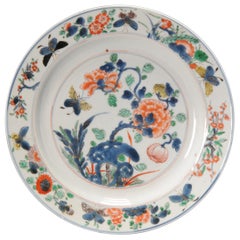
Quality Kangxi Period Chinese Porcelain Famille Verte Plate China, 18th Century

Quality Kangxi Period Chinese Porcelain Famille Verte Plate China, 18th Century

Located in Amsterdam, Noord Holland

A beautiful large antique Kangxi (1662-1722) dish decorated in the centre with a brightly-coloured scene of a different kind of flowers, rocks and a butterfly. The rim is decorated w...

Category

Antique 18th Century Chinese Decorative Dishes and Vide-Poche

Materials

Porcelain

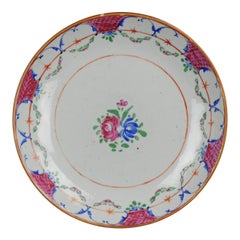
Antique Chinese Porcelain Charger Plate Qianglong Jiaqing Qing, ca 1780 - 1810

Antique Chinese Porcelain Charger Plate Qianglong Jiaqing Qing, ca 1780 - 1810

Located in Amsterdam, Noord Holland

Lovely Chinese Porcelain Charger. Unusual crude Lowestoft decoration. Typical late Qianlong or Jiaqing period pottery. Additional information: Material: Porcelain & Pottery Type: Pl...

Category

Antique 19th Century Chinese Decorative Dishes and Vide-Poche

Materials

Porcelain

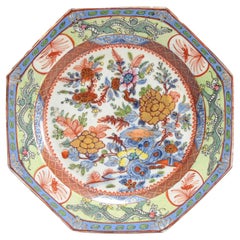
Antique 18th Century Chinese Porcelain Plate with Regency Style Overdecorating

Antique 18th Century Chinese Porcelain Plate with Regency Style Overdecorating

Located in Amsterdam, Noord Holland

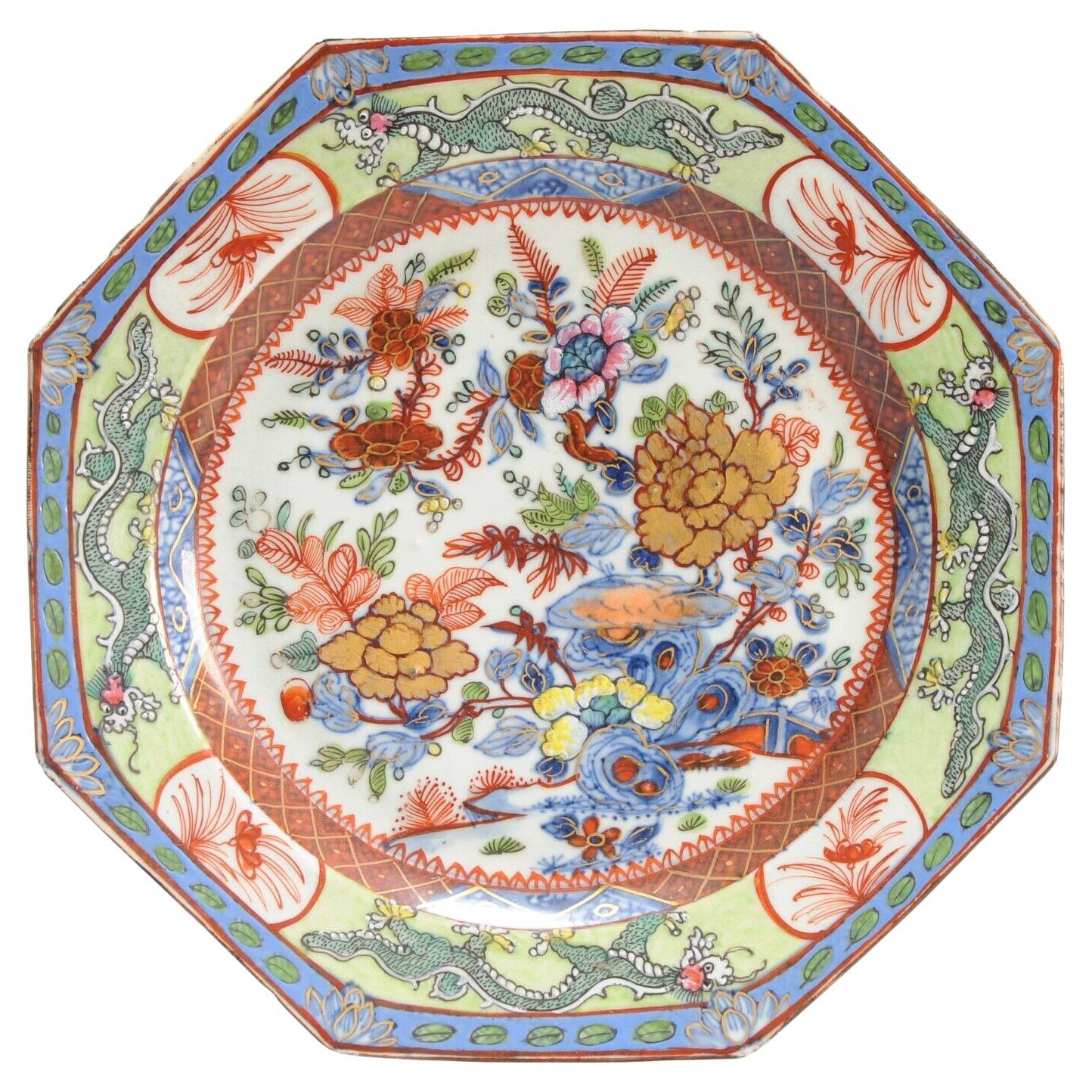
A very nicely made piece of 18th century porcelain decorated with a beautiful scene. Underglaze blue and overglaze other enamels done later in Europe. We have also added a picture of how a similar original Blue and white dish would have looked like. This is an example of British overdecoration.Provenance:Provenance: Doyle Sep 27, 2024 11:00 Boston Collects, Lot 1083 Six Chinese Porcelain Table Items 18th and 19th centuries Estate / Collection: Property of a Jamestown, Rhode Island Collector Often seen as ugly and black sheep of the porcelain world. British 1810-1820 Clobbered wares deserve better as they are historically very interesting. So lets call them George the IV or Regency Taste redecorated porcelain. And leave the clobbered behind us as it does no justice to what they are at all. Its not that because we live in a time were these super funky colours are out of taste that we should hate on these pieces. A short history! During the early 19th century, the Prince Regent (later King George IV) played a key role in cultivating a taste for the exotic Orient among the British elite, influencing interior design during the Regency era. His lavish projects, such as the Royal Pavilion in Brighton, epitomized this fascination. The Pavilion, with its blend of Indian, Chinese, and Gothic elements, became a symbol of the Prince’s extravagant taste. The interiors featured Chinese wallpaper, Indian textiles, and oriental furniture, reflecting the era’s growing interest in Chinoiserie and other oriental-inspired designs. This trend extended to the decorative arts, where clobbered Chinese...

Category

Antique 18th Century Chinese Regency Decorative Dishes and Vide-Poche
Materials

Porcelain

You May Also Like

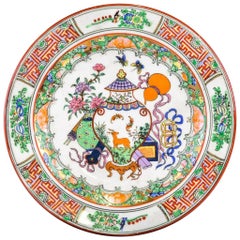
Vintage Chinese Porcelain Plate, Made in China, Early 20th Century

Vintage Chinese Porcelain Plate, Made in China, Early 20th Century

Located in Roma, IT

This porcelain plate is an original decorative object realized in China by Chinese manufacture, at the beginning of the 20th century. It is decorated with geometric and floral or...

Category

Early 20th Century Chinese Antiquities

Materials

Ceramic

19th century Chinese Canton Porcelain Plate, 1890s

19th century Chinese Canton Porcelain Plate, 1890s

Located in LEGNY, FR

Beautiful decorative plate in Chinese porcelain, Rose Canton style, dating from the 19th century. It is richly adorned with traditional Chinese scenes, flowers, exotic birds, and fig...

Category

Antique Late 19th Century Chinese Platters and Serveware

Materials

Porcelain

Chinese Export Rose Medallion Porcelain Plate, Qing Dynasty, Circa 1875

Chinese Export Rose Medallion Porcelain Plate, Qing Dynasty, Circa 1875

Located in Land O' Lakes, FL

A finely decorated Chinese Export Rose Medallion porcelain plate dating to the Qing Dynasty, circa 1875. Hand painted in vivid enamels, the plate is richly detailed with alternating ...

Category

Antique 1870s Chinese Ceramics

Materials

Porcelain, Paint