Wolmar Silversmiths Castillo Silver-Plated Bowl
By Wolmar Castillo
Located in Chicago, IL
Wolmar silversmiths Castillo silver-plated nowl.
Category
Mid-20th Century Mexican Mid-Century Modern Decorative Bowls
Materials
Silver Plate
The fine brass, copper and silver metalware produced by distinguished manufacturer Württembergische Metallwarenfabrik (WMF) has adorned the tabletops of restaurants, hotels and homes around the world. WMF is especially prized by collectors for its Art Nouveau works of the late 19th century and Art Deco pieces manufactured throughout the early 20th century.
WMF traces its beginnings to 1880 when the merger of Straub & Sohn and Ritter & Co. formed the public limited company Württembergische Metallwarenfabrik. The company initially focused on tableware and decorative pieces, such as vases and planters. In 1892, WMF introduced its patented “perfect hard silver plating,” a technology that distributes twice as much silver to the sections of cutlery that experience the most wear, allowing the whole piece to hold its luster longer than other silver-plated products.
In 1905, WMF acquired a majority holding of Orivit AG, a company in Cologne that manufactured products from a tin alloy, further expanding its range of materials. By 1910, its main facility in Geislingen, Germany, employed 4,000 workers. It had branches in Vienna, Warsaw and London, and printed a catalog in 12 languages.
As a German business, WMF experienced extensive asset loss in the aftermath of the world wars. However, by 1950, its main facility once again had a workforce of more than 3,000 employees, and its high-quality products returned to popularity. There was an increase in demand for its Cromargan cutlery as well as work by WMF’s preeminent lighting designer, Wilhelm Wagenfeld.
By the 1960s, WMF’s main facility had 5,800 employees. More factories were opened to keep up with demand. WMF is now one of the largest manufacturers of metalware in the world and continues to produce pieces of superb quality. The company has over 200 branches in Germany, Austria and Switzerland, and owns branches in 40 other countries.
On 1stDibs, explore serveware, decorative objects, lighting and more from Württembergische Metallwarenfabrik (WMF).
Wolmar Silversmiths Castillo Silver-Plated Bowl
By Wolmar Castillo
Located in Chicago, IL
Wolmar silversmiths Castillo silver-plated nowl.
Silver Plate
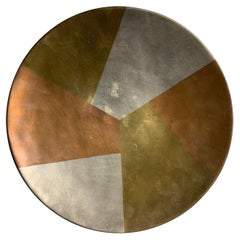
Los Castillo Metales Casados Handcrafted Mexico Mixed Metal Dish Bowl
By Los Castillos
Located in Chicago, IL
Los Castillo metales casados handcrafted mexico mixed metal dish bowl.
Metal
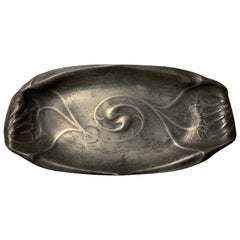
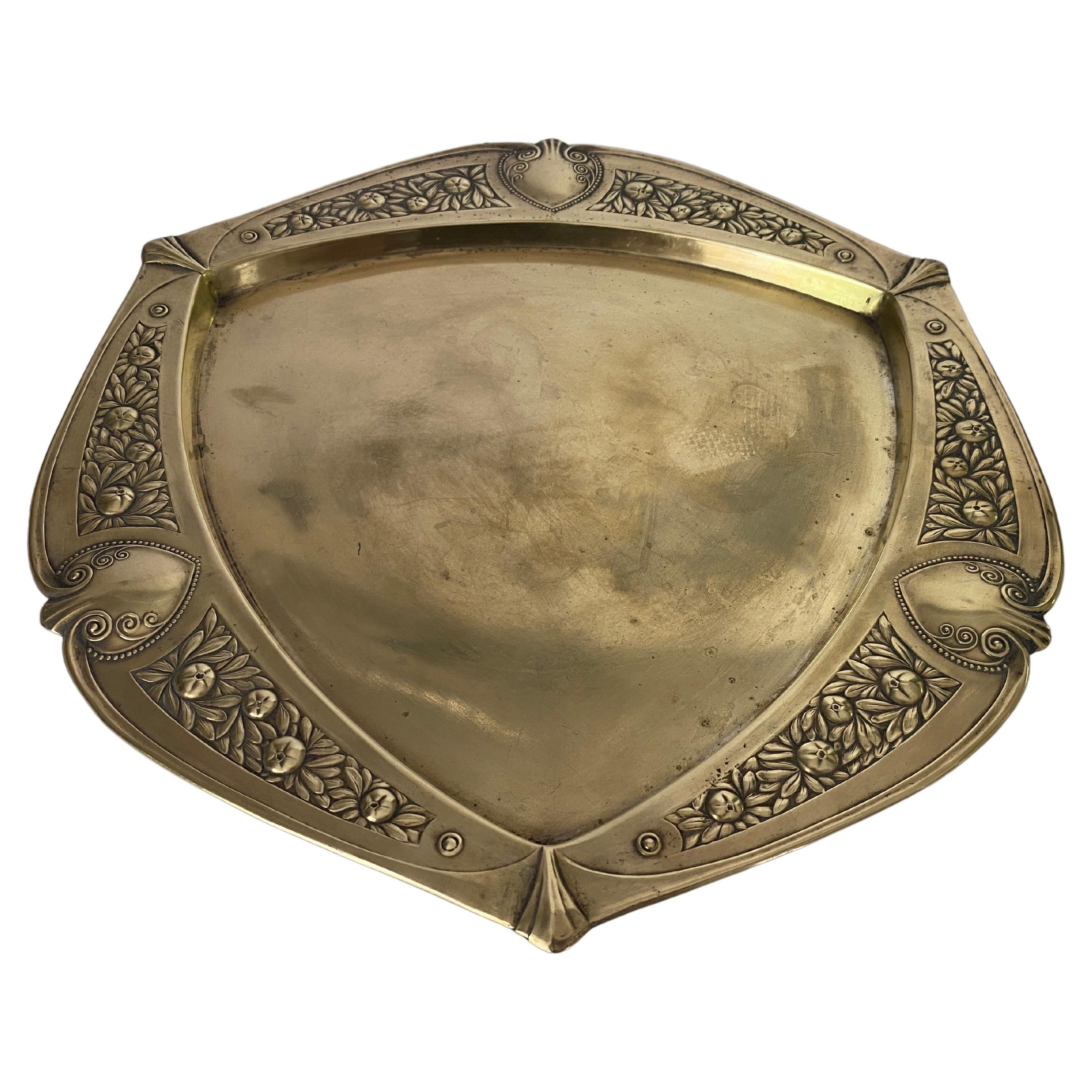
Hugo Leven Kayserzinn Art Nouveau Tray / Dish, Germany, circa 1900
By Kayserzinn 1, Hugo Leven
Located in Chicago, IL
Hugo Leven Kayserzinn Art Nouveau tray / dish, Germany, circa 1900.
Pewter
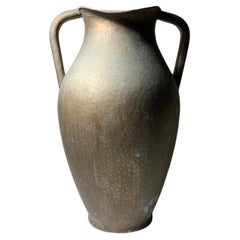
A Large Italian Egidio Casagrande Hammered Brass Garden Urn Vase / Aldo Tura
Located in Chicago, IL
A Large Italian Modernist Garden Urn Form by Egidio Casagrande. Hammered Brass. Dating to the 30's /40s Left as- found. Have not touched the surface in regards to cleaning. Style...
Brass
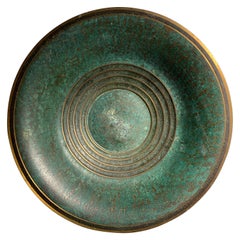
Art Deco Bronze Verdigris Centerpiece Bowl by Carl Sorensen
By Carl Sorensen
Located in Chicago, IL
Art Deco Bronze Verdigris centerpiece bowl by Carl Sorensen.
Brass
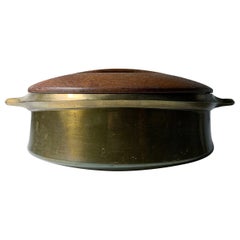
Early Chafing Dish /Pot Designed by Jens Quistgaard for Dansk
By Jens Quistgaard
Located in Chicago, IL
Early Fondue Pot Designed by Jens Quistgaard for Dansk A wood stand sometimes comes with this form. It is not with this pot. Chip to wood ...
Brass

17th Century Brass Alms Pan-16" diameter
Located in Harrodsburg, KY
A 17th Century brass alms pan, most likely from Nuremberg. The hammered decoration includes a raised central boss surrounded by a swirled motif. This central relief is surrounded by ...
Brass
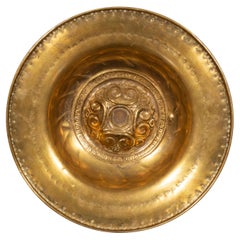
Early European Brass Alms Plate
Located in Essex, MA
With deeply molded body with central inner scrolled design. The outer with stamped decoration.
Brass
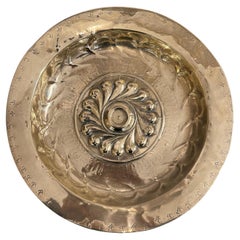
17th Century German Brass Alms Dish, Baroque Style, Hand-Crafted
Located in ARMADALE, VIC
A German Repousse Brass Alms Dish, 17th Century These dishes were originally used as everyday flatware by the wealthy during the Medieval period, serv...
Brass
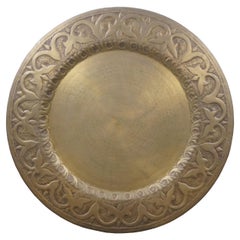
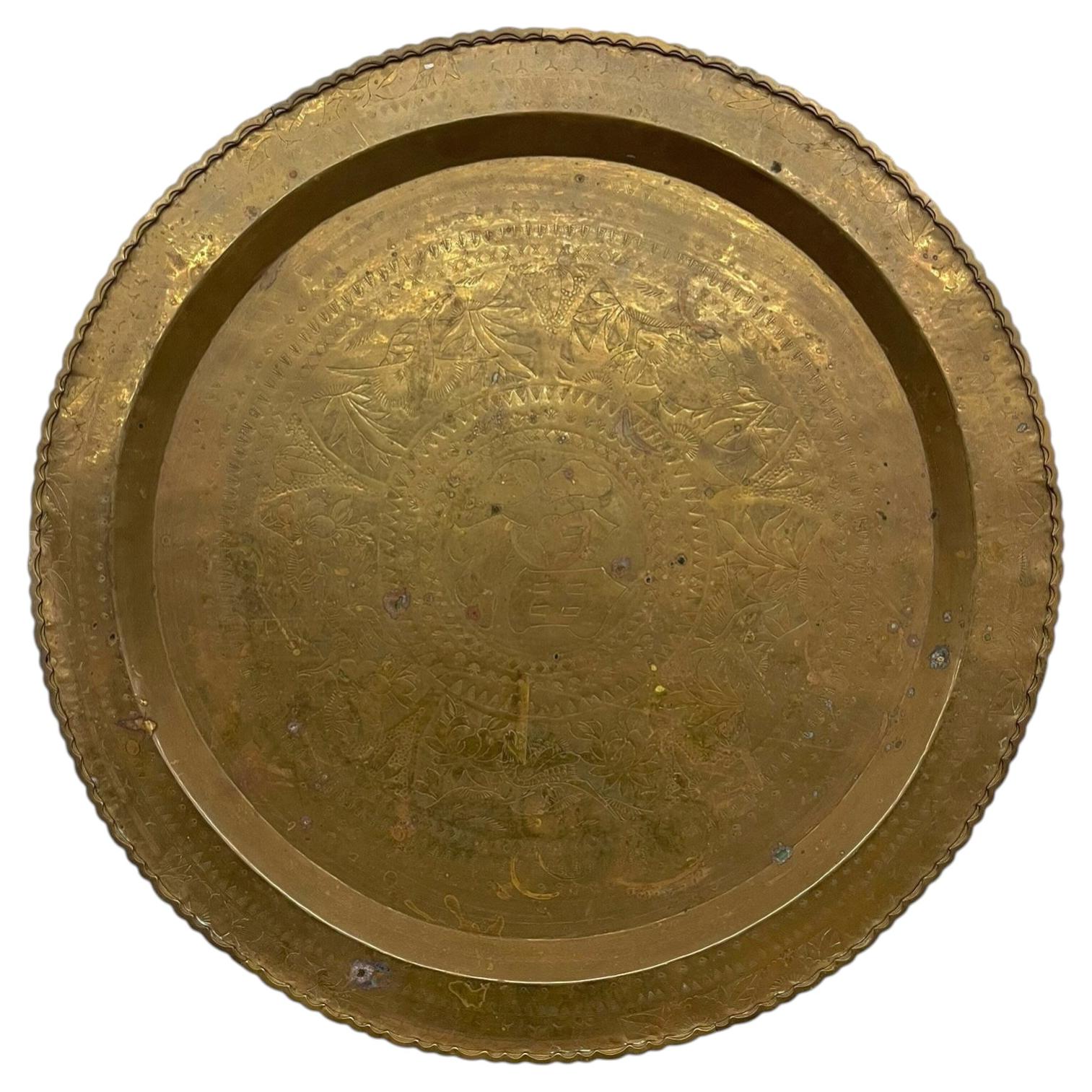
20th Century European Hammered Brass Wall Hanging Plaque Plate Tray 30"
Located in Dayton, OH
Vintage 20th century immense wall hanging brass platter / tray. Hammered brass with a plain center and bold foliate / vine design around the edge. Dimensions: 30" x 0.375" x 30" (Wi...
Brass
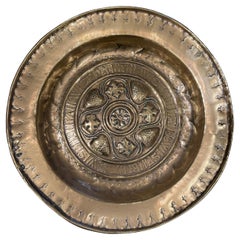
German Repousse Brass Alms Dish, Hand-Crafted, 17th Century, Nuremberg
Located in ARMADALE, VIC
A German Repousse Brass Alms Dish, 17th Century Origin and Function: These brass dishes were primarily made in Nuremberg, Germany, and were initially ...
Brass
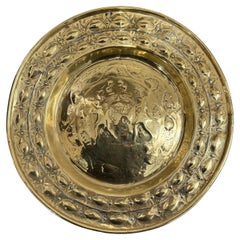
A Large German Repousse Brass Alms Dish, 17th Century
Located in ARMADALE, VIC
A Large German Repousse Brass Alms Dish, 17th Century These dishes were originally used as everyday flatware by the wealthy during the Medieval period, serving for food or for holding water for hand-washing. They also served as a display of wealth and status. When they went out of fashion in the later 17th century, many were donated to churches and used as collection plates, which is how they acquired the name "alms dishes". Purpose: While historically used for collecting donations for the poor and charitable purposes, they were also commonly used as offertory plates in churches for collecting offerings during services. Historical Use: In medieval times, these brass dishes served as everyday flatware for the wealthy, used for food or holding jugs for hand-washing. They also served as displays of wealth and status. Transition to Alms Dishes: When they fell out of fashion as domestic items in the later 17th century, many were donated to churches and used as collection plates, leading to the name "alms dishes". Decorative Function: European paintings of home interiors...
Brass