Want more images or videos?
Request additional images or videos from the seller
1 of 7

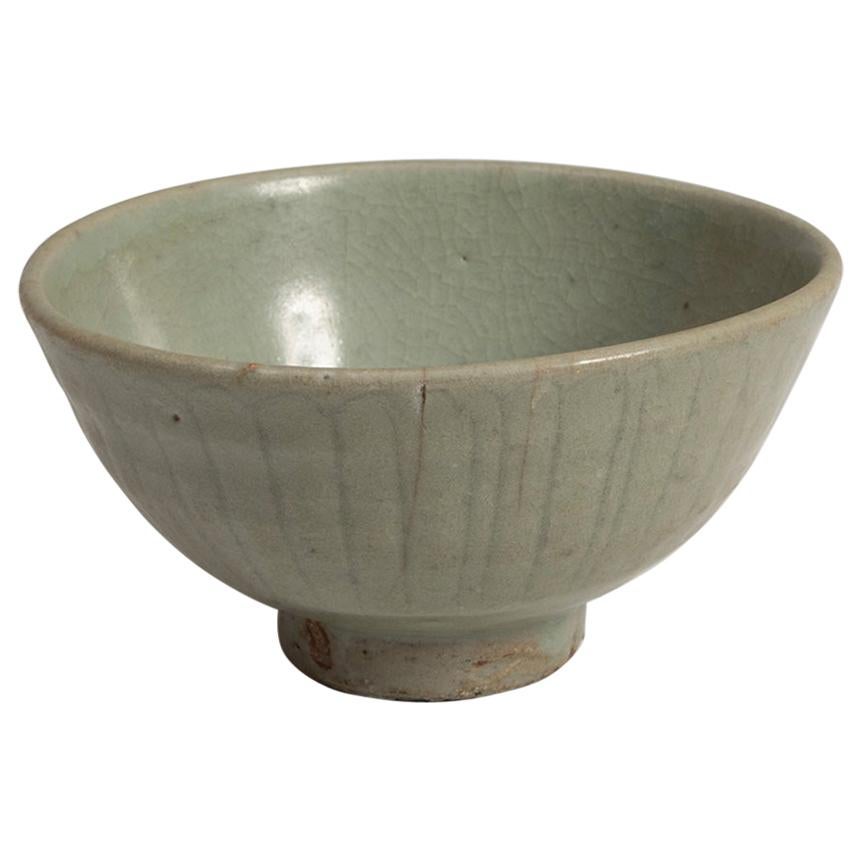
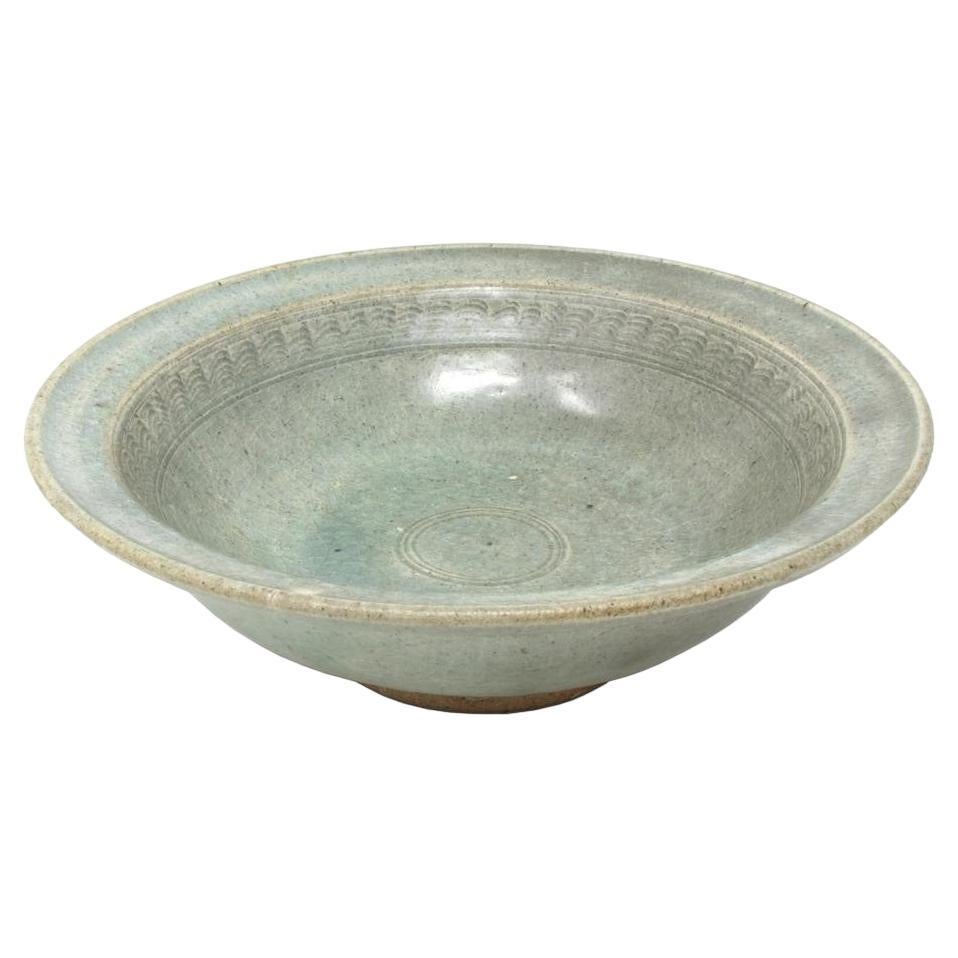
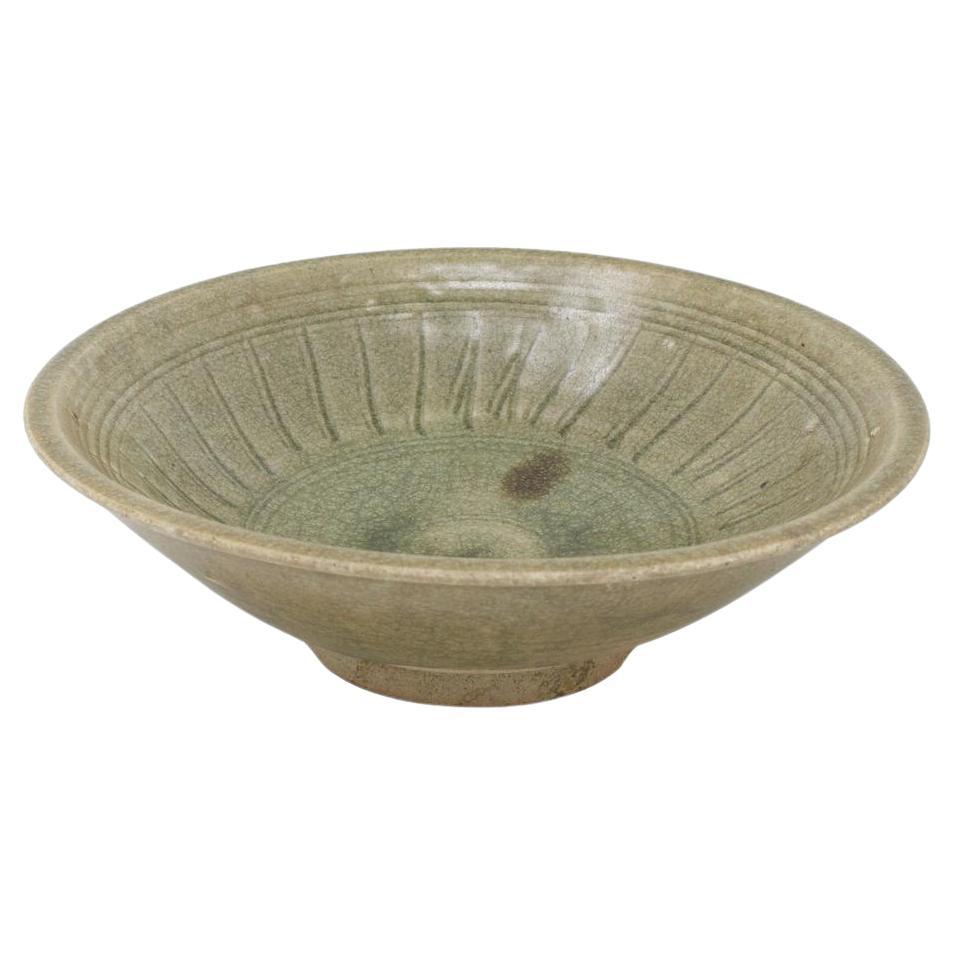
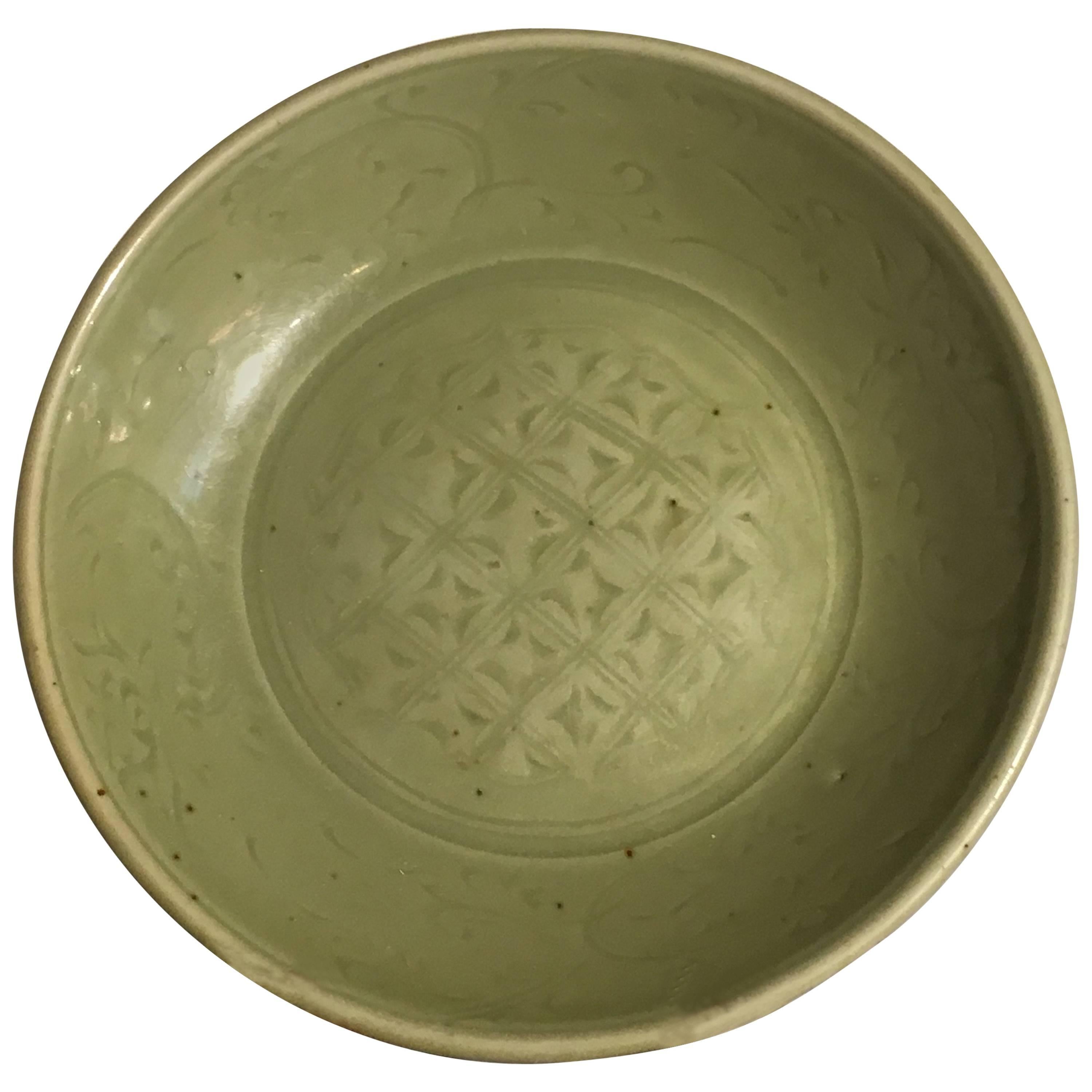
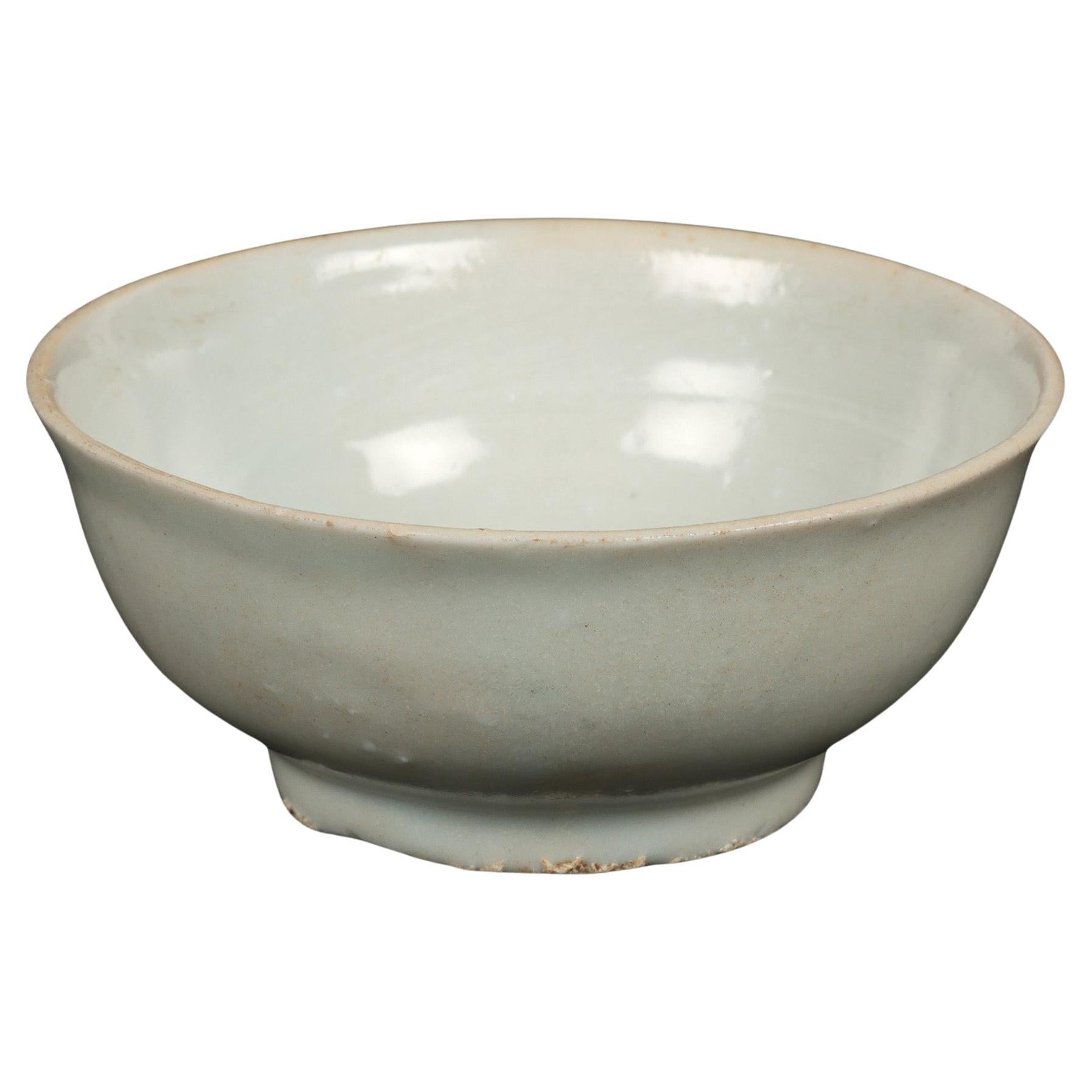
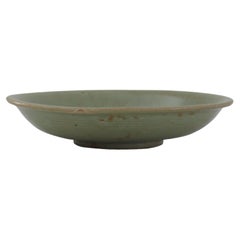
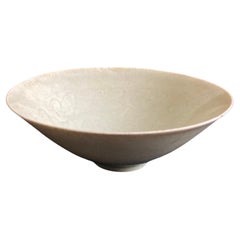
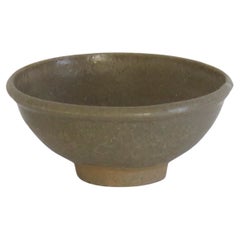
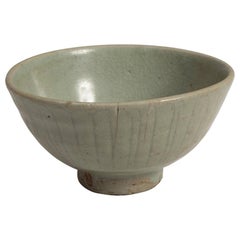
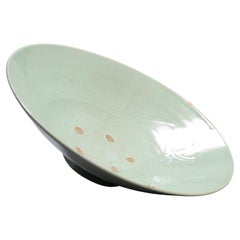
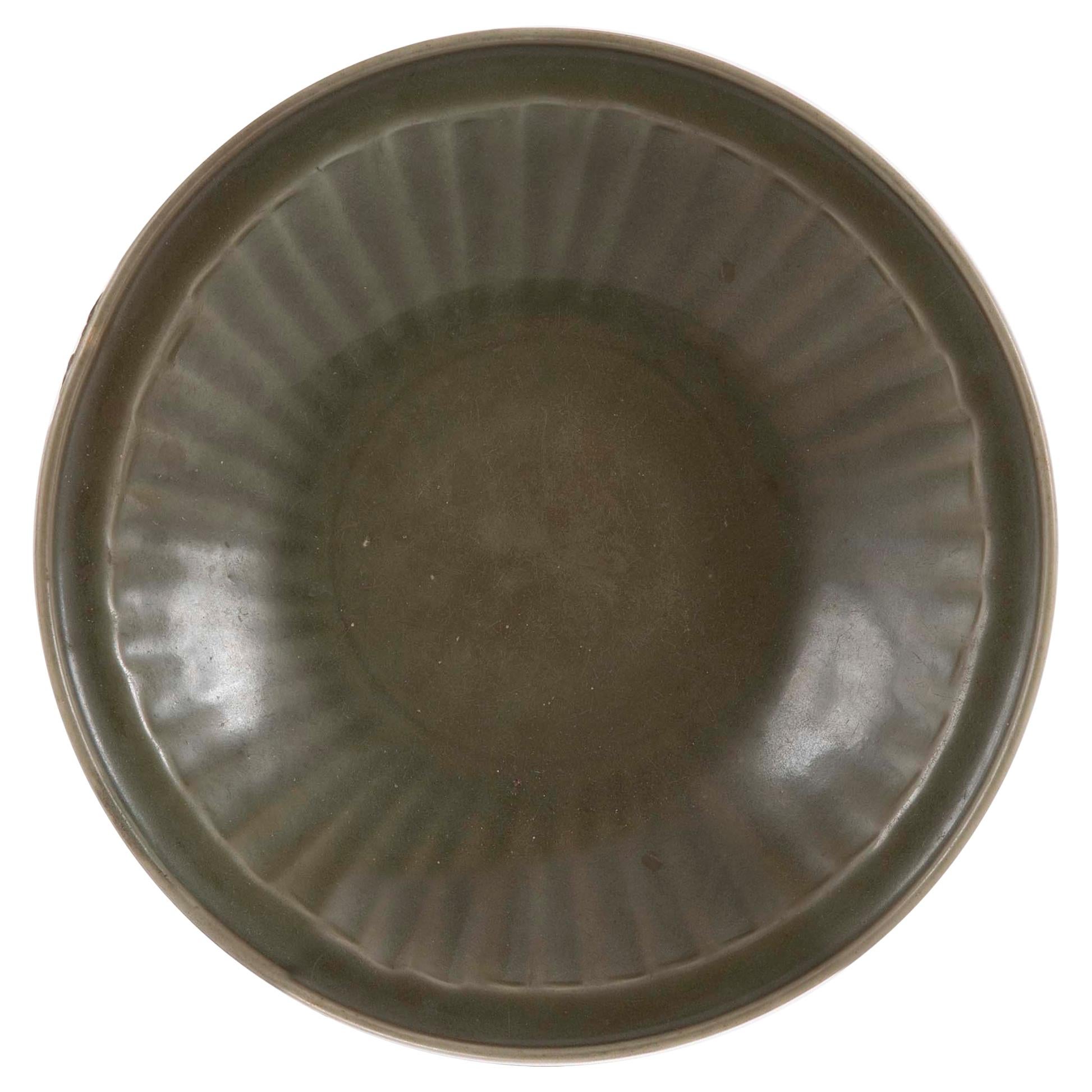
Rare Chinese Celadon Glaze Dish 14th Century Museum Quality Large Decorated

$3,878
£2,918.82
€3,756.32VAT Included
CA$5,484.57
A$5,570.65
CHF 3,210.21
MX$67,257.36
NOK 37,289.58
SEK 37,600.71
DKK 25,527.01

About the Item

In China, the term qingci "青瓷" (literally meaning blue-green porcelain) is used to designate ceramic objects of gray-green color, with the first character representing blue or blue-green color "青". Various epithets were used to describe this color: "heavenly azure" "天青" (tian qing), "dusty blue" "粉青" (fen qing), or "after the rain passes, the sky becomes blue" - yu guo tian qing "雨過天青", which idiomatically means the arrival of good times after troubles. The characteristic gray-green color is obtained by adding iron oxide to the glaze. During the chemical reaction in reduction firing (i.e., without oxygen access) of the ceramics, the iron contained in the glaze acquires a blue, gray, or greenish hue. During the Song (宋), Yuan (元), and Ming (明) dynasties, the art of Chinese celadon ceramics reached its peak. The most renowned were the products from the Yue (越) and Longquan (龙泉) kilns in the southeastern province of Zhejiang (浙江). The high value that celadon possessed in Chinese culture could originally have been due to the similarity of the glaze color to jade, which was attributed various magical properties. Perhaps, precisely because of this similarity, it was believed that celadon also possesses supernatural qualities—for example, if poisoned food were placed in a celadon dish, it would change its color. The change in fashion in the 18th–19th centuries led to a decline in production and the loss of many secrets of celadon manufacturing. The complex multi-stage technology for producing celadon, which has survived to this day in pottery workshops in Longquan "龙泉" (Zhejiang "浙江" Province), is included in the UNESCO List of Intangible Cultural Heritage of Humanity. This ceramic dish is an extremely rare museum-quality piece and will become the crown jewel of any exclusive collection. DETAILS: Artist: 14th century China Medium: Ceramic dish with celadon glaze, hand-formed, hand-decorated with cutting tools in sgraffito technique or low relief Size approximately: 30.2 cm diameter, 8.5 cm height (11.9 × 3.4 inches) Condition: Overall in very good condition with minor age-related wear and glaze cracks Provenance: Private collection Notes: Kindly refer to the high-resolution photographs, which form part of the condition report. Color and tonal values may vary when viewed in person, depending on viewing conditions and ambient light Shipping: Approx. weight 1.7 kg; packed approx. weight 3-4 kg. Secure, insured worldwide shipping.
  • Dimensions:
    Height: 3.4 in (8.64 cm)Width: 11.9 in (30.23 cm)Depth: 11.9 in (30.23 cm)
  • Style:
    Chinese Export (Of the Period)
  • Materials and Techniques:
  • Place of Origin:
  • Period:
  • Date of Manufacture:
    e.g. 1310-1390
  • Condition:
    Wear consistent with age and use. Overall in very good condition with minor age-related wear and glaze cracks.
  • Seller Location:
    Sweden, SE
  • Reference Number:
    1stDibs: LU8776246580612

More From This Seller

View All
Bisque Porcelain and Gilt Bronze Vase 19th century 4 Seasons Putti Allegory

Bisque Porcelain and Gilt Bronze Vase 19th century 4 Seasons Putti Allegory

Located in Sweden, SE

Empire Vase (Tazza) produced in bisque porcelain by top level manufacture, possibly in Germany or France, in the second half of the 19th century and decorated with finely crafted fin...

Category

Antique Late 19th Century Empire Vases

Materials

Gold, Bronze

Mahogany Tea Caddy Wooden Casket Box w Antique Glass Empire early 19th century

Mahogany Tea Caddy Wooden Casket Box w Antique Glass Empire early 19th century

Located in Sweden, SE

Rectangular shape mahogany veneered casket made in first half of 19th century presumably in Europe. Cast glass vessels are intact at their original place. Candy sugar bowl along with...

Category

Antique Mid-19th Century Empire Decorative Boxes

Materials

Glass, Cut Glass, Mahogany

Gustav Klimt in Goebel Artis Orbis Vintage 3 pcs Glass Ensemble Vase Bowl Set

Gustav Klimt in Goebel Artis Orbis Vintage 3 pcs Glass Ensemble Vase Bowl Set

By Goebel Company

Located in Sweden, SE

Gustav Klimt, the renowned Austrian painter and a prominent figure in the Viennese Art Nouveau movement, has left an indelible mark on the world of art. His influence has transcended...

Category

Late 20th Century Art Deco Vases

Materials

Gold Plate

Sridevi East Asian Hindu Deity Goddess bronze Figurine Antique 18th-19th century

Sridevi East Asian Hindu Deity Goddess bronze Figurine Antique 18th-19th century

Located in Sweden, SE

Fantastic Hinduism masterwork was discovered in our stock: attractive sculpture stood for decade on our shelf pleasing an eye and raising some questions. Finally, we were able to separate the wheat from the chaff: hand chased bronze head of Shridevi with gold crown or tiara was set (!) on the large early 19th century French clock...

Category

Antique Early 19th Century Tibetan Figurative Sculptures

Materials

Gold Plate, Bronze

Antique Flame Mahogany Empire Tea Caddy Wooden Casket Box 19th century

Antique Flame Mahogany Empire Tea Caddy Wooden Casket Box 19th century

Located in Sweden, SE

Rectangular shape mahogany veneered casket made in first half of 19th century presumably in Europe. High quality work of applied arts in Neoclassical (Biedermeier) style. The fork of...

Category

Antique Late 19th Century Empire Tea Caddies

Materials

Wood, Mahogany

Swedish Gilt Heavy Silver Mustard or Sauce Cup Antique Empire Mug 1827

Swedish Gilt Heavy Silver Mustard or Sauce Cup Antique Empire Mug 1827

Located in Sweden, SE

Fine and solid creation by unidentified Swedish silver works presumably in Stockholm, date mark is 1827. Stylish and authentic creature of classical geometry would accomplish your Em...

Category

Antique Early 19th Century Swedish Empire Sterling Silver

Materials

Gold Plate, Silver

You May Also Like

Chinese Stoneware Bowl or Dish Longquan Celadon Incised, Yuan Dynasty 1271-1368

Chinese Stoneware Bowl or Dish Longquan Celadon Incised, Yuan Dynasty 1271-1368

Located in Lincoln, Lincolnshire

This is a very old interesting Chinese stoneware Longquan Celadon bowl or plate with incised decoration, which we date to the Yuan Dynasty, circa 1300. The bowl is well potted on a low foot.  The bowl is an olive green colour having a celadon glaze with incised decoration to its centre of what looks like a flower stem and additionally three incised string lines to the outer wall. Unglazed parts fire to a terracotta brown colour as with the base section The piece is unmarked but for similar pieces see the superb book: Chinese Ceramics by He Li published by Thames & Hudson, 1996; pages 164 to 184. NOTES Longquan is a city in South west China. These wares were produced over a long time period from 959 to 1550; which covers the Northern Song, Southern Song...

Category

Antique 15th Century and Earlier Chinese Other Ceramics
Materials

Stoneware

Rare Antique Edo period Japan Japanese Porcelain Celadon Plate Arita Dish

Rare Antique Edo period Japan Japanese Porcelain Celadon Plate Arita Dish

Located in Amsterdam, Noord Holland

Sharing with you this very nice edo period example with carved fish design. Storage Box included Unmarked at base Arita ware, also known as Arita-yaki, has its origins in 1616, whe...

Category

Antique 17th Century Edo Decorative Dishes and Vide-Poche

Materials

Porcelain