
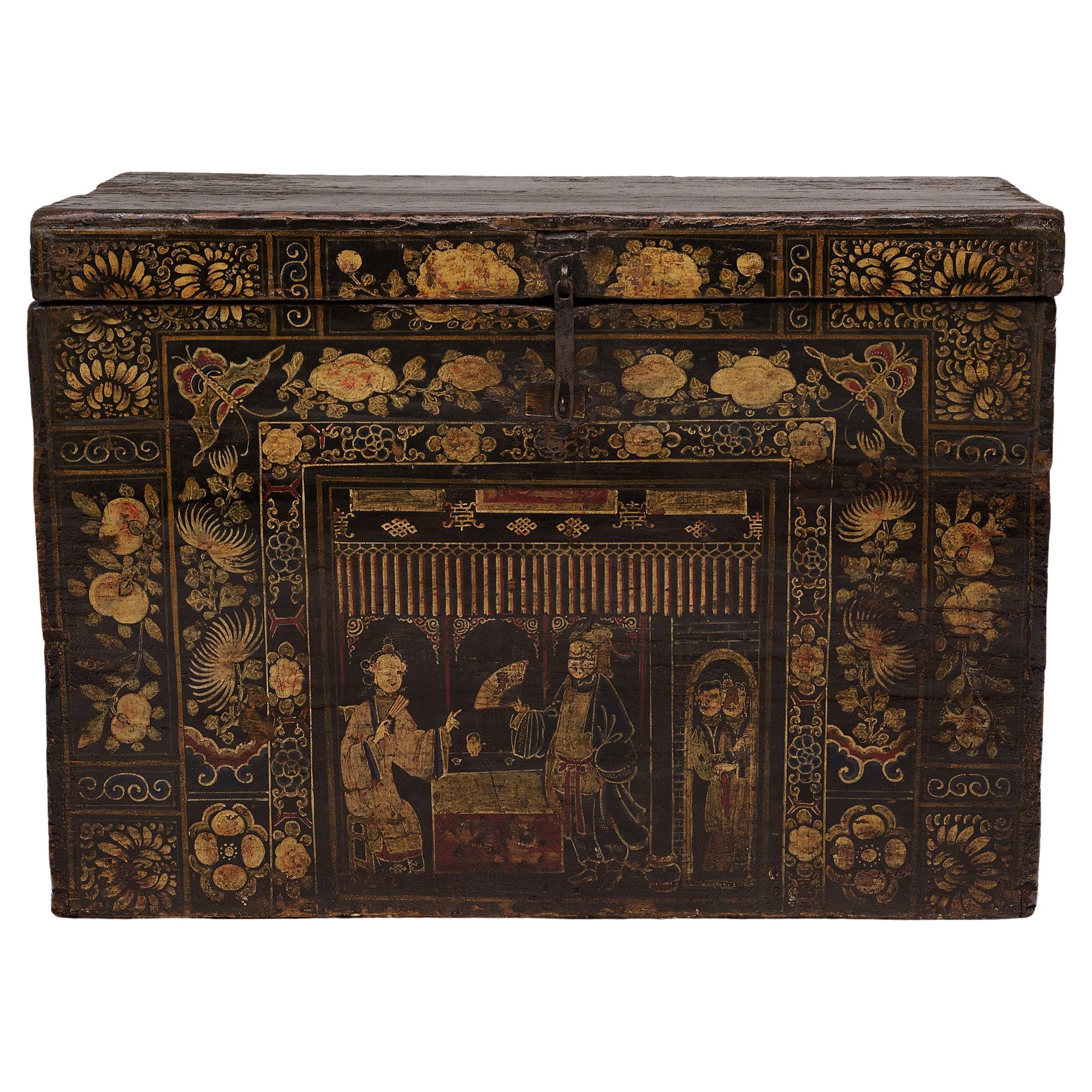
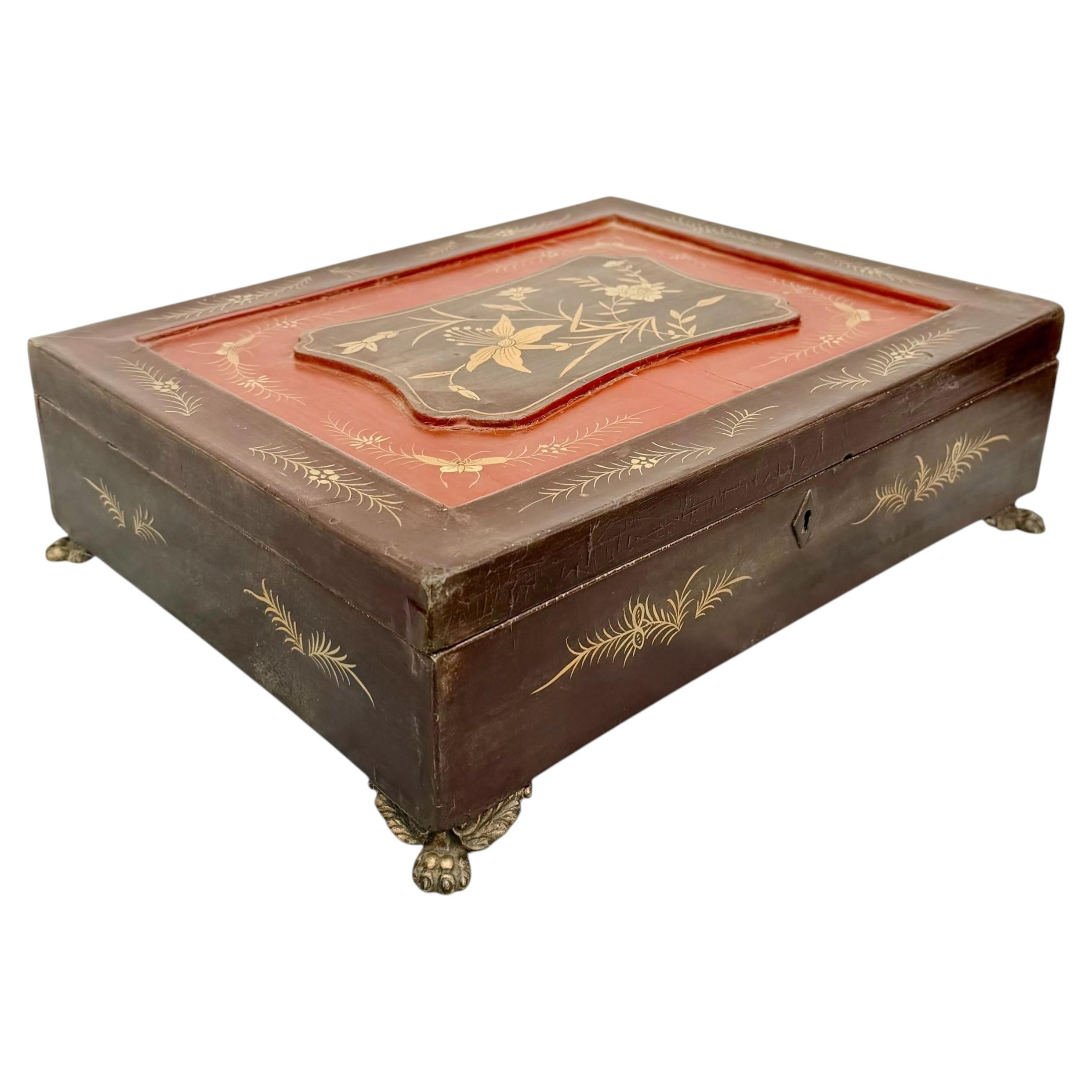
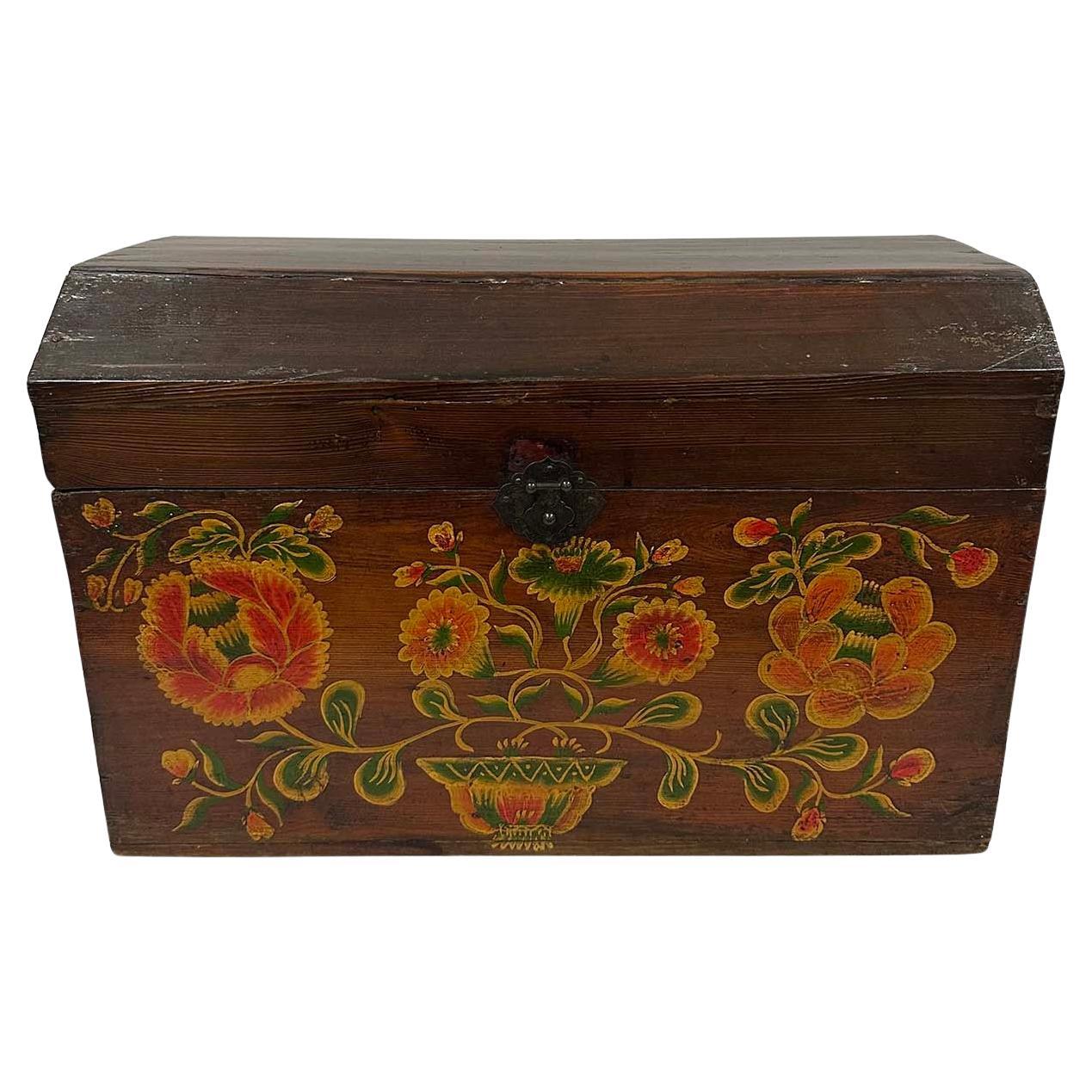
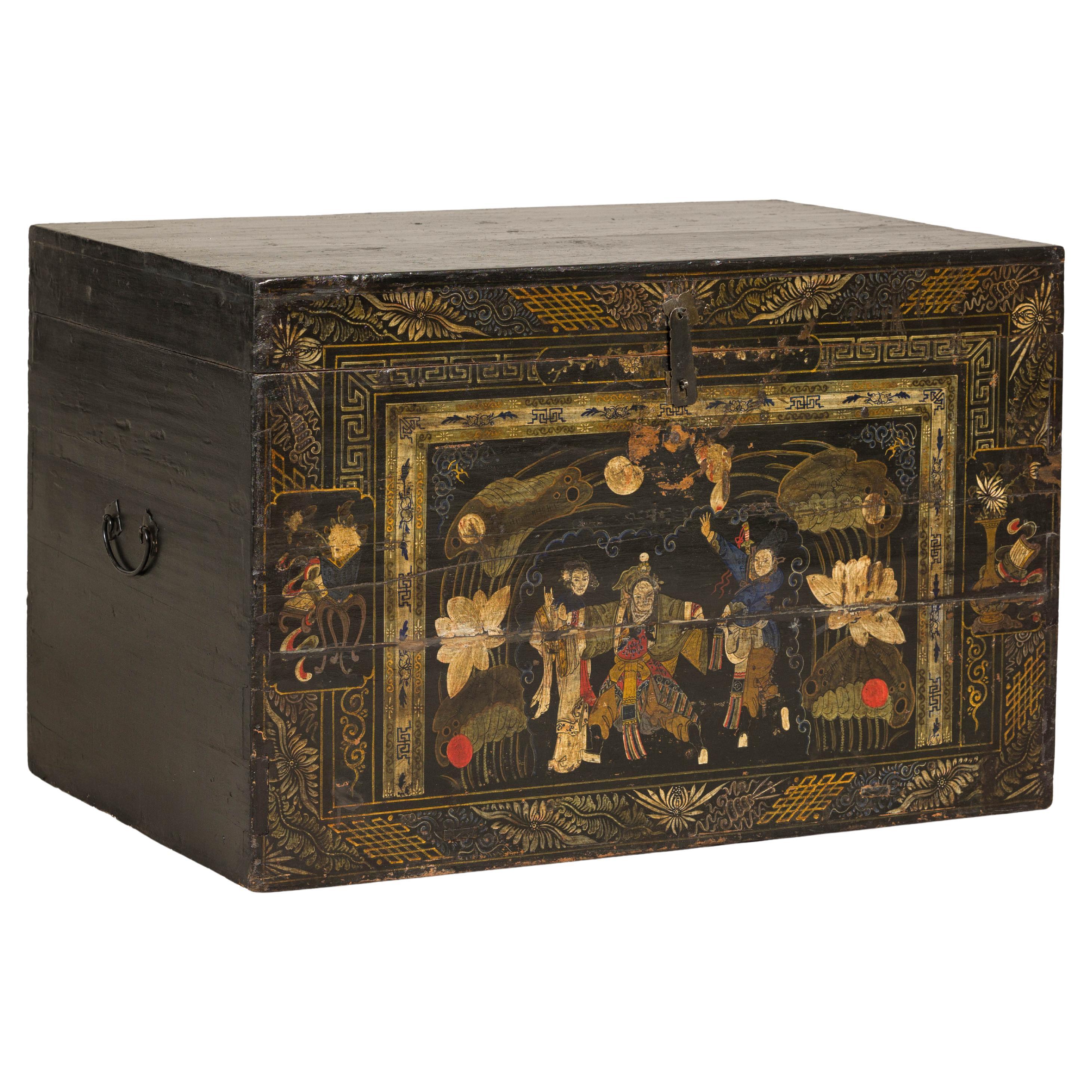
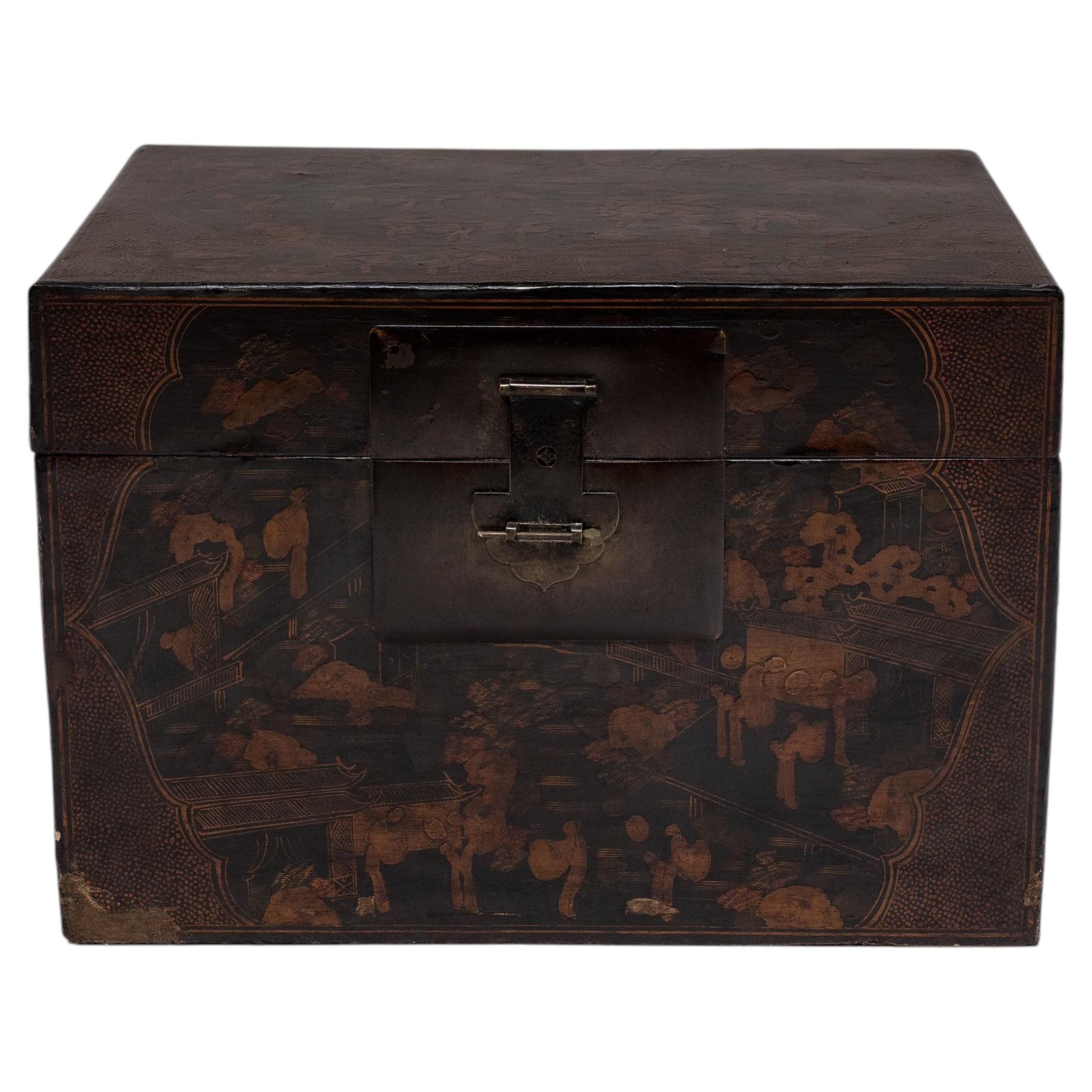
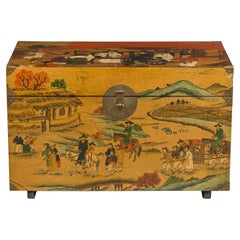
Chinese Hand-Painted Decorative Box, Village Scene, 20th Century
Located in Queens, NY
Asian Chinese hand painted large box decorated with of a small village gathering
Category
20th Century Chinese Chinese Export Decorative Boxes
Materials
Paint
Chinese Hand-Painted Decorative Box, Village Scene, 20th Century
Located in Queens, NY
Asian Chinese hand painted large box decorated with of a small village gathering
Paint
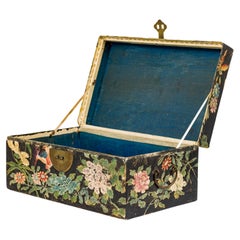
Mid-Century Chinese Hand-Painted Chest with Exotic Birds, Circa 1955
Located in Queens, NY
Chinese Mid-Century small rectangular hinged chest with metal latch and two side ring handles, hand painted featuring two exotic birds (depicted on the top and front), pine, berries,...
Wood
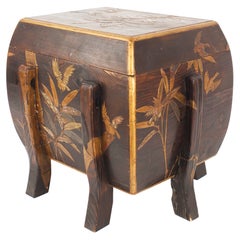
Japanese Lacquered Karabitsu Trunk, 19th Century, Gilt Inlay, Antique
Located in Queens, NY
Japanese (19th Cent) brown lacquered karabitsu traveling trunk with carved birds and floral relief of gilt and pearl inlay resting on 6 legs.
Lacquer
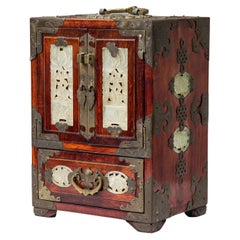
Chinese Mid-Century Hardwood Jewelry Box, Inlaid Faux Jade, Circa 1955
Located in Queens, NY
Chinese Mid-Century small rectangular hardwood box / cabinet features 2 hinged swing doors both carved and inlaid with faux white jade above a bottom drawer with incised metal scroll...
Fabric
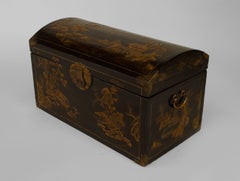
19th Century Chinese Black Lacquered Floor Trunk with Gold Leaf
Located in Queens, NY
Asian Chinese black lacquered floor trunk with a rounded arch shaped top and decorated with Chinese genre scenes and having a red painted and parcel gilt interior.
Gold Leaf
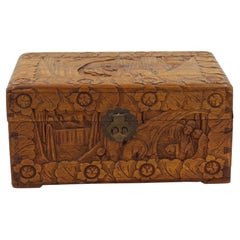
Mid-Century Chinese Wooden Scenic Design Carved Hinge Top Box
Located in Queens, NY
Mid-century Chinese carved wooden box featuring an elaborate scenic design with a hinged top and brass closure hardware. (Stamped HUNG HOP CHEST CO. HONG...
Metal, Brass
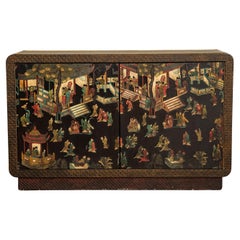
Narrow Vintage Chinoiserie Cabinet, Hand-Painted Wood, USA, 1970s
Located in Miami, FL
Narrow vintage Chinoiserie cabinet, USA 1970's Elegant and refined vintage narrow Chinoiserie circa 1970's featuring an exceptional and vibrant hand-painted Chinoiserie scene across ...
Wood
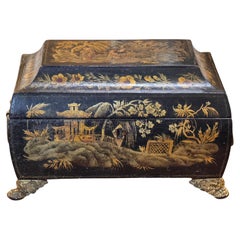
19th Century Regency Chinoiserie Box With Painted Scenes
Located in Charlottesville, VA
Chinoiserie box with hand-painted garden and pavilion scenes on all sides, including floral borders and a central landscape panel on the lid. The shaped body stands on cast metal fee...
Wood, Paint
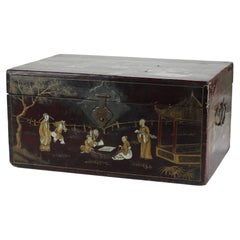
Antique Chinese Polychromed Chinoiserie Document Box c1890
Located in Big Flats, NY
An antique Chinese document box, dating to approximately 1890, features a rich polychromed Chinoiserie decoration. Crafted from wood with a lacquer finish, the exterior is adorned wi...
Wood
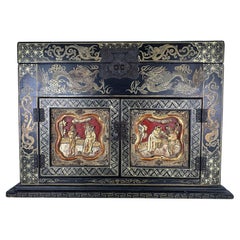
Early 20th century hand painted Chinese export large jewelry box
Located in Allentown, PA
This is a mid 20th century hand painted Chinese export large dresser box/jewelry box. This box has two doors to the front with hand carved figures. The box has beautiful hand painted...
Wood
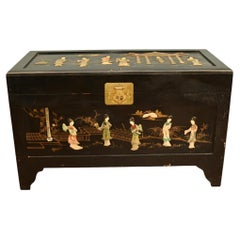
Chinese Lacquer Coffer Storage Box Antique Wedding Chest 1920
Located in Potters Bar, GB
A highly decorative and unusually large Chinese Export black lacquer coffer, dating to the early 20th century and beautifully decorated with traditional gilt landscape scenes and fin...
Giltwood
Rare Chinese Kangxi Polychrome Coromandel Lacquer Casket
Located in Lymington, GB
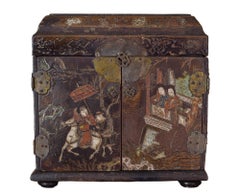
A rare Chinese polychrome Coromandel or ‘Bantam Ware’ lacquer casket or table cabinet, Kangxi period (1661-1722). Circa 1700. This fine small Chinese-export lacquer fitted casket is decorated overall with polychrome incised decoration. Opening with two doors revealing a red interior with fitted drawers and a hinged rising top. In superb, almost entirely original condition, retaining its vivid colours and fine details with courtiers in a pavilion and on horseback amidst foliage and formal palace gardens. The small bun-type feet are historical replacements. Interestingly bearing an antique-script inventory #25 and A I on the base. Nb. Bantamwork or Coromandel lacquer, not to be confused with ‘japanning’, is the term applied to decoration that is cut into a layer of gesso and then lacquered in colours. Much of the lacquer was transhipped from China through Coromandel in India, or the Dutch colony Batavia, Java. References: Coromandel lacquer or 'Bantamwork', with its characteristic incised decoration, was made in Henan province in Northern China from the latter-part of the Ming dynasty and exported to Europe from the end of the 17th Century through the East India Company's and VOC trading posts on the Coromandel Coast of India. The technique consisted in overlaying a base of wood with a series of increasingly fine white clays and fibrous grasses. Over this surface, lacquer was applied and polished before the design was incised and the hollowed out portions filled with colour and gilt and finished with a clear lacquer to protect it. Although John Stalker and George Parker used the term 'Bantamwork', the contemporary layman usually called it 'cutt-work', 'cutt Japan' or 'hollow burnt Japan'. Stalker and Parker discuss two types of 'Bantam-work' - flat and incised - in their 'Treatise on Japanning and Varnishing' (1688), noting that it 'was done in colors mix't with a gum water'. They also considered that it was 'almost obsolete, and out of fashion, out of use and neglected....' although admitted that 'it was very pretty, and some are more fond of it, and prefer it to the other...'. This casket/ table cabinet now on offer is related to one formerly with Malletts and illustrated in A. Bowett, 'English Furniture 1660-1714: From Charles II to Queen Anne' (2002) p. 150, plates 5:9. A much larger yet closely-related Bantam work coffer with rising lid was offered in the 'Asian Art in Cologne' sale lot 114 on 11th December 2021. Estimated @ £ 60,000 - £79,000. Mme de Pompadour, mistress to King Louis XV from 1745 to 1751, was an avid collector and admirer of Chinese Coromandel or Bantam Work, and was probably largely responsible for the very high prices recorded for such pieces, sometimes 10 times or more the price of ordinary furniture of equivalent quality. A Coromandel cabinet...
Lacquer