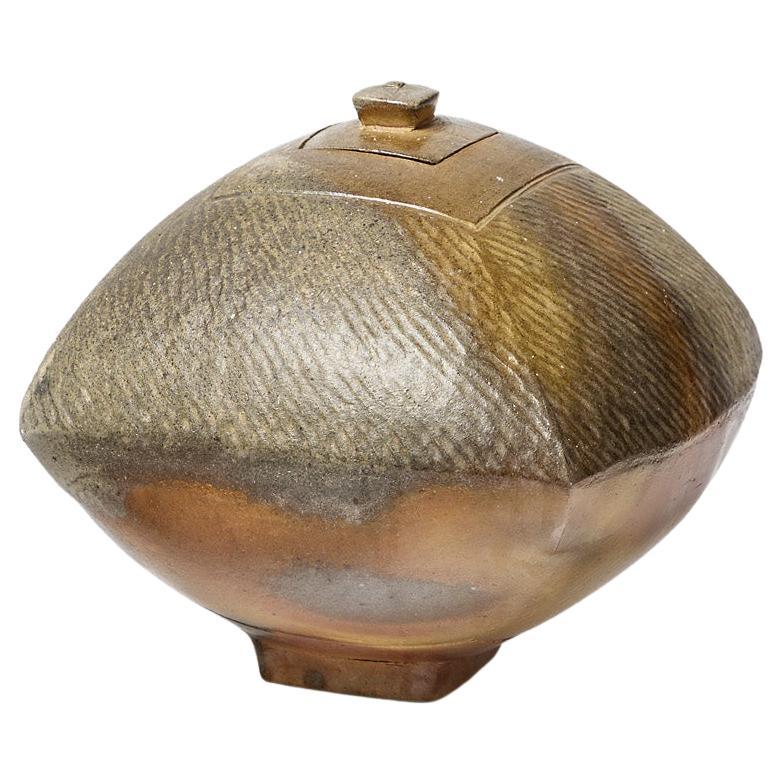
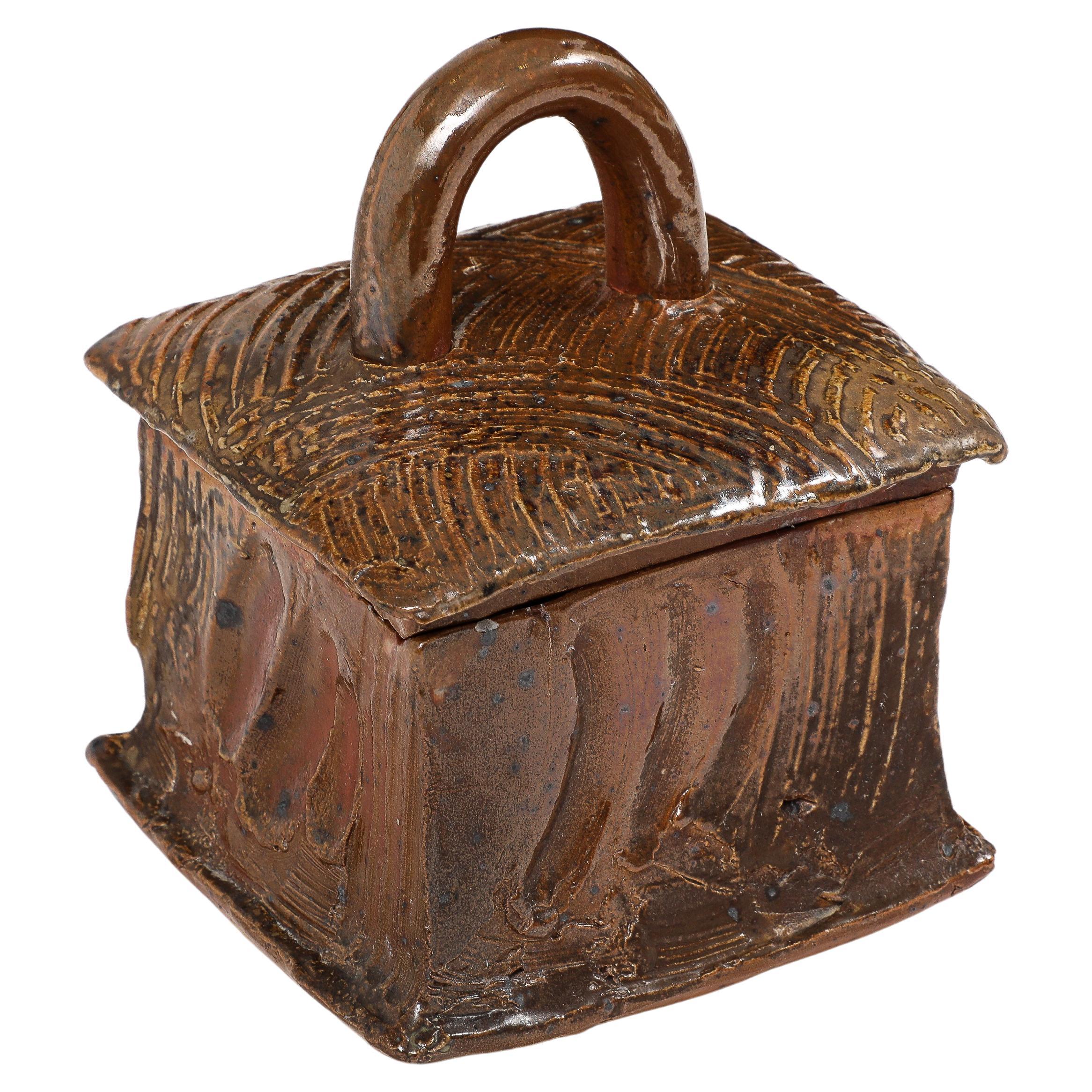
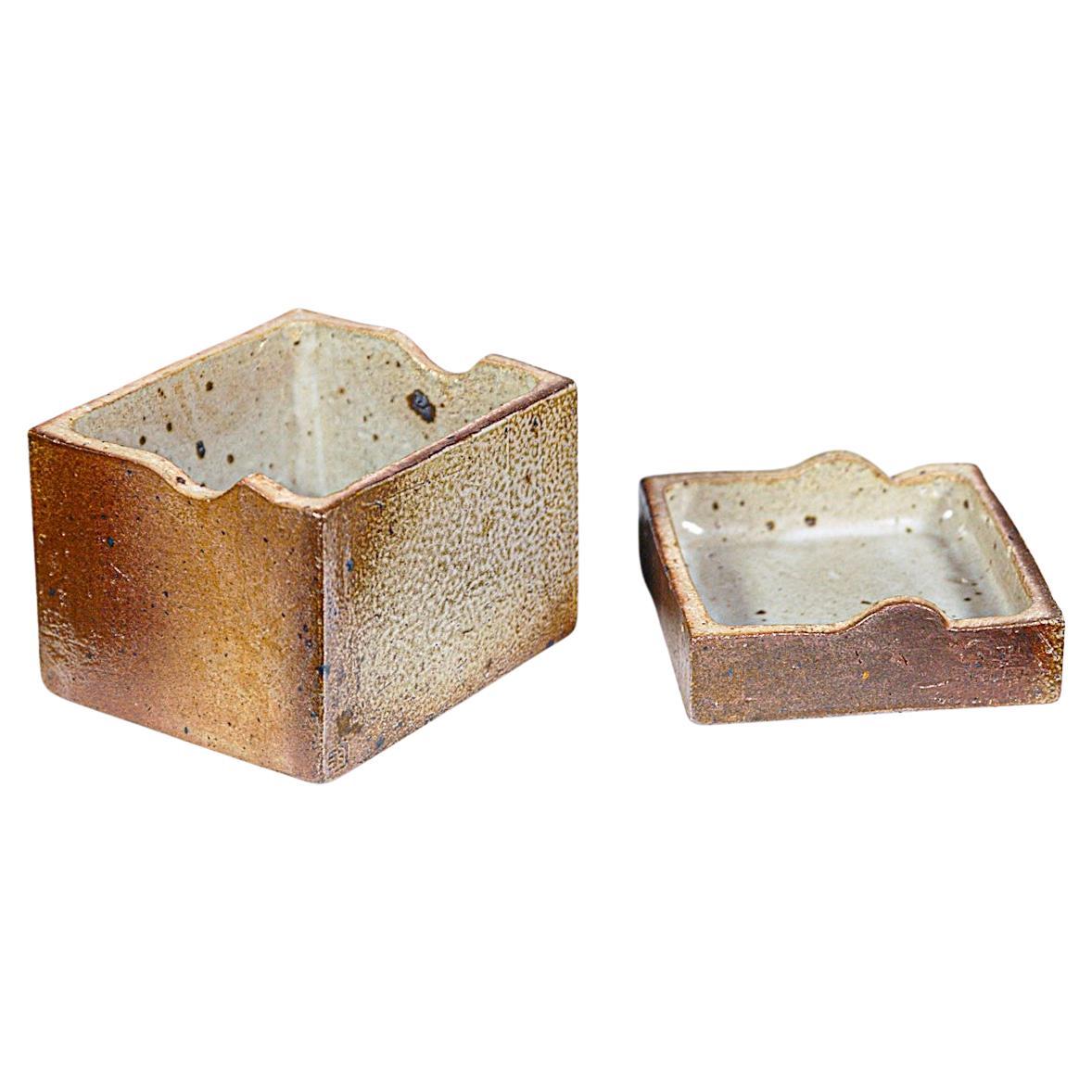
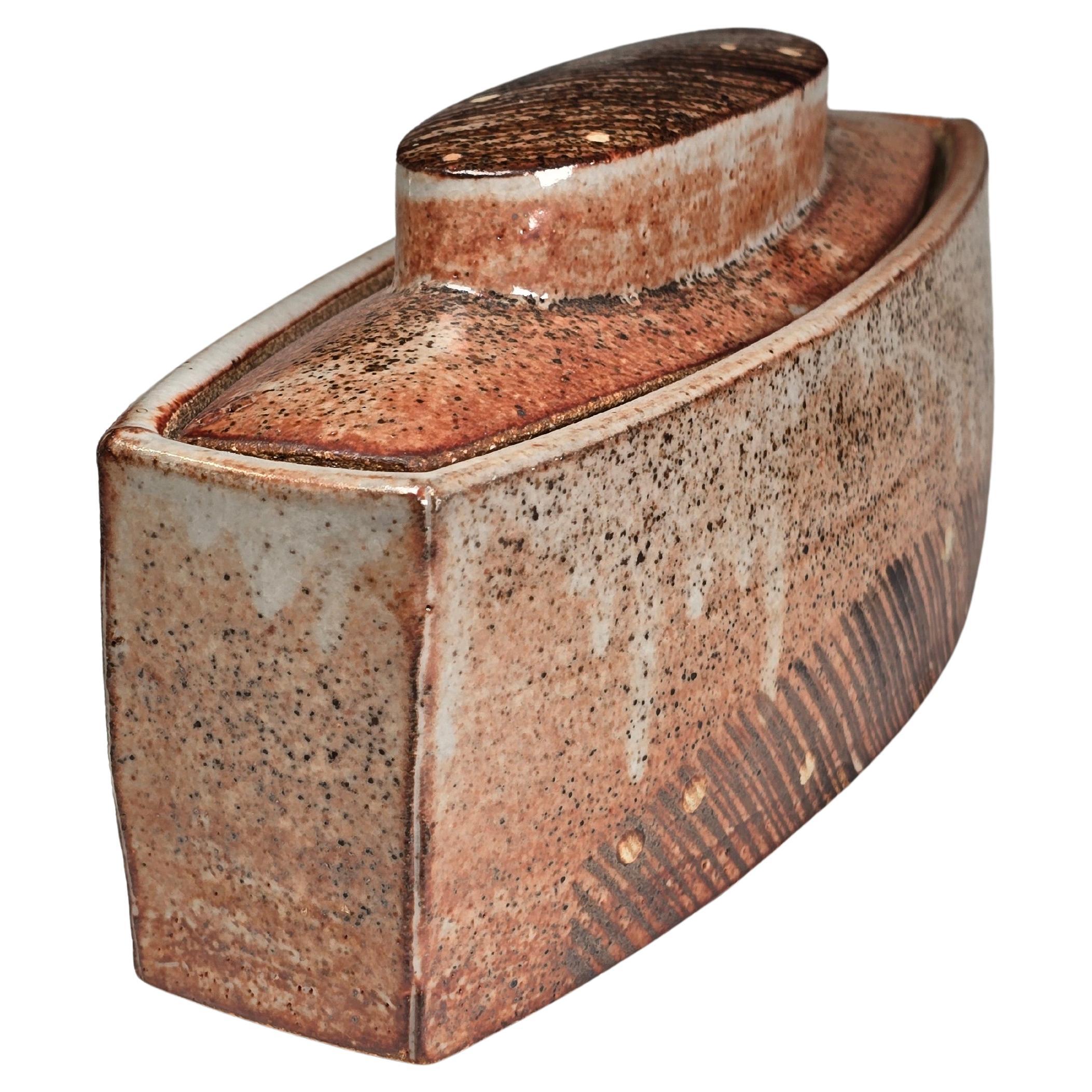
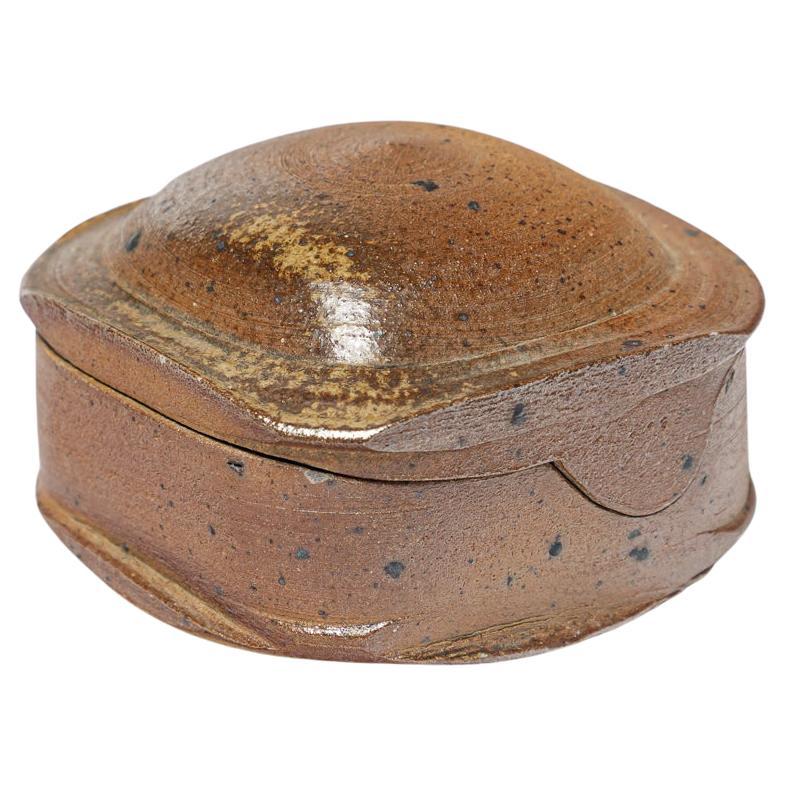
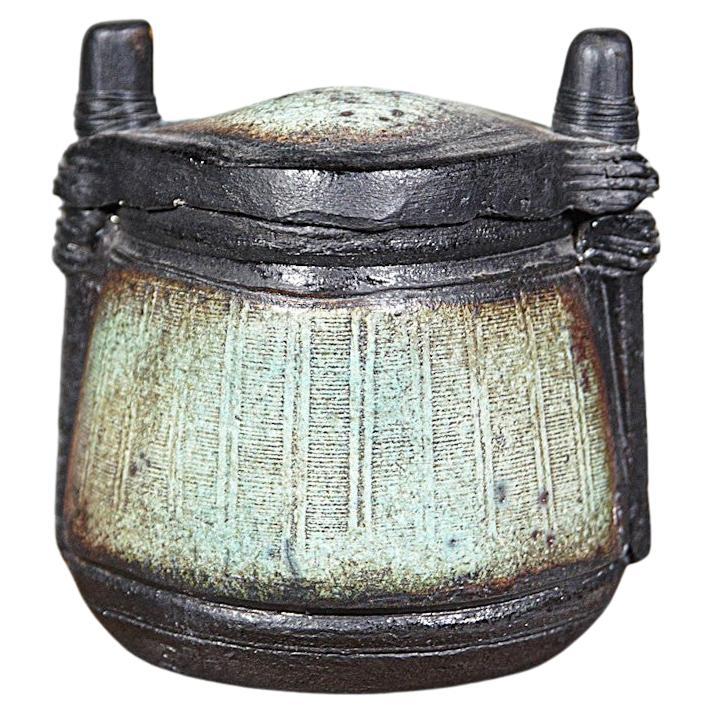
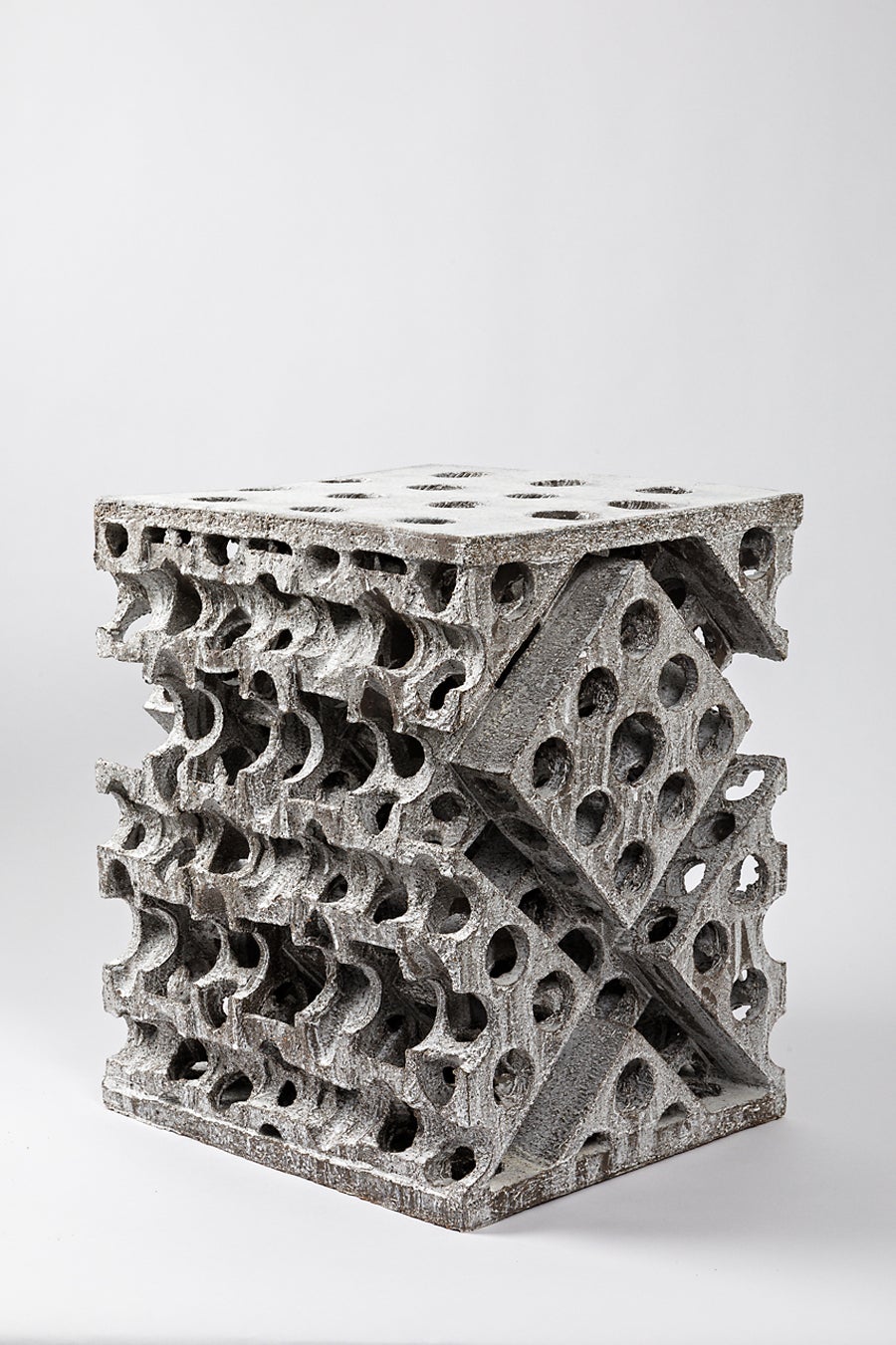
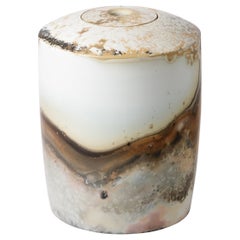
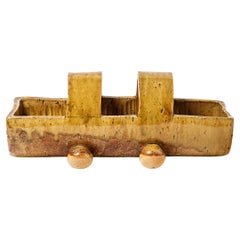
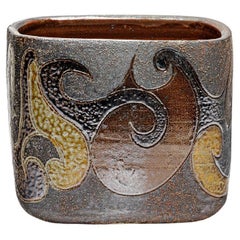
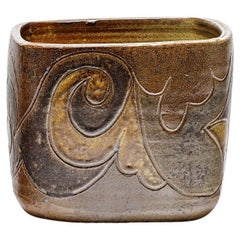
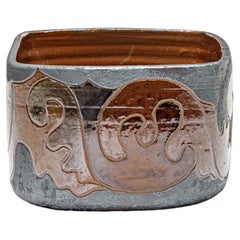
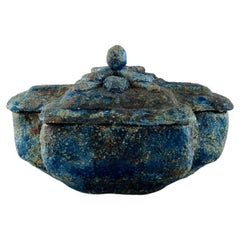
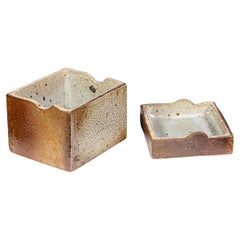
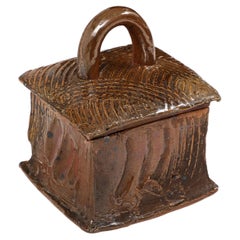
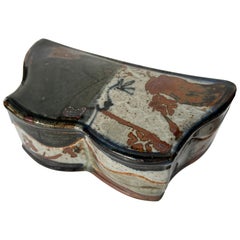
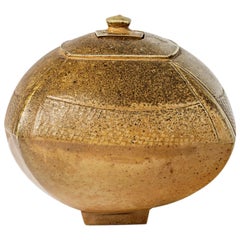
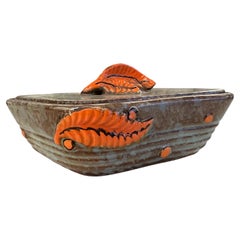
Glazed stoneware box by Jean-Pierre Viot.
Artist signature under the base. 1968.
H : 3.7 x 13.4 x 9.8 inches.
-
“Discreet, friendly, attentive, Jean-Pierre Viot is a central figure in French ceramics. (…) Jean-Pierre Viot’s research can be summed up in two words: rigor in construction, but sensitivity in form and material. While the first term readily aligns with the certainties of abstraction, the second is supposed to turn away from them. An old debate, an apparent contradiction, an eternal struggle between the classical and the romantic — those convinced that rigor generates a purer emotion, and those persuaded that Dionysian intoxication, or the simple Zen respect for nature, carries a far more authentic song.
Jean-Pierre Viot strives to resolve this opposition, to propose a synthesis, and shows us — if not proves — that it is possible. I imagine that the work itself, the discovery of clay, that of the potter’s earth which undergoes so many metamorphoses from the living walls of the quarry excavations to the certainties of the essential wheel-thrown pottery fixed by fire, may have guided his approach. In his earliest works, he confronted architecture, and this choice led him to bring forth the hypersensitivity of clay as if left to itself. His walls, fountains, and sculptures might have seemed, had technique allowed it, to emerge directly from the ground, merely eroded by rain and sun. Yet beneath this gestural quality, construction — as natural as it appeared — was always present. (…) Jean-Pierre Viot is lucid, and only great mastery can justify such ambition. He plays this subtle game of the constructed deconstructed, suggesting rather than asserting; his works strive to elude blunt references. (…) One stands before objects that have, in a sense, returned to a natural state and which, beyond their solidity, their construction, their architecture, allow the viewer to formulate a personal response, to participate in the dialogue proposed.
Jean-Pierre Viot, as comfortable in small formats as in large ones, enhances them with graphic elements, signs, scratches, sudden thicknesses of glaze that emphasize their underlying organic character. As Haguiko notes, beyond the object itself, he works on a subject that is none other than the space generated by it — much like a musician is aware of the volume in which the flowing sounds he has created will unfold. (…) Jean-Pierre Viot’s work evokes a hard-won serenity.”
Robert Deblander